
I’ve made this argument before (Deviance as Doctrine: The Post-Liberal Moral Revolution; The Politics of Grievance: Primitive Rebellion and Rhetoric of Social Justice), but a recent Louder with Crowder episode so perfectly illustrates my argument that I am moved to take another whack at it. Steven Crowder asks why the progressive left loves criminals and deviants. I think I have the answer. But first, here is the Louder with Crowder segment:
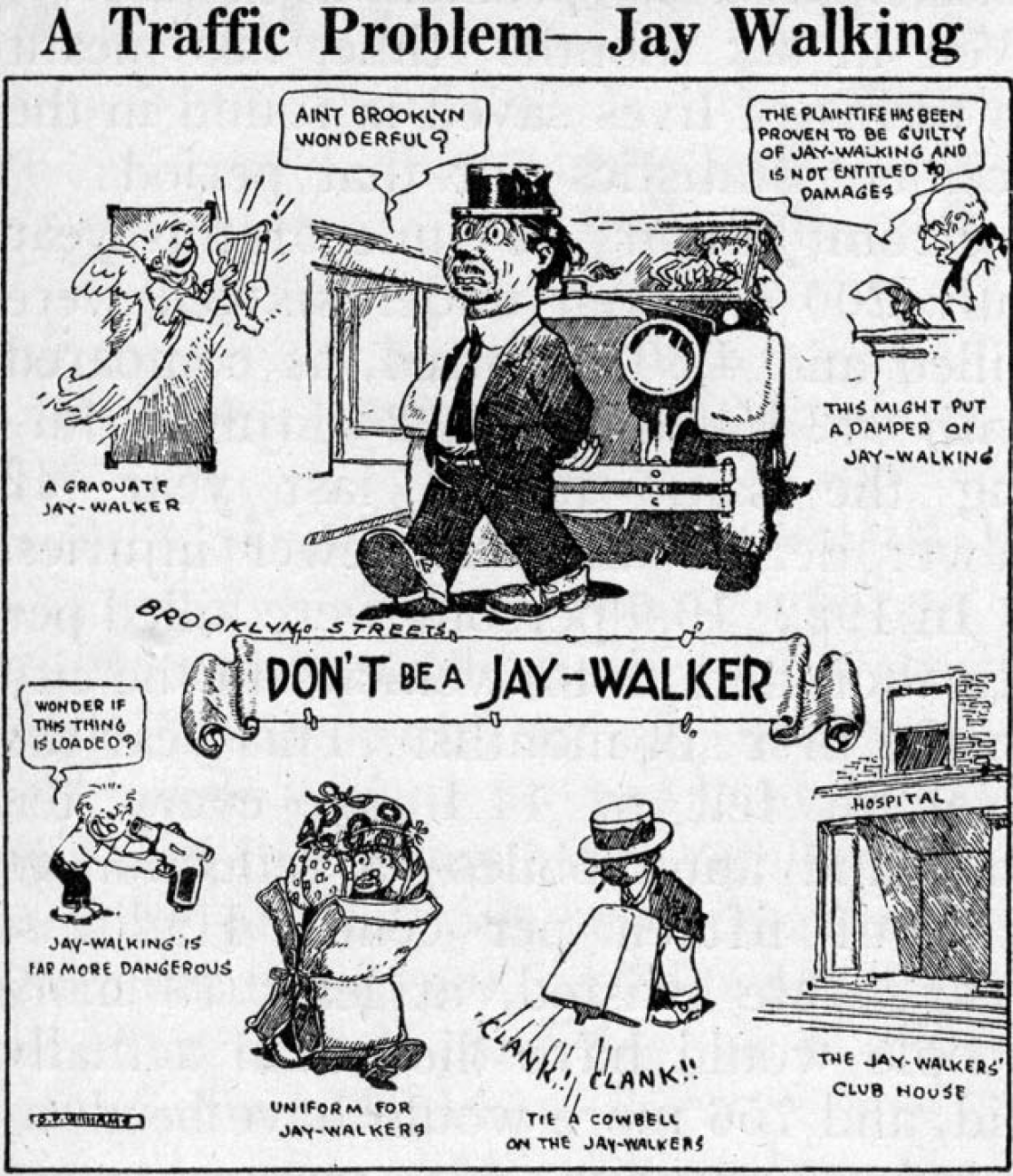
What is jaywalking? The legal definition of jaywalking varies by jurisdiction, but in most US cities and states, it generally refers to a pedestrian crossing the street outside of a marked or unmarked crosswalk, especially between adjacent intersections that are controlled by traffic signals. It also includes crossing against a pedestrian signal, such as walking when the signal displays “Don’t Walk,” and crossing in a manner that creates a safety hazard or interferes with oncoming traffic.
Several US states and jurisdictions have moved to decriminalize or eliminate jaywalking as a criminal offense to address demographic disparities. What began in Virginia has grown into a national reform movement, with over 50 million Americans now residing in places that have relaxed jaywalking enforcement in some way. (Crowder’s example is New York City decriminalizing jaywalking last year.) These reforms are driven by racial equity concerns and the rationalization that jaywalking laws are ineffective safety measures.
It is well-documented that black and Latino pedestrians are disproportionately cited or stopped for jaywalking and other minor infractions. The progressive argument is police patrol patterns (heavier presence in certain neighborhoods), implicit bias (unconscious racial profiling), and socioeconomic or structural factors (fewer crosswalks, longer waits at lights) are the reason for the disparities. But could this be that blacks and Latinos are more likely to jaywalk? There is a significant lack of comprehensive, nationwide behavioral data comparing jaywalking rates by race or ethnicity. The available data comes from enforcement records, not observations of actual behavior. Is there another way we could answer this question?
Black and Latino pedestrians in the United States face significantly higher risks of being hit and killed by vehicles compared to their white and Asian counterparts. According to the latest age-adjusted fatality data from 2021, Black pedestrians had a fatality rate of 4.4 per 100,000 people, while Latino pedestrians had a rate of 3 per 100,000. In contrast, non-Hispanic white pedestrians had a rate of 1.9 per 100,000. Asian non-Hispanic individuals had the lowest rate of all these categories at 1.4 per 100,000. When examining risk in terms of exposure—measured as fatalities per mile walked—research suggests that black pedestrians are nearly twice as likely to be killed per mile walked compared to white pedestrians. Hispanic pedestrians, similarly, are about 1.5 times more likely to face a fatal outcome under the same conditions.
These disparities are not only present in death rates but are also reflected in injury statistics. Emergency room data collected between 2021 and 2023 showed that black pedestrians were 1.93 times more likely, and Hispanic pedestrians 1.70 times more likely than their White counterparts to require emergency medical treatment from being struck while walking.
What progressives will tell you is that these figures paint a sobering picture of systemic disparity. Despite often walking more due to lower car ownership rates, people of color are navigating environments that are less safe for pedestrians. This is due to historic underinvestment in pedestrian infrastructure in communities of color, such as the lack of crosswalks, inadequate lighting, and dangerous road designs that prioritize vehicle speed over pedestrian safety.
But it could be that blacks, and to some extent Latinos, as a group are engaged in what Karl Marx and Frederich Engels called “primitive rebellion”? This term describes individual and group acts of defiance by members of the lower class who believe system is rigged against them. Engels describes the phenomenon in his Conditions of the Working Class in England, where he describes how joblessness, overcrowding, and poverty are associated with crime, disorder, and rioting, which he interprets as expressions of social desperation.
In a letter to Marx, Engels remarks on the rise in petty crime and lawlessness in Paris, citing it as evidence for a growing belief among the poor that the law does not represent them, that it is merely a tool of bourgeois domination, and therefore worthy of violating. It’s what David Matza and Gresham Sykes a century later described as “techniques of neutralization”—rationalizations used to justify wrongdoing. This is a kind of demoralization, not in the sense of resignation, but in the loss of belief in the legitimacy of the social and legal order.
A regular guest on Crowder’s show, Nick Di Paolo, relayed an answer from a cop to a question concerning crossing against the light: “Why do they do that?” The cop responded, “Because every ounce of their fiber is fighting against the man and the establishment.” Di Paolo said it was the best explanation he has ever heard. And for good reason. And it’s not just jaywalking. It’s crime in general and a myriad of other subculturally-specific behavioral norms. Progressives normalize violations of the broader norms of society.
I argue in previous essays that the contemporary left has embraced a pattern that, at first glance, appears erratic or irrational: not merely the rationalization of their actions, but in the celebration of those who break the law, flout norms, or violate traditional moral codes. From criminals to illegal aliens, to individuals engaged in perverse lifestyles, lawbreakers and norm violators are increasingly held up not just as sympathetic, but as heroic. For the rest of us, this feels less like politics and more like cultural upheaval—confusing, chaotic, even unhinged. That’s because it is.
But this seeming irrationality masks an intentional moral and strategic realignment. It is the rational deployment of irrational means for political ends. The elevation of deviance isn’t a misfire of progressive politics—it’s a deliberate move to undermine existing structures and reframe moral authority. By recasting lawbreakers and outcasts as noble resisters of systemic injustice, progressives are engaging in a form of ideological subversion. What looks like compassion is, at a deeper level, a tool for cultural and political transformation.
This view relies heavily on structuralist explanations of human behavior—those found in academic theories that prioritize systems over individuals. Criminal acts are reframed not as failures of character or will, but as outcomes of historical trauma, poverty, or racism. Lawbreaking becomes not a breach of social contract, but a cry for justice. No justice, no peace. In this moral ecosystem, victimhood grants sanctity. To suffer is to be righteous, and those who suffer at the hands of authority—border patrol, immigration agents, police—are elevated as moral avatars.
From this perspective, punishment is rarely seen as just. Instead, it is recast as cruelty, a symptom of institutionalized oppression. The enforcers of rules become villains, while violators are recast as heroes. This moral reversal doesn’t merely confuse traditional categories—it redefines them entirely. It replaces individual accountability with systemic blame, law with empathy, and order with rebellion.
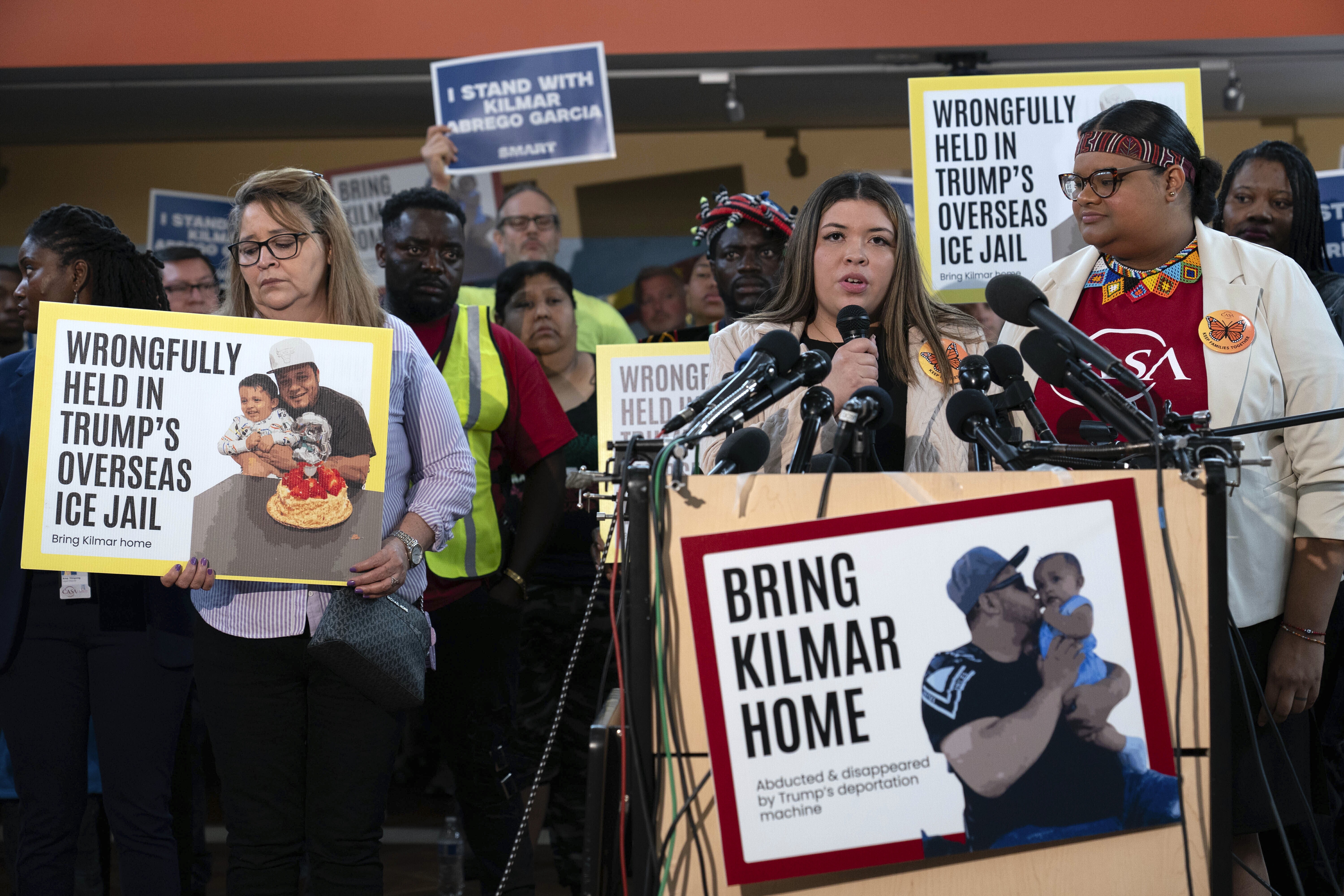
In this new hierarchy, the highest form of moral standing comes from being “marginalized,” or more accurately marginalizing oneself through deviant behavior and life style. This is how a human trafficker and serial wife beater Kilmar Abrego Garcia can become a poster boy for injustice. Those seen as oppressed—especially if poor, non-white, or gender-nonconforming—are said to possess a heightened moral insight: the righteous privilege of the deviant. Their “lived experience” is unassailable truth. Crossing a border illegally, breaking laws, or flouting societal norms become courageous acts of resistance against a system deemed illegitimate.
Insisting that people follow traffic rules oppresses the righteous rebel. Jaywalking is an act of resistance.
This is the glue holding together much of the left’s political coalition. Immigrant communities, racial minorities, urban voters—all demographics more likely to experience friction with the state—deserve not merely sympathy but sanctification. Instead of addressing why certain behaviors lead to law enforcement encounters, progressives reframe the law itself as the problem.
This approach serves concrete political ends. It fuels activism, mobilizes voters, and shapes public narratives. Media stories highlighting sympathetic offenders transform individual wrongdoing into broad indictments of society. These stories aren’t just meant to evoke empathy—they’re designed to shift public perception, weaponizing what one might charitably describe as personal tragedy—at worst thuggery—for ideological gain.
In this light, the celebration of transgression becomes more than moral posture—it becomes strategy. Progressives argue that traditional concepts of justice—deterrence, equality, fairness, punishment—are merely masks for maintaining power structures dominated by capitalists, conservatives, nationalists, and other “privileged” classes—Christians, cisgendered, whites, white adjacent, etc. The left calls not for reform, but for reimagining justice itself: grounded not in impartiality or law, but in “equity,” “liberation,” and “repair.”
The jargon of the woke left, common in academia and activist spheres, flips the moral compass. Offenders no longer need correcting; they’re symbols of deeper truths. Lawbreaking becomes revelatory. Transgression becomes obligatory, even sacred. Deviance is not merely defined down, as Daniel Patrick Moynihan warned in the early 1990s. It is that, to be sure, but it is also redefined as virtue.

This linguistic turn reflects a broader philosophical departure from classical liberalism. Moral legitimacy is no longer found in customs, democratic consensus, or laws, but in personal suffering and subjective identity. Those once deemed criminal—be they illegal aliens or violent offenders—are now praised precisely because their lives defy convention. Their deviance becomes a form of moral authenticity.
We see this in the beatification of career criminals like George Floyd, in sympathetic portrayals of individuals with gang affiliations and violent pasts. These portrayals are not isolated—they represent a systemic effort to blur the boundaries between virtue and vice, legality and illegality. It’s not just storytelling—it’s an ideological reframing promoting cultural realignment.
This realignment is not a grassroots revolution. It’s engineered from above. Major institutions—academia, corporations, media conglomerates, NGOs—have embraced this moral inversion not because they share its ideals, but because it serves their interests. In many instances, they manufactured it. As traditional norms dissolve, individuals become more dependent, inner-isolated, and pliable. But not all are docile. Some are angry, and therefore useful. A society detached from family, heritage, nation, and tradition is one that’s easier to manage—through bureaucracy and ideology. And the ease with which they may be gathered in the streets and provoked to violence makes them instruments for sowing chaos.
This top-down destabilization reframes cultural disintegration and social disorder as moral progress—as liberation. Corporate HR departments speak the language of diversity and inclusion while extracting maximum value from atomized workers. Media companies amplify fringe identities not for justice, but for clicks. Bureaucrats use the rhetoric of “safety” to justify censorship and surveillance. None of this requires liberty or self-governance—only compliance. Liberty and self-governance are the signs of power and privilege. So, in the end, there must go away.
The breakdown of tradition isn’t a side effect—it’s the goal. Norms around family, morality, national identity, and sex are intentionally eroded. Norms bind people together, and a bound society is harder to control. Disorder becomes a tool of governance—rule over a disordered populace and conditions that draw the disordered. The Old Left sought to empower the working class. The New Left empowers the technocratic class by disempowering the citizenry.
In this environment, the glorification of deviance functions as a mechanism for substituting bureaucratic authority—technocracy—for civilizational values. Cultural boundaries are erased, inherited wisdom dismissed as prejudice, and legal structures undermined. In their place stand policies and paradigms determined not by voters, but by elite networks of credentialed professionals and ideologically aligned institutions.
This is the essence of the post-liberal and post-truth world. Classical ideals—free speech, rule of law, limited government—are subordinated to vague imperatives like “equity,” “inclusion,” “safety” (but not public safety), and “wellbeing.” These terms become weapons deployed to justify everything from race-based policies to censorship. They’re slogans of control masquerading as liberation.
The new order doesn’t suppress freedom with jackboots. It dissolves it through emotional manipulation, institutional creep, and technocratic consensus. It is Sheldon Wolin’s “inverted totalitarianism.” In this framework, deviance is no longer merely tolerated—it is instrumentalized. The breakdown of legal norms and moral precepts facilitates a larger project: the reengineering of society into a managed system, ruled not by law and custom, but by expertise and ideological conformity.
Donald Trump doesn’t like the word “progressive.” He says it sounds too nice. He likes the word “liberal” to describe this. Ironically Trump is a liberal and his word choice undermines his ability to accurately describe the problem. Progressivism is regressive. What claims to be progressive is in truth the cultural façade of a deeper transformation. Behind the stories of liberation lies a calculated campaign to dissolve the foundations of civil society and replace them with a new order—one more centralized and more intrusive than anything that came before it.
To those grounded in conventional moral codes—centered on lawful conduct, personal responsibility, and societal cohesion—this valorization of transgression is perplexing. Yet for many on the left, it’s righteous rebellion. Celebrating those targeted by law enforcement or immigration control becomes a way of attacking the institutions themselves, which are portrayed as inherently corrupt, oppressive, and racist. The goal of progressives is not to make America better. It is to make America go away.
I can hear the criticism now. How did we get from jaywalking to the decline of Western Civilization? To dismiss jaywalking as a trivial offense is to dismiss the symbolic weight it carries in the cultural and political imagination. What was once a minor infraction of urban order, one designed to protect human life, has become, in the progressive framework, an emblem of defiance against systems deemed illegitimate. Ultimately, it is not the act itself that matters. It’s what the act represents—a challenge to the authority of law, to the expectation of conformity, and ultimately, to the legitimacy of the social order. Jaywalking is a litmus test for a worldview that reinterprets deviance as justice, lawbreaking as virtue, and public safety as racist.
The deeper problem is not the individual crossing against the light but the broader ideological project that celebrates such acts as morally elevated—that valorizes one of a myriad of actions against the regular order of things. Excusing acts of primitive rebellion—jaywalking, resisting arrest, sitting in the road, smash and grab, violence against ICE agents—signals a deliberate and determined unraveling of the norms and institutions that sustain a free and cohesive society. Jaywalking may be minor in legal terms, but in the context of instrumental chaos, it reveals a profound shift in how justice, legitimacy, and morality are being redefined—not from the ground up, but from the top down.
Finally, for those considering telling me about the origin of jaywalking, how it was the evil auto industry through aggressive public campaigns shaming pedestrians, framing pedestrian behavior as the problem rather than dangerous driving or poor infrastructure, who manufactured a crime, I will not be impressed. Cars have been a wonderful addition to human history, liberating individuals to get to where they need to go quickly—to travel where they wish on a whim. There are sidewalks and crosswalks for pedestrians. There is nothing stopping pedestrians from getting where they need to go—except not following public safety rules.
There’s a way to tell the history of this law without the biased language The Resistance™ uses to delegitimize laws. Jaywalking originated in the early twentieth century during a time when automobiles were becoming increasingly common on city streets. As cities faced rising pedestrian fatalities amid increasing car traffic, auto industry groups and safety advocates promoted the idea that pedestrians should use sidewalks and designated crossing areas, helping governments establish jaywalking laws as a way to enhance public safety. The left wants to make everything good bad.

 freedom and reason