
“Madness is something rare in individuals—but in groups, parties, peoples, and ages, it is the rule.” ―Friedrich Nietzsche, Beyond Good and Evil
The rise in mental illness in the West is driven by postmodernist notions that have colonized our sense-making institutions over the last several decades. Postmodernism denies the reality of truth. Once there’s no truth, there’s only fantasy and personal impulse. Every person who has a tendency towards disordered thinking becomes unfettered by any requirement that they live in a truth-based reality. Disordered thinking is contagious without the anchor of truth, without the parameters of reason. Cluster B becomes a social movement. And it has—latching onto whatever flag and slogan put into its hands and mouths.
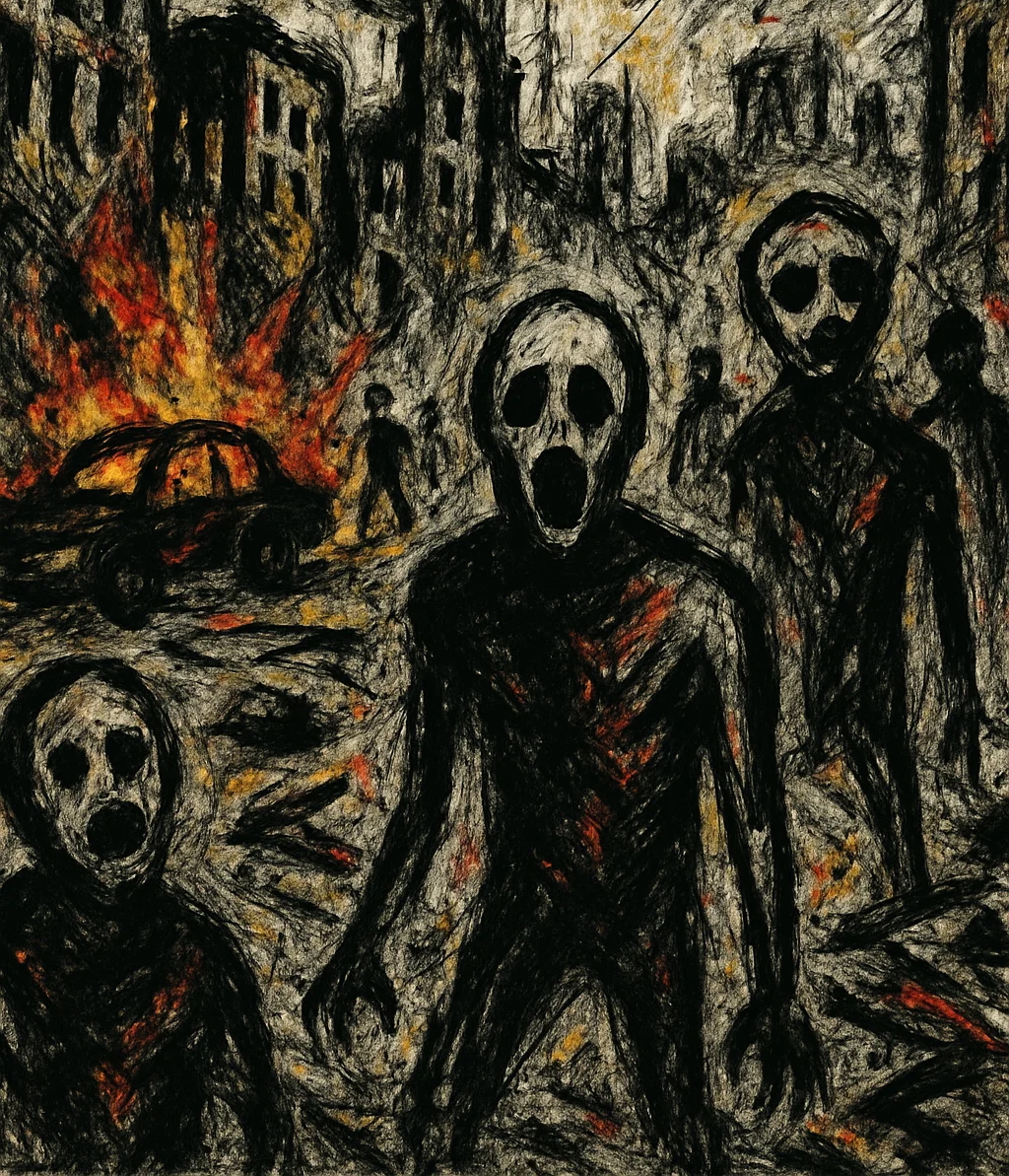
Freedom without obligation, structure, and virtue leads to madness—in a word: nihilism. That’s what the postmodernists seek: the madness of conceit. At the core of this ideology is egoism. Under egoistic anarchism, all alleged abstract ideals—morality, the state, even humanity—are illusions that limit personal freedom. Today, egoism has merged with the transhumanist desire of exploiting technology to “liberate” humanity, to transcend the body. This is what lies in back of the madness of transgenderism: the belief that individuals are not bound by the truth of reality. It perverts the ideal of making of yourself what you will.
If one recognizes postmodern relativism—egoistic self-sovereignty—as the path to disorder and nihilism, then actual or true freedom must be grounded in something deeper than fantasy and personal impulse. It is this: actual freedom is not the absence of limits but the presence of order rooted in truth. Freedom, properly understood, is the ability to live in alignment with reality—not escape it. The attempt to escape reality is the desire to escape freedom, to seek instead the ecstasy of simulacra. True freedom requires acknowledgment of objective truths: about human beings, morality, nature, and the structure of the world—the terrain of the real.
When truth is dismissed as a social construct or a matter of personal feeling, freedom becomes unmoored, untethered to reality and shared humanity, to our species-being, and thus transformed into its opposite. In its place exists a counterfeit version, a simulation of liberty—one that is ultimately self-destructive, disconnecting individuals from what is real and from what is good and right. In a word: a state of psychopathy. To not live in the real world is by definition madness.
True freedom requires moral structure and obligation. Freedom is not the ability to do whatever one wants, freedom is not sociopathic, but the capacity to choose good and right in the context of family and community. This is why the postmodernist notion of social justice is deceitful: it denies the social. True freedom is cultivated through virtue: the habits of courage, knowledge (valorized belief), self-restraint, and wisdom. Without these, freedom collapses into chaos. We see the chaos across the West. Our youth are lost in it.
The postmodern exaltation of personal autonomy without responsibility creates not liberation but fragmentation of self and society. Freedom divorced from virtue leads to license, and license leads to cultural breakdown and moral corruption. Estranged from truth and our common humanity is what generates the emotional and psychological troubles we see so many people in. Long ago, the great sociologist Max Weber warned us about this. He warned us about the iron cage.
Freedom requires a shared vision of the common good and human nature. A true social justice is found there. When society loses its sense of what it means to be human—of what is dignified, essential, and true about our nature—then each individual becomes a sovereign island, an atom left to invent meaning in a vacuum. As another great sociologist, George Herbert Mead, observed, the self is a product of co-present and emotionally available relations; under postmodernist conditions, the individual is alienated from his comrades, alone (even in crowds) and depersonalized. Alone in crowds, the individual becomes a mob.
Such atomization is not freeing; it’s disorganizing and destabilizing. The denial of a human nature in radically subjectivist and transhumanist ideologies fosters confusion and mental disintegration. These are the conditions that disorder individuals. A society that encourages individuals to deny biological reality or moral responsibility in favor of self-constructed identities is not promoting freedom—it’s encouraging and affirming delusion. More than this, it’s establishing the conditions of authoritarianism; in the end, only naked power will determine right. As this ideology spreads, ever more people—especially the young and still developing—are pulled into its gravity well.
Actual freedom is ordered freedom—anchored in truth, governed by virtue, and oriented toward the good and right. It is not enough to be free from constraints; we must be free for something: for love (not self-love), for community (not imagined or manufactured communities), for truth (not “lived experience,” “my truth,” relativism). Without these foundations, freedom becomes not a blessing but a curse. Indeed, it’s not freedom at all. It’s chaos and disorder.
If postmodernists attempt to deconstruct all norms and dissolve all structures in the name of a perverse conception of liberation, then the antidote is the recovery of character, purpose, and truth as the essential conditions for any meaningful and sustainable freedom. Opposition to woke progressivism is thus not merely disagreement over policy and politics—it’s a struggle against the forces of chaos that would plunge the West into the New Dark Ages.

 freedom and reason