
Human beings are not blank individuals—they’re culture bearers. Culture, in its broadest sense, includes customs, ethics, language, norms, religious beliefs, values, and inherited patterns of social life. It is not confined to borders, nor is it static; culture travels with people, shaping every environment they enter. When individuals or communities migrate, they do not arrive empty-handed—more than cuisine and language, they bring with them a worldview, rooted in faith, ideology, social norms, and tradition. The portability of culture presents modern society with one of its most difficult challenges.
The challenge deepens when we recognize that different cultures are associated not only with different customs, but also with different systems of governance. Some cultures, shaped by centuries of civic development, philosophical inquiry, and political debate, support democratic institutions and pluralistic values. Others, shaped by authoritarianism, religious authority, or tribal structures, are more accustomed to rigid hierarchical or theocratic systems. The form of government a society adopts is rarely arbitrary—it reflects the cultural soil from which it springs. Culture and governance are entwined in a mutually reinforcing relationship.
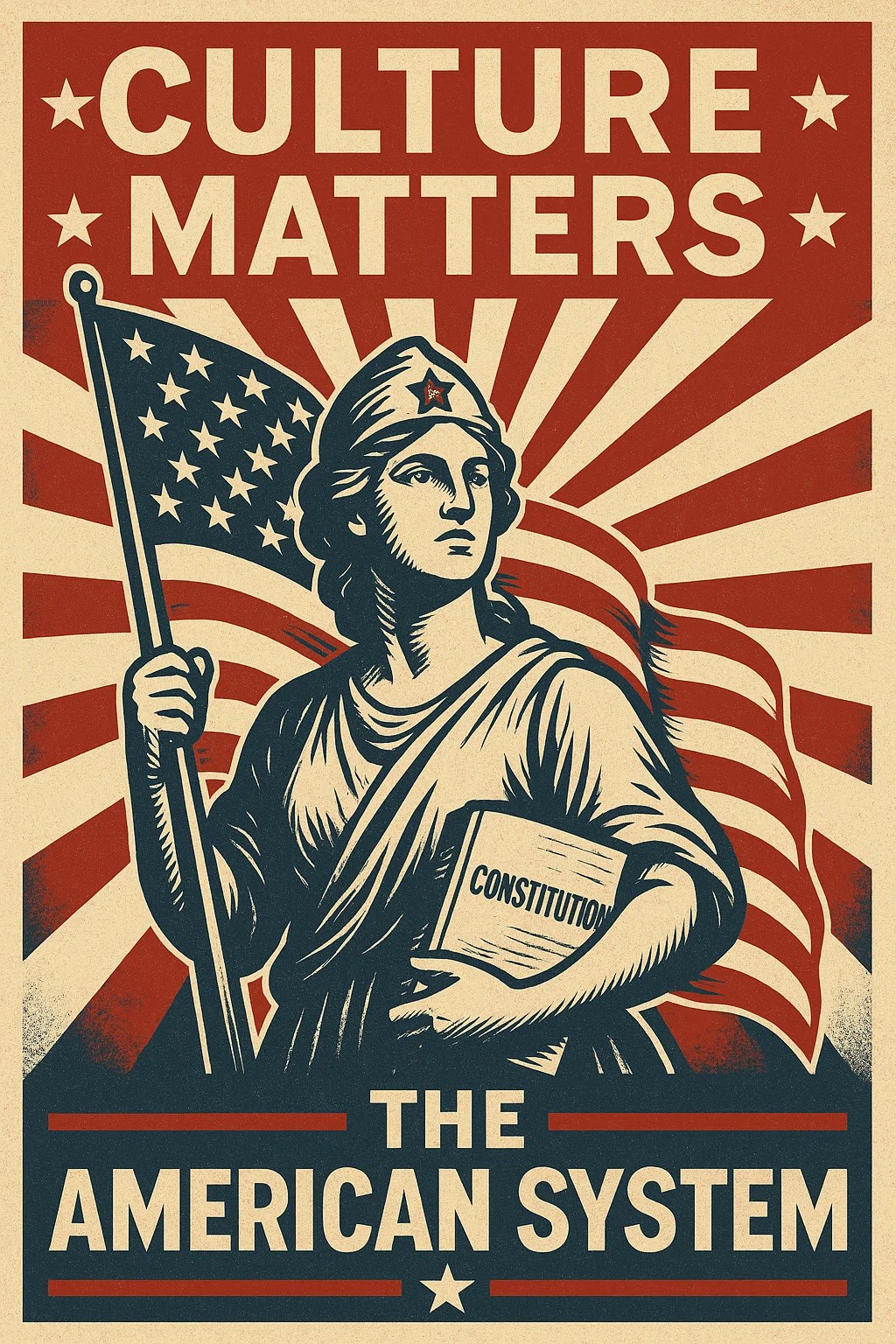
When migration occurs at a manageable scale and is accompanied by mutual education, engagement, and integration (or assimilation), selected cultures can enrich the host society. I say selective because not all cultures are compatible with the culture of the host country. In some cases, immigrants not only adopt the host nation’s values but bring renewed energy to its civic life and democratic institutions. However, when migration occurs rapidly and in large numbers without strong integration, or when the incoming culture carries deep commitments that resist assimilation, it disorganizes the culture of host country and weakens civil society.
This becomes particularly significant when the host society is built on principles of liberal democracy—freedom of conscience, speech, writing, etc. Such systems require more than just laws to function; they depend on a cultural infrastructure: belief in the equal dignity of individuals, a commitment to civil discourse, and tolerance of differences (but not so tolerant that they self-destruct). These values are not easily transmitted, nor are they universally held. Immigrants bring expectations about how authority should function, how community should be organized, and what role, if any, religion should play in public life. When a significant number of newcomers arrive from cultures where these principles are absent or even opposed, and when assimilation is discouraged—by the host or the immigrant communities or both—the foundation of democratic governance is imperiled.
It’s not just the danger of those who bear cultures incompatible for liberal democracies—there are those in the host country who represent a danger to the national integrity necessary to maintain a free and open society. Multiculturalists (what were before called cultural pluralists) argue that it is wrong to expect assimilation from those who arrive with different traditions. Multiculturalists promote the preservation of diverse cultures within an ostensibly shared political space, holding that difference should not only be tolerated but welcomed and affirmed.
We might charitably assume that this view has noble aims: to avoid cultural erasure, to foster mutual respect, to protect minority identities, etc. I have suggested in past writings that these arms are not what drives multiculturalism, but rather are rationalizations for strategies globalists use to pursue their anti-working class agenda. As one can see in the above video, there are many in the United States who seek to overthrow the American System. But whether we’re charitable or not, the same questions must be addressed: Can a society maintain cohesion when its members are encouraged to live in separate cultural silos? Can a liberal order survive if large segments of its population do not internalize the norms that sustain it? The answer to the question is no.
Cultural diversity can be a source of strength only if it is accompanied by a shared commitment to the ethical and political framework of the host society. Without this, cultural pluralism becomes not a mosaic (even if this were desirable), but a patchwork of mutually exclusive enclaves, each with its own allegiances, rules, and vision of justice. Multiculturalism is in reality the balkanization of the West. If liberal democratic society depends on shared civic values like free speech, gender equality, or the separation of religion and state, what happens when large segments of its population do not subscribe to those values? National suicide.
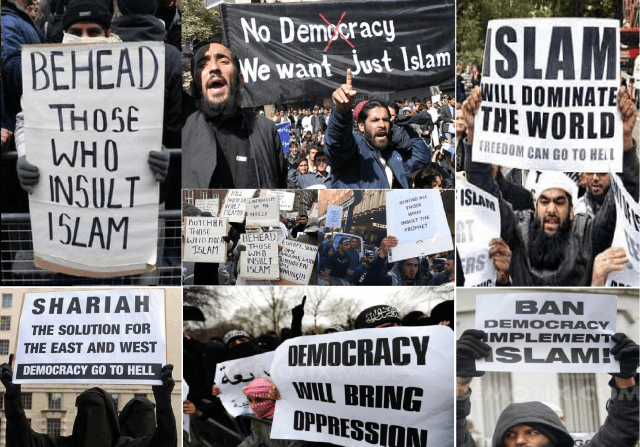
This is not a hypothetical concern. Look at France, Great Britain, and Sweden. Multiculturalism has been a disaster. Efforts to maintain cultural pluralism have resulted in the growth of insular communities with limited engagement with the broader population. When people live parallel lives, each within its own cultural framework, mutual understanding declines. In the long term, this situation weakens the social fabric and challenge the stability of the political system itself. Democracy, after all, is not only about elections—it depends on habits of tolerance and trust (within reason). These habits are learned and passed down through culture.
Cultures are more than sets of customs or rituals. They form the foundation of political systems. Over time, a society’s governance tends to reflect the values and assumptions rooted in its culture. Democratic systems arise and flourish in cultures that value compromise, debate, and individual freedom. In contrast, cultures shaped by religious absolutism or rigid hierarchy foster governments where authority is concentrated and dissent is discouraged. In this way, governance and culture are tightly interwoven—one helps to sustain the other.
None of this is to suggest that immigration is inherently a threat to governance. On the contrary, many immigrants adopt democratic values with great enthusiasm and make substantial contributions to their new home. The challenge lies not in the movement of people, but in the assumptions we make about cultural compatibility and civic cohesion. A society can be both diverse and united, but only if it fosters a shared commitment to the core values that sustain its political life. For this reason, immigration policy must be prudent.
As countries continue to navigate the complexities of cultural change in an interconnected world, they will need to grapple honestly with the relationship between culture and governance. Preserving cultural identities and protecting democratic institutions are not always goals in harmony—but the health of modern societies depends on finding a way to hold them together.
Unfortunately, there is no compromise on immigration. One side believes in globalism and rule by transnational corporations and governing bodies. The other believes in the nation-state and citizen governance. Jean Guerrero of the New York Times, says that patriots are trying to erase multiculturalism. She’s right. So are the patriots. Multiculturalism is a globalist ideology.
The classical-liberal ideal of E pluribus unum is a society composed of individuals—not tribes or identity blocs—freely associating under shared principles. This norm reflects Enlightenment values—equality before the law, liberty, and reason—and stands in contrast to corrupt interpretations that emphasize group identity over individual agency. Multiculturalism is ruinous to the organic foundation of the American Republic. Progressives want to balkanize America. It’s a political economic strategy.
The battle for Los Angeles—and in other cities across the nation—is the battle for America. And Americans should never compromise with the forces that seek to dismantle the republic that keeps them free. However many tens of millions of illegal aliens currently reside in America, they must go home and the policy going forward should reduce future immigration to a trickle—and then only from cultures compatible with our own.

 freedom and reason