
This essay is a follow up to a recent essay Deviance as Doctrine: The Post-Liberal Moral Revolution. Here I get into theory.
It’s funny (not really), in most critical justice and law curricula, we are rarely taught what justice means. This is not true in the courses I teach, but I am rather exceptional in that regard. The term “justice” is rich with meaning, and interpretations of the term shift depending on the context—cultural, legal, ideological, moral, philosophical, political, social. At its most basic level, justice refers to the principle of fairness: the idea that individuals should receive what they are due, whether in terms of consequences, rights, or treatment. However, this apparently simple definition confronts competing and often conflicting theories about what fairness entails, and to whom it is owed.
In legal terms, justice implies adherence to established laws and procedures. A just outcome in this sense is one that conforms to due process, treats all parties equally under the law, and dispenses punishment or protection in proportion to the facts and evidence. This concept of procedural justice, or proceduralism, is central to liberal democracies, where the legitimacy of the legal system rests on the perception that rules are applied consistently, regardless of class, race, or status. In modern, enlightened societies, the principle applies to individuals, although they may be grouped as an injured party in a class-action lawsuit. Moreover, group members may be treated differentially if they comprise an objective class, such as age, disability, or gender. Justice in this sense is not, however, applied to an imagined community, such as a race or a religion, as these are either abstractions or belief systems.
Philosophically, justice has long been debated as a moral ideal and whether that ideal may transcend existing laws. Thinkers from Plato to Rawls have proposed that justice involves more than mere legality; it encompasses the proper ordering of society, where individuals receive what is deserved not just according to law, but according to contribution, need, or virtue. Distributive justice, for instance, concerns how burdens, opportunities, and resources should be shared among members of a community. This gives rise to debates between egalitarianism, libertarianism, meritocracy, and socialism—all of which define fairness differently.
In social and political discourse, particularly today, justice often takes on a collective and historical dimension. Terms like economic justice, racial justice, and social justice suggest that fairness cannot be understood apart from historical wrongs, inherited dis/advantages, or structural inequalities. Here, justice involves rectifying systemic imbalances or addressing group-based harms, even if that requires unequal treatment to achieve equity—all of which are contested in political space. This version of justice is proclaimed as forward-looking in its goals but backward-looking in its moral claims: it calls not just for individual accountability, but for redistributive or reparative action grounded in historical grievance.
Finally, in cultural and emotional realms, justice is invoked in terms of restoration or vengeance. Victims or their communities may demand justice as a form of symbolic redress—where seeing someone condemned, held responsible, or punished offers psychological closure or social affirmation. Justice can blur into revenge, especially when it is untethered from impartial standards, becoming a vehicle for ideological, moral, or political assertion.
Each of these meanings carries different implications for how societies understand crime and punishment, equality and obligation. Tensions arise when one conception of justice—say, legal proceduralism—clashes with another—say, historical reparations. Much of our current cultural and political conflict can be traced to these underlying disagreements over what justice is, what it demands, and who has the authority to define it.
As I have explained many times before, modern enlightened systems of law explicitly reject the notions of intergenerational guilt and collective punishment because they violate foundational principles of due process, individual justice, and moral agency. Individualism is not merely a cultural preference. It is a moral and philosophical principle rooted in universalism—the recognition that all human beings share a common nature and are therefore entitled to the same fundamental rights, with equity prepared to considered objective group differences.
This idea underpins the concept of human rights: that dignity, justice, and liberty are not granted by governments or earned through group membership, but are instead inherent in each person simply by virtue of being a member of the species. It is this universalist ethos that animates the Declaration of Independence, which asserts that all men are created equal and endowed by their Creator with certain inalienable rights—life, liberty, and the pursuit of happiness. Such rights can only be meaningfully upheld when individuals are recognized as moral agents, not subsumed into classes, collectives, or tribes. Individualism, properly understood, is the safeguard of human dignity because it affirms that no person is expendable, and no one is reducible to their ancestry, identity, or inherited guilt.
Before the term “Creator” appears, the Declaration notes the entitlements due each person—in a democratic republic each citizen—by the “Laws of Nature” and of “Nature’s God.” These concepts reflect the Enlightenment-era appeal not to a specific religious tradition, but to natural law—a rational, universal order discoverable through reason and science and accessible to all people regardless of faith—and even in the absence of it. This language signals a move away from divine-right theories or scriptural authority and toward a humanistic framework in which rights are grounded in humanity itself.
This concept of Nature’s God suggests a moral order inherent in the structure of the world and in human reason, rather than one revealed solely through theology. It aligns closely with the views of thinkers like Locke and Jefferson, for whom equality and liberty were not contingent on religious belief but derived from the shared nature of all human beings. Thus, the authority of the Declaration’s moral claims lies not in religious dogma but in a philosophical conviction that human beings possess inalienable rights by virtue of their rational, moral nature—a view that unites individualism with a universal, secular ethic, sorted only by citizenship. This view has been confirmed by science and is the material basis of human rights.
In liberal democracies, responsibility for wrongdoing is thus understood to be personal and specific, tied to the actions and intentions of individuals, not to their ancestry, group identity, or historical association. The idea that one person could be held liable for the sins of their forebears or punished for the actions of others within their ethnic, racial, or social group undermines the rule of law by substituting moral retribution for individual accountability.
Enlightenment thinkers, influenced by humanism, reason, and secularism, articulated a break from primitive theocratic or tribal models of justice where bloodlines or collective identity determined guilt and obligations. Instead, they established the principle that punishment must correspond to a person’s own actions and be adjudicated through fair and impartial procedures.
This is why modern constitutions, and legal codes prohibit bills of attainder, collective reprisals (except in cases of national self-defense), and retroactive justice (except in the case where consequences follow action): such mechanisms treat people not as autonomous moral agents but as proxies for historical or group-based blame. Upholding individual responsibility preserves not only fairness but also social cohesion, by resisting the impulse to re/litigate history through the punishment of the present.
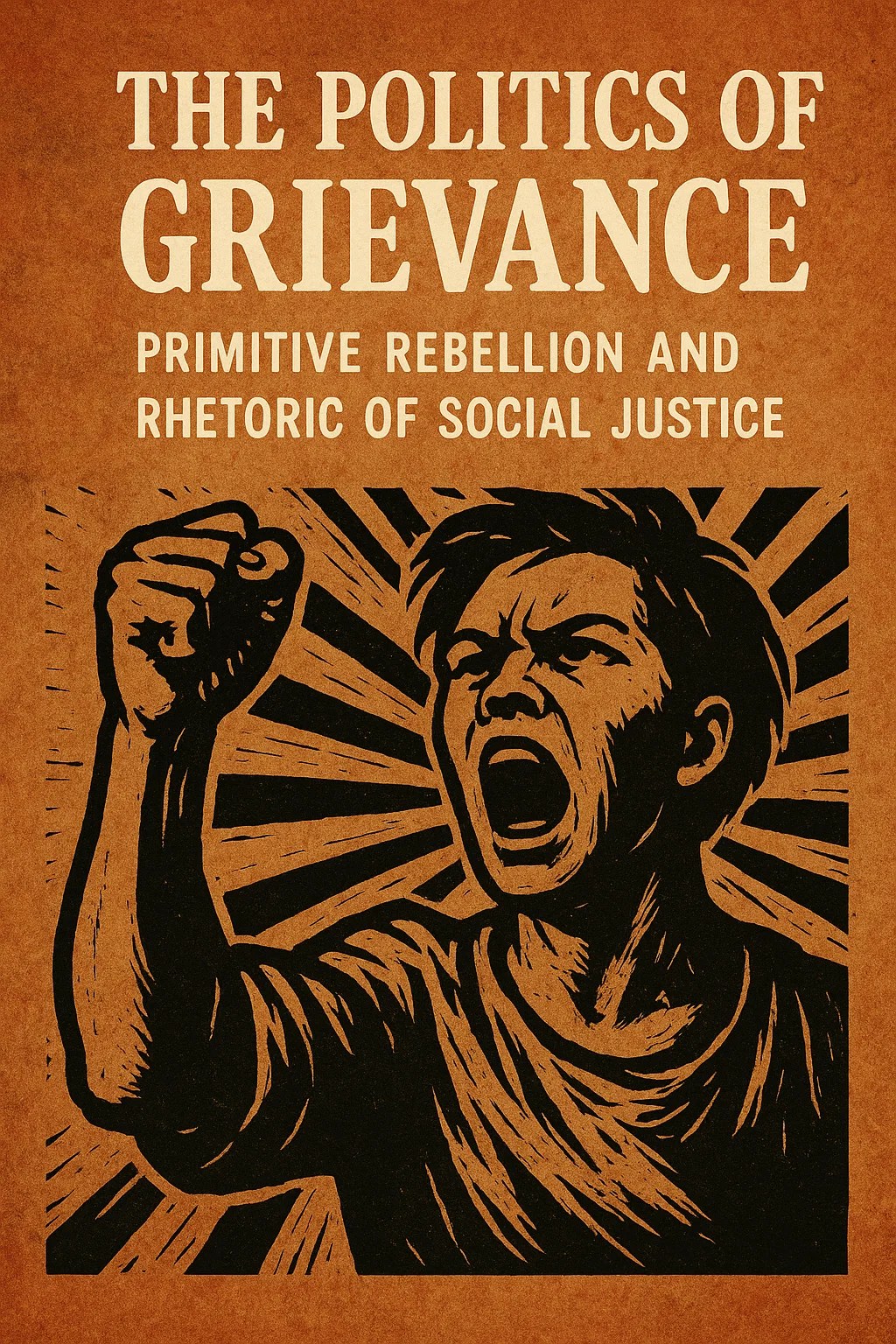
However, tragically, devotion to humanist and rational principle is not shared to the same extent across the populations. Alongside modern, enlightened principle exists the primitive and tribal impulse, and these often take the form of collective blame, group-based moral reasoning, identity-bound loyalties, and retaliatory justice, impulses that prioritize in-group grievance over universal rights and individual accountability. Except for national integrity, necessary for the enlightened rule of law in a world with barbarians, for here is neither primitive nor tribal, it is destructive tolerate the primitive and tribal impulse for collective and intergenerational punishment. These are antithetical to the modern, enlightenment principle of individualism, an antithesis that comes with great harm precisely because it negates individualism. When individualism is negated, the rule of law devolves into the rule of the jungle.
Given the continued existence of primitive and tribal impulse in modern Western societies, there is a significant psychological and social risk when individuals are persistently told that they’re the victims of systemic injustice—particularly when this message frames the success of others as having come at their expense. Such narratives, especially when cast in zero-sum terms, can foster not only entitlement and resentment, but also a sense of moral justification for antisocial behavior. If one’s gain is perceived as another’s loss, then acts of aggression, hostility, theft, or even violence may come to be seen not as crimes, but as a righteous form of restitution—a reclamation of what was unjustly taken.
This framing becomes particularly combustible when situated within broader narratives of class and, especially, racial struggle. When marginalized individuals are told that their suffering is the result of deliberate exploitation—whether by a wealthier, more powerful class, or by a racially dominant group (whether a majority or minority)—the appeal to reparatory or revolutionary justice can override traditional moral constraints. Violence, in this context, is no longer a last resort, but a morally sanctioned tactic: a justified uprising against perceived oppressors. After all, oppressors don’t answer for their deeds or make good on their debt (that’s backed into the character of oppression), so extralegal means are in order.
Such dynamics are reflected in what German philosophers Karl Marx and Friedrich Engels described as primitive rebellion—a spontaneous, often unstructured eruption of violent discontent from the oppressed, whether an individual or an affinity group (or a alliance thereof), marked less by ideology (although sometimes organized by it by those who find discontent strategically useful) than by visceral rage at perceived injustice. In this light, street-level crimes—assault, looting, vandalism—are recast not as lawless acts, but as direct-action reparations or legitimate acts of resistance.
This sense of moral vindication is intensified when the rhetoric of grievance is linked not only to class but to racial identity. History tells that racial identity is enough by itself, and experience tells us that it is the more potent grievance. What begins as a cry for justice risks mutating into a license for revenge, especially when collective historical trauma is invoked to justify individual or group aggression.
Here, Engels’ notion of demoralization becomes relevant: when prolonged injustice is coupled with the failure of reform or revolution, the working (or marginalized) class may become disillusioned with ethical and legal norms altogether, leading to a kind of moral cynicism. In such a state, crime is no longer taboo, but a rational—even honorable—reaction to what is perceived is a rigged social order.
In criminology, sociologists David Matza and Gresham Sykes developed the theory of techniques of neutralization, published in 1957 in the American Sociological Review, which sheds light on how individuals justify wrongdoing. These techniques are particularly relevant here. One is the denial of the victim, wherein the offender sees the target of their harm not as an innocent person, but as someone who “deserved it.”
In the context of class- or identity-based grievance, the victim is recast as the oppressor—an abstract stand-in for centuries of perceived exploitation or systemic privilege. The perpetrator then frames their actions not as transgression, but as justice. A victim is an innocent person who did not deserve what happened to him. If the person is not innocent, then he is not a victim, but a just target for retaliation over perceived harms. A white man, by virtue of being white, and thus a member of a group believed to be the cause of a black man’s misery, is not a victim. Indeed, he is an oppressor. And victims have a right to retaliate against their oppressors.
Another technique is the denial of injury: the claim that the harm caused is minimal or inconsequential. Stealing from the wealthy—or from members of an economically or racially dominant group—is seen as harmless because “they have enough,” or because they allegedly acquired their resources through unjust means. “They didn’t earn it—they took it from me. They owe me.”
This narrative is a hallmark of grievance politics, where collective resentment is weaponized to justify individual or group-level harm, it immorality neutralized via the frame of symbolic redress or reparation. This can take the form of the warehouse worker taking “wages-in-kind” by stealing laptops at a large retail computer store. Or it could be a flash mob smash and grab, in which a sudden, coordinated group action—typically organized via social media or messaging platform—forcibly breaks into a location and quickly grabbing valuables before fleeing. If any pangs of guilt crop up, the perpetrator can remind himself that the store has insurance that covers theft.
Closely related to these techniques is the denial of responsibility, where the actor absolves himself by citing external forces. Poverty, marginalization, historical injustice—these become explanations that excuse action rather than strictly contextualize wrongdoing. Personal agency is downplayed in favor of structural determinism: “I did what I had to do. They put me in this situation.”
This attitude resonates with the phrase “Society prepares the crime; the criminal commits it” an observation often attributed to Henry Thomas Buckle, a nineteenth century English historian. His pithy line succinctly captures a central idea in sociological criminology: that while individuals are responsible for their actions, broader social conditions—such as cultural narratives, inequality, marginalization, poverty—create the environment in which crime becomes more likely. There is something to this sociologically, buy the result is too often a posture of perpetual victimhood in which the lines between explanation and exoneration blur.
Additional techniques include appealing to higher loyalties—violating societal norms or laws in service of a perceived greater good, such as a collective identity, group cause, or ideology. Here, the offender does not see himself as breaking the law for selfish reasons, but as upholding a higher moral imperative that transcends ordinary rules. This can involve loyalty to a class-based movement, an ideological struggle, or a racial group, wherein acts of disruption, theft, or violence are reframed as sacrifices or duties in the service of justice.
In this framework, the law becomes an instrument of oppression, and breaking it becomes an act of liberation. The moral compass is no longer calibrated to universal principles, but to the perceived needs and grievances of one’s group. The outside becomes expendable.
This technique is frequently coupled with condemning the condemners, wherein authorities or critics are discredited as morally compromised or complicit in systemic injustice. The offender shifts focus from his own conduct to the alleged hypocrisy or illegitimacy of those who seek to hold him accountable. In politicized or racialized contexts, this can take the form of asserting moral immunity based on historical victimhood: “They can’t judge me—they’re part of the system that created this.” The result is a potent form of justification, where lawbreaking is seen not as a moral failing but as an act of resistance, and where personal responsibility is eclipsed by collective grievance.
In their article, Sykes and Matza focused on juvenile delinquency, which was a major concern in America at that time (should still be). But the argument’s frame can be applied in many ways to many things. When I teach this theory in criminology class, the obvious application that occurs to me is to the situation in Nazi Germany during WWII. There, entire populations were dehumanized and recast not as individuals, but as symbols of a threat to be neutralized—“denial of the victim” on a genocidal scale. The Nazis denied injury by claiming they were merely defending themselves and their nation from subversion and Jewish elites, who were accused of running German life. They denied responsibility by embedding individual participation in a system that was framed as inevitable or necessary.
The Nazis appealed to higher loyalties—to Volk, Führer, Fatherland—and condemned the condemners as corrupt, foreign, and weak. The horrors of that period were not carried out by monsters, but by ordinary people equipped with the same psychological tools we see in everyday delinquency—techniques of neutralization writ large. The lesson is not that all acts of deviance are equivalent, but that the moral frameworks used to justify them are alarmingly portable. When group grievance becomes moral license, and ideology replaces personal responsibility, the results can escalate from petty theft to historical atrocity.
What links these techniques is a psychological and rhetorical inversion: the oppressor is reimagined as the victim, and the victim as the oppressor. The result is a moral logic that enables and even demands retaliation—justice requires it. When identity politics intersects with this dynamic, particularly along lines of class and race, it organizes resentment as action. Individuals are no longer acting out of personal grievance alone, but as part of a larger historical reckoning. This makes the resulting behavior more dangerous, because it is perceived not merely as justified, but righteous. The perpetrator becomes virtuous, while his victim becomes deserving of whatever terrible thing is visited upon him. Street-level criminality, in this context, becomes imbued with reparatory or revolutionary meaning—primitive rebellion, and sometime highly coordinated group action, fueled by a collective sense of moral outrage.
Of course, the existence of real injustice cannot be denied. Historical and structural inequalities are facts that demand attention and reform. This is why we have legal systems to manage conflict and disputes. But how we speak about those injustices matters a lot. If we teach people that their suffering is irreparable, permanent, unjust, the direct fault of an identifiable other, we risk nurturing a worldview in which violence is seen not as tragic, but necessary. Without a constructive vision for change—one that affirms agency, mutual responsibility, reconciliation, as well as one that recognizes when responsibility and reconciliation have no relevance to the situation in question—the language of justice may become indistinguishable from the rhetoric of vengeance. In this case, social justice becomes unsanctioned restorative and retributive justice—which means they are not form of justice at all. Indeed, they constitute injustice.
The popular rhetoric surrounding critical race theory (CRT)—especially as it has filtered into mainstream discourse where it carries popular power—reinforces a binary worldview that divides society into two fixed and opposing camps—oppressors and victims—and feeds the antagonisms that risk crime, disorder, and violence. While some will argue that the academic origins of CRT are more nuanced (pealing back the overwrought jargon, it’s not really a nuanced standpoint), it nonetheless in its distilled public form essentializes identity categories and reduces complex social dynamics to a historical morality play, where guilt and innocence are predetermined by group membership. Individuals are not primarily evaluated by their actions, character, or intentions, but by their cultural or racial affiliation. The paradigm leaves little room for moral ambiguity or individual agency. One is either complicit in systemic oppression or a victim of it—there is no neutral ground.
Readers will recall that race grifter Ibram X. Kendi makes a central and often-quoted claim in his 2019 book How to Be an Antiracist that there is no such thing as being “not racist.” According to Kendi, a person is either racist or antiracist—there is no neutral or passive position. He writes, “The opposite of ‘racist’ isn’t ‘not racist.’ It is ‘antiracist.’” He argues that claiming to be “not racist” is a way to evade responsibility for confronting racism. In his view a racist is not merely somebody who expresses a racist idea, but who supports a racist policy through action or inaction. An antiracist is someone who opposes racist policies and ideas through deliberate action.
Kendi frames racism as not just about intent or prejudice, but about structures, policies, and power. Therefore, inaction or neutrality in the face of racial inequality is itself a form of racism, because it allows those inequalities to persist. Under Kendi’s framework, being “not racist” is an impossibility. He must actively work against racism—or else, by default, be complicit in it. Widespread acceptance of this idea explains why many white progressives did not merely fail to condemn the theft, vandalism, and violence perpetrated by blacks during the George Floyd Riots, which they saw as righteous, but rationalized it and, in some instances, celebrated it, even joining with their black allies to commit crimes themselves.
Such rhetorical framing is potent because it aligns with deeply rooted narratives of collective suffering and historical grievance. It repurposes legitimate critiques of racial inequality (explanations for which should be open and unflinching) into a form of moral absolutism. From this standpoint, there is only reason that explains racial disparities in American society: systemic racism, a reality from which whites benefit.
The danger here is that frame treats these categories as permanent and non-negotiable—and proceeds on the fallacy of reification. A white individual may be deemed an oppressor not based on any personal conduct, but purely due to alleged inherited benefit. Likewise, a person of color may be framed as a perpetual victim, regardless of actual circumstance or success. This erodes the possibility for solidarity across lines of class and identity, replacing it with a politics of categorical antagonism. This points the aggrieved weapon-like towards his perceived oppressor.
When CRT rhetoric intersects with the techniques of neutralization described earlier, it can serve to further justify antisocial or extralegal behavior. The denial of the victim becomes institutionalized: if certain groups are viewed as inherently oppressive, then the loos or suffering of individuals associated with that group is no longer morally significant. Similarly, the appeal to higher loyalties—to ancestral suffering, historical redress, or racial justice—can supersede traditional ethical norms. The individual no longer bears full responsibility for his actions, as he acts on behalf of a larger historical narrative. He is acting for the sake of justice. In this way, criminal or disruptive behavior becomes not only rationalized, but imbued with moral meaning and ethnical purpose.
This rhetoric also tends to obscure the class distinctions and internal diversity within both majority and minority groups. It flattens lived experience into ideological caricature. Poor whites, for instance, are often lumped into the oppressor category despite sharing many of the structural disadvantages associated with systemic marginalization. Wealthy elites of color, by contrast, may retain the status of “victim” by virtue of their racial identity, even if they hold substantial economic and cultural power—including over poor blacks. This inversion distorts the analysis of actual material conditions and redirects anger away from systems and structures and toward individuals or groups based solely on perceived identity.
In effect, this rhetorical framework becomes a secular form of original sin, where redemption is not achieved through personal growth, reform, or solidarity, but through permanent self-abasement. The moral logic here is not restorative (even if we agreed that such a thing were possible collectively or intergenerationally) but punitive, not reconciliatory but accusatory. As such, it encourages an emotional posture of entitlement, grievance, and suspicion, rather than constructive engagement or shared responsibility.
What this produces is a fertile ideological environment for primitive rebellion, as Marx and Engels described: unfocused, often chaotic eruptions of violence and disorder, rooted in a deep but often inarticulate sense of injustice. In a society where certain rhetoric frames material deprivation and personal frustration as the fault of a monolithic, racialized other, the moral inhibitions against acting out that frustration are weakened. Demoralization—the erosion of ethical norms under the weight of prolonged disillusionment—is accelerated when dominant cultural narratives themselves provide moral cover for transgression. When extralegal action is seen as morally courageous, and restraint as complicity, the path from grievance to violence becomes not only intelligible, but attractive.
Does this view have its roots in Marxism? The rhetoric of class antagonisms does. At the same time, class is not the same as race, since class is one’s objective position with respect to the means of production. Capitalism is an exploitative system.
What about CRT? Is this Marxist? CRT emerged in the 1970s and 1980s as a response to the perceived limitations of traditional civil rights discourse. It was also shaped by critical legal studies (CLS) and its perceived limitations. CLS, which developed in the 1970s out of legal realism (I will leave you to study that tradition to avoid another digression), was deeply skeptical of the idea that law is a neutral or objective system, contending that legal doctrines often serve to reinforce existing power structures, especially those rooted in capitalism.
CRT scholars took up this critique but felt that CLS was insufficiently attentive to the specific role of race in legal outcomes. As a result, CRT adopted many of CLS’s methods—such as deconstructing legal texts and exposing hidden power dynamics—but reoriented them around racial rather than purely class-based or economic hierarchies. So, however CLS was derived from Marxism, CRT moved beyond understanding law as rooted in the class struggle to portray race relations in a similar vein.
CRT scholars like Derrick Bell, Kimberlé Crenshaw, and Richard Delgado were heavily influenced by the CLS emphasis on law as a tool of power, but critiqued CLS for being disconnected from lived experience, particularly the experiences of people of color. Where CLS tended to universalize oppression under bourgeoise legal structures, CRT insisted on the particularity of racial injustice and the ways in which it operates independently from, though often in conjunction with, class-based exploitation.
CRT introduced concepts like “intersectionality” and “interest convergence,” which were aimed at showing how racism persists even when formal legal equality is achieved, and how racial justice is often only advanced when it aligns with the interests of dominant groups. This is a crucial point, since the argument is that, even when race is no longer a factor in the administration of justice, the administration of justice perpetuates racial inequality. This is the reason why CRT rejects the doctrine of colorblindness. CRT advocates insist on seeing race everywhere.
Marxism, especially in its critical and cultural forms, plays an indirect though, some would say, foundational role in shaping CRT. Much like Marxist thought, CRT views society through the lens of conflict and domination, rather than consensus or gradual progress. CRT shares with Marxism the belief that the legal and political order is not neutral but structured to maintain existing power relations.
However, CRT critiques classical Marxism for what it sees as its economic reductionism—that is, its tendency to treat race as epiphenomenal or secondary to class (Marx understood race as a strategy for disorganizing the proletariat, and thus a feature of the superstructure). In this way, CRT represents a substantial theoretical divergence from orthodox Marxism: it centers race as the fundamental axis of power, not merely a derivative of class struggle. Nevertheless, CRT’s emphasis on structural inequality, ideological hegemony, and systemic critique reflects the imprint of Marxist analysis.
By centering race as the primary axis of oppression rather than class, critical race theory fundamentally reorients the political struggle away from the unifying potential of class solidarity. In classical Marxist analysis, the working class—regardless of race—is the universal subject of history, united by its exploitation under capitalism. But in CRT, white workers are cast not as fellow victims of economic exploitation, but as beneficiaries of “white privilege” and complicit in maintaining racial hierarchies.
This framing fractures the cross-racial unity that Marxism sees as essential for revolutionary change. By portraying white laborers as oppressors rather than comrades, CRT divides the proletariat along racial lines, undermining the very solidarity needed to confront capital. As a result, the goal shifts from dismantling class domination to confronting racial power structures—a project with different ends, enemies, and methods. Rather than seeking to unite the working class against capitalist elites, CRT can function to polarize it internally, redirecting antagonism horizontally rather than vertically. This is very useful to corporate power. This is an antagonism they can wield as a weapon against the working class.
This divergence from classical Marxism is therefore not accidental. Critical race theory emerged not from labor movements or working-class activism, but from within elite academic and legal institutions—authored and advanced primarily by members of the professional-managerial class. Its architects are not coal miners or factory workers but civil rights attorneys, diversity consultants, and tenured professors: individuals embedded in the technocratic elite. Their goal is not to dismantle capitalism, but to ascend within it—to critique systems of power in ways that position themselves as indispensable interpreters and overseers of justice.
In this way, CRT serves as a tool of upward mobility for a segment of the credentialed class, allowing them to secure roles in corporate bureaucracies, foundations, media, and universities by promoting racial consciousness over class solidarity. The material interests of this class are not aligned with the working poor—black or white—but with maintaining and managing institutional frameworks that reward credentialism, ideological orthodoxy, performative equity initiatives. Rather than calling for the abolition of capitalist structures, CRT often functions to diversify their management.
Having explained the deeper logic and source of the antiracist line (I appreciate your patience), I can now return to the problem of interracial crime and violence. Beginning around 2010, the core concepts of CRT—previously confined to academic circles and legal scholarship—began to be popularized by corporate diversity initiatives, elite educational institutions, and major media outlets. Terms such as “systemic racism,” “white privilege,” and “white supremacy” entered the public lexicon, not just as descriptors of extremist behavior or overt prejudice, but as frameworks for understanding everyday life and social structure. (see Gender and the English Language. The first part of the essay concerns gender, as one can see by the title, but the second part pulls in the way corporate state media manufactured the myth of enduring racism in American.)
According to this rhetoric, racial disparities in education, health, incarceration, and wealth are not simply the result of historical discrimination or socioeconomic complexity, but of an ongoing, invisible system that privileges whites as a group and disadvantages blacks and other minorities (emphasis on “invisible”). Under this framework, all white individuals—regardless of background economic status, and intent—are presumed to benefit from unearned racial advantages, and are therefore implicated in the perpetuation of inequality.
This worldview provides the moral and philosophical foundation for contemporary calls for reparations. If systemic injustice is embedded in the very structure of society—and if whites continue to benefit from this structure—then restitution is framed not only as appropriate, but as necessary. Reparations, in this context, are not limited to government payments or policy changes, but are often envisioned in more expansive terms: educational preference, wealth redistribution, and in some cases, the acceptance of social blame and moral guilt. Such a model does not invite dialogue or reconciliation so much as it demands submission to a retributive moral logic: the present must continually atone for the sins of the past. This regime asserts itself as commissar, judge, and jury, and those who counterpose to it the long-standing model of modern enlightened justice, are accused of asserting the hegemony of white supremacy.
This intensifying racial consciousness is closely linked to the growth of the Black Lives Matter movement (BLM), which gained national prominence after a series of police shootings in the 2010s and reached a fever pitch in 2020 following the death of George Floyd. While BLM began as a protest movement aimed at highlighting perceived racial injustice in policing, it quickly evolved into a broader cultural and ideological force. Its slogans, symbols, and talking points echoed and amplified the assumptions of CRT: that American institutions are irredeemably racist, that disparities equal discrimination, and that revolutionary action—not reform—is the only path to justice. The Democratic Party, the corporate media, and the culture industry all affirmed the BLM standpoint. This gave the movement cover to pursue CRT to its logical conclusion. The result was billions of dollars in damaged buildings and stolen merchandise, as well as the intimidation and perpetration of violence against white people.
The protests that erupted in the summer of 2020 were not merely spontaneous expressions of grief or outrage; they were manifestations of a deeper ideological shift. For many participants, especially those shaped by years of CRT-inflected rhetoric, the unrest represented not just protest, but restitution—even retribution. In cities across the United States, peaceful demonstrations gave way to arson, looting, and targeted attacks on symbols of perceived white or capitalist power. These acts were often rationalized—not just by fringe voices, but by some mainstream commentators—as understandable, even justifiable, expressions of historical pain. The line between political dissent and what Marx and Engels once termed primitive rebellion became increasingly blurred: acts of destruction were no longer condemned as criminal but reimagined as morally charged responses to systemic oppression.
For the record, Marx and Engels condemned this, accurately observing that primitive rebellion was counterproductive. “The ‘dangerous class,’ [lumpenproletariat] the social scum, that passively rotting mass thrown off by the lowest layers of the old society, may, here and there, be swept into the movement by a proletarian revolution; its conditions of life, however, prepare it far more for the part of a bribed tool of reactionary intrigue.” Indeed.
BLM was an organized uprising. But street-level reparations of an individual character occur on a continual basis in America. Street-level interracial crime, particularly when committed by those cast as historical victims against those designated as historical oppressors, illustrates the dangerous inversion of moral accountability produced by grievance ideology. While overall crime in the United States is largely intraracial, violent interracial crime—especially black-on-white incidents—occurs at disproportionately high rates relative to population sizes, a fact that is often suppressed or distorted in mainstream discourse.
When it is acknowledged, it is frequently reframed through the lens of structural injustice, implicitly or explicitly rationalizing it as the understandable backlash of an aggrieved group. In such cases, acts of assault, robbery, or even murder are not merely crimes of opportunity or pathology, but are imbued with symbolic meaning—as payback for microaggressions, redlining, segregation, slavery. The perpetrator is no longer a criminal but a vessel of historical reckoning; the victim, stripped of individuality and moral standing, is recast as a deserving stand-in for ancestral guilt.
This dynamic sets justice on its head: instead of evaluating acts based on individual agency and harm, the system (and those who manipulate it) treats some perpetrators as victims of history and some victims as embodiments of systemic guilt. This not only destabilizes public safety but corrodes the moral foundation of a liberal legal order, which requires impartiality, equal treatment, and individual culpability.
The politicization of justice through the rhetoric of grievance has profound and corrosive implications for the moral and legal fabric of society. When justice is no longer tethered to individual responsibility but instead subordinated to collective blame and historical redress, it ceases to be justice in any meaningful sense. The ideological frameworks that justify disorder, theft, and violence in the name of reparation or resistance are not paths to equity; they are vehicles for revenge, often perpetrated against individuals who have committed no wrong.
By dissolving the distinction between explanation and justification, and between victimhood and vengeance, these narratives transform lawbreaking into moral action, and moral principle into tribal score-settling. It becomes blood feud. Enlightenment values— individual agency, reason, universal rights—must remain the foundation of a just society, or else we risk regressing into a world where justice is no longer blind, but guided by grievance, identity, and ideological zealotry. The modern legal system was built to transcend such tribal logic. We dismantle it at our peril.

 freedom and reason