
I’m not saying that Andrew Doyle reads my blog (clearly people do as evidenced by the thousands of annual visitors). But the wave length here is for the most part parallel and at times almost identical to arguments I have made on Freedom and Reason.
I am not nearly as well-spoken as Doyle—or the hosts of Triggernometry. I envy those who with the ability to convey ideas through speech. So if you are interested in an enlightened discussion of liberalism, and you find my essays overlong and tedious (I readily admit that they are), then this video is for you. You will understand me better if you listen to Doyle. I’m a liberal, and what Doyle argues here captures the spirit of liberalism.
I do want to qualify one of his arguments. Perhaps liberalism does not deny human instincts for retribution and vengeance. Perhaps it does not carry the utopian assumption that human nature is essentially good—that bad behavior is learned not innate. I think there is evidence that there is an animality to man (we are, after all, a primate species) and that it comes with authoritarian potential.
At the same time, both good and bad is learned. Doyle leans a bit too much on the Hobbesian premise. If we are essentially good, we are corruptible, as experience testifies to. What liberalism does assert is that, alongside emotion, as a product of natural history, there is in the human brain rational cognitive machinery that makes reason possible—and desirable. This is the Lockean premise.
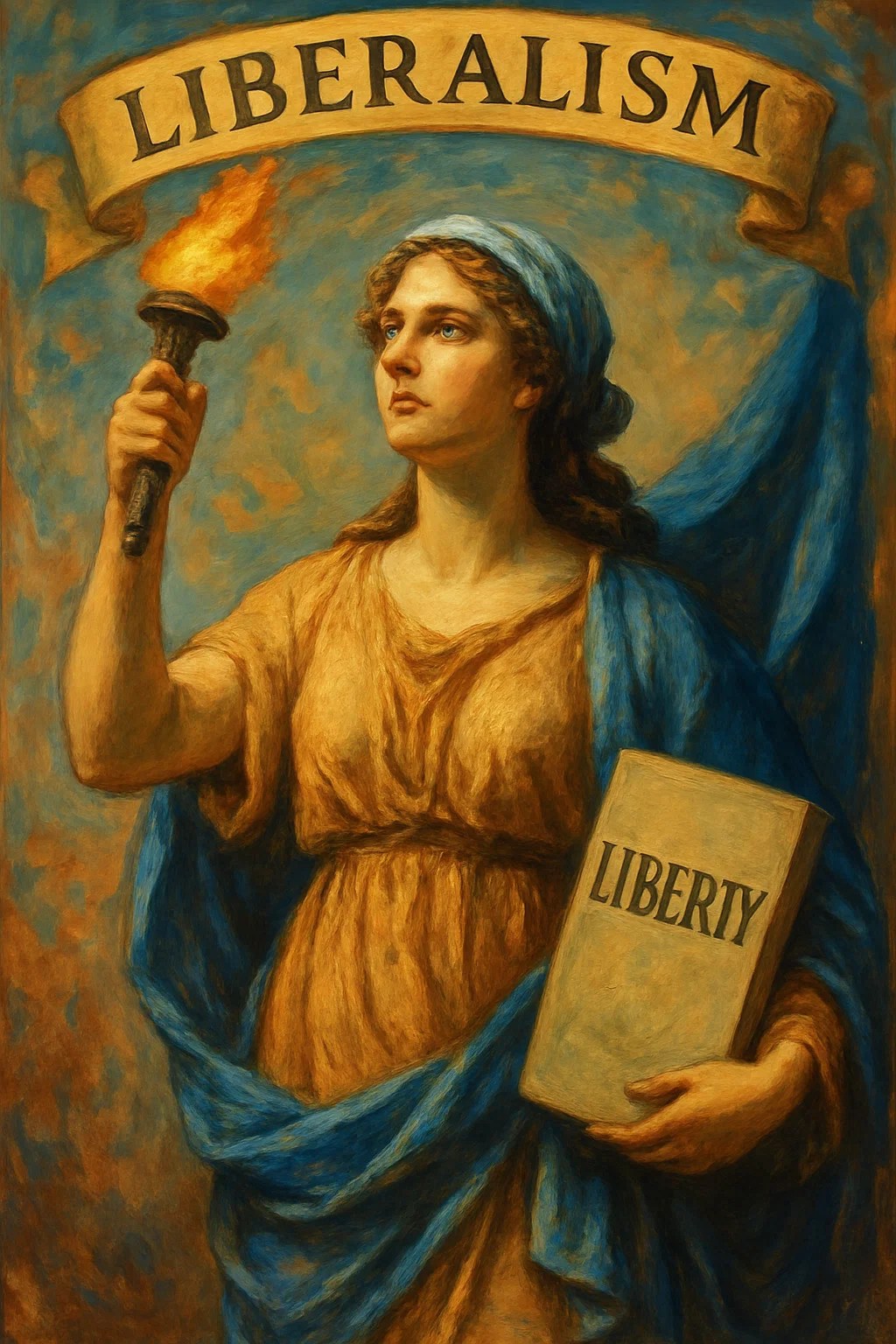
Liberals struggle for is the right of individuals to think, speak, and write as they will, to freely associate with others, not only as a natural right, but as a humane and pragmatic approach to conflict resolution and problem solving. As much as authoritarianism observably exists in history—and even in the present—so does libertarianism.
I would not, therefore, argue as Doyle does that authoritarianism is the default position, although I do recognize that it has been the way of the world for much of human existence—and it threatens us presently. Moreover, it is not just with the Enlightenment that the authoritarian tendency is marginalized. There are examples of enlightened thinking in premodern spaces and times. However, it is with the Enlightenment that authoritarianism is recognized as universally problematic and that a worldview established on the basis of reason and tolerance affords humanity with the best way forward.
This thought is based on facts in evidence, which is why Abraham Maslow’s hierarchy of needs is so powerful: the needs it posits are determinable by science. I don’t deny that there is a human nature, but rather argue that human nature is not authoritarian by default. I also believe that human nature arguments risk mystification. Science is the counter to that problem.
One other thing. I agree wholeheartedly with Konstantin Kisin that a distinction should be made between citizens and noncitizens. If no such distinction is made, then republican government is impossible. Republicanism is the best system so far devised to sustain liberalism—to resist authoritarianism.
The rule of law that defends the principles of free and open society necessarily depends on the existence of nation-states in a world where cultures exist that do not accept individualism and liberal principles. A republic cannot long survive the incorporation of populations whose worldview is antithetical to Western Enlightenment values.
If the authoritarian is a citizen, then the republic is stuck with them. The best citizens can do is criticize the authoritarian tendency and persuade the authoritarians and others to join the liberal side. But if they are not citizens, then they can be expelled. And they should be. If they don’t want to live in a free society, then why are they here? These aren’t immigrants. They’re colonizers, and what they seek is to establish their tyranny here.
As Christopher Hitchens noted several years ago, the city only falls when the barbarians are inside the gates, and the least we can expect from patriots is that they will not invite them in, will vigorously defend the gates, and if the barbarians are inside, send them back outside.
Without borders, the gates we draw around our territories, there is no way to keep out the barbarians or expel them when get in. This is why transnationalism is an existential threat to freedom. The modern nation-state and its rules of exclusion, does not therefore contradict liberalism, but is essential for its continued existence.
Just as your family’s safety depends on walls and doors that lock and the right to self-defense should strangers break in, so should the republic lock its door to strangers. We cannot always know for sure will harm us, but we have good cause to believe that at least some will. It is better not to fuck around and find out.

 freedom and reason