
Why aren’t we talking about Alejandro Mayorkas? Serving in senior positions under both President Barack Obama and President Joe Biden, Mayorkas played a pivotal role in shaping US immigration policy in the twenty-first century—and not for the better. His approach to immigration has been praised by progressives. But in the populist world, Mayorkas is a villain, an immigrant who played a major role in advancing the managed decline of the American Republic and diminishing the quality of life of its citizens. For his efforts to deconstruct the national community, Mayorkas was impeached in 2024, making him the first cabinet secretary to be impeached in nearly 150 years. The Democrat-controlled Senate dismissed his impeachment to avoid a trial that risked shining a spotlight on Mayorkas’ anti-American agenda.
In this essay, I detail the role Mayorkas played in the project of managed decline, highlight the position of leading Democrat figures on the question of immigration, i.e., the open articulation of a desire for demographic replacement and the reordering of national life, and the populist response to what is plainly a globalist agenda.
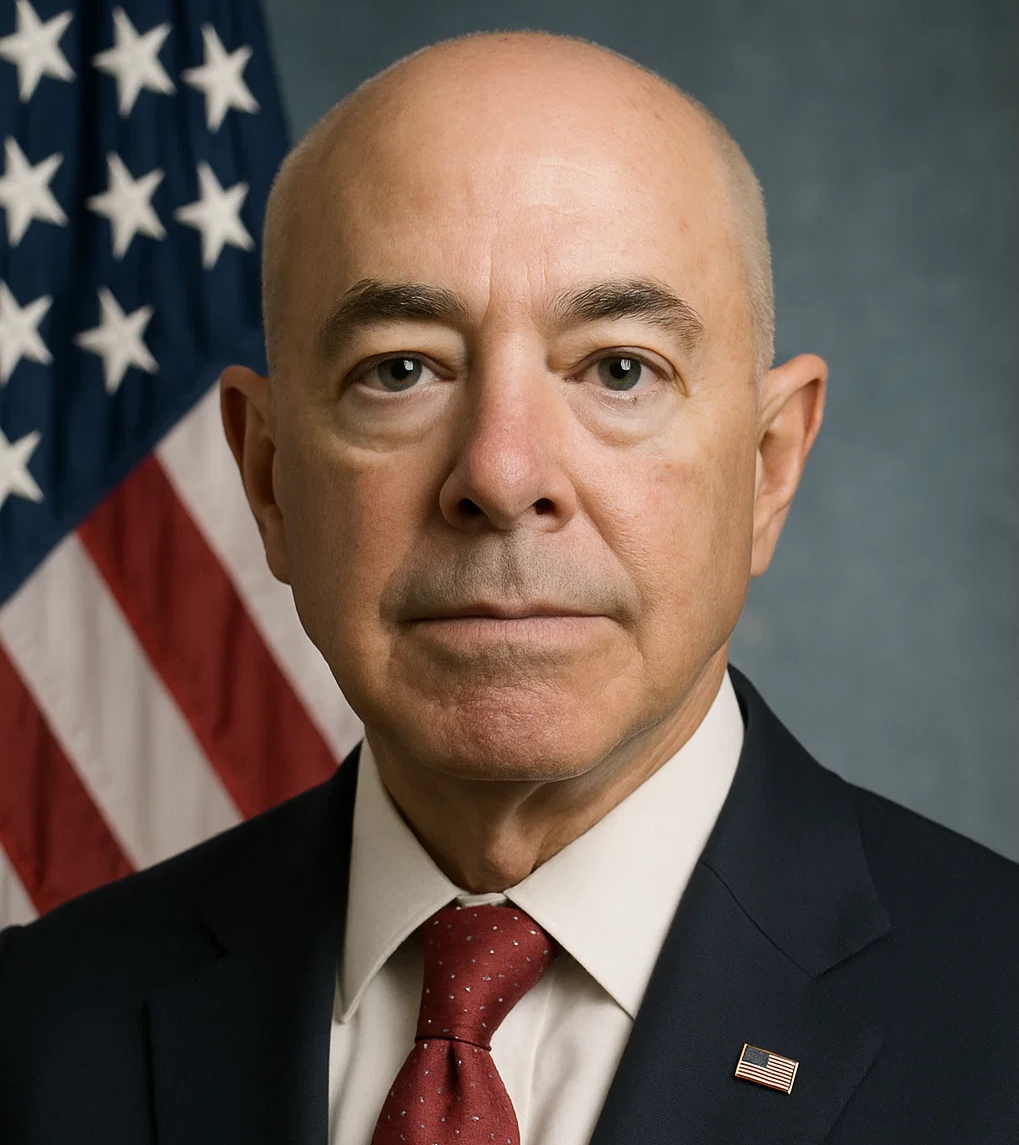
Under President Obama, Mayorkas served first as Director of US Citizenship and Immigration Services (USCIS). In that role, which he held from 2009 to 2013, he was instrumental in the development and implementation of Deferred Action for Childhood Arrivals (DACA), a program announced in 2012 that allowed undocumented immigrants who were brought to the United States as children to remain and work legally. Bypassing Congress through executive action, DACA became a cornerstone of the Obama administration’s immigration policy. Mayorkas is credited with managing the program’s rapid rollout and implementation.
In 2013, Mayorkas was promoted to Deputy Secretary of the Department of Homeland Security (DHS), where he served until 2016. During this period, he supported the expansion of executive actions on immigration, including an attempted expansion of DACA and a new program, Deferred Action for Parents of Americans (DAPA). DAPA was ultimately blocked by the courts (as I have argued in recent essays, I don’t think courts should be involved in this, but the outcome was a good one). Mayorkas also helped coordinate enforcement priorities to focus on criminals and recent border crossers, rather than broader interior enforcement—a stance that foreshadowed the Biden administration’s policies.
Biden nominated Mayorkas to serve as Secretary of Homeland Security (DHS) in December 2020, making him the first immigrant to hold the position. Mayorkas had served on the board of HIAS (the Hebrew Immigrant Aid Society), an organization (on of many faith-based NGOs) focused on refugee protection and resettlement, resigning from the board upon his nomination. His tenure at DHS saw record levels of illegal immigration at the southern border, straining immigration courts, which were overwhelmed by the sheer numbers of aliens coming before their benches.
His admirers tell us that Mayorkas tried to walk a tightrope between enforcing border laws and fulfilling the administration’s promises of what he and the President characterized as a more humane immigration system. But the premise is false. Mayorkas ended several Trump-era policies, including the Remain in Mexico program, and attempted to replace them with new asylum regulations that emphasized “fairness” and speed—that is, importing as many foreigners to America as possible. He rolled out humanitarian parole programs for nationals from countries like Cuba, Haiti, and Venezuela. He engineered the end of Title 42, a public health policy that allowed for swift expulsions at the border.
Republicans accused Mayorkas of failing to maintain operational control of the border, correctly observing that his policies encouraged illegal crossings and endangered national security. In 2024, the Republican-controlled House voted to impeach Mayorkas on charges of “willful and systemic refusal to comply with the law” and breach of public trust. The articles of impeachment cited his handling of border security, use of prosecutorial discretion, and misrepresentations to Congress. This marked the first impeachment of a cabinet official since 1876.
However, the Democratic-controlled Senate dismissed the charges without proceeding to a full trial, citing the absence of constitutional grounds. One suspects that what was really at issue was the problem of discovery. A Senate trial would have requiring bring evidence otherwise bear, and Democrats did not want Americans to learn about Biden’s plan for a transformed America. Democrats argued that the impeachment was a misuse of the impeachment process to target policy disagreements rather than actual misconduct—this in the face of Mayorkas throwing open the southern border of the United States to millions of foreigners, many of whom were gang members and hardened criminals. It was a smokescreen. The corporate state media dutifully stuffed the case down the memory hole.
Mayorkas isn’t a maverick on this issue. In recent years, several high-profile Democratic leaders, including Biden, Senator Chuck Schumer, and failed presidential candidate Hillary Clinton, have increasingly framed immigration not only as a humanitarian and moral imperative but also as a strategic necessity for America’s long-term demographic and economic health. Their arguments explicitly link immigration to an aging population, declining birth rates, and labor shortages. Rather than embracing traditional natalist policies, which encourage higher native birth rates, Democrats articulate a philosophy that positions immigration as the key to what they characterize as demographic renewal and national vitality. Nothing could be further from the truth.
Mayorkas often emphasized the idea that the US immigration system should be seen as a source of strength, not disorder. In various speeches and interviews, he argued that immigrants bring cultural dynamism, energy, and innovation to the nation—attributes he sees as essential to sustaining America’s global leadership. He also highlighted the economic dimension, noting that immigrants fill critical labor gaps and contribute to industries suffering from workforce shortages, especially in agriculture, healthcare, and technology. What he didn’t highlight is the fact that labor shortages can be met by native Americans who are idled by urban social policy and drive up wages for those with strong attachment to the labor market.
Mayorkas’ rhetoric is based on the ideological assertion that the United States is at its core a “nation of immigrants,” and that embracing this identity is not only a moral stance but also a pragmatic one. As I have documented on this platform, this ideology roots in the cultural pluralist and transnationalist arguments of urban-based cosmopolitan intellectuals dating from the early twentieth century and the industrial class they served. Their arguments have played a key role in undermining the dynamic of assimilation and integration necessary for national integrity. As I have argued before, and soon will again, the notion of America is a “nation of immigrants“ is nonsensical, since the vast majority of Americans are native to the country.
Senator Chuck Schumer articulated the replacement plan explicitly in 2022, calling on Congress to “welcome immigrants” in order to “replenish our population” and counteract declining birth rates. Acknowledging the anxieties around border security, Schumer argued that America must nonetheless find a way to balance enforcement with generosity. In Schumer’s view, immigration reform is not just about fixing a broken system; it’s about securing the country’s economic future in a time of demographic contraction. This mirrors a broader shift in the Democratic establishment, where immigration is increasingly defended as an engine for population sustainability and long-term growth.
Hillary Clinton recently took this argument a step further by openly criticizing the growing natalist movement in populist circles, which calls for government support to encourage higher native birth rates. In a widely discussed speech, Clinton rejected the notion that America’s demographic crisis can—or should—be solved through such policies. She emphasized that immigration provides a more immediate, pluralistic, and realistic solution to population decline. Clinton warned that natalism, particularly when wrapped in ethno-nationalist rhetoric (her characterization), risks veering into exclusionary or reactionary politics. In contrast, she portrayed immigration as a pathway to diversity and openness, which strengthens America’s relevance on the world stage.
Clinton’s argument is bound up with the history of eugenics, a progressive program she attempts to attribute to such populist figures as Vice-President JD Vance and entrepreneur Elon Musk. In so many words, she is claiming that natalists are attempting to stem the decline in the white population by promoting child birth. But is this not plainly the goal of replacing Americans with black and brown immigrants? Moreover, it’s not only whites who are too numerous for this crowd. Democrats have ghettoized blacks, segregated them from the more affluent, idled them (replacing their labor with immigrants), made them dependent on government, and disorganized their families, especially by removing fathers from the home. And while black women still have higher fertility rates than white women, the rates are declining for blacks, as well. What Democrats don’t want to see is rising fertility rates and especially a return to the nuclear family and empowered communities among working class native Americans, black and white. The reality is that it’s the Democrats who are the eugenicists—and they’ve updated the strategy for the age of globalism and identity politics.
The birth control movement in the United States has long intersected with eugenic thinking, explicitly so in its early twentieth-century phases. Margaret Sanger, a leading figure in this movement and founder of the organization that would become Planned Parenthood, advocated for contraception not only as a means of empowering women but also as a tool for improving what she called “social health.” She embraced eugenics believing that limiting the reproduction of those deemed “unfit” would benefit society. Sanger’s involvement with the Negro Project in the 1930s has drawn criticism for reflecting a racially paternalistic approach, although it involved collaboration with black leaders who supported birth control access as a form of racial uplift.
While some have emphasized her efforts targeting black Americans, Sanger and other eugenicists were focused more broadly on reducing fertility among poor and working-class populations across racial lines. Eugenics dovetailed with broader anxieties about degeneracy, poverty, and social order. While many industrialists supported mass immigration for its economic benefits—particularly cheap labor—eugenicists were often opposed to immigration, fearing that it would dilute the genetic stock of the nation.
A convergence of interests played out in the 1924 Immigration Act that restricted immigration from southern and eastern Europe and prepared the way for America’s golden years. Unlike progressives who embraced technocratic solutions to social problems, the populist push for immigration restriction was driven by concerns about wages, national identity, and social cohesion. However, these combined forces pushed immigration restrictions across the line. Today, progressives have reconciled mass immigration and eugenics through a strategy that pushes down fertility rates for native Americans and replaces them with foreign workers.
It must be remembered that progressivism from its inception has been characterized by expertise, scientism (a religious-like faith in science), and social reform to improve society, i.e., to advance the technocratic project. Many progressives embraced ideas about “scientific” approaches to social problems, including education, poverty, and public health. Eugenics fit into this framework as a form of “social improvement” through controlling reproduction. Margaret Sanger identified with many progressive ideals—especially public health, social reform, and women’s rights. She believed birth control could help reduce poverty and improve social conditions. Like many progressives, she was influenced by eugenic thinking, which was widely accepted in reform circles as a legitimate science at the time. At the same time, corporations depend on cheap labor to maximize surplus value, and that means disorganizing labor to prevent an empowered working class that would agitate for higher wages.
Corporate opposition to democratic accountability fiercely targeted populism, while progressivism was seen as a more palatable, even useful, reform movement from the perspective of big business. Progressivism’s focus on expert regulation and social order meshed with corporate interests in managing capitalism’s challenges and staving off revolutionary change. Populism, which arose in the late twentieth century from the struggles of small farmers, laborers, and small business owners, was explicitly hostile to the concentration of corporate power. Populists saw large corporations—particularly railroads, banks, and monopolies—as exploitative forces that threatened the livelihoods and autonomy of ordinary people. Their political agenda called for radical reforms such as breaking up monopolies, empowering labor unions, and implementing direct democratic controls like initiatives and referendums. These demands directly challenged the power structures and profit models of big business, prompting fierce corporate resistance.
In contrast, progressivism emerged in the early twentieth century among a different social base—urban middle-class professionals, reform-minded politicians, and organic intellectuals serving big government and corporate interest—who believed that social problems could be addressed through expert governance, regulation, and scientific management. Progressives generally sought to manage corporate power rather than limit it, indeed even entrench bureaucratic logic. Many in the corporate world found this technocratic approach compatible with their interests, as it aimed to contain social unrest and create a more predictable business environment without threatening the fundamental structures of industrial capitalism. This meant that while progressives pushed reforms, they worked within the existing capitalist order, sometimes even partnering with corporate leaders to implement changes that could strengthen the system overall.
Thus, progressivism represented a reform movement that sought to humanize and stabilize capitalism through expertise and regulation, whereas populism posed a more direct, grassroots challenge to corporate power and economic inequality. This is how you can see a split among progressives, such as those who supported immigration restrictions and those, such as Horace Kallen, who opposed them. When it came to immigration restrictions, the progressives were split. Populist opposition to mass immigration was much more strident and unified. Progressives have been unified in a strategy that marginalized the native-born working class via globalization, off-shoring good-paying value added jobs white replacing native workers with immigrant labor. Ghettoization of blacks, the destruction of labor unions, and open borders were accomplished during the Great Society, when progressive Democrats were the hegemonic power in the Imperial Capitol.
President Biden, who continues the progressive tradition, consistently echoes the themes of his comrades Mayorkas, Schumer, and Clinton. Running for the Democratic Party nomination to run against President Trump, Biden called for immigrants to surge to the border. His administration’s rhetoric emphasized “a secure and humane immigration system” that supports America’s economic needs. In speeches and policy rollouts, Biden has spoken about immigrants as essential contributors to the nation’s cultural fabric and workforce development. His administration promoted pathways for legal immigration and temporary labor programs—often citing demographic trends as justification.
Together, these leaders express a coherent philosophy, one already obvious in their policies and actions: that immigration is not just about compassion or inclusion (not for the sake of these things per se, of course)—it is integral to the survival and renewal of the American project in an era of shrinking birth rates and global competition, challenges progressives engineered and desire. Where others see immigration as a threat to national identity or stability, they argue it is the very means by which the United States can adapt, lead, and thrive lead in the twentieth century.
Indeed, others do see immigration as a threat. And they’re right. From a populist and nationalist standpoint, the progressive vision of immigration as a “solution” to demographic and economic decline is not a humanitarian necessity but a continuation of a globalist agenda that undermines the foundations of democratic self-determination, national cohesion, and working-class security. Mass immigration is not a neutral policy lever—it’s a force that reshapes the cultural and economic landscape of the country in ways that serve elite interests while marginalizing ordinary citizens.
Large-scale immigration, especially when rapid and poorly integrated, erodes the shared culture, language, norms, and values that bind a nation together. While the US has a long history of immigration (America is hardly alone in this), the sheer scale and pace of modern migration, coupled with an emphasis on multiculturalism rather than assimilation, is fragmenting national identity. Instead of a melting pot, mass immigration produces parallel societies within nations, ethnic enclaves and racial ghettos, culturally disorganizing the nation and undermining social trust, particularly in working-class communities where the changes wrought by mass immigration are most visible and most acutely felt.
Mass immigration functions as a downward pressure on wages and job security, especially for native-born workers without college degrees, impacting native black and brown families the most. Immigration is not an economic lifeline but a labor-market manipulation tool that benefits corporations by increasing the supply of cheap labor and weakening workers’ bargaining power. That’s what Democrats mean by global competition: pitting workers around the world in competition. That’s free trade. Wages remain stagnant because employers can tap into a constant stream of new, more vulnerable workers. There’s no compassion among Democrats here. If they were compassionate, they would think first of the American worker. Instead, in the words of Hillary Clinton, the American worker belongs in a basket of deplorables.
The populist argument dovetails with a broader critique of globalization, the coordinated project by economic and political to detach capital and labor from national obligations. Just as globalization offshores factories and hollows out industrial towns, immigration is a strategy of on-shoring labor surplus—importing low-wage workers who compete with the domestic labor force and strain public services. In both cases, the working class is asked to bear the costs of elite-driven policies, while being told these changes are inevitable, necessary, or virtuous. When American object, they are smeared as nativists, racists, and xenophobes.
The populist position emphasizes democracy accountability and national sovereignty. Mass immigration levels and policies have been imposed from above, without meaningful consent from the electorate. The political class—especially in major cities and global institutions—has become detached, or more precisely protected in the gated communities, from the real-world consequences of immigration in local communities. All this fuels resentment and distrust, not just toward the policies themselves but toward the broader system that implements them.
From this perspective, the progressive call to solve population decline with immigrants rather than by rebuilding domestic family formation is seen as a rejection of national continuity. Rather than invest in policies that help Americans start families—affordable housing, better wages, stable jobs—the corporate state prefers a demographic replacement strategy. Replacement is dismissed as a racist conspiracy theory, but, as we plainly see, replacement of the native population with foreign labor in America (and across Europe) is the explicit goal. Democrats are emboldened to say the quiet part out loud. And they paid dearly for it in 2024.
In a recent essay I asked: what meaning does citizenship, culture, or national identity really have? The same rhetorical question can be asked here. If a nation’s population can simply be swapped out to serve GDP growth, what is the meaning of citizenship, culture, or national identity? At its core, the populist-nationalist critique of immigration is not driven by hostility to outsiders but by a sense that the American working class is being systematically displaced and ignored—culturally, economically, and politically—in service of a vision that prioritizes diversity, markets, and transnational flows over cultural rootedness, national survival, popular sovereignty.
In this light, allowing Alejandro Mayorkas to quietly leaves his role as one of the major players in weakening America’s national community is part of the project to dissimulate the managed decline of the American Republic. Mayorkas was not among the several preemptively pardoned by President Biden as he left office. He’s fair game. Where are congressional Republicans on this? It is not enough that President Trump has reduced illegal border crossings to a trickle. It is not enough—if federal courts will allow it—that he deports many of the millions Mayorkas allowed to walk into our country. Those who betrayed America must be held accountable for their treason. Biden doesn’t have long to live. But Mayorkas looked healthy enough to me when he left office. Where is he now? Republicans need to establish his whereabouts and call him before the nation to answer for his deeds.

 freedom and reason