
As past posts on social media and on this platform will show, I used to believe that the government providing vouchers or funding to allow parents to send their children to religious schools violated the principle of separation of church and state—that is, that vouchers run afoul of the Establishment Clause of the First Amendment, which prohibits the government from endorsing or supporting a religion.
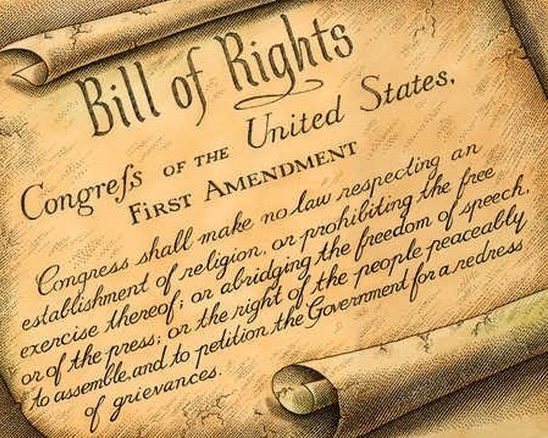
As I was driving home from Tennessee recently (I traveled there upon the death of my mother), arguing with myself as I do, I considered that the First Amendment is a double-edged protection: it forbids the establishment of a religion AND guarantees the free exercise thereof. When the government creates an education system funded by taxpayer dollars but restricts religious families from accessing those funds unless they forgo religious education, it isn’t maintaining neutrality—it is, in fact, discriminating against religious exercise.
Religious families pay the same taxes as secular families do. Yet they’re denied equitable access to public educational funds simply because they wish to exercise their religious freedom through their children’s schooling. In effect, religious parents are taxed to support a system that excludes their values, and then prohibits them from redirecting those funds toward an education that aligns with their deeply-held convictions.
Why isn’t this a form of taxation without representation? I argued back and forth but couldn’t articulate an adequate rebuttal.
It’s crucial to distinguish between government supporting a religion and government allowing citizens to freely exercise their religion. If vouchers or educational savings accounts are provided neutrally—available to all families regardless of religion or secular preference—then the government is not establishing religion; it is empowering private choice and enabling religious freedom.
It’s the parents, not the state, who choose religious schools. To tell religious families they cannot choose religious schools—which is effectively the case if they cannot afford to send their kids to those schools—is to discriminate against families on the basis of religion, which is forbidden by the Constitution.
Put another way, refusing religious families the ability to use public funds for religious schooling is itself a violation of the Free Exercise Clause. It treats religious conviction as a disqualifier for participation in public benefits—a move that demands religious individuals either compromise their faith or forego public support.
Public schools, while neutral with respect to religion in theory, necessarily reflect a particular philosophical worldview—often a secular or materialistic one. I’m secular and materialistic (in the philosophical sense). I agree that public schools should proceed on this basis and should not endorse a religion (which is why we need to root out ideologies such as gender ideology from them).
However, for religious families, this neutrality is politically interested; it is a philosophical position that conflicts with their own convictions. Thus, government neutrality on religion would allow religious families to use their educational funds to choose schooling that reflects their religious worldview, just as secular families can accept the materialistic worldview implicit in public education.
Public schools can have no religious content—or at least it should be neutral on the question of religion—because of the First Amendment. But the government cannot discriminate against citizens on the basis of religion. If children of religious parents are denied a religious education because of the structure of public funding guided by the First Amendment, then the government its discriminating against those children.
I have argued with myself several times about this over the last few days and I cannot save the position I previously held. Educational choice programs that allow funding to follow the student—including to religious schools—uphold both key mandates of the First Amendment: no establishment of religion and free exercise of religion. Far from violating the Establishment Clause, vouchers respect and empower the religious diversity of American citizens—while maintaining religious neutrality on the part of the government.
You may wish for a system that compels the children of religious families to receive a secular and materialistic education by denying those families access to educational funds to pursue religious education. But this is not your choice. The First Amendment guarantees religious liberty, which means that, while each of us enjoy freedom from religion, each of us also enjoy the freedom to religion.
Families should make such determinations for their children, not government, and they should enjoy access to resources that allow them to realize those determinations. It’s their money. These are their children. Religious families are also part of the public. In fact, they’re the majority.

 freedom and reason