As readers might expect, I get hassled a fair bit in private messages and anonymous emails. The motive of these communications is obvious in their tone—they don’t like the things I say and they want to shame me. That’s fine, but I would like to point out that, while I often don’t like things other people say, I don’t send them private messages and anonymous emails. If I think what somebody says is worth critiquing or responding to, I write an essay and publish it on Freedom and Reason, where it is not private or anonymous.
One anonymous email I received recently attacked me for not proceeding in a rigid academic manner, noting that I don’t cite sources. I bring shame to my discipline. I am a fraud. I thought this one was worthy of a response, since others might also be wondering why I write without a web of citations surrounding my sentences. The claim that I don’t cite sources is inaccurate. When I use the ideas of another scholar, I cite that scholar. When I based my essay on a news article, I cite the news article. When I object to a post on X, I share the post. But it is true that I don’t write in a rigid academic manner. This is on purpose. Freedom and Reason is for the general public, not specifically for other academics.
When I established this platform in 2006, I chose to write in the style of historians like J.M. Roberts and sociologist like C. Wright Mills, men of an earlier and better era of historiography and social studies. My goal on Freedom and Reason is to convey arguments and ideas in a way that is accessible to everybody, whether they have advanced degrees or not. I want to bring arguments and ideas to the people so they can ponder them and use them to advance their own arguments and ideas.
I also find academic writing to be obnoxious. The modern academic convention of providing a source for every claim not only complicates the text but it puts on airs; I find such writing to be a pretentious act, one of wrapping arguments in a convention that gives the text a false sense of legitimacy and self-importance. A lot of bad science comes with a lot of citations. If anybody doubts a claim I make, if they care enough about the matter at hand, it is as easy for them to find the sources of that knowledge as it is for me to find those sources when I need to refresh my memory or attain greater accuracy and precision in my writing. Every claim I make is fact checked, and every opinion I make is formed by an analysis of those facts.
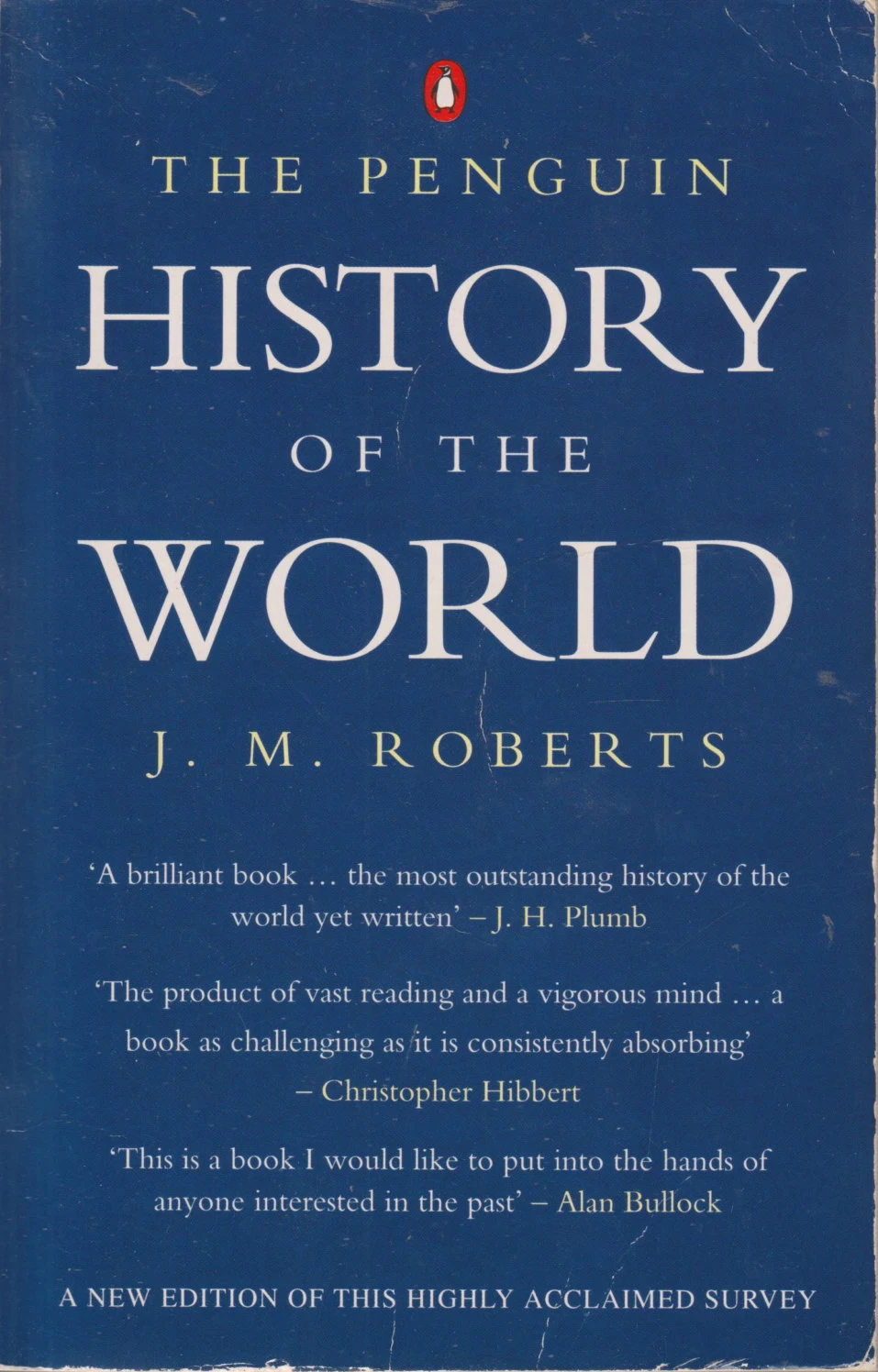
Who is John Morris Roberts? If you don’t know his work, you should check it out. Roberts was a distinguished British historian and academic renown as a gifted conveyor of historical narrative. In 1976, he gained widespread recognition with History of the World, a fat paperback I picked up one day a long time ago at a bookstore. I was quickly absorbed into the story of mankind. At the same time, I was immediately struck by the absence of footnotes. “One can write history this way?” I thought to myself, then just an undergraduate studying psychology and anthropology at Middle Tennessee State University.
I am always interested to learn more about the man whose work I am reading, so I investigated who Roberts was and why he wrote this way. I learned that Roberts’ goal was to synthesize vast historical developments—the book covers the entirety of human history, as well as prehistory, so there’s a fair bit of archeology and anthropology early on—into a coherent story for general readers. This reflected his belief that history should serve as a tool for understanding the human experience. Roberts deliberately chose a narrative-driven approach over an academic one, thus prioritizing readability and synthesis over exhaustive documentation. I appreciated that. A lot.
As I do on Freedom and Reason, Roberts wrote the book for a general audience, not a strictly scholarly one, and he relied on the assumption that readers understood that much of the content drew from widely accepted historical knowledge accessible to anybody who cared enough to look for it (then, again, why would they, since it is right there in his book). After all, how many books had been written on the Roman Empire? Who would one cite? Everybody who touched the subject? Roberts understood that including detailed sources would bog down the text, disrupting its flow and making it less appealing to non-specialists. I learned that his choice reflects a stylistic decision common in popular history books of that era, where the author’s knowledge and interpretive skill were foregrounded. I said to myself: this is how it should be.
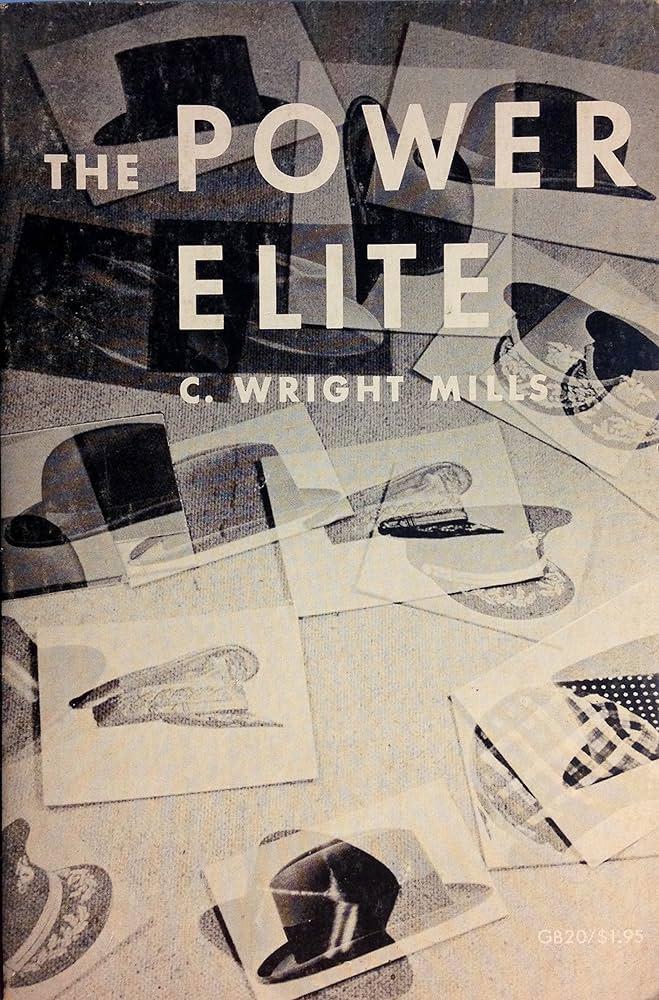
I was already becoming somewhat familiar with this stylistic choice in psychology and sociology produced by the best thinkers during mid-twentieth century American history. In my master’s program, where I studied social psychology, I learned that C. Wright Mills, in whom I developed a particular fascination, that his sparing use of citations was not atypical among sociologists. But it was Mills’ style that caught my eye, and I modeled myself after him in learning how to write (I tell students all the time to find somebody whose writing they like and emulate them—like I would with any beginning guitar player when I gave music lessons). Mills wrote with a bold, confident voice that leaned on his analytical prowess, while eschewing the dense web of references.
In works such as White Collar, The Power Elite, and The Sociological Imagination, Mills blends general knowledge with a plain Marxist critique, trusting readers to follow his reasoning without needing a citation for every claim. It was Mills himself who described his approach in this way. Mills includes an appendix in The Sociological Imagination titled “On Intellectual Craftsmanship.” There, Mills pulls back the curtain on his own process as a thinker and writer, offering advice to scholars and students alike on how to cultivate their sociological imagination. He reveals how he keeps files and journals, stuffing newspaper and magazine articles into folders, jotting down ideas, observations, and personal reflections. He urges readers to blend life experience with academic study. Mills is less concerned with formal rules—like heavy citation—and more with encouraging a creative, independent habit of mind. He corrupted me (as any good radical should); I found having to jump through the hoops of publishing in a modern academic journal to be frustrating—a straitjacket that added nothing but the cover of authority. Still, my PhD dissertation, a sprawling two volume tome, had hundreds of footnotes.
Roberts and Mills’ approach makes for a smoother read, emphasizing the author’s interpretive lens over a catalog of borrowed ideas—and there is nothing wrong with borrowing ideas. This is how culture has always worked: a man sees good ideas and approaches and incorporates them into his own. This is the mark of any intelligent man.
Consider how when somebody writes about general relativity or natural selection, while he may associate with these theories the names of their authors—Einstein and Darwin—he will rarely cite in the text or in a footnote the specific works and pages where these ideas were originally found. Indeed, he may have never read those original works but learned about their ideas from those who had—or from those who had learned them from another person who had at some point heard or read about them. General relativity and natural selection is the currency of their respective domains. One writes about heliocentrism and the spherical Earth without citing any sources. Etcetera. Otherwise, things would get tedious. And tediousness is an abundant element in the world.

 freedom and reason