
When I was in graduate school in the 1990s (I attended the University of Tennessee between 1996-2000), specializing in international political economy, the left was highly critical of US Agency of International Development (USAID). USAID was a well-known CIA cutout and instrument of imperialism. Under the guise of helping Third World countries, USAID undermined domestic economies, shaped culture and politics, and reconfigured governments to make the periphery more conducive to incorporation into a world order engineered by multinational and transnational corporations—everything the left opposed.
The November 1999 World Trade Organization (WTO) protests, popularly known as the “Battle of Seattle,” saw tens of thousands of activists, environmentalists, and labor unions converge on the WTO Ministerial Conference in the state of Washington. The protests centered on the WTO as an expression of corporate-driven globalization. The WTO prioritized corporate profit over democratic government, environmental protections, national sovereignty, and workers’ rights, including those in developing countries. As champions of the super-exploited populations in the periphery of the capitalist world-system, the left saw globalization as anathema to social justice.
Not all of my fellow graduate students supported the protests. Not all of my fellow graduate students were leftwing (if you can believe that given it was a sociology program—but that was then and this is now). I did, however. And I wasn’t alone. However, the protests turned chaotic, the violence instigated by agent provocateurs and police tactics bent on undermining populism’s legitimacy. Demonstrators clashed with police, who deployed rubber bullets and tear gas. It was, as was January 6, 2021, a police riot. The results served their purpose: images of blocked streets and smashed windows were broadcast around the world. For many on the left, the event crystallized resistance to the nascent transnational world order. The left was on the march. At least this is what I hoped for. But I was wrong.
Today, the United States has a president and a party that is turning away from globalization and returning to the American System, the model outlined in official documents, such as the 1791 Report on Manufactures, by Alexander Hamilton during the first presidential term of George Washington, who aimed to transform an agrarian former colony of the British Empire into a self-sufficient industrial power. Today’s left recoils in disgust and horror.
As I have written about on the pages of Freedom and Reason, central to the Hamiltonian vision were protective tariffs to shield fledging American industries from competition with established nations (Britain, France, etc.), encouraging domestic manufacturing over reliance on imports, as well as public and private investments in infrastructure to modernize what had been a peripheral sphere of the Empire. Hamilton understood that economic independence and self-sufficiency underpinned national sovereignty—and that national sovereignty underpinned the personal sovereignty of its citizens. The principles behind the American System foreshadowed Abraham Maslow’s Hierarchy of Needs. This is Trump’s vision for the United States. The left rejects it.
The Founding Fathers emphasized small non-intrusive government and individual liberty as core principles to safeguard against tyranny. They drew heavily from Enlightenment ideals and their lived experience under British rule. Thomas Jefferson and James Madison championed a limited federal government, codified in the Constitution’s enumerated powers and its Bill of Rights, which protects from state overreach such freedoms as bearing arms, religion, and speech. These arrangements and principles stem from a belief that centralized power—e.g., the monarchy the American patriots rejected, sacrificing their lives for the cause of liberty—threatened personal autonomy and self-governance, favoring instead a system where individuals and the several states in which they resided held significant authority. Even the Federalists, which included Hamilton, those who advocated for a stronger national framework, framed the American System as a means to these ends: to secure liberty through self-sufficiency and stability—not as an enveloping structure to manage the lives of the People.
At least until 1999, a significant proportion of the left still believed in these arrangements and principles, which had proven themselves over time to be rational means to ends sought: human freedom and an open democratic society. Even Gus Hall, leader of the Communist Party USA (CPUSA), proposed a “Bill of Rights Socialism” in 1990, advocating for a uniquely American socialism that builds on US democratic republican traditions by expanding the Bill of Rights to guarantee positive freedoms like education, employment, healthcare, housing, and union membership—all of which would exist alongside the constitutional protections laid down by the Founders.
The freedom afforded to the people by the American System, even in the face of the growing technocracy of the corporate state—the freedom that abolished the premodern legacy institutions of chattel slavery and racial caste Americans had inherited, as well as to the rise of labor unions—was embraced by the left. Moreover, those who believed in popular democracy, in a word populism, grasped that problem of entrenching corporate state arrangements, especially in the face of transnationalization, better known as globalization.
What changed after 1999 was not so much a shift in the tactics of the left but a shift in economic and political loyalties. What occurred was a drastic ideological metamorphosis. This transformation in consciousness was driven by, among other things, the rise of postmodernist critical theory and its progeny—critical race theory, queer theory, postcolonial studies—which were consolidated in universities during the 1990s and pressed into the minds of graduate students who would go on to secure positions in America’s sense-making institutions, e.g., public schools and universities (this was true in Europe, as well).
This standpoint emphasized identity and power over class or sovereignty. A generation of woke progressive intellectuals would over the next twenty-five years permeate the academy and other institutions of cultural management, indoctrinating the youth of America to believe that their nation and the greater West were rotten and racist—to turn away from the Enlightenment and its promise. The function of this shift was thus to discredit populism and nationalism and invert the left’s priorities. (There is a much larger story here, which I have written about in numerous essays on Freedom and Reason, but for this essay I am staying focused on the culmination of the long march through the institutions.)
This is how once opponents of corporate-state power, leftwing intellectuals and their disciples, became its proponents, aligning with the administrative state and technocratic apparatus to enforce a new orthodoxy under the guise of social justice—a photo negative of the Old Left. This pivot abandoned the rational principles upon which the American Republic was founded—economic independence, individual liberty, and limited government—for the managed, globalist order that the left once resisted.
Today, as Trump revives that Hamiltonian vision of self-reliance, the irony deepens: the populist right now echoes the Old Left’s skepticism of unaccountable power, while the woke left champions the very corporate-technocratic hegemony it fought to dismantle. The populist right champions free speech and nonviolence, while the left pursues authoritarian control over conscience and advocates violence against persons and property.
The case of USAID is a paradigm of the pivot. The critique I summarize at the top was particularly prominent among leftist activists and intellectuals during the second half of the twentieth century. I was surrounded by it. I was a part of it. I knew that USAID, while officially a development agency, served as a tool of US foreign policy, aligned with Cold War-era objectives and operated according to the designs of the intelligence establishment—all in the service of the imperial ambitions of the American Empire. I knew that the USAID’s many initiatives and programs were ostensibly aimed at providing economic aid, humanitarian assistance, and infrastructure, but were strategically designed to destabilize and reshape the political economic systems of developing nations to align their populations with Western corporate interests.
USAID’s involvement in Africa, Latin America, and Southeast Asia, where aid was tied to conditions that promoted market liberalization and the suppression of leftist movements, were well known—and condemned. The left knew that USAID projects were used as cover for intelligence operations and to funnel resources to anti-democratic regimes in Chile, the Northern Triangle, Vietnam, and elsewhere. If readers want to go down the rabbit hole on this, I recommend they seek out and review the vast body of literature on this developed by dependency theorists and scholars working in the world-systems tradition (look for the concept “development of underdevelopment”), which definitively demonstrated that USAID and similar agencies were pieces of a broader imperialist agenda to integrate Third World economies into a global capitalist system—incorporation at the expense of cultural integrity and local sovereignty.
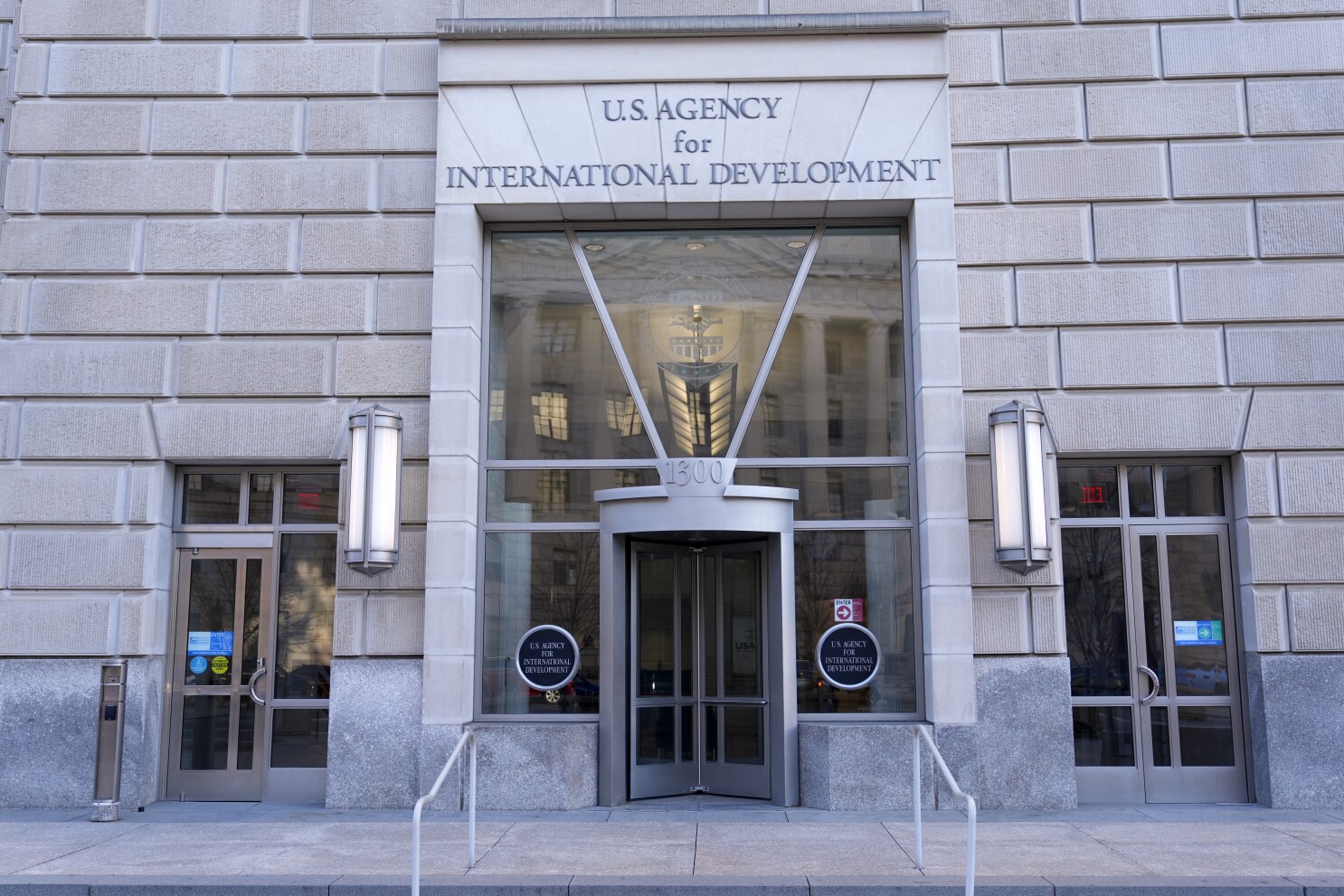
Yesterday, the Trump administration, guided by Hamiltonian principles, formally notified Congress of its intent to shutter USAID. Congress established the agency in 1961 under the Foreign Assistance Act, so Trump cannot fully dissolve the agency by executive action alone; Congress holds the authority to create and abolish federal agencies. Congress could either codify USAID’s demise or resist it. With Republicans holding power in both the House and the Senate, the outcome is favorable to those who desire to see the United States pull back from empire and return to the republicanism upon which the country was founded.
This is something the left should support. Yet progressives have reacted to these developments with alarm, casting the shuttering of USAID as a reckless abandonment of America’s global humanitarian leadership. Such rhetoric reflects an astonishing reappraisal of empire on the left. The rank and file, failing to understand that the agency’s role as a tool of US imperialism is a feature not a bug, treat the agency’s cover story—fighting disease, hunger, and poverty—as its raison d’être, betraying their ignorance of critical political economy.
This is perhaps surprising given their frequent appeal to democratic and liberal principles. But it’s not that surprising when one understands that what passes for the left today are apologists for the corporate state and technocratic control justified by the rhetoric of woke progressivism. It is therefore not so much a mark of ignorance but an indication of assigned roles in the project to obscure imperialism.
One giveaway is the ironic appeal to “soft power.” That is the raison d’être of humanitarian foreign intervention! Think about it: how could humanitarian sentiments be sincere when advocates of foreign intervention, either rhetorically or in action, embrace the administrative state and corporate governance, Or when they take up the anti-working class standpoint of corporate elites? Have you heard the way progressives talk about ordinary working class Americans? “Fascists.” “Mouth breathers.” “White supremacists.” Etcetera. MAGA are the second coming of Nazis in their eyes. The left is hysterical (in both uses of that term).
We saw the embrace of technocracy in the left’s panic over reports of mass layoffs of federal employees, the cancelling of programs costing taxpayers billions of dollars, and fears that folding programs and operations formerly managed by USAID into the State Department. But where are the complaints over the persistence of ghettos in America in the twenty-first century? Why isn’t the left up in arms about the addicts and homeless teaming America’s cities? Where are the marches for American jobs?
The charge that the deconstruction of USAID prioritizes national interests over global welfare broadcasts the left’s disregard for the fate of America’s working class and those left behind by globalization. At best, what passes for leftwing concern for American citizens is the maintenance of the nation’s poor through paternalistic programs producing dependency (and Democrat voters). Meanwhile they demand open borders and the replacement of American workers with foreigners. And the continuation of imperial projects such as USAID that sustain these conditions.
Obstruction by federal judges has fueled progressive hope, but the boldness and speed of the administration’s actions—legitimized by the popular desire for fiscal responsibility and empirical evidence of waste, fraud, and corruption in federal agencies—have left those who desire to keep in place the regime of foreign interventionism scrambling to rally congressional opposition before the July deadline. (Yesterday, a federal appeals court cleared the way for Elon Musk and DOGE to resume their efforts to shut down the USAID.)
Hence the frenzy over upcoming elections in April. But the Democratic Party has never been more unpopular. The public is wise to lawfare. And Republicans control the White House and Congress, as well as a majority of governors’ mansions and state legislatures. What passes for the left has thus been reduced to a shrill minority, double-downing on all the things that have marginalized them culturally and politically. Still, it is imperative for those who want to keep the project to restore the American System to get out and vote.
This may seem like an odd development—the left flipping in the span of a quarter century from critics of corporate power and the transnationalist project to cheerleaders for elite ambition—but it is understandable when one contextualizes the metamorphosis in the history of twentieth and twenty-first century progressivism and the successful disinformation campaign painting populism as authoritarian and backwards. The capture of the West’s bureaucracy and sense-making institutions, including the culture industry and legacy media, and the casting of progressivism as social justice, provided elites with the vehicle for transforming mass consciousness on the left into its antithesis.
A major role in all of this is the left’s zombie-like devotion to the Democratic Party. “Vote Blue no matter who.” (We might add to that slogan no matter what.) But the progressive hegemony is fracturing. To be sure, what passes for the left is still dangerous. Progressive elites still maintain control over the sense making institutions. But the public is onto to them—an awareness that will only pay off if the populace prevents the regression sought by the left.
On a personal note, the shift I am describing is how I have come to viewed of having abandoned leftwing principles and switched sides. But I have opposed transnationalism all along. I have always argued against foreign interventionism as a general policy. As soon as I learned what USAID was about I advocated for its shuttering—as well as the shuttering of agencies and programs of its ilk. I’m opposed to imperialism. I didn’t switch sides. Those parading about chanting superficially leftwing slogans did. If they hadn’t, they would see that the values they claim to hold—opposition to oligarchic control and warmongering—are now represented by MAGA. Robert F. Kennedy, Jr. is the head of the Department for Health and Human Services, for goodness sake.
But they can’t see that because they have been conditioned to hate and loathe Trump and those around him and those who support them. They instead identify their politics with the machinations of the Democratic Party—the party that advances the material interests of the transnational corporate class. The politics of today’s social justice warrior have become reflex. This is a reactionary politics. So much so, that those who embrace it are attacking their fellow citizens in the working class. Of course, vandalizing Teslas wasn’t the first sign of the so-called left’s descent into zealotry. Before that was Black Lives Matter and the pandemic panic. The summer of 2020 made the zealotry plain, normalizing it in the eyes of millions. But if you needed confirmation of the phenomenon, you have it now.
The reality is that what pretends to be the left today is a Trojan Horse for the transnationalist corporate elite. And they have rolled the ruse inside the city gates. The battle is on.

 freedom and reason