
As I have been writing about for a while now, lawfare has become a major weapon in the project to disrupt and ultimately destroy the Trump president and stifle the populist movement. My essay, The Judicocracy Problematic, in particular is a warning of the problem of allowing the establishment to substitute the judiciary for democracy. We are witnessing what I warned about playing out before our eyes.
One aspect of lawfare is resort to the universal injunction and the temporary retraining order (TRO) in the federal judiciary. A universal injunction refers to a court order that not only concerns a legal dispute for the parties directly involved but also prohibits the federal government from enforcing a law or policy against anyone, anywhere, not just the plaintiffs in the case. The TRO is a type of injunction.
The use of these judicial instruments rightly raises concerns about the scope of judicial authority and foundational principle of Separation of Powers, principally in the usurpation of the Article II authority of the executive branch of the federal government.
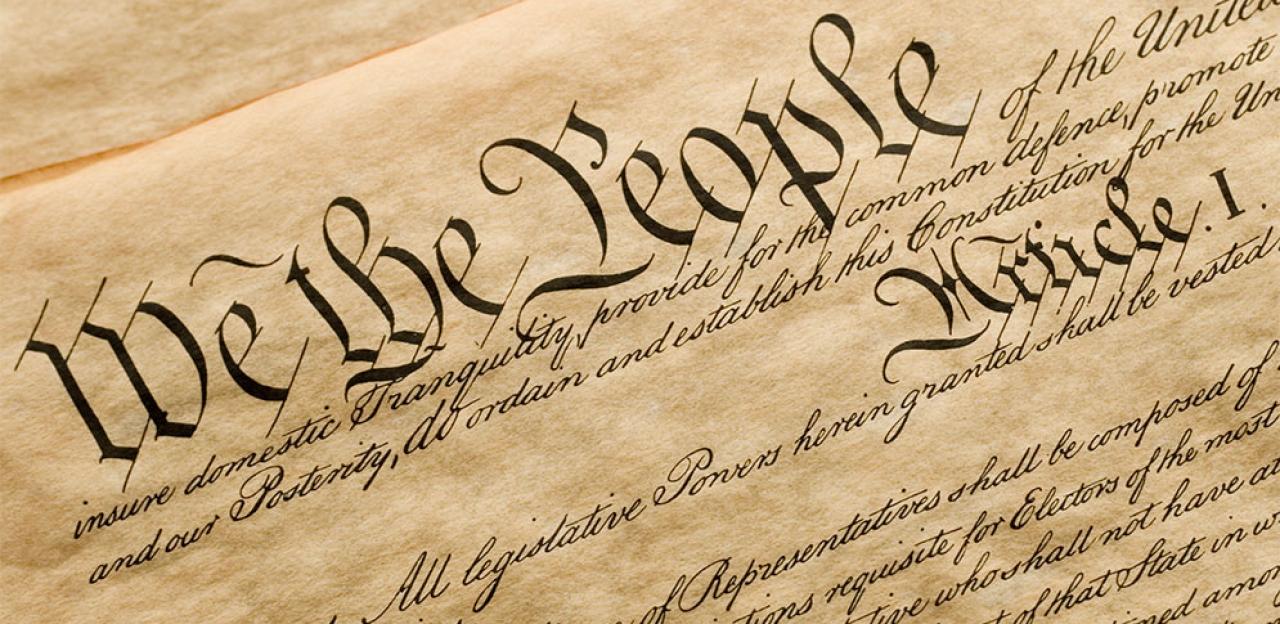
The US Constitution splits judicial powers across its first three articles to balance power among the branches of government. Article I grants Congress the ability to establish and shape the federal court system, giving it control over the judiciary’s structure. Article II assigns the President the role of nominating federal judges, with the Senate providing advice and consent, ensuring the executive and legislative branches share responsibility for judicial appointments. Article III then defines the judiciary itself, establishing judicial independence by stating that judges serve “during good behavior”—essentially for life unless they engage in misconduct or other unethical behavior.
One is right to ask how the impeachment standard in Article II migrated to Article IIII. The current consensus interpretation is that Article II covers impeachment as a check on all federal officers, including judges. This interpretation ties judicial tenure to this standard of behavior, meaning judges can be removed through impeachment by the House and conviction by the Senate for offenses like abuse of power or bribery. However, cabinet officials, who are federal officers, serve the pleasure of the President (see the 1926 Supreme Court case Myers v. United States).
Abuse of power is obvious in the rise of the universal injunction, which compromises the separation of powers. Historically, injunctions were narrow, tailored to the specific parties bringing the suit whatever the issue. The legal roots trace back to English law, where courts aimed to provide remedies that were just and specific to the case at hand. In the US, this carried over into federal courts under Article III, with the Judiciary Act of 1789 and later cases like Marbury v. Madison (1803) establishing judicial review—but not broad, universal relief.
As I noted, aside from the Supreme Court, federal courts are created by Congress. So far, the Supreme Court and Congress have allowed the rise of universal injunctions. It now is time to review the matter. It is also time to revisit the question of whether the Article III standard legally aligns with the Article II standard for removing a federal officer. If federal officers in the Cabinet are exempt from this standard, then why not federal judges, with the authority to remove them residing in Congress given Article I powers?
The reason why these matters must be revisited is because of what I discuss in that recent essay cited above: the usurpation of executive authority reserved by the Constitution to the President of the United States, the one office elected by all citizens. The modern surge in universal injunctions began gaining traction in the twentieth century as the courts became increasingly politicized.
One oft cited early example of the universal injunction is the 1963 case Wirtz v. Baldor Electric Co., where a district court issued an injunction affecting non-parties. This was an extraordinary action by the court. The real escalation and normalization of the practice came decades later with politically charged issues, for example immigration, where single district judges started halting entire federal policies.

For instance, in 2015, a Texas district judge issued a nationwide injunction blocking Obama’s Deferred Action for Parents of Americans (DAPA) immigration policy, affecting millions beyond the plaintiff states. One will recall that Democrats bitterly complained when US District Judge Andrew Hanen in Texas issued that nationwide injunction.
Similarly, during Trump’s presidency, judges in Hawaii and California issued universal injunctions against the travel ban, stopping its enforcement nationwide. What did Democrats think about that? Crickets. With Trump, the practice skyrocketed, with the administration facing an avalanche of such injunctions, a sharp contrast to the handful seen during earlier administrations. Democrats cheered on the judiciary for the resort to lawfare. Given their growing political irrelevance, it was their only recourse—that and the deep state.
The political warfare in all this is obvious. Litigants, often states or advocacy groups, turn to what is called “forum shopping” looking for sympathetic judges in districts known for ideological leanings eager to usurp Trump’s authority. One of the factors associated with this is the expansion of the administrative state, prompting bolder judicial responses usurping Article II powers to entrench that establishment. Indeed, one of the flashpoints is the use of the universal injunction to stymie Trump’s project to deconstruct the administrative state.
As mentioned above, the Supreme Court hasn’t definitively settled the issue, and Congress has been reluctant to take on the matter, leaving lower courts room to wield this untoward power. However the problem has been noted at by the Supreme Court. In Trump v. Hawaii (2018), justices criticized universal injunctions as historically unmoored and a power grab. Still, the Court has set no binding limit on the practice. And, again, Congress is sitting on their hands.
The universal injunction is a paradigm of judicial overreach; a single unelected judge can derail a national policy, undermining democratic processes, thereby thwarting the popular will, and moreover creating inconsistent law (conflicting injunctions from different courts). Defenders of the practice tell is that they’re a necessary check on executive overreach, especially when policies affect millions uniformly and irreparable harm is at stake. But this is the function of judicial review, ultimately delivering cases to the Supreme Court where the establishment of national-level judgments on constitutionality properly resides.
The Supreme Court needs to act to clarify the matter. It will be terrible for the Republic if they get this wrong. Indeed, it will be something of a judicial coup, possibly sparking a constitutional crisis. But Congress also needs to act to reign in partisan judges who use the universal injunction to improperly constrain the executive branch. One immediate action that can be taken is defunding these courts. This will allow Congress to get around the problematic migration of Article II standards to Article III governing the tenure of judges. Another action Congress can take immediately is for the Judiciary to bring these judges before the committee and interrogate their actions. Congress has oversight authority.
Bottomline: a democratic republic cannot abide by the tyranny of a judicocracy.

 freedom and reason