
This essay explores protectionism and tariffs (see also my essay Why the Globalists Don’t Want Tariffs. Why the American Worker Needs them). I begin by recalling the 1993 debate between Ross Perot (presidential candidate in 1992 and 1996) and Vice President Al Gore on Larry King Live over the North American Free Trade Agreement (NAFTA). I watched the debate live, along with 16.8 million others—it was the second most-watched program in CNN’s history.
This debate remains one of the most memorable economic discussions in American history, exemplifying the divide between nationalism and globalism. More than that, it revealed the Democratic Party’s attitude toward ordinary Americans, highlighting its disregard for job security and the preservation of stable, prosperous communities—all while insulting their intelligence.
The debate occurred in the aftermath of General Motors CEO Roger Smith relocating automotive plants in Flint, Michigan to other locations, including Ciudad Juárez, Mexico. GM made the decision to relocate in anticipation of NAFTA. The closure of plants in Flint, particularly in 1987 and 1988, was depicted in Michael Moore’s 1989 documentary Roger and Me, which highlighted the economic and social effects of Smith’s decisions on the community, which were devastating. (Roger and Me remains Moore’s best documentary. I highly recommend readers watch it if they are unfamiliar with that situation.)
Gore, representing the Clinton administration’s pro-NAFTA stance, argued that free trade would lead to economic growth, increased efficiency, and job creation. As part of his argument, Gore presented Perot with a photograph of the authors of the Smoot-Hawley Tariff Act of 1930, claiming that the act, signed into law by President Herbert Hoover, had been a major factor in deepening the Great Depression. Indeed, Gore said that economists widely agreed that it was the central cause of the depression. The rhetoric was obviously intended to discredit Perot’s advocacy of economic nationalism and his calls for protectionist policies.
For his part, Perot warned that NAFTA would lead to a “giant sucking sound,” as American jobs, particularly in manufacturing, were relocated to Mexico, where labor was cheaper and worker protections weaker. This, Perot argued, would deindustrialize key sectors of the economy, depress wages, and undercut American workers. Perot recognized that global trade agreements were written to benefit multinational corporations rather than domestic workers. He saw protectionism as a way to correct for these effects, ensuring that American industries remained competitive and that wages were protected from a race to the bottom. He was also concerned about the conditions of Mexicans.
Perot’s position was rooted in the tradition of Hamiltonian economics and the American System, which relied on tariffs to foster domestic industry. From the founding of the Republic, protectionism was a key element of national economic strategy, promoting industrial self-sufficiency and national security. The Smoot-Hawley Tariff, which Gore exploited as a cautionary tale, was merely one episode in a long history of tariff use.
The Vice President portrayed Smoot-Hawley as an extraordinary event, using the photograph as a prop to sidestep the fact that, among experts, the Great Depression is widely attributed to financial instability and monetary policy rather than tariffs. Gore’s selective use of history was intended to obscure the broad success of protectionism in American economic development. In doing so, he revised history to advance the globalist agenda.
Both Gore and Perot recognized that capital was highly mobile in a globalized world, allowing corporations to relocate production to exploit lower costs. In Perot’s view, tariffs—and, more broadly, reversing globalization and regionalization—were necessary to counteract this mobility and ensure that domestic workers were not sacrificed on the altar of corporate profits. The Clinton administration—led by the so-called New Democrats, who rebranded the party under the banner of neoliberalism—viewed protectionism as an obstacle to the progress of the New World Order, an order shaped by transnationalism.
Perot’s argument anticipated many of the concerns that have since become central to debates about globalization: deindustrialization, economic dependency on foreign nations, unemployment, and wage stagnation. In hindsight, his warnings have proven prescient, evident in the decline of American manufacturing and the rise of economic populism in response to globalization’s detrimental effects.
(I will soon publish an essay charting the rise of populism over the last several decades. In that piece, I will argue that the Trump phenomenon is not merely a reaction against globalism but rather that the president has long been a champion of economic nationalism, a contemporary of Perot’s.)
Despite what the propagandists of the corporate state claim, Perot was not a relic of outdated economics. Rather, he was a modern-day Cassandra. Protectionism offers essential tools for addressing the challenges of globalization, particularly in light of the limitations of comparative advantage and the portability of capital.
While free trade advocates argue that open markets lower prices and maximize efficiency, their arguments deliberately ignore the realities of modern globalization—namely, that the free movement of capital in pursuit of lower costs directly affects workers’ livelihoods. Protectionist measures, such as tariffs, help counter the negative effects of capital flight, preserving both national and local economic stability.
This reality exposes a fundamental flaw in the theory of comparative advantage. Classical political economy suggests that countries should specialize in industries where they have an opportunity cost advantage, thereby increasing overall productivity and wealth. This principle, however, relies on the assumption that factors of production—such as capital and labor—are relatively immobile, meaning that industries will naturally develop in regions best suited for them.
In today’s globalized economy, this assumption no longer holds. Capital mobility enables multinational corporations to shift production to low-wage countries, where artificially lower costs are driven by government subsidies (such as grants, tax breaks, infrastructure support, and resource discounts), lax environmental regulations, and weak labor protections. Transnationalism facilitates this process—and it is no coincidence that the projection of US military power aligns with these economic interests. Neoconservatism and neoliberalism are intrinsically linked; the New Democrats have become the party of war.
In a 1999 essay, The US and NATO in the Balkans, published in New Interventions, I analyzed Clinton’s bombing of Belgrade within the broader context of global capitalism. I argued that the Kosovo crisis must be understood in relation to the history and structure of the capitalist world economy, as well as the geopolitical interests that drive state and military operations to sustain and expand capitalism.
I further contended that NATO, along with the broader political and military apparatus it belongs to, has been a central force in advancing globalization. Its role has included suppressing socialist movements, quelling nationalist uprisings in developing regions, and integrating former Soviet Bloc territories into the global economic system.
I will let readers explore that essay for themselves, but the following passage is particularly relevant, so I will share it here:
“The US has facilitated capitalist development by supporting and implementing a neoliberal project throughout the territories formerly controlled by socialist regimes. This has involved the introduction of World Bank- and IMF-promoted economic policies that have reorganized the entire regional economy. These policies have caused widespread misery among people who once enjoyed a relatively high standard of living under socialism. The region is being set up to become the European equivalent of the Maquiladora, with export processing zones spreading across the countryside of what was once a multiethnic socialist state. Once the region is politically stabilized, there is little doubt that capital will flood in.”
My February 2022 essay History and Sides-Taking in the Russo-Ukrainian War also bears out, globalization depends on war.
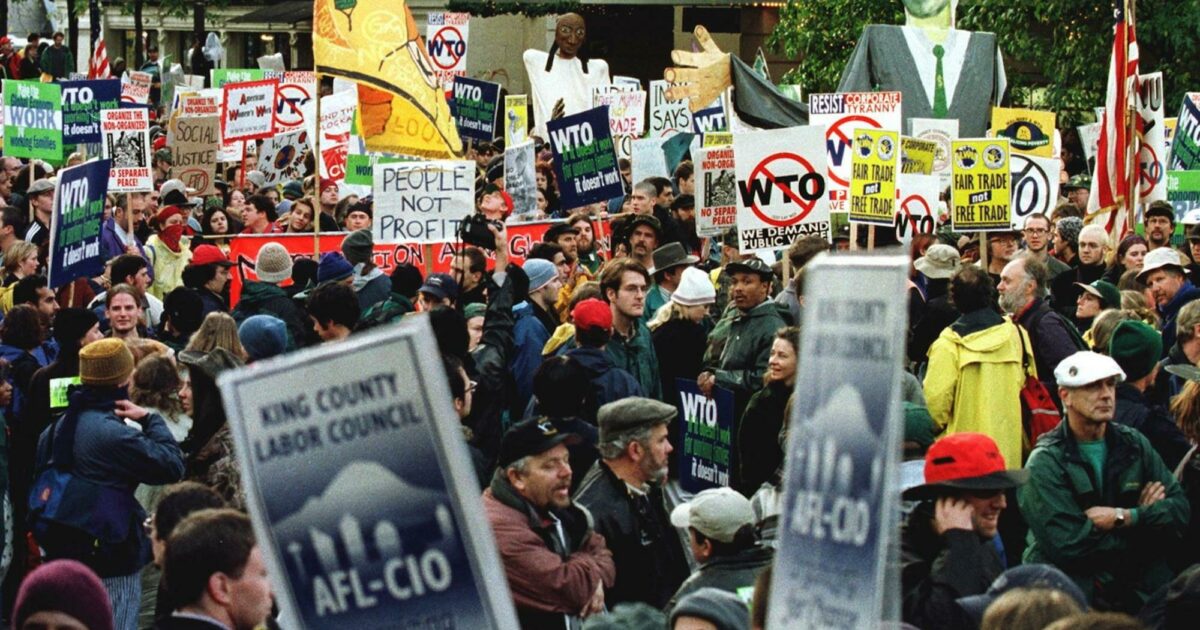
As history demonstrates, these dynamics have severe consequences for industrialized, high-wage economies—something the left once acknowledged. Recall the Battle of Seattle, the protests surrounding the 1999 World Trade Organization (WTO) Ministerial Conference, which sought to initiate a new round of global trade negotiations. The conference was met with strong opposition from environmentalists, labor unions, and other pro-worker advocacy groups. These groups recognized that as industries relocate to exploit cheap labor abroad, domestic manufacturing declines, leading to deindustrialization, environmental degradation, and rising structural unemployment. One might ask, where has that left gone?
The erosion of key industries not only undermines a nation’s economic security but also poses significant risks to national security. As industries are outsourced, nations become increasingly dependent on global supply chains, which expose them to economic warfare and external shocks. This vulnerability was starkly evident in recent disruptions caused by geopolitical conflicts and pandemics.
Outsourcing critical industries makes countries susceptible to price volatility, shortages across various sectors, and even adversaries who may use economic power as a form of warfare. For instance, pharmaceutical shortages are a persistent problem, directly impacting patient access to essential medicines. The same issue arises in critical sectors like energy and transportation.
Consider the United States’ dependence on Taiwan, particularly in light of China’s ambitions. Globalists often frame resistance to this dependency as part of a broader narrative about a “a war on Taiwanese semiconductors,” obscuring the precariousness of relying on a single source for such vital components.
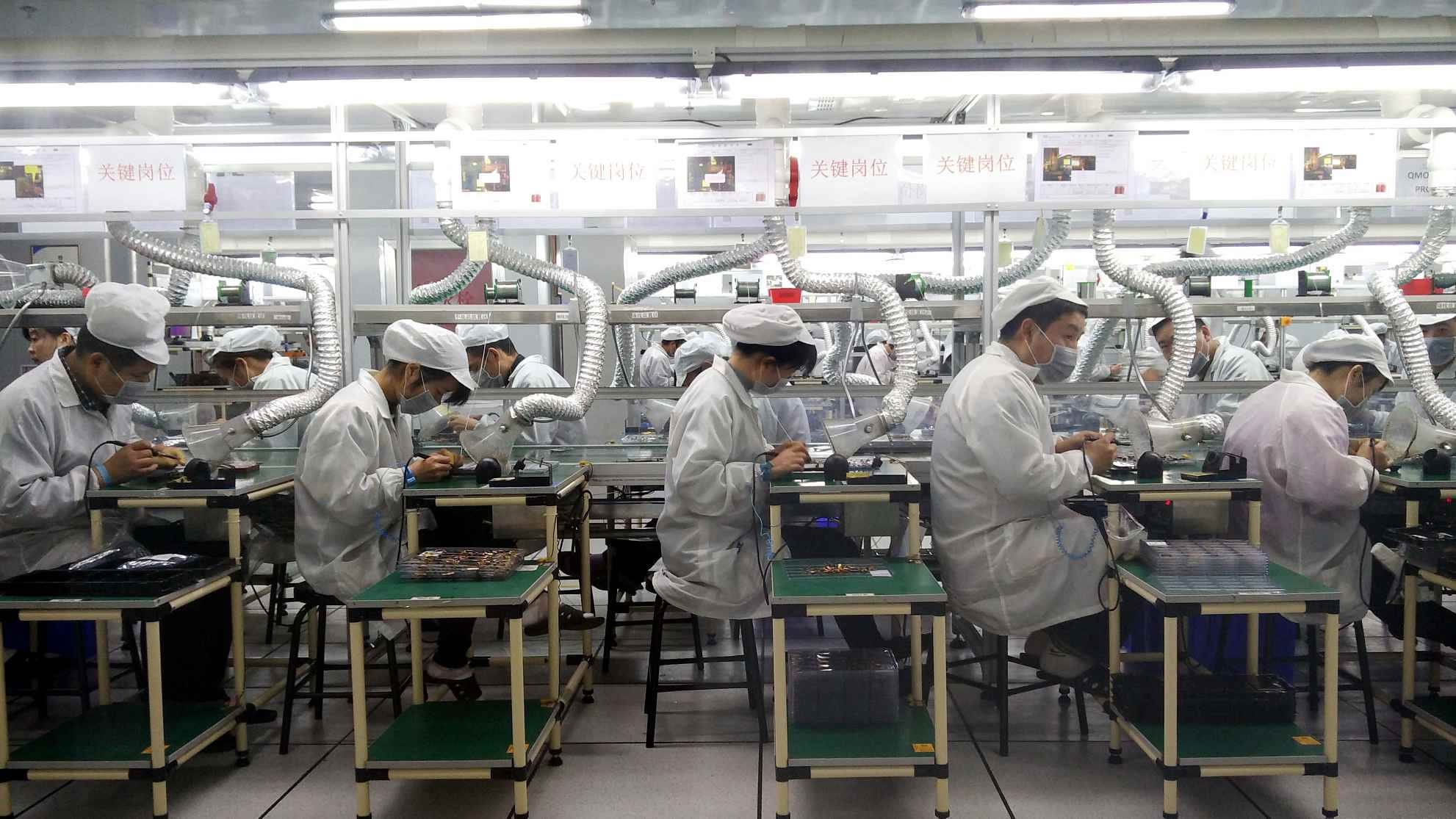
Protectionist measures, such as tariffs, correct market distortions by ensuring that domestic producers can compete on a more level playing field and that critical industries remain resilient to disruptions, whether caused by economic warfare or logistical breakdowns. By discouraging offshoring and incentivizing local production, tariffs help protect strategic industries and stabilize employment, preventing economic dislocation.
Economic nationalists are not opposed to capitalism; rather, they prioritize fair trade over free trade. Strategic protectionism enables nations to maintain greater self-sufficiency, reduce dependency on foreign production, and ensure resilience during crises. Additionally, tariffs offer a source of external revenue, allowing governments to avoid over-reliance on internal taxation. (See Eighty Billion is Not Nothing, but Revenue Generation is Not the Point of Tariffs. My thoughts on this matter have been evolving).
While free trade may be ideal in theory, the realities of globalization require a more pragmatic approach. Donald Trump’s strategy of reciprocal tariffs is a core component of his economic agenda and aligns with Republican Party orthodoxy (see History as Ideology: The Myth that the Democrats Became the Party of Lincoln). . Like Perot, Trump advocates for a shift away from classical political economy in response to the rise of capital mobility.
Strategic protectionism is not about rejecting trade altogether; rather, it is about ensuring that economic policy serves national interests, rather than merely catering to the profit motives of multinational corporations. By using tariffs to regulate the movement of capital and prevent further deindustrialization—while promoting reshoring and near-shoring—governments can foster economic stability, protect workers, and safeguard long-term national prosperity.
Trump’s strategy is most evident in his recent efforts in Panama (see Countering China’s Influence). Since the handover of the Panama Canal to Panama in 1999, China has significantly expanded its economic influence in the region. Although the canal is not officially part of China’s Belt and Road Initiative (BRI), Panama’s 2017 decision to join the BRI and sever ties with Taiwan effectively placed the canal under Chinese influence. In response, Trump has taken steps to counter China’s growing presence, including demanding Panama return control of the canal to the US and pressuring the country to withdraw from the BRI. These moves are part of a broader strategy to reduce Chinese influence over critical global infrastructure and addressing national security concerns presented by an increasingly aggressive rival.
The strategic use of protectionism, such as tariffs, is not an opposition to capitalism but a pragmatic response to the realities of globalization. As global supply chains and capital mobility expose nations to economic vulnerabilities, particularly from rivals leveraging economic power, strategic protectionism offers a path to maintaining national self-sufficiency, economic stability, and long-term prosperity. Whether through curbing offshoring, encouraging reshoring, or countering foreign influence over critical infrastructure, protectionist policies ensure that economic policy prioritizes national interests over the unchecked profit motives of multinational and transnational corporations.

 freedom and reason