
There are two definitions or usages of the term “racism.” The first definition refers to an ideological belief system that asserts the existence of distinct racial categories and the inherent superiority of certain races over others. This perspective is rooted in the idea that race is a biologically fixed characteristic that determines capabilities, intelligence, and moral worth. Historically, this form of racism has justified discriminatory practices such as colonialism, segregation, and slavery. It often manifests in overt prejudice and explicit discriminatory policies that favor one racial group over another based on perceived innate differences.
The second usage of racism focuses on the structural and systemic inequalities that result in racial disparities, regardless of individual intent or belief in racial superiority. This understanding of racism considers historical and institutional factors that create and maintain unequal conditions for different racial groups. Examples include disparities in criminal justice outcomes, education, income, jobs, and wealth outcomes that disproportionately affect marginalized racial groups. Even in the absence of explicit racial animus, policies and practices that perpetuate these inequities are considered forms of systemic or structural racism. This broader definition shifts the focus from personal prejudice and explicit discriminatory law and policy to societal patterns that sustain racial injustice.
Using the first definition, a law or policy is considered racist if it is explicitly based on the belief that distinct racial categories exist and that some races are inherently superior or inferior to others. Such laws institutionalize the belief in racial hierarchies by granting privileges to one racial group while oppressing or disadvantaging another. For example, Jim Crow laws in the United States were racist because they were founded on the idea that white people were superior to black people, justifying legal segregation and denying black Americans equal rights. Similarly, apartheid in South Africa was a racist system because it legally enforced racial segregation and discrimination, privileging white South Africans over nonwhite populations. These policies are not merely associated with racial disparities; they are explicitly designed to uphold racial superiority and inferiority, making them fundamentally racist under this definition.
Using the second definition, which focuses on systemic inequalities and racial disparities, indeed, often taking these facts on their face as an explanation for them, urban areas in the United States exemplify how historical and institutional factors have created and sustained racial disparities. Many predominantly black and Hispanic neighborhoods in cities suffer from fewer economic opportunities, higher crime rates, limited access to healthcare, and underfunded schools. These conditions are not merely coincidental but are the result of public policies and social forces. Under this definition, these conditions are considered forms of systemic racism because they perpetuate racial disparities even without explicit racist intent, demonstrating how historical injustices and institutional structures contribute to ongoing inequality.
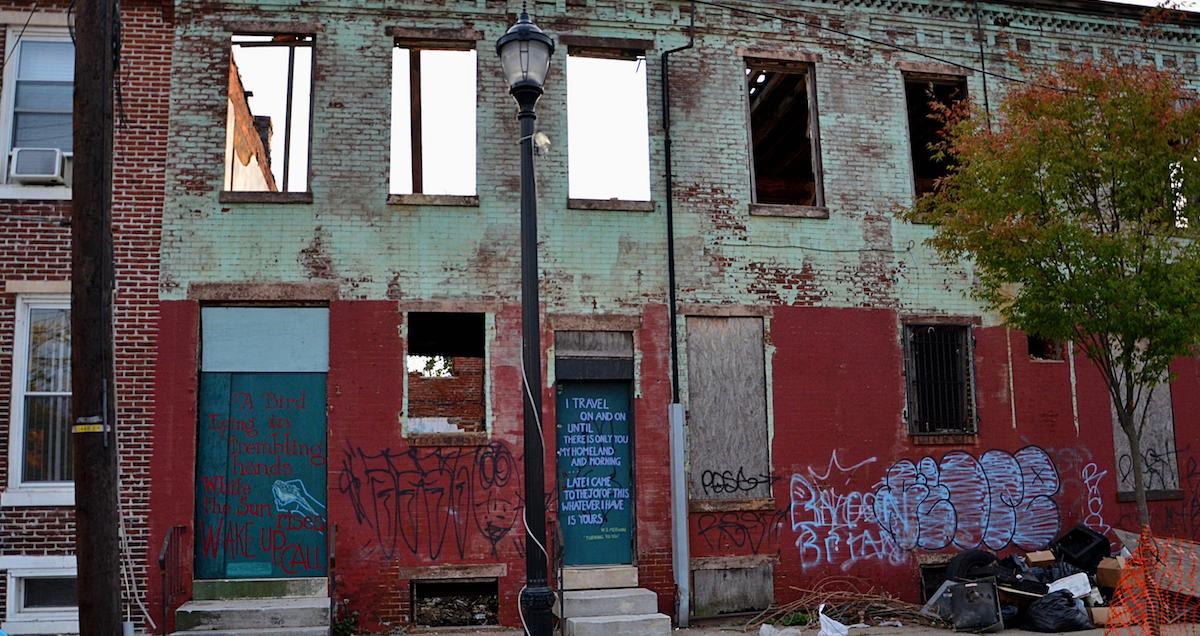
A truth that escapes a great many people is that most major urban areas in the United States are run by the Democratic Party, which has held political control in cities such as Chicago, Detroit, Los Angeles, and New York for decades. The governing philosophy in these cities aligns with progressive policies, emphasizing government intervention in the distribution of economic, educational and other resources. The people there are heavily dependent on progressive taxation, public assistance programs, and regulations aimed at maintaining the conditions of marginalized communities. High taxation, overbearing regulations, and over-reliance on government programs have stifled economic growth and opportunity. They have also promoted family disintegration. For example, the fathers of around eighty percent of black children in urban areas are not married to their mothers, and are often not present in their lives.
It is therefore important to ask why, if those living outside urban areas are not responsible for the conditions of cities because they do not control the policies or leadership that govern them, they are blamed for the conditions of black Americans and other impoverished racial minorities. Local governments in major urban centers make decisions on education, housing, regulations, and taxation, which directly shape the economic and social environment of these areas. Since rural and suburban residents have little to no influence over these city policies, they cannot be blamed for the ongoing issues in urban centers. Federal and state funding is often directed toward urban development initiatives (i.e., maintaining the conditions I have described), meaning that resources from taxpayers outside these cities are frequently allocated to address “urban challenges.” If city leadership continues implementing policies that fail to resolve issues such as crime, educational disparities, and poverty, the responsibility lies with those who enact and support these policies, not with people living in areas where different governance models are in place.

In most counties across the United States, the Republican Party and conservative and traditional liberal philosophy prevail. Rural and suburban areas tend to favor limited government intervention, lower taxes, and policies that prioritize individual responsibility and free-market solutions. These regions typically emphasize business-friendly regulations, local control over education, and a focus on traditional social values. This contrasts in governance philosophy between urban Democratic leadership and rural Republican leadership highlights the ideological divide in the country, with cities tending to support progressive policies.
I have emphasized in my writings that while culture and race are often conflated concepts, they are fallaciously so. This conflation functions to make those who criticize certain cultures appear to be making a racist argument. The effect is to make public conversations about the cause of racial disparities difficult, which serves the interests of those who benefit from maintaining the conditions that produce and reproduce dysfunctional culture. So to clarify, race is a socially constructed classification based on perceived physical characteristics such as ancestry and phenotypic characteristics. It is largely an external categorization that societies have historically used to group people, often with social and political implications.
Race has no inherent connection to attitudes, behavior, traditions, or values, as it is not a determinant of one’s abilities or worldview. Culture, on the other hand, refers to the shared beliefs, customs, language, practices, and values of a group of people. It is shaped by geography, history, religion, and social norms, rather than genetics or physical traits. Culture is learned and passed down through generations, influencing everything from cuisine to family structures to academic tenacity and work ethic. Crucially, while people of the same racial background may share some cultural elements due to historical and geographical factors, individuals from different racial groups can share the same culture.
Culture plays a significant role in explaining group differences and disparities by shaping attitudes, behaviors, social norms, and values that influence educational, economic, social outcomes. Different cultural traditions emphasize varying levels of emphasis on education, family structure (the integrity thereof), social cohesion, and work ethic, all of which can impact a group’s success in different societal contexts. For example, cultures that strongly prioritize formal education and intergenerational investment often see higher academic achievement and economic mobility. Similarly, cultural attitudes toward authority, community support networks, and risk-taking can affect economic decisions, entrepreneurship, and social mobility. Cultural differences help explain why different groups respond differently to similar educational outcomes and economic and social conditions, leading to variations in outcomes.
Thus, if racism is to blame for the conditions of black Americans in urban areas, the definition that applies is the second one—systemic or structural racism. This is the definition progressives and Democrats promote and portray as getting at the root causes of racial disparities. The first definition, which centers on explicit beliefs in racial superiority and inferiority, does not align with modern urban policies, as there are no current laws that openly promote racial hierarchy as Jim Crow laws once did. Instead, racial disparities in crime, education, and economic opportunity must be explained by the second definition, which attributes these differences to historical injustices and institutional policies that, even without explicit racist intent, sustain inequality. Since Democratic leadership has controlled urban policy for decades, systemic racism in these areas stems from the policies enacted under their governance rather than from outside influences.
This ties in to the problem of open borders and mass immigration, which Democrats promote. Open borders exacerbates economic challenges for working-class Americans, particularly for black and Hispanic citizens and legal residents, by increasing labor market competition in lower-wage sectors. The influx of cheap foreign labor results in a surplus of labor, which depresses wages and reduce job opportunities for these vulnerable groups, who already face systemic barriers in the workforce because of the effects of the policies I have identified. The economic pressures minorities face disproportionately affects those with limited education or skills. Furthermore, employers exploit the availability of a cheaper labor force to drive down wages and working conditions, ultimately harming the economic mobility of working-class Americans who are already struggling. The combination of these factors deepen racial disparities.
Everything progressive Democrats tell you about racism is designed to distract you from the fact that the definition of racism they embrace indicts them as the racists, not rural and suburban conservative and traditionally liberal Americans. Democrats blame white conservatives and traditional liberals for racism—as progressives define it—framing it as the enduring problem of “white supremacy.” But white supremacy is captured by the first definition, and the fact is that white supremacy is not really a problem anymore. Progressives confuse the public about who the racists are to maintain the conditions that benefit them.
The prevailing narrative is that Democrats are the champions of the poor and downtrodden, and that false narrative works because progressives have captured the administrative apparatus and the sense-making institutions of the nation. But we can easily decode the rhetoric: what they’re really talking about is the paternalistic relationship cosmopolitan elites established over decades that keeps black and Hispanic urban dwellers in impoverished inner-city neighborhoods, idle and dependent on public assistance. Democrats make Republicans out to be the party of racism to distract those under their control as to the real cause of their suffering and to stymie attempts to change the conditions that actually keep down blacks and Hispanics.

 freedom and reason