
“All persons born or naturalized in the United States, and subject to the jurisdiction thereof, are citizens of the United States and of the State wherein they reside. No State shall make or enforce any law which shall abridge the privileges or immunities of citizens of the United States; nor shall any State deprive any person of life, liberty, or property, without due process of law; nor deny to any person within its jurisdiction the equal protection of the laws.” —Fourteenth Amendment to the United States Constitution
I no longer live in the great state of Tennessee (my home state—perhaps I will one day return there), but I keep up with matters there, especially when they touch on matters of national concern. The Tennessean reported on Tuesday that “Tennessee Republicans file bill to allow public schools to reject undocumented children.” By “undocumented,” propagandists mean illegal aliens. In US law, the term alien has historically referred to any non-citizen (see 8 U.S. C. § 1101, 8 U.S.C. § 1365(b), etc.). Illegal broadly means not permitted by law, and it applies to both civil and criminal violations. Those who are here illegally are therefore illegal aliens. If they or their parents crossed the border illegally, violating 8 U.S.C. § 1325 or § 1326), their presence here constitutes a criminal offense. If they overstay their visas, it’s a civil penalty. That said, here’s what I think is important to consider in this case.
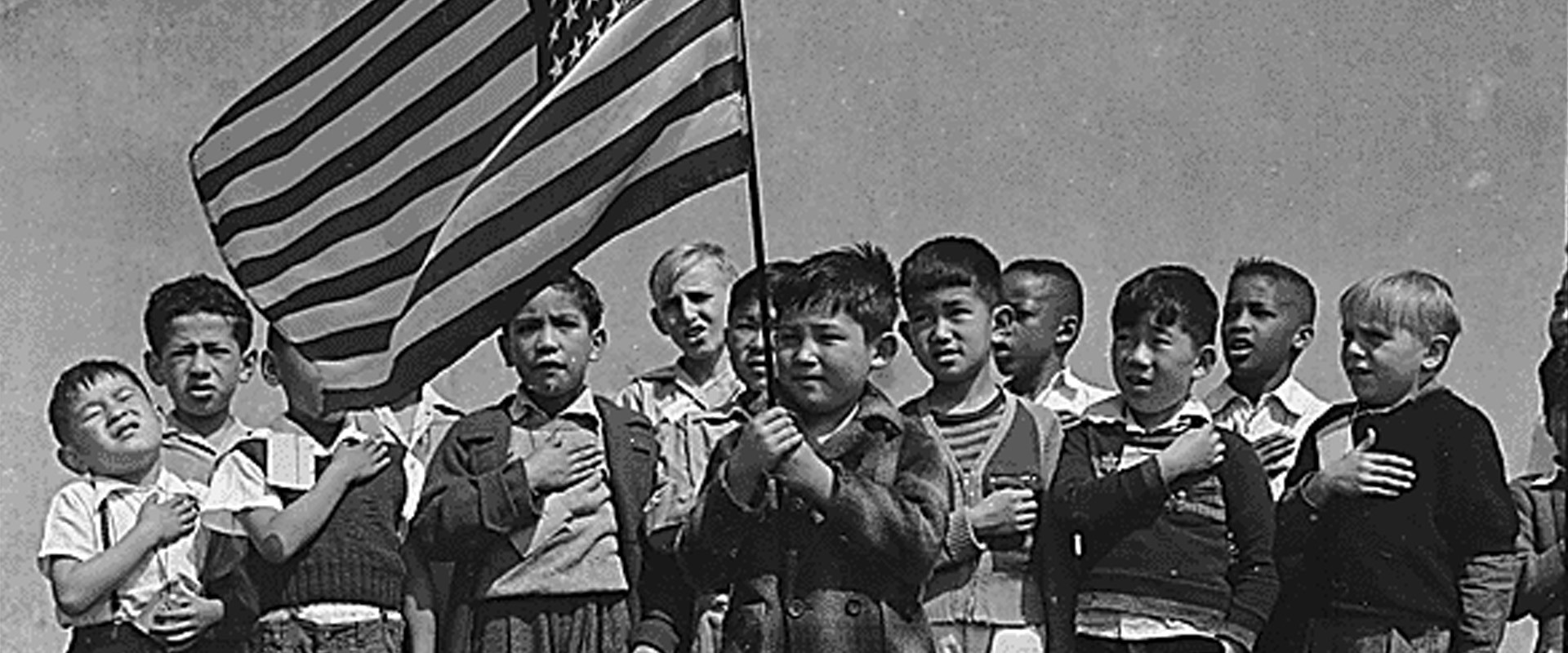
If and when a school denies enrollment to illegal aliens (the legislation leaves that determination up the district), it is sure to be challenged by enterprising attorneys and advocates for illegal aliens and thus trigger judicial review. Nothing is ever really or inherently unconstitutional from the standpoint of stare decisis, the legal principle that courts follow precedent but are at the same time permitted to overrule precedent and trigger judicial review. This is because either the precedent was poorly decided (based on flawed reasoning or an incorrect interpretation of the law), the legal landscape has shifted (over time, changes in societal values, technological advancements, or other factors might make past rulings no longer relevant or just), or the law evolves (courts may find that constitutional interpretations, evolving understandings of rights, or new legal theories warrant a departure from established precedent. In other words, the law is never really settled, as everybody recently found out with Dobbs, which ended the 1973 precedent established in Roe v Wade concerning abortion rights. Indeed, this is likely the point of the legislation, to attempt to overturn the precedent in question, Plyler v. Doe (1982).
This is not a bad thing. Legislatures have the power, I will assert the obligation, to trigger judicial review because, as the representatives of the people, their duty is to express the popular will, with due respect to the individual, and this must presume that the people are not weighed down by past political attitudes or shackled to moribund manifestations of law. The judiciary’s role in a constitutional republic eschewing the tyranny of majoritarianism is to work from law and principle to determine whether the interpretations of the law are valid, as well as whether majority desire conflicts with the liberties and rights of individuals, and hence on which side the law and those who administer it must come down.
The Fourteenth Amendment states that no government can make or enforce any law that abridges the privileges or immunities of citizens. This is one of those instances where the plain text of the clause leaves little to no wiggle room for judges. Whether an illegal alien has the same privileges and immunities is a more open question, albeit the term jurisdiction tells us something about the status of persons to which the article refers. Given that those here illegally can be deported (and even naturalized citizens under certain conditions), whereas native-born citizens cannot, it’s not safe to assume that illegal aliens are entitled to the things citizens are. Indeed, any honest reading the article tells you that they are not. Just as the man who breaks into your house is not entitled to your stereo system, the man who breaks into your country is not entitled to the things your tax dollars buy. And that’s the way it’s supposed to be in a representative system where the citizen is sovereign. If anybody from anywhere can exploit public resources, then the citizen has no country.
On the question is whether the precedent established in Plyler v. Doe will stand or fall, whatever one thinks of the matter, one must keep in mind that the Supreme Court in 1982 had a different composition than the Supreme Court in 2025. Most of the court’s justices then were appointed during the 1960s-70s progressive era. Even moderately conservative justices, for instances Harry Blackmun and John Paul Stevens, evolved into left-leaning judges on the bench. I don’t see a lot of evolving on the bench today—and that’s not necessarily a bad thing. To be sure, it depends on where the observer stands. I trust where I stand is clear enough.
The almost certain judicial review provoked by Tennessee’s actions—if enacted and contested guaranteeing it—will land the question finally in the lap of the Supreme Court, and given the Court’s present-day composition, it is probable that Plyler v. Doe will not survive. It will likely go the way of Roe v Wade (1973), Chevron (1984), and Grutter v. Bollinger (2003), precedents established during the progressive era of the Court. If overturned, it will make life difficult for those who are in the country illegally, which will in turn disincentivize the desire of those who wish to illegally enter our country or overstay their welcome to exploit resources meant for citizens. If the Court also overturns US v. Wong Kim Ark (1898), the interpretation of the Fourteenth Amendment that all persons born on US soil, regardless of their parents’ nationality or immigration status, are to granted citizenship, then the Court can make it even less desirable to enter or stay in our country (you can read my essay on that matter here: “Blatantly Unconstitutional”? Ending Birthright Citizenship for Illegal and Certain Other Aliens).
The movement to reclaim America for Americans is a noble one, one patriots hope the Supreme Court will affirm in its pending sessions.

 freedom and reason
This is so valuable. I’m not sure: do you want your links not shared around widely, say on substack, or do you want them shared? I remember a flap a while back, with some students having encountered your writing via social media. I am talking about potentially very argumentative forums, such as low info forums full of hysteria and even race and (particularly) gender brownshirts, with the hysteria being fanned by irresponsible journalists–yet low information can be combated, and this is a prime example of the information they need and lack. Or it could be only shared to more knowledgeable forums ,with people who are somewhat in the choir already but may benefit from domain knowledge such as this post provides.
Share where you will! Thanks for reading!