
The First Amendment to the United States Constitution states, “Congress shall make no law respecting an establishment of religion, or prohibiting the free exercise thereof; or abridging the freedom of speech, or of the press; or the right of the people peaceably to assemble, and to petition the Government for a redress of grievances.” I have written extensively on Freedom and Reason on matters of religious liberty and freedom of speech. In this essay, I focus on the Free Press Clause considering revelations that various government agencies in the executive branch of the federal government have been subsiding partisan media.
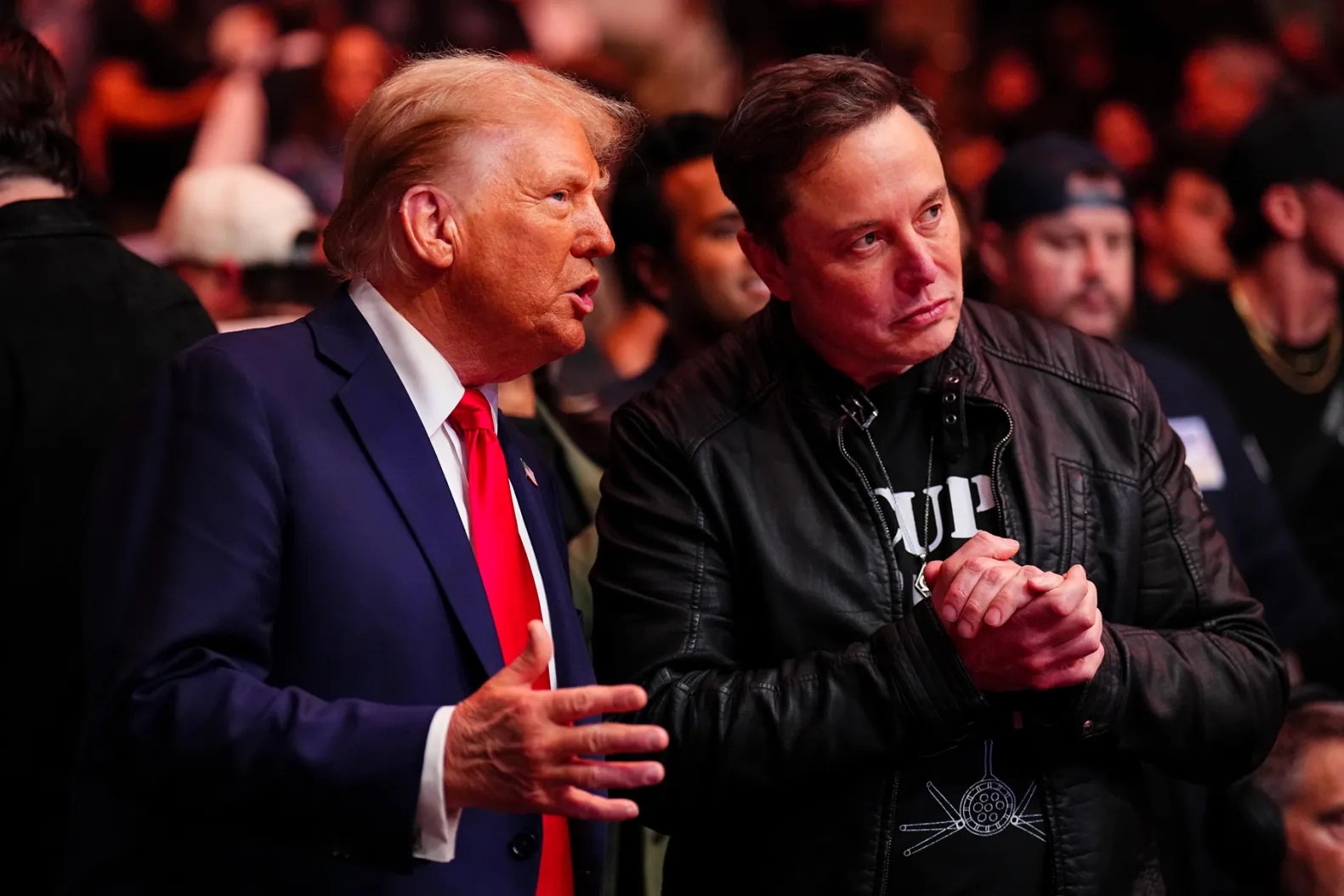
Just as Elon Musk performed a great service to the nation by releasing of the Twitter Files—internal company documents discovered after taking ownership of the platform, now X, revealing government influence in the manipulation of information—in the employ of President Donald Trump, the man has drawn the nation’s attention to another very serious problem in the realm of mass media: the government subsidizing partisan press outlets, such as Politico. Government subsidies to the media present the same problem identified in the Establishment Clause—to wit, the government cannot endorse, favor, or fund any religion. This principle is meant to prevent government entanglement in religious affairs. Likewise, press freedom requires independence from government influence to avoid conflicts of interest and undue state control of information and opinion.
The Twitter Files signaled the problem of undue state control, exposing biased content moderation at a major social media platform. Especially troubling in the Twitter case (and this is true also of Facebook and other social media platforms) was the level of direct government intervention. The files revealed coordination between Twitter executives and government agencies on issues like COVID-19 and the suppression of the Hunter Biden laptop story, as well as progressives agenda such as antiracism and gender ideology. Musk framed the disclosures as a victory for transparency and free speech, and he was right about that. Critics point to Musk’s own influence over platform policies that raised questions about his commitment to neutrality. But this is a commitment attributed to him and an impossible ideal to achieve, nor is it desirable. Neutrality isn’t the issue. Independence is.
Neutrality in media has always been a myth. Speech has content. The goal is diversity of content, not an impossible standard. One cannot imagine neutral content because neutrality is unobtainable. Any content claiming to be neutral could only be propaganda wrapping around itself such rhetoric. A free press is about something else: freedom from the government and an open system permitting viewpoint diversity. If we were to appeal to any sort of neutrality at all, it could only be a euphemism for the situation secured by the firewall between government and the press. Just as state-sponsored religion undermines religious independence, state-funded media compromises journalistic independence. In both cases, financial dependence on the government creates a conflict of interest, making it harder for institutions to remain in any sense autonomous and free to serve their respective audiences.
This is the heart of the problem with the government funding media organizations, whether the outlet is national or local. Yes, that means that media without sufficient income from non-government sources risk failure, but this is not a reason for the government to subsidize the media. The Free Press Clause serves to protect the freedom of the press from government interference, and that precludes government subsidies even at the risk of failure in the market. The clause is there to ensure that journalists and media organizations can operate independently, publish information, and, crucially, report on government actions without fear of censorship, suppression, or retaliation. Whatever the inherent problems of the media in a capitalist society, this protection is essential for maintaining an informed public, holding those in power accountable, and fostering open debate in a democratic society.
We call the media the Fourth Estate to underscore its role as an independent check on power. As such, it sits alongside the other three branches (or estates) of government—the Executive, Judicial, and Legislative. The free press functions as an external and unofficial watchdog, ensuring transparency, exposing corruption, and fostering considered debate—whatever party is in power, whatever ideology is in vogue. A free press is therefore an essential pillar of democracy, responsible for holding those in power accountable and informing the public.
In decrying the cutting of funding to media organization, selective or generally, progressives are defending another estate, the Administrative State (and the technocratic apparatus), an unelected and unaccountable estate operating inside the Executive, a vast army of federal bureaucrats comprising a permanent Washington establishment, with all the interests bound up in it: the Pharmaceutical-Medical Industrial Complex, the Military Industrial Complex, etc. This establishment, captured by corporate power and progressive ideology—this is who is subsidizing the partisan media to manipulate public opinion into supporting the narrow corporate interests and goals of the transnational corporate class. The same forces that corrupted social media, have long corrupted the traditional media.
When the role of the Fourth Estate is compromised by financial dependence on the government, it comes under the sway of the very power it is meant to scrutinize. To be sure, existing in a corporate capitalist environment, it is already compromised by the interests of the social classes it serves. But, again, these interests do not speak with one voice. The problem of corporate power is thus amplified when channeled through the administrative state, which can then be used to advance the agenda of the most powerful actors. The joining of a government subservient to corporate interests functions to concentrate and focus those interests. As Karl Marx famously noted in the Communist Manifesto, “the state is the executive committee of the whole bourgeoisie.” By that he meant that the state serves the interests of the capitalist class rather than the general population. The state—through its institutions and laws functions to maintain the economic power of the bourgeoisie, protecting their property and interests. Even in democratic societies, the state is not neutral but rather exists as a tool of the wealthy and a system of inequalities. Government funding of the press on worsens the situation: the state, already organized to manifest the interests of the bourgeoisie in law and policy, makes the nominally free press even more of an instrument of corporate power, undermining its role as an independent check on authority. To be sure, this role is an ideal, but when under the employ of the government, the ideal has no chance of serving its purpose.
This is why press freedom and independence—whether from government control or corporate interests, albeit not fully obtainable in the latter because of the fact of the capitalist mode of production—are fundamental to its function as the Fourth Estate. Just as we have the separation of church and state, we must have the separation of the press and state; the only way to dilute corporate power is with media diversity, and that can only be achieved, if only by degrees, by keeping separate the executive committee and the free press. By guaranteeing freedom of the press, the First Amendment helps prevent government overreach, allows for investigative journalism, and enables the dissemination of diverse viewpoints, functions fundamental to any sort of democracy. Despite corporate power, systems are complex, and democracy, liberties, and rights remain present. We erase their presence when the corporate state controls the press. At that point, it becomes only propaganda.
Even if government funding of the press is structured to be at arm’s length—i.e., through public media organizations like NPR, PBS, or the BBC (the US government also gave money to the BBC)—there remains the risk that government officials will use financial leverage to shape coverage overtly or subtly. This can manifest in direct interference (e.g., pressuring editors and journalists) or indirect self-censorship, where journalists avoid reporting too aggressively on government failures for funding restrictions. If a society is to achieve total separation of press and state, then the practice of state-run media must also be abolished.
Even if a publicly funded outlet operates with integrity, itself a problematic claim, there’s a public perception problem. Critics can claim it is biased in favor of the government and thereby undermine trust (in any case, trust must be earned, not conferred). To be sure, commercial media—while independent of government—faces pressures from corporate advertisers and interests, which introduces its own set of biases. Indeed, in many cases, the press is itself a mouthpiece for the corporation. But since the free press in a capitalist society is also a business enterprise, one dependent on advertisers and customers and shaped by market dynamics, there can in the end be no firewall between the press and corporate power. Nowhere in the First Amendment will one find language suggesting there should be. The First Amendment deals with the power of government. It separates the government from religion, speech, and the press. These firewalls are obtainable in the democratic sphere.
A common misconception, particularly among those unfamiliar with Marx’s critique of the state and capitalism, is that government power acts as a counterbalance to corporate power. In fact, they are intertwined. Many people view public or government-funded media as an antidote to the influence of privately owned corporate media, assuming that the former serves a democratic function by providing unbiased information in opposition to the interests of big business. However, Marx argued that the state is not a neutral actor standing apart from the influence of capitalism; rather, it functions as the executive committee of the capitalist class. This means that the state—through its laws, institutions, and financial systems—ultimately serves the interests of the capitalist elite, even when it appears to be acting on behalf of the public.
When government funding supports media outlets, it reinforces this relationship, as media organizations become financially dependent on the state, thus compromising their independence. In this context, whether media is privately owned or government-subsidized or is itself a public entity, the end result is the same: both are shaped by the broader capitalist system and the interests of those in power. This creates an illusion of democratic oversight, where government is perceived as a check on corporate power, when in fact both are interlinked in sustaining the capitalist order. By obscuring this connection, the distinction between public and private media appears more significant than it truly is, thus masking the deeper, undemocratic concentration of power in the hands of the corporate state.
It should be obvious to readers that a truly free press must be both editorially and financially independent of the government, for it cannot be the one without the other. As I have argued, ad I want to emphasize this point, this goes for the rebuttal that government funding can be useful in supporting public interest journalism, particularly in areas underserved by the market. One might propose strict safeguards to emplace to prevent political influence from corrupting the mission of the press, but this is unworkable in practice. In the end, the very institution meant to check power becomes compromised by it. This is under the control of the people. The people elected Donald Trump to check the undue power of corporate media and the administrative state that serves its interests, to check the progressive agenda and the project of big intrusive government which it by and large opposes. They elected Trump to rein in the bureaucracy and technocratic control. And they elected him knowing that Elon Musk would be appointed to carry out their desire.
The rise of new media—digital journalism, social media, and independent content creators—has transformed how information is produced and consumed. Unlike traditional media, which operates through established institutions with at least ostensive editorial oversight, new media allows for decentralized and immediate dissemination of news, bypassing traditional gatekeepers. Social media platforms enable anyone to share news, shaping public discourse in real time. The desire of elites to continue traditional media, captured by corporate state power, is manifest in their desire to save traditional media from demise.
Legacy media is how the corporate state established and perpetuated the hegemonic power of the oligarchy. The oligarchy thus suffered a massive blow to its power when Musk reformed Twitter, with other social media platforms following suit. The power elite is now frantically trying to keep alive the legacy media; its needs a bulwark against the rise of citizen journalism. But the free press project is about citizen journalism. That is the purpose of the Fourth Estate. The democratization of information has expanded access to diverse perspectives and that terrifies the oligarchy. They need the legacy media, and the assistance of government, to tell the public that the new media is problematic. They depict algorithm biases, echo chambers, misinformation, etc., which, to be sure, are problems, as threats to democracy, while defending the threat to democracy posed by government-funding of legacy media. They are themselves fighting to keep alive bias, echo chambers, and misinformation.
To be sure, the new media platforms are owned by private corporations, and because of this they hold immense power over public discourse; the concerns about censorship, political influence, and corporate control over what information is amplified or suppressed is warranted. This evolution in media complicates the traditional notion of press freedom, as the watchdog role of journalism is now entangled with tech companies, user-generated content, and government pressures to regulate digital spaces. But that is why the presence of Elon Musk on the media landscape, and Donald Trump on the political one, are such significant developments. Thanks to the populist-nationalist movement, the people are now able to reclaim their democracy, and vital to reclamation is sharply limiting corporate state power in matters of the Fourth Estate. It will be by raising up the democratic attributes in a civilization rooted in democratic republican values and liberal principles that we can, at least to a substantial degree, counteract the problem Marx identified in his writings. At the very least, by restoring the free market, we can make our capitalist system more democratic and responsive to the popular will.

 freedom and reason