
Let’s not forget that when Roosevelt took office in 1933 and began implementing his New Deal programs, he was accused of authoritarianism. Critics, particularly from the Republican Party and business sectors, argued that his extensive use of executive power to create agencies and programs represented a drastic departure from traditional democratic governance—that centralization of power in the federal government undermined individual liberties and “state rights,” a euphemism for our federalized system.
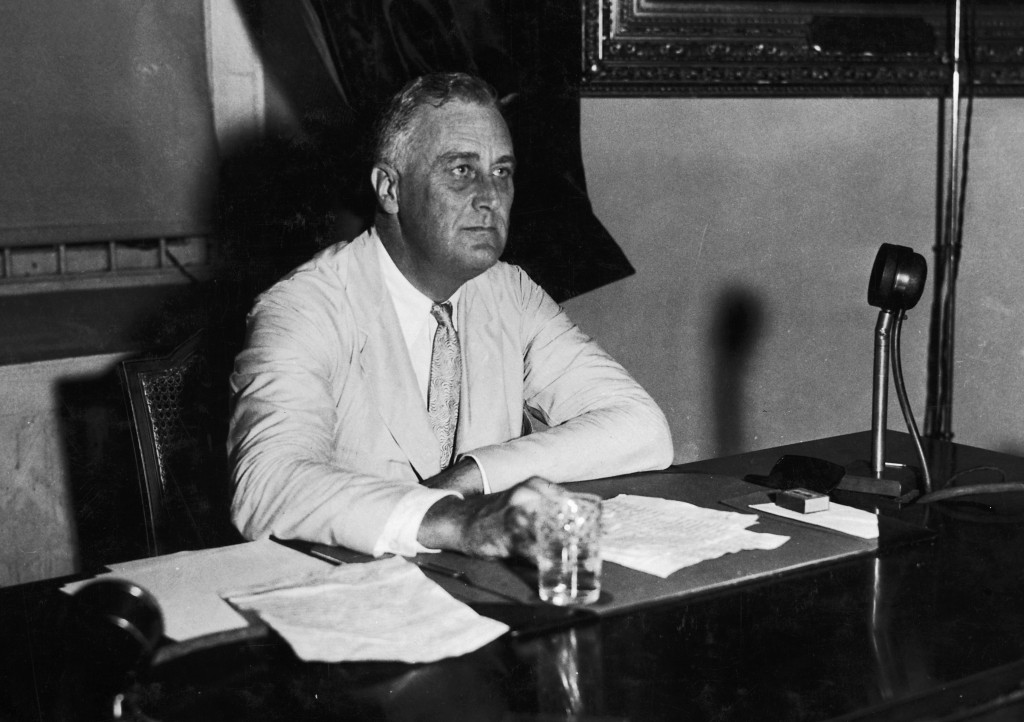
Republicans in particular expressed concerns that Roosevelt’s policies were leading the country toward a more centralized and potentially dictatorial government. For its part, the Roosevelt administration emphasized that the New Deal programs were necessary reforms, framing the initiatives as essential for protecting democracy and promoting economic recovery.
In a historic analog to X (Twitter), Roosevelt produced “Fireside Chats,” radio broadcasts that directly communicated with the American public to explain his policies and reassure citizens about his intentions and build public support. Roosevelt sought to build a broad coalition—labor unions, farmers, and progressive intellectuals—to strengthen the political base for his policies. When faced with legal challenges to the New Deal, his administration defended its initiatives in court. Roosevelt administration framed its actions as a legitimate response to a national crisis, positioning itself as a defender of democracy rather than a threat to it.
The progressive panic isn’t really about bold executive action. It’s about which party is taking bold executive action. Progressives might do better to argue policy rather than attempt to manufacture a moral panic. But they won’t because their policies are strongly disliked by the public. So, on second thought, what option do they have but the old playbook?
The question of which period of bold action was authoritarian is not my object here, but something I have explored in depth on Freedom and Reason. But I do want to note that, in the aftermath of Roosevelt, there was a gradual but significant shift in union density from the private sector to the public sector. Private sector unions represent the working class, which has been decimated by globalization (off-shoring and mass immigration). Public sector unions represent the credentialed class, the professional-managerial strata, reflecting the vast increase in the federal bureaucracy that progressives initiated and Roosevelt accelerated. Today, union density in the private sector is at a record low—under six percent. In contrast, public-sector union density now stands at 32.2 percent (even higher in local government).
This trend marks a shift in political power from the working class to the class that manages them for sake of the ruling class. Deconstructing the administrative state shifts power back to working people. Without private sector unions, the people now depend on populist government to represent them. Perhaps that is even better. Noting these facts in part answers the question about which period of bold action is authoritarian.

 freedom and reason