
The White House budget office has ordered a pause on all federal grant and loan programs, potentially affecting trillions in government spending. Predictably, there is opposition to this move by those affected by it. In this essay I will explain why the administration finds this necessary and why the credentialed and professional-managerial strata are panicked over it.
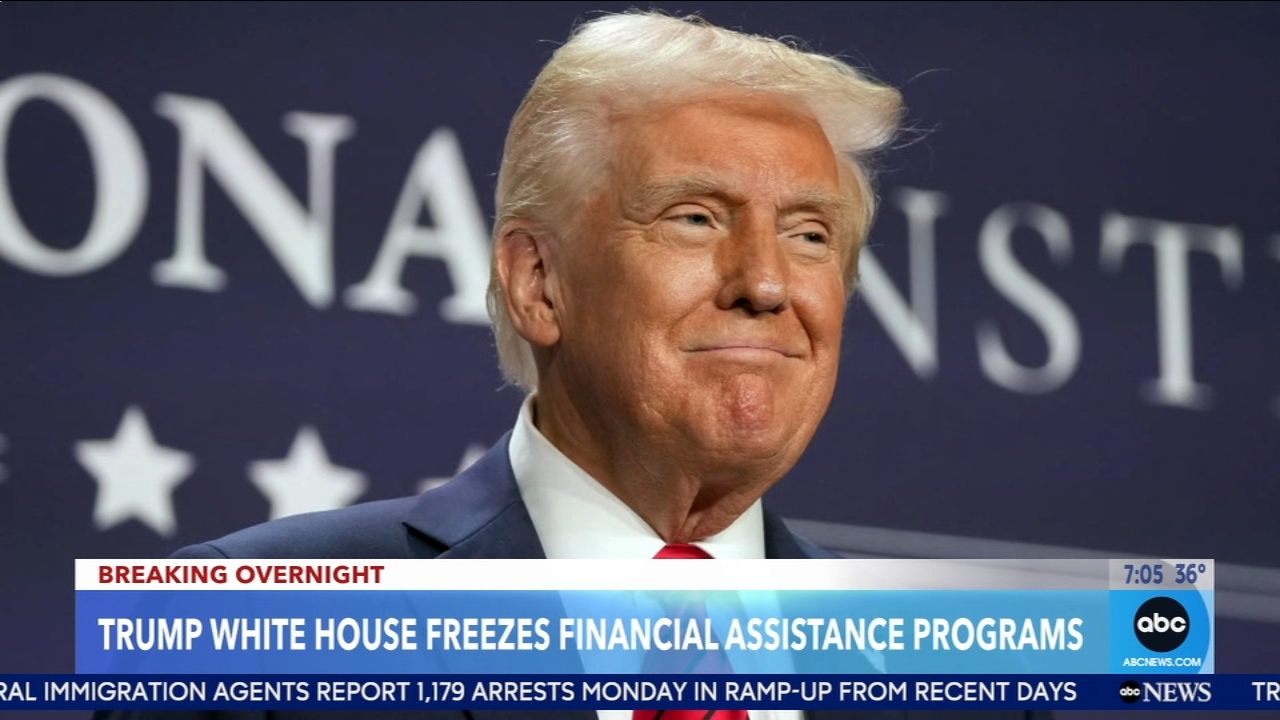
How many trillions are we talking about? Three trillion dollar was spent last year on federal assistance programs to businesses, nonprofits, universities, businesses, and state and local government grants. To clarify, this is not assistance to individuals. Social Security and Medicare, the trust funds, are not included in the pause, although they stand to benefit from slashing the federal budget.
That three trillion figure is mind blowing one. Leaving aside the trust funds, the two largest federal budget items are military and interest on the national debt. Department of Defense funding bill provides just over 824 billion dollars for 2024. It was increased several tens of billions in the 2025 budget. In 2024, interest on the national debt was $1.1 billion—$251 billion more than in 2023. Taken together with other discretionary spending, the 2024 budget was $2.7 trillion dollars. This means that spending on the programs Trump has paused exceeds all discretionary annual spending plus the cost of servicing the debt. The federal government has been stacking trillions upon trillions of dollars onto the national debt. The debt now exceeds $36 trillion, with approximately 1.7 trillion dollars added annually.
Interest on the national debt goes into what accounts? Foreign and international investors, including countries like Japan ($1.1 trillion) and China ($749 billion), now hold $7.9 trillion (29 percent of publicly held debt). The Federal Reserve’s holdings have risen to $4.8 trillion due to monetary policy actions, while intra-governmental holdings, such as Social Security and Medicare, account for $7.1 trillion. That means that the government is borrowing from the trust funds generated by payroll taxes. Domestic private investors, including mutual funds ($3.8 trillion) and banks ($1.7 trillion), play a significant role. State and local governments hold approximately 2.1 trillion dollars of debt, largely for pension funds and reserves, while other domestic and international investors collectively hold about $6 trillion. Whoever owns it, the interest represents $1.2 trillion dollars that crowding out other investments.
Debt financing comes with another problem. When a government borrows money to finance its deficits, it issues bonds, which require interest payments. The amount of government borrowing can influence interest rates because, if the government issues large amounts of debt, it may need to offer higher interest rates to attract investors, particularly if there are concerns about the government’s ability to repay the debt. Borrowing demands push up the cost of money in the economy overall. As interest rates rise, it makes borrowing more expensive for the private sector. This is known as “crowding out.” Thus private businesses that want to borrow for investment—such as to expand operations, build new facilities, or develop new products—find it more costly to do so. Consumers are also discouraged from taking out loans for things like homes or cars. As a result, government borrowing reduces the amount of investment in the private sector, stifling economic growth.
Therefore, apart from the government spending a significant portion of its budget on servicing debt, which results in less fiscal flexibility to invest in other important areas, such as education, infrastructure, or public services, as well as perpetuating a vicious cycle, increased demand for borrowing—both from the government and the private sector—pushes interest rates higher, making it more difficult for businesses to secure financing at affordable rates.
Those who think the government can print its way out of this, whether they want this or not, if they have their way, which they largely have, must know that risks turning us into a Third-World county. Combined with support for mass immigration from the Third World, this seems to be what they want. The historical examples of excessive money printings are many. These cases highlight the consequences of a practice that can lead to runaway inflation, eroding the value of currency and causing severe economic instability. I will review some of the worst cases so readers can get an idea of the problem.
In the aftermath of WWI, to pay reparations under the Treaty of Versailles, the Weimar Republic printed money at an unsustainable rate, causing hyperinflation and a plummeting of the mark’s value. By 1923, the exchange rate reached 4.2 trillion marks to one US dollar. In Hungary after World War II, the government printed money to cover wartime expenses, resulting in one of the worst instances of hyperinflation in history. By 1946, Hungary’s inflation rate was so severe that prices were doubling every fifteen hours, and the pengő became worthless.
There are more recent examples. In Argentina during the late 1980s, the government printed excessive amounts of money to finance budget deficits, leading to an inflation rate of 12,000 percent in 1989, destabilizing the Argentine peso. Bolivia faced a similar situation in the 1980s when economic crises prompted the government to print money, resulting in annual inflation of 24,000 percent by 1985. During the early 1990s, Yugoslavia experienced hyperinflation as the breakup of the country, war, and sanctions led the government to print money to fund its operations, driving inflation to 313 million percent by 1993. Zimbabwe began printing money to finance its budget deficit, sparking hyperinflation that peaked at 79.6 billion percent in 2008. The Zimbabwean dollar became worthless and the country abandoned its currency the following year. In Venezuela, beginning in the mid-2010s, the government printed money to deal with declining oil revenues and economic mismanagement, resulting in hyperinflation that reached over a million percent by 2018. This led to the collapse of the bolívar and widespread economic hardship.
Several factors influenced the inflation problem in the United States today, and the increase in the money supply during the COVID-19 pandemic is one of them. In response to the economic downturn caused by the pandemic, the federal government implemented large fiscal stimulus measures, including direct payments to individuals, unemployment benefits, and business relief programs, while the Federal Reserve kept interest rates low and engaged in large-scale asset purchases, known as “quantitative easing.” This combination of fiscal spending and monetary policy aimed to prop up the economy but led to a significant increase in the money supply. While this increase helped support demand during a time of economic shutdown, it also triggered inflationary pressures as supply chains were disrupted and labor shortages emerged. We can attribute the currently problem of inflation, particularly in goods and services, to this large influx of money into the economy without a corresponding increase in production. The scope of the problem is so big that it will take a while to wring inflation out of the system.
Biden isn’t entirely to blame for this. Following the 2008 financial crisis, the Federal Reserve undertook a series of unconventional monetary policies, most notably quantitative easing, to stabilize the economy. The Fed purchased large amounts of government bonds and mortgage-backed securities to lower long-term interest rates and inject liquidity into the financial system. This monetary stimulus aimed to encourage borrowing, spending, and investment to help revive the economy. While inflation remained subdued during most of Obama’s presidency, the increase in the money supply during this period contributed to higher asset prices, such as stocks and real estate. The long-term effects of expansive monetary policies laid the ground for future inflationary pressures.
Part of undoing this involves a bottom-up review of the budget. the Trump administration can’t leave that review to the same people who put the nation in this situation. This is what folks mean when they talk about deconstructing the administrative state. A paradigm shift must happen at some point to save the republic. I will probably not agree entirely with the program array when it all comes back on line, but cut will have to be made. There will be pain. The pain is unavoidable.
There is some confusion about all this works. Congress holds the power of the purse, meaning it’s responsible for appropriating funds through the passage of laws, including budgets and spending bills. This appropriation determines how much money will be allocated to various government departments, programs, and initiatives. Once Congress has appropriated the funds, the Executive is responsible for managing and utilizing them, sometimes according to the guidelines set by the legislature, but which generally leaves management matters to the various agencies. Federal agencies and departments under the executive branch implement programs, ensuring that appropriated funds are spent effectively and in compliance with legal requirements. This arrangement reflects the principle of separation of powers.
Historically, the Executive has had the power to impound funds, i.e., delaying or withholding the spending of funds Congress has appropriated for specific purposes. This allows the executive branch to control the use of budgeted funds, either temporarily or permanently, rather than spending them as intended by Congress. The Impoundment Control Act of 1974 restricted the president’s ability to withhold funds without congressional approval. But the Executive still retains discretion in managing appropriated funds. Agencies can shift funds between accounts or purposes. The OMB still controls the timing and rate at which funds are distributed, in part to prevent overspending. Moreover, the Executive can determine how programs are administered or prioritized within the scope of legislative intent. If money is being spent in ways not intended by Congress, or within the scope of the Executive’s priorities, the Executive has a responsibility to address these matters.
This idea is that Congress has control over appropriations while the president manages them. Trump paused certain programs to determine whether they’re being used appropriately and effectively. It’s part of the comprehensive review of the administrative state he promised during the campaign.
The administrative state, often referred to as the “fourth branch of government,” operates within the executive branch and is largely staffed by a credentialed class of professionals whose expertise drives the implementation of government policies. This class shares a natural affinity with the professional-managerial class found in academia, think tanks, and nongovernmental organizations, as both groups benefit from expansive government operations. Their professional interests are closely tied to the continuation of large budgets, sustained appropriations, and a steady flow of grants and loans, which fund their programs, secure their positions, and support their institutional objectives. This dynamic creates a vested interest in maintaining the status quo of big government and can lead to resistance against efforts by Congress or the Executive to curb spending or shift priorities. Such resistance arises from both practical concerns over job security and ideological commitments to the policies and projects they administer, presenting significant challenges to elected officials aiming to reform or restrain administrative practices.
Many in my line of work—I am an academic—identify as on the left and talk a good game about the working class, the interests of which they purport to advance and defend. However, this is not the class to which they belong, and their opposition to the grant and loan programs Trump has paused is rooted in the interests of their class, the new middle class, not in the interests of the working people they say they represent. In the way, the new middle class are the functionaries of the corporate state.
In his Prison Notebooks, written while in an Italian prison during the fascist period, Antonio Gramsci provided us with useful distinction that can help us understand the problem. Gramsci distinguishes between “organic intellectuals” and “traditional intellectuals.” Organic intellectuals emerge from or are tied to specific social classes. Depending on their class commitments, such intellectuals can either challenge or transform existing power structures, or they can defend the status quo and perpetuate the system. In either case, they articulate the interests and values of their class, helping to build its consciousness and capacity for political action. In contrast, traditional intellectuals are detached from class struggles and linked to long-standing institutions, such as academic or religious institutions. They consider themselves independent and perpetuate the status quo by remaining aloof from it. Gramsci argues that the distinction is not fixed; time can institutionalize organic intellectuals; traditional intellectuals can realign with new hegemonies.
One may conclude that the professional-managerial class within the administrative state operates as a modern iteration of Gramsci’s “traditional intellectuals,” ostensibly detached yet deeply invested in maintaining the systems that sustain their status and power. While their rhetoric often champions the working class, their actions and priorities reveal a closer alignment with their own class interests. This contradiction underscores the importance of identifying true “organic intellectuals,” those who represent the working class, challenging entrenched power structures rather than perpetuating them. Only through such realignment can the interests of the broader population take precedence over the self-preservation of an insulated elite.
At the same time, there can be organic intellectuals within academia, such as administrators drawn from corporate or political ranks, as well as business professors who embody and articulate the interests of the capitalist class. These individuals, while situated within educational institutions, often serve to reinforce and legitimize the values and priorities of the economic elites they represent. Their presence shows that organic intellectuals are not confined to popular movements but can emerge in institutional settings to advocate for dominant class interests. Understanding this dynamic is crucial to understanding how academia, like other institutions, can perpetuate hegemonic power.
The federal grant and loan programs in question often serve the interests of specific elites and professional classes rather than directly benefiting the working class. For instance, grants to universities fund research projects that may advance academic careers or institutional prestige but offer little immediate or tangible benefit to working-class communities. Most of the knowledge academics produce is esoteric and of no practical value to working people. At the same time, it can be of considerable value to those classes who exploit working people. Indeed, those who work in institutions of higher learning, many of whom proclaim solidarity with working people, are nearly unanimous in their defense of open borders, a policy that harms the interests of working people.
Similarly, loans and subsidies to businesses and nonprofits frequently bolster the corporate sector or professional-managerial institutions, reinforcing their dominance while leaving the material conditions of the working class largely unchanged. Even programs aimed at aiding state and local governments can disproportionately benefit administrative bureaucracies rather than addressing the pressing needs of working-class citizens. This allocation of resources reveals a misalignment between the stated goals of these programs and the realities of who benefit from them.
The Democratic Party, traditionally perceived as the party of labor, has undergone a significant transformation over the past several decades, aligning itself more closely with the interests of the credentialed and professional-managerial class, the class that serves as functionaries for the corporate state. This shift, exemplified by Clinton’s embrace of globalization and market liberalization, prioritized policies that benefited elites in academia, finance, and technology while leaving many working-class Americans behind. In contrast, the Trump presidency represents a populist reorientation of the Republican Party, challenging the corporate state’s dominance and addressing issues critical to the working class. Trump’s efforts to deconstruct the administrative state, reprioritize federal spending, limit immigration, and adopt a more nationalist economic agenda signal a break from the traditional Republican alignment with global corporations. This approach, while controversial among those seeking to sustain the status quo, reflects a genuine attempt to empower ordinary Americans and prioritize their economic and social well-being over the entrenched interests of the managerial and elite classes. Thus the pain imposed is not out of a desire to hurt working class citizens, but to establish the conditions in which they can regain control over their lives in the republic that was meant to serve their interests.
Capitalism isn’t going anywhere. The question for the left is what sort of capitalism will best serve the interests of the working people, which includes their ability to live their lives beyond the scope of an expansive and intrusive government. It also means that those made dependent on government by progressives will have a change to become more self-reliant and enjoy the dignity that comes with work. With mass deportations, there will be jobs that need to be filled. It’s time to transition the idled from their idled lives to lives lived productively. Everything follows from this, most importantly the reestablishment of the nuclear family among those most harmed by progressive social welfare and other policies. One of the consequences of getting Americans back to work is the amelioration of the criminogenic conditions that make citizens unsafe by generated the individuals who populate our prisons.

 freedom and reason