
In his Farewell Address, Joe Biden cast a foreboding shadow over the American landscape, warning of the emergence of an oligarchy that consolidates immense wealth, power, and influence. He invoked imagery of the Gilded Age robber barons, framing his concerns in the rhetoric of safeguarding democracy and ensuring fairness for all.

“I’m so proud of how much we’ve accomplished together for the American people. And I wish the incoming administration success, because I want America to succeed,” he said. Alluding to the narrative that Trump attempted to prevent a peaceful and orderly transition of power in the wake of the 2020 election, he declared, “I’ve upheld my duty to ensure a peaceful and orderly transition of power to ensure we lead by the power of our example.” Then, attempting to capture the tone of Dwight D. Eisenhower’s ominous Farewell Address of 1961 (see We Have Become Eisenhower’s Worst Fears), Biden pivoted to a warning, intended to connect Trump to the Big Tech oligarchs:
“In my farewell address tonight, I want to warn the country of some things that give me great concern. And this is the dangerous concern—and that’s the dangerous concentration of power in the hands of very few ultra-wealthy people, and the dangerous consequences if their abuse of power is left unchecked. Today, an oligarchy is taking shape in America of extreme wealth, power, and influence that literally threatens our entire democracy, our basic rights and freedoms, and a fair shot for everyone to get ahead. We see the consequences all across America. And we’ve seen it before, more than a century ago. But the American people stood up to the robber barons back then and busted the trusts.”
Before his sideways attempt to portray Trump as anathema to the interests of the American Republic, he tainted the history of America by feigning wonder at a portrait of the Statue of Liberty that hangs in the White house and waxing sentimental about the Republic’s Founders: “A nation of pioneers and explorers, of dreamers and doers, of ancestors native to this land, of ancestors who came by force, a nation of immigrants who came to build a better life, a nation holding the torch of the most powerful idea ever in the history of the world that all of us—all of us are created equal. That all of us deserve to be treated with dignity, justice, and fairness. That democracy must defend and be defined and be imposed, moved in every way possible. Our rights, our freedoms, our dreams.” (Emphasis mine)
He was not merely contrasting the White Anglo-Saxon Protestant to those others progressives see as his victims, a standard tactic of delegitimizing the purpose of America, but to prepare the audience to engage in acts of resistance against the reclamation of America’s purpose: the supposed pending abuse of power by Trump. “But we know the idea of America—our institution, our people, our values that uphold it—are constantly being tested. Ongoing debates about power and the exercise of power, about whether we lead by the example of our power or the power of our example, whether we show the courage to stand up to the abuse of power or we yield to it.”
Biden’s characterization of the situation—while cloaked in populist alarmism—obscures a very different reality, one that with a proper grasp of history and power dynamics lays bare the dissonance between his proclaimed ideals and the policies enacted under his administration, and more broadly the plan the Corporate State and its small army of progressive elites have for its future. Beneath the veil of warnings lies a profound irony: the very oligarchy Biden cautions against has flourished through the machinations of the Corporate State, of which Biden himself has been a central figure—to be sure, not the actual manipulator of the levers of power (he is himself a shell of the person he used to be and always only an instrument), but rather a simulation of an American president.
We must never forget that the Biden administration, in concert with the CIA, DHS, and FBI (the Deep State), exercised unprecedented influence over Big Tech platforms, platforms owned by the very oligarchs he alluded to in his remarks. Under the guise of combating misinformation and protecting public health during the COVID-19 pandemic, as well as appearing to ensure electoral integrity, federal agencies pressured platforms like Facebook and Twitter to suppress dissenting voices. Accounts were deactivated, content flagged, and alternative narratives silenced. Far from being independent arbiters of public discourse, these platforms were conscripted into service by the Administrative State. The alignment of Big Tech with federal power epitomized the very abuse of power Biden claimed to decry—a collusion that undermined open dialogue and democratic deliberation, the lifeblood of a free society.
The implications of this collusion extended far beyond the mere suppression of information. It revealed the interdependence between corporate elites and state actors, a relationship not unlike that of the old monopolies and political machines of the late nineteenth century, collusion that progressivism and the regulatory regime (the FDA, USDA, etc.—later the CDC, ED, EPA, etc.) were and designed to conceal and obscure. Rather than protecting the democratic ideal, this alliance entrenched a system of governance that served the interests of the few over the many.
In this sense, Biden’s rhetoric about standing against oligarchy represents an exercise in dissimulation—a propagandistic effort to obscure the fact that his administration, like those of his predecessors (the Bushes, the Clintons, the Obamas), embodied the consolidation of corporate governance. Biden, like his predecessors, is a creature of the Establishment—the military-industrial complex, the medical-industrial complex, the censorship-industrial complex, and the other complexes whose insatiable desire for wealth and power require control over mass consciousness.
However, history seldom moves in a single direction. No control system is total—at least not in the long run. The rise of a populist movement, encapsulated by the persistence of Donald Trump and the America First agenda, marked a decisive counterforce to Corporate State’s hegemony. Despite the relentless efforts to delegitimize the MAGA movement, its force of purpose proved resilient, amassing tens of millions of supporters who defied the narratives propagated by the mind control apparatus—the mass media, the culture industry, and the academy. Trump won more than 77 million votes, winning more than 14 million more votes than he won in 2016. Hardly the unpopular figure the media portrayed; Trump became more popular over the intervening eight years. This groundswell of populist energy catalyzed a shift that even the Big Tech oligarchs could not ignore.
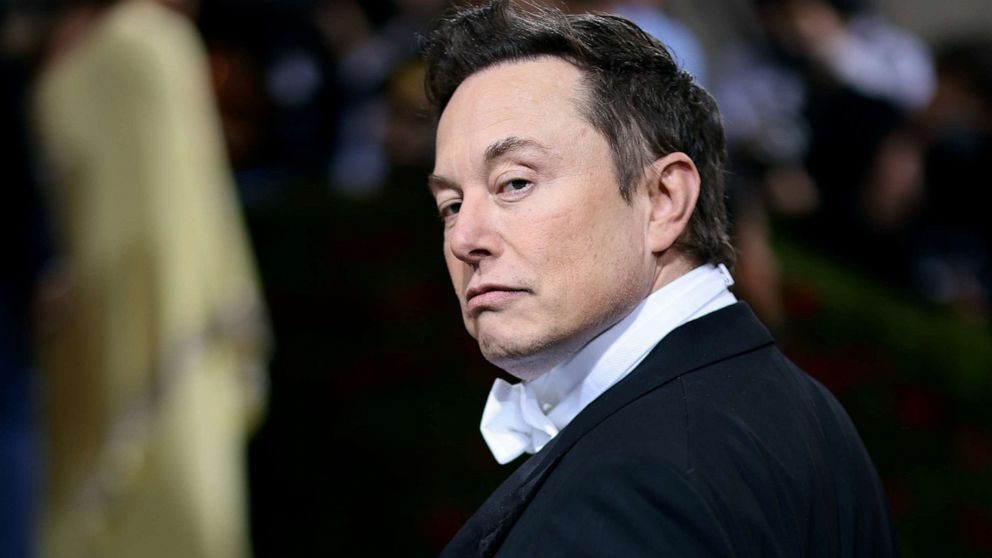
Elon Musk’s October 2022 acquisition of Twitter, rebranded as X, signaled a pivotal moment in this transformation. Recognizing the inevitability of Trump’s re-election and the ascendancy of populist nationalism, and his own interests in a free and open society (which we must admit has not been perfectly consistent), Musk dismantled the platform’s legacy of censorship and realigned it with the popular will. Following Musk’s lead, especially in the wake of Trump’s landmark victory, Mark Zuckerberg and other tech leaders pivoted, opening their platforms to reflect the preferences of a burgeoning populist majority. This transition marked the erosion of the Establishment’s dominance over Big Tech and the beginning of a new era in which these platforms became subservient to the democratic-republican ethos.
In this new paradigm, the power once wielded by corporate elites in concert with the administrative state has been supplanted by a renewed commitment to the classical liberal values of free association, conscience, publishing, and speech, to grassroots activism, and to popular sovereignty. This shift, far from being confined to the United States, echoes as well across Europe, where similar populist-nationalist movements are challenging the entrenched power of bureaucratic elites and transnational corporations. The global resonance of this transformation underscores the universality of the struggle for self-determination against centralized power.
Considering this, Biden’s Farewell Address takes on a new dimension, not as a clarion call against oligarchy but as an attempt to misdirect the American people and prepare the ground for the coming corporate-organized resistance to the popular will. By framing the populism that unites the left and the right as a threat rather than a corrective, Biden and his administration seek to reinforce the very power structures they claim to oppose. His warnings about the abuse of power ring hollow when juxtaposed with the actions of his administration, which weaponized federal agencies to suppress dissent and uphold the interests of the Corporate State. Progressivism, in this context, reveals itself not as a synonym for populism but as its antithesis—a tool of corporate governance masquerading as egalitarian ideal.
The rise of populist-nationalist movements, bolstered by the realignment of Big Tech, represents a reclamation of power by the people. It’s a reminder that democracy is not a gift bestowed by elites but a right fought for and exercised by citizens. As America transitions into this new era, the oligarchs who once served the Corporate State are now compelled to answer to the desires of the populace. In these developments we see a vindication of the ideals upon which the nation was founded—a testament to the enduring power of self-government. With the resurrection of reason and truth, the destructive ideologies that plague the West—CRT, DEI, TQ—are on the run. Don’t let up (see my recent Tasks for the Rebel Alliance).

 freedom and reason