
I want to urge you to watch this interview. You will learn a lot from it. It could change your life. I teach this material in my Freedom and Social Control class. It appears at several points during the semester. I do media and propaganda as thought control. Thats obvious. But I also do it when I cover the sick role, and the medical-industrial complex (psychiatry being the focal point) and the reason it manufactures life-long patients, namely profit. (The government does this by creating dependents.)
I have several essays about this on my platform Freedom and Reason: A Path Through Late Capitalism. This subject, like many of the other subjects I cover, would never be accepted for publication in academic journals, and so I publish here. But it would be pointless even if academic outlets permitted this information to appear given that only a handful of people—often the most deeply indoctrinated among us—read academic journals. The paywalls are too high for the ordinary person. Perhaps that’s okay because most of what one finds there is nonsense. What might be useful to masses is obscured by jargon.
Here’s what’s not nonsense (I will try to avoid using too much jargon): You are being managed, and there’s a lot of effort invested in obscuring that fact. Those managing you know that popular awareness of how you are being managed will give you insight into your personality and help you resist your managers’ schemes. The managers know, or at least those who developed the techniques they use know, that gullibility and suggestibility are variable across individuals, and that everybody is to some degree capable of being conditioned. They use that knowledge to tailor the techniques of mind control. Knowing where you lie along the distribution of these traits and the different management techniques used to leverage that variability could help you avoid being manipulated.
Since most of you are not in that universe, you may not be aware that universities offer courses and organize thematics around the topics of conspiracy theory and dis/misinformation. These courses and thematics are designed, whether the curricular designers and administrators are aware of it (most aren’t, frankly) to dissimulate the technology of thought control by making awareness of its techniques appear as the product of paranoia. Talk the way I talk and you are the type of rube who listens to Bobby Kennedy, Jr., and that crowd. Obviously, I am guilty as charged.
For those unfamiliar with the term, dissimulation is the opposite of simulation. The latter involves making something that doesn’t really exist, or is actually something else, appear as if it does or is what is presented. This is happening all the time now, for example in the phenomena of simulated sexual identities. Once artificial intelligence, robotics, and virtual reality are fully realized, Baudrillard’s precession will be fourth order. In contrast, dissimulation is making something that does in fact exist—such as the fact that you are being managed—appear as if it doesn’t really or that it is not what you think it is. The most convincing simulations will thus be those for which the process by which they are produced is dissimulated.
With thought control techniques, you’re “supposed” to know that these things exist but disbelieve that they have real effects and distrust those who tell you what the purpose behind it all is. The dissimulation of thought control is key to maximizing its effectiveness.
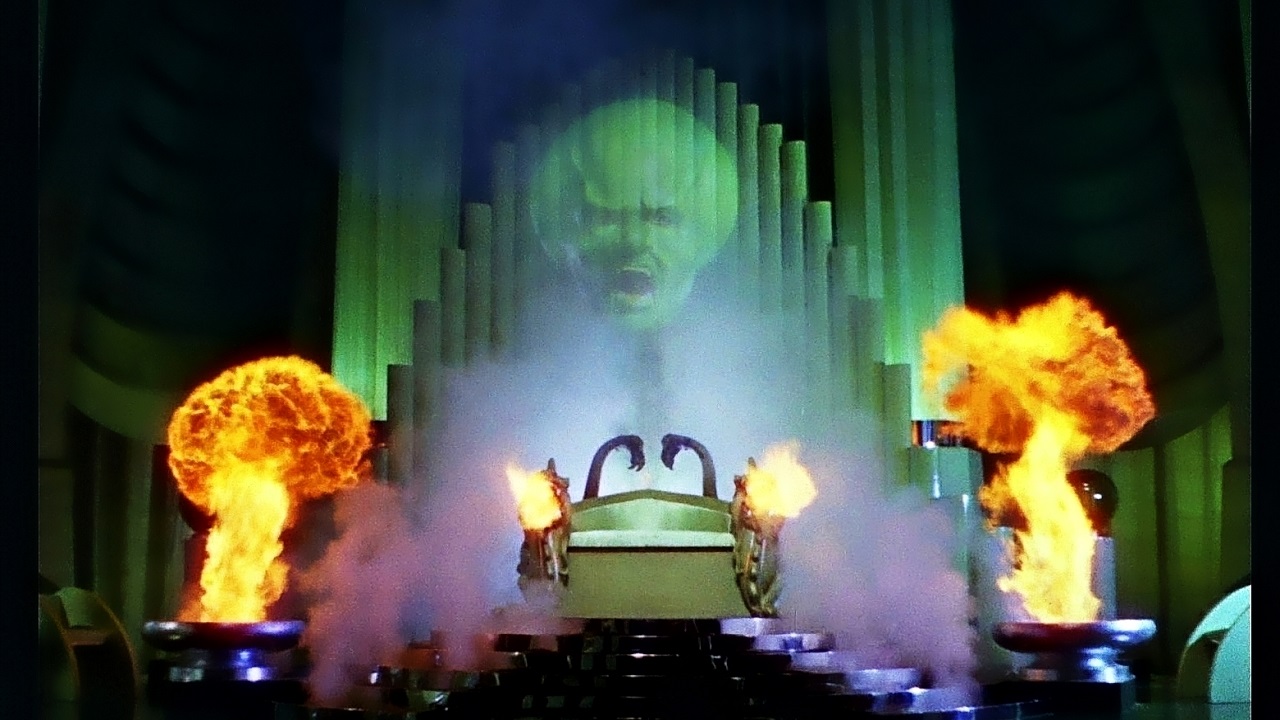
We all remember The Wizard of Oz (here referring to the 1939 Metro-Goldwyn-Mayer film). The Great and Powerful Oz was a simulation. Toto, because he is a dog, is free of the capacity to be manipulated by dissimulation (dogs are affected by simulations for the same reason), pulls back the curtain to expose the huckster pulling the levels that work the simulation.
At first you see evil. This man is an exploitative narcissist (which he is). But by humanizing the huckster and rationalizing his manipulations, and by leaning into his charisma and confidence (both simulations), the human and humanoid characters continue to trust him even after he is exposed as a huckster. Indeed, he becomes even more powerful in his naked moment (which is still fiction, but I ask you to suspend your disbelief for our purposes here).
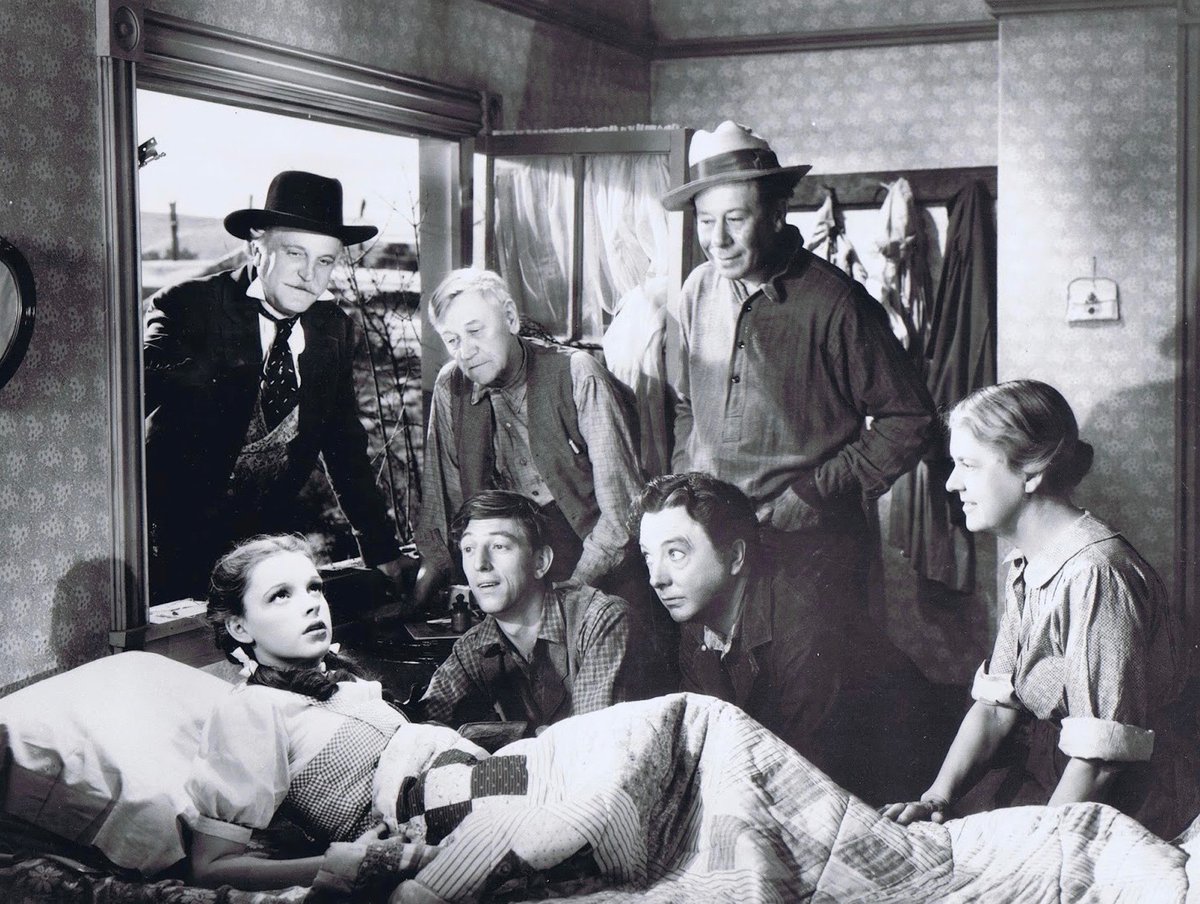
Remember, the technicolor part of the film is a dream. The huckster appears in both the black-and-white “real world” and the technicolor dream (ponder that juxtaposition later—or now, if you wish) expressing empathy. But his life is hucksterism. He appears to have more power in his manufactured authenticity. At least his power is more subtle. He uses it to exploit the gullibility and suggestibility of the fellowship for his own profit, whether it’s sustaining his life at the edges of black-and-white communities in his traveling van or ruling the Emerald City, where he uses parlor tricks like the Horse of Many Colors to amaze the citizens there.
While the huckster can give the humanoids—the Tin Man, the Straw Man, and the Cowardly Lion (all metaphors)—a symbolic item that completes them, they are all figments of Dorothy’s imagination—or rather sublimations of personalities in her black-and-white life. Dorothy and Toto are real (the Fourth Wall is only broken by the Wicked Witch of the West in the dream world). Oz cannot complete Dorothy. Only Dorothy can do that. And she finds, in the final analysis, that she is already complete. She was all the time. There’s no place like home.
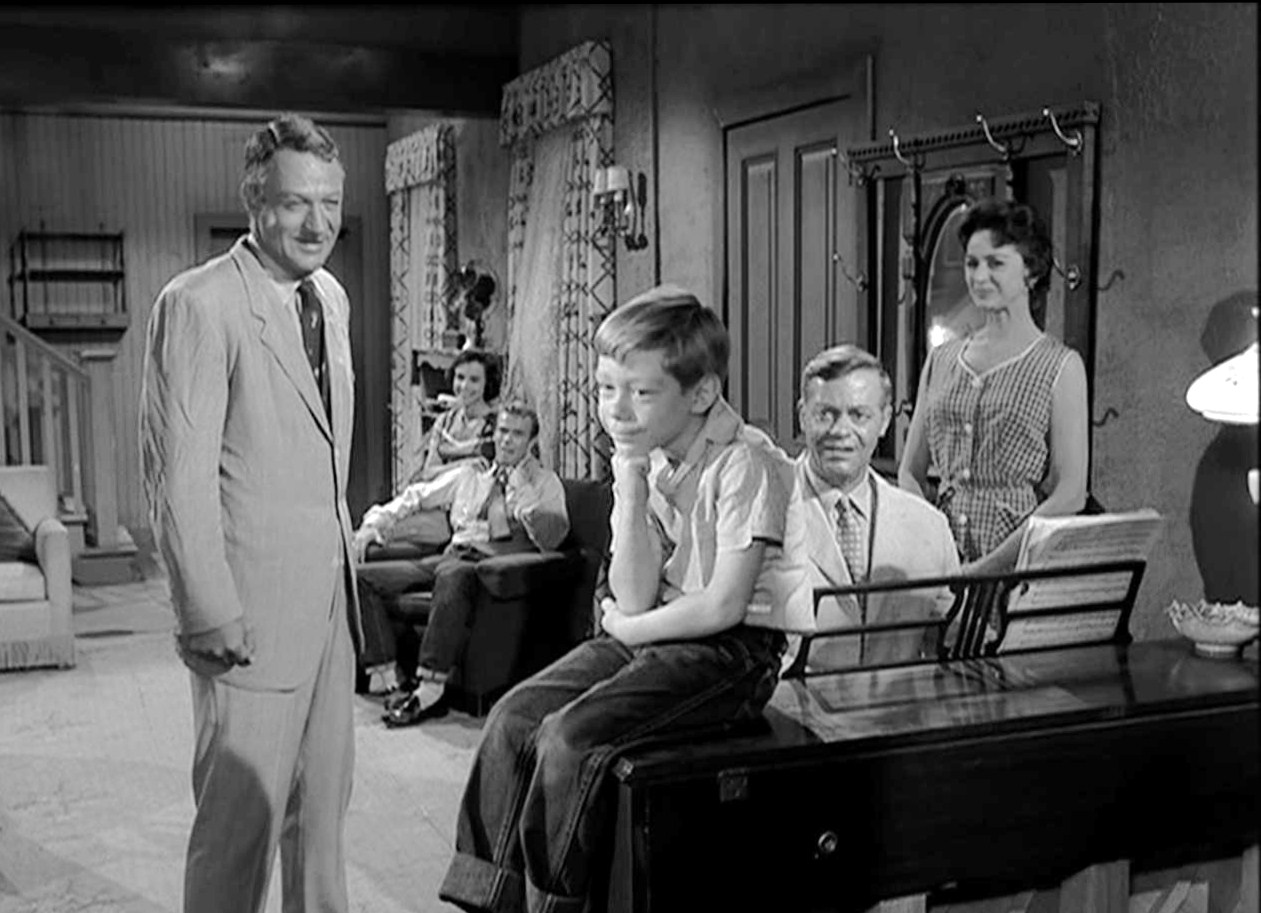
Remember the short story “It’s a Good Life?” Maybe you saw the Twilight Zone adaptation. The world was destroyed and only Peaksville left untouched. This was home. Those trapped in Anthony Fremont’s dream (nightmare) never wake up—if it was a dream at all. They couldn’t kill Anthony because he would know. Dorothy sought the dream Land of Oz because she felt trapped. She found adventure after being knocked unconscious. The dream was very real. It was in color. Any everybody around her was in it.

 freedom and reason