
Update (10:50 PM): Listening the PBD podcast. Tom Elsworth made a great case for acquiring Greenland here on Apple Podcasts: California Wildfires, Gulf of America, Zuckerberg Kills Meta Fact-Checking. The conversation is in the order of the title. Scroll forward (or listen to the whole thing). In summary: There are minerals there. China is trying to acquire them.
I know for most Trump’s rhetoric regarding Greenland and the Panama Canal comes as a surprise or an absurdity—a shock even. But Trump has been talking about these acquisitions for a long time. And he is not the only one. Nor are his ambitions unusual to United States history. There’s a reason for this: enhancing national security through territorial expansion. His ambitions are not personal, but patriotic and strategic.
There is precedent for this in American history. A cornerstone of US foreign policy, aimed at limiting European influence in the Western Hemisphere, the Monroe Doctrine was articulated in 1823 by President James Monroe. The doctrine declared that any attempts by European powers to colonize or interfere in the affairs of the nations of the Americas would be viewed as acts of aggression against the United States. In return, the US pledged to refrain from involvement in European wars or internal affairs.
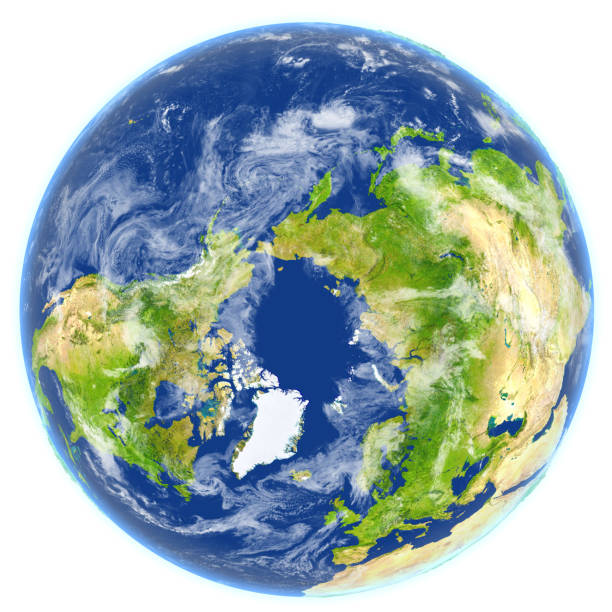
We’re used to looking at the world map from the side and not from the top. The perspective determines how we think about the world and the security risks the actual proximities of nations pose. Russia seems very far away when viewed from the side. It’s not. Sarah Palin was correct: you can see Russia from Alaska on a clear day. For this reason, Alaska, acquired by the United States from Russia in March, 1867, via a treaty negotiated by US Secretary of State William Seward, was a vital strategic acquisition. The acquisition provided not only strategic advantages, but access to vast natural resources, as well as a stronger presence in the Pacific for trade and territorial expansion. Abundant wealth in natural resources, including oil, has proved Alaska to be an immensely valuable asset.
We think about the top and bottom of the planet as covered in ice caps, which also messes with our grasp of the situation. The South Pole is a continent. However, the North Pole is not a land mass at all but a sea. This sea separates North America from Russia. It’s not a big sea. At least not big like the Atlantic or the Pacific. Given Democrats constant ranting about the danger Russia poses to our democracy, they should appreciate this fact more than anyone. Obviously Democrats and Republican allies are not shy about interfering in the affairs of Europe to harass Russia on its Western Front.
At present, Greenland is an autonomous territory in the sphere of the Kingdom of Denmark. Greenland became a colonial possession of the Norwegian crown during the medieval period. Greenland established home rule in 1979 and expanded its autonomy in 2009. Today, while foreign affairs and defense remain under Danish control, Greenland manages most of its internal affairs and has its own parliament. Incorporating Greenland into the US sphere of influence provides the Western Hemisphere with greater security in the region. Greenland desires complete independence from Denmark, and Denmark has signaled its openness to negotiations with the United States over Greenland’s future.
As for the Panama Canal, its strategic and economic value should be obvious to everyone who understands why the United States built the canal in the first place. The canal is presently controlled in a major way by the Chinese Communist Party, which represents a much greater threat to world freedom than Russia. Rhetoric aside, Democrats don’t really care about the China problem. They have spent the last fifty years selling out American to China to enrich their corporate masters in world cities across the West. They have moreover been busy installing the CCP model of control in the West (a major part of the significance of Donald Trump’s victory in the 2024 election). But the rest of us should care. China is Orwell’s dystopia on steroids.
Now, I am not saying we should take over Greenland or the Panama Canal. I am saying that I understand why this is being considered. It’s not some wild idea that only Trump could dream up. It’s something that should be discussed and debated. The People would do well to disregard the incessant mocking by progressives and hear out the argument.
As for acquiring Canada, which Trump is flirting also with, is not such a good idea. Canada would become our largest state. It would get about the same number of electoral votes as California. Canada is more like California than it is like, say, Texas. Just saying, Republicans, Canada as our 51st state might likely secure Democratic Party hegemony for generations. This is a country that had Justin Trudeau as prime minister for a decade.
For their part, Canadian officials have floated the idea of incorporating California, Oregon, and Washington into Canada. Others have suggested Canada acquire Minnesota. I am not saying these are good ideas, either, but these are our worst states, fitting better with the Canadian idea as it has developed than they do with the American Creed. Of course, this idea is the worst idea because it diminishes the world’s greatest hope for democracy and freedom. So we hope instead that these states come around—and there are promising signs that they will in time.

 freedom and reason