Anti-Science Tendencies Threaten Secular Society—and Human Freedom

Anti-science refers to a set of attitudes and beliefs that dismiss or reject scientific methods and principles. Individuals who hold anti-scientific views deny science as a reliable means of generating objective and universal knowledge. This perspective manifests in various ways, such as rejecting the theory of evolution, embracing pseudoscience—claims that present themselves as scientific but fail to adhere to established scientific standards—and falsely asserting that corporate medicine is grounded in genuine scientific practice.

My critique of gender ideology is the same as my critique of Islam or Scientology. To be sure, one can believe in gender identities, thetans, and souls. I don’t care what people believe per se. I don’t care how they appear—and long as appearances are not for deceptive purposes with the intent to harm others. Wear the stereotypical garb of the other gender. Whatever. But deny the rights of others, harm children, undermine the integrity of science, now I care. And so should you.

All ideologies are subject to criticism, the pernicious most necessarily, since the harms involved often elude a great many people. Scientology has been successfully withered by relentless criticism and ridicule, as it should be. Unfortunately, Islam has been rather resilient (some 1.8 billion believers and growing). The state of gender ideology is somewhere in between. People are more aware today of the harms this belief system and its associated practices causes others, especially to women and children. Unlike Scientology, gender ideology has the support of corporate state power. As for Islam, the West remains far too tolerant of its practices.

The central claims of gender ideology, Islam, and Scientology are unscientific, even antiscientific. One of the most settled question in science is that in gender is binary, and in mammals exclusive and immutable. A member of our species cannot change gender. It is an impossibility. Members of the gender cult, and the institutions they have coopted—the institutions that are exploiting them for profit—have substituted a quasi religious ideology for science. That the cult has the corporate state at their backs, and the ideology captured organs claiming to do science, makes the problem of gender ideology a difficult one to unwind.

I continue to confront the objection that gender and sex are different things. But that distinction, portrayed as definitive, is in fact recent and contrary to settled science. As I have shown on the pages of Freedom and Reason, gender and sex have been synonyms for eight centuries. I have provided proof that biologists use gender to refer to gamete size, sex-determining chromosomes, and genitalia in books and journals, and objective research that still work from the standpoint of scientific integrity. That others have substituted ideology for science does not make their ideology scientific. It only shows the power of ideology to corrupt scientific institutions.

Psychiatrists specifying DMS-5 categories (image generated by Grok)

To be charitable, perhaps the problem is being misspecified. Gender dysphoria, like all body dysmorphia may have roots in a brain disorder (it appears as a body mapping problem). But gender identity as anything other than an internal subjective experience is an entirely made up notion—and made up by a man who believed in dream telepathy. And the man before him was a pedophile. Is that unfair? Hitler had some good ideas, I’ve been told. The point is that it’s a crackpot notion invented by crackpots. In the end, gender identity is a nonfalsifiable proposition, which means, like the soul in Islam or the thetan in Scientology, it lies beyond the scope of science. The advocates of this idea are chasing gender angels. It’s a faith belief.

The claim that a man can have a gender identity that is incongruent from his actual gender is indistinguishable from a man who says he has a soul that exists independent of his body (Christianity, Islam) or that a thetan exists inside him that must be realized through auditing (Scientology). These are unscientific concepts. The conjecture that a female brain can exist in a man’s body would have to be definitively shown in every instance where an intervention is sought—and even then, it does not follow that modifying a person’s physiology or morphology is the appropriate intervention. It will take incontrovertible evidence to disprove the obvious, that a brain in a man’s body is by definition the brain of a man, however it appears in scans and scopes.

Identity is not what a sentient being thinks of itself. Such a standard is absurd on its face. That has never been a standard in science. Identity is what the being is, determinable by science. This fact has far reaching implications. Universal humans rights must rest on this standard, since science uncorrupted by ideology is the only universal method of explanation. What gender is a member of any given species of mammal? Look and see.

Unlike most mammals, our species have delusions. Either that or they are lying. They believe in things or claim to believe in things that cannot be demonstrated to be there in actuality, things that are not merely unproven, but at this point unprovable. People who insist that I am wrong are not working from the standpoint of reason and science. Those who want to punish or shame me for working from that standpoint are authoritarian in attitude.

The man is of course free to believe whatever he will, but this remains a faith belief. A free and open society allows for faith belief. Many of my family and friends are Christians and I do not seek an intervention to cause them to believe something else except in debate. People have to voluntarily leave the head space they are in. We may only reach them by persuasion. I have no power to deprogram those captured by cults and religions and I do not seek that power. At the same time, a free and open society cannot allow faith belief to determine the lives of anybody else or to guide government action. We live—or at least should live—in a secular society where decisions that affect everybody are based on rational adjudication of facts and situations. All deviations from that standard undermine reason and the foundation of human freedom. This is the problem.

What gender ideology seeks is to create simulations that stand in the place of reality—and they demand that everybody else agree or risk marginalization, punishment, or reputational harm. The gender affirmation movement is industrial scale delusion and deception. Indeed, it is not a social movement at all, but a reactionary countermovement against reason and science and human freedom (See The Authoritarian Presence).

Mitch McConnell and Reductio ad Hitlerum

Mitch McConnell has implied that “America First” rhetoric parallels the sense of that rhetoric in the 1930s in the run up to WWII. In an interview with the Financial Times, McConnell cautioned against the perils of isolationism, stating, “We’re in a very, very dangerous world right now, reminiscent of the period before World War II.” He continued, “Even the slogan is the same—‘America First.’ That’s what they said in the ’30s.” Addressing foreign conflicts, McConnell remarked, “For most American voters, the instinctive response is, ‘Let’s stay out of it.’ That was the argument made in the ’30s, and it simply won’t work.”

The “America First” concept has a long and evolving history in US political discourse, associated with prioritizing American interests above international commitments. You might wonder what is wrong with putting America First. The short answer is, for the common man, nothing. But McConnell wants you hear “America First” rhetoric pro-Hitler talk, even though Hitler hasn’t been around for almost as long as McConnell has been living—which is a very long time. Why? Because he is a functionary for transnationalist corporate power, the real fascist force in the world today.

Mitch McConnell of Kentucky

One might remark that McConnell apparently forgets Ronald Reagan employed “America First” rhetoric during his political career, albeit his usage, and crucially the context, differed from some of its earlier and later invocations. In distinction to the Bush family, the Clintons, and Obama, Reagan was an economic nationalist, emphasizing American competitiveness and self-reliance in the global economy rather than subservience to it. His “America First” appeal conveyed economic revival, including policies to strengthen American manufacturing, reduce government regulation, and lower taxes to enhance the nation’s competitive edge. He criticized policies he believed disadvantaged American workers or businesses. “Our present troubles,” he said in his Inaugural Address, could be conquered by “reawakening this industrial giant” and beginning “an era of national renewal.” Was Reagan expressing the “palingenetic form of populist ultra-nationalism” Roger Griffin details in his work on fascism? Hardly (even if we accept Griffin’s definitions are valid).

Reagan is often portrayed as belligerent for his expansion of military spending (which began, for the record, under his predecessor, Jimmy Carter). But Reagan’s focus on military strength was connected to his belief in national sovereignty and defense of the homeland in the context of the Cold War (as late as it was). His foreign policy, especially his stance against the Soviet Union, focused on restoring American military might, framing it as essential for national security and leadership in the world. He emphasized the need for the US to act independently, when necessary, placing American interests above multilateral agreements or international constraints. Reagan’s spirit was that of optimistic patriotism. His “Make American Great Again” and “Morning in America” slogans, and overall messaging, highlighted “American exceptionalism.” His rhetoric invoked a vision of America as a “shining city on a hill,” America is a moral leader, a nation with a special destiny. His rhetoric aligned with populist “America First” sentiments by asserting America’s unique role and preeminence.

As with Reagan’s use of “America First” rhetoric, Trump’s use of the rhetoric lacks the isolationism associated with the pre-World War II America First Committee, which opposed US entry into the Second World War. For those who see parallels between the threat posed by Hitler’s Germany and that of Putin’s Russia, there are frankly no parallels really to be seen here. There are no indications that Putin harbors ambitions to conquer Europe or other parts of the world. The Russia-Ukraine conflict is a territorial dispute antagonized by the West. The association of Trump’s foreign policy with those of the America First Committee is a cover for expansion of the transnational power eastward. It is indeed the Mitch McConnells of the world who are pushing military belligerence and expansionist policies. We know what his ilk’s goals are.

Where Reagan and Trump differ significantly are on matters of immigration and free trade. However, concerning the latter, Reagan also sought protections for US industries when necessary. Trump’s is far more reaching, understanding that for much of American history, governments sought to protect American business, and, furthermore, generated revenue through tariffs, which have largely been replaced by the income tax. As for immigration, Reagan did not enter office with his predecessor having induced the largest immigration increase in American history. Average annual immigration under Reagan was fewer than a million. A conservative estimate of the average under Biden has been around two and a half million annually. In four years of Biden, the nation has experienced millions more immigrants than during the entire eight years of Reagan. The influx under Reagan could not threaten the integrity of the nation; by the end of Reagan’s presidency, roughly eight percent of the US population was immigrants. Today, more than fourteen percent of the US population is foreign born—and they are coming from all over the world, where cultural sensibilities are often antithetical to those that sustain America.

McConnell’s insinuation that Trump’s patriotism smacks of those who delayed the United States entry into World War Two is shameful. But more importantly, it tells you whose side he is on. And it’s not ours.

The Authoritarian Presence

The attitude that there should be punishment or other some other serious consequence for the expression of opinions one is presumably not supposed to have indicates the presence of the authoritarian personality.

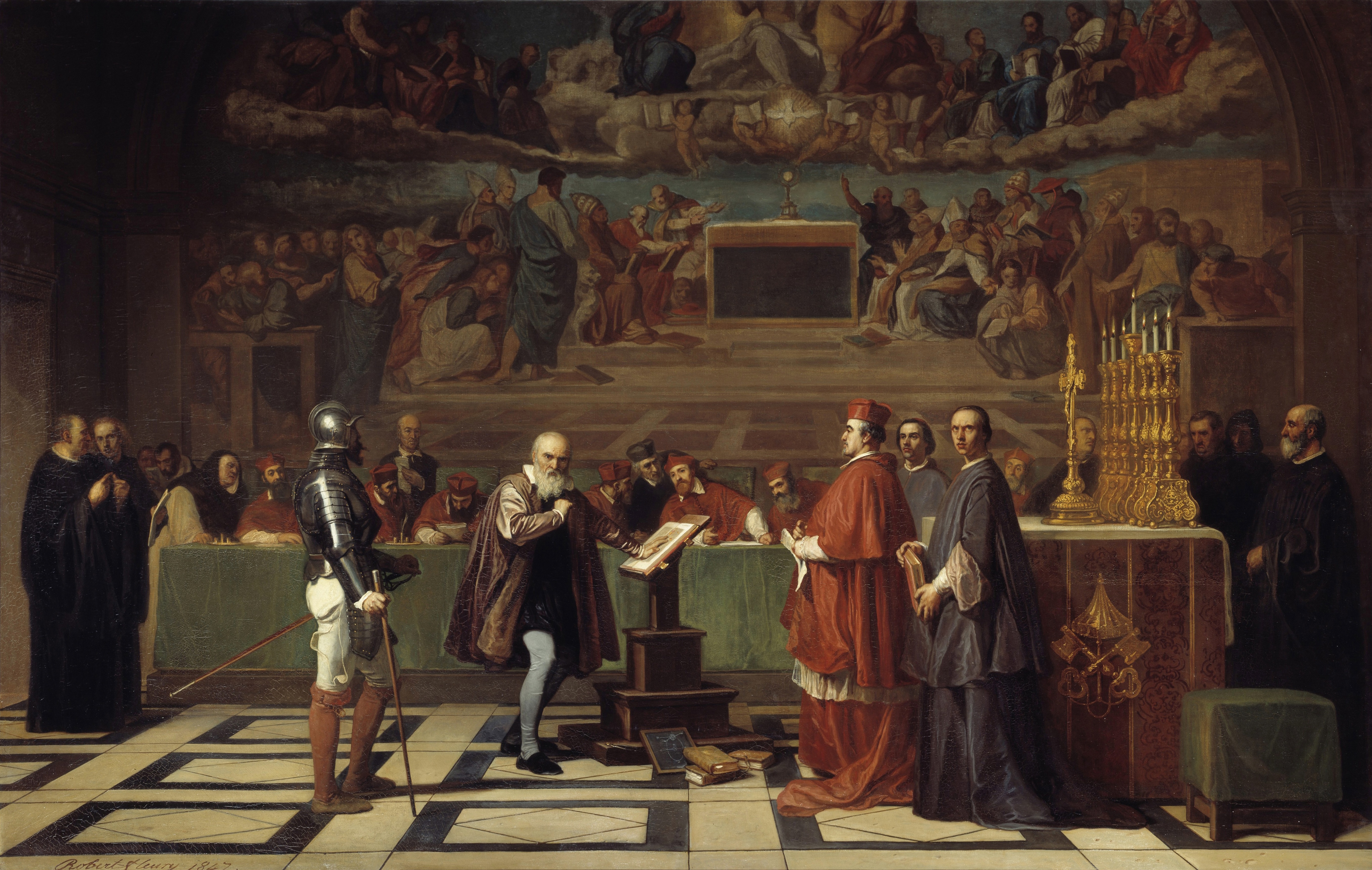
Galileo at trial

Take, for example, the belief that transwomen are women. This belief rests on the redescription of gender as a social construct, an internally sensed identity, or both (although holding both is a contradictory position). I have examined both assumptions (you will find those examinations on Freedom and Reason) and found the first routinely misdescribed and the second nonfalsifiable and therefore unscientific.

Of course, people are (or should be) free to believe that transwomen are women, but when this belief is imposed on others, and by imposed I mean some coercive means applied, a situation of tyranny is manifest. Tyranny is not diminished by claiming those subject to it are bigots as popularly understood (e.g., “transphobes”), since the charge issues from the side claiming to have the truth. It’s a substitute for substance.

For there is another side, and that is the belief that gender is a synonym for sex and that gender is binary and immutable. This is the majority position. To be sure, the majority can be mistaken. In this case, the majority is not mistaken because the science is as settled as science can be on the particular question; the belief is justified and therefore constitutes knowledge. But supposing it were not, and it wouldn’t matter for the right to express either side if it were (after all, people are free to believe in God and souls), the fact remains that there are two (or more) sides, and in a free and open society, individuals have the right to their side and to express their opinions without fear of consequences that limit their freedom.

Tyranny is obvious in the official suppression of belief because sanctioning sides requires a commissar, an office that has the authority to sanction dissidents. The commissar is the office with personnel who decides which side is a priori true or not and silence the side it deems false by fiat.

A priori involves denoting knowledge that proceeds from theoretical or ideological deduction rather than from observation or shared experience. Theoretical deduction presumes the validity of the theory in use, and in science all theories are open and subject to revision. The deduction used in the case of the commissar’s sanction flows from ideological presupposition, that is axioms or postulates derived from politics not from scientific reasoning. Therefore, the imposition of the deduction in such a case is the imposition of ideology, which is the central feature of totalitarian societies, from Soviet-style socialism to Nazi-style fascism.

Free and open societies liberate individuals from mandatory ideological systems, allowing them to choose or resist any ideological system. They are also free to choose or resist any theoretical system. The advancement of the heliocentric views of the social system, for example, depended fundamentally on dissent from the Ptolemaic system of geocentrism. Thankfully, even in the face of the commissar, dissidents persisted—but not without consequences.

The same is true with other controversial questions. For example, in the aggregate, blacks have a lower IQ than whites and Asians. In various literatures, this fact is chalked up to genetic inheritance, cultural inheritance, economic inheritance, etc (these are not mutually exclusive). To a priori rule out of order any argument positing genetic inheritance is an instantiation of tyranny. In a free and open society, a person has the right to consider and express the claim that there are distinct races and that grouped IQ differences are explicable on the basis of genetics.

One more example: grouped differences between men and women. Admitting wide variability and overlapping distributions, the means of a myriad of attributes deviate significantly. As a group, men are faster than women. They are stronger than women. They punch harder than women. They have greater lung capacity. They are taller. Moreover, there are differences in perception, reasoning, and temperament. One can say that, then, at swimming, for example, men are better than women. Another way of putting this is that men are superior in this domain. Inversely, women are inferior in this domain. To use the word “inferior” in this case will draw the charge of bigotry or prejudice. But, if it is true, the intent of the charge is to distract from the argument at hand by making it about the character of the arguer, not the substance of his argument. (It must be noted here that crossing over from prejudice to discrimination occurs when women are compelled to compete against men in sports.)

In all the examples used above, while people are certainly free to call people names, a free and open society tolerates the arguments the name callers seek to suppress, the truth of the claims arrived at through a rational examination of the available evidence. Yet we find ourselves in a situation where such rational examinations are suppressed or disallowed by various means—and these means undermine the foundation of a free and open society.

Kafka World: The Bizarre Case of E. Jean Carroll

George Stephanopoulos, ABC host of This Week, who formerly ran “bimbo” interference for confessed philanderer Bill Clinton during his 1992 run for President, deplatformed himself on X recently, presumably because ABC has agreed to give fifteen million dollars to President-Elect Donald Trump’s presidential library fund to settle a lawsuit filed because Stephanopoulos falsely claimed Trump raped E. Jean Carroll.

In 2019, two years into the #MeToo movement, Carroll claimed Trump sexually assaulted her in a New York City department store dressing room roughly thirty years ago (she also accused CBS CEO Les Moonves of rape). Trump says he didn’t. Carroll sued Trump for defamation because he said he didn’t rape her. Incredibly, in May of 2023, Carroll won her case. But perhaps it’s not so incredible given that the case was pursued in New York, a state notorious for its harassment of Donald Trump. (See the 2023 zombie case Alvin Bragg, New York County District Attorney covering Manhattan, brought against Trump.)

E. Jean Carroll

Let’s review the twisted logic at work in the Carroll v Trump civil case, although I am not promising that I can make it make sense. In order for the defamation case to work, the fact of rape must be a priori established. This would have to be the case for Trump to have lied about it. How else could this be if it were only a matter of Trump denying he raped a woman? Wouldn’t most of men deny they had raped a woman whether they had or not? In fact, almost all men accused of rape deny it. In the end, the jury fell short of saying it was rape, instead saying it was sexual abuse, and found Trump liable for defamation, and awarded her five million dollars.

The judge in the case, Lewis Kaplan, insisted sexual abuse meant rape, and dismissed Trump’s countersuit by asserting that Trump had raped Carroll “in common modern parlance” although not “in the narrow, technical meaning of a particular section of the New York Penal Law.” If you were thinking judges in New York work from the technical meaning of the penal law, you were mistaken.

Judge Lewis Kaplan

Kaplan is a driven man. Trump was never found guilty of, or even charged with rape or sexual assault in a criminal case where the burden on the state would have been to prove his guilt beyond a reasonable doubt. Here’s reasonable doubt: Carroll and her lawyers claim Trump’s DNA is on the dress she wore the night she said she was raped. But when Trump’s team offered a DNA sample, Judge Kaplan ruled, “There is no DNA evidence in this case, and none will be introduced at trial.” Why would he rule this way? Because Carroll changed her story about when the rape occurred when it was revealed that the Donna Karan dress she insists she was wearing that day (the one with an unidentified male’s DNA on it) wasn’t produced by Donna Karan until after Carroll initially claimed the sexual assault occurred, which was in 1994.

The logic of this case would be like me accusing you of stealing my car stereo speakers in 1995, and when you deny it, sue you for defamation, with the jury having to establish that you did in fact steal my stereo speakers and therefore my denial constitutes defamation. This even though I didn’t even own a car in 1995.

New York is Kafka World. This case and the hush money case are among the most bizarre cases I have ever seen. And we know why. Because Trump was the target.

The Ideological Corruption of Higher Education is Deep and Ubiquitous

What was obvious from the beginning is now admitted to by Crystal Mangum, the former exotic dancer who accused three Duke men’s lacrosse players of rape in 2006, igniting a national firestorm, She confesses that she lied about the encounter.

What Steven Miller says here is correct. Truth doesn’t matter to progressive academics. They’re advancing a political agenda. They can’t be bothered by facts. The agenda aligns with the goals of the Democratic Party. It’s very tribal.

Given the ubiquity of this attitude in the academy, it can be a lonely and alienating place for liberal and conservative faculty and students.

This is why those who had a different position of the Duke case—except Miller—did not speak up at the time. And it’s why progressives don’t change their position in the face of overwhelming evidence contradicting their assumptions.

Duke University in Durham, North Carolina

A new report by FIRE (Foundation for Individual Rights and Expression) reveals that half of faculty believe mandatory DEI statement pledges in hiring are “rarely” or “never” acceptable, while two-thirds advocate for institutional neutrality in colleges and universities.

The findings also highlight significant ideological divides, with nearly half of conservative faculty (47 percent) feeling unable to express their opinions due to concerns about negative reactions, compared to only 19 percent of liberal faculty (i.e., progressive academics).

Additionally, 35 percent of faculty admit to self-censoring their written work, a striking increase from the level of self-censorship reported by social scientists in 1954 during the McCarthy era, underscoring a growing climate of caution in academic expression.

Only 20 percent of university faculty say a conservative (and presumably a liberal, as well) would fit in well in their department.

There are many sets of “two kinds of people in the world.” One set is made up of those who identify with a social movement or political party and allow that tendency to sweep them along. If the movement or party changes, they change with it. Truth is what the party says the truth is. George Orwell captured this well in Nineteen Eight-Four.

The other side of this particular set are those who are true to themselves, truth arrived at through fact and reason, and support movements or parties if these advance the goals based on truth. The reasonable don’t allow themselves to be carried off by the movement or party. And, crucially, they can admit when they’re wrong.

The first side of the set is caught making bold claims based not on evidence, but on agendas. This attitude makes them gullible. It also makes them tenacious. When the facts contradict their ideology, they tend not to step forward and admit they were wrong. They’re even less likely to repudiate the ideology that made them that way.

The Truth About Race and Crime

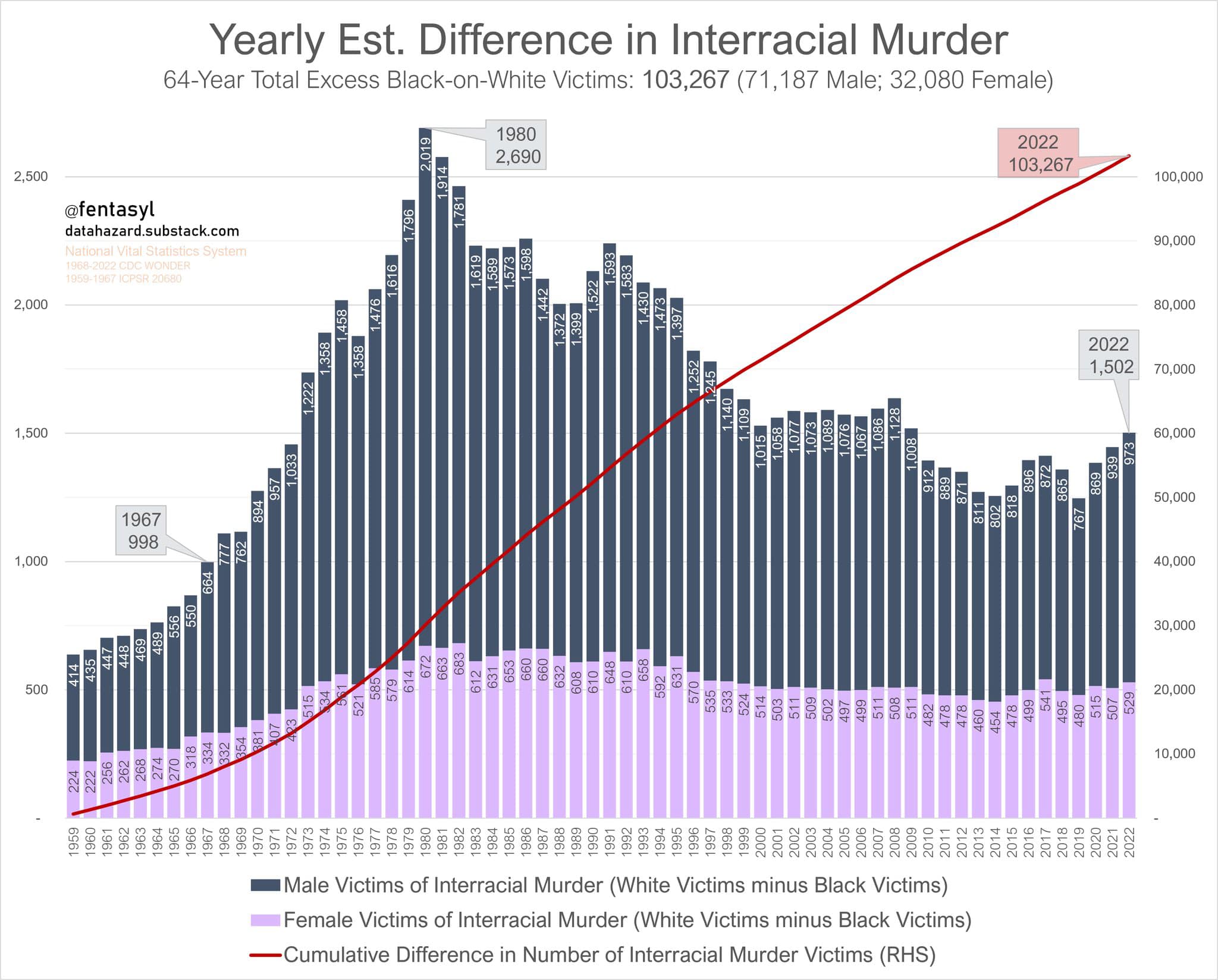
Bubba (@BubbatheOG) goes after Charlie Kirk and the latter’s statements concerning the overrepresentation of blacks in prisons and in serious crime. This video is a load of non sequiturs. I will come to that, but why avoid reality? Or does Bubba not know how to do basic research? Most of the victims of cries perpetrated by blacks are themselves black—more than half of homicides are perpetrated by black (mostly) men and more than half of the victims of homicides are black (mostly men). Moreover, blacks are far more likely to murder (and rob, etc.) whites than the other way around. We can’t solve the problem of crime if we don’t tell the truth. Public safety is a human right. Let’s begin with the black-on-white crime problem.

Daniel Penny and another man restrain Jordan Neely who was threatening passengers on a subway train with violence

We hear a great deal about interracial homicide when it’s white people killing black people. “Racism” we’re told. We were reminded of this in the Daniel Penny acquittal. Penny, who is white, was found not guilty of killing a black man on a subway. Penny acted because the man was threatening passengers. He was not alone. Black men helped. They were never charged. Black Lives Matters claims that whites kill blacks with impunity. But the reality is that far more whites are murdered by blacks than the other way around. Another reality is that the media rarely reports this fact.

Why is black on white murder so much more frequent than white on black murder? Partly because, demographically, as a group, blacks are much more likely to murder compared to other groups. The statistics are quite dramatic. Over 95 percent of murders are committed by men. Blacks commit more than half of all murders. Blacks are around 12 percent of the population. Men are half the population. Black men are eight times more likely to kill than white men. Given segregation, wherein most serious crime is interracial, the intraracial ratio is remarkable Imagine the inverse of that ratio with no media attention. Seems impossible, doesn’t it? (see Why are there so Many More White than Black Victims of Interracial Homicide?) I have been reporting on this on Freedom and Reason for many years (see also Race and Violent Death in America). Below is another graphic representation of the phenomenon.

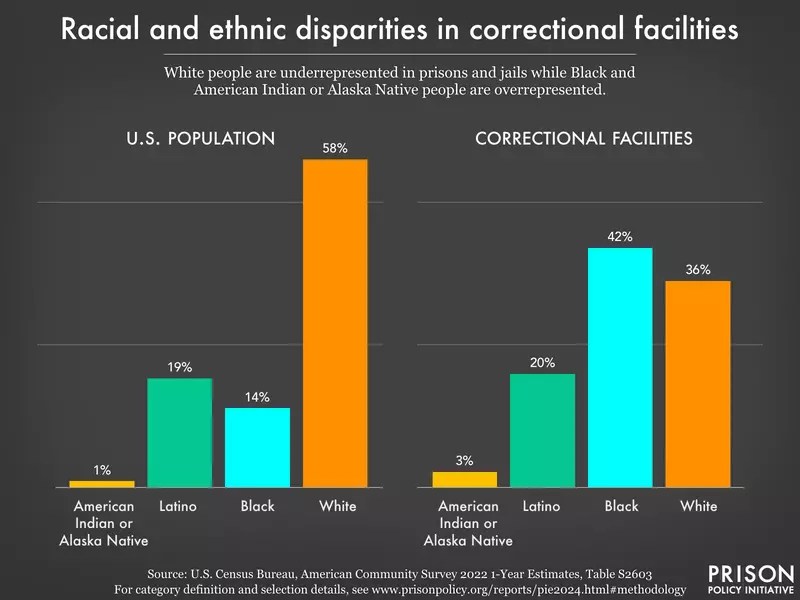
What about Bubba’s criticisms of Kirk? Blacks are by race 42 percent of the prison population—and with the prison population over 90 percent male, and black males making up only around six percent of the US population, the racial disproportionately is staggering. In contrast, whites are 36 percent of the prison population.

Bubba’s numbers aren’t real. More than this: the Bureau of Prisons, like the Census Bureau, obscures the true number by introducing ethnicity in the mix. A third maybe more of Hispanics are racially black. This is somewhat offset by moving white Hispanics into the white category. But by how much? A lot of Hispanics are indigenous. In other words, not nearly enough to get whites near 50 percent.

The drastic overrepresentation of blacks in prisons is roughly proportional to the amount of serious crime blacks perpetrate—over 50 percent of murders and robberies, and a third to two-fifths of other serious crimes (aggravated assault, burglary, rape). Most mass murders happen in black-majority neighborhoods. Again, if one cares about black people, then he tells the truth about crime in the Blue Cities. He certainly doesn’t obscure the data to deny what any competent observer can find by spending a few minutes on the Internet.

(Dis/re)ordering the World. Why Science is Bigotry

A series of exchanges on X, where charges of transphobia are being leveled at critics of queer theory, have moved me to extend the thesis of this morning’s essay, Noam Chomsky on the Pretentious Character of Queer and Other So Called Theories. Since science contradicts the claim that gender is mutable, of course natural history is by definition transphobic from the standpoint of queer theory. The fallacy of the mutability of gender is a central tenet of queer theory because of its functional utility in advancing the anarchist project of transgressing normative social relations that safeguard children and women and efficacious social relations more generally. So here is yet another essay expounding on the problem of postmodernism.

A well worn illustration of postmodernism

The rejection of science and universal normative systems is true of postmodernist notions generally. Postmodernism contends that science is one of many discourses constituted by power and thus are either programs of liberation or oppression. That this is a paradox for a philosophy that assumes the poststructuralist stance of no binaries is also functional to the project, since, as with all religious and religious-like systems, unresolved contradiction continuously produces liminal states and situations. These leave the populace more amenable to control and suggestion (the Nazis understood this well).

As a consequence, any scientific claim that contradicts gender ideology is the expression of oppressive power must be a form of bigotry. This approach means to inoculate queer theory from criticism, as any criticism of the theory is confirmation of the theory. The same is true with critical race theory (CRT). From the CRT standpoint, individualism is an expression of white supremacy, and thus the Western justice system, rooted in individualism, is racist. The alternative to Western-style justice is the atavistic notion of collective and intergeneration guilt and responsibility; the goal is inverting an imagined hierarchy, the validity of which is claimed to rest on subjected status, an assumption achieved through control of major societal institutions. Criticism of CRT is thus also portrayed as bigotry.

From the postmodernist standpoint, the world is divided between allies and enemies (another binary). No argument, no claim, no sensibility is not ideological or political. It is either the argument or claim or sensibility of the ally or of the enemy. Postmodernism is thus nothing more than modern dress on tribalism, a perfect praxis for perpetuating the hegemony of corporate statism. It’s a form of identity politics able to manufacture an infinite number of identities that hypostatize personal truths (i.e., delusions) in order to disrupt normality and assert power over others.

Queer theory, critical race theory, postcolonial studies, and all the other permutations of postmodernist thinking rest on a praxis rooted in anarchism and nihilism with the express goal of delegitimizing the Enlightenment, overthrowing Western civilization, and resurrecting the primitive—without the regular normative structure. These notions are anti-science and anti-reason. They are backwards and destructive.

This is the praxis that underpins diversity, equity, and inclusion (DEI) programming. We find DEI across the corporate and state systems. To be sure, DEI appears to be on the run, but this is a temporary fallback to regroup. Once you recognize why disrupting the norms of Western civilization is advantageous to corporate state ambitions and arrangements, you will understand why queer theory, critical race theory, etc., are portrayed as legitimate ways of (dis/re)ordering the world. They will try to return in another form. Indeed, they will never fully leave on their own. Be determined and vigilant.

Noam Chomsky on the Pretentious Character of Queer and Other So Called Theories

Noam Chomsky on postmodernism:

“If you look at what’s happening, I think it’s pretty easy to figure out what’s going on. I mean, suppose you’re a literary scholar at some elite university or an anthropologist or whatever. If you do your work seriously, that’s fine, but you don’t get any big prizes for it. On the other hand, you take a look over in the rest of the university, and you got these guys in the physics department and the math department, and they have all kind of complicated theories, which, of course, we can’t understand, but they they seem to understand them. And they have principles and they deduce complicated things from the principles and they do experiments, and they find either they work or they don’t work. And so that’s really impressive stuff, so I want to be like that too. So I want to have a theory in the humanities, you know, literary criticism, anthropology, and so on. There’s a field called ‘theory.’ We’re just like the physicists. They talk incomprehensibly, we can talk incomprehensibly. They have big words, we’ll have big words. They draw far reaching conclusions, we’ll draw far reaching conclusions. We’re just as prestigious as they are. Now if they say, well, look, we’re doing real science and you guys aren’t, that’s white, male, sexist, bourgeois, whatever the answer is. How are we any different from them? Okay. That’s appealing.”

Chomsky is correct on the nonsense hailing from literary studies and philosophy. Critical race theory, queer theory, etc., aren’t theories at all but ideologies that work at cross purposes with science. They are designed to rationalize political goals that threaten prevailing and just normative systems.

The core premise of critical race theory is that law founded on individualism is a white supremacy construct and that race-based social justice—with its atavistic ethics of intergenerational and collective guilt—should replace it. The “logic” of the “theory” rests on the fallacy of misplaced concreteness, reifying demographic categories and reducing flesh and blood individuals to personifications of statistical abstractions. For example, because, on average, white men have more wealth than black men, all white men are “privileged.” In the real world, there are black men with vast sums of money while white men live under bridges with no money at all.

The core premise in queer theory is that gender is a social construct independent of natural history. This is said to advance a project to normalize paraphilias. Queer theory’s premise is easily falsified by scientific investigation. Indeed, the objectivity and materiality of gender is one of those rare settled questions in the sciences. But gender activists deny or obscure the truth because truth is an obstacle in their political path. As with critical race theory, I have written extensively on this subject on the pages of Freedom and Reason.

However, compelling Chomsky’s critique of postmodernist literary theory, his extension of this critique to anthropology, sociology, and other social sciences fails. Theories in the social sciences are indeed distinct from those in natural sciences like physics or biology, as I explain in my essay The Four Domains of Reality: Sketching an Analytical Model of Emergent Complexity, but this distinction reflects the different natures of the phenomena studied, not an absence of rigor or intellectual merit. Theory plays a crucial role in the social sciences by providing frameworks for understanding cultural phenomena, human behavior, and social structures, as well as offering explanatory and predictive tools and frameworks.

Theories in the social sciences differ fundamentally from those in the natural sciences because they address human behavior and social phenomena, which are complex, context-dependent, and influenced by myriad factors such as agency, culture, and history. While natural science theories often seek universal laws (e.g., Newton’s laws of motion or Darwin’s theory of natural selection), social science theories are typically more contingent and interpretive, aiming to explain patterns, relationships, and processes in human societies. However, the physical and natural sciences also involve contingency and interpretation. All sciences works both deductively and inductively.

Social science theories are derived from systematic observation, data analysis, and careful interpretation. Theories of social stratification, such as Max Weber’s analysis of class, status, and power, or Karl Marx’s theory of historical materialism, are rooted in empirical study and offer valuable insights into the dynamics of economic, political, and social systems. These theories are not universally deterministic, but rather provide robust tools for understanding complex social phenomena. They enjoy considerable degrees of criterion-related validity.

One of the key roles of theory in the social sciences is to provide frameworks for explaining why and how particular social phenomena occur. Pierre Bourdieu’s concept of habitus, which explains how individual behaviors and perceptions are shaped by social structures and past experiences, illuminates the interplay between agency and structure, helping observers understand how societal norms and individual actions influence each other. Such theories deepen our understanding of social behavior and offer ways to analyze human interactions that would otherwise appear chaotic or random.

Unlike atoms or molecules, humans act within culturally, historically, and socially contingent frameworks that are constantly evolving. Theories in the social sciences embrace this complexity rather than reducing it to oversimplified models. Clifford Geertz’s interpretive anthropology emphasizes the importance of “thick description” in understanding cultural phenomena. This approach does not aim for universal generalizations but instead seeks a nuanced understanding of particular social contexts. Such theories allow researchers to engage deeply with the experiences of individuals and communities, offering insights that are both meaningful and practically relevant.

Theories in the social sciences also have predictive value, more probabilistic than the deterministic, but, again, this is true of the physical and natural sciences, as well. Criminological theories, such as strain theory, provide predictive insights into crime trends and patterns, which can inform policy and intervention strategies.

Critiques like Chomsky’s (Richard Feynman’s critique of sociology is another example) stem from comparing the social sciences to the natural and physical sciences without fully appreciating the unique nature of social phenomena. While it is true that social science theories may lack the precision and universal applicability of some natural science theories, this is a reflection of the subject matter rather than a shortcoming of the discipline. The social sciences grapple with the dynamic, fluid, and meaning-laden realm of human life, which requires theoretical frameworks that are flexible, interpretive, and responsive to context.

Theories in the social sciences are indispensable for understanding the complexities of human behavior and social systems. While they differ from the theories of natural sciences in their approach and scope, this difference is a strength, not a weakness. Social science theories provide crucial explanatory frameworks and offer practical tools for addressing societal challenges. Far from being a detriment to the intellectual landscape, the theoretical work of the social sciences enriches our understanding of the human condition and equips us to navigate an increasingly complex world.

This is not true of postmodernist literary theory. Its incorporation of theoretical language is pretentious. Postmodernist approaches employ dense and abstract terminology that can obscure meaning rather than clarify it. Unlike the empirically grounded and practically applicable theories in the social sciences, postmodernist theory avoids empirical engagement—even denying that universalism is possible since science itself is just another discourse. Postmodernists emphasize rhetorical style over explanatory power. It is more performative than substantive. The obscurantism inherent in such postmodernist “theories” as critical race theory and queer theory is not a bug but a feature. In fields serving the interests of corporate power, one should not expect otherwise.

Kids-For-Cash: Biden’s Shameful Pardon of Michael Conahan

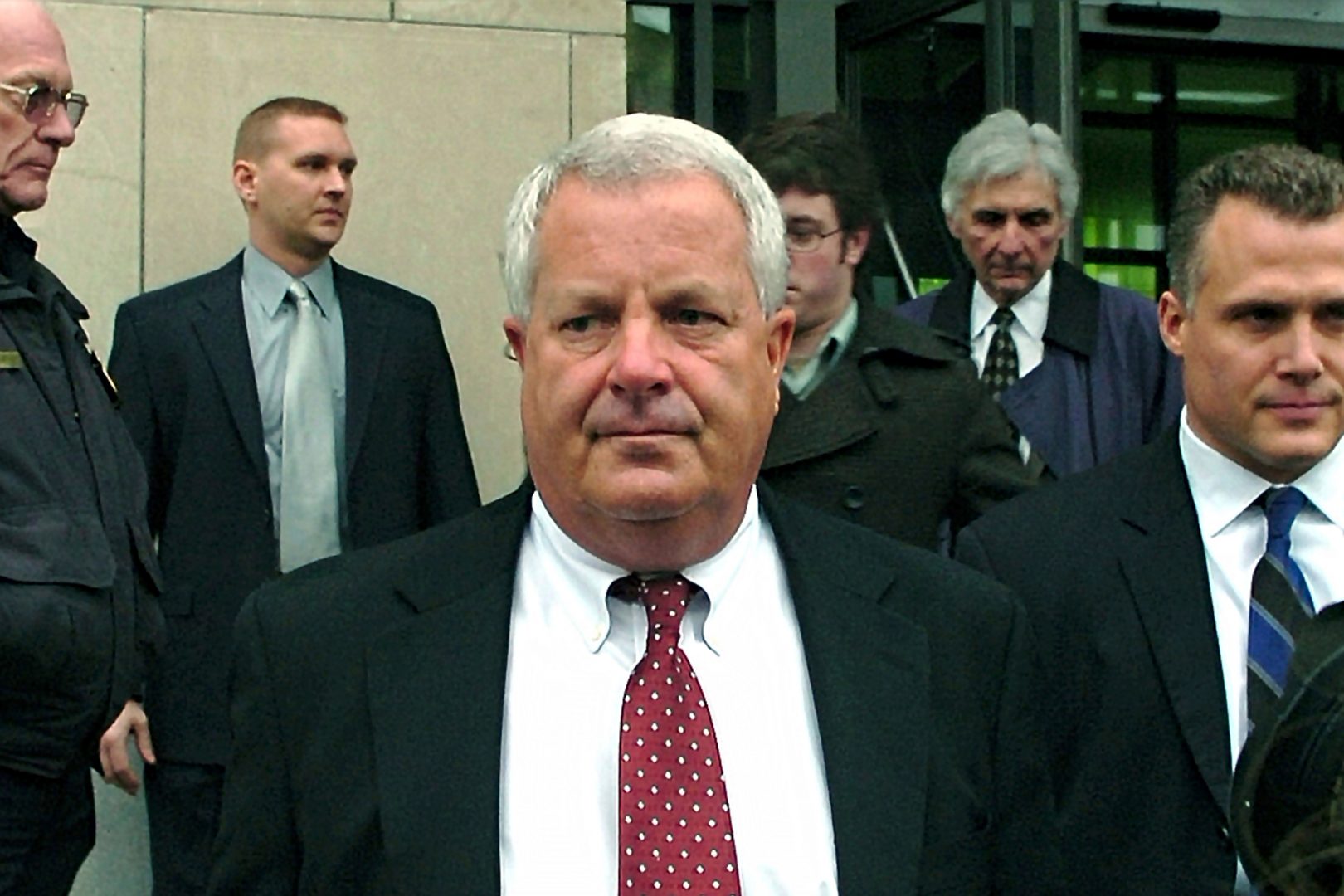
Unless you live near Wilkes-Barre, Pennsylvania, or teach and research in the field of juvenile delinquency as I do, you may be unfamiliar with the “Kids-For-Cash Scandal.” Michael Conahan, pictured below, was convicted, alongside former judge Mark A. Ciavarella Jr., for funneling juvenile defendants to two private, for-profit detention centers in exchange for 2.1 million dollars in kickbacks.

Michael Conahan

Conahan pleaded guilty to charges of conspiracy in 2011 and was sentenced to 17 years and six months in prison. Ciavarella, Jr., was sentenced to 28 years. During the COVID-19 pandemic, Conahan petitioned for, and won “compassionate release,” citing concerns that he was “in grave danger of not only contracting the virus, but of dying from it.” In June 2020, Conahan was released to home confinement in Florida under federal supervision.

Outgoing President Joe Biden just commuted Conahan’s sentence. Even members of his own party are calling his action outrageous. “Some children took their lives because of this. Families were torn apart,” Pennsylvania Governor Josh Shapiro said of the scandal. “There was all kinds of mental health issues and anguish that came as a result of these corrupt judges deciding they wanted to make a buck off a kid’s back.”

Sandy Fonzo confronts Judge Chiavarella on the courthouse steps after he was convicted in the “Kids for Cash” scandal in 2011.

Sandy Fonzo, whose son killed himself after being placed in juvenile detention, called the Biden pardon of Conahan development “deeply painful.” “Conahan’s actions destroyed families, including mine,” she said in a statement. “My son’s death is a tragic reminder of the consequences of his abuse of power. This pardon feels like an injustice for all of us who still suffer. Right now, I am processing and doing the best I can to cope with the pain that this has brought back.”

One quibble with her remarks. Biden’s action doesn’t “feel” like an injustice. It is an injustice. There’s a reason why Joe Biden is widely seen as the worst President in modern American history—because he is the worst President in modern American history.

Free Thought or Toeing the Line? The Purpose of the Public University

The apparatchik of the communist cell has to toe the party line handed down from the commissar. All members must act to drag comrades who deviate from the line back to conformity. This may take the form of the struggle session, in which members take turns scolding the deviant, who must confess his crimes against the party. In the worst case scenario, the deviant will be punished by or expelled from the party.

A struggle session of Liu Shaoqi

The public university in a free society should not be like a communist cell. There is no party line in a free university. The core value of the public university is providing a space where individuals are free to express opinions however much they deviate from the presumed orthodoxy. The administration must therefore be ideologically and politically neutral in its policies and pronouncements.

Imagine a college teacher kicking a student out of class who uttered an opinion with which the teacher or other students disagreed or found offensive. Imagine a university administration expelling students for disagreeable or offensive opinions. Imagine a college student being expelled from school for posts on social media.

Have these things happened? If they have, they’re violations of the First Amendment. As long as students are honoring time and place rules and not disrupting the classroom, they are entitled to their opinions—however disagreeable or offensive. People can believe and say whatever they want in America. It’s a free country, after all.

The same is true for college teachers. Punishing or expelling a college teacher for opinions expressed at the appropriate time and in the appropriate place is a violation of the teacher’s civil rights.

How did we ever wind up in a place where this was not obvious? The first thought an administration should have at a complaint from students, faculty, or the community should not be “We are looking into it,” or “We have a process,” but “At this institution we uphold the First Amendment and the principle of academic freedom.” Anything less than that pronouncement is an act of cowardice or equivocation, the latter a troubling sign of the commitment to the foundational ethic of a free and open society.