
Racism (or racialism) is the belief in the inherent inferiority or superiority of particular racial groups, sometimes grounded in pseudoscientific theories about grouped human differences. Noting grouped human differences is not racism (there are obvious phenotypic differences across human populations). Nor is ranking cultures in terms of their relative adequacy in meeting human needs racist (see A Case of Superexploitation: Racism and the Split Labor Market in Springfield, Ohio for an embedded analysis of the difference between culture and race).
Racism is more than prejudice. Racists posit a hierarchical view of humanity based on supposed constitutional or innate differences, seen as fixed and determinative of behavioral, cognitive, and moral capacities. Racism is used to justify the unequal treatment and social stratification of groups. Racism was institutionalized for a time in American history and legitimized by both academic and popular discourse, playing a significant role in justifying slavery, eugenics, and segregation. Those institutions were dismantled more than half a century ago. Today, there are very few racists, and those who harbor racist thoughts tend not to express them in public. However, across the span of these changes, ethnic and racial humor was used to cut the tension of intergroup antagonisms.
A joke about New Jersey is not an example of racism. Neither are jokes about Haiti or Puerto Rico. Branding jokes “racist” is a paradigm of how progressives weaponize language to demonize their enemies. Progressives substitute for comedy what we might term “clapter” (as opposed to laughter) around politically-correct statements. What comedy is allowed should target those perceived to be at the top of the intersectional hierarchy of power, not those at the bottom of the hierarchy. Thus only progressives, i.e., those who manufactured the hierarchy and presume to speak for the downtrodden and powerless, are allowed to poke fun at people over identity. Progressives call this “punching up.”
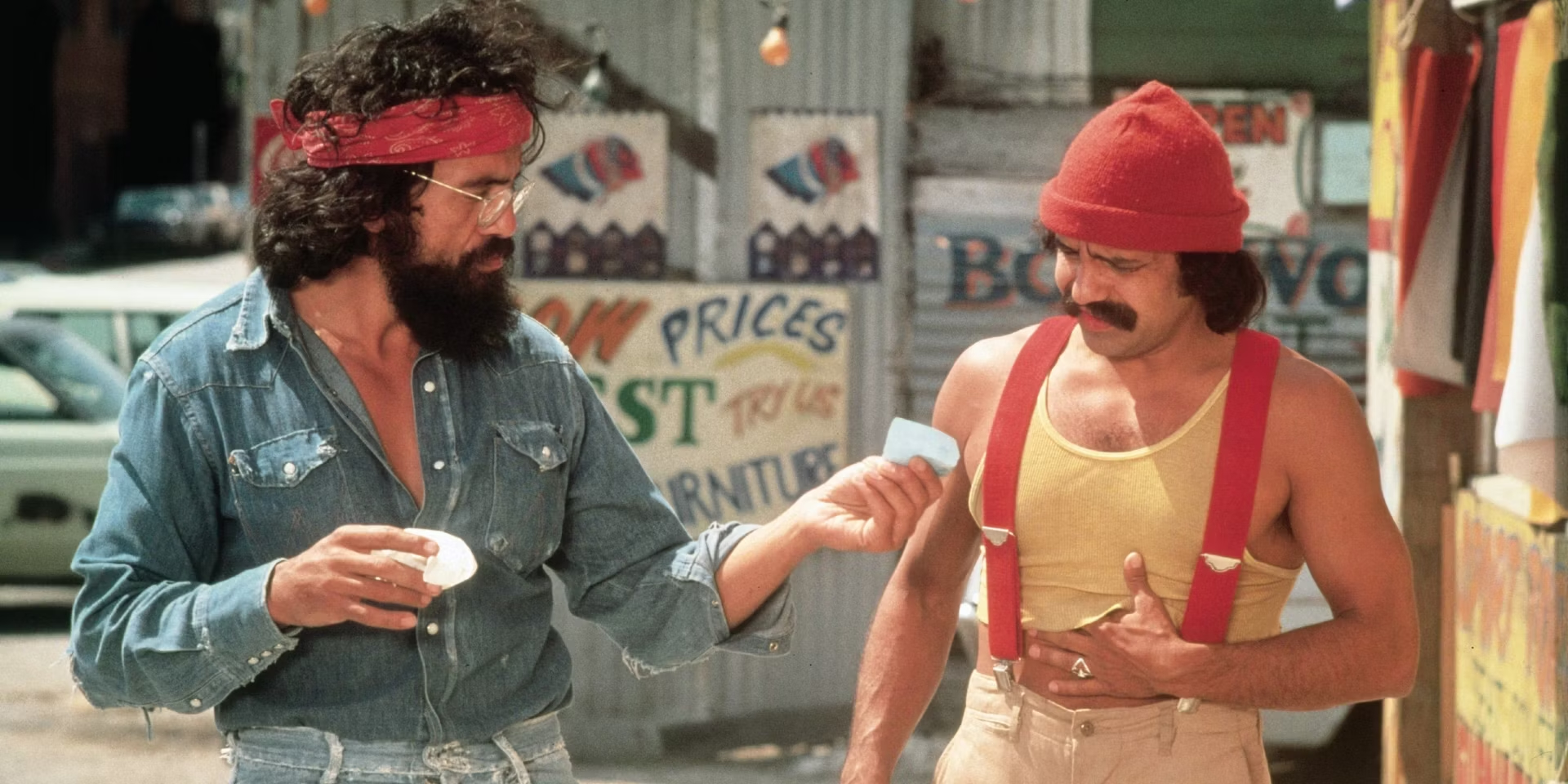
That there are rules to comedy at all—beyond making people laugh—is why I call progressives “joyeaters” and “buzzkills.” I have asked this question of many of my friends from back in the day (the 1970s): could Cheech and Chong even be possible today? Perhaps if they focused their humor exclusively on making fun of straight white Christian men and women. If that were the case I wouldn’t buy any of their records.
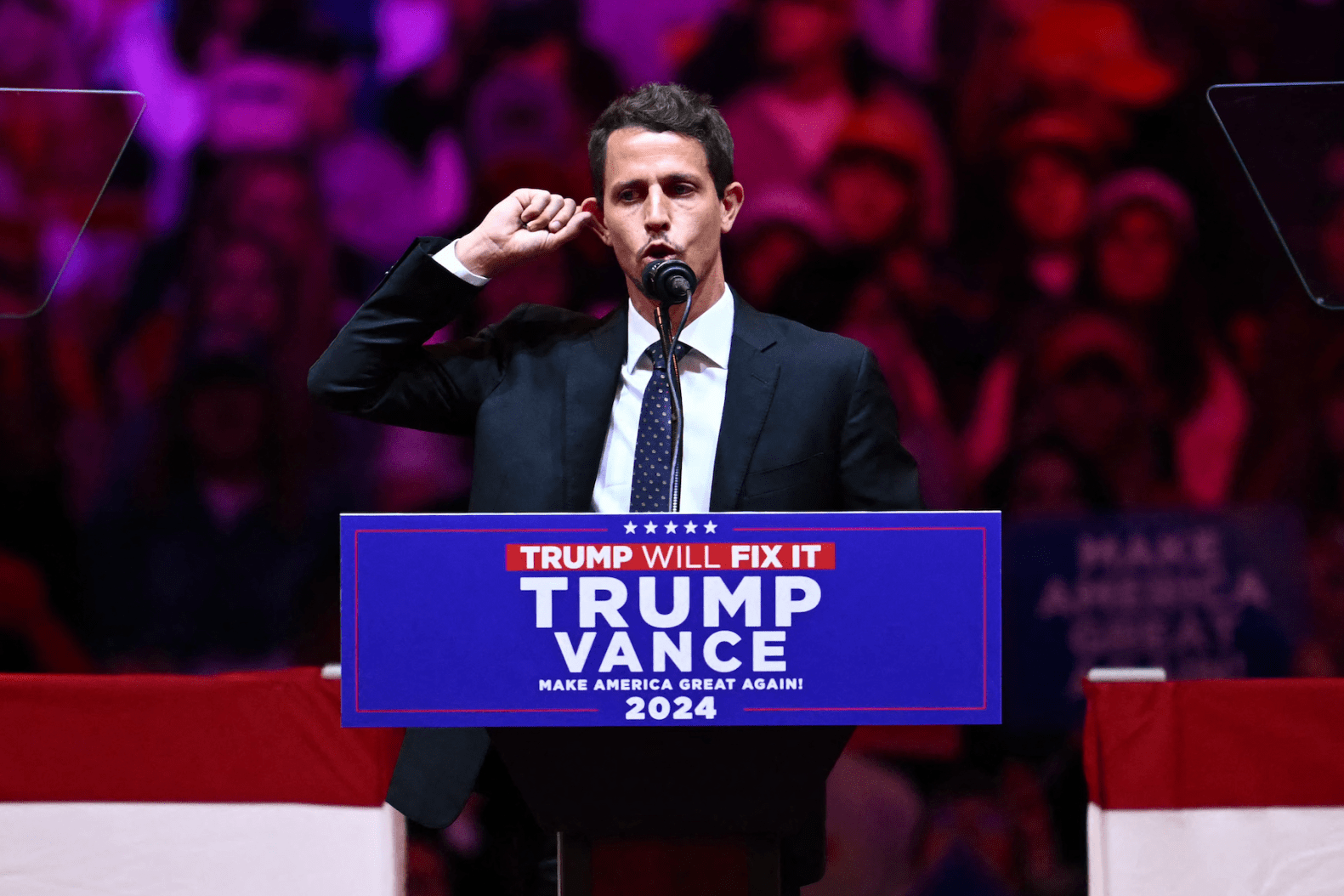
Sadly, the Trump campaign is distancing itself from Tony Hinchcliffe, the comedian who spoke last night at Trump’s Madison Square Garden “Nazi” rally. (Never mind that FDR, JFK, Carter, and Clinton also held rallies there—remember the double standard!) “This joke does not reflect the views of President Trump or the campaign,” senior adviser Danielle Alvarez said in a statement. Lame. (“Ableist!”)
It’s not Hinchcliffe who’s the problem. The Trump campaign shouldn’t apologize. It’s the offense-takers and the speech police who are the problem. If someone is offended by a joke about New Jersey, his offense-taking stems from an aspect of group or place-based identity, where the person feels a connection to New Jersey and perceives the joke as a slight to that identity. Slights are felt by the overly sensitive. That’s on the overly sensitive.
In social science, we can explain this over-sensitivity using social identity theory, where people derive part of their self-esteem and sense of belonging from the groups they identify with—whether that’s based on culture, place, or other affiliations or associations. For those who take things personally, or who want to make a molehill into a mountain, a joke about New Jersey triggers a defensive reaction because it touches on a significant facet of how they see themselves or where they feel a sense of pride.
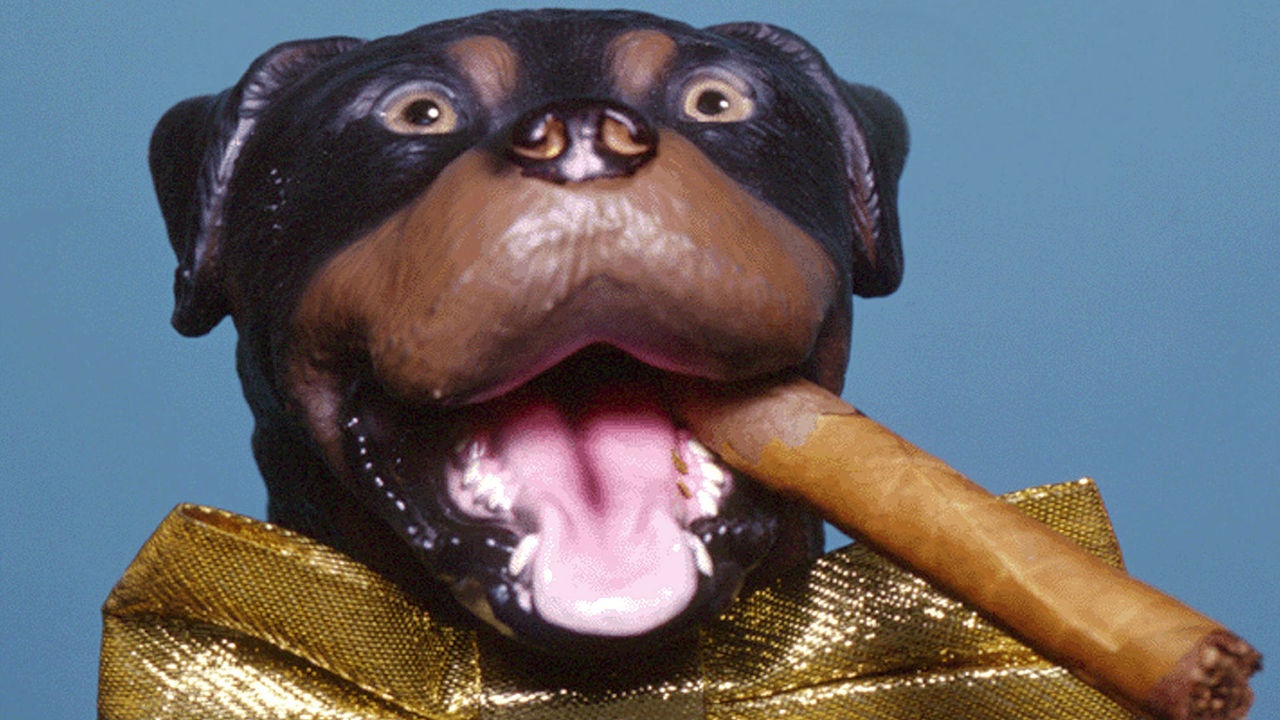
The jokes told by Hinchcliffe, a stand-up comic who regularly perform on roasts—he has written eight Comedy Central Roasts—and is known for his Kill Tony podcast, are not examples of racism. Hinchcliffe works in the vein of Don Rickles. This is the work of the insult comic. Remember when Rickles performed for Ronald Reagan at Reagan’s second inaugural ball, held at the Washington Convention Center in 1985. Rickles made his career performing ethnic humor, insulting people over their race and religion. Rickles was also a regular on roasts. Remember Triumph, the Insult Comic Dog on Conan? Remember Triumph’s joke about Koreans and dogs at the Star Wars convention?
Would Rickles even be allowed to perform given today’s climate of progressive hegemony over culture industry and legacy media content? No, things have not gotten better since then. It is never better when a small group of extremists who control culture and media smear comedians as “racist” and multiracial/ethnic political rallies as “fascist.” Read this morning’s news coverage to see how much worse things have become. From The New York Times on down, Trump is a candidate whose “rhetoric has grown darker and more menacing.” Here’s the hyperbolic NYTimes piece from which that quote is drawn: “Trump at the Garden: A Closing Carnival of Grievances, Misogyny and Racism.” The progressive bubble constitutes an alternate universe.
We also have to consider that the Trump-Vance campaign picked Tony Hinchcliffe to trick Democrats into leaning into their bogus fascism and racism narratives as their closing arguments down the stretch. Calling Trump a fascist and a racist is one of the reason why he has closed the gap on Harris. The Harris campaign and corporate media and culture industry allies look like woke scolds. Americans hate woke scolds.
Finally, you will enjoy this. Here’s Hinchcliffe and Roseanne Barr promoting a Puerto Rican comedian. Enjoy. Oh, and see the next video, too. It’s a comedian opening for the Harris-Walz campaign slamming Mexicans.

 freedom and reason