
On Thursday of last week (October 17, 2024) I presented a section of a developing manuscript on the legacy of the Black Panthers at the conference Social Change and Resistance: Looking Back to Move Forward organized by the Mid-South Sociological Association (their 50th Anniversary as an organization). The published title of my talk “From Civil Rights to Armed Resistance to Community Empowerment: The Rise and Fall of the Black Panther Party.” The subtitle of my talk was meant to communicate the fall and its legacy. As with organized labor, black liberation has been coopted and negated by corporate power. I am sharing here my prepared remarks with some embedded links to relevant sources.
A decade ago, I published a lengthy encyclopedia article on the Black Panthers in Heith Copes and Craig Forsyth’s Encyclopedia of Social Deviance. I am presently expanding that article into a long-form essay or, possibly, a short book, that explores the journey of black liberation from the 1960s to the present day (you can find a version of the initial treatment here: The Black Panthers: Black Radicalism and the New Left).
Today’s talk takes a section of that work in progress, wherein I explore the trajectories of two significant movements in the history of black activism and community organizing in the United States, the Black Panther Party (BPP) and Black Lives Matter (BLM). While both are rooted in a shared discourse of racial justice, differences in ideology, organization, and political engagement reveal a complex shift in how racial issues have been framed and mobilized over time, suggesting that both movements ultimately move from different standpoints. A key part of the analysis concerns the disposition of the state with respect to social movements.
I argue that to grasp the contrast between these two movements, one must consider the BPP’s history, its theoretical foundations, and the severe repression it faced—subjects covered in my earlier work and forthcoming manuscript—in contrast with the history of BLM and its acceptance by the neoliberal establishment and progressive politics, which have historically been hesitant to embrace militant discourse and praxis.
One interpretation of this acceptance is that social progress has opened the policy ground to critiques of the criminal justice system and more thoroughgoing policy considerations. Another interpretation is that corporate power, and its attendant political apparatus, find ideological advantage in coopting the rhetoric of racial justice. These are not necessarily mutually exclusive.
The BPP was a neo-Marxist movement focused on confronting capitalist exploitation during a time of institutionalized racism and widespread police brutality. The Panthers endured significant state repression, notably through the FBI’s COINTELPRO program, which sought to disrupt and disorganize the BPP through a campaign of disinformation, infiltration, surveillance, and violence, aiming to neutralize the organization by sowing internal discord, undermining its leadership, and bringing disrepute to black liberation movements. J. Edgar Hoover’s description of the BPP as “the greatest threat to the internal security of the country” underscores the extent to which the state viewed the BPP’s Marxist platform as a threat to capitalist stability. There were other targets of COINTELPRO operations, such as the Nation of Islam (NOI). Both the Panthers and NOI, despite significant differences—in particular, the later focused on black separatism—were attempts to build autonomous governance structures from the majority white establishment.
Founded in 1966 by Huey P. Newton and Bobby Seale, the BPP was a Marxist-Leninist organization committed to revolutionary change, advocating armed self-defense and organizing community programs like affinity-based education, free breakfasts, and health clinics in underserved Black communities. The BPP viewed racial oppression as inseparable from capitalist exploitation. Influenced by thinkers like Frantz Fanon, party theorists saw black communities as internal colonies, dominated by the US ruling class, which exploited black labor and maintained control through poverty and police brutality. This intersection of capitalism and white supremacy justified the BPP’s call for revolutionary socialism and self-defense, positioning them against capitalist and state power.
(For examples of my critiques of Black Power and the New Left, see Frantz Fanon and the Regressive Ethics of the Wretched: Rationalizing Envy and Resentment—and Violent Praxis and The New Left’s War on Imaginary Structures of Oppression in Order to Hide the Real Ones. These contain embedded links to other essays in this vein.)
Perhaps no figure illustrates the depth of state hostility towards the Panthers more than Fred Hampton, the charismatic Chicago leader who was assassinated by the FBI and local law enforcement in 1969 in an operation led by Ed Hanrahan, the State’s Attorney of Cook County. His actions, in coordination with the FBI, resulted in the deaths of Hampton and Mark Clark, leader of the Peoria chapter. Hampton’s murder underscored the state’s fear of a revolutionary black movement capable of challenging capitalist power structures. The BPP’s history is thus one of courageous resistance met with violent state repression.
To briefly locate this history in the social structural dynamic to draw the contrast of contexts, the milieu in which the Panthers emerged was organized by broader economic shifts driven by the transnationalization project, marked by outsourcing and immigration, developments that eroded job opportunities for black workers, which, combined with Great Society programs that encouraging reliance on public assistance, idled young men and pushed them out of the household, disorganizing further already disorganized urban communities. (This development accompanies the institutionalization of the black civil rights project. See A Note on Desegregation and the Cold War.)
Joblessness, structural inequality, and family disintegration fueled a rise of crime in black-majority inner city neighborhoods, which the Panthers in part moderated through truces negotiated among street gangs and developing and administering on the ground social supports. Indeed, after the destruction of the Panthers, with inner city conditions continuing to deteriorate amid the mounting crisis of late capitalism, gang violence returned and escalated over the next two decades, associated with the vast expansion of the criminal justice apparatus. (See Scaling Up Reaction Formation: The Case of the Ghetto.)
BLM, which gained national prominence in 2013 following the acquittal of George Zimmerman in the killing of Trayvon Martin. BLM gained further momentum after the 2014 shooting of Michael Brown in Ferguson, Missouri, which sparked widespread protests and debates about police brutality and racial inequality. The shooting became a defining moment for BLM, galvanizing a national movement around the idea of systemic racism in law enforcement. (See my recent Ferguson Ten Years Later.)
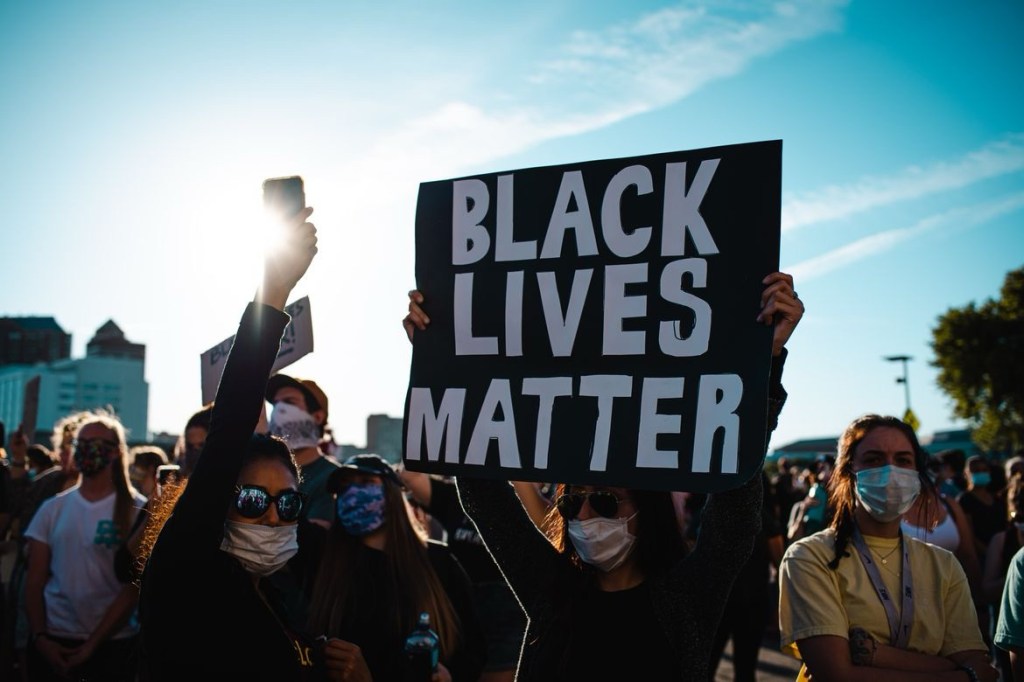
Founded by Patrisse Cullors, Alicia Garza, and Opal Tometi, BLM positioned itself as the voice of a new generation fighting against police violence and systemic racism. Unlike the BPP, BLM has operated in a political landscape where the ideas of racial justice and reform are more palatable to those in power. The support it has received from corporate entities and its alignment with political figures, particularly within the Democratic Party, represents a stark departure from the antagonistic relationship between the Black Panthers and the state apparatus. Moreover, unlike the BPP, BLM’s arguments and rhetoric regarding criminal justice reforms have become to some degree institutionalized. This has occurred as counterintelligence efforts have shifted attention from populist left movements to populist right movements framed by a narrative of resurgent white supremacy.
In 2020, Zach Goldberg, then a PhD candidate in political science at Georgia State University, argues in the pages of Tablet that, years before Trump’s election, the media significantly increased its coverage of racism and adopted new theories of racial consciousness (“How the Media Led the Great Racial Awakening”). He writes, “In the wake of the protests, riots, and general upheaval sparked by the police killing of George Floyd in Minneapolis, the United States is experiencing a racial reckoning. The response from America’s elite liberal institutions suggests that many have embraced the ideology of the protesters.”
Writing in the moment, Goldberg observes: “Countless articles have been published in recent weeks, often under the guise of straight news reporting, in which journalists take for granted the legitimacy of novel theories about race and identity. Such articles illustrate a prevailing new political morality on questions of race and justice that has taken power at the [New York] Times and [Washington] Post—a worldview sometimes abbreviated as ‘wokeness’ that combines the sensibilities of highly educated and hyperliberal [by which I understand him to mean progressive] white professionals with elements of Black nationalism and academic critical race theory. But the media’s embrace of ‘wokeness’ did not begin in response to the death of George Floyd. This racial ideology first began to take hold at leading liberal media institutions years before the arrival of Donald Trump and, in fact, heavily influenced the journalistic response to the protest movements of recent years and their critique of American society.”
Goldberg proceeds by way of content analysis of several publications, including the Los Angeles Times and Wall Street Journal, in which the jargon taken for granted during the summer of 2020, was rolled out during the Obama presidency, emerging around 2011. Academics terms proliferated—“microaggressions,” “institutional/structural/systemic racism,” “racial disparity(ies)/gap(s)/ inequality(ies)”—as well as increasing frequency of terms such as “white people,” “whiteness,” “white privilege/racial privilege,” “racial hierarchy(ies),” “white supremacy(ism/ists),” and “racism/racists.” These terms were amplified in other print media, in search engines results, and on social media platforms. The drastic rise of racial rhetoric drove public concern across political groups. (They did the same thing with gender. See Gender and the English Language.)
One may argued that the Democratic Party leveraged the perception these terms created to sidestep addressing the deeper economic inequalities affecting both black and white working-class populations, issues that surfaced during Occupy Wall Street in 2011 in response to the 2008 financial crisis and subsequent recession. Occupy Wall Street framed the struggle as between the “1%” and the “99%.” After initially ignoring the movement, coordinated law enforcement crackdowns resulted in arrests and the violent clearing of protest encampments, drawing criticism from civil liberties groups. There was thus a need to pivot from class-based to race-based politics, to obscure the economic focus central to the BPP’s platform. From an elite standpoint, BLM and identity politics provided a timely diversion, fitting the political moment while distracting from broader critiques of economic inequality. (January 2012 speech Theorizing the Moment: Occupy Wall Street.)
Though Cullors and Garza identified as “trained Marxists,” BLM’s focus is on racial justice within existing institutional frameworks rather than the abolition of capitalism. Unlike the BPP, which demanded community control and an end to capitalist exploitation, BLM emphasized narrow reforms, stopping short of a revolutionary challenge to the economic system. The call to defund the police aligns with this more reformist agenda, focusing on restructuring rather than dismantling the institutions that perpetuate inequality and, in turn, drive crime and the need for public safety measures.
BLM’s integration into mainstream politics has drawn criticism from prominent left figures like Adolph Reed Jr., Cedric Johnson, and Jodi Dean. They argue that BLM’s style of politics emphasizing on identity politics makes it susceptible to absorption into the neoliberal framework. Indeed, BLM’s corporate sponsorship underscores its alignment with the capitalist framework. After George Floyd’s murder, BLM received significant corporate backing, with companies like Amazon, Coca-Cola, Facebook, Google, and Nike pledging billions to racial justice initiatives. Professional sports teams and athletes also became vocal supporters. Leagues like the NBA, NFL, MLB, and MLS incorporated BLM messaging, with players wearing slogans like “Black Lives Matter” and “End Racism,” and kneeling during the national anthem to protest police brutality and systemic racism. These actions are critiqued as performative, leveraging the movement for branding purposes. (See Corporations Own the Left. Black Lives Matter Proves it and What’s Really Going On with #BlackLivesMatter).
Therefore, one possible explanation for corporate and mainstream political support lies in the way BLM’s messaging around racial justice aligned with broader cultural shifts in corporate responsibility and diversity initiatives. From a Gramscian perspective, corporate endorsement of BLM allowed companies to align with a popular social cause without addressing the structural economic inequalities their own practices contribute to. This aligns with what Gramsci described in his Prison Notebooks as a hegemonic project, where opposition isn’t just suppressed but coopted and led. Similarly, for the Democratic Party, BLM’s emphasis on police reform and social justice provided a way to appeal to younger, more progressive voters, positioning the party as a champion of racial equality while sidestepping deeper critiques of capitalist exploitation, which movements like the Black Panthers had prioritized.
* * *
The BPP had a nuanced view of the nuclear family that reflected its broader revolutionary goals. While the BPP critiqued the traditional nuclear family structure, particularly in its patriarchal form, it did not outright reject the family unit. Instead, they reimagined it within a collective framework that aligned with Marxist ideology.
In traditional Marxist theory, the nuclear family is viewed as a product of capitalist society, reinforcing private property, patriarchy, and individualism. The BPP, drawing on these ideas, saw the nuclear family, especially when shaped by capitalism, as potentially oppressive, particularly to women and children. They viewed the traditional family as a space where capitalist and patriarchal values were often reproduced, including rigid gender roles and the subordination of women. At the same time, they critiqued the systemic forces—poverty, racism, and state violence—that harmed black families, leading to the breakdown of community structures.
The BPP prioritized women’s liberation within their movement, rejecting traditional gender roles and advocating for women’s participation in leadership and decision-making. This stance naturally conflicted with the idea of the nuclear family as a patriarchal institution. Many prominent women in the BPP, such as Elaine Brown, contributed to shaping this vision, which placed the liberation of black women on equal footing with the broader struggle against capitalism and racism.
BLM, on the other hand, explicitly critiqued the nuclear family, particularly its patriarchal form, as part of its foundational ideology. In early versions of its platform, BLM stated their commitment to “disrupt the Western-prescribed nuclear family structure,” which they argued was a tool of oppression that enforced rigid gender roles and upheld patriarchal and heteronormative values. Instead, BLM promoted extended kinship networks and “villages” that would raise children and support each other outside of the traditional nuclear family model.
This stance drew criticism from conservative commentators who saw it as an attack on the family structure itself. BLM later softened or removed some of this language from its public platforms. Their emphasis was on creating inclusive family structures that recognized the roles of extended families, non-binary individuals, and same-sex partnerships, as well as supporting single-parent households, especially in marginalized communities.
While both BPP and BLM shared a critique of patriarchy and recognized the ways that the nuclear family could perpetuate inequalities, BLM’s position was more directly aligned with dismantling the nuclear family as part of a broader challenge to heteronormative and patriarchal systems. BLM explicitly linked the dismantling of patriarchal family structures with broader LGBTQ+ and feminist goals. BPP was more focused on reconstructing family life within a collective framework that emphasized community solidarity.
* * *
BLM’s integration into elite institutions may also be understood through the lens of a “color revolution,” where revolutionary rhetoric is simultaneously manufactured and channeled into maintaining the status quo. A color revolution refers to a form of non-violent and violent resistance or protest movements aimed at influencing regime change. These movements are typically associated with the Orange Revolution in Ukraine (2004) or the Rose Revolution in Georgia (2003), which were named after their distinctive symbols or colors associated with the protest. We also saw this with the Arab Spring, which emerged in 2010. They rely on civil disobedience, grassroots activism (often astroturf), and mass mobilization, and they often seek to unseat governments seen as authoritarian, corrupt, or illegitimate.
The popular narrative is that color revolutions are organic phenomenon, but those who follow these developments closely see something different: the role of foreign intervention, NGOs and Western governments, in particular the CIA and other national security state actors. These observers argue that movements can be manipulated and even orchestrated by external powers to advance geopolitical interests rather than genuinely democratic or local aims. This is where the concept intersects with ideas about “manufactured revolution,” where revolutionary energy within a population is co-opted by external actors to destabilize a regime without necessarily creating substantive democratic or populist reforms. We most recently saw this in Ukraine in 2014, where the CIA or other Western intelligence agencies supported far right elements in Ukraine during the 2014 Euromaidan protests and the subsequent conflict (see History and Sides-Taking in the Russo-Ukrainian War).
In recent years, the term “color revolution” has been broadened to describe perceived attempts to undermine or destabilize regimes in a way that benefits transnational interests, especially in opposition to nationalist or populist movements. Governments facing such protests sometimes frame them as being instigated by foreign powers to delegitimize domestic dissent. The connection to the BLM movement in some critiques relates to concerns about the manipulation of grassroots energy by elites to channel frustration into controlled opposition that ultimately aligns with corporate or political establishment interests, rather than radical change.
Claims that BLM may be part of a “color revolution” narrative, manipulated by elites or serving establishment interests, come largely from populist and anti-establishment voices on both the left and the right. Prominent figures and thinkers have advanced these critiques. These critics argue that, even if we assume that BLM began as a genuine grassroots movement against police brutality and systemic racism, it has since been co-opted by corporate, political, and media elites who have shaped its messaging and goals in ways that align with their broader agendas. This view often posits that BLM’s energy was directed away from systemic change and toward reinforcing the power of existing political institutions, particularly the Democratic Party.
Darren Beattie, founder of Revolver News, has explicitly linked BLM to “color revolution” tactics. Beattie’s argument is that BLM protests, along with the broader unrest of 2020, were part of an orchestrated effort to undermine the populist movement and create political instability that benefited Democrats. Michael Benz, a cybersecurity expert, has drawn comparisons between BLM and CIA racial operations in Third World countries.
Evidence supporting these claims centers on many of the observations already made here corporate sponsorship and close alignment with the Democratic Party. With respect to the latter, BLM’s messaging and activism aligned closely with Democratic campaigns, particularly during the 2020 presidential election. BLM leadership, especially figures like Patrisse Cullors, have been criticized for their closeness to Democratic elites and fundraising strategies. However, Cullors has publicly stated her alignment with progressive causes within the Democratic framework, which confirms the movement’s institutional entanglement.
* * *
Elite support served to blunt the momentum of populist, class-based movements that threatened the established economic order and progressive political hegemony. By channeling popular energy into the more manageable discourse of racial justice, BLM’s rise helped deflect attention from broader critiques of economic inequality and class oppression as the Democratic Party moved close to corporate power and the Republican Party fractured along intraclass lines. BLM’s focus on identity politics allowed corporations and political elites to signal their commitment to social justice without confronting the underlying class dynamics that perpetuate inequality. By emphasizing racial injustice through academic terms such as “white privilege” and “structural racism,” elites redirected populist anger away from the failures of neoliberalism and toward identity politics and a seemingly radical politics that does not threaten the corporate state structure. This alignment thus effectively neutralized the potential for a more radical, class-based movement that might have challenged corporate power or sought systemic change beyond the realm of police reform.
My critique notwithstanding, the BPP’s Marxist revolutionary platform directly challenged the economic and political order of the United States, seeking to unite worker liberation with the overthrow of capitalism. BLM, despite radical rhetoric, has been co-opted by corporate interests and operates within a framework that diverts attention from class struggle—indeed, it may have been organized to achieve this purpose. The corporate sponsorship, academic backing, and political alignment with the Democratic Party suggest that BLM serves to maintain the capitalist system rather than threatening it. While the BPP was repressed by state forces through programs like COINTELPRO, BLM is free to operate within the capitalist order, at the very least raising questions about its role in sustaining the very structures its supporters claim it opposes.

 freedom and reason