
“The university’s purpose is not political action or social justice. It is to create an environment in which learning thrives.”—Jonathan Levin, New Stanford President
Dr. Allan Josephson, a leading child psychiatrist, recently won a significant legal victory after being abruptly dismissed from his role at the University of Louisville for comments he made about gender dysphoria. Josephson, who had headed the university’s Division of Child and Adolescent Psychiatry for over two decades, expressed caution about gender treatments for children during a 2017 panel at the Heritage Foundation. His remarks ultimately led to his termination in 2019.

Following his dismissal, Josephson filed a federal lawsuit, claiming his First Amendment rights had been violated. The university defended its decision, arguing that his public comments, given his leadership role at the medical school, blurred the line between personal views and professional responsibilities. One presumes this was his professional opinion given his role as a leading child psychiatrist. Attorneys for the university recognized this, too, bizarrely arguing that his personal comments related to his professional role at the medical school and thus overcame his First Amendment claim.
Josephson’s concerns regarding gender treatments for children are indeed rooted in his professional expertise. In his speech to the Heritage Foundation, he argued that gender dysphoria is primarily a socio-cultural and psychological phenomenon, and questioned whether medical interventions were the appropriate solution. The real issue lies deeper, he argued, urging society to focus on the developmental needs of children, which he feels are being neglected.
Courts ruled in Josephson’s favor, affirming his right to free speech. Reflecting on the case an op-ed for the Daily Signal, Josephson noted the court’s recognition that his speech at the Heritage Foundation panel was protected under the First Amendment. The ruling confirmed that the university’s actions constituted retaliation, violating his constitutional rights.
“Just weeks after I spoke at The Heritage Foundation, I was demoted from my role as division chief,” Josephson writes in his op-ed. “After that, I was ostracized, stripped of my teaching duties, and subjected to other forms of hostility. And about a year later, the university refused to renew my contract—in effect, firing me. That was after 14 successful years rebuilding and leading the division, three years with perfect reviews, no disruptions in the division’s work, and no problems recruiting new faculty. I wasn’t fired for poor management, teaching, or unprofessional conduct. The university ended my career because I elected not to surf the current wave of social activism, because I expressed views—supported by scientific literature and clinical experience—that the university found politically incorrect, and because, in my case, activism trumped academic thought, the search for the truth, and the well-being of patients.”
* * *
The Josephson case had a good outcome. Will the same be true for the cases of Amy Wax, the University of Pennsylvania law professor officially sanctioned for violating the institution’s behavioral standards, following a decision made by a university committee? Wax, known for questioning the academic ability of black students, hosting white nationalist Jared Taylor in her classroom, and advocating for reduced Asian immigration, will face a one-year suspension at half pay. Additionally, she will lose her named chair, summer pay, and be required to clarify in public appearances that she is not representing the university. Wax will retain her tenure and will not be fired.
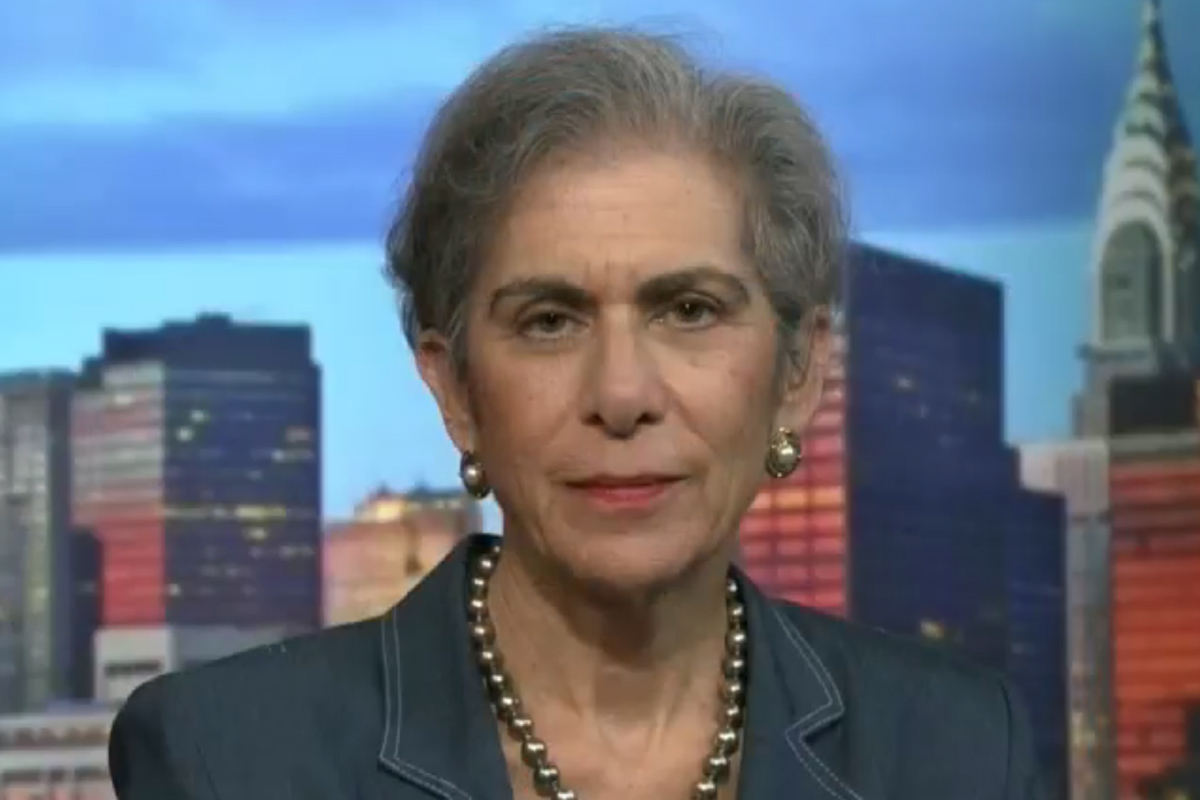
The sanctions follow years of controversy surrounding Wax’s statements and conduct, which the university determined created an unequal educational environment for her students. Penn’s statement emphasized that Wax had engaged in “flagrantly unprofessional conduct” both inside and outside the classroom, breaching her responsibilities as a teacher to provide equal learning opportunities for all students. Despite her appeal, the US Senate Committee on Academic Freedom and Responsibility confirmed that the proper procedures were followed, allowing the university’s sanctions to move forward.
The decision to suspend Wax marks a rare disciplinary action against a tenured professor, which the opponents of free speech say underscores the gravity of her behavior—that is, her words. Provost John L. Jackson Jr. emphasized that while academic freedom allows for a broad range of opinions, professors must conduct themselves in a manner that is fair and professional, avoiding behavior that undermines the impartial treatment of students. Some have criticized the university for not going farther, with student advocates calling for the revocation of Wax’s tenure.
Why do some desire to revoke Wax’s tenure? In 2017, Wax coauthored an op-ed in which she said, “All cultures are not equal. Or at least they are not equal in preparing people to be productive in an advanced economy.” In 2019, she drew ire from the woke crowd for a comment during a conference about immigration. In 2021, during a podcast with Brown University economist Glenn Loury, she said immigration policies should be geared toward “cultural compatibility.” For these rather innocuous remarks she has been branded a racist, an application of a term that telegraphs a fundamentally misunderstanding of what racism is. (See my essay Smearing Amy Wax and The Fallacy of Cultural Racism. I have an essay pending that will revisit the question.)
Others, including the author of this essay, view the punishment as an infringement on academic freedom. “Simply calling a faculty member unprofessional, absent serious misconduct like sexual misconduct and research fraud, it’s not enough” to warrant this punishment, said Zach Greenberg, a First Amendment attorney at Foundation for Individual Rights and Expression (FIRE). He said academic freedom is meant to protect controversial speech and viewpoints even when they may offend others. “If there is evidence that her grading is based on race or other improper factors,” Greenberg said there there may be something actionable. However, “Penn has not shown that.” Penn’s decision sets a dangerous precedent for faculty members who express controversial opinions. Of course, given the current censorious environment on college campuses and elsewhere, it was expected that the woke scolds would come after Wax.
Update (September 30): The Non-Disparagement Clause
I was sent a September 25 article from The Washington Free Beacon, “How Penn Tried To Buy Amy Wax’s Silence.” Check it out: “The school offered to water down the sanctions against her if she agreed to stop discussing—and criticizing—her treatment at the hands of the university. She refused.”
“The quid pro quo was outlined in a draft settlement agreement presented to Wax in August and reviewed by the Washington Free Beacon. That agreement—the product of months of negotiations between Penn and its embattled gadfly—would have let Wax keep her base salary during the course of her suspension and thrown in a one-time payment of $50,000, partially offsetting the loss in summer pay.
“In return, Wax would agree ‘not to disparage the University’ over the two-year-long process to which it subjected her. She would also waive her right to sue Penn or disclose the evidence she had presented in internal hearings to clear her name, including testimony from former students who called into question the charges against her.”
There’s a lot more. And it’s really good. Aaron Sibarium is on fire. Check it out.
* * *
University of Wisconsin has fired Joe Gow, the former chancellor who made pornography with his wife, Carmen Wilson. Gow had wanted to stay on as a professor after stepping down as chancellor, but the university said no. Zach Greenberg of FIRE, called the regents’ decision “a major blow to academic freedom and free speech rights.” “FIRE has said time and time again: public universities cannot sacrifice the First Amendment to protect their reputations,” Greenberg said. “We’re disappointed UW caved to donors and politicians by throwing a tenured professor under the bus.”
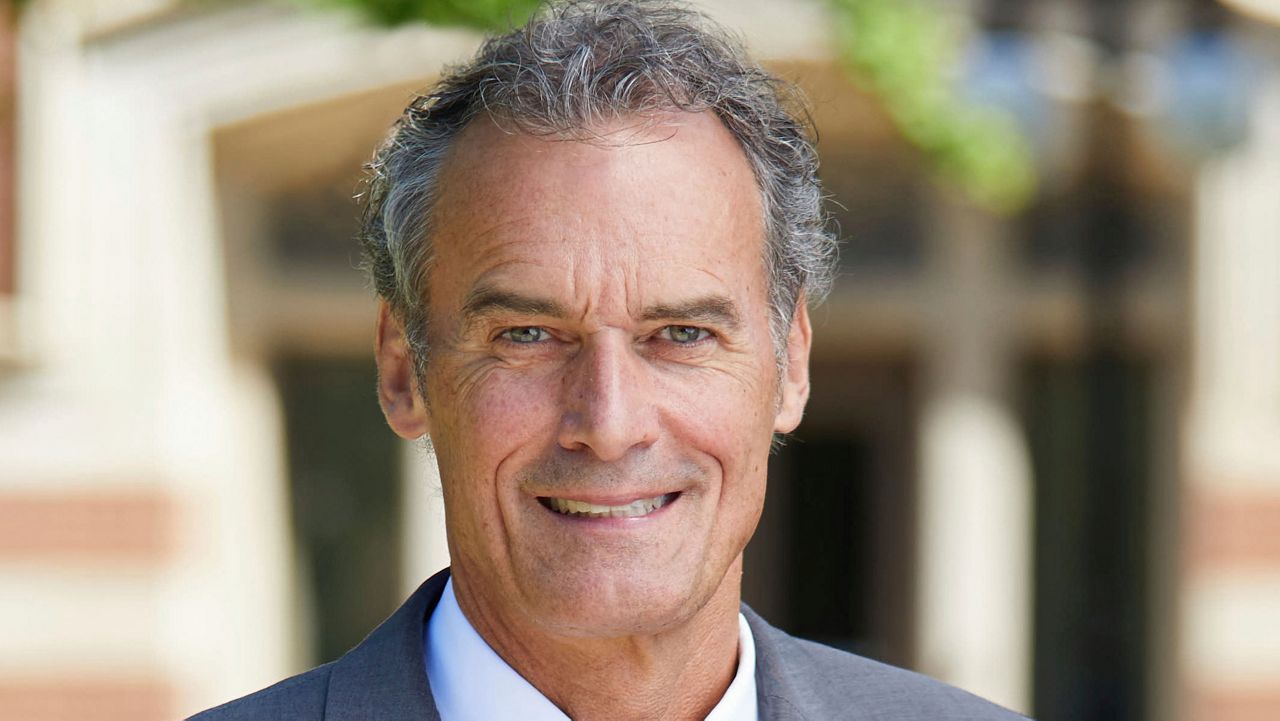
The university of Louisville goes after Allan Josephson because he criticizes medical experiments on children. Penn State goes after Amy Wax because not all cultures are equal. Now the University of Wisconsin-La Crosse boots out Joe Gow for having sex on camera and writing books about it. Isn’t pornography legal? Has La Crosse converted to a Christian organization that polices the morals of its employees?
The decision of the Board of Regents was unanimous. I know you know what unanimous means, but just to wrap our minds around this, let us reflect on the fact that not a single regent—of seventeen—voted to defend Gow’s first amendment right. Why? Apparently it’s a case of placating the Republicans in the legislature. AP News writes, “Universities of Wisconsin President Jay Rothman has been working since he took the job in 2022 to navigate thorny relationships with Republican legislators who view the system as a liberal incubator.”
Well, clearly the system is not a liberal incubator or it wouldn’t violate the free speech rights of its faculty. Rothman wanted to show Republicans that his administration and the Board of Regents were prepared to trash the First Amendment because they think Republicans don’t like free speech. If we move from the premise that words have meaning, I think what Republicans object to is to liberalism but progressivism and all the DEI hustling, as they should—albeit not at the expense of free speech. So Gow is a martyr in the struggle for a free and open society.
To be sure, although Republicans are far more liberal on these matters than progressives, Republicans could be better on this issue. But progressives are a disaster for free speech, as we can see from the foregoing (and in the next section of this essay). Gow’s charge of hypocrisy directed at the Board of Regents is on the nose; this is a big piece of the essence of progressivism, namely the double standard that permits all manner of obscene materials under labels the woke promote and the destruction of those who move under other labels. Gow is to be punished because he and his wife made pornography that emphasized loving and transactional intercourse while leaving out bondage and humiliation and other paraphilic behaviors.
The chair of the UW-La Crosse communications department, Linda Dickmeyer, opposed Gow’s return to the classroom but because Gow has not taught for twenty years. When Gow was in the communication studies program at Alfred University in New York state in the 1990s, he earned the school’s Excellence in Teaching Award three times. I am sure he would have no problem transitioning back to the classroom. They don’t want him in the classroom because he and his wife made pornographic videos, which is protected by the First Amendment.
* * *
In words echoing the Trilateral Commission’s 1975 report The Crisis of Democracy: Report on the Governability of Democracies to the Trilateral Commission, John Kerry, former Secretary of State and Presidential Candidate recently told an audience at the World Economic Forum (WEF), “I think the dislike of and anguish over social media is just growing and growing and growing. It’s part of our problem, particularly in democracies, in terms of building consensus around any issue. It’s really hard to govern today.”
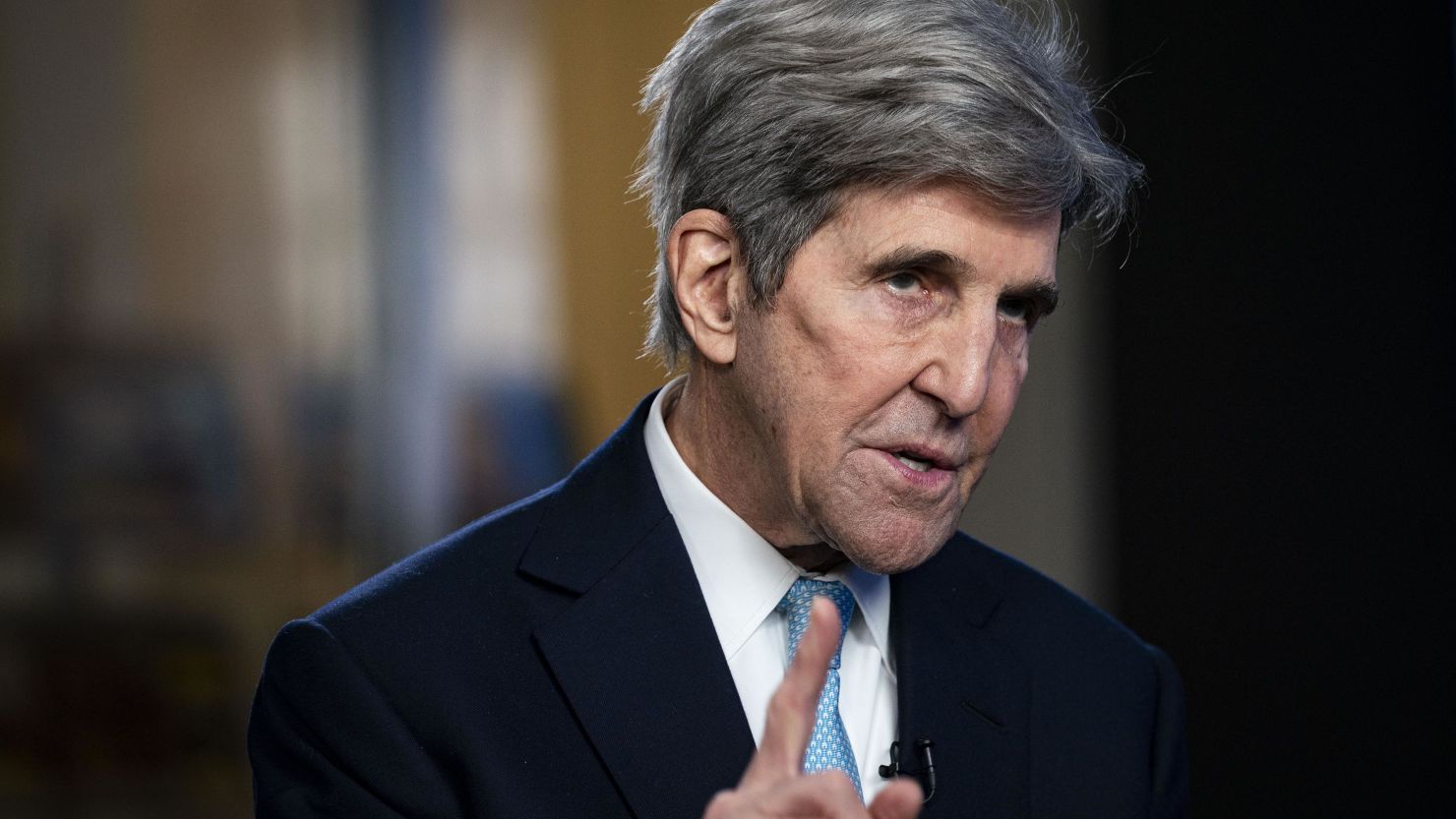
“The referees we used to have to determine what’s a fact and what isn’t a fact, they’ve been eviscerated to a certain degree. People go and then people self-select where they go for their news or for their information, and then you just get into a vicious cycle. It’s really, really hard, much harder to build consensus today,” Kerry continues. “There’s a lot of discussion now about how you curb those entities in order to guarantee that you’re going to have some accountability on facts, etcetera.”
This is hardly subtle. Kerry is telling his elite audience that he wants to curb your right to receive information that interferes with the Party’s agenda. He complains that “if people go to only one source, and the source they go to is sick and has an agenda, and they’re putting out this information, our First Amendment stands as a major block to the ability to be able to just hammer it out of existence.” That’s right. The First Amendment exists precisely for that reason.
But Kerry has a plan to fix that problem: “So what you need, what we need, is to win the ground, win the right to govern by, hopefully, winning enough votes that you’re free to be able to implement change.” This is the way progressives think. It’s the way they govern. It’s soft fascism. The referees he misses is the commissar. He wants the commissar to determine what’s a fact and what not a fact. He wants mind control.
Kerry’s not the only one. Here is Vice-Presidential candidate Tim Walz arguing that there is no First Amendment right to hate speech or disinformation:
And here’s Hillary Clinton calling for the prosecution of Americans exercising their free speech right:
* * *
While writing this essay, I was reminded of Mike Adams, the former University of North Carolina Wilmington professor who killed himself after being pushed into early retirement for offensive tweets. Adams was accused of making remarks that were perceived as dismissive of racial justice movements, particularly the Black Lives Matter movement. He described women’s studies as a nonessential major, which some saw as degrading toward women. He referred to North Carolina as a “slave state” in criticizing the state’s COVID-19 restrictions. Adams was also known for his opposition to the LGBTQ+ movement, with posts that were viewed as “transphobic.”
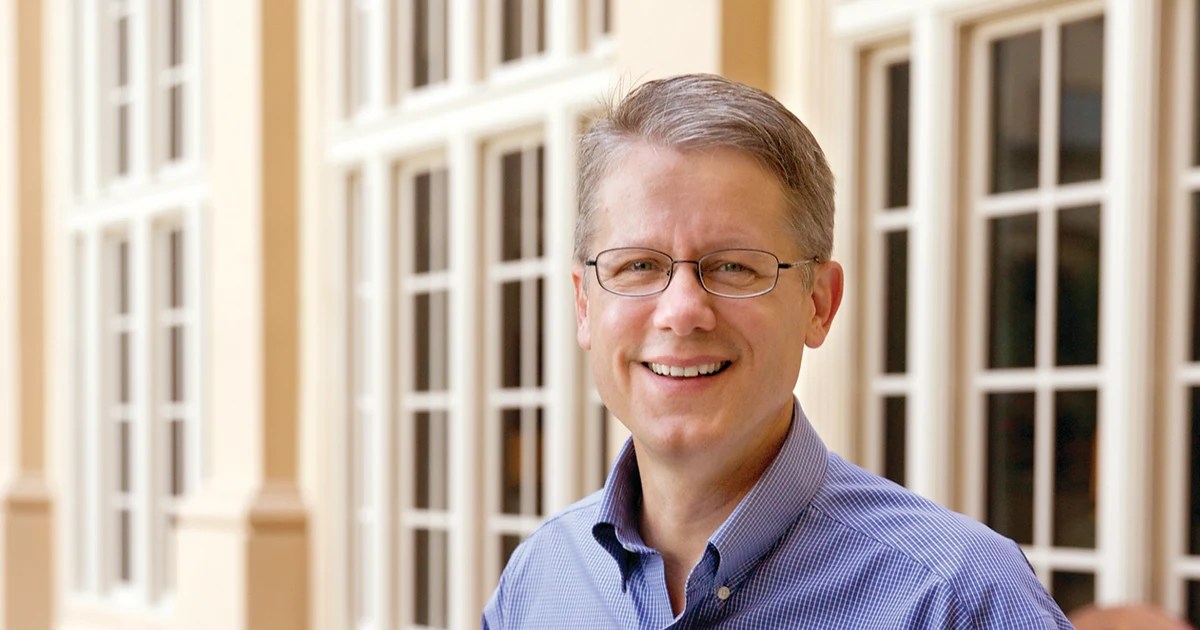
These comments sparked widespread outrage, particularly among faculty and students, who saw his remarks as inconsistent with the values of inclusion and respect that universities are meant to foster. Amid growing public pressure, Adams and the university reached a settlement in which he agreed to retire early. Tragically, before his retirement became official, Adams was found dead in his home in July 2020 with a gunshot wound to his head. His death was ruled as a suicide. He was only 55 years old. Adams left no note, but the combination of public outrage and professional consequences may have affected his mental state leading up to his death. We may never know why he killed himself.
For most public employees, the prevailing legal standard, established by the Supreme Court in Garcetti v. Ceballos (2006), holds that the First Amendment does not shield public employees from disciplinary actions related to speech made in the course of performing their official duties. In other words, if an employee’s speech is part of their job responsibilities, it’s not protected under the First Amendment, and the employer may regulate or discipline such speech without violating the employee’s constitutional rights. However, the issue becomes more complex in the context of academic institutions, where the principle of academic freedom has long been viewed as essential to the pursuit of knowledge and the exchange of ideas. In Adams v. University of North Carolina-Wilmington (2011), the Fourth Circuit Court of Appeals became the first federal appellate court to recognize that academic freedom, a key interest protected by the First Amendment, can override the general rule established in Garcetti.
Adams claimed that he was denied a promotion due to his public commentary on controversial issues, which he argued was protected by the First Amendment. In its decision, the court held that the speech of university professors on matters of public concern, even when related to their academic expertise or job duties, must be afforded greater protection than the speech of other public employees. The court reasoned that academic freedom is a “special concern of the First Amendment” and is vital to the mission of public universities as institutions that foster free inquiry and debate. As a result, Adams carved out an exception to the Garcetti rule in the academic context, affirming that public university professors retain First Amendment protections for their speech related to their scholarship and teaching, even when such speech is closely tied to their official duties.
Adams may play a key role in the fate of Amy Wax. So also may Josephson v. Bendapudi, the case involving Allan Josephson in the US District Court for the Western District of Kentucky (the lawsuit was brought against Neeli Bendapudi, who was the President of the University of Louisville at the time, along with other university officials.) Although Adams v. University of North Carolina-Wilmington was not explicitly cited in Josephson’s legal case, the principles it laid out—namely, that university professors’ speech on matters of public concern tied to their academic work can be protected—were certainly relevant. Josephson’s case, like Adams’, revolved around the question of how far academic freedom and free speech protections extend when professors express controversial or unpopular views, particularly on sensitive social issues. Ultimately, Adams, and now Josephson, established important precedent for the protection of academic speech in certain circumstances.

 freedom and reason