
(Note: I didn’t elaborate the justice question in remarks I first made on Facebook and then adapted to Freedom and Reason in The Ubiquity of Fallacious Reasoning on the Progressive Left, because I was focused on explaining the widespread problem of fallacious thinking among progressives. I am an educator and reflexively see teachable moments. In one thread on Facebook, for example, I applied the Socratic method to bring participants to enlightenment. Unfortunately, this was perceived as manipulative. This is the problem that often lies behind the unwillingness of progressives to participate in rational discussion: progressives (especially the youth) cling to an ideology that privileges artificially constructed classes of sexual minorities over women’s rights, which are organic and rooted in natural history. Readers might consider the present essay as Part Two of Thursday’s essay, although it carries its own title.)
The term “equity” is often misunderstood—or misrepresented, particularly in political discourse. Conservatives, and some progressives (Kamala Harris, for example, who just secured the requisite delegates to be the Democratic Party’s nominee for President), tell us that equity is striving for “equality of outcome.” But the actual meaning of the term concerns practices aimed at providing individuals with the opportunities and resources they need to reach their potential, considering their circumstances and the differences between individuals. This is something quite different from seeking equality of outcomes.
Equity involves recognizing that people face different barriers and have different advantages and needs. Equitable practices encompass targeted intervention, policies, and support designed to address those inequalities and provide opportunities tailored to individual and group differences. Equitable policies and practices are an attempt to level the playing field to ensure everyone has a fair chance at participation and success. Crucially, equity doesn’t guarantee participation and success; it attempts to clear the barriers that prevent participation and success. Individuals still need to possess the talents and take the initiative to seek and win success. These are the ethics that propel progress.
The establishment of sex-based rights is arguably the most significant instantiation of equity in this sense. The emergence of sex-based rights in Western society has deep historical roots, beginning with early feminist struggles and the honing of rational scientific thought in the Enlightenment era. The emergence of sex-based rights in America can be traced back to the early feminist movements of the nineteenth and early twentieth centuries. Title IX of the Education Amendments of 1972, which prohibited sex-based discrimination in education and sports, is the relevant advance for the present discussion. The struggle for equity-based equality more broadly addressed issues such as gender-based violence and reproductive rights violence.
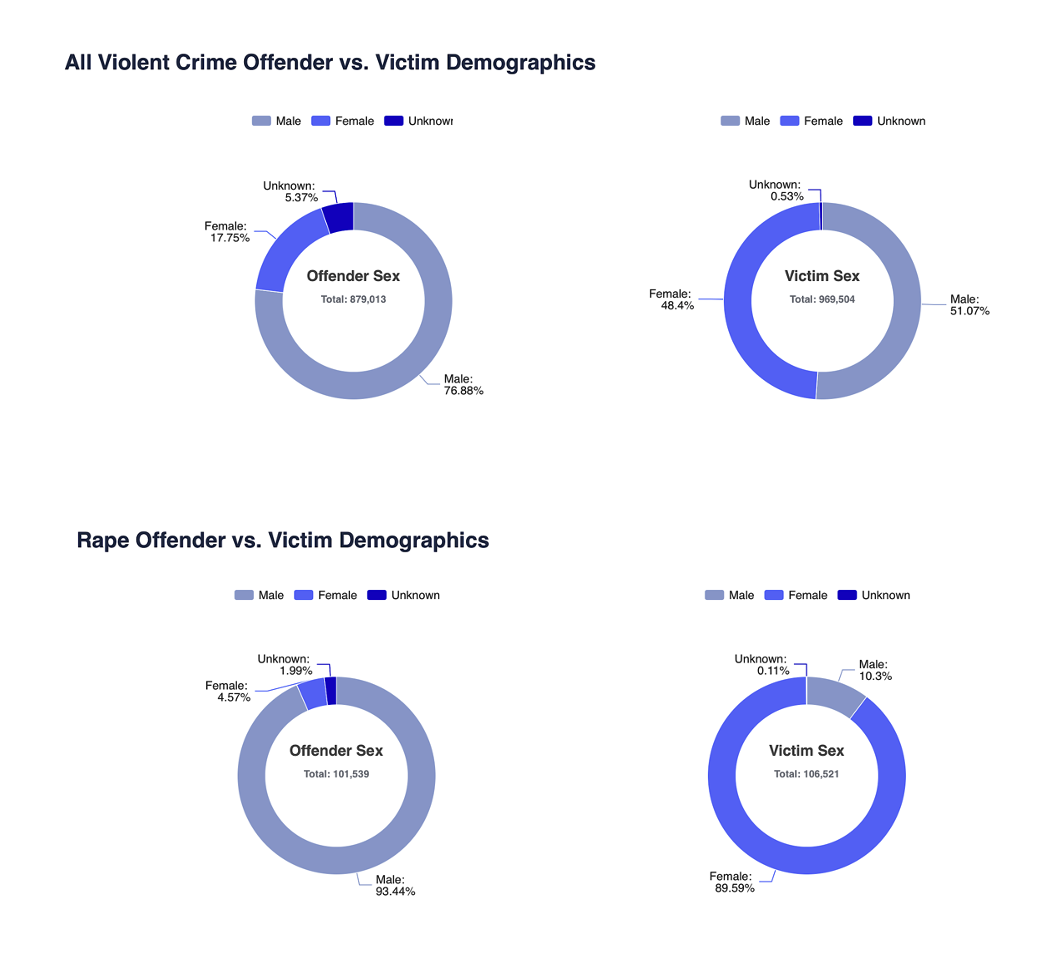
By acknowledging the distinct and profound differences and needs between males and females, sex-based rights aim to ensure equal opportunities and fair treatment for both sexes. Sex-based rights address various areas where females and males different challenges or disadvantages, such as in education, health, and in the workplace. Sex-based rights are also crucial to the need to protect women from violence, of which males are overwhelming the perpetrators. In the United States, for example, more than three-quarters of criminal violence is committed by males; nearly half of the victims of criminal violence are women. For rape, man are perpetrators in nearly 95 percent of offenses, with women representing 90 percent of victims. By implementing policies and protections that specifically consider these differences, such sex-segregated spaces (bathrooms, dressing rooms, locker rooms, prisons, rape and domestic violence shelters) societies can work towards creating conditions where both men and women may be safe and achieve their potential.
Inclusion is the practice of ensuring that individuals from diverse backgrounds, experiences, and identities are respected, supported, and welcomed in a community or an organization. It involves creating an environment where everyone feels valued and has equal access to opportunities and resources, regardless of their individual or group characteristics, which requires addressing systemic barriers. Conflicts arise between the progressive doctrine of inclusion and the principle of equity, particularly when individual differences intersect with group or class-based differences.
This tension becomes especially pronounced in the case of gender. For example, allowing male athletes to compete in women’s sports conflicts with the equity principle of ensuring a level playing field for girls and women who face natural disadvantages in durability, endurance, speed, and strength. Indeed, sex-segregation in sports was instituted not only as an instantiation of equity but as a form inclusion: without sports of their own, girls and women could not participate in sports given the vast natural differences between female and male genders. Thus allowing males to compete in women’s sports is an expression of what I am calling “exclusive inclusivity” because it logically ends in women being unable to compete on a level playing field—and because it excludes all males the opportunity to compete against women (a point I will address towards the end of this essay).
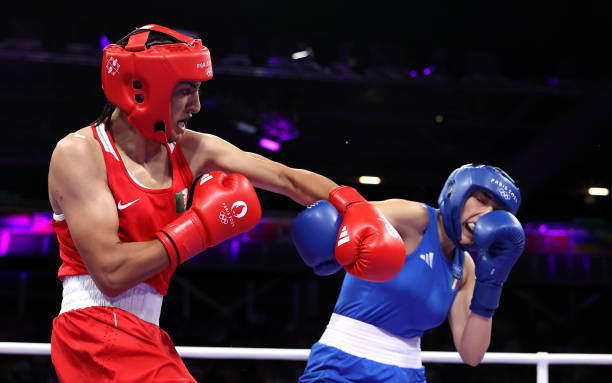
The day before yesterday, in The Ubiquity of Fallacious Reasoning on the Progressive Left I took some time to explain why DSD, or disorders of sexual development (some prefer to say “differences in sexual development”) does not change the argument concerning males in women’s sports. Noting that male athletes in women’s boxing at the Paris Olympics have DSD is irrelevant to the problem. To be sure, a male with DSD did not choose to identify as a female as is the case with gender identity, but the DSD male is still a male. He has XY chromosomes and how feminine appeared his reproductive anatomy appears, an XY male with a disorder of sex development (DSD) can never have functioning female gametes (oocytes), which is the universal definition of sex. As I noted in that essay, the appeal to DSD is fallacious thinking, and these informal fallacies occur because either people don’t understand the rules of argumentation (and arrogantly refuse to learn them) or they eschew the rules because doing might would compel them to form the actual argument that refutes their position. Determined to sacrifice equity upon the altar of inclusion, they cannot form such an argument when they also wish to appear committed to science.
At the core of the desire to include males in women’s activities and spaces is a very dark force that I will come to, but before I do, I need to state the obvious: allowing males to compete in women’s sports negates sex-based rights in the most blatant way possible. It undermines an entire class of athletes—disregarding their aspirations, talents, and training—for the sake of a small number of individuals who either identify as the gender they are not nor can ever be or whose sex was misidentified at birth.
At Friday’s press conference, International Olympic Committee spokesman Mark Adams said, “What I would urge is that we try to take the culture war out of this and actually address the issues and think about the individuals and the people concerned.” Here is asking us to think of the male athletes. “Let’s be very clear here. We are talking about women’s boxing,” Bach said Saturday morning. Indeed. “We have two boxers who were born as woman [sic], been raised as woman, who have passports as a woman, and who have competed for many years as woman. This is legally the definition of a woman. There was never any doubt about them being a woman.” But this is not the scientific definition of a woman. A woman is an adult female human. These are males. The law is irrelevant here. There are many fictions in law. Resort to citing passports is a red herring (same with birth certificates, drivers licenses, etc.). Passports and other personal documents don’t determine sex. Nature determines. Do a cheek swab and get back to us.
USA’s Nikki Hiltz, a female who identifies as the nonsensical gender identity “nonbinary,” but is competing in the women’s class because she couldn’t qualify for a male team, weighed in on the controversy in an Instagram story Friday. She said that “transphobia” (this term is used to smear those who reject the demand to affirm delusional thinking) is “going crazy.” She continued: “Anti-trans rhetoric is anti-woman. These people aren’t ‘protecting women’s sports,’ they are enforcing rigid gender norms and anyone who doesn’t fit perfectly into those norms is targeted and vilified.” This is interesting considering what Hiltz said to Runner’s World in June 2023: “Going to the Olympics is such a dream of mine. But it’s also such a dream of mine to take testosterone or grow facial hair or have top surgery, and so I think sometimes I can really resent this sport.” How is taking testosterone, growing facial hair, and having your breasts removed not anti-woman? Hiltz literally wants to go to war with her female body.
Those who work from a conception of inclusion decoupled from equity, this conception an article of faith of the woke neoreligion, tell us that it is unjust to exclude a male from participating in girls and women’s sports because he has been raised a female. They believe—and they must believe this—that it is the responsibility of female athletes to accommodate males with DSD because they were born “ciswomen.” They believe also that it is right for an athletic organization to assume for female athletes the responsibility for and the risk involved with male inclusion in women’s sports. But the role of athletic organizations is to ensure fair competition—which is why, as explained above, sex-segregated sports exists in the first place, an establishment rooted in the ethic of equity, which is in turn based objective sex differences, again rooted in natural history—and to protect the health and safety of all athletes.
Allowing males to compete in female sports, whether those males identify as women or were misgendered at birth, violates the requirement to ensure fair and safe competition, thus treating women inequitably and puts them as risk of harm beyond the dangers already accepted by the sport. It strips women of their right to equitable treatment for the sake of an arbitrary doctrine in what is an ideological standpoint held by a minority but would be unjust even if the majority agreed with the minority. It means that the purpose of equity, which is the inclusion of girls and women in sports, is negated for a conception of inclusion that rests on no valid justice principle, unless one believes it is just for an entire class of human to sacrificed to the needs of a handful of individuals who objectively belong to the other class of humans. And since nobody who makes the argument for “trans” or “intersex” inclusion also agrees that sex-segregation in sports should be abolished—at least nobody I have been arguing with does. Indeed, their arguments are often prefaced with, “I agree that it is unfair for men to compete against women in athletics.” Disclaimer conceals the dark truth of their politics.
This is one of the many problems with DEI. Equity and inclusion are contradictory principles in DEI schemes, with the former potentially grounded in objective fact (but often not in practice as imagined communities are included in the programming) while the latter is a quasi-religious doctrine when asserted beyond material human need. Sex-segregated activities and spaces exist so women can compete on a level-playing field. Because our species is sexually dimorphic, the result of natural history, males and females are not the same. They are different classes, and it is unfair to pit different classes against each other in athletic competition. Therefore, any valid ethic of inclusion would defend equitable arrangements.
The charitable interpretation is that inclusion in the progressive sense demands allowing males into female sports because of a misplaced humanitarian compassion for the individual presumed either to suffer from “gender identity disorder” (recently recoded as “gender dysphoria”) or who suffers from a disorder of sexual development. Humanitarian compassion is misplaced precisely because it includes an individual from another class (even if we grant these individuals class status) at the expense of an entire other (materially indisputable) class, i.e., females, who are an objective and scientifically determinable category to make certain males feel included. But what about girls and women? When the interests and safety of girls and women are sacrificed for the sake of men this is misogyny. To develop policies and practices that violate sex-based rights is an expression of misogyny. In the field of combat sports, it is the most overt form of misogyny. Put bluntly, those who defend the IOC’s inclusion of Imane Khelif and Lin Yu-Ting in the Paris 2024 Games, endorse male violence against women.
This is the problem with progressive version of social justice (one of them anyway): it fetishes sexual identity for males—trans identifying, and intersex males are a sacred totem in realm of the woke progressivism—and then seeks to compel an entire class of humans to suffer on account of their religion. It is analogous to the demand that a population observe the rules of Islam; because Muslims don’t eat pork, nobody eats pork. In the case of trans or intersex inclusion, it is an expression of patriarchy desire. Because, as an article of faith, women are those who say they are—including men. Men get to define what a woman is, not science. Indeed, if those advocating for males in women’s sports were honest, they would advocate for the deconstruction of sex-based rights altogether. At present, the exceptions are just rationalizations. The distinction being made in this case is arbitrary. If it is wrong for athletics to exclude males from competition in women’s sports, then why are any males excluded from competing against women? Because they don’t identify as such or because they don’t suffer from a medical condition? That’s discriminatory. One must accept the fiction that trans women are women or that a male with genitalia resembling that of women are women for the scheme to work.
Accommodation is important in creating equitable situations. That’s another form of inclusion that doesn’t violate fairness. If a person has no legs, then wheelchair ramps are installed to make it possible for the individual to enter a building and do his business. This is inclusive equity. But the person with no legs is not entitled to be fitted with mechanical ones that allow him to compete against those with legs in athletic competition. How shall such a situation be managed to ensure fairness? His mechanical legs give him advantage. Do we adjust the device, so he won’t run so fast. How do we determine the metrics for standard limitations? Will it be set at the fastest time? Anything less than that would guarantee that he will lose to the person who is faster. And the upward adjustment will always guarantee that he is the fastest. Should set it at the average? Then he will never win. Should we handicap all the other runners (shades of Harrison Bergeron)?
Citing the importance of inclusivity, Oscar Pistorius, a South African sprinter, who had both of his legs amputated below the knee when he was 11 months old (he was both with fibular hemimelia, was allowed to compete in in the 2012 Olympic Games using carbon-fiber prosthetic limbs, known as “blades,” which produced remarkable speed and agility (predictably, the press nicknamed him “Blade Runner”). He became the first double-amputee to participate in the Olympics, running in the 400 meters and the 4×400 meters relay. His unfair advantage did not go unnoticed, and his inclusion sparked debates about the fairness of using prosthetic limbs in competition. The fact that he did not win any medals does not change the judgment I am coming to. What if he were to experiment with different composite materials to improve his speed? We won’t have an answer to that question because in 2013 was charged with the murder of his girlfriend, Reeva Steenkamp, convicted and subsequently found guilty of murder, resulting in a lengthy prison sentence, of which he served nine years and is now living under strict parole conditions at his uncle’s home in Pretoria, South Africa. The unfortunate reality is that his personal circumstances should have excluded Pistorius from participation, and the fact that he did not win any medals doesn’t change that judgment. The rebuttal “Who is to say his blades should be treated as artificial?” asks us to deny the fact that they are artificial—just as queer theory asks us to deny that trans identities are simulations.
Women will never be linebackers in the NFL. In that case, no rule is necessary to keep them from trying because women could never compete at that level. This is the same reality that compels Hiltz to compete against other women. We might consider allowing women to take performance enhancing drugs to match male bodies, but then we’re comprising their health and safety—and compelling them to modify their bodies for men. We don’t even want to incentivize that. Moreover, it is doping. Males will on average always have numerous physical advantages over women. In boxing, a man and a woman at the same weight are not the same. The distribution of fat and muscle on a145lbs man is different from the distribution of fat and muscle on a145lbs woman. As I write in Misogyny Resurgent:
“Physiologically, males tend to have greater muscle mass and a higher percentage of lean body tissue compared to females, who generally have a higher percentage of body fat. This difference in musculature is evident in attributes like upper body strength and punching power, where males typically outperform females. The enhanced musculature in males is linked to higher levels of testosterone, which promotes muscle growth and strength. However, the differences are not reducible to testosterone. Skeletal differences between males and females are pronounced. Males usually have larger and denser bones, contributing to greater overall body strength and support for larger muscles. The male pelvis is narrower and more robust, designed to support heavier loads and facilitate bipedal locomotion. In contrast, the female pelvis is wider and more adapted for childbirth. The center of gravity is different. Facial structural differences are another area of sexual dimorphism, with males generally exhibiting more pronounced brow ridges, a squarer jawline, and larger cheekbones. Again, these features are thought to be associated with greater levels of testosterone during puberty, which influence bone growth and facial morphology.”
Sex-based rights recognize and respect the inherent differences between the sexes, aiming to create a form of equity that acknowledges these distinctions while ensuring fair treatment and opportunities for all. This approach acknowledges that men and women, as a matter of natural history, the objective basis for human rights, are different. Maternity leave policies recognize the unique role of women in childbirth and early child-rearing, providing support that helps balance career and family responsibilities. Similarly, measures against gender-based violence recognize the higher rates of such violence against women and aim to offer specific protections and support systems. By focusing on the unique experiences and requirements of each sex, sex-based rights strive to create a more equitable society where both men and women can achieve their full potential without being disadvantaged by their biological differences.
The view that sex-based rights recognize differences between the sexes and aim to create equity aligns most closely with liberal feminism and difference feminism. Liberal feminism emphasizes the importance of equal rights and opportunities, advocating for legal and policy reforms that address the unique challenges and needs women face, such as reproductive rights and workplace equality. Difference feminism explicitly acknowledges and values the differences between men and women, arguing that these differences should be respected and accommodated within societal structures. This perspective supports the idea that true equality requires differential treatment to ensure that both genders can thrive, rather than a one-size-fits-all approach. Both forms of feminism share a commitment to fairness and justice, but difference feminism particularly highlights the importance of recognizing and valuing the distinct experiences and contributions of women. When asked what my brand of feminism is, it is this. It always has been.

 freedom and reason