
Note: My essay on this nightmare was auto-published this morning. I wrote it yesterday before the matches. I will update when the dirty deeds are done.
“First of all, she’s not really a she. She’s a transgender, post-op person. The operation doesn’t shave down your bone density. It doesn’t change. You look at a man’s hands and you look at a woman’s hands and they’re built different. They’re just thicker, they’re stronger, your wrists are thicker, your elbows are thicker, your joints are thicker. Just the mechanical function of punching, a man can do it much harder than a woman can, period.” —Joe Rogan, 2013
“For the record, I knocked two out [women]. One woman’s skull was fractured, the other not. And just so you know, I enjoyed it. See, I love smacking up TEFS (sic) in the cage who talk transphobic nonsense. It’s bliss!” —Fallon Fox, 2020

Rogan is talking about Fallon Fox, a transgender mixed martial artist who was a focal point of controversy and debate in the sports world. Fox started identifying as a woman in 2006 and underwent “gender confirmation surgery” (a past euphemism for extreme body modification) in 2007. He competed in women’s MMA competitions, including promotions like the XFC and later the UFC. Fox’s physiological advantages—bone density, muscle mass, etc.—gave him an edge over female fighters. Trans activists argued that Fox’s participation should be based on his gender identity and the fact that he had undergone hormone replacement therapy and surgery, which, they argued, levels the playing field—thereby admitting physiology matters. Others saw it for what it was—a male athlete punching female competitors in the face on the ground that self-identification matters more than objective reality. (I have written several essays on the problem of boys and men in women’s sports and other activities and spaces; see The Rapidly Approaching Death of Sex-based Rights; The Thomas-UPenn Episode: A Textbook Case of Institutional Gaslighting; No, The International Powerlifting Federation Did Not Strike a Blow for Women’s Rights; Should Trans Identifying Women Go to Men’s Prisons? The Casual Use of Propagandistic Language Surrounding Sex and Gender; Why Are There Sex-Segregated Spaces Anyway? NPR, State Propaganda Organ, Reveals Who and What have Captured the State Apparatus; Is Title IX Kaput? Or Was it Always Incomprehensible? Burned at the Stake: Another Victim of the Gender Cult.)
The 2024 Olympics in Paris have stirred controversy with the inclusion of trans identifying males, or trans women, competing in women’s boxing (Supper in the Spectacular Café). Previously, such athletes were barred from competition under the regulations of the International Boxing Association (IBA), which was responsible for overseeing the sport. However, the International Olympic Committee (IOC) has taken over the process, cutting out the IBA’s control. With the IOC’s decision, trans women, i.e., males, are now allowed to compete against women in boxing events. Their inclusion is determined based on their sex identification on their passport, which includes those who self-identify as such. This move has sparked debates regarding fairness and safety, given the physical advantages that trans women might retain from male puberty, such as greater muscle mass and bone density. Critics argue that these advantages could pose significant risks to female athletes in a contact sport like boxing. As they did in Fallon’s case, supporters of including trans women emphasize the importance of recognizing and respecting gender identity, advocating for equal opportunities for all athletes regardless of their gender identity.

One of these male athletes is Imane Khelif of Algeria (above). He is set to compete in the women’s under 66kg category (welterweight) on Thursday, August 1. The other is Taiwan’s Lin Yu Ting (below). He will compete in the under 57kg division (featherweight) on Friday, August 2. Both boxers were disqualified from the World Championships in New Delhi last year for failing to pass gender eligibility tests. Both tested for XY chromosomes, i.e., they are male. This should be enough to disqualify them from competition. But, as we say Friday night at the opening ceremony, the Olympics have become infected by the woke mind virus.

“Everyone competing in the women’s category is complying with the eligibility criteria,” said International Olympic Committee spokesman Mark Adams. “They are women in their passports and it’s stated that is the case, and they are female.” Adams emphasized the “incredibly complex” system that determines eligibility criteria for women’s sports saying, “Everyone would love to have a single answer, yes or no. The federations need to make the rules to make sure there is fairness but also the ability for everyone to take part that wants to.” However, one’s sex determination on a passport in the age of self-identification and abandonment of sex-based rights by many governments around the world is based neither on materialist science nor objective criteria. What is more, many governments are induced to send male athletes to compete in women’s sports because of the prestige associated with accumulating gold medals.
The lure of gold medals has caused governments to do terrible things before. Recall the scandal involving East German athletes during the Cold War, which centered on the widespread use of performance-enhancing drugs, particularly anabolic steroids. This controversy primarily concerned the doping of female athletes. The East German government had orchestrated a state-sponsored doping program, administering steroids and other banned substances to athletes to enhance their performance in both Olympic and other international competitions. The scandal was brought to light after the fall of the Berlin Wall in 1989, revealing that the doping program was more extensive than initially known. Doping impacted multiple Olympic Games, including the 1976 Montreal Olympics, 1980 Moscow Olympics, and the 1984 Los Angeles Olympics, where East German athletes achieved notable successes. The revelation of these practices led to significant debates about fairness in sports, health issues for the athletes involved, and a reevaluation of results.
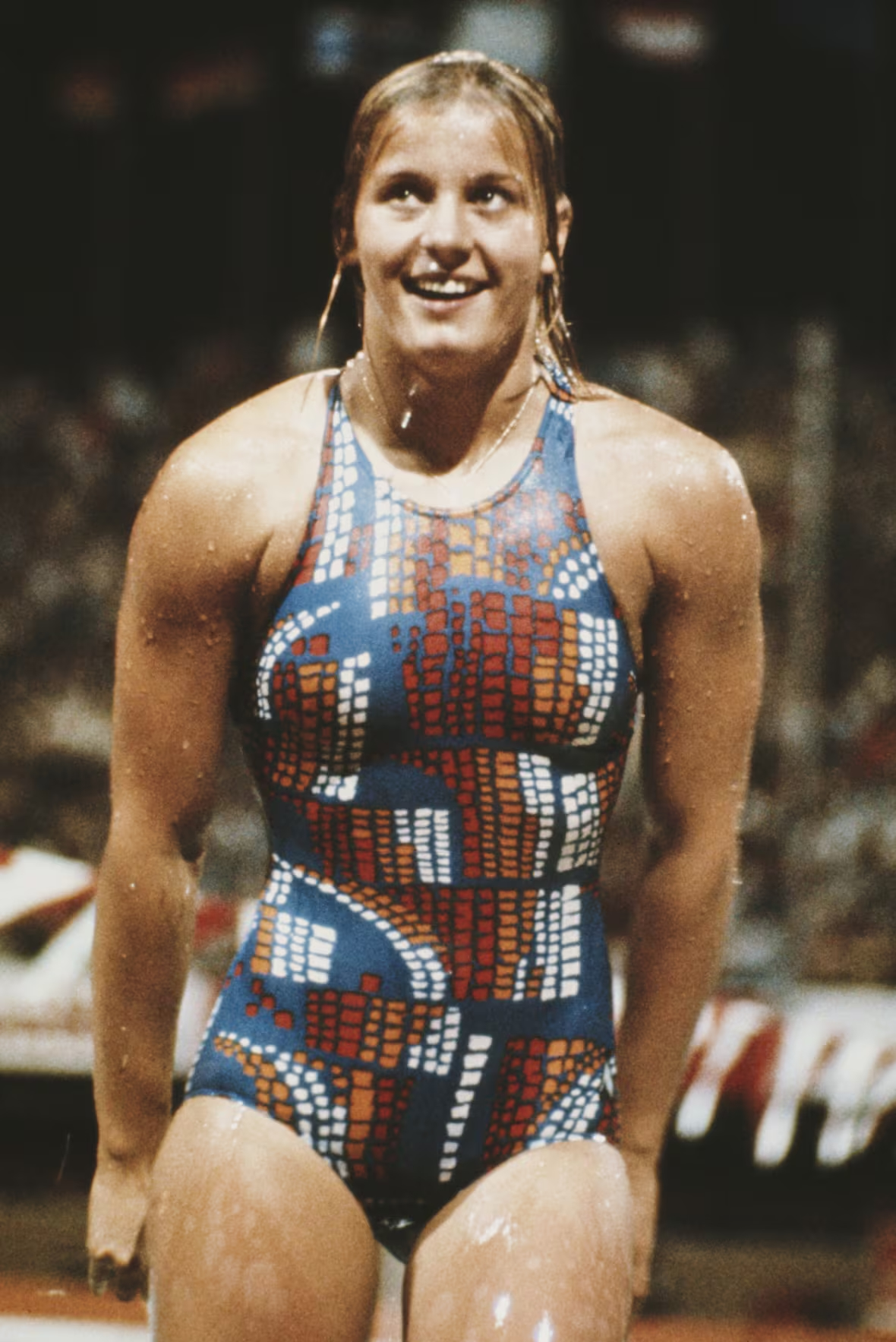
Female athletes from other countries had suspicions about the East German doping practices. As East German female athletes dominated many events during the 1980s, competitors from other nations and their coaches began to notice their unusual performances and physical changes. There were growing concerns and whispers about the possibility of doping, particularly because East German female athletes exhibited pronounced muscle development and physical characteristics that seemed atypical for women athletes at the time. Many people could see what they saw, even if they didn’t speak up. These suspicions were compounded by the fact that the East German sports program was known for its secretive nature. After the fall of the Berlin Wall, investigations and testimonies from former athletes and officials exposed the extent of the doping regime, validating the concerns raised by their international counterparts.
The East German doping scandal remains one of the most significant cases of state-sponsored cheating in Olympic history. Likewise, the current decision allowing males to compete against women, with males enjoying natural advantages even greater that the drug enhanced East German female athletes, has sparked a significant debate about the balance between inclusivity and fairness in sports. We should use the word cheating here just as we did in the case of East German female athletes. The alleged complexities of navigating gender identity within competitive athletics present a different problem only in the sense just mentioned, namely the advantages that trans-identifying males have over female athletes due to innate physiological differences. Whereas steroids masculinized female athletes after puberty, the fact of being male provides advantages over women way beyond the benefit of steroids. There is no navigating this. The bridge should be condemned and closed.
I argue that prioritizing inclusivity over fairness diminishes fairness and objectively endanger women by allowing athletes with male physiological advantages to compete against those without them. This undermines the principles of competition, which are based on providing a level playing field for all participants. Prioritizing fairness over inclusion not only honors traditional sex-based rights but also aligns with the core principles of competitive sports, ensuring that all athletes have an equal opportunity to succeed based on their abilities and training rather than inherent grouped physical advantages. We’re told that balancing these considerations requires careful thought and a nuanced approach to policy-making in the realm of athletics, but it may be the case that the issue is one-sided. Indeed, when one steps into the boxing ring, one is not competing against a self-identification but against a concrete individual whose advantages are determined by his objective sexual identity. (See Decoding Progressive Newspeak: Equity and the Doctrine of Inclusion.)
The question of whether self-identification trumps objective reality or that decisions about competitive sports are grounded in the facts of natural history has implications well beyond the question of men in women’s sports. Here we encounter the opposition between idealism and materialism. Idealism posits that beliefs and personal perceptions shape reality, allowing individuals to define their identities based on subjective feelings. This perspective holds that one’s internal sense of self can determine their gender, regardless of biological or physiological characteristics. Materialism, on the other hand, asserts that reality is grounded in objective, observable facts. According to this view, gender and sex are determined by physical attributes such as chromosomes, reproductive anatomy, and secondary sexual characteristics (not simulated). The materialist perspective maintains that these biological factors are the basis for categorizing individuals as male or female, and self-identification cannot alter these inherent characteristics. This fundamental question underpins much of the contemporary debate on gender identity, with significant implications for individual rights, legal frameworks, and societal norms. I want the reader to know that I come down resolutely on the side of scientific materialism.
If we accept that gender and sex are different things, which is the central doctrine of queer theory (which is not a theory in the scientific sense), and sex refers to the physical anthropological differences between female and male, we now have the task of determining what we mean by gender. For centuries, gender and sex have been synonyms, meaning that gender also referred to the physical anthropological differences between female and male, determinable primarily by gamete size, but also chromosomes and reproductive anatomy. Historically, a woman was scientifically defined as an adult female human and a man as an adult male human. Gender was binary and immutable, and social institutions were organized around this fact. In the drive to equality with the emergence of modernity, society came to recognize that sex differences were so profound that equitable ends required the recognition of sex-based rights. This recognition is manifest in sex-segregated activities and spaces, sports being one of them. (See (see The Pelvis Tells the Story: Archeology and Physical Anthropology are Most Unkind; Bubbles and Realities: How Ubiquitous is Gender Ideology? Separating Sex and Gender in Language Works Against Reason and Science; Scientific Materialism and the Necessity of Noncircular Conceptual Definitions; The Science™ and its Devotees.)
In the nineteenth and twentieth centuries, anthropologists, historians, human biologists, and sociologists developed the concept of the sex role. During this period, sex became the preferred term (although gender continued to be used in botany). Scientists observed a natural sexual division of labor based on morphological and physiological differences and reproductive roles. By the 1940s, there was still no clear conceptual distinction made between gender and sex. One only needed to refer to the sex role as the gender role; they were interchangeable. Although the sex role referred to natural differences between the sexes, it also included (culturally and historically variable) sociocultural features associated with it—norms, statuses, and typifications (or stereotypes). By using the word gender to refer to roles exclusively and reducing sex to the biological, the sociocultural aspects of sex could be mystified, isolating gender from the biological and establishing a concept. Thus, the sociocultural role was decoupled from sexual dimorphism and the reproductive roles of the species. (See Gender Roles and Stereotypes; Gender and the Gender Role; Gender and the English Language; Manipulating Reality by Manipulating Words; Sex = Gender Redux: Eschewing the Queer Linguistic Bubble; There’s No Obligation to Speak Like a Queer Theorist. Doing so Misrepresents Reality; Denying Reality: The Tyranny of Gender-Inclusive Language; Sex and Gender are Interchangeable Terms; Gender and Sex. Once More for People in the Back.)
If one drops the term “role” from gender, what is gender if not sex? This is a significant problem for those seeking to escape the constraints of material reality. If you pay attention, you will see that gender is often used in place of gender role (it is useful to point that out in conversation). At the end of the 1960s, psychiatrists paired gender with the concept of identity and constructed a new term: gender identity. Normally, identity would be what the thing is, i.e., the thing in itself, so one’s gender would again be determinable by morphological and physiological differences and reproductive roles. However, psychiatrists changed the meaning of identity to refer to what the thing thinks it is, independent of what it really is, thus making it a subjective matter. Because it is subjective, the male sex can think he is the female gender, in which case the male “identifies” as a woman and he expects those around him to also identify him as such. If the subjective definition of identity replaces the materialist definition, and idealism is privileged over objective reality, then a man becomes a woman according to the queer definition of gender, hence the slogan “Trans women are women.”
All this depends on accepting idealism and rejecting materialism and objective reality. If a man can be a woman because he thinks of himself that way, but objectively he remains male by materialist standards, then materialism has been subordinated to feeling, which is subject to the problem of delusion. In other words, whatever the belief, it becomes a reality possessed by only one person, and those around him must take his word for it (consider the problem of alien abduction or commune with angels). The observer will have to accept as true whatever the subject tells him without objective confirmation or verification of the truth of his claim. In other words, those around the man will have to affirm his self-identification or self-report on faith (or at least bad faith). This reliance on faith belief renders the proposition non-falsifiable. However, under the original meaning of gender, the question of a person’s gender is a verifiable fact, confirmed by an examination, which would rarely be wrong, and verification would rarely need to be performed since it would, in the vast majority of cases, be determined (not assigned) at birth.
Even if we accept the queer theoretical terms but do not abandon science altogether, the problem of sex differences remains. To be sure, there is a push to make these arbitrary and subjective, as well, as seen in the practice of changing sex on birth certificates by governments that have abandoned sex-based rights. For postmodernists, science is one of the grand narratives that carries authority only because we believe it does; the categories of the natural sciences are as socially construct as those of literary traditions and the social sciences. Postmodernism of which queer theory is a branch, collapse ontology into epistemology and then pluralize the latter (which is why there are an infinite number of genders). But suppose we compromise and agree to differentiate between gender as defined in queer theory and sex as defined in science. In this scenario, sex-based rights would continue to exist because they are based on the objective of sexual dimorphism. A man would be permitted to “identity” as a woman, but he would not be able to participate as one in sex-segregated activities and spaces. I recognize this is an unacceptable compromise from the standpoint of trans activism. But what about for rest of us?
Assuming the rest of us find value in materialism, let’s turn to the science. From a physical anthropological perspective, sexual dimorphism in humans, the facts of which are empirical and verifiable, reveals significant differences in cognitive and emotional function, connective tissue, musculature, skeletal structure, and other physical attributes between males and females. Physiologically, males tend to have greater muscle mass and a higher percentage of lean body tissue compared to females, who generally have a higher percentage of body fat. This difference in musculature is evident in attributes like upper body strength and punching power, where males typically outperform females. The enhanced musculature in males is linked to higher levels of testosterone, which promotes muscle growth and strength. However, the differences are not reducible to testosterone. Skeletal differences between males and females are pronounced. Males usually have larger and denser bones, contributing to greater overall body strength and support for larger muscles. The male pelvis is narrower and more robust, designed to support heavier loads and facilitate bipedal locomotion. In contrast, the female pelvis is wider and more adapted for childbirth. The center of gravity is different. Facial structural differences are another area of sexual dimorphism, with males generally exhibiting more pronounced brow ridges, a squarer jawline, and larger cheekbones. Again, these features are thought to be associated with greater levels of testosterone during puberty, which influence bone growth and facial morphology.
What explains the profound objective differences between men and women which has since time memorial determined and shaped their social roles and led to the development of sex-segregated activities and spaces, as well as safeguarding norms? We do have the answer to this question. The theory that males engaged in combat and other strenuous physical activities explains many of these differences. Evolutionary pressures favored males who could effectively engage in combat, hunt, and protect the group. This need for physical prowess drove the development of stronger muscles, denser bones, and greater overall strength. The idea that dietary habits alone account for these differences has been largely debunked, with evidence strongly supporting the role of evolutionary pressures related to physical competition and survival.
Although there are adaptive advantages to sexual dimorphism, there are other effects that can be deleterious if not controlled and steered in the proper way. Male violence, including against women, is an important aspect of understanding human sexual dimorphism. Historically, males have been more prone to aggression and violent behavior, which can be linked to the evolutionary need for males to compete for mates, resources, and social status. This aggression is evident in the higher rates of violent crime committed by males compared to females. Violence against women, in particular, can be understood through the lens of evolutionary psychology, where control over female reproduction and dominance may have been historically advantageous for males. It’s essential to recognize that while these behaviors may have roots in evolutionary history, they are not justifiable and are influenced by cultural and social factors in contemporary society. Addressing male violence requires a nuanced understanding of both biological predispositions and the impact of societal norms and values.
Misogyny is the ingrained disdain, hatred, loathing, and prejudice towards women, manifesting in various forms including belittlement, discrimination, and violence. Misogyny is embedded in cultural, organizational, institutional, and social frameworks, perpetuating gender inequality and hindering women’s opportunities and limiting their rights. Misogyny can be overt, such as in derogatory language and physical abuse, or subtle, such as in workplace biases and societal expectations that limit women’s roles and contributions. This pervasive bias not only harms individual women but also undermines the fabric of a just and equitable society by sustaining power imbalances and stifling self-actualization, the full development of the personality. This is why just societies recognize sex-based rights and establish sex-segregated activities and spaces.
This weekend, the whole world will see misogyny in its most overt manifestation when male athletes will enter the squared circle and batter women about the head and body. They will see this because leading organizations and major institutions have accepted the fiction that gender is self-identified and that self-identification trumps the objective science of physical anthropology. Everybody who allows this—and supports it—participates in misogyny. This is what queer praxis seeks, among other things, the elimination of sex-based rights and the erasure of principle of equity with respect to gender. The fact that it is actually happening tells us that postmodernism has won over the institutions of society. Modernity has been replaced by atavisms and perversions. Woke progressivism is an authoritarian and regressive project, a neoreligion that eschews whatever good could be found in the old religion. A neoreligion that, in canceling the Enlightenment, portends a New Dark Ages.
* * *
What about this hackneyed straw man concerning genital policing? I’m 62 years old, and in those many years, I have never seen nor had it suggested to me that we police each other’s genitals in daily life. Stating that men shouldn’t trespass upon women’s activities and spaces is certainly not a call for genital policing. Indeed, genital policing is generally unnecessary for two reasons.
First, since for nearly everybody in the modern period, gender is documented on a birth certificate, which carries over to driver’s licenses, passports, etc., with the expectation that individuals are for the most part decent human beings who will respect the dignity and safety of girls and women and thus observe the norms that safeguard them. All we need to ensure is that governments don’t abandon sex-based rights and arbitrarily change sex identification on birth certificates, drivers licenses, passports, etc. To be sure, men will still use deceptive mimicry to enter spaces exclusive to girls and women, but one need not check their genitals to enforce sex-based rules. As for the Olympics, we see that how gender is sorted for sex-based competition is, per the current rule, what is listed on the passport. Even if this system had not become corrupted by ideology and politics, we might still need to test athlete to determine their gender because they may be lying for the same reason we test for steroids, etc.
Second, thanks to natural history, humans are remarkably accurate in determining whether faces and bodies are male or female—independent of sociocultural cues or seeing them nude. There are fairly convincing simulated sexual identities out there that may fool some people, but they’re rare (see (Simulated Sexual Identities: Trans as Bad Copy). Most men don’t pass as women even with extensive body modification or less evasive cosmetic applications (makeup, wigs, etc.). The proportions are different. The gait is different. The infliction of the voice. Etc. (See The Story the Industry Tells; Wait Until You’re Older; The Body as Primary Commodity: The Techno-Religious Cult of Transgenderism; Mystification in the Marketing of “Live-Saving Gender-Affirming Health Care”; Making Patients for the Medical-Industrial Complex; The Persistence of Medical Atrocities: Lobotomy, Nazi Doctors, and Gender Affirming Care; Thomas Szasz, Medical Freedom, and the Tyranny of Gender Ideology; The Function of Gender Ideology in Rationalizing Physician Harm). AI is good at gender detection, too, much to the consternation of ideologues who deny the material reality of the gender binary. (See The Queer Project and the Practice of Deceptive Mimicry; Magical Thinking and Perception Management in Gender Ideology’s Imperial Ambitions.)
As implied in Neutralizing the Gender-Detection Brain Module, I suspect we are seeing in the younger generation a gradual diminishment of the gender detection facility due to early and intentional disruption of its developmental unfolding, which is a goal of educational and mass media programming around the false distinction between sex and gender delineated by the pseudoscience of gender identity. But, for now, most women know when a man is in their space. Tragically, because of the more subtle impositions of misogyny, most women don’t speak up for fear of retaliation or shaming. This explains why most women do not speak up when those who are supposed to safeguard them put them dangerous activities and spaces with men.

 freedom and reason