
“We are effectively run in this country via the Democrats, via our corporate oligarchs, by a bunch of childless cat ladies who are miserable at their own lives and the choices that they’ve made, so they want to make of the country miserable too,” JD Vance, Tucker Carlson Tonight, July 29, 2021
“You should never say anything to hurt anybody’s feelings, but when you look at all these interviews by JD, he was talking about how the Democratic Party has abandoned the traditional family. So this idea of trying to marginalize JD and make him some kind of bad person is not going to work. He’s not a bad person, he’s a good person.” —Lindsey Graham, Face The Nation, July 28, 2024
As is well known, JD Vance isn’t from Kentucky. Apparently that’s a big deal to the folx. Vance was born in Middletown Ohio, about a hundred and eighty miles from where both sides of his family lived in Jackson, Kentucky. To give you some perspective, that’s about the same distance as between Nashville and Knoxville. For Wisconsinites, it’s a little shy of the distance between Green Bay and Kenosha. That’s not very far. A tank of gas. Vance used to spend time during his summers in Franklin (much like I would spend time during my summers in Blackman, TN, and Terre Haute, IN).
And yes, it’s true, JD Vance is not the man’s original name. He was born James Donald Bowman. His parents were divorced when Vance was a toddler and he was adopted by his mother’s third husband, Bob Hamel. Vance’s mother, Beverly Carol, changed the boy’s name to remove his father’s name, choosing “David “ to keep his nickname “JD.” Somehow Vance was able to find a time machine and mastermind all this because it’s deceptive and he’s a bad person. Or haven’t you heard?
Rumor has it that Vance was never poor. In fact, he was born with a silver spoon in his mouth. Why? Because he went to Yale obviously. But the truth is that Vance grew up in poverty, his mother addicted to drugs. The situation was so bad that he and his sister Lindsey were raised by their material grandparents, Mamaw and Papaw, who had moved to Middletown from Jackson. He took the family name “Vance” in appreciation for his grandmother’s sacrifices (she had a tough life, as well). She was the woman who raised him.
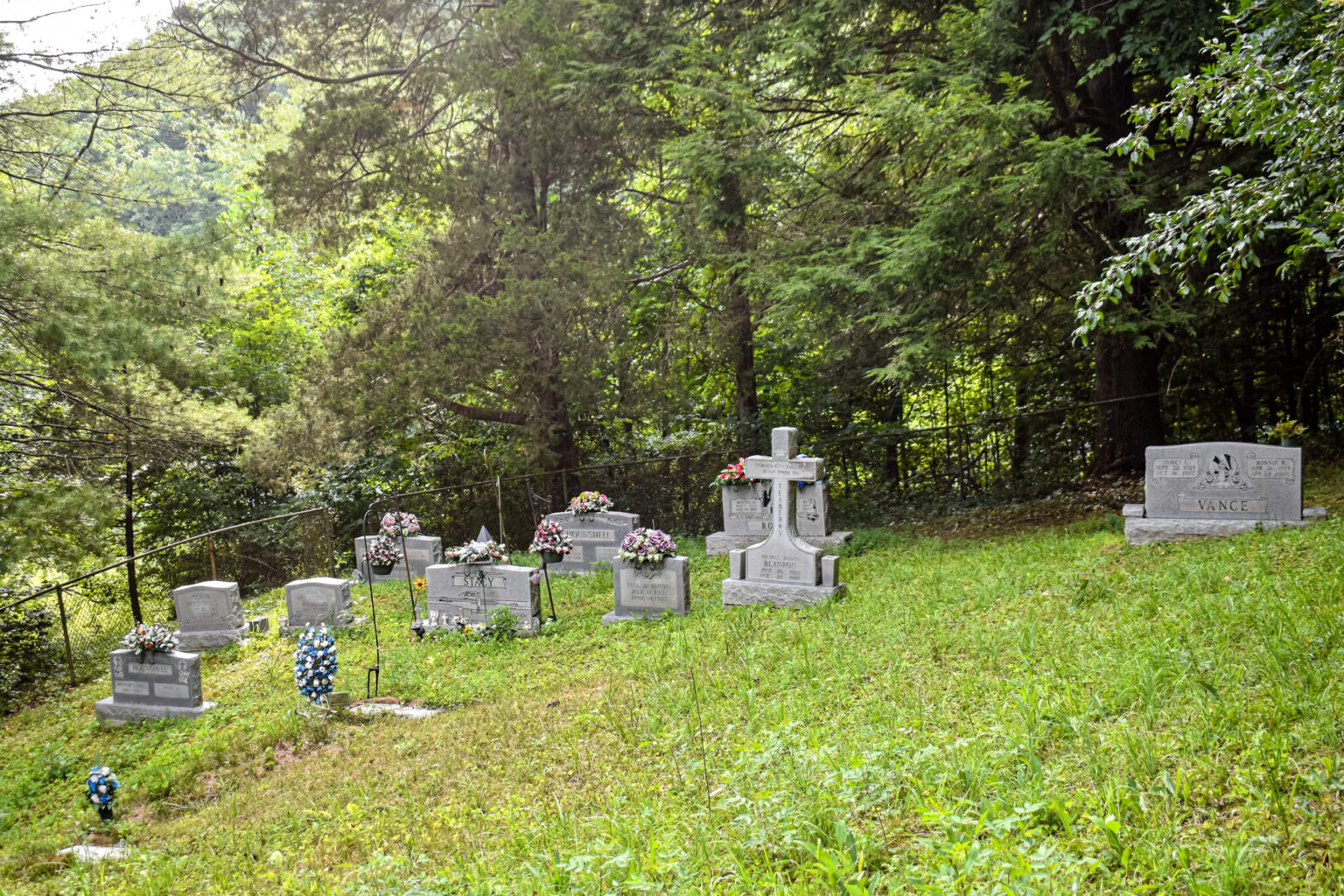
These arrangements didn’t improve his life chances, though, not financially at least, so Vance took it upon himself to make things happen and joined the Marine Corps. With the GI bill in hand, Vance attended Ohio State University, where he graduated summa cum laude, which allowed him to secure a full-ride scholarship to Yale for the first year. It was there that a friend persuaded him to write a memoir about his life. It was there that he also met his wife, Usha (they have three children together).
When the book Hillbilly Elegy came out it was not marketed so much as a story about his family’s roots in Appalachia, albeit that piece is crucial, but more about the devastation wrought by globalization and regional deindustrialization and falling away from traditional values. For this reason, the Washington Post called him the “voice of the Rust Belt.” Today, his working class sympathies are getting him accused on X by right-wingers of being more of a socialist than a conservative. Those on the far left are billing him as a rich man (while voting for the party that represents the richest of men).
I haven’t read the book. I watched the movie a few weeks ago. I did research to fill in the gaps. It was easy to suss all this out. The man’s life is, after all, an open book. Wikipedia is not a bad source for things like this.
The experience has been impactful because I remember, in the 1980s, how globalization had emptied my state of electronic subassembly plants and apparel manufacturing factories. We were the subject of the documentary Global Assembly Line, which I often show my students. Nashville was a fading city then. I moved to Miami shortly after graduating high school in 1980 to make a life (lasted about a year in that crime-infested hellhole). Intellectually, with a specialization in political economy, I found Vance’s biography useful as a concrete personification of the harm caused by transnationalization. I find Michael Moore’s documentary Roger and Me useful for the same reason. I show that in class, as well. All this provides the context for the rise of populism and the persona of Donald Trump.

I also find Vance’s biography impactful because my family on my paternal side has roots in Appalachia. Although I only lived at the foot of the mountains for a little while as a kid, and did my PhD there in Knoxville, I still feel a connection. This connection was reinforced by regular visits to Sparta where my grandfather and his father before him lived, working in the coal mines up on the mountain. My great grandfather Austin was a blacksmith. (I own land up there.) And, of course, the time I spent with my grandfather, who, having come down from off that mountain physically, never left the mountain spiritually.
Our species are culture bearers, which means we humans take our culture with us wherever we go. I know this will sound cliche, but putting it simply goes like this, you can take the man off the mountain, but you can’t take the mountain out of the man. I’d like to believe there’s a little mountain in me. When I say I have roots in Appalachia, I don’t feel like I’m lying. And JD Vance is a lot closer to those mountains than I am.
We all know what this is about. I just wanted to take a minute and share my thoughts about it. By the way, my great grandmother’s name on my grandmother’s side was Mamaw. My grandfather’s name was Papa. Now my father is Papa.

 freedom and reason