“Donald Trump and the MAGA Republicans represent an extremism that threatens the very foundations of our republic.”— Joe Biden, Philadelphia 2022
There is a lot of talk these days about fascism in the United States (and in Europe, as well). Indeed, persistent and widespread rhetoric characterizing Donald Trump and his populist supporters likely played a role in the attempt made on his life two Saturdays ago. The false characterization is based on selective and decontextualized features of fascism and mapping them over the Trump phenomenon— Trump is a demagogue who champions nationalism (as if that is a bad thing), and so forth. I discussed this in previous essays, so I won’t repeat myself here. What I want to do today is identify the inherent features of twentieth century fascism to help readers elaborate their capacity to see fascism in the twenty-first century. Mussolini and Hitler are long gone, but the corporate state they championed is not; it has only become entrenched, its power dissimulated by a culture of futility.
Before proceeding, I want to note that this essay was meant for Saturday, but I instead published The Paris Olympics and the War on Western Culture: Preparing the Masses for the New World Order for obvious reasons. However, the analysis presented there issues from my ongoing analysis of the New Fascism, so they were well together as a series.

I like sharing images of Biden in Philadelphia giving his “Battle for the Soul of the Nation” speech. Not because the imagery is fascistic; although, as Walter Benjamin told us in 1936 (see “The Work of Art in the Age of Mechanical Reproduction”), the aesthetics of fascism are not unimportant, fascism does not reduce to aesthetics. Expecting twenty-first century fascism to mirror its historical forms from the first half of the 20th century overlooks significant socio-political transformation and technological advancements that erase and reframe historic features of fascism (the content of Biden’s Philadelphia speech was an instance of such reframing). Indeed, only a few days ago, Biden declined to run for reelection in 2024 at the insistence of his own party. What dictator does that? Indeed, that the establishment could sack a President of the United States and tens of millions would turn on a dime to support his replacement is one more compelling piece of evidence for my thesis.
Fascism in its initial phase emerged in response to unique historical circumstances: economic crisis, post-World War I disillusionment, the rise of mass media and propaganda, to name a few. Today, digital communication, diversified economies, and global interconnectedness present new avenues—and challenges—for authoritarian political projects. Modern manifestations of fascism are seen in the exploitation of the uncertainty rapid change generates, in their deployment of sophisticated propaganda techniques, and adapt to democratic norms rather than overtly rejecting them. Thus examining fascism exclusively through a historical lens risks overlooking its contemporary variations and the more nuanced ways it might manifest and influence modern societies.

A sociologist aiming to understand these dynamics across time and space abstracts and generalizes the underlying features of fascism, isolating patterns that transcend specific historical contexts. This approach involves identifying core elements such as administrative rule, authoritarianism, propaganda, suppression of dissent, and weaponization of the justice system that reappear in different forms under varying economic, political, and social conditions. By focusing on these fundamental characteristics, and taking into account current global trends such the erosion of democratic norms and the increasing use of surveillance technology, the public can better anticipate how fascism might appear today. This broader perspective allows for a more comprehensive understanding of fascism’s contemporary presence in ways that may not be immediately recognizable but are equally pernicious. I begin with a (very) brief account of historical fascism.
The mid-twentieth century witnessed the rise of two prominent totalitarian regimes in Europe, namely Italian Fascism and German National Socialism. Both regimes implemented distinct economic models to consolidate power and achieve their ideological goals, with Italian Fascism striving to create a corporate state, and Nazi Germany establishing totalitarian monopoly capitalism. Too much can be made of the distinction, and in the current period fascism presents as a synthesis of these designs. Indeed, these frameworks not only shaped their respective economic systems and left lasting impacts on European history, but they influenced the post-war integration efforts that led to the formation of the European Union (EU).
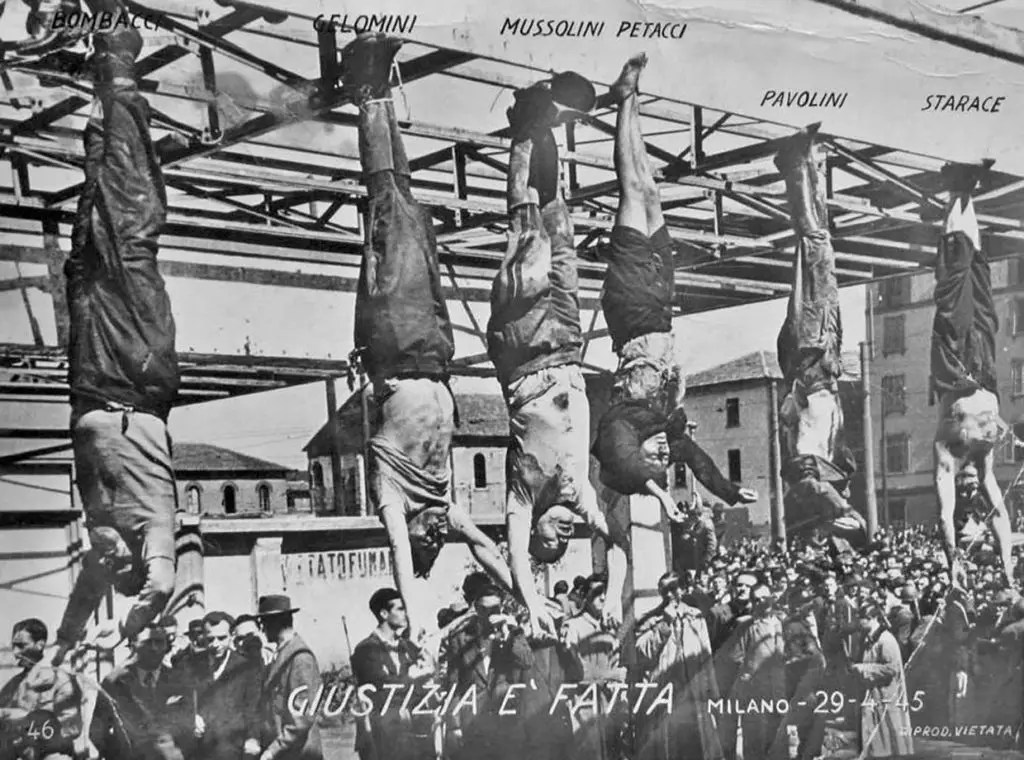
Under the leadership of Benito Mussolini (1922-1943), Italian Fascism aimed to establish a corporate state where society was organized into regime-controlled associations or corporations. Corporatism sought to harmonize the interests of various economic and social groups, eliminating the appearance of class conflict through national unity. The Italian state acted as the ultimate authority, integrating all sectors of society into a cohesive framework designed to serve national goals. The result was a totalitarian regime where the state’s interests superseded class and individual interests, promoting a centralized economic structure.
Adolf Hitler’s Nazi government, in collusion with big banking and corporate power, implemented a form of totalitarian monopoly capitalism (see Totalitarian Monopoly Capitalism: Fascism Yesterday, Today, and Tomorrow). While maintaining private ownership of industries, the Nazi regime exercised extensive control over the economy, directing economic activities to align with its ideological and militaristic objectives. In the context of state managed production and resource allocation, particularly in sectors critical to rearmament and war efforts, major corporations such as Volkswagen, Siemens, Krupp, IG Farben, and Deutsche Bank played significant roles in this system, collaborating with the regime to achieve their goals.
One way of looking at Germany under Nazi control is that these corporations benefited from state contracts and support, effectively becoming instruments of the totalitarian state. The other way of seeing it is that the totalitarian state was the instrument of the corporate power. However, these are not mutually exclusive conceptualizations. Indeed, the relationship between state and economy under Nazism can be understood as a reciprocal, intrinsic integration where both entities simultaneously shaped and were shaped by each other in a dialectical process. It can be described, following the work of Barrington Moore, Jr., a “revolution from above.” (See Celebrating the End of Chevron: How to See the New Fascism.)
Under Hitler, corporations thrived on state contracts and support, becoming instruments of the totalitarian state by producing war materials, utilizing forced labor, and aligning with the regime’s goals. Simultaneously, the Nazi state relied on these corporations to bolster its power, using economic resources to fuel its expansionist ambitions and to consolidate control over society. This synergy created a feedback loop where state policies facilitated corporate growth and corporate power reinforced state authority. Thus, the lines between state and economy blurred, revealing a co-dependent relationship where each entity’s influence and strengths were inextricably linked to the other’s. This dialectical integration underscores how the state’s totalitarian nature and the corporate pursuit of profit were mutually reinforcing, leading to a unified, powerful apparatus that drove the Nazi war machine and sustained its oppressive regime.
Crucially, Hitler’s definition of socialism diverged significantly from that of traditional Marxian socialism, wherein the working class takes possession of the means of production and distributes the fruits of their labor on the basis of productivity. Hitler redefined socialism to align with a particular brand of nationalist and racial ideology (essentially the same thing in Hitler’s scheme), emphasizing unity and the subordination of worker interests to those of the nation as a racial community. In Hitler’s view, socialism was not about class struggle or the redistribution of capital as Marxism posited but about the collective welfare of the Aryan race and the German nation. Hitler envisioned a hierarchical society where the state would play a central role in organizing and directing economic and social life, ensuring that all elements of society contributed to the national interest. This form of socialism rejected the idea of class struggle and instead promoted the idea of a Volksgemeinschaft, or people’s community, where loyalty to the nation and race was paramount.
As I explain in Republicans and Fascists, at its core, right-wing ideology revolves around the belief in a natural hierarchy and the inherent right of superior individuals to govern those deemed inferior, which this right is determined by divine right or genetics. The masses are seen as inferiors, as rabble to manage. This perspective asserts, albeit often not explicitly, that economic and social inequalities and political symmetry are natural and desirable, reflecting inherent differences in ability, character, and worth. Proponents argue that order and stability are best maintained when society is structured around these hierarchies, with leadership roles reserved for those who demonstrate superiority through power, wealth, and other markers of success. This ideology champions authority and the maintenance of established social structures, if they align with the ideology, viewing these as essential to the proper functioning of society. This is the identitarian model of power embraced by corporatists (social democrats) and progressives.
In contrast, the nationalism found in liberal democracies like the United States is generally based on civic principles, including democratic governance, equality before the law, and individual rights. To be sure, liberal democracies emerge from capitalist relations, liberalism establishing in principle the relative autonomy of markets from state control (see The Individual, the Nation-State, and Left-Libertarianism); but the political system is inclusive in nature, focusing on shared values and political identity rather than racial identity or ethnic purity (see Secularism, Nationalism, and Nativism). American nationalism is rooted in the idea of a melting pot, where people of diverse backgrounds can coexist and contribute to the nation’s identity. Therefore, while both ideologies use the term “nationalism,” Hitler’s version was exclusive and racially defined, whereas the nationalism in liberal democracies emphasizes civic identity and inclusivity. The attack on nationalism and populism from the progressive left erases the distinction between different nationalisms to advance transnationalism (see An Architect of Transnationalism: Horace Kallen and the Fetish for Diversity and Inclusion; The Democratic Party and the Doctrine of Multiculturalism; The Denationalization Project and the End of Capitalism).
Historically, populism has been closely associated with popular democracy, as it emphasizes the power and voice of the ordinary people against the elite and the establishment. Populist movements arise from a recognition that the ruling class is disconnected from the needs and desires of the general populace, advocating for greater political accountability and responsiveness to the will of the people. In this sense, populism aligns with the principles of popular democracy by seeking to empower the masses and ensure their interests are represented in the political process. There are politics that appear populist, diverging from the ideals of democratic governance by undermining democratic institutions. The two-term presidency of Barack Obama is a good example of authoritarianism and warmongering moving under cover of populism. We also saw this with the two-term presidency of George W. Bush. In truth, both regimes advanced the establishment projects of neoconservatism and neoliberalism. The two terms represent a combined 16 years of establishment continuity. Adding Bill Clinton’s two terms and the term of George H.W. Bush, and the establishment enjoyed twenty-eight years of relatively undisturbed hegemonic control.
The ideological account of ultranationalism obfuscates many important fact about the historic instantiations of fascism. For example, Fascist Italy and Nazi Germany indeed shared a common ideology that articulated the importance of nationalism, yet their ambitions extended far beyond national borders. Both regimes sought to assert their power and influence through aggressive expansionism, driven by a vision of reclaiming perceived historical greatness and securing resources to sustain their ambitions. They sought empire. In Italy, Mussolini’s fascist movement emphasized the restoration of Italy’s former imperial glory, invoking the legacy of ancient Rome to justify expansionist policies. Nationalist fervor was aimed at unifying Italians under a single authoritarian state, asserting dominance both internally and externally. Mussolini sought to revive Italy’s imperial legacy by conquering territories in North Africa, such as Ethiopia and Libya, envisioning a new Roman Empire. Italian ambitions in the Mediterranean aimed to challenge British and French colonial interests, expanding Italy’s influence beyond European borders.
Similarly, Nazi Germany’s nationalism was deeply intertwined with the goal of territorial expansion. Hitler’s regime propagated the idea of Lebensraum (living space) for the German people, which justified aggressive territorial expansion into Eastern Europe and beyond. The invasion of Poland in 1939 marked the beginning of World War II, driven by Hitler’s goal to secure Lebensraum and assert German dominance in Europe. Subsequent campaigns in Western Europe, the Balkans, and the Soviet Union aimed to establish German hegemony across the continent. The Nazis aimed to create a Greater Germany, incorporating ethnic Germans from neighboring territories and establishing hegemony over Central and Eastern Europe.
The nationalist and expansionist goals of Fascist Italy and Nazi Germany had profound consequences both domestically and internationally. Domestically, these regimes used militarism and propaganda to consolidate power, suppressing dissent and promoting a cult of leadership centered on Mussolini and Hitler. Internationally, their actions destabilized global peace and security, leading to the deadliest conflict in human history. Moreover, the expansionist policies of Fascist Italy and Nazi Germany fueled atrocities and human suffering on an unprecedented scale. In Italy’s African campaigns, atrocities against local populations and the use of chemical weapons underscored the brutality of imperial ambitions. The Holocaust, perpetrated by Nazi Germany, resulted in the systematic genocide of six million Jews and millions of others deemed undesirable by the regime.
Despite the collapse of these regimes, the corporate power structures that supported them endured and adapted to the post-war context. The aftermath of the war saw the dissolution and restructuring of many companies associated with the Nazi regime. However, several of these corporations, such as Volkswagen, Siemens, Krupp (later ThyssenKrupp), BASF, Bayer, and Deutsche Bank, survived the war and played crucial roles in the economic recovery and development of post-war Europe. Their expertise, infrastructure, and international connections were instrumental in rebuilding Germany and contributing to broader European reconstruction efforts. The European integration process, ostensibly driven by a desire to prevent future conflicts and promote economic stability, was significantly influenced by these economic actors.
I have in mind a future essay that will analyze the matter in greater depth, but briefly here, the European Coal and Steel Community (ECSC), established in 1951 by the Treaty of Paris, marked the first step towards European integration. It aimed to pool coal and steel production among member states, making war between historic rivals France and Germany materially impossible. German companies, including those that had collaborated with the Nazi regime, were integral to this effort, leveraging their industrial capabilities to support the ECSC’s goals. The establishment of the European Economic Community (EEC) in 1957 through the Treaty of Rome further deepened economic integration. The EEC aimed to create a common market and harmonize economic policies among member states. German corporations, having rebuilt and restructured their operations, were key players in this process, contributing to the economic growth and stability necessary for European integration.
Thus, the corporate state framework of Italian Fascism and the totalitarian monopoly capitalism of Nazi Germany not only shaped their respective economic systems but also influenced the post-war trajectory of European integration. The collaboration between the state and major corporations in both regimes created a foundation for economic growth (albeit in the context of the falling rate of profit, hence neoliberalism), ultimately contributing to the formation of the European Union. This integration process, ostensibly driven by the lessons of the past and the desire for a peaceful and prosperous Europe, saw the involvement of many German corporations that had once been allied with the Nazi regime now playing pivotal roles in building a united and cooperative European community.
The European Union is a regionalist project. But regionalization is part of globalist ambition. We should explore that question since one of the claims that we are not currently in a fascist order is the fact of transnationalism. Isn’t fascism an ultranationalist project? Or is it globalism imperialism rebranded? Imperialism has traditionally referred to a state’s policy or practice of extending its power and influence over other territories through colonization, conquest, or political dominance. Historically, imperial powers sought to acquire new territories to assert cultural and political hegemony over subjugated regions and for economic exploitation, strategic advantage, etc. This often involved establishing direct control over colonies, imposing governance systems, exploiting resources, and extracting wealth for the benefit of the imperial center.
In contrast, globalism, or globalization, describes the contemporary trend of increasing interconnectedness and interdependence among cultures, economies, and societies worldwide. Unlike imperialism, which centers on hierarchical control and territorial expansion, globalism emphasizes the flow of ideas, goods, services, and capital across borders. It involves the integration of markets, the spread of technology and information, and the development of global institutions and norms that facilitate cooperation and coordination among nations. At least that’s the way the project is spun. The concept of neoimperialism complicates this distinction—if we agree that the distinction is something deeper than cosmetic. Neoimperialism refers to a modern form of imperialism that operates through cultural, economic, or technological dominance rather than direct political control or military conquest. In this sense, globalism, with its emphasis on economic integration and global institutions, is a continuation or evolution of imperialist ambitions under new guises. After all, under neoimperialism, powerful nations or corporations use global structures to maintain dominance over weaker states, influencing policies, and exploiting resources for their own benefit. Put another way, we are looking a distinctions without a lot of differences.
* * *
I hate to even bring Steven Bonnell aka Destiny into this, but since he is channeling a common sentiment, and the irony of the moment is perfect, I am compelled to. Bonnell describes the demand for uncritical faith in the corporate captured institutions of state power characteristic of fascism as democracy, while describing the confidence people have in a citizen they know the corporate state sees as an enemy of that state and ascribes to it fascism. He literally has it backwards. What he says here is the equivalent of smearing as fascists those Italians who grasped that Antonio Gramsci was persecuted by the fascist government in Italy (a corporate state) because Gramsci was a critic of fascism. He does this because, first of all, presumably the Gramsci case would be obvious to him, but he can’t work from the principle that makes it true (he is not very well read and he is the paradigm of the Gish gallop). Second, he absurdly thinks that fascism reduces to a charismatic strong man trusted by the people. He has tailored his definition of fascism to meet the Trump moment. It is typical of progressives to see administrative rule and technocratic control as democracy and populist resistance to concentrated power as fascist (I have an essay pending on the camera obscura that will help readers understand how ideology works).
Here is what Bonnell and so many others don’t care to understand. At its core, fascism is an authoritarian political ideology characterized by the concentration of power in a centralized government apparatus that seeks to control all or most aspects of public and private life. It emphasizes social hierarchies, the subordination of individual interests to corporate bureaucracy, and the use of state mechanisms to enforce conformity and loyalty to the prevailing ideology. This ideology involves the glorification of the government and sometimes its leaders, suppression of political opposition, and the use of propaganda to manipulate public opinion. Some sort of race thinking is usually present.
While historically associated with dictators like Mussolini and Hitler, contemporary interpretations must recognize that fascism can manifest in various forms of authoritarian governance, not necessarily dependent on a charismatic leader or a racist ideology. Economic control is typically exercised through the collaboration of government and industry, promoting a managed economy that aligns with the state’s objectives—which at the same means that the state is the instrument of corporate power, the ruling class. Fascism also relies heavily on militarism and the pursuit of strength and unity through aggressive means, fostering a culture of fear and obedience among the populace. The essence lies in the centralization of authority, suppression of dissent, and the imposition of strict controls over society.
Today’s Democratic Party seeks the consolidation of power within the form of a federal government but that seeks to regulate a myriad of aspects of public and private life through control over the judiciary, executive action, and expansive legislation, all coordinated by an unconstitutional, unaccountable, and unelected administrative-technocratic apparatus. The party’s emphasis on social hierarchies through identity politics, promoting selected groups’ interests over individual merit, and the alignment of government initiatives with corporate interests in industries like healthcare and technology, demonstrate the desire to subordinate individual interests to corporate bureaucracy.
The Democratic Party’s policy proposals, such as increased regulation and collaboration with large corporations on issues like climate change and healthcare, promote a managed economy aligned with state objectives, blurring the lines between government and corporate power. The party’s messaging and media strategies glorify selected government leaders while suppressing opposition through social media regulation and other forms of censorship, aiming to enforce conformity and loyalty to its ideology. The party’s support for defense spending and military interventions is an indication of the party’s militarism and the control of the geopolitical environment through aggressive means.
While the Democratic Party does not fit the historical mold of fascist regimes, the elements of centralized authority, economic control through government-industry collaboration, and the suppression of dissent are all present, indicating the presence of the core transhistorical features of fascism. We don’t have to travel down this road to perdition. It is possible to reclaim for the people a nation governed by democratic-republic values in the context of a system of sovereign nation-states ordered by classical liberal values. We still have the ballot box. To be sure, the rigging and fraud were historic in 2020, and they will try to steal this election, too, but if the numbers are great enough and the voters vigilant enough, we can prevent another four years of the West’s slide into the New Fascism.

 freedom and reason
Brilliant. Thank you. Sure wish this was on Substack! Cross post?