If men define situations as real, they are real in their consequences. — William Issac and Dorothy Swain Thomas (1928)
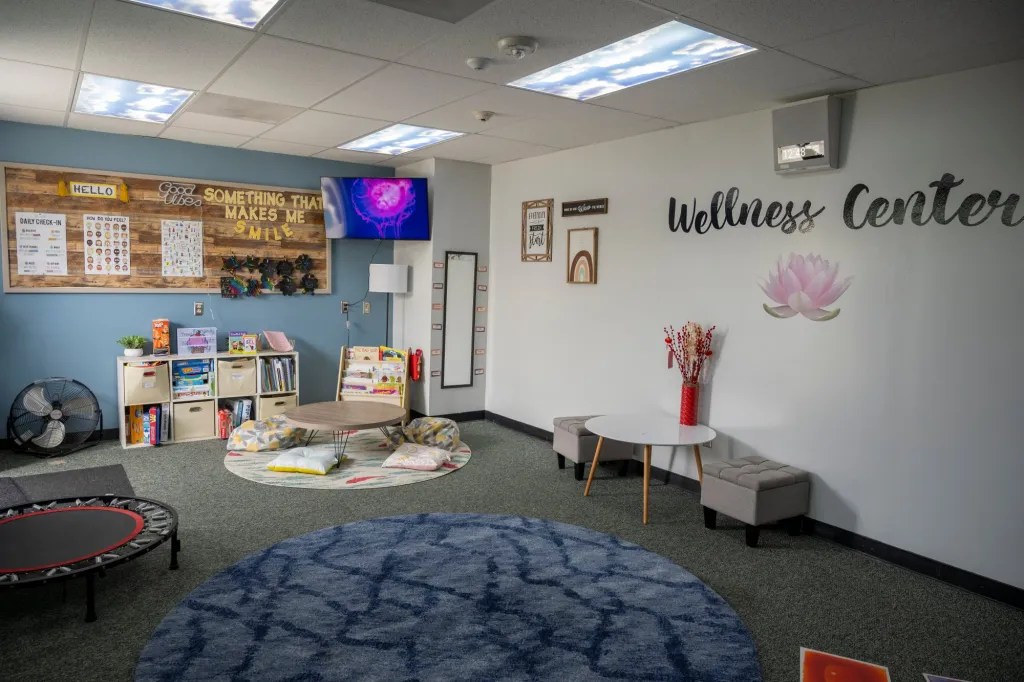
Is it at least possible that the Wellness Center at the college you or your children attend presumes illness? “If you build it, they will come.” This phrase is appropriated from a line spoken by Ray Kinsella, played by Kevin Costner, in the film Field of Dreams (1989). Some hasten to note that the line is misquoted; however, it preserves the essential meaning: people often don’t know what they seek until you tell them. What you tell them doesn’t necessarily have to be real or necessary; it just needs find them anxious and vulnerable, a condition that may be manufactured by those who are expert at disordering personalities. Those experts are tied to a vast corporate enterprise racking in hundreds of billions of dollars every year. The global mental health industry, showing a compound growth rate of 3.8% annually, is forecasted to grow to more than $532 billion by 2030. It’s truly a field of dreams.
I have covered this matter in depth on Freedom and Reason (See, e.g., Making Patients for the Medical-Industrial Complex; Feeding the Medical-Industrial Complex; Thomas Szasz, Medical Freedom, and the Tyranny of Gender Ideology; Disordering Bodies for Disordered Minds). Yesterday, I listened to The Brendan O’Neill Show from March 7. He interviewed Abigail Shrier, former opinion columnist for the Wall Street Journal. In 2020, she published Irreversible Damage: The Transgender Craze Seducing Our Daughters. O’Neill and Shrier engaged in a conversation about her latest book, Bad Therapy: Why the Kids Aren’t Growing Up. They explore such topics as the prevalent over-diagnosis of mental-health conditions, the detrimental impact therapists can have on children and parental authority, and the innate resilience inherent in human beings. Here’s the conversation on Apple Podcasts.
Among the many forces at work, Shrier notes the emergence of Social and Emotional Learning (SEL), an educational framework ostensibly focused on nurturing students’ abilities to understand and manage their emotions, set and achieve positive life goals through responsible decision making, feel and show empathy for others, and establish and maintain positive relationships. SEL advocates claim the goal is to foster students’ social and emotional skills, which are essential for success in school and work, and life in general. However, by framing discussions around emotional well-being in educational contexts, teachers (perhaps for many inadvertently) often reinforce the belief that students have been traumatized or vulnerable.
At the top, I quoted what has come to be known as the Thomas theorem. But even when things are real, they can be made more traumatic by defining them as such. Many of us have had the experience of watching babies made to cry upon bumping their head solely on the reaction of those around them. Indeed, you can make babies believe they have bumped their heads even when they haven’t by acting as if they have.
Consider the Dartmouth Scar Experiment. Participants thought they were being interviewed for jobs with fake scars on their faces applied by a makeup artist. During final touch up, no longer being able to see themselves in a mirror, the scar was removed without their knowledge. Those participants who believed that they had a visible scar reported experiencing increased level of discrimination. They reported feelings of powerlessness and self-pity. They were also more like to blame others for their feelings.
Encouraging students to explore feelings and experiences in-depth, there’s a risk of inadvertently amplifying or even manufacturing perceptions of trauma. In other words, the process of introspection and discussion lead some students to interpret normal life challenges or experiences as traumatic events, potentially exaggerating their negative impact. Moreover, they learn that trauma is debilitating, thus steering the child into the sick or victim role. This creates a self-fulfilling prophecy, where students come to view themselves primarily through the lens of trauma, potentially limiting their perceptions of their own agency and resilience.
It should be obvious that excessive focus on exploring trauma and negative emotions in educational settings compromises important aspects of students’ development, such as fostering resilience, promoting positive coping strategies, and building strengths-based approaches to negotiating the life-course. Educators, while crucial in supporting students’ emotional and social development, usually don’t have the professional training or expertise to serve as therapists or counselors. Many only have a bachelor’s degree, and the quality of education programs is widely variable. Moreover, the vocation has become target and instrument of woke progressive programming.
Engaging in deep emotional exploration without proper training is associated with boundary issues. As I have noted, this can be a form of grooming. However, as Shrier points out, counselors and therapists are often as bad, and they are a conduit into the medical-industrial complex, thus representing another form of grooming. This is evidenced by the fact that all of the worsening mental health outcomes for kids widely reported by the media, and confirmed by research—as well as young people declining to engage in life and thrive at it (see tweet below)—have coincided with a generation of parents obsessed with the mental health and well-being of their children.
This phenomenon has been well-explored in my field of sociology. In his various books (The Presentation of Self in Everyday Life, Asylums: Essays on the Social Situation of mental Patients and Other Inmates, and Stigma: Notes on the Management of Spoiled Identity), for example, Erving Goffman directly or in effect elaborate the concept of the “sick role.” The sick role refers to a set of social behaviors and expectations associated with individuals who are perceived or depicted as disabled or ill. Goffman described the sick role as a socially sanctioned deviant status that individuals assume when they are treated as ill. This status comes with exemptions from normal responsibilities and obligations to seek help and cooperate with treatment. The later requires reifying the mental illness, which often involves securing an official diagnosis. In this view, illness is not necessarily am objective phenomenon, but a socially constructed experience shaped by cultural norms and expectations, and social interaction.

 freedom and reason