
“I had come across an article about families who had been trying to lodge complaints against the church for sexual abuse, and they were being silenced. Basically everything I had been raised to believe was a lie.” —Sinéad O’Connor
News and talk personality Barbara Walters is dead. The celebration of her life is deafening. But not every moment of her long career will be dwelled upon. Remember in 2013 when she accused child actor Corey Feldman of “damaging an entire industry” with pedophilia accusations? In case you don’t remember, here’s a clip:
The Sinéad O’Connor quote at the top of this blog is the artist explaining her thought process for the SNL performance that resulted in her being effectively banished from pop music. At the conclusion of her performance of Bob Marley’s “War,” she shredded a picture of Pope John Paul II (a photo she took herself and the only photo to hang on the wall of her home for years).
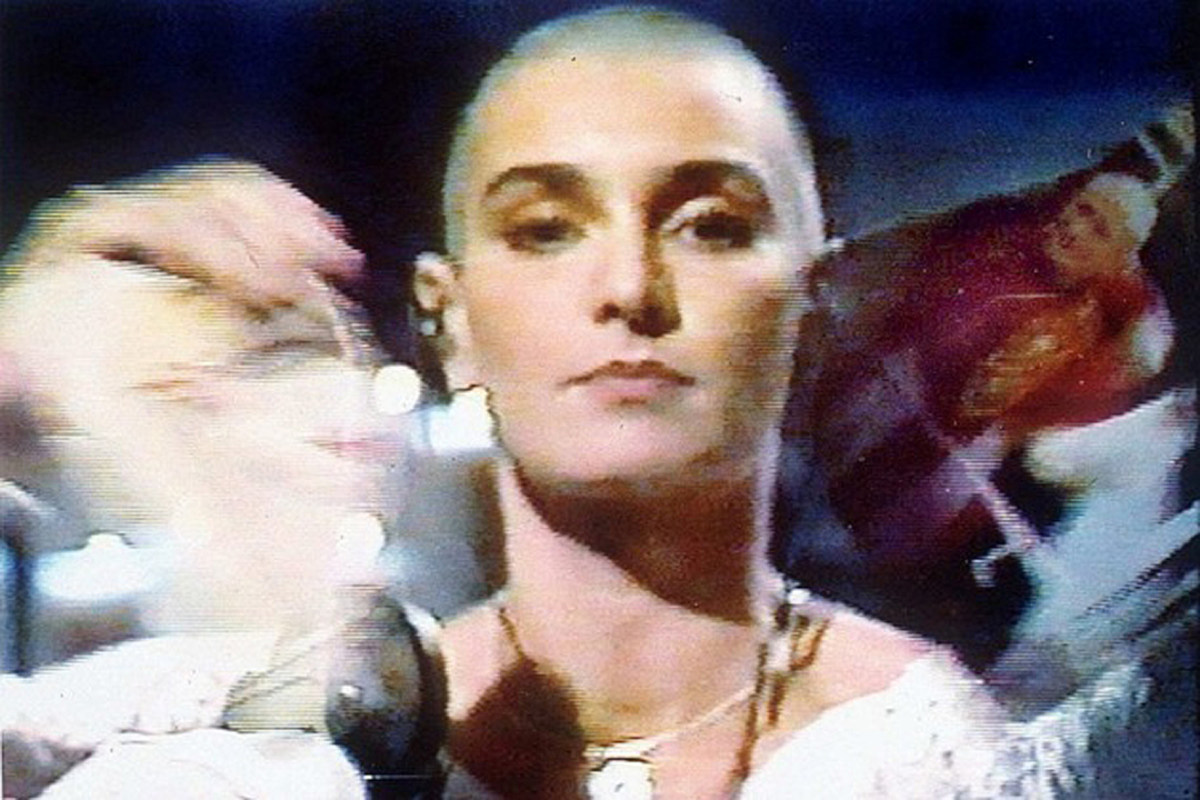
Feldman was shamed for coming forward. O’Connor was punished for telling the truth. Powerful cults don’t like it when people expose their paraphilias—and paraphilias appear to be common to powerful cults (and some obscure ones).
We have been hearing a lot lately about grooming and pedophilia. But the culture industry’s sexualization of children and rationalization of child molestation is not a new thing. (Nor is reputational murder, of course.) The erotic obsession with the prepubescent form of the human species—whether the boy or the girl—appears to be deep-seated in many of those who produce and participate in popular culture.
I have no reason to believe that this interest issues from the same evolved capacity that has us finding immature versions of our own (and many other animal species) cute and worthy of attention and care. There’s nothing untoward about that. Pedophilia is something dark and sinister. The desire for androgyny, for the child form stuck in a prepubescent state, is not a natural one. It’s pathological. Adults cannot serve as the guardian of childhood innocence at the same time sexualize them.
Remember the Brookes Shield’s coffee table book back in the 1970s? Remember Richard Prince’s photograph of her ten-year-old body that was widely circulated years ago, a photograph originally taken in 1975 by fashion photographer Garry Gross in 1975 for a Playboy publication titled Sugar and Spice?
In the Guardian’s words, Shield’s was photographed “oiled and glistening, naked and made-up, posing in a marble bathtub with a seductive danger that belies her years.” She has, the Guardian quotes Prince, “a body with two different sexes, maybe more, and a head that looks like it’s got a different birthday.”
Remember the advertising campaign for Calvin Klein Jeans in the late 1970s that featured a then 15-year-old Shields? Remember her lines? “You know what comes between me and my Calvins? Nothing!”
In 1981, Shields’ mother sued Gross on the grounds that his continuing sale of the photographs was damaging to her daughter’s reputation. Gross’ lawyers argued that his photographs could not damage Shields’ reputation because she had made a profitable career “as a young vamp and a harlot, a seasoned sexual veteran, a provocative child-woman, an erotic and sensual sex symbol, the Lolita of her generation.”
The judge in that case, state Supreme Court Justice Edward Greenfield, dismissed the attempt to prevent commercial distribution of those photos. “They have no erotic appeal except to possibly perverse minds,” he opined while scolding Teri Shields for exploiting her daughter sexuality. Shields was seeking to present her daughter as “sexually provocative and exciting while attempting to preserve her innocence,” Greenfield said. “She cannot have it both ways.”
What about the child?
All these years later, the culture industry is at it again (they never stopped). In photos for fashion company Balenciaga’s gift collection campaign, young children are photographed posing with teddy bears in BDSM gear. Beside them, a stack of papers: the Supreme Court’s 2008 United States v. Williams opinion upholding a federal law prohibiting child pornography in advertising. Hardly subtle. Balenciaga’s competitor Benetton soon came under fire, as well, for “sexualizing” children in their campaign portraying prepubescent boys and girls in sexualized fashion.
Obviously I am not sharing any of these pictures. They’re easily found on the Internet. As a free speech advocate, I am not necessarily suggesting censorship of crime scene photography (we are still able to see photographs of genocide and lynching). The focus should be on those who put children in these situations—wherever the situations—and on the perverse culture that enables the paraphilias associated with the desire to consume these images.
This question occurred to me in the late-1980s sitting in an abnormal psychology class: Why does paraphilia in all its manifestations appear so common among those in positions of authority? Are sexual disorders (or perversions) associated with other predictors of success in hierarchies? Or is their concentration among the elite the result of a great deal of effort on the part of child predators to insinuate themselves into positions of trust where they find birds of a feather?

Maybe this explains why, all these months after British socialite Ghislaine Maxwell was convicted on sex trafficking charges, not a single name from her elite client list has been publicly named. Or why her lover Jeffrey Epstein (they say) hung himself in prison.
Of course, the problem with paraphilia is not just about Hollywood and child actors, Catholic Priests and altar boys, or sex islands with children waiting for businessmen and politicians to arrive in lear jets. Denied or dissimulated there, it’s being mainstreamed elsewhere, the resistance smeared as bigotry. Soon it will be an identity (for some it already is). How far away are we from the time where we will be punished for refusing to refer to pedophiles as “minor attracted persons” or “MAPs”?
Most folks with don’t care about sexual fetishes. Whatever gets a person off—as long as it doesn’t hurt people. If men and women want to go to strip clubs and throw money at exaggerated personifications of gender stereotypes, whatever. It’s a free society. I’m not offended. Just leave children out of it.
I will have more to say about this topic in future blogs. I’m readying a piece on queer theory and its obsessions with child sexuality. I also have in development an essay on the sociology of sex and gender aimed at countering with science the postmodernist disruption of ordinary understanding about human nature.
Happy New Year, by the way. Thanks for reading Freedom and Reason.

 freedom and reason