USA Today ran this headline yesterday: “‘Parents’ rights’ groups labeled extremist: SPLC lists a key Florida group as anti-government.” The article uses SPLC’s designation of the Moms for Liberty as “extremist.” Note the use of scare quotes around parents’ rights in the headline. In fact, Moms for Liberty is a parents’ rights group. USA Today is using scare quotes to imply that the group, or any group like it, isn’t really about parents’ rights, but about right-wing ideology. Conservatives don’t really care about children. They only use them as pawns in the culture war. You know, that sort of impression.
Is this the Ministry of Truth? No, it’s Southern Poverty Law Center’s headquarters in Montgomery, Alabama
The Southern Poverty Law Center’s loathing of the ordinary American and the populist movement is palpable. What is the explanation for designating Moms for Liberty an “antigovernment group” and “extremist”? “Moms for Liberty is primarily aimed at not wanting to include our hard history, topics of racism, and a very strong push against teaching anything having to do with LGBTQ topics in schools,” SPLC Intelligence Project Director Susan Corke Corke said. “We saw this as a very deliberate strategy to go to the local level.” The SPLC concludes in its report that the group is part of a broader “antigovernment movement“ focused on local politics that sprung up during the pandemic.
“Antigovernment.” What does that even mean? Does it refers to having a stance or perspective that opposes or criticizes the actions, policies, or existence of a government or governmental authority? Presumably Moms for Liberty is not an anarchist organization. In fact, anarchist groups are not on SPLC’s list of antigovernment groups (which you can download here as an Microsoft Excel spreadsheet: SPLC’s 2022 list of antigovernment groups).
I asked ChatGPT to tell me what an antigovernment person might look like. It told me that antigovernment people are not people who want no government but rather those who “may object to specific policies, laws, or actions undertaken by the government. They might believe that certain policies infringe upon personal freedoms, violate human rights, or are ineffective or unjust.” Sounds like a healthy democracy to me. Was Martin Luther King, Jr. antigovernment?
“Some individuals may be anti-government due to a general distrust of concentrated power and authority. They may be concerned about the potential for corruption, abuse of power, or the erosion of civil liberties when too much authority is vested in a central government.” Hey, I possess a general distrust of concentrated power and authority. I, too, am concerned about corruption, abuse of power, and erosion of civil liberties when too much authority is vested in a central government. Am I antigovernment?
“Many proponents of limited government believe that the role of the state should be minimal, primarily focused on protecting individual rights and maintaining essential functions like defense and justice. They may view an expansive government as intrusive, inefficient, or prone to overreach.” Ah, so libertarians are antigovernment. I’m a libertarian, a classically liberal sort of fellow. I view an expansive government as intrusive and prone to overreach. It’s looking like I’m antigovernment, alright.
“Being anti-government can also extend to opposing specific forms of governance, such as autocracy, dictatorship, or totalitarianism. Individuals who oppose these systems may advocate for more democratic or decentralized alternatives.” I oppose fascism. Yep. I’m antigovernment.
Just to make sure, I asked ChatGPT, “Would you change the definition of antigovernment from what you wrote above? Or are you satisfied with your answer?” It responded: “I believe the definition I provided accurately reflects the general understanding of what it means to be ‘anti-government.’ However, if there are specific aspects or nuances you would like me to address or clarify, please let me know, and I’ll be happy to provide further information or modify my response accordingly.”
ChatGPT’s invitation sounds enticing, but to stay focused on the matter at hand, does SPLC have a definition of antigovernment? That might be more relevant. And it turns out that they do and it’s nothing like what ChatGPT generated—albeit it does read like something ChatGPT might hallucinate if I had asked it for some nuance:
“An antigovernment group is an organization or collection of individuals that—based on its official statements or principles, the statements of its leaders, or its activities—believes the federal government is tyrannical and traffics in conspiracy theories about an illegitimate government of leftist elites seeking a ‘New World Order.’ In the past this movement was referred to as the ‘Patriot’ movement by adherents and critics. Although many elements of the movement were originally rooted in white supremacy and antisemitism, the movement has attempted to distance itself from these ties since the mid-1990s, following the Oklahoma City bombing. In recent years, however, antisemitic and anti-Muslim sentiments have permeated the movement’s conspiracy theories.”
Moms for Liberty founders Tiffany Justice and Tina Descovich present the Liberty Sword to Governor Ron DeSantis before he speaks during the inaugural Moms For Liberty Summit July 15, 2022 in Tampa, Florida.
According to SPLC, Moms for Liberty is a “far-right organization that engages in anti-student inclusion activities and self-identifies as part of the modern parental rights movement. The group grew out of opposition to public health regulations for COVID-19, opposes LGBTQ+ and racially inclusive school curriculum, and has advocated books bans.” It continues: “Moms for Liberty and its nationwide chapters combat what they consider the ‘woke indoctrination’ of children by advocating for book bans in school libraries and endorsing candidates for public office that align with the group’s views. They also use their multiple social media platforms to target teachers and school officials, advocate for the abolition of the Department of Education, advance a conspiracy propaganda, and spread hateful imagery and rhetoric against the LGBTQ community.”
As is standard with SPLC’s profiles, the organization provides quotes by Moms for Liberty leaders and members. It’s a long list, but this quote is representative: “I raise my children. The government does not. We do not co-parent with the government. And there are certain sensitive subjects that we would like to be directing the conversation around for our children,” said co-founder Tiffany Justice in a C-SPAN2 About Books interview. “Parents are very concerned about this idea about gender identity that was never discussed in our public schools, and it is now taking a front row seat in our children’s education. And it is affecting everything they do, including for many of our girls, how safe they feel in the bathrooms at their school.” Sounds like a concerned parent invested in the wellbeing of children in public schools. This is antigovernment? This is extremist?
The worst quote I could find was from Melissa Bosch of the Lonoke County, Arkansas chapter. Bosch is a fireplug, for sure. SPLC reports that she was indicted for “terroristic threatening” directed towards the faculty and staff of Cabot School district. That’d be bad if it were true. But it’s not true. According to the incident report, “Sgt. Baugh obtained the copy of the recording from the Mom of Liberty meeting. Dr. Thurman stated that Melissa Bosch has been very outspoken at school board meetings. Due to her conduct, he was concerned about the comment on the recording. After listening to the full recording, the individual identified as Melissa Bosch did in fact make the statement ‘If I had any mental issues they would all be plowed down with a gun by now’. However this statement was not made in the context of a threat. Sgt. Baugh spoke to Dr. Tony Thurman as well as to Melissa and informed her that she would not be charged in this case.”
In March of this year, on The View, Jane Fonda said pro-life politicians should be murdered. I could not find Fonda’s name on the SPLC web site. I am sure that’s an oversight. Or maybe the organization took Fonda’s word for it when she later clarified that comments were “obviously made in jest.” Rep. Anna Paulina Luna, R-Fla., reported Jane Fonda to Capitol Police “for threatening public officials.” The police in this case didn’t take any of this seriously, either. There’s no way Bosch’s words could be taken that way. After all, the recording is muffled so it is hard to hear her intent.
If SPLC doesn’t designate Antifa an antigovernment group (I checked, I doesn’t), then how is Moms for Liberty an antigovernment group? The answer lies in what SPLC is all about. It’s not actually against extremism or hate. It depends on who the extremist is and who or what is hated. For SPLC, any group that does not repeat the slogans of the progressive establishment is antigovernment. SPLC does not want an America where there are different opinions, where competing ideas are contested, where democracy happens—especially at the local level. Grassroots politics is scary. But not really. It’s not local politics that concerns SPLC. It’s the ideological content of the politics that exercises the organization. Blacks Lives Matter. Mostly peaceful. Moms for Liberty? Right up there with the KKK.
If you object to teaching children to regard each other through the lens of racial resentment, you are antigovernment in SPLC’s eyes. You might ask whether the government should actually ban teaching children to regard each other through the lens of racial resentment. Isn’t that racist programming? No, because you are an antigovernment extremist. If you don’t think that children should be sexualized in school by reading books with pornographic content or having provocative and searching conversations about sex and gender with their teachers, or if you don’t want Pride flags in the classrooms and hallways, you are antigovernment. What if administrators and teachers put up Christian Nationalist flags? Wouldn’t SPLC condemn that? Of course it would. It would be horrified if that happened. Because that’s the wrong flag.
For SPLC and the worldview it expresses, the mindset of the progressive establishment, it’s not the principle that classrooms should be ideologically-free spaces that should concern parents. Classrooms should be centers of ideological indoctrination. But it’s got to be the right ideology. And the content of that ideology can be understood by who SPLC defames.
However, one wonders how SPLC will respond to Muslim parents who object to woke indoctrination of their children. Here’s a rally in Montgomery County, Maryland yesterday. It is loud and enthusiastic. Antigovernment? Extremist?
The #WokeArmy is dealt a lethal blow. The battlefront: Montgomery County, Maryland. TODAY. The hard-left came after the kids and Muslim parents aren’t having it. 🧵
Montgomery County Public Schools recently refused to allow parents to opt out of indoctrination that relates to… pic.twitter.com/KIMTI1fAIM
What about these Armenians who object to the woke indoctrination of their children in Glendale, California? They are being attacked by the trans activist organization Antifa. Remember, Antifa is not an extremist organization because it attacks antigovernment types. But Armenians? They’re antigovernment?
Glendale (CA) police rush in and save #Antifa & far-left protesters during a fight against Armenian-Americans outside a school board meeting. Many parents of immigrant background disapprove of the schools celebrating pride events. pic.twitter.com/i1L2P1aBxt
Andrew Doyle’s monologue is one of the more important I’ve heard in my life. I did know all of this. He’s telling the truth. Women and homosexuals are being pressed from all sides. Sex-based rights are under siege. I’m frustrated by the fact that so many people around me not only don’t understand this, but couldn’t understand it if I attempted to explain it to them—and would call me names if I actually tried. I can’t speak like Doyle. Doyle speaks for many. The least I thought I cold do is share his speech. So I did. Let’s see if I get in trouble for it.
In recognition of Pride month, the mayor of Green Bay, Eric Genrich, has raised a Pride Progress flag outside City Hall
In recognition of Pride month, the mayor of Green Bay, Eric Genrich, has raised a pride flag outside City Hall, showcasing his support for the LBGTQ+ community. Positioned just below the American flag, this pride flag serves as a symbol of acceptance and inclusivity, according to the mayor (the same mayor who bugged City Hall). Governor Tony Evers has raised a pride flag in Madison, as well. However, the flag flying beneath the American flag over at City Hall is not the Pride flag but the flag Doyle suggests folks discard—the gender ideology flag. Evers also raised the Pride Progress flag. Of course, had they not, they would have had to endure the hysterics and risk violence from trans activists. But this is not why they hoisted Pride Progress instead of the Pride flag.
Earlier this year, Genrich vetoed a proposed city flag policy, breaking a tied vote of 6-6 in the Common Council. The proposed policy aimed to limit the flags displayed on city flagpoles to the national, state, city, and POW/MIA flags. I don’t think any seat of government should fly any flag but those common to us all. We are all citizens of the nation and residents in our state. These flags represent the people and symbolize the principle of collective self-government. I do not accept gender ideology, nor does gender ideology accept me, so why is that flag flying over over my city and state? That’s not an inclusive act. It is, in fact, exclusive, as Doyle explains in his monologue. And it is divisive, asking me to salute a flag that denies women and homosexuals are really existing personalities.
A patriotic take on Pride
Of course, I love seeing the rainbow flapping on poles in my neighborhood. There’s one flapping near me now that many conservatives would find sacrilegious because it conjures Old Glory. It’s the one I have shared above. I think it’s lovely. If the mayor is going to fly a movement flag on common ground, I’d rather it be the flag of gay liberation and not the one that represents those who call lesbians bigots for refusing to have sex with persons with penises.
* * *
From the Daily Signal: “The Associated Press directs journalists to abide by transgender ideology while denying that such an ideology exists.” The new directive is a clear indication of an agenda to dissimulate the ideological character of a political movement through the systematic control of language. This is Orwellian as hell. As I reported recent, NIH recently rolled out its compelled speech agenda (see NIH and the Tyranny of Compelled Speech) and the APs compelled speech agenda looks highly similar.
This is part of a greater epistemic project to manufacture the false perception that claims requiring proof have been proven and are no longer subject to mention, let alone debate. This is a propaganda technique I have tagged “strange alchemy,” inspired by Jeffrey Reiman passage in The Rich Get Richer and the Poor Get Prison: “A strange alchemy takes place when people accept uncritically the legitimacy of their institutions: What needs justification becomes proof of justification.” This is the work of the Cathedral, where faith-based claims are taken as true by appealing to authority (power + legitimacy), reinforced by penance and excommunication.
Gender ideology is most definitely an ideology. Given the supernatural claims its proponents make, I classify it as a religious ideology. At the very least it is quasi-religious and antiscientific. An example of this is found in the demand that AP journalists accept and convey the assumption that sex is “assigned at birth.” Sex is neither socially ascribed nor achieved. Sex is identified or recognized at birth (and that determination is rarely in error). It is therefore not “assigned.”
As for the religious character of gender ideology, consider the doctrine that a “gender identity,” recognized by attitudes and behaviors in a child that appear to align with culturally and historically specific sex roles and stereotypes, can at some point during gestation become trapped in an opposite-sexed body, a condition with a diagnosis prescribing a medical-industrial ritual that seeks to release (“affirm”) the gender identity through hormones and surgeries, hypostatizing the stereotype, personifying an abstract concept, giving it substance and treating it as a distinct and tangible thing, thus transforming the person into a living simulacrum of an abstraction. This is what the AP demands its journalists frame as “gender affirming care.” Journalists may not called this “mutilation.”
One wonders what AP journalists are expected to call the cultural and religious practice of cutting off a girls labia and clitoral hood, and sometimes the clitoris itself, in backwards cultures around the world. After all, female genital mutilation affirms that the girl has become a woman, a set of role expectations that does not include sexual enjoyment or bodily integrity. (See The Problem with Parental Rights.)
“Justice is the end of government. It is the end of civil society. It ever has been and ever will be pursued until it be obtained, or until liberty be lost in the pursuit.” —James Madison Federalist No. 51
You’ve heard the slogan. “America is not a democracy. It is a constitutional republic.” I ran across a tweet with this slogan the other day (I have shared the tweet below). The tweet is from Turning Point Action. Turning Point Action is a 501(c)(4) nonprofit organization based in the United States affiliated with Turning Point USA, a conservative student organization founded by Charlie Kirk in 2012. Turning Point Action aims to engage and educate young Americans on conservative principles, free markets, individual liberties, and limited government. A note to the attachment the organization shared on twitter falsely characterizes democracy as “mob rule.” Mob rule is actually a failure of democracy.
I responded to this tweet with this comment: “This is kind of a fake issue. A constitutional republic is a type of democracy. Madison was warning against tyranny of the majority when he criticized democracy. Obviously he meant majority rule. If the people have a say in their government via popular vote, that’s democracy.” I want to break out of the constraints on Twitter and elaborate my point in this blog. Twitter has aggressively de-boosted my tweets and replies for years now, so if I want to get wide play for my arguments, I need to blog them.
James Madison (1751-1836) was one of the Founding Fathers of the United States, principal architect of the US Constitution and the Bill of Rights, and fourth President of the United States during 1809-1817. He is arguably the true father of the republic.
A Virginian, James Madison was one of the Founding Fathers of the United States and a principal architect of the US Constitution and the Bill of Rights. He was highly critical of democracy in his writings. But he did not reject democracy. On the contrary, he argued for a type of representative democracy called a constitutional republic. He did so because he saw in majority rule the potential for the suppression of minority rights. He proposed a constitutional republic to prevent the tyranny of the majority and protect minority and individual rights. He was especially concerned to protect the “minority of the opulent,” a term he used to refer to those in possession of large tracts of land producing various primarily commodities for the world capitalist economy.
James Madison made his arguments in favor of a constitutional republic in “The Federalist Papers,” published between 1787 and 1788. The essays were written by James Madison, Alexander Hamilton, and John Jay under the pseudonym “Publius” to promote the ratification of the United States Constitution. Published in various newspapers throughout the states during that time, these papers provided arguments and explanations about the structure and benefits of the proposed constitution. If we want to know what Madison thought about this issue, we will find it there.
Madison’s specific critiques of democracy can be found in Federalist No. 10 and No. 51. In No. 10, Madison discusses the dangers of factionalism in a democracy. He defines a faction as a group of citizens who are united by a common interest but whose actions may be dangerous or harmful to the rights of other citizens or the overall public good. Madison argues that factions are inevitable in a free society but worries that majority factions, with their potentially overpowering influence, could threaten minority rights and the stability of the government. He suggests that a large and diverse republic would be better equipped to mitigate the adverse effects of factions compared to a small, homogeneous democracy.
“From this view of the subject it may be concluded that a pure democracy, by which I mean a society consisting of a small number of citizens, who assemble and administer the government in person, can admit of no cure for the mischiefs of faction,” Madison writes. “A common passion or interest will, in almost every case, be felt by a majority of the whole; a communication and concert result from the form of government itself; and there is nothing to check the inducements to sacrifice the weaker party or an obnoxious individual. Hence it is that such democracies have ever been spectacles of turbulence and contention; have ever been found incompatible with personal security or the rights of property; and have in general been as short in their lives as they have been violent in their deaths.” In contrast, a republic “opens a different prospect, and promises the cure for which we are seeking.”
“The influence of factious leaders may kindle a flame within their particular States,” Madison anticipates, “but will be unable to spread a general conflagration through the other States.” He then provides several examples of the problems that a republican form of democracy can check: “A rage for paper money, for an abolition of debts, for an equal division of property, or for any other improper or wicked project, will be less apt to pervade the whole body of the Union than a particular member of it.” He also expresses concern about the dangers of a religious sect becoming a political faction and seeking power through government. This concerns is what inspires the religious liberty clause in the First Amendment.
In Federalist No. 51, which revolves around the federal principle, or federalism, Madison discusses the importance of separation of powers and checks and balances within the government. He argues that the structure of the government should be designed in a way that enables different branches to check and balance each other, thereby preventing any one branch from becoming too powerful. Madison highlights the necessity of this arrangement to protect individual rights and prevent the concentration of power. The republican form of government is vital to the pursuit of justice, he notes, which is the goal of government.
“In a society under the forms of which the stronger faction can readily unite and oppress the weaker, anarchy may as truly be said to reign as in a state of nature, where the weaker individual is not secured against the violence of the stronger,” he writes; “and as, in the latter state, even the stronger individuals are prompted, by the uncertainty of their condition, to submit to a government which may protect the weak as well as themselves; so, in the former state, will the more powerful factions or parties be gradually induced, by a like motive, to wish for a government which will protect all parties, the weaker as well as the more powerful.”
Even if Madison did not define his terms, it would be uncharitable to his argument to conclude that he means to conclude that a constitutional republic eschews democratic processes. Democracy refers to a system of government where power resides with the people. It is characterized by direct or representative participation in decision-making processes. In a direct (or pure) democracy, citizens directly participate in making laws and governing the state. This was the idea Madison was criticizing. A constitutional republic is a system of government that combines elements of democracy with a written constitution that limits the powers of the government. In a constitutional republic, the rule of law is paramount, and the rights of individuals and minority groups are protected from the whims of the majority. The constitution acts as a framework that defines the structure of government and outlines the rights and freedoms of the people. This is no less of a form of democracy.
Conservatives emphasize the distinction between a democracy and a constitutional republic to underscore the importance of constitutional limits on the powers of the government. They argue that the United States’ system was intentionally designed to prevent unchecked majority rule and to protect individual liberties. This is true. But that does not make the United States undemocratic or the American Creed antidemocratic. Madison believed that with its checks and balances and protection of individual rights a constitutional republic would provide stability and prevent the abuses that could arise from unchecked majority rule, while allowing collective self-government. Indeed, the point of the American Revolution was establishing a system for orderly and collective self-government. This is the essence of democracy.
The philosophy of American government is what we call democratic-republicanism. Democratic-republicanism is a political philosophy that combines the idea of popular sovereignty, where the people hold ultimate power, with a system of representative government and the rule of law. The dynamic of self-government in the America system is the living practice of enlarging democratic participation where it does not interfere with the inherent rights of individuals—and limiting democratic participating where it does. Democratic-republicanism is rooted in the idea of popular sovereignty, where ultimate power rests with the people. Democratic-republicanism emphasizes the participation of citizens in the political process and the protection of individual rights and liberties.
The philosophy of democratic-republicanism draws inspiration from the classical republican tradition, which values civic virtue, the common good, and public participation. It also incorporates democratic principles, such as majority rule and equal representation. Democratic-republicanism encompasses a political philosophy that values democracy, popular sovereignty, the protection of individual rights, and republican ideals. It seeks to strike a balance between majority rule and the preservation of individual liberties, with the aim of creating a just and stable society.
The US Constitution, with its checks and balances, separation of powers, and protection of individual rights, embodies democratic-republican ideals. The system of representative government in the United States, where citizens elect representatives to make decisions on their behalf, is an example of democratic-republican governance. Democratic-republicanism promotes the idea that political power should be dispersed among different branches of government, with each branch having checks on the others. It recognizes the importance of respecting individual rights and liberties, even in the face of majority rule. The philosophy encourages active civic engagement and responsible governance.
It is therefore curious that conservatives insist on denying the democratic character of the government of the United States. It is certainly not because they don’t seek and, when they obtain power, practice majority rule. Conservatives don’t have a problem in denying the liberty of individuals—women in their reproductive freedom, gays and lesbians and their desire to marry—when it suits their ideology. Our curiosity is satisfied when we recognize that the slogan only pertains to those instances when people seek to use the democratic machinery to advance interests conservatives oppose. The slogan is not a testable claim about American democracy; it’s rhetorical cudgel to limit democracy for one’s enemies by distorting the character of our republic.
— DeSantis War Room 🐊 (@DeSantisWarRoom) June 2, 2023
Florida governor Ron DeSantis is fighting the good fight against woke. But on the question of whether he truly understands the ideological character of woke politics, he and other Republicans regularly put their ignorance on display. Cultural Marxism is not actually a Marxist project. Marxism involves raising consciousness about class position and struggle. Marxists reject the identitarianism that works against class consciousness, condemning those politics as forms of false consciousness. Woke is the epitome of the false consciousness that paralyzes working class struggle.
When I wrote something similar to what I put above on Twitter, a British profile called David Kennaway commented that “Marxist[s] use these woke ideologies to create chaos and dissent. BLM leaders said they are Marxists and typically stole all the money. The kids they indoctrinate are just pawns in a war against the establishment. None of this shit would be allowed in any Marxist country.” He told me to educate myself and shared a New York Post story about Black Lives Matter co-founder Patrisse Cullors, who confessed in a 2015 video to being a “trained Marxist.”
I reminded Kennaway that Marxists oppose racism, which is why the communists supported the Republican Party in the Civil War, i.e., to end the disorganization of the working class that worked by racializing labor. On behalf of the International Working Men’s Association, Marx wrote to Lincoln in 1865: “While the workingmen, the true political powers of the North, allowed slavery to defile their own republic, while before the Negro, mastered and sold without his concurrence, they boasted it the highest prerogative of the white-skinned laborer to sell himself and choose his own master, they were unable to attain the true freedom of labor, or to support their European brethren in their struggle for emancipation; but this barrier to progress has been swept off by the red sea of civil war.” Earlier in the letter, Marx wrote: “From the commencement of the titanic American strife the workingmen of Europe felt instinctively that the star-spangled banner carried the destiny of their class.” I told Kennaway that Marx wrote for the party newspaper, the New York Tribune, founded by abolition and communist sympathizers.
Marxism offers an analysis of racism within the broader framework of its critique of capitalism and class struggle. According to Marxist theory, racism is a product of and intertwined with the class-based exploitation inherent in capitalist societies. Marxism argues that racism serves to divide the working class and maintain the dominance of the capitalist class. It asserts that racism and other forms of oppression, such as sexism, are tools used by the ruling class to maintain control, divert attention from class exploitation, and weaken the potential for solidarity among the working class. Marxist theory emphasizes that liberation from racism and other forms of oppression is achieved through the overthrow of capitalism and the establishment of a democratic society. In this vision, the elimination of class-based exploitation would lay the foundation for the eradication of racism and other forms of inequality. With its obsession over race and gender, is this what BLM represents? Is this why corporate state power has embraced BLM? The capitalist class is trying to overthrow capitalism and replace it with socialism?
When I explained how BLM and other similar groups sow disorder, Kennaway said I had described Marxism. No, I corrected him, “I just described identity politics.” Identity politics is a corporate state project, I told him, not working class politics. I then said, “Even without knowing that, you’d ask why capitalists embrace BLM, CRT, DEI if these are Marxist ideas.” British Twitter user Louisa MA approximated the correct answer when she commented: “There is an irony in [that] as groups are pre occupied fighting over climate, biological sex rights and statues to slave owners in universities, the real problem in society, economic inequality, which is front and centre of #Marxism gets ignored. It’s distraction politics.”
But there is no irony here. This is intentional. Woke is a corporate state scam engineered to distract people. People like Kennaway believe it a Marxist plot—and there are millions of Kennaways out there. So I’m over on Twitter trying to explain to folks why Black Lives Matter (BLM), critical race theory, cultural Marxism, diversity, equity, and inclusion (DEI), queer theory, and all the rest of it are not “Marxist” or “neo-Marxist,” but components of a corporate state project to disorganize the working class and manufacture legitimacy for elite interests and objectives. I am meeting with a lot of resistance. The corruption of simple thought works most powerfully against consciousness.
I’m asking people not to believe what race hustlers like the founders of BLM say about themselves and to instead study what they actually say and actually do. If one does this, I tell them, one will find that there is nothing Marxist about any of it. As I write above, Kennaway shouldn’t even need to engage the intellectual side of this at all to figure it out. He need only ask himself why corporations and state institutions design and implement DEI and other woke programming if those things were in fact Marxist in character. I am routinely astonished to see that something this obvious doesn’t occur to a great many people.
Why would corporations wrap their advertising and marketing campaigns in the woke messaging of queer theory and antiracism if these were Marxist ideas? How likely is it to see Bud Lite slapping a hammer and sickle on a beer can? Does Target have a shrine to Marxism-Leninism like they do to queer theory?
If you think all this is Marxist, ask yourself these questions: What or who made you believe that Marxism has captured America’s corporations? What or who convinced you that Dylan Mulvaney’s image on a Bud Lite can, or chest binders and tuck-friendly swimsuits at Target have anything to do with Marxism? Don’t be played like that. Watch this:
Patrick Grzanka is a professor in the Department of Psychology and chair of the Interdisciplinary Program in Women, Gender, and Sexuality at the University of Tennessee-Knoxville (here is his profile). I obtained my PhD in sociology (criminology and political economy) from the University of Tennessee-Knoxville in 2000. After seeing Matt Walsh utterly obliterate Grzanka in What is a Woman?, which is streaming right now at Twitter (see below), given my association with this institution, I feel moved to respond.
It’s the movie they really don’t want you to see: #WhatIsAWoman?
Of course, I am not responsible for the quality of professors at this or any other institution. In my experience, shallow thinkers obtain PhD and today’s university is a shallow grave—maybe more like a rut at the moment. Grzanka’s degree is in American Studies, which is surprising given that he is tenured in the alleged scientific discipline of psychology.
While American Studies does borrow language from various scientific disciplines, such as history (when using comparative methods) and sociology, the program focuses on the cultural, social, and historical aspects of US society while generally eschewing scientific methods. American Studies thus falls within the broader purview of the humanities, which is today corrupted by critical theory and postmodernism. This is especially true of American Studies, which is a creature of those regressive ideas and, like women, gender, and sexuality studies, a relatively new addition to the list of academic programs at colleges and universities.
Before I continue with all this, I want to report (and maybe you have heard about this already) that Twitter backed out of an agreement to amplify the video. This means that Twitter users will have to know about the livestream and actively seek it out. Twitter also moved to de-boost the video, which makes it even harder to find. You can tell this is happening because “What is a woman?” does not appear in the what is trending feed.
After watching the video, I understand why Twitter reneged on the deal. It is devastating to gender ideology, which the corporate state is keen on promoting. Indeed, this crackpot ideology is blown up in the first few minutes of the video thanks to the interview with Gert Comfrey, a “gender affirming therapist” in Nashville, Tennessee. I wrote on Titter owner Elon Musk’s retweet of the Daily Wire account that is streaming the video: “I checked. Gert Comfrey is an actual person. This is not a skit. The argument Comfrey presents in Walsh’s What is a Woman? is not a straw man. This is gender ideology. Watch the whole thing. But really it’s over at this point. And you are only a few minutes in.”
Diagram cribbed from Wikipedia
Okay, so why I am responding to this event? For one thing, I want visitors to Freedom and Reason to know that my professors in the Department of Sociology when I attended that institution could define things without circularity, which is how Grzanka responds to the question “What is a woman?” Grzanka doesn’t even have an argument ready when Walsh calls him on the fallacy, which suggests that this is a problem academics never confront going about their cloistered lives. “A woman,” Grzanka answers Walsh’s probing, “is somebody who identifies as a woman.” In my blog Men Do Not Have Periods, I note that this is like saying that a rectangle is “a geometric shape we called a rectangle,” in addition to or in place of the definition that a rectangle is a geometric shape with four right angles or any of the other objective definitions one might find in a dictionary.
I don’t know if it is still true that professors in the UT Department of Sociology can still do non-tautological definitions. Maybe not in light of the fact that the program now brags: “Ours is a research and teaching environment that emphasizes theories of social justice” (follow the link to learn more). But it was true when I attended in the late 1990s. Whether they can or not, I am taking the opportunity Grzanka presents us with to emphasize the importance of accurate and precise definitions for the purposes of concept formation and operationalization.
Let me be very blunt about this. No actual scientist works from circular or tautological definitions. There is no way to arrive at operational definitions, which are required in hypothesis testing, if the conceptual definition one is attempting to operationalize (i.e., discriminate and measure some thing) has no content independent of the letters than form the term. At the moment somebody who works in a scientific field can supply only a tautological definition, you know that person is not actually a scientist whatever his transcript says or wherever his publications appear.
Frankly, I wonder whether a PhD candidate who cannot define something without circularity should even be awarded the prestigious degree he is seeking. Moreover, why is a man with an American Studies degree, a field notorious for circular definitions, even tenured in a psychology program? Psychologists proclaim their discipline to be scientific. Are psychology faculty at the University of Tennessee-Knoxville not embarrassed by the fact that their colleague can’t tell Matt Walsh what a woman is? Are they embarrassed by how idiotic he appears in the interview? Do they even know how idiotic he appears? Or did they congratulate him on doing a great job in the interview? Could they even bring themselves to watch What is a Woman? or would it burn their eyes?
I am a scientist, so I will answer Matt Walsh’s question. A woman is an adult human female. I can elaborate briefly, briefly since there is little more to say about this. A female is one of two sexes in the human species. The sex binary is also true for all mammals. And for all birds. And for all reptiles. And for most amphibians and fish—and even here, the few species of amphibians and fish that can change sexes can only be one sex at a time. Gender ideology denies these scientific facts. That’s why it is ideology.
One last thing. This exchange from Walsh’s interview with Dr. Michelle Forcier of Brown University, a pediatricians who uses puberty blockers and cross-sex hormones and performs surgeries on children, is deeply disturbing given that the medical-industrial complex claims its practices are based on science:
Forcier: Telling that family based on that little penis that your child is absolutely 100 male-identified, not matter what occurs in their life – that’s not correct. …
Walsh: Have you ever met a four-year old who believes in Santa Claus?….Would you say that this is someone who maybe has a tenous grasp of realty
Forcier: They have an appropriate four-year old hand on the reality that’s very real for them
Walsh: Agreed. Santa Claus is real for them, but Santa Claus is not actually real.
Forcier: But Santa Claus does deliver their Christmas presents.
Walsh: Well yeah, but he’s not real though.
Forcier: To that child they are.
Walsh: But I see a child who believes in Santa Claus…but say this is a boy and he says I’m a girl . This is someone who can’t distingue between fantasy and realty so how could you take that as a reality?
Forcier: I would say that as a pediatrician and as a parent I would say how wonderful my four-year old and their imagination is.
See the rest of her interview. Her responses are rationalizations that allow her to justify making money by exploiting confused and distraught families. Watch all of What is a Woman? before the streaming period is over. I provided the link above. Let friends and family know about it.
Yesterday, the text of the bill made public on Sunday evening, the House voted on a deal negotiated by the White House and House Republicans that would suspend the nation’s borrowing cap until January 2025, enabling the debt to grow beyond the ceiling. The bill imposes a cap on non-defense discretionary spending, which covers areas such as public education and transportation, for fiscal year 2024, removing the debt limit as a potential issue in the 2024 presidential election (evidence of establishment influence on Republican Party leadership). The deal allows for a one percent increase in 2025. After fiscal year 2025, there would be no budget caps.
Leaders of both parties in Congress persuaded enough of their members to support the agreement, which contains provisions that are not favored by lawmakers on either side. Speaker of the House Kevin McCarthy faced a potential revolt by populists in his party, those who held out during McCarthy’s ascension to the Speaker’s chair to successfully extract concessions from the front runner (for example, hearings on the weaponization of government, which have so far produced bombshell revelations concerning collusion between business firms and deep state operatives). Some Democrats had their own objections. “My red line has already been surpassed,” New York’s Alexandria Ocasio-Cortez warned. “I mean, where do we start?” Then she ticked off items in a list that included work requirements and cuts to programs. “I would never—I would never—vote for that.” And she didn’t.
In the end, 165 Democrats voted for the bill, along with 164 Republicans, and the House adopted the measure on a 314-117 vote. Now the bill moves to the Senate, where majority leader Chuck Schumer has promised to put it to a quick vote. The Senate, the seat of the legislative establishment, is almost certain to pass the measure. They have to get it to the president’s desk by June 5, an arbitrary deadline set by UC-Berkeley professor emeritus Janet Yellen, current Secretary of the Treasury and former chair of the Federal Reserve. Yellen is a long-standing Democratic Party insider.
According to a fact sheet distributed by the House GOP, non-defense discretionary spending would be rolled back to fiscal year 2022 levels, with federal spending limited to one percent annual growth for the next six years (in the bill passed by the House the limit on annual growth in spending extended to a decade, with defense spending again excluded). The breakdown of non-defense discretionary spending for fiscal year 2024 would be approximately $704 billion. Out of this amount, $121 billion would be allocated for veterans’ medical care, and $583 billion for other areas. According to the bill’s text, $886 billion would be allocated to defense spending. In other words, retirement benefits excluded, more than a trillion dollars will be spent on the military and its liabilities annually.
The bill temporarily expanding work requirements for certain adults receiving food stamps. Currently, childless, able-bodied adults aged 18 to 49 can only receive food stamps for three months within a three-year period unless they work at least 20 hours a week or meet other criteria. The agreement would gradually raise the upper age limit for this mandate to 55. The deal would also increase exemptions for veterans, homeless individuals, and former foster youth in the Supplemental Nutrition Assistance Program (SNAP), commonly known as food stamps. All these changes would be in effect until 2030. The agreement also seeks to tighten the existing work requirements in the Temporary Assistance for Needy Families (TANF) program, primarily by adjusting the work participation rate credits that states can receive for reducing their caseloads. Work requirements would not be introduced in Medicaid, a provision which House Republicans had previously called for in their debt ceiling bill.
Sources: US Department of Treasury, US Office of Management and Budget. Chart adapted from a CNN graphic fund here.
There is a lot in this bill to which I object. That the military budget isn’t reduced is troubling in light of the facts that tens of billions continue to flow to Ukraine to fight a proxy war with Russia and very little is being done to deter an increasingly aggressive mainland China or to stop the invasion of the United States at its southern border. I disagree with the expanding work requirements unless there is also provisions for closing the southern border and deporting the millions of illegal aliens who have entered the country, punishing corporations who offshore production, and funding for jobs and job training for those required to work under the requirements. More broadly, I oppose the panic over the debt limit that puts the nation under duress to support an agreement that won’t solve the problems the working class of America faces but will in fact continue the process of turning future generations into debt-encumbered serfs and be used to justify dismantling the social safety net so many Americans depend on for survival.
One of my areas of specialization is political economy, in particular international political economy and world systems theory. In my graduate studies in sociology, I focused on the dynamics and history of the capitalist mode of production, theories of development and underdevelopment, and the causes of capitalist crisis. Because my appointment at the University of Wisconsin-Green Bay is based on my other specialization, namely law and order, I am not really known in my field as a political economist. However, political economy is the beating heart of Marxist sociology, which is my approach in most matters sociological, and I continue to keep abreast of the literature, as well as emerging economic trends.
In this blog, I want to bring my training to bear on the current macroeconomic economic situation. However, I want to emphasize at the outset that the present blog is less about the specific moment than it is about sketching the history of economic thought as it bears on the economic history of the United States and the world capitalist economy for the purposes of developing a model to allows for a clearer understanding of the present moment, as well as strategies for addressing problems associated with it. This blog will provide readers with nomenclature and key schools of thought and theories they might find useful in explaining the world around them and understanding how macroeconomics impacts them and their families and communities. My hope is that will at least be helpful in navigating arguments and information distributed in media, podcasts, and the various salons of the twenty-first century, both physical to virtual spaces. I also want to stress that I do not develop such a model here. The primary purpose of this educational is educational.
* * *
Macroeconomics is a branch of economics that focuses on the study of the overall behavior and performance of an economy. It deals with the analysis of such variables as economic growth, government action, and labor market dynamics. Macroeconomics examines the interactions between different sectors and agents within an economy, including business, government, and households, as well as the dynamics of international markets, including capital and labor markets. In sum, macroeconomics aims to understand and explain the factors that influence economic outcomes on a grand scale, which in the current period means the global scale. (You got a taste of this in my recent blog Maoism and Wokism and the Tyranny of Bureaucratic Collectivism, where I focused on the development of China and its emergence as a dominant economic force in the global economy.)
Key topics in macroeconomics include economic growth (productive capacity, living standards), business cycles (expansion and contraction), labor markets (human capital, wages), fiscal policy (taxing and spending), monetary policy (central banks, money supply, interest rates), international trade and finance (balance of payments, exchange rates, trade flows), inflation, which effects price level and purchasing power, and globalization (commodity chains, supply chains). Globalization refers to the interconnectedness and interdependence of economies across borders and the effect interconnectedness and interdependence of economies has on national sovereignty and cultural integrity. I will touch on many of these topics in this blog.
Macroeconomists use various theoretical models and empirical methods to understand and predict the behavior of these economic variables. As noted in the previous section, I work from a Marxist standpoint, what Karl Marx called the “materialist conception of history,” or historical materialism. Because the insights and research in macroeconomic analysis generally hail from standpoints that (at least formally) exclude Marxist assumptions, which are anathema to both bourgeois and progressive economics, the theories that inform the choices and decisions business firms and policymakers make regarding strategies for addressing economic challenges and achieving desirable outcomes are often substantially ideological. Considering this, I thought it would be useful to review basic macroeconomics in a way that included the standpoint of historical materialism.
To give the discussion a concrete point of departure, I begin with the panic of the moment: the national debt of the United States and the risk of default. As of May 1, 2023, the national debt has reached 31.46 trillion dollars. The debt is accumulated through deficits, which occur when government spending exceeds revenues; for every year the federal government runs a deficit, the national debt grows because of the growing amount of money borrowed. My apologies if the reader understand the difference between debt and deficit, but in my experience few people do, I want to proceed considering that not all my readers have a sufficient understanding for the terms of the discussion.
For decades, the federal government has been unable to fund basic programs and public services without borrowing money. The federal governments spent 28.7 percent more than it received in revenue in fiscal year 2022, resulting in a 1.45 trillion-dollar deficit, a number that is difficult to wrap one’s mind around given that it seems not long ago at all that this number reflect the national debt. At this pace, the national debt will increase 14.5 trillion dollars over the next decade. This is according to the Department of the Treasury. According to the Congressional Budget Office (CBO), deficits 2024-2033 will total more than twenty trillion dollars.
The panic is that the government will default on its debt unless it raises the debt ceiling, a move that allows more government borrowing. However, this does not solve the problem of the mounting financial burden placed on the backs of future generations—indeed, it worsens the problem. A 2022 Government Accountability Office (GAO) report warns that the burgeoning national debt is unsustainable not only in the long term but in the intermediate term. According to 2022 budget outlook, the CBO projects that, based on economic forecasts, debt as a percentage of gross domestic product (GDP) will outpace GDP over the next thirty years, exceeding 180 percent of GDP by 2050 (see the above chart).
In the context of government debt, default occurs when a government is unable or unwilling to meet its obligations to repay the interest or principal on its debt. When a government defaults on its debt, it fails to make the required payments to its creditors, such as bondholders or international financial institutions (depending on the position of the country to regional and global economic systems). As I understand it, the United States government has enough cash on hand to pay its creditors. Moreover, it can rescind tens if not hundreds of billions of appropriated funds that have not been spent (more than the unspent and uncommitted pandemic relief money identified in the bill). Talk of default by Democrats and the corporate media is deception by nomenclature. Default is not the same thing as not being able to pay the bills. That’s why elites are fighting over the debt limit. Democrats want to raise the debt ceiling to borrow more money to pay for social programs. Republicans are fighting to keep spending from growing.
My Republican senator here in Wisconsin, Ron Johnson, asserts that the federal government possesses abundant funds to fulfill its financial obligations. He contends that President Joe Biden and Treasury Secretary Janet Yellen need to exercise control over their spending practices. “We have more than enough revenue” to address the national debt, cover interest payments, fund Social Security, and finance Medicare, he recently argued, indicating that he will likely vote against the debt ceiling bill. Drawing upon his accounting background, his assessment is that the government is overspending and should establish a baseline informed by factors such as population, growth, and inflation. The current debt ceiling deal doesn’t involve an increase but rather a suspension of the ceiling, he notes, a fact he decries as dishonest, advocating instead for a clear dollar amount increase that would inform the American public of the additional spending being proposed.
Of course, default is a looming possibility given the extent of mismanagement and bad theory all around. Default may occur for various reasons, including economic crises, fiscal mismanagement, political instability, and unsustainable debt levels. Today’s crisis features all four. I’m preparing a future blog on the problem of legitimation crisis to discuss the political sociological side of this, but it will suffice to say here that the United States is entering a full spectrum crisis—economic, political, and cultural (some even say spiritual). The current situation carries the potential for severe consequences for both the government and the economy, leading to currency depreciation, higher borrowing costs, loss of investor confidence, reduced access to international financial markets, and further economic instability. If you reason dialectically, you understand that effects deepen the causes.
(I will avoid notes in this blog, but I think this one is necessary. As implied a paragraph ago, in some cases, governments seek assistance from international organizations, such as the International Monetary Fund (IMF), to address their debt issues and restructure their obligations to avoid default. This would be an embarrassment to the world’s largest economy. It would shake the faith not only in the global capitalist economy, but in international relations and geopolitics. The United States embodies the paradox of “too big to fail.”)
The government not paying its bills, often referred to as a government shutdown or a fiscal crisis, typically occurs when the government is unable to pass a budget or appropriate funds to finance ongoing operations. This situation arises when there is a political impasse, a failure to reach a consensus on budgetary matters, or other governance challenges. That’s all part of the deliberative democratic process. Spending projects and priorities lie at the heart of real politics. To be sure, the government may not have sufficient funds to meet its day-to-day expenses, such as paying salaries to government employees, funding public services, or fulfilling contractual obligations, but that’s the problem of administrative state and the technocratic apparatus. Editorializing for a moment (it won’t be the last time), citizens should never be slaves to interests of the permanent political class and its functionaries.
Accuracy and honesty require that we emphasize that, while both default on government debt and the government not paying its bills can have significant economic and financial implications, they are distinct phenomena. Default relates specifically to the government’s inability to honor its debt obligations, while the government not paying its bills refers to a broader situation of fiscal strain that affects the government’s ability to meet its various financial commitments. As noted a moment ago, this nation can honor its debt obligations. As for paying its bills, when you and I face this same thing at home or at our business, we either find a way to cut spending or increase our income (revenue). A lot of state governments must do this, as well. We may have to make hard choices. We may have to change the way we do things.
Before getting to what we need to do, at least an assessment of the viability of arguments and theories about policies, I want to acknowledge that the government can borrow money to cover its expenses, including paying its bills, and briefly explain how this is done. Governments often engage in borrowing by issuing debt instruments such as treasury bonds, bills, or notes to raise funds from investors and financial institutions. This borrowing allows the government to finance its operations, invest in infrastructure (if it is wise), fund public programs (if it is prudent), and meet its financial obligations (which it must do to maintain its legitimacy). When the government borrows to pay its bills, it essentially uses the borrowed funds to cover immediate expenses.
The problem of debt can become more troublesome during periods when tax revenues or other sources of income are insufficient to meet the government’s spending commitments. However, even with greater than average revenue generation, the government spending considerably more than it takes in remains the core problem. The relation occurs in a complex set of other relations. According to the Tax Foundation, in 2023, revenues will equal 18.3 percent of GDP, compared to a 50-year average of 17.4 percent, while spending will equal 23.7 percent of GDP, compared to a 50-year average of 20.1 percent. The means that the project interests costs will grow from 2.4 percent of GDP in 2023 to 3.6 percent of GDP over the next decade. Debt held by the public will reach its highest level ever recorded by 2033 at 118 percent.
When a government takes on more debt, it leads to an increase in interest payments, which become a greater portion of the government’s budget over time. The interest payments on government debt represent the cost of borrowing and servicing the debt; as the government accumulates more debt, the total amount of outstanding debt increases, and with it, the interest obligations. If the government’s debt burden grows faster than its ability to generate sufficient revenue or control spending, a larger portion of the budget will need to be allocated to servicing the interest payments. The chart below is reflects the unified budget. Even including the trust funds, at 661 billion dollars in 2023, the annual interest paid on the debt comprises a large portion of the budget.
When interest payments become a large portion of the government’s budget, it can have several implications immediate and potential. It reduces the amount of funds available for other government expenditures, such as public services, infrastructure investments, or social programs. It may lead to difficult choices and potential cuts in other areas of the budget. If a significant portion of the budget is dedicated to servicing debt, it can create fiscal imbalances and limit the government’s ability to respond to economic shocks or invest in priority areas. It can also lead to higher borrowing costs in the future, as lenders may perceive increased risk associated with the government’s debt sustainability.
When a government increases its borrowing and accumulates more debt, it puts upward pressure on interest rates in the economy. The increased borrowing by the government leads to higher demand for loanable funds in the financial markets. If the supply of savings or available funds for lending remains relatively constant, the increased demand for borrowing can push interest rates higher due to the increased competition for those funds. This has a “crowding out” effect, as government borrowing competes with private sector borrowers for the available pool of funds. Additionally, a larger government debt burden raises concerns among investors and lenders about the government’s ability to repay its obligations. If lenders perceive higher risk associated with lending to the government, they may demand higher interest rates as compensation for the increased risk.
There are many other factors to consider: monetary policy, inflation (real and anticipated), central bank action, and the overall economic environment. The economic environment is especially crucial albeit often feeling like an abstraction. In times of downturns or when central banks implement accommodative monetary policies, interest rates may remain low despite increased government borrowing; however, excessive government borrowing and unsustainable debt levels eventually lead to higher borrowing costs and increased interest rates if investors and lenders lose confidence in the government’s ability to manage its debt. This how governments can suddenly find themselves in crises for which they are ill-prepared.
An unsustainable level of government debt potentially negatively affects economic growth and usually does. To stress some things already said and introduce others to make some crucial connections, when the government borrows extensively, it increases the demand for loanable funds and can crowd out private borrowers, such as businesses and households. Reduced access to credit for the private sector hinders investment, productivity, and overall economic growth. Higher interest rates increase borrowing costs for businesses and individuals, making it more expensive to invest, expand business, or purchase goods and services. This dampens economic activity and slows down growth. High levels of government debt lead to expectations of future tax increases to service the debt. Anticipated future tax burdens discourage consumption, entrepreneurship, and private sector investment. Excessive government debt can limit a government’s ability to respond effectively to economic crisis. When debt levels are already high, governments has less room to implement expansionary fiscal policies, such as increased government spending or tax cuts, which are often used to stimulate economic growth during recessions.
For readers wondering if all government debt is necessarily detrimental to economic growth, the answer is no, absolutely not. Moderate levels of debt used to finance productive investments, such as education or infrastructure projects, can contribute to long-term economic growth by enhancing productivity, improving the scope and depth of skills of the labor supply, and promoting innovation. A country can invest in itself the same way a business firm can invest in itself. At the same time systemic consequences and unintended effects can emerge.
Average rate of profit (ARP) and organic composition of capital (C/V) Sources: BEA, Table 3.3ES; NIPA Tables 2.2A and 2.2B; uS Department of Labor, Bureau of Labor Statistics, series ID CES0600000001, NIPA tables 6.17A, 6.17B, 6.17C, 6.17D. Source of chart: World Review of Political Economy 3(3):288-312
Rising organic composition of capital (OCC) associated with rising productivity has in the past resulted in higher wages in capital-intensive sectors, and government spending has contributed to these productivity gains. However, rising OCC also comes at the expense of a smaller work force, as greater productivity mean fewer workers can do more work, while globalization, both offshoring and immigration, driven by the same imperative to accumulate capital, puts downward pressure on the aggregate income of low-wage labor-intensive sectors. This has led to growing redundancy in labor markets and a fall in the rate of profit. Slower economic growth is a result of the capacity to produce large amounts of surplus value without the corresponding purchasing power to realize that surplus as profit in the market. In other words, in the present moment, the rationalization of production is the root cause of looming crisis of capitalism. This complex fact should frame discussions concerning the problems covered in this blog.
“By composition of capital we mean the proportion of its active and passive components, i.e., of variable and constant capital,” Marx writes Capital Volume III, Chapter 8. By “variable capital” Marx means the proportion of capital invested in wages, i.e., the purchase of labor-power. The capital is “variable” because it may produce surplus value in the labor process over and above the “necessary labor time.” By “constant capital” (“fixed capital” in bourgeois economics) Marx refers to “a definite quantity of means of production,” the proportion of capital invested in the objects of product that are embodied in the commodity, as well as machinery, materials, tools, etc. used up in production, which must be renewed. In this process there is a tendency of the OCC to rise over time. I discuss the consequences in this blog: The End of Work and Value (see also my blog Marxian Nationalism and the Globalist Threat).
In capitalist economies, surplus value is generated through the exploitation of labor. Workers produce more value through their labor than the value they receive in the form of wages. Capitalists realize this surplus value as profit by selling the goods and services produced in the market. Marxists classify a crisis in which capitalists struggle to realize surplus value as profit in the market as a realization crisis. In a realization crisis, the issue lies not in the production of surplus value itself but rather in the realization or actualization of that value as profit in the market. Factors such as declining demand, insufficient consumer purchasing power, or market saturation can hinder the sale and realization of surplus value, leading to a “crisis in profitability for capitalist enterprises. For mainstream economics, this is commonly referred to as a “profitability crisis.” This brings us to the economics of the business cycle, i.e., the explanation of business expansions and contractions.
Along with talk about default coming from the progressive side, we hear a lot about the problem of governments printing money, with conservatives citing extreme cases such as Venezuela and Argentina. Printing money, i.e., monetary expansion, is different from taking on more debt. Printing money refers to the process by which a central bank increases the money supply in an economy. This is typically done by the central bank purchasing financial assets, such as government bonds or other securities, from banks or the private sector. The central bank creates new money to pay for these assets, effectively injecting money into the economy. The goal of monetary expansion is to stimulate economic activity, boost lending and investment, and combat deflationary pressures. By increasing the money supply, central banks aim to lower interest rates, encourage borrowing and spending, and promote economic growth.
But as is so often the case, there is the other side of the thing. Excessive or uncontrolled money creation prompts inflationary pressures and erodes the value of a currency. The role of central banks is to implement monetary policy to carefully manage money supply growth, aiming to strike a balance between promoting economic activity and maintaining price stability. But this is presuming that central banks are apolitical generally and not subject to political agenda in the here and there, a naive presumption. (Venezuela continues to illustrate why printing money is not the optimal strategy for dealing with economic problems.)
* * *
What is to be done? One thing that needs to happen is that the government needs to raise revenues. This cannot be accomplished solely with tax increases. Indeed, tax increases come with problems—one of which is the problem of revenue reduction in the long term: excessive taxation puts a drag on economic growth necessary for raising revenues. There is a pair of paradoxes to consider here. The first is the paradox of reducing revenues by sabotaging economic growth with higher taxes. The second is the paradox of raising revenues by stimulating economic growth with lower taxes. Some readers will want to remind me of the nearly confiscatory rates of taxation on the top income groups in United States during the “Golden Age of Capitalism.” I am sympathetic to this position. However, it is important to consider the broader economic and historical context.
The post-war era witnessed significant economic expansion characterized by robust growth and rising living standards. Other factors, such as increased government spending, technological advancements, and world economic conditions played crucial roles in fostering economic growth. Things that work in some contexts, don’t work in others. The application of theory induced from one set of facts to a situation with a very different set of facts is an ideological or religious move, not a scientific one. That said, observers have differing views on the specific impact of high tax rates on economic growth. Some argue that the high tax rates discourage work effort, investment, and entrepreneurship among high-income earners, hindering economic growth. Others contend that the high tax rates reduce income inequality, fund government programs and infrastructure, and create a more stable economic environment.
I will delve into the economic history of the post-WWII context later in the blog, but it will be necessarily to cover some of that history presently.
Because of the alleged drag high rates of taxation are theorized to have on the economy, with the fall in the rate of profit indicating that the post-war boom was not sustainable (without much consideration by progressive economists of the problem of rising OCC), President John F. Kennedy proposed a shift in tax policy. The Revenue Act of 1964 was passed under Kennedy’s successor, Lyndon B. Johnson, and reduced the top marginal tax rate from 91 percent to 70 percent as part of efforts to stimulate economic growth amid a fall in the rate of profit. Kennedy and his advisers, in conjunction with the Chambers of Commerce, believed that lower tax rates would provide businesses with more incentives for investment, leading to increased economic activity. The government joined Kennedy’s tax cuts with changes in immigration policy, effectively opening America’s borders to immigrants from across the planet, and rolling out a globalist agenda that incentivized the offshoring of manufacturing.
Proponents of the Kennedy tax cut, as with the Reagan tax cuts, argue that the tax rate reduction during Kennedy’s presidency, combined with other factors such as increased government spending, contributed to the economic expansion of the 1960s. On the other hand, critics argue that the cuts primarily benefitted the wealthy and did not necessarily cause the increased economic growth. They suggest that the economic expansion during the 1960s was influenced by other factors, such as demographic change, fiscal policies, and technological advancements. They point out that high-income individuals often have a lower propensity to spend and may opt to save or invest their additional income rather than stimulate economic activity. In other words, the economic impact of tax policies is multifaceted and depends on various factors, including the specific economic context, other policy measures in place, and the overall fiscal environment. Tax rates are just one component of a complex system, and their effects can be influenced by a range of factors.
Can economic growth lead to increased tax revenues without raising tax rates. Indeed, it can happen with and because of tax cuts. How much it affects economic growth and revenues is the better compound question. But here’s the theory. When the economy expands, businesses generate more profits, individuals earn higher incomes, and consumption levels rise. This can result in higher tax collections from income taxes, corporate taxes, and sales taxes. It moreover allows businesses to realize surplus value in profits which allows for investment in new plant and equipment and expansion of value-producing sectors.
This approach is sometimes known as supply-side economics, which gets a bad wrap among progressives who advocate a more Keynesian approach, an approach focused on the demand side, and, more recently, modern monetary theory (MMT), two theories I discuss later on. But to stay with supply-side theory for the moment, this brand of economics emphasizes the importance of factors influencing the supply of goods and services in driving economic growth and prosperity. Proponents argue that policies aimed at reducing tax rates, removing regulatory barriers, and promoting incentives for production and investment stimulate economic activity and improve overall economic performance, which in turn raises revenues.
The logic of the argument is illustrated by the infamous Laffer curve (see above), named after economist Arthur Laffer, theorized that that there is an optimal tax rate that maximizes government revenue beyond which further increases in tax rates can lead to diminishing tax revenue. The Laffer curve posits that at very low tax rates, such as zero percent, the government would generate no revenue because there would be no tax base. As tax rates increase, the incentive to engage in productive economic activities, to invest and work, decreases, leading to a decline in taxable income and, consequently, a reduction in tax revenue. On the other side of the curve, at very high tax rates, the Laffer curve suggests that excessive tax burdens can discourage economic activity and lead to tax avoidance or evasion. This can result in a decrease in taxable income and, ultimately, lower tax revenue for the government. Somewhere between these extremes is a theoretical sweet spot. The evidence supporting the effectiveness of supply-side economics and the validity of the Laffer curve is subject to debate. While some empirical trend studies and historical examples have shown positive outcomes from supply-side policies, others have suggested more nuanced or limited effects. But the theory has not been refuted and it remains intuitive.
Supply-side economics, as well as neo-classical approaches and the Austrian School, challenged Keynesian economics, which was hegemonic for decades following WWII. Keynesian economics, or Keynesianism, is named after the British economist John Maynard Keynes, one of the most influential economists of the 20th century. Keynes challenged classical economic theory, which held that markets would naturally reach a state of equilibrium and that government intervention in the economy should be minimal. Keynes argued that the economy could experience prolonged periods of high unemployment and underutilization of resources, and that market forces alone would not necessarily correct these imbalances. He believed that during times of economic downturns, the government should step in to stimulate aggregate demand through increased spending and monetary policy measures.
One of Keynes’ key ideas was the “multiplier effect.” According to this concept, an initial increase in government spending or investment can lead to a larger overall increase in national income. If the government spends money on infrastructure projects, Keynes theorized, it creates jobs and income for workers, who then spend their earnings on goods and services, thereby stimulating further economic activity. Keynes also advocated for using monetary policy to manage the economy, arguing that central banks should adjust interest rates to influence investment and consumption. During periods of economic recession, Keynes suggested that central banks lower interest rates to encourage borrowing and spending, thereby stimulating economic activity. In his theory, then, the government acts as a counterweight to the vagaries of the capitalist market, pulling the economy up when it’s down and keeping it from overheating when it’s up.
Keynesian economics gained significant prominence during the Great Depression of the 1930s when many economies worldwide were grappling with high unemployment and stagnant growth. Keynes’ ideas provided a theoretical framework for governments to implement policies such as fiscal stimulus and monetary easing to combat recessions. While Keynesian economics has faced criticism, it has had a lasting impact on economic thought and policymaking. Keynesian principles influenced the development of welfare states, the use of fiscal policy to manage aggregate demand, and the understanding that government intervention can play a crucial role in stabilizing the economy. Many governments still employ Keynesian-inspired policies during economic downturns, with a focus on increasing government spending, cutting taxes, and implementing expansionary monetary measures to stimulate economic growth and reduce unemployment.
In contrast to Marxist solutions to economic instability and inequality, such as the abolition of property in land and of all rights of inheritance, confiscation of the property of all emigrants, nationalization of industries and other instruments of production, Keynesian ideas were taken up by progressives, who saw a chance to integrate further the administrative state and technocratic apparatus with the social logic of corporate governance and bureaucratic rationalization. Thus Keynesianism was a justification for more thoroughgoing corporatist arrangements and greater manipulation of the thoughts and actions of the masses for the sake of avarice.
(Sorry. One more note. Not all policies sketched in the Communist Manifesto have been eschewed by capitalist elites. A heavy progressive or graduated income tax was a plank in the 1848 platform. As the foregoing makes obvious, progressive income taxes have been incorporated in modern state capitalist systems, including the United States. However, this is not a communist plot. What capitalist elites have cribbed from the communists is borrowed in order to the undermine the organized proletarian movement by ameliorating systemic discontents inherent in the capitalist mode of production. The effect of this has been to disorganize the proletarian movement. This strategy is what elites call “social democracy,” or, as it known in the United States, “progressivism.”)
Against the Keynesian demand management approach, a resurgent Austrian School, led by Ludwig von Mises and Friedrich Hayek, gained prominence in the mid-twentieth century. The Austrian School advocated for a more laissez-faire approach, emphasizing the role of individual decision-making, market processes, and the limitations of government intervention. Hayek and von Mises were critical of Keynesian policies, particularly the use of fiscal stimulus and the belief in the government’s ability to effectively manage the economy. They argued that excessive government intervention and monetary expansion distorts resource and capital allocation and ultimately produces economic instability. During the 1970s, when Keynesian economics faced challenges in addressing stagflation (a combination of high inflation and high unemployment), the Austrian School gained attention for its critique of Keynesian policy prescriptions. Austrian economists argued that the business cycle fluctuations and structural imbalances resulted more from government intervention, particularly through monetary and fiscal policy rather than from external shocks and government aloofness.
Perhaps more profoundly, and here we come to the expression of libertarianism that continues to move American politics on the right, the Austrian School provided people with a philosophy of personal autonomy and individual freedom, which many young people found very attractive. Both von Mises and Hayek expressed concerns about the dangers of authoritarianism and totalitarianism, emphasizing the importance of economic freedom, individual autonomy, private property rights, and the rule of law as essential components for human flourishing that underpinned societal well-being (if such a thing could be said to exist). Their works emphasized the need to protect individual liberties, defend the principles of free markets, and maintain a system that respects the diverse knowledge and preferences of individuals.
Von Mises wrote about this in his 1949 Human Action. Because individuals possess unique knowledge and subjective preferences, he reasoned, centralized planning and intervention by authorities is unable to efficiently allocate resources. Like Adam Smith and his metaphor of the “invisible hand,” Von Mises believed that market processes, guided by voluntary exchanges and the profit motive, enable individuals to coordinate their actions and allocate resources effectively. The alternative, the expansion of government control, would lead to detrimental consequences for both economic prosperity and individual liberty. Central planning and government intervention lead to distortions and inefficiencies, as well as the suppression of personal freedoms. Totalitarian regimes represented grave threats to human flourishing and warned of the erosion of individual rights under such systems.
Friedrich Hayek, in his 1944 book The Road to Serfdom, examined the dangers of central planning, collectivism, and the erosion of individual freedom. He argued that the concentration of power in the hands of a central authority inevitably leads to the problems of authoritarianism and totalitarianism. Hayek cautioned against the idea that a planned economy could achieve desirable outcomes, highlighting the importance of individual choice and spontaneous market processes in the determination the price system. Hayek believed that the values of individual liberty, limited government, and private property rights, were essential for maintaining a just and prosperous social order. In his 1960 book The Constitution of Liberty, Hayek defends the idea that spontaneous order, emerging from the interactions of individuals pursuing their own goals within a framework of rules, leads to better outcomes than centrally planned or directed systems. He warns against the dangers of collectivism, central planning, and the concentration of power, arguing that these approaches undermine personal freedom, individual responsibility, and economic prosperity.
In my course, Freedom and Social Control, which begins with the big ideas of liberty and democracy, I assign my students excerpts from Marx and Engels’ The Communist Manifesto (the preface to the Skyhorse editions penned by yours truly) and Hayek’s The Road to Serfdom and The Constitution of Liberty. I explain that Ronald Reagan in the United States and Margaret Thatcher in the United Kingdom implemented policies in the 1980s that reflected elements of both the Austrian School and supply-side economics. These leaders pursued deregulation, tax cuts, and market-oriented reforms with the aim of reducing the role of government in the economy and stimulating economic growth. I explain to them that this is the context in which I came of age and that these developments framed the macroeconomic situation their parents faced when they came of age generation later. Of course, progressive economic ideas also contributed to this framework. Indeed, these are the competing macroeconomic theories that underpin the current political debates over the character and scope of democracy, equality, and freedom.
I then play them this video by Marxist anthropologist and geographer David Harvey (or rather the RSAnimate version of it because it is more entertaining and increases engagement) to raise the problem of capitalist crisis and ways of understanding that problem.
Earlier I mentioned Modern Monetary Theory (MMT). So what about that? MMT is an economic framework that challenges traditional views on fiscal and monetary policy. MMT emphasizes that governments with sovereign control over their own currency can issue it without default risk if the currency is not pegged to another currency or tied to a fixed exchange rate. MMT suggests that the primary role of fiscal policy should be to achieve full employment and price stability, rather than focusing on balancing budgets. It argues that governments should use their fiscal capacity to stimulate or cool down the economy as necessary, with taxes acting as a tool for demand management. MMT proposes a job guarantee program where the government acts as an employer of last resort, offering a job to anyone willing and able to work. This is seen as a way to maintain full employment and stabilize the economy.
One obvious criticism is that MMT downplays the risks of inflation, and in the current situation that is a concern. Critics argue that excessive government spending without corresponding increases in productivity or supply capacity can lead to inflationary pressures, eroding the purchasing power of money and potentially destabilizing the economy. Here again, the history of Argentina and the current reality of Venezuela are thrown in the faces of MMT advocates. MMT’s focus on government spending capacity and the ability to create money raises concerns about the potential impact on interest rates. Critics argue that increased government spending financed by money creation could lead to higher interest rates, as the supply of money increases faster than the demand for borrowing.
MMT’s emphasis on currency sovereignty and fiscal capacity downplays the real resource constraints on an economy. Critics argue that an economy’s productive capacity, including capital, labor, and natural resources, imposes limits on sustainable government spending and that excessive government intervention can misallocate resources and hinder long-term growth. Critics also highlight the potential political challenges associated with implementing MMT policies. The ability to use fiscal policy more liberally may lead to debates about the appropriate level of government intervention, potential inefficiencies, and the risk of favoritism or rent-seeking behaviors. And what about globalization? That’s what made Keynesianism a dinosaur. (We are coming to that.)
Earlier I noted the selling of bonds to fund the government. (I almost had an argument on Facebook about bonds in the scope of MMT recently, but decided that the level of competency of my audience precluded any productive discussion of the matter. However, it did inspire my decision to include a treatment of MMT in this blog.) Bonds are debt instruments issued by governments, corporations, and other entities to raise capital. They are typically bought by a wide range of investors, including individuals, institutional investors, and foreign entities. Individual investors include retail investors and households that purchase bonds directly or indirectly through mutual funds, exchange-traded funds (ETFs), or retirement accounts, a pool of investment resources used by transnational corporates (TNCs) to entrench globalization. There are also institutional investors, such as pension funds and insurance companies, that often invest in bonds as part of their portfolio diversification and income generation strategies. These large-scale investors can buy bonds in significant quantities. But so can individuals who have the wealth to invest in low-yield long-term assets.
Banks and financial institutions, including asset management firms, and commercial and investment banks, hold bonds as part of their investment portfolios. They may also act as intermediaries, facilitating bond transactions for their clients. Central banks, such as the Federal Reserve in the United States (or the European Central Bank), hold government bonds as part of their monetary policy operations. They purchase bonds in the open market to influence interest rates or provide liquidity to the banking system. Foreign governments, sovereign wealth funds, and international financial institutions also hold bonds. This includes foreign entities investing in the bonds of both developed and developing (and underdeveloped) market economies. Bond mutual funds and ETFs pool together funds from multiple investors and invest in a diversified portfolio of bonds. Investors can purchase shares of these funds, indirectly gaining exposure to a broad range of bonds.
While the traditional perspective sees bonds as a means for governments to borrow money from the public to finance expenditures, MMT offers a different perspective (this is what my Facebook interlocutors didn’t understand). According to MMT, a sovereign government that has control over its currency and issues debt in its own currency can create money through fiscal policy. It argues that such a government can spend money into the economy without being solely reliant on borrowing or tax revenue. In this context, bonds are seen as unnecessary for government financing and are not required to fund government spending. Proponents of MMT argue that the primary purpose of issuing bonds is to manage interest rates and provide a safe financial instrument for investors. To be sure, the government can use bonds to drain excess reserves from the banking system and control inflation by influencing interest rates. However, according to MMT, these interest rate management operations can be achieved through other policy tools, such as adjustments to the reserve requirements or interest paid on reserves.
The point is that, in the MMT framework, government spending is not constrained by the need to issue bonds or by concerns about accumulating public debt. Instead, the focus is on the impact of fiscal policy on the real economy, such as inflation, productive capacity, and unemployment. Critics of MMT express concerns about the potential inflationary risks associated with increased government spending without the discipline imposed by bond issuance. They argue that the absence of bonds could lead to excessive money creation and inflationary pressures. In other words, the question of bonds is one of the main bones of contention.
MMT can be seen as compatible with Keynesian economics, as both frameworks share some common objectives and principles. This is one of the reasons progressives have glommed onto MMT as Keynesianism have flailed about. Recall that Keynesian economics emphasizes the role of aggregate demand in determining economic outcomes and advocates for active government intervention through fiscal policy to stabilize the economy. According to this view, during recessions or periods of low demand, government spending should increase to stimulate economic activity and reduce unemployment. MMT focuses on the monetary operations of governments and challenges conventional notions of government budget constraints and debt. It argues that sovereign governments with control over their own currency can spend money into the economy to achieve full employment and control inflation, without being limited by revenue or the need to borrow.
Keynesian economics can be seen as providing the policy prescriptions and fiscal framework that align with MMT’s theorization of the fiscal space available to governments. MMT provides additional insights into the monetary operations and constraints faced by governments, which can further inform Keynesian policy recommendations. Both frameworks advocate for government intervention to stabilize the economy, promote full employment, and manage inflationary pressures. They share a common goal of utilizing fiscal policy to achieve macroeconomic objectives.
However, as I noted earlier, Keynesian strategies are not as effective as they used to be—and this has implication for MMT. Globalization has significantly increased the interconnectedness and interdependence of economies, and Keynesianism depended on the capitalist world economy, the nation-state, the international system, and the historical-conjunctural event of WWII and its aftermath. Analysts of the present situation must consider the global context and interconnectedness when formulating and implementing economic policies considering the constraints international economic integration imposes national economies.
In a globalized economy, capital flows freely across borders. Increased capital mobility can limit the effectiveness of Keynesian policies, as expansionary fiscal or monetary measures in one country can lead to capital outflows, currency depreciation, and potential economic imbalances. Highly-mobile capital allows investors to globetrot, moving their capital to different countries in search of higher returns or safer investment environments. This constrains the ability of governments to independently stimulate the economy through fiscal policy. When a government implements expansionary fiscal policies, such as increased government spending or tax cuts, it sows concerns among investors about fiscal sustainability, inflation, or currency depreciation. In response, capital flows out of the country, putting downward pressure on the currency, raising borrowing costs, and potentially undermining the intended effects of fiscal stimulus. Globalization makes the movement routinely and systemically viable. Monetary policy, particularly through central bank actions, has thus gained prominence in economic management. Central banks use interest rate adjustments and unconventional measures like quantitative easing to influence economic conditions. With monetary policy taking a more prominent role, fiscal policy has relatively less influence and scope for direct intervention.
Globalization has led to increased trade and competition. Countries are now more interconnected through supply chains, and businesses operate in a globalized marketplace. This means that the impact of domestic fiscal stimulus measures on overall economic activity can be influenced by factors such as import levels, exchange rates, and global demand conditions. Changes in domestic demand alone may not have the same multiplier effects on employment and output if a significant portion of the demand is met through imports or if domestic producers face intense international competition. Many countries have faced increasing levels of debt, which can limit the ability of governments to engage in expansionary fiscal policies. High levels of debt raise concerns about fiscal sustainability, potential crowding out effects, and the risk of rising interest rates. These constraints can limit the scope and effectiveness of Keynesian policies that rely on increased government spending.
Moreover, in a globalized world, the economic policies implemented by one country can have spillover effects on other countries. Expansionary fiscal policies in one country can lead to trade imbalances, currency fluctuations, or inflationary pressures that spill over to other economies. These spillover effects can complicate policy coordination and limit the ability of individual countries to independently implement Keynesian policies without considering the potential repercussions on other nations. Globalization and international agreements, such as trade agreements or fiscal stability commitments, introduce external constraints on domestic fiscal policy. Countries may have to adhere to fiscal rules or commitments that limit their ability to engage in substantial deficit spending or provide state aid to industries. Such constraints restrict the flexibility of governments to use Keynesian mechanisms to stimulate domestic demand during economic downturns. This is the problem of transnationalization and the loss of national sovereignty amid the deepening globalization of the capitalist mode of production.
Finally, in a globalized world, currencies are subject to fluctuations in response to various economic factors. If a country implements MMT policies that result in a significant increase in government spending or a larger fiscal deficit, it may put downward pressure on the country’s currency. This can lead to currency depreciation, affecting trade competitiveness and potentially impacting the effectiveness of MMT policies. Globalization has facilitated greater mobility of capital across borders. If a country implements MMT policies that result in increased government debt or deficit spending, it may lead to concerns among international investors about the country’s fiscal sustainability. These concerns can trigger capital outflows, increasing borrowing costs, and potentially limiting the government’s ability to finance its spending through debt issuance. This could constrain the implementation of MMT policies.
The success of Keynesian economics is thus temporally bounded. It worked because of a unique world situation, a historical-conjunctural moment, if you will. The post-World War II era presented a unique economic environment with significant slack in the world economy and reconstruction needs in several regions. This contributed to the actual and perceived effectiveness of Keynesian economics during that time. The aftermath of World War II required substantial reconstruction efforts, particularly in war-torn countries. This created a surge in demand for goods and services, providing an opportunity for Keynesian policies to stimulate economic activity and employment. Government spending on housing, industrial revitalization, and infrastructure projects helped absorb the excess capacity and unemployed resources, contributing to economic growth.
During the war, the US government had increased military spending to support the war effort. This spending had a stimulating effect on the economy, boosting industrial production, creating jobs, and reducing unemployment, thus tapping the industrial reserve that had expanded during the Great Depression. However, after the war, with the cessation of hostilities, the need for such high levels of military expenditure diminished. In keeping with past practices, the war’s end brought a drastic demobilization of military personnel and a transition from wartime production to peacetime activities.
This period of economic contraction, known as the “postwar recession” or, more positively, the “wartime-to-peacetime transition,” resulted in the return of high levels of unemployment and excess labor supply. Industrial restructuring involved retooling factories and retraining workers, which also caused disruptions in the labor market. The significant number of soldiers returning to civilian life (approximately 16 million Americans served in the armed forces during World War II) put pressure on the labor market. The sudden influx of veterans seeking jobs increased competition, leading to an increase in unemployment rates and plunging wage floors across sectors. Progressives realized they had to do something drastic to keep the masses from defecting wholesale to the Republican Party, so they turned to Keynesian policies, such as increased government spending or public works programs, which helped generate employment opportunities, reduce unemployment, and boost aggregate demand.
The argument made sense and Keynesianism came into its own. The war effort had utilized significant portions of productive capacity for military production. After the war, there was an abundance of underutilized industrial capacity that could be used for civilian production. Keynesian policies aimed at stimulating consumer demand, such as tax cuts or government transfers, and this helped activate the idle capacity and promote economic growth.
Governments had more flexibility in implementing expansionary fiscal policies during the post-war period due to lower public debt levels (in contrast to today) and a general willingness to use deficit spending for economic reconstruction. Fiscal stimulus through government spending or tax cuts could be deployed without concerns about high debt burdens or borrowing costs, allowing for a more robust application of Keynesian principles. The post-war period was characterized by a broad acceptance of Keynesian economics and the role of government intervention in managing the economy. Governments had a strong political mandate to address the challenges of reconstruction, and there was a belief that active government involvement could bring about economic stability and growth.
In addition to investment in public infrastructure, one of the primary wages the US government stimulated and stabilized economic growth during this period was by remobilizing its military forces and entering a cold war with the Soviet Union by initiating the policy of containment. The renaming of the Department of War to the Department of Defense, the result of the National Security Act of 1947, which restructured the military and national security apparatus of the United States to reflect the broader strategic focus on maintaining military preparedness ostensibly in the face of the growing geopolitical tensions, signaled the establishment of what President Dwight D. Eisenhower, in his farewell address to the nation on January 17, 1961, called the military-industrial complex, which he described as the “conjunction of an immense military establishment and a large arms industry.
During the Cold War era, which lasted from the late 1940s to the early 1990s, the United States significantly increased its military spending. Military spending as a percentage of US gross domestic product (GDP) saw a substantial increase. In the late 1940s, military spending accounted for approximately five percent of GDP. By the late 1950s, during the height of the Cold War, it had reached a peak of around ten percent of GDP. Throughout much of the Cold War period, military spending consistently remained above five percent of GDP. The US government invested heavily in defense programs, such as the development of nuclear weapons, missile defense systems, and various military technologies. The United States maintained a large military force during the Cold War. In 1950, the active-duty military personnel numbered around 1.5 million. By 1968, at the height of the Vietnam War, it reached its peak at approximately 3.5 million. The number of active-duty personnel gradually decreased in the following years, but the United States maintained a significant military presence throughout the Cold War. Today, there are roughly 1.3 million active-duty military personnel and another million or so reserve and National Guard members.
The increase in military spending during the Cold War had various economic implications. On one hand, it stimulated sectors of the economy, such as defense industries and technological advancements. This is still true today. On the other hand, it required substantial government resources that could have been allocated to other areas like social programs or infrastructure projects. This is true for other nations, as well. For example, NATO (North Atlantic Treaty Organization), a intergovernmental military alliance formed in 1949 to promote collective defense and cooperation among its member countries, expects countries to contribute to their own defense capabilities and asks them to meet certain defense spending targets. NATO member countries have committed to allocate a certain percentage of their GDP towards defense spending. In 2006, NATO established a guideline for member states to strive towards allocating at least two percent of their GDP to defense expenditures.
The increased government spending on defense had a multiplier effect on the economy. It created jobs, generated income, and stimulated demand for goods and services. The defense industry, along with its supply chains, played a crucial role in fueling economic growth, especially in the manufacturing sector. The production of military equipment, technological advancements, and research and development efforts were significant contributors to economic expansion during this period. Furthermore, the Cold War spending also had indirect effects on the economy. It stimulated technological innovation, especially in areas such as aerospace, electronics, and communications. These innovations not only benefited the defense sector but also had broader applications in the civilian economy, spurring further economic growth and productivity gains.
US M1A2 Abrams tank
The point I intend by going through this history is that one reason why there is so much recalcitrance among those who are in a position to reduce defense spending is that they recognize that this budget item—the largest item in the discretionary spending portfolio—is one of only remaining instruments in its possession that allows the state to complete the faltering circuit of capitalism (faltering because of the inherent contradiction in the capitalist mode of production explained earlier in the blog). Defense spending allows for investment in high technology while reducing the scope of the industrial reserve by employing millions of otherwise redundant workers, especially those from disadvantaged backgrounds. Moreover, weapons sales generate tens of billions of dollars for defense contractors and related industries. For example, sales of US military equipment to foreign governments rose 49 percent to $205.6 billion in the latest fiscal year, according to the US State Department in a recent report. Companies that benefit from these sales include General Dynamics Corp, which makes the Abrams tank, Boeing, which makes the F-15 jet, and Lockheed Martin Corp, which makes ships.
Reflecting on everything I have written here, there are two observations I want to make in concluding. First, this is a lengthy blog and lots of things compete for my time and I recognize that it could be better organized and content more succinctly put. If it helps, think of it as a set of notes. (That’s how I am looking at it.) Second, on the question of what is to be done, if revenues cannot be generated to finance national priorities, then tough decisions have to be made concerning what those priorities are going forward. We cannot keep leaving successive generations with ever more debt. The debt they’re being burdened with is not a useful inheritance, as much of it, despite completing the circuit of capitalist accumulation, does not advance the means of production in a way that creates opportunity for the masses to generate wealth for themselves. Neoliberalism and other rationalizations are just so much rent seeking that advances the longterm interests of no one but the superrich. And this explains why they are moving the world towards a system of global neo-feudalism ruled by a transnational corporate state apparatus. They know the capitalist mode of production is coming to an end. They are desperately trying to protect their opulence.
I have a huge piece coming on the US debt ceiling panic, but in the meantime, I have some items to share that have drawn my attention.
First up, this item: Variety published this article by Tatiana Siegel: “ESPN Anchor and Vaccine Skeptic Sage Steele’s Free Speech Battle With Disney Heats Up.” Here are the particulars verbatim: “Steele’s suit argues that Connecticut law prohibits private employers from disciplining their employees for engaging in constitutionally protected speech, whether that speech takes place in the workplace or outside of it.”
Here’s my commentary: That’s a solid position, but Steele goofs when comparing her case to that of Disney. “I wholeheartedly agree with Disney’s position that in America, the government cannot punish you for speaking your mind,” she says. “In my opinion, it begins and ends with diversity of thought. We must fight to preserve that fundamental constitutional right.” Steele is a person—a flesh-and-blood human being who has an inherent right to freedom of conscience and speech. Disney is an artificial entity, a business firm, with no inherent right to any of these things. The Supreme Court may have ruled that corporations are persons, but they are not, and any ruling that necessarily supposes they are is illegitimate on its face. Rights are the possession of people. They are not the possession of legal fictions. States have powers and these are necessarily determined by the consent of those over whom these entities claim to govern and limited by democracy. Corporations are subordinate to the state as they are constructs of the state.
A cartoon depicting corporate speech and its ability to drown out the speech of actual persons
Yeah, I get her angle. If Disney is suing over its free speech right, then why is it denying Steele her free speech rights? But Disney doesn’t actually enjoy a right to free speech. Not morally and if principle matters. But it does according to the Supreme Court ruling recognizing corporations’ right to free speech in the case of Citizens United v. Federal Election Commission, decided in 2010. The case centered around campaign finance laws and the extent to which corporations and unions can engage in political spending. In its decision, the Supreme Court held that political spending is a form of protected speech under the First Amendment of the United States Constitution, and that corporations and unions have the right to spend money to support or oppose political candidates and issues. The court ruled that restrictions on corporate and union spending in federal elections violated their free speech rights.
Not to get too far into the weeds here, but the majority opinion, written by Justice Anthony Kennedy, held that political speech is essential to a functioning democracy (true) and that the government should not restrict the ability of individuals (yes), including those acting through corporations and unions (rationalization), to express their views and participate in the political process. Critics of the ruling argue that it opened the door to increased corporate influence in politics, allowing corporations to spend unlimited amounts of money on political campaigns, potentially drowning out the voices of individual citizens. That’s the specific problem. The more general problem is that corporations enjoy the right of free speech thanks to a Supreme Court that has for centuries, independent of the ideological makeup of the course, ruled in favor of the “corporate citizen” over the rights of real-life flesh-and-blood citizens. I dred opening up the Constitution, but we need an amendment here.
* * *
Because early transitioning changes a person’s brain, children who are subjected to hormones and surgeries often don’t de-transition. The gender ideology crowd uses this as proof that transitioning children is relatively unproblematic. But early transitioning is a self-fulling prophecy. For those unfamiliar with this paradox, a self-fulfilling prophecy is a concept in which a belief or expectation about a condition or an outcome influences an individual’s thinking and behavior in a way that ultimately makes the belief or expectation come true. In other words, a person’s belief about something shapes her actions or attitudes in a manner that leads to the fulfillment of that belief.
Many girls who are put through the process of transitioning would otherwise have grown up to be lesbians or straight women. They are instead given hormones and surgeries to make them appear stereotypically male with intervention confirming the result. Since the subject in the experiment is one, if the result is obtained, there is no way to know what would have happened otherwise. So powerful is the effect that some girls who transition believe they are now heterosexual because they “really are men” because the object of their romantic desires remain women. This sounds like a total form of conversion therapy performed on the body and the mind. Indeed, that is precisely what it is.
TEASER: Preteen Hormones, Double Mastectomy at 13, Suing Kaiser | Layla Jane @LJDetrans
However, a growing number of adolescents and young adults are escaping the gender ideology cult, thanks to the proliferation of gender critical views, and they are de-transitioning. Some are suing the doctors and healthcare corporations that put them through the process to make them permanent medical patients. Tragically, awareness about the problems with gender ideology come too late for many people. But the hope is that awareness will save others from repeated the error.
The following clip illustrates in a deeply disturbing and tragic way recognition that one is transitioning because of social pressure, in this case pressure from the mother, who asks a question to confirm her work and instead gets the awful truth that her son played along because he believed it was important to listen to his mother. But he already started the hormones that will sterilize him. I agree with the opinion of the person who tweeted this: the mother belongs in jail. So do the doctors. I’m calling for Nuremberg 2.0. (Also shocking about this clip is that it’s from 2012.)
Munchausen’s mommy caught on camera when she asks her 10 year old son (biologically male) who she put on irreversible puberty blockers, if he wants to grow up to be a boy.
He responded: “I don’t know I need to listen to you, you’re my mom.”
— Right Side of History™️ (@xxclusionary) May 31, 2023
I don’t want to distract from the significance of the above clip, but I really wish folks would stop using the construction “biological male.” The adjective is entirely tautological if science matters. If one wants to say “biological women” to differentiate between females and “trans women,” that might work, if one accepts the construct of gender established a few decades ago by humanities and social science professors. But we can’t leave the planet altogether by treating the term “male” as if it is anything but biological. Keep one foot on the ground, at least. Then again, why give any ground to quasi-religious ideology?
We saw this construct again in this Fox News article, “Female athletes are retiring after competing against biological men, track champion warns: ‘It’s devastating,’” which originally used the construct “biological male.” No the headline uses “biological male.” Still, since trans women are male, and since a man is defined as an “adult human male,” either construct is fallacious. So, I take back what I said about “biological women.” A women is an adult human female. It’s already biological. Full stop.
“What is that agenda? It is the lucrative invention of the trans child. I say lucrative, because in the States, billions of dollars are projected to be made by surgeons and drug companies with lifelong medicalisation being offered to 13-year-olds.” This quote is from an article by Suzanne Moore, “The cult of gender ideology is finally disintegrating,” published in the Daily Telegraph.” I am happy to see people discussing the financial motive in pushing hormones and surgeries on children (and we should be concerned about the adults, as well). Moore is identifying the medical-industrial side of the problem (see Making Patients for the Medical-Industrial Complex). There is more to the agenda, as I have discussed in past blogs and will discuss again soon. Stay tuned.
I barely said anything publicly abt this issue & I’ve had so many ppl msg me, stop me in the street to say thank you+ tell me stories abt girls who are afraid to speak up for fear of lost employment/being called hateful. It is not hateful to demand fairness in sports for girls https://t.co/teNoMDWNW4
— Samantha Steele Ponder (@samponder) May 25, 2023
From the New York Post story “ESPN’s Sam Ponder accused of ‘bigotry’ after transgender athlete stance,” we are subjected to a ridiculous claim directed by USA Today’s Nancy Armour to ESPN host Sam Ponder concerning the latter’s comment about transgender athletes. Ponder tweeted this: “I barely said anything publicly abt this issue & I’ve had so many ppl msg me, stop me in the street to say thank you+ tell me stories abt girls who are afraid to speak up for fear of lost employment/being called hateful. It is not hateful to demand fairness in sports for girls.” Armour responded with this: “Don’t be fooled by the people who screech about ‘fairness’ to cloak their bigotry toward transgender girls and women, the transgender girls and women who have the audacity to want to play sports, in particular. This is, and always was, about hate, fear and ignorance.” Actually, it has nothing to do with any of those things. It has everything to do with fairness. So let’s screech it out loud: Males should not be allowed to compete in women’s sports! (The majority of Americans agree with Ponder and me.)
Finally, there is this weird passage concerning “calls for transgender athletes to participate in sports against the gender they were born as instead of the gender they identify as.” Identity is subjective. Its reification is the work of ideology. What a person is born as is what is real. We are a sexually dimorphic species; male and female, we are different genotypes. It is backwards to even consider sacrificing fairness on the altar of inclusion. Equality is not at issue. There is nothing stopping trans women from competing in sports. What is at issue is protecting sex-based rights in a universe where the gender binary is a real thing.
It’s a fascistic impulse to seek allyship with corporate power. Why do corporations seek to ally with LGBTQ+ activists? One reason is a social credit system has been established to reward corporations that advance gender ideology and its anti-enlightenment and anti-science agenda. I discuss this in my recent blog Is the Madness Unraveling? In there I direct readers to The New York Post April 7 article “Inside the CEI system pushing brands to endorse celebs like Dylan Mulvaney.” I quote Dana Kennedy, who reports, “At stake is their Corporate Equality Index—or CEI—score, which is overseen by the Human Rights Campaign, the largest LGBTQ+ political lobbying group in the world.” Kennedy goes on to report that the HRC issues report cards for America’s biggest corporations via the CEI, awarding (or subtracting) points for how well companies adhere to the HRC’s rating criteria. Businesses that attain the maximum total points earn the coveted title “Best Place To Work For LGBTQ Equality.”
I go on to discuss what’s behind this. There’s the millions of dollars from George Soros’ Open Society Foundation. Their’s the organization Gay, Lesbian, Straight Education Network, or GLSEN, which pushes for kids to secretly change their genders in schools without parental consent (see here). I was asked by a reader of the blog to add information about ESG, or environmental, social and governance, which produces scores effectively grading “social responsibility” for entities ranging from corporations to governments. One of the investment firms behind the scheme is the enormous BlackRock. Transnationalist NGOs such as World Economic Forum organize corporate associations with groups like the Human Rights Campaign. Why these groups seek these ends is obvious. As I have argued before, this is in part because the system of corporate governance has established a Chinese-style social credit system designed to promote transgressive ideologies, such as queer theory, to create niche markets around manufactured identities, but also to transform western societies into a global system under corporate state control.
How on earth could an economist as decorated as Wolfers see the terrorist threat coming those who oppose the spread of fascistic policies like CEI and ESG? Corporations are entities that feed stockholders income and pay executives exorbitant salaries by exploiting workers and manipulating consumers into buying shit they don’t need and Wolfers says holding them accountable for their politics is “terrorism.” Check out his resume online. He’s beloved by the cathedral. This is how you rise to fame with a conscience capable of defending one of the worst violators of labor rights in America—you fellate the power elite. Their association with big business notwithstanding, Republicans still understand that good government depends on listening to the people, prompting virtue (not just signaling it), and safeguarding children (see Republicanism and the Meaning of Small Government). They believe in nation-states and the international system. Democrats are fused with corporate power. The party is globalist and neoliberal to its core. The choice is real.
* * *
Finally, I watched the first 20-30 minutes of Peterson’s YouTube show and that was as much as I could take. I am actually not sure of how long I watched it because time was hard to keep track of given that Peterson has so over-monetized his show you are busy either skipping ads after a few seconds when you can or going to get more coffee when you can’t. I can tell you, though: It is awkward. Peterson is trying to find a way into sociobiology and evolutionary psychology—pulling out all the stops with his peacock example. (Well, not all the stops. He didn’t talk about lobsters. Or maybe he did later on.)
For those of you who will watch it or have what does Jordan Peterson mean when he talks about mate selection across classes? Peterson loves to talk about the phenomenon of individuals from different socioeconomic classes forming relationships and choosing partners, which he uses to explore how people navigate these choices from an evolutionary standpoint. From this standpoint, mate selection can be influenced by various factors such as personality traits, physical attractiveness, reproductive fitness, and socioeconomic status. He uses this to talk about how interclass mating leads to social mobility, as individuals from lower socioeconomic backgrounds may have the opportunity to improve their circumstances through marriage or long-term relationships with individuals from higher social classes but that these patterns are differentiated by sex. He concludes that men choose on physical attributes, while women choose status and wealth, which allows women to mate across class and ugly men to get beautiful women. Wolf is ready for the argument to some extent (and discussed broad shoulders and large penises), but she is at points ill-informed about the literature. It’s an interesting albeit tense conversation. ‘
But all those damn ads.
* * *
Oh, wait, one more thing. It’s brief. An observation. After decades of trying to shrink the white population by separating out white Hispanics (as “people of color”), progressives now have to deal with the fact that the majority of Hispanics are white and, yes, they can be white suprematist.
“If there is any enduring principle in our constitutional framework, it is that no government official, regardless of their status, can dictate what should be considered orthodox in politics, nationalism, religion, or any other matters of personal conviction. Nor can they coerce individuals to profess their beliefs through speech or action.” —Justice Robert H. Jackson West Virginia State Board of Education v Barnette (1943)
You may have experienced pressure to conform your speech patterns, and thus your thought patterns to avoid operating in bad faith, to the jargon (and assumptions) deployed by the gender ideology crowd. You may have been called a “bigot” or a “transphobe” for believing that a woman is an adult human female and that therefore a man cannot be one, since he is not a female, a designation rooted in objective scientific facts (chromosomes, gametes, reproductive anatomy). You may have have been told that now even “female” is an arbitrary category that any person can appropriate for their identity and that you must accept this fiction and affirm those who believe it.
The technocracy cannot depend on peer pressure for crimestop so changing the way you speak and think is now a government project—of course, in total contradiction with the foundation law of the republic. What is in objective fact the misgendering of individuals is being baked into the rulebooks as a rule against the misgendering of individuals. The US Equal Employment Opportunity Commission’s technical assistance publication Protections Against Employment Discrimination Based on Sexual Orientation or Gender Identity takes liberties with a Supreme Court’s decision in Bostock v. Clayton County (2020) to assert that “the use of pronouns or names that are inconsistent with an individual’s gender identity as unlawful harassment.” (For background on this, see my NIH and the Tyranny of Compelled Speech).
The EEOC guidance states, “intentionally and repeatedly using the wrong name and pronouns to refer to a transgender employee could contribute to an unlawful hostile work environment” and is thus a violation of Title VII. So if an individual who is obviously male identifies as a woman, employees will be required to refer to that person as a “she.” In other words, the employee is compelled by law—or at least administrative rule—to both (a) speak in a way he may not wish to (which is his right) and (b) lie. To put this another way, the employee is forced to misgender the person out of fear of discipline, marginalization, or termination.
The EEOC guidance is clearly at odds with the First Amendment and the several Supreme Court rulings affirming the plain meaning of the article. The “compelled speech doctrine” establishes the principle that the government is prohibited from coercing individuals or groups into endorsing specific forms of expression. As a result, the First Amendment not only restricts the government from penalizing individuals for their speech, but also safeguards them from being punished for declining to articulate, promote, or conform to messages sanctioned by the government.
The compelled speech doctrine finds its notable application in the Supreme Court case of West Virginia State Board of Education v Barnette (1943). In this ruling, the Court declared that a state cannot compel a child to stand, salute the flag, and recite the Pledge of Allegiance. The justices recognized that students who were Jehovah’s Witnesses, due to religious beliefs, possessed a First Amendment right to abstain from reciting the Pledge of Allegiance or saluting the American flag. Thus the right to freedom of conscience was affirmed by the Court. I myself appealed to this ruling throughout my public school experience when I refused to stand and pledge allegiance to the flag (I now stand and recite the pledge, but voluntarily).
The Court also applied the compelled speech doctrine in Wooley v. Maynard (1977). In that case, Chief Justice Warren E. Burger proclaimed, “The right to speak and the right to refrain from speaking are interconnected facets of the broader concept of ‘individual freedom of thought.’” The Court extended the scope of the compelled speech principle in Hurley v. Irish-American Gay, Lesbian and Bisexual Group of Boston (1995), wherein it ruled that government officials could not compel parade organizers to include a gay and lesbian group and its messages in their event. Chief Justice John G. Roberts Jr. reaffirmed the core tenet of the compelled speech principle in an even more recent case of Rumsfeld v. Forum for Academic and Institutional Rights (2006): “Key precedents of this Court have established the principle that freedom of speech prohibits the government from compelling individuals to express certain views.”
(For more case law, see the entry “Compelled Speech” in the First Amendment Encyclopedia, housed at my alma mater Middle Tennessee State University.)
If the man passes as a woman, other employees will naturally use the preferred pronouns. This is because humans are evolved beings with an innate capacity to determine gender with great accuracy. Thus there is likely to be no issue when a male who passes for a woman enters a female space if no women in that space know the individual is male. The individual’s right to privacy does not require disclosure of chromosomes or presentation of reproductive anatomy. It is only in cases where the individual is known to be or is obviously male that the employees are required to deny that fact. In this case, the man has failed in his attempt at a facsimile. However, instead of maintaining the integrity of sex-segregated spaces, employees are now called upon, under threat of discipline or termination, to uphold the delusion that the man is really a woman and pretend as if that the integrity of that space has not been violated. This is what is meant by the term “affirmation” in gender ideology. By demanding that employees affirm males as women, they are being conscripted into a war against fact and reason—a war that is quite obviously also against the First Amendment.
“The reason that I left Beaver was because my womanhood was starting to show. So, they used to like tape me down.” —Jeri Weil
I just learned that Judy Hensler, played by Jeri Weil, was fired from Leave it to Beaver (which ran from 1957–1963) because of puberty (I understand that Janet Jackson, who was later shamed for exposing her breast during a half-time performance at the Super Bowl XXXVIII, had the same experience while viddying Good Times in the 1970s). Children inevitably grow up and, although there are ways to stop puberty hormonally these days, historically when girls develop their secondary sex characteristics that has been rather obvious.
Jeri Weil was fired from Leave it to Beaver for refusing to bind her breasts
Weil was given a chance to stay in the character if she continued used the technique of chest binding, or breast binding, but she was stubborn and refused. Chest binding causes lung constrictions and difficulty in breathing, acne of the breasts and surrounding area, bacterial and fungal infections, scarring of the breast tissue, and permanent deformation of the breasts.
I don’t know whether it was because of long waits on set that worried Weil or because she didn’t want to treated in a sexualized manner (it seems the latter based on her interviews), but it’s outrageous that she would be given such an ultimatum. So what if her breasts were noticeable? It’s not like the kids who watch the show who were around her age were seeing breast develop in their own lives, their homes and schools.
Weil became a real estate agent and writer after leaving Leave it to Beaver. In an interview with the Baby Boomers Talk Radio, she told the host that she do not further pursue an acting career because her experience on the show turned her off from the industry. “I didn’t even try,” she explained. “I wanted nothing to do with it.”
However, she did meet up with the Beaver, played by Jerry Matthews, when he reprised the role in the The New Leave it to Beaver. Here’s a clip from a March 1987 episode:
Jeri Weil reprises her role as Judy Hensler in the March 18, 1987 episode of the revival series The New Leave it to Beaver.
I read that, today, chest binding is much less dangerous. Maybe. Now that it has become a practice associated with the gender craze, the culture industry is normalizing it and big retail stores like Target and Walmart are marketing such things as “breathable strapless chest breast binder trans lesbian tomboy cosplay” items to girls. (Walmart removed the page showing an adolescent wearing the aforementioned item, but you can shop for a similar item using an adult model here.) The medical-industrial complex has joined the normalization by providing links to instructions on how to “safely” wear chest binders.
What explains the culture industry obsession over the prepubescent and androgynous form? What explains the shaming of puberty, which has been pushed down into Western popular culture generally, and is particularly affecting girls? Why is the medical-industrial complex affirming cultural stereotypes by administering chest binders, hormones, and surgeries? Anorexia is also a consequence of the cultural obsession with bodies and puberty. How is the medical-industrial complex handling that problem? Ask yourself about business models and shareholder interests to answer these question (see Making Patients for the Medical-Industrial Complex; Disordering Bodies for Disordered Minds).
Phobia of puberty and the problem of anorexia are hardly the only perverse things about elite culture. Moreover, similar perversions exist among the elite in other cultures and at other times, as well. Foot binding. Neck stretching. The removal of the labia and sometimes the clitoris of girls entering puberty. The patriarchy and its extreme expression in misogyny, the pathological fear and loathing of the female body, even while sexualizing and appropriating it, is an enduring problem in history. Hensler is just one example, albeit a notable one. She sacrificed her dream to be an actress, but I admire her for not giving in.
You might be wondering why those who have for decades been busy changing our culture and moral understandings have of late been becoming ever more shrill, ever more censorious, ever more violent. This is in part because politicians in many states across America have been finally enacted legislation to safeguard childre and more states are following suit. But it is also because—and this helped produce the wave of safeguarding legislation—the Internet has opened up new spaces for truth-tellers, whom elite hegemony over our institutions had long silenced, to enlighten millions.
In this video, Laurence Fox delivers a superb monologue on the importance of truth telling in the face of what he calls the “worship of lies”:
When the truth-tellers were marginalized by what was effectively exclusive control over the means of communication and idea production by progressive elites, those who were and still are changing us for the sake of profit and perverse desire could appear reasonable—or at least silence those who doubted their claims from speaking up for fear of looking unreasonable. Being accused of “conspiracy theory” was, until recently, an effective thought-stopping device. Today, the accusation is becoming something of a badge of honor to be worn by those whose past interpretations of patterns are validated by present facts.
With the opening of new and hard to control spaces, and the rise of mutual knowledge spread by brave voices with previously-suppressed facts, desperation has set in. The strategic denial that greased the slippery slope—e.g., “Nobody is grooming your children”—has been easily exposed for what it is: a concerted effort to get our children. The retail giant Target has lost more than ten billion just in the last week for grooming children, and those for whom Target’s Pride display served as a shrine celebrating their children, mothers suffering from Munchausen-by-proxy, have taken to social media to wail about genocide.
Why would Target erect a shrine to transgenderism in the first place? See The New York Post April 7 article “Inside the CEI system pushing brands to endorse celebs like Dylan Mulvaney.” Dana Kennedy reports: “At stake is their Corporate Equality Index—or CEI—score, which is overseen by the Human Rights Campaign, the largest LGBTQ+ political lobbying group in the world.” Kennedy goes on to report that the HRC issues report cards for America’s biggest corporations via the CEI, awarding (or subtracting) points for how well companies adhere to the HRC’s rating criteria. Businesses that attain the maximum total points earn the coveted title “Best Place To Work For LGBTQ Equality.” What’s behind this? For one thing, millions of dollars from George Soros’ Open Society Foundation. Target also partners with GLSEN, which pushes for kids to secretly change their genders in schools without parental consent (see here). (I will be following up on these matters in future blogs.)
So this is in part because the system of corporate governance has established a Chinese-style social credit system designed to promote crackpot transgressive ideologies, such as queer theory, to create niche markets around manufactured identities. This follows from the logic of consumer culture, where producing consumers is as important than producing commodities. We see this at work in the medical-industrial complex, where they are creating lifetime customers by breaking bodies and sickening people (see Making Patients for the Medical-Industrial Complex). The power elite is weaponizing corporate logic, integrating corporate persons into the social credit system. Transnational elites are changing our culture to control us, and a key part of the strategy is to disrupt ordinary and traditional ways of thinking and behaving. Corporate power is a subversive force. This is the revolution-from-above I have been writing about for the last few years (most recently in Maoism and Wokism and the Tyranny of Bureaucratic Collectivism).
What feeds this at the level of the personality is the narcissism that lies at the heart of the transgender phenomenon. In the May 26, 2023 episode of The Matt Walsh Show, “The Left Has Found Their New Frontier: Male Breastfeeding,” the host reported on the case of a trans TikTok user named Naomi who reports that he has been taking drugs and hormones for the purpose of inducing lactation, what he refers to as a “cow achievement” that brings him “queer joy.” He shares online images of himself allegedly feeding a baby the discharge from a bottle (I will spare you the images, but they aren’t hard to find, see here for examples).
Naomi reviewing the literature
In an article Naomi cites to justify his ambitions, “Case Report: Induced Lactation in a Transgender Woman,” published in a 2018 issue of the journal Transgender Health, the researchers (one of whom is, according to Walsh, a trans activist who argues that only trans people should research trans people) identify a single case of a man in whom lactation was induced using domperidone, estradiol, and progesterone and breast pumping. In another article Naomi cites, “Lactation Induction in a Transgender Woman Wanting to Breastfeed: Case Report,” published in the May issue of The Journal of Clinical Endocrinology & Metabolism, the authors lament the fact that the use of language surrounding fertility and breastfeeding remains “heterogendered,” meaning that people who breastfeed are assumed to be straight and identify as women. This is a fine example of the way gender ideology queer theory takes an obvious and necessary fact and attempts to make it appear arbitrary and suspect. Both articles are a fine example of the way gender ideology has colonized and corrupted the medical science literature—or what purports to be medical science literature in the case of Transgender Health.
As Walsh points out, we are now living in a world where a man using synthetic hormones and experiencing discharge from his nipples (nipple discharge in a man should always be evaluated by a doctor) can adopt a child in order to affirm his delusions by pretending to nurse or bottle feed that child with that discharge, transmitting the synthetic hormones and other drugs to the baby’s body. And it’s not just the mix of domperidone, estradiol, and progesterone transmitted to the infant in this practice. Men who believe their women are also quite likely to suffer from one or more psychiatric disorders, which means that the discharge also may contain antianxiety, anticonvulsant, antidepressant, and antipsychotics medication. These can cause cardiac, respiratory, and other health problems, as well as precocious puppetry, which will presumably be controlled with hormones blockers that, if continued (which is likely in the desire to infantilize and trans the kid), will retard brain development.
As Walsh points out, when a mother breastfeeds her child, this is an act of love, done for the sake of the nourishing the child and bonding mother and child. It’s a natural and human thing. When a man does this, on the other hand, it is not for the child, but for his ego. The man admits this because he is explicitly seeking this end to affirm his delusion that he is a woman. But he is not a woman. He cannot be. And therefore he cannot be a mother. His behavior is instead the behavior of a narcissist who doesn’t care about others but about himself. And progressive society enables him by celebrating the act.
As I have written about many times in the past, there is danger in writing the things I have written here. Some institutions will punish a man who tells the truth. Quite a few institutions, in fact. And that is a very revealing truth. When a man (an autogynephilic man who might very well be deriving sexual gratification from pretending to breastfeed a child) endangers children for his own satisfaction and can enjoys the support of institutions that may punish those who criticize him and who demand the protection of children, then you know that something has gone terribly wrong in the world. And this is why we need people like Laurence Fox and Matt Walsh to speak with moral clarity and call out crazy. I don’t want to sound overly optimistic, but it looks like crazy may be on the run.








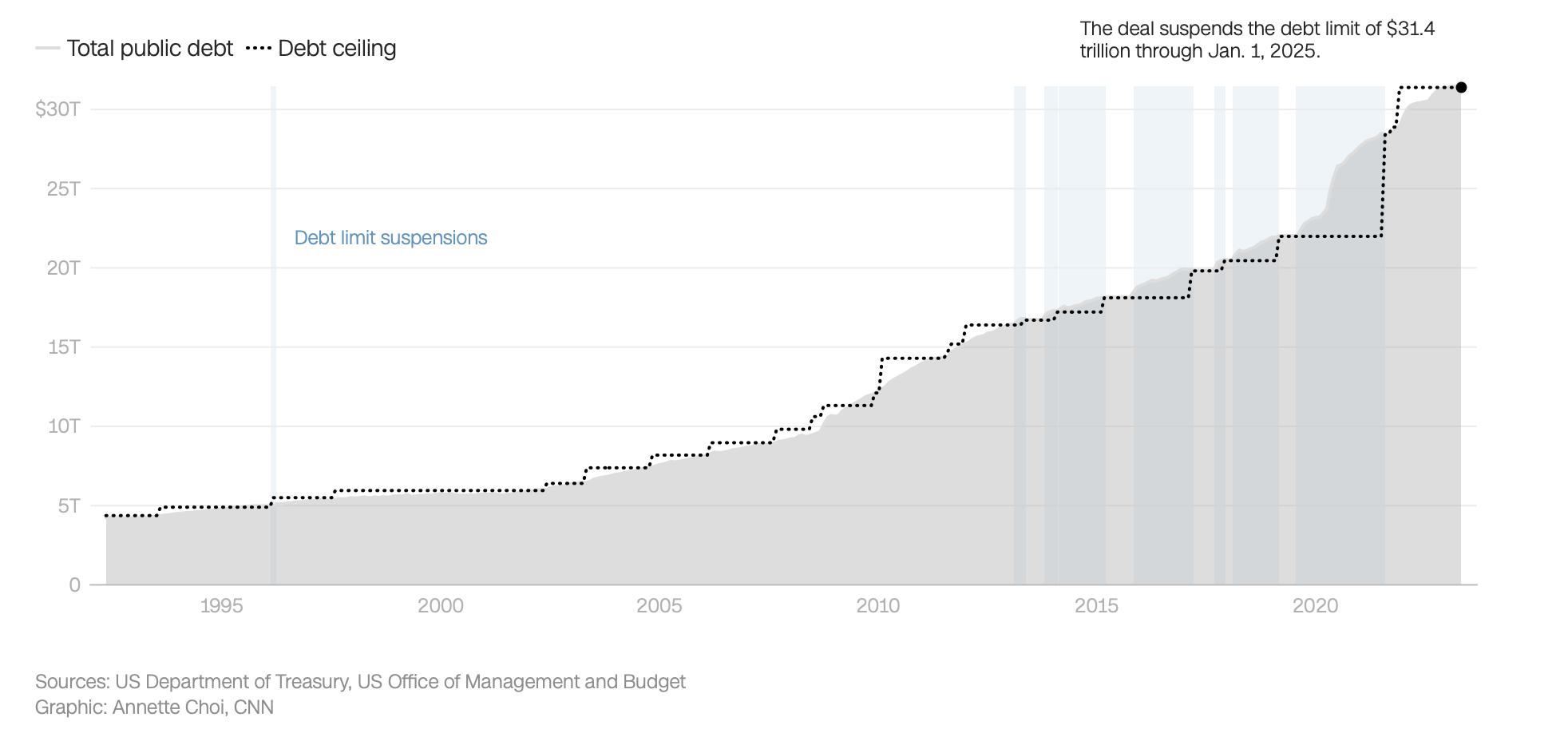


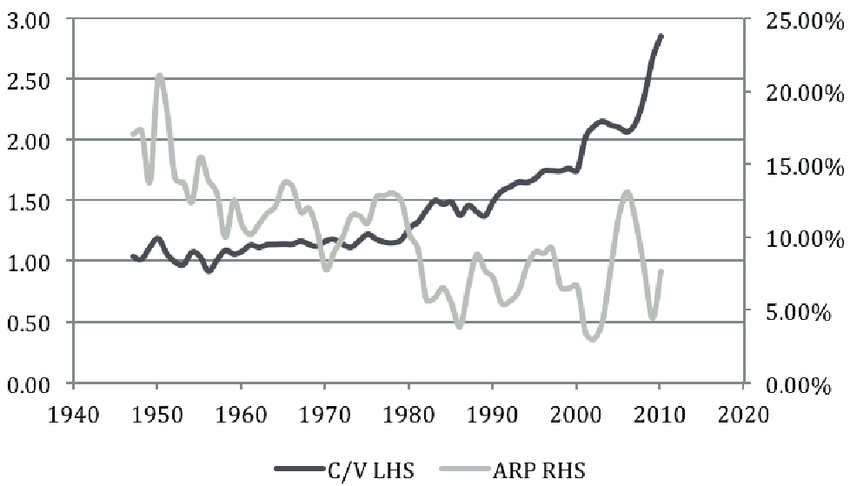
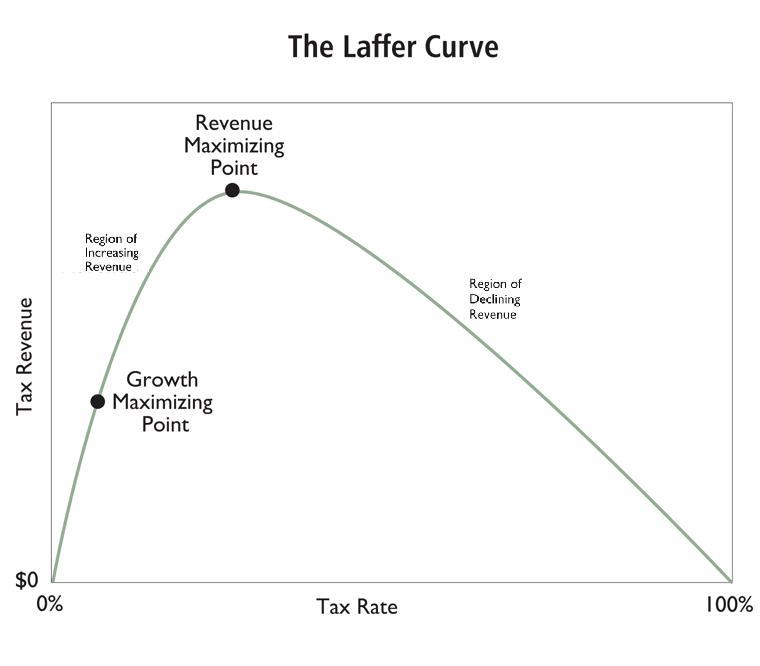






 freedom and reason