
“Individuals need not believe all these mystifications, but they must behave as though they did, or they must at least tolerate them in silence, or get along well with those who work with them. For this reason, however, they must live within a lie. They need not accept the lie. It is enough for them to have accepted their life with it and in it. For by this very fact, individuals confirm the system, fulfill the system, make the system, are the system.” —Václav Havel
Hat tip to Wesley Yang @wesyang on X (formerly Twitter) for alerting me to this June 2018 Goggle business entry: “Adding ‘LGBTQ-friendly’ and ‘Transgender Safe Space’ attributes on Google My Business.” The entry gives a business owner a way to add woke slogans to his web site, actions that will ingratiate him not only to the woke subaltern, whose narcissism feeds on the obsequiousness of others, but to his superiors, the men who control the fate of his business and career. Before getting to the businessman’s superiors, let’s pay attention for a moment to the express intent of attaching to one’s business woke slogans and symbols.
“There’s little that compares to the feeling of walking into a place and being immediately comfortable—your shoulders loosen, your breathing slows, you physically relax, knowing you can be yourself. Finding those spaces has often been hard for the LGBTQ+ community. We want to help celebrate those spaces of belonging and make them easier to find,” the Google entry instructs its users. “One way to do this is with small businesses, which are an important part of any community. Business owners can mark their businesses as ‘LGBTQ-friendly’ and as a ‘Transgender Safe Space’ on their Google listing to let customers know they’re always welcome. These attributes appear on a business’ Google listing on Maps and Search.” The entry neatly appeals to the popularity of making this move into woke sloganeering: “Your business can join the more than 190,000 businesses globally that have already enabled the ‘LGBTQ-friendly’ and ‘Transgender Safe Space’ attribute.” (It is certainly many tens if not hundreds of thousands more since then.)
I shared the tweet above in mu June 2023 essay The Politics and Purpose of Affirming the Person. The Chair of Asset Management and CEO of the transnational investment management and financial services firm BlackRock, Inc., Larry Fink, brags about establishing and his campaign to legitimize in the corporate world Chinese Community Party style social credit systems that compel corporations to conform to political-ideological agendas. BlackRock can do this because the firm manages eight trillion dollars in assets. In the clip, Fink touts the firm’s project to force behavioral change through financial reward and punishment.
The Corporate Equality Index, popularly known as the CEI-score, published by the Human Rights Campaign, the largest LGBTQ+ political lobbying group in the world, drives business to BlackRock which then concentrates wealth and power under its transnational governance structure. The CEI isn’t the only social media score used. The principle of ESG, or environmental and social governance, is another benchmarking construct used by BlackRock and other firms. These powerful firms demand from corporations who seek investment funds that they conform to the terms of these social credit systems they control and delegate.
The Human Rights Campaign is one of the organizations socializing the idea that business owners should be compelled to act in bad faith by punishing them for, among other things, failing to affirm the chosen gender identities of other persons. We see other projects in, for example, Black Lives Matter. “But it is not your responsibility to affirm anybody’s subjective identity,” I assert in The Politics and Purpose of Affirming the Person. If you are obligated to affirm the myth of systemic racism, then you know you do not live in a free society. “Rules that tell you must affirm or validate the subjective projections of others—that is, rules that punish you for refusing to participate in affirming the desires and delusions or others—are inherently tyrannical.”
In his 1978 essay “The Power of the Powerless,” Václav Havel, the Czech playwright, essayist, dissident, and statesman who played a pivotal role in the peaceful transition of Czechoslovakia from totalitarianism to democracy (such as it is), provides the template for understanding the postmodern character of oppressive power, a manifestation of power that operates by giving those under its thumb a way to adapt to tyranny while maintaining their dignity. Havel regards the need for dignity as an innate trait of human being. This trait is leveraged in compelling individuals to impose upon themselves and others the structure of power by supplying them with For the purpose of adding LGBTQ-friendly slogans and symbols to one’s business is not to make people feel welcome, but to signal one’s obedience to the power structure.
In this entry, save for a short concluding paragraphs, I share passages from Havel’s essay without further commentary. These passages are easily translatable to our current circumstances. If you remain unsure about why these passages apply to your situation living in the West, read more Freedom and Reason.
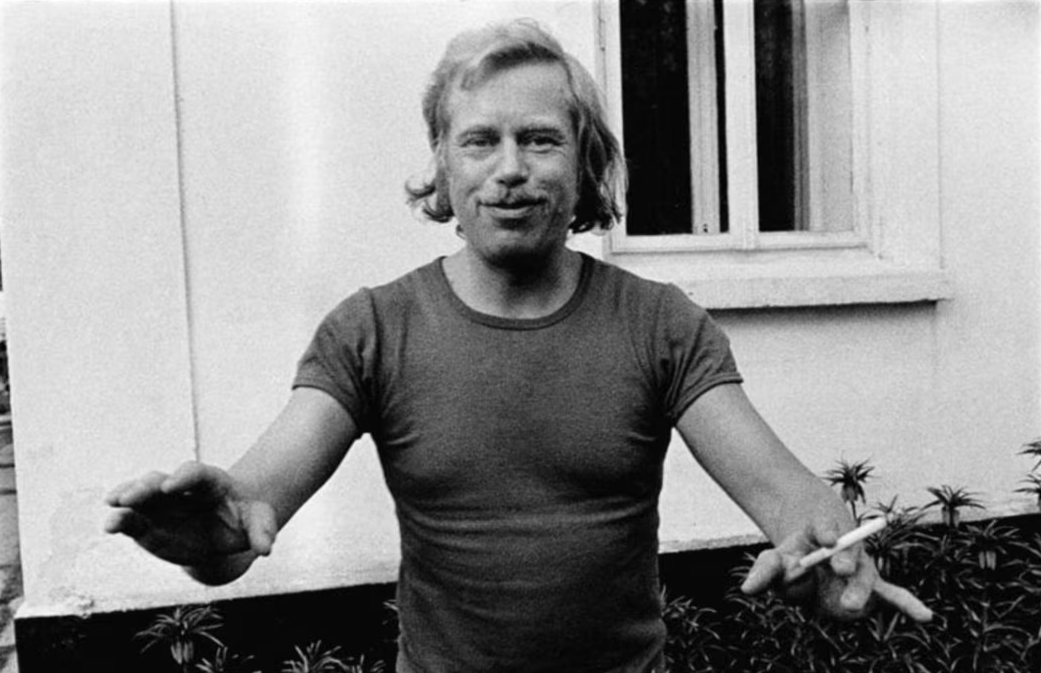
“A specter is haunting Eastern Europe: the specter of what in the West is called ‘dissent.’ This specter has not appeared out of thin air. It is a natural and inevitable consequence of the present historical phase of the system it is haunting. It was born at a time when this system, for a thousand reasons, can no longer base itself on the unadulterated, brutal, and arbitrary application of power, eliminating all expressions of nonconformity. What is more, the system has become so ossified politically that there is practically no way for such nonconformity to be implemented within its official structures.
…
“The manager of a fruit-and-vegetable shop places in his window, among the onions and carrots, the slogan: ‘Workers of the world, unite!’ Why does he do it? What is he trying to communicate to the world? Is he genuinely enthusiastic about the idea of unity among the workers of the world? Is his enthusiasm so great that he feels an irrepressible impulse to acquaint the public with his ideals? Has he really given more than a moment’s thought to how such a unification might occur and what it would mean?
“I think it can safely be assumed that the overwhelming majority of shopkeepers never think about the slogans they put in their windows, nor do they use them to express their real opinions. That poster was delivered to our greengrocer from the enterprise headquarters along with the onions and carrots. He put them all into the window simply because it has been done that way for years, because everyone does it, and because that is the way it has to be. If he were to refuse, there could be trouble. He could be reproached for not having the proper decoration in his window; someone might even accuse him of disloyalty. He does it because these things must be done if one is to get along in life. It is one of the thousands of details that guarantee him a relatively tranquil life ‘in harmony with society,’ as they say.
“Obviously the greengrocer is indifferent to the semantic content of the slogan on exhibit; he does not put the slogan in his window from any personal desire to acquaint the public with the ideal it expresses. This, of course, does not mean that his action has no motive or significance at all, or that the slogan communicates nothing to anyone. The slogan is really a sign, and as such it contains a subliminal but very definite message. Verbally, it might be expressed this way: ‘I, the greengrocer XY, live here and I know what I must do. I behave in the manner expected of me. I can be depended upon and am beyond reproach. I am obedient and therefore I have the right to be left in peace.’ This message, of course, has an addressee: it is directed above, to the greengrocer’s superior, and at the same time it is a shield that protects the greengrocer from potential informers. The slogan’s real meaning, therefore, is rooted firmly in the greengrocer’s existence. It reflects his vital interests. But what are those vital interests?
“Let us take note: if the greengrocer had been instructed to display the slogan ‘I am afraid and therefore unquestioningly obedient,’ he would not be nearly as indifferent to its semantics, even though the statement would reflect the truth. The greengrocer would be embarrassed and ashamed to put such an unequivocal statement of his own degradation in the shop window, and quite naturally so, for he is a human being and thus has a sense of his own dignity. To overcome this complication, his expression of loyalty must take the form of a sign which, at least on its textual surface, indicates a level of disinterested conviction. It must allow the greengrocer to say, ‘What’s wrong with the workers of the world uniting?’ Thus the sign helps the greengrocer to conceal from himself the low foundations of his obedience, at the same time concealing the low foundations of power. It hides them behind the facade of something high. And that something is ideology.
“Ideology is a specious way of relating to the world. It offers human beings the illusion of an identity, of dignity, and of morality while making it easier for them to part with them. As the repository of something suprapersonal and objective, it enables people to deceive their conscience and conceal their true position and their inglorious modus vivendi, both from the world and from themselves. It is a very pragmatic but, at the same time, an apparently dignified way of legitimizing what is above, below, and on either side. It is directed toward people and toward God. It is a veil behind which human beings can hide their own fallen existence, their trivialization, and their adaptation to the status quo. It is an excuse that everyone can use, from the greengrocer, who conceals his fear of losing his job behind an alleged interest in the unification of the workers of the world, to the highest functionary, whose interest in staying in power can be cloaked in phrases about service to the working class. The primary excusatory function of ideology, therefore, is to provide people, both as victims and pillars of the post-totalitarian system, with the illusion that the system is in harmony with the human order and the order of the universe.
“The smaller a dictatorship and the less stratified by modernization the society under it, the more directly the will of the dictator can be exercised. In other words, the dictator can employ more or less naked discipline, avoiding the complex processes of relating to the world and of self justification which ideology involves. But the more complex the mechanisms of power become, the larger and more stratified the society they embrace, and the longer they have operated historically, the more individuals must be connected to them from outside, and the greater the importance attached to the ideological excuse. It acts as a kind of bridge between the regime and the people, across which the regime approaches the people and the people approach the regime. This explains why ideology plays such an important role in the post-totalitarian system: that complex machinery of units, hierarchies, transmission belts, and indirect instruments of manipulation which ensure in countless ways the integrity of the regime, leaving nothing to chance, would be quite simply unthinkable without ideology acting as its all-embracing excuse and as the excuse for each of its parts.
…
“Ideology, in creating a bridge of excuses between the system and the individual, spans the abyss between the aims of the system and the aims of life. It pretends that the requirements of the system derive from the requirements of life. It is a world of appearances trying to pass for reality.
“The post-totalitarian system touches people at every step, but it does so with its ideological gloves on. This is why life in the system is so thoroughly permeated with hypocrisy and lies: government by bureaucracy is called popular government; the working class is enslaved in the name of the working class; the complete degradation of the individual is presented as his ultimate liberation; depriving people of information is called making it available; the use of power to manipulate is called the public control of power, and the arbitrary abuse of power is called observing the legal code; the repression of culture is called its development; the expansion of imperial influence is presented as support for the oppressed; the lack of free expression becomes the highest form of freedom; farcical elections become the highest form of democracy; banning independent thought becomes the most scientific of world views; military occupation becomes fraternal assistance. Because the regime is captive to its own lies, it must falsify everything. It falsifies the past. It falsifies the present, and it falsifies the future. It falsifies statistics. It pretends not to possess an omnipotent and unprincipled police apparatus. It pretends to respect human rights. It pretends to persecute no one. It pretends to fear nothing. It pretends to pretend nothing.
…
“We have seen that the real meaning of the greengrocer’s slogan has nothing to do with what the text of the slogan actually says. Even so, this real meaning is quite clear and generally comprehensible because the code is so familiar: the greengrocer declares his loyalty (and he can do no other if his declaration is to be accepted) in the only way the regime is capable of hearing; that is, by accepting the prescribed ritual, by accepting appearances as reality, by accepting the given rules of the game. In doing so, however, he has himself become a player in the game, thus making it possible for the game to go on, for it to exist in the first place.
“If ideology was originally a bridge between the system and the individual as an individual, then the moment he steps on to this bridge it becomes at the same time a bridge between the system and the individual as a component of the system. That is, if ideology originally facilitated (by acting outwardly) the constitution of power by serving as a psychological excuse, then from the moment that excuse is accepted, it constitutes power inwardly, becoming an active component of that power. It begins to function as the principal instrument of ritual communication within the system of power.
“The whole power structure (and we have already discussed its physical articulation) could not exist at all if there were not a certain metaphysical order binding all its components together, interconnecting them and subordinating them to a uniform method of accountability, supplying the combined operation of all these components with rules of the game, that is, with certain regulations, limitations, and legalities. This metaphysical order is fundamental to, and standard throughout, the entire power structure; it integrates its communication system and makes possible the internal exchange and transfer of information and instructions. It is rather like a collection of traffic signals and directional signs, giving the process shape and structure. This metaphysical order guarantees the inner coherence of the totalitarian power structure. It is the glue holding it together, its binding principle, the instrument of its discipline. Without this glue the structure as a totalitarian structure would vanish; it would disintegrate into individual atoms chaotically colliding with one another in their unregulated particular interests and inclinations. The entire pyramid of totalitarian power, deprived of the element that binds it together, would collapse in upon itself, as it were, in a kind of material implosion.
“As the interpretation of reality by the power structure, ideology is always subordinated ultimately to the interests of the structure. Therefore, it has a natural tendency to disengage itself from reality, to create a world of appearances, to become ritual. In societies where there is public competition for power and therefore public control of that power, there also exists quite naturally public control of the way that power legitimates itself ideologically. Consequently, in such conditions there are always certain correctives that effectively prevent ideology from abandoning reality altogether. Under totalitarianism, however, these correctives disappear, and thus there is nothing to prevent ideology from becoming more and more removed from reality, gradually turning into what it has already become in the post-totalitarian system: a world of appearances, a mere ritual, a formalized language deprived of semantic contact with reality and transformed into a system of ritual signs that replace reality with pseudo-reality.
…
“The profound crisis of human identity brought on by living within a lie, a crisis which in turn makes such a life possible, certainly possesses a moral dimension as well; it appears, among other things, as a deep moral crisis in society. A person who has been seduced by the consumer value system, whose identity is dissolved in an amalgam of the accouterments of mass civilization, and who has no roots in the order of being, no sense of responsibility for anything higher than his own personal survival, is a demoralized person. The system depends on this demoralization, deepens it, is in fact a projection of it into society.
“Living within the truth, as humanity’s revolt against an enforced position, is, on the contrary, an attempt to regain control over one’s own sense of responsibility. In other words, it is clearly a moral act, not only because one must pay so dearly for it, but principally because it is not self-serving: the risk may bring rewards in the form of a general amelioration in the situation, or it may not. In this regard…, it is an all-or-nothing gamble, and it is difficult to imagine a reasonable person embarking on such a course merely because he reckons that sacrifice today will bring rewards tomorrow, be it only in the form of general gratitude.”
…
When a state has as much power and control over a population as the corporate state currently possesses, nothing happens by accident. The application of power may feel arbitrary, the actions of leaders capricious, but the phenomena of experience are not accidental. Your task as a person who wishes to be free is to acquire a theory that will explain the structure and process of power as clearly and thoroughly as possible and wield it to show others power’s purpose. If freedom is not what you wish, then you’re part of the structure and process of power, however incidental to it. A person who does not desire freedom terminally is either a tyrant or a useless person, that is an idiot. The latter is of course not useless to the tyrant; the tyrant depends on the idiot. The idiot is useless to those whose struggle is against tyranny.

 freedom and reason