
Update (7/2/2023): It would have been the right decision whether the majority approved, but since I have heard so much about the Supreme Court not following majority opinion as if that mattered, an ABC News poll shows that a solid majority of Americans agree with the decision (52%). Large majorities of Republicans (75%) and independents (58%)—who comprise the majority of this country—approve of the ruling. The minority who identify as Democrats (albeit who appear as the majority because they run the administrative state, technocratic apparatus, media, culture industry, and educational institutions) are overwhelmingly opposed at 26 percent. Their opposition still can’t drag the overall number below 50 percent.
There are divisions between racial groups. Most whites (60%) and Asians (58%) approve of the Supreme Court’s decision to limit the use of race in college admissions,. However, only 25% of blacks support the decision. Given that the vast majority of blacks are Democrats, this isn’t a surprise. Hispanics are split, with 40% approving and 40% disapproving, with the rest not sure about what they think.
On the other two big decisions, the ruling affirming the right of Americans to the freedoms of conscience and speech, and the ruling knocking down Biden’s attempt to make all Americans assume the student loan debt of millions of Americans, more of those polled support the decision than oppose them. Moving forward, we will likely see growing support for these three decisions as the principles behind them emerge from the dissipation of the political smoke bombs progressives are tossing everywhere.
We now returning to the previously schedule program, “Our Liberal Supreme Court.”

* * *
“Congress shall make no law respecting an establishment of religion, or prohibiting the free exercise thereof; or abridging the freedom of speech, or of the press; or the right of the people peaceably to assemble, and to petition the Government for a redress of grievances.” Article One of the United States Bill of Rights
The claim that the Supreme Court’s decision in 303 Creative LLC v. Elenis protecting the First Amendment rights of Lorie Smith—the owner of a website company who worried she would be asked to create a wedding website with expressions that contradict her conscience and free speech fights—discriminates against gays and lesbians, as well as those who identify as a gender other than the one they are, is an attempt to obfuscate the principle underpinning the ruling. Likewise, the propaganda the corporate state media deploys to characterize the political standpoint of the various sides is meant, or at least functions to confuse the public about what actually happened.

In its ruling, a 6-3 vote, the Supreme Court determined that Colorado’s anti-discrimination law infringed upon Smith’s First Amendment rights. The Court’s decision stemmed from the recognition that Smith’s creative web design work should be considered a form of expression or speech, which of course it is. As a result, the state’s requirement for her to create content that contradicts her religious beliefs would have compelled her to engage in speech with which she disagreed, thus violating her rights. The ruling is monumental; there are no more precious rights than those found in the First Amendment to the United States Constitution.
Progressives are characterizing the majority of the Court as conservative and rightwing, but there is arguably no truer expression of liberalism than the majority’s ruling in 303 Creative LLC v. Elenis, which comes on the heels of another paradigm of liberalism expressed in the Court’s ruling on affirmative action (see The Supreme Court Strikes a Blow Against Institutional Racism). The corporate state media not only obfuscates the liberalism of the (nominal) conservative majority, but it reflexively portrays progressivism as an expression of liberalism, obscuring the fact that these standpoints are opposites.
Liberalism is a political and philosophical ideology that emerged during the Enlightenment (eighteenth century). It is characterized by a focus on equality, limited government, and the protection of individual liberties and rights. Liberalism promotes the establishment of societies that value individual autonomy, pluralism, rationality, and the pursuit of personal happiness and fulfillment. In contrast, progressivism is characterized by an ideological interpretation of equity in which members of selected identity-based groups are privileged, while the liberty and rights of others are diminished, as well pursuing an intrusive project to government expansion, one controlling every aspect of the citizen’s life
The freedom and rights liberalism emphasizes—freedom of conscience, speech, religious expression, assembly, association, privacy, and the right to own property—are determined to be inherent and inalienable, belonging to every individual regardless of their identity. Liberalism thus stressed the importance of a legal system that applies equally to all individuals. The rule of law ensures that no one is above the law and that legal protections are guaranteed for all citizens. Liberalism values individual freedom and autonomy, allowing individuals to make choices about their own lives and pursue their own goals, as long as they do not harm others or infringe upon their rights.
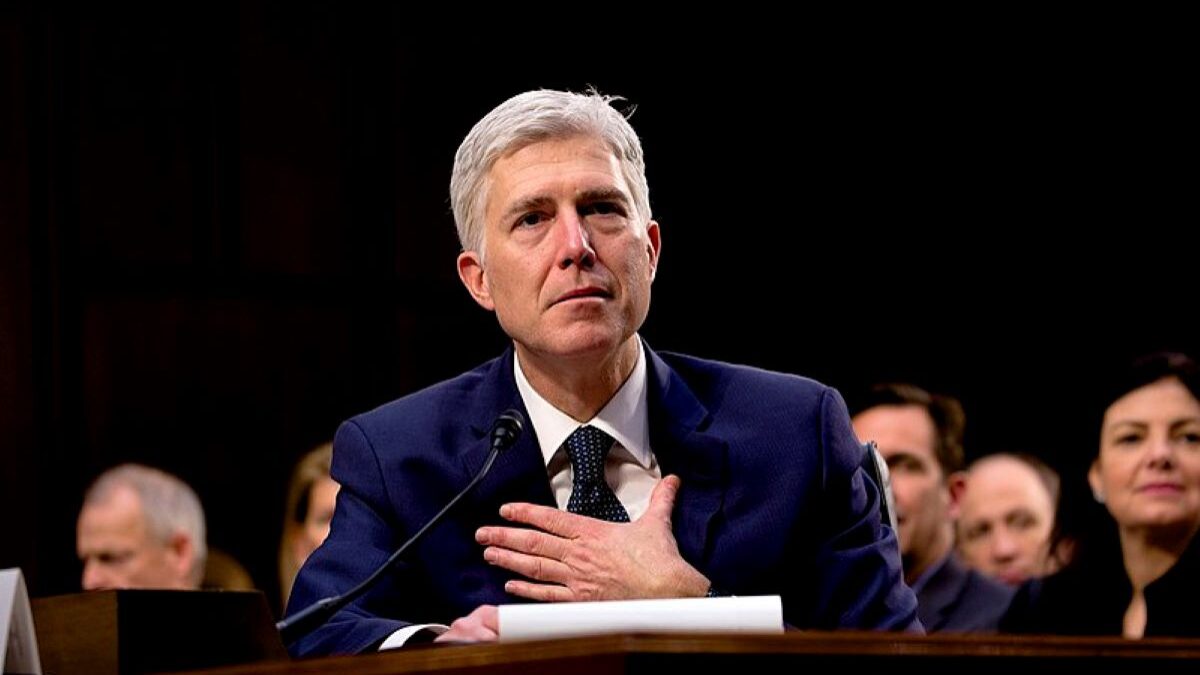
The Supreme Court ruled that the First Amendment bars Colorado from forcing “an individual to speak in ways that align with its views but defy her conscience about a matter of major significance.” In this ruling, the Supreme Court ruling embodied the core principle of liberalism and struck down authoritarian state law and policy that should to compel the speech of a citizen along ideological lines. Justice Neil Gorsuch, who authored the opinion, stated that the First Amendment “envisions the United States as a rich and complex place where all persons are free to think and speak as they wish, not as the government demands.” He noted that the court has long held that “the opportunity to think for ourselves and to express those thoughts freely is among our most cherished liberties and part of what keeps our Republic strong.”
I don’t want to belabor the point, but I want to make sure it sticks: Gorsuch’s opinion oozes liberalism as defined above—which is what liberalism is. Don’t be confused by propaganda. What today we call conservatism is often really liberalism. Whether the making of decisions on the basis of the liberalism that inheres in the American Creed is identified as conservatives is beside the point. We judge the political, ideological, and philosophical standpoints of people based not on how they identity but on what they are, and Democrats abandoned liberalism long ago. They are now the party of the administrative state and the technocratic apparatus. Thus, part of grasping the significance of the Supreme Court’s recent decisions is to recognize the corporate state media’s attempt to citizens by misusing language. Liberalism is not something the media calls liberalism any more than a woman is somebody who says they are one, and so on. Liberalism is a set of principles. Either you believe these principles and you are a liberal or you don’t and you are something else.
Just as Gorsuch’s words instantiate the principles of liberalism, the dissent of Justice Sotomayor’s indicate their opposite. “Today, the Court, for the first time in its history, grants a business open to the public a constitutional right to refuse to serve members of a protected class,” Sotomayor wrote in her dissent. But this case was not about whether Smith, whose business is a place of public accommodations, can discriminate based on a person’s sexual orientation or gender identity. The Supreme Court did not rule on that question. Indeed, the Court documents make clear that Smith had no problem serving gays, lesbians, and bisexuals. The Supreme Court ruled instead that Smith has a right not to be compelled by the state to make expressions that violate her conscience and free speech right. That was what Smith sought in the process. And she won. We all won.
You may recall a previous Supreme Court ruling, in the case of Masterpiece Cakeshop v Colorado Civil Rights Commission (2018). This case addressed the issue of whether owners of public accommodations can refuse certain services based on claims of free speech and free exercise of religion under the First Amendment. The case specifically revolved around a bakery, Masterpiece Cakeshop, which declined to create a custom wedding cake for a gay couple due to the owner’s religious beliefs. The Colorado Civil Rights Commission assessed the case under the state’s anti-discrimination law and concluded that the bakery had engaged in discrimination against the couple. The commission issued specific directives to the bakery. After pursuing appeals within the state, the bakery brought the case to the Supreme Court and won.
That decision was a 7–2 in favor of Masterpiece Cakeshop. However, the Court ruled on limited grounds, stating that the Commission had failed to demonstrate religious neutrality, thereby violating the bakery owner Jack Phillips’ right to freely exercise his religion. As a result, the Court overturned the Commission’s decision but left ambiguous the broader questions surrounding the intersection of anti-discrimination laws, freedom of speech, and free exercise of religion, as the lack of religious neutrality by the Commission complicated the case. Yesterday’s decisions drops the other shoe. It’s now precedent that state law cannot compel individuals to make expressions that violate their conscience and speech rights. This is a triumph of liberalism. It should be recognized as such.

 freedom and reason