
The Supreme Court handed down a decision yesterday, authored by Chief Justice John Roberts, that contradicts the plain language of the Constitution and empowers the judiciary to govern federal elections. The corporate state media celebrated the decision, dutifully portraying those defending the “Elections Clause” as advancing a “fringe theory” known as the “independent state legislature” theory. Not only does the decision contradict the plain language of the Constitution, but it contradicts longstanding and affirmed Supreme Court precedent that has held that Article I, Section 4, Clause 1, which I detail in a moment, provides for legislatures, not courts, to regulate how states exercise their authority over Senate and House elections.
The independent state legislature theory pertains to the process of legislative redistricting. According to this theory, the power to draw and determine the boundaries of electoral districts lies exclusively with state legislatures and cannot be delegated or controlled by other entities, such as courts or independent redistricting commissions. Readers should know, if this essay’s contents do not make obvious, I am committed to popular control over the election process, which means that governance of the process properly belongs with the elected representatives of the citizens of the various states. According to proponents of the theory, of which I am one, any attempt to transfer this power to alternative bodies or involve the judiciary in the redistricting process infringes upon the constitutional rights of the state legislature.
The theory finds its basis in the Elections Clause of the United States Constitution, which states that the “Times, Places, and Manner of holding Elections for Senators and Representatives, shall be prescribed in each State by the Legislature thereof.” Advocates of the theory interpret this clause as granting broad discretion and exclusive control to the state legislature in determining the rules and procedures for conducting elections, including redistricting. In recent years, some courts have ruled in favor of independent redistricting commissions, while others have upheld the authority of state legislatures. The question is whether courts should enjoy this level of control over a process determined by the people. The Supreme Court has issued rulings on redistricting cases that have both supported and questioned the theory. But yesterday’s decision changes elections fundamentally. If you thought the 2020 federal elections were rigged and stolen, the courts just ensured that the 2024 election cycle will be just as gamed and just as fraudulent.

This decision follows recent decisions rejecting districts maps for failing to gerrymander districts on the basis of racial identity, a clear rejection of colorblind individualism and an act of elevating the progressive ideology of racial reification. The claim that this is a conservative, i.e., classical liberal, court can be put to bed in light of these decisions. There is a liberal minority (justices Clarence Thomas, Samuel Alito and Neil Gorsuch dissented to yesterday’s ruling), but we can now see that Brett Kavanaugh and Amy Coney Barrett were likely ringers for establishment forces and that Roberts has in recent years come under the influence of the same forces. Either that, or the recent threats to the safety of the justices, both in street-level thuggery and the specter of arbitrary ethics violations, as well as talk of court-packing and term limits for the justices, have them intimidated. To be sure, a man can change his mind; however, in his opinion, Robert rationalized a previous decision from which he dissented eight years ago. It’s obvious that something has compromised his principles.
The bottom-line is that the Court’s decision is an invitation for state and federal courts to use judicial review as a weapon against the republic and selected democratic movements. While Roberts’ majority opinion cautions state courts to resist imposing any sort of limits on legislatures’ action, the decision leaves open the question of when a state court ruling would go too far. That no limits on judicial review are articulated gives away the game: the judiciary has been given power to govern our elections. This means that judges—woke and progressive judges—can change the rules of federal elections mid-process, as courts and the executives of the various states did in the 2020 and 2022 cycles, a power that allows courts to favor one party over another. The paradigm of exercising political-ideological prejudice is found in decisions regarding the processing of absentee ballots, a voting method preferred by Democrats.
I want to spend some time discussing the Constitution in order to put the matter as clearly as I can, as this is a monumental decision. I also want to discuss related issues to give the reader a sense of the past spirit of populism and the anti-democratic power the establishment is exercising over the republic’s machinery of late.
Article One of the United States Constitution, in Section 4, contains the relevant clause pertaining to federal elections. As noted, this clause is commonly referred to as the Elections Clause, also known as the “Times, Places, and Manner Clause.” Here is the exact text of the clause: “The Times, Places and Manner of holding Elections for Senators and Representatives, shall be prescribed in each State by the Legislature thereof; but the Congress may at any time by Law make or alter such Regulations, except as to the Places of chusing [sic] Senators.” The purpose of this clause is to strike a balance between state and federal authority in managing the electoral process. State legislatures have the primary responsibility for regulating elections, but Congress has the power to intervene and establish nationwide standards if deemed necessary (the Voting Rights Act of 1965, for example). However, the clause does not give courts, either state or federal, the authority to determine such matters—each state’s legislature has the power to establish the rules and procedures for elections within their state.
I need to emphasize something to push back against the so-called “States’ Rights” argument, which has no basis in constitutional law (states have powers not rights—only people have rights). This power is found in the “Supremacy Clause,” a legal doctrine found in Article VI, Clause 2 of the United States Constitution. It establishes that the Constitution, along with the laws and treaties made under it, are the supreme law of the land, taking precedence over any conflicting state laws or constitutions. Here is the exact text of that clause: “This Constitution, and the Laws of the United States which shall be made in Pursuance thereof; and all Treaties made, or which shall be made, under the Authority of the United States, shall be the supreme Law of the Land; and the Judges in every State shall be bound thereby, any Thing in the Constitution or Laws of any State to the Contrary notwithstanding.”
The Supremacy Clause establishes the hierarchical structure of laws in the United States. It declares that the federal Constitution, federal laws enacted by Congress, and treaties approved by the federal government hold the highest legal authority within the country. According to the Supremacy Clause, if there is a conflict between federal law and state law, the federal law prevails. State judges are not allowed to contradict federal law, with disputes settled through the principle of judicial review. Thus state governments are required to adhere to and enforce federal laws, even if they differ from state laws or preferences, and there is a mechanism to compel them to do this. This principle ensures uniformity and consistency in the application of federal laws across all states. The Supremacy Clause is one of the key provisions that delineates the relationship between the federal government and the states in the United States and reinforces the idea of a unified legal framework at the national level. Crucially, it upholds the sovereignty of the entire citizenry.
There is an exception in Elections Clause concerning the “Places of chusing [sic] Senators.” This exception means that only the state legislatures have the authority to determine how senators are chosen, such as through popular vote or by legislative appointment. You may remember that the Seventeenth Amendment to the United States Constitution, ratified in 1913, changed the rule concerning the election of federal senators. Prior to the Seventeenth Amendment, senators were chosen by state legislatures rather than by popular vote. The amendment modified Article I, Section 3, Clause 1 of the Constitution, which originally stated: “The Senate of the United States shall be composed of two Senators from each State, chosen by the Legislature thereof, for six Years…” The Seventeenth Amendment revised this clause to read: “The Senate of the United States shall be composed of two Senators from each State, elected by the people thereof, for six years….”
The Seventeenth Amendment introduced the direct election of senators by the people of each state and thus represents an expansion of the people’s power. This change was made in response to concerns over corruption and political manipulation in the selection process when state legislatures appointed senators, but it also represents the populist spirit of the time. The amendment aimed to increase democratic participation and give citizens a more direct voice in choosing their senators. Since the ratification of the Seventeenth Amendment, senators have been elected through popular votes in statewide elections, similar to the election process for members of the House of Representatives. You will note that this amendment does not undermine the legislative branch of the states as the body regulating elections and was passed by Congress.
The Supreme Court cannot negate amendments; it can only interpret them. At least that is the original design. This is why I have spent time discussing this—to show the correct way to change the Constitution, that is, through the process outlined by the document. To wit, I draw your attention to the part of the United States Constitution that allows for amendments: Article V. Here is the text: “The Congress, whenever two-thirds of both Houses shall deem it necessary, shall propose Amendments to this Constitution, or, on the Application of the Legislatures of two-thirds of the several States, shall call a Convention for proposing Amendments, which, in either Case, shall be valid to all Intents and Purposes, as Part of this Constitution, when ratified by the Legislatures of three-fourths of the several States, or by Conventions in three-fourths thereof, as the one or the other Mode of Ratification may be proposed by the Congress….”
There are also laws regulating elections after the founding, actions that are, as I have explain, permissible by the Election Clause. One of these, the Electoral Count Act (ECA) of 1887, also known as the Lodge-Gosper Act or the Federal Election Law (Pub. L. 49–90, 24 Stat. 373, later codified under Title 3, Chapter 1), reformed the electoral process for presidential elections in the United States. The act primarily addressed the selection and appointment of electors who would cast their votes for President and Vice President. It aimed to regulate and standardize the selection of electors across states and establish procedures for resolving disputes in the appointment of electors. The Electoral Act of 1887 required states to appoint their electors through a popular vote rather than through the state legislature. It also set a uniform Election Day for presidential elections, which is now held on the Tuesday following the first Monday in November.
The ECA was passed by Congress in 1887, a decade after the controversial 1876 presidential election. During that election, between Republican Rutherford B. Hayes and Democrat Samuel J. Tilden. The election results were disputed due to allegations of voter fraud, voter suppression, and the presence of multiple sets of electoral votes from several states, leading to a prolonged deadlock in Congress that lasted for weeks. The 1880 and 1884 elections were also closely contested, further highlighting the potential for partisan manipulation in the absence of a defined counting procedure. These subsequent events reinforced the urgency to establish a formal mechanism for counting electoral votes. By implementing the ECA, Congress aimed to provide a framework that would guide the counting process and mitigate potential political maneuvering. The law sought to ensure a fair and consistent approach to resolving any disputes or controversies that may arise during the counting of electoral votes.
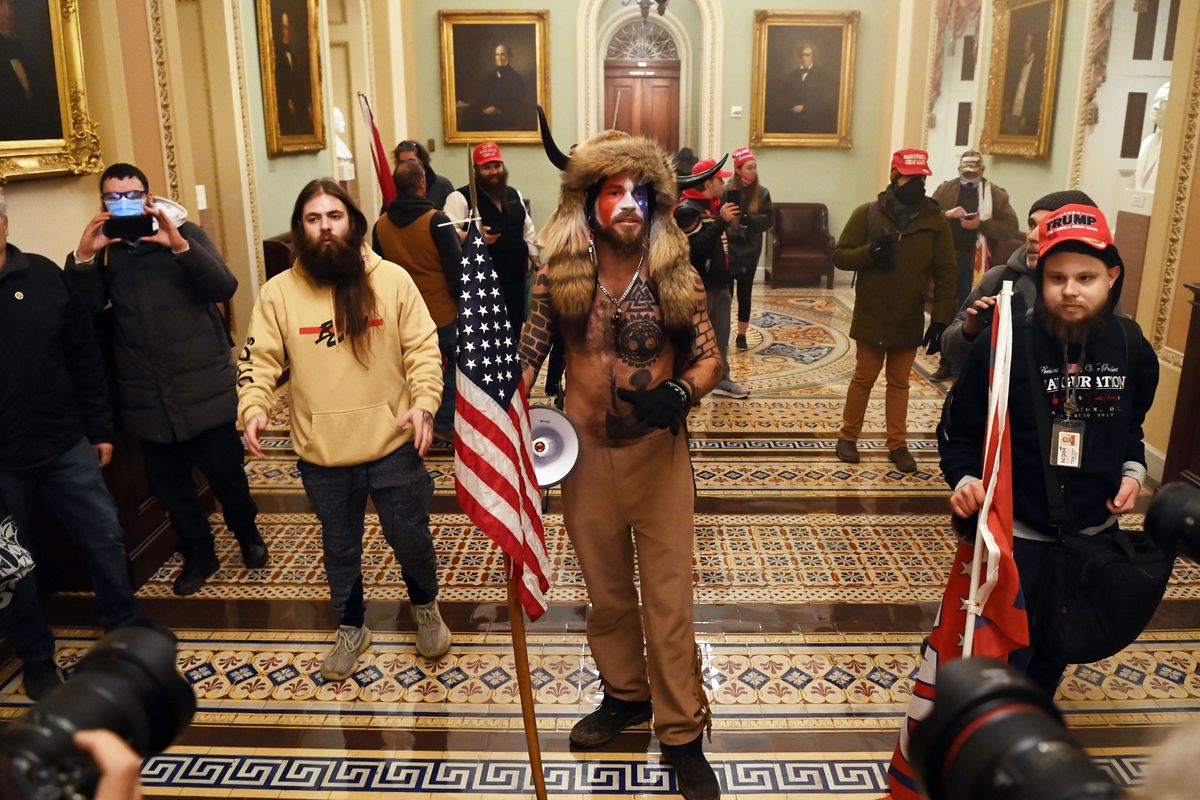
This is the law that allowed for challenges to the 2020 elections during the January 6, 2021 joint session of Congress. In accordance with the Electoral Count Act of 1887, for an objection to a state certification to be upheld by Congress, it must be supported by both a Representative and a Senator. This occurred in the case of Arizona, trigging an adjournment of the joint session adjourned at 1:15 pm to allow each chamber to debate and vote on the objection. It was at this moment that protestors entered the Capitol, forcing an evacuation of legislators from the building. After clearing the Capitol of protestors and resuming the process, objections to the electoral votes of Georgia, Michigan, and Nevada were raised by Republican members of the House but not sustained because no senator joined the objection. The “insurrection,” apparently worked. In fact, in the case of Georgia, Senator Kelly Loeffler withdrew her objection after the building was cleared. The objection concerning Pennsylvania electors was sustained, but was overruled by the entire body. It is unclear what would have happened on January 6 had protestors not entered the Capitol, in several instances facilitated by Capitol police.
On December 22, 2022, the Electoral Count Reform and Presidential Transition Improvement Act of 2022 was passed by the United States Senate. In votes conducted the next day, the bill enjoyed majorities in both the Senate (overwhelmingly) and in the House (a much closer vote). President Joe Biden signed it into law a few days later. The bill designates each state’s governor as the responsible authority for submitting certificates of ascertainment, unless state laws or constitutions specify otherwise; establishes an expedited review process for certain claims related to a state’s certification of electors, including a three-judge panel with a direct appeal to the Supreme Court; mandates that Congress must defer to slates of electors submitted by a state’s executive branch in accordance with judgments made by state or federal courts; clarifies that the vice president does not possess sole authority to determine, accept, reject, or adjudicate disputes regarding electors (this was the piece that most concerned the establishment); raises the objection threshold from one member of each chamber to 20% of each chamber; and prohibits state legislatures from declaring an election as “failed,” allowing for the rescheduling of elections only under “extraordinary and catastrophic” circumstances.
Both yesterday’s Supreme Court decision (and other recent decisions regarding gerrymandering) and last year’s revision to the ECA, albeit arrived at through the legislative process, represent regressive moves stymieing the trend in expanding the scope of popular sovereignty. These actions represent corporate state power moves to thwart control and review of elections by the people of their states as represented by their representatives. The 2020 election should have been a wakeup call for maximizing democratic redress in the conduct of elections, but the Supreme Court has empowered courts to hinder the legislatures in the various states from organizing voting in such a way that would permit the success of democratic movements threatening establishment power. Beneath the capture and trepidation of conservatives judges noted earlier is the emergence of a logic of control that facilitates the workings of the administrative state and the technocratic apparatus, all this for the sake of corporate governance. Indeed, the ECA revision appears to anticipate Robert’s ruling. The decision puts the power to control elections in the hands of judges and relegates the people to the role of spectators of elite machinations. This is one more nail in the coffin where the corpse of the American Republic lays prone.

 freedom and reason