
Drag Queen Story Hour, Queer Theory, and the Sexualization of Children
Update (June 5, 2023): I have updated this essay to include links to blogs I have written in the meantime that I think the reader will find helpful.
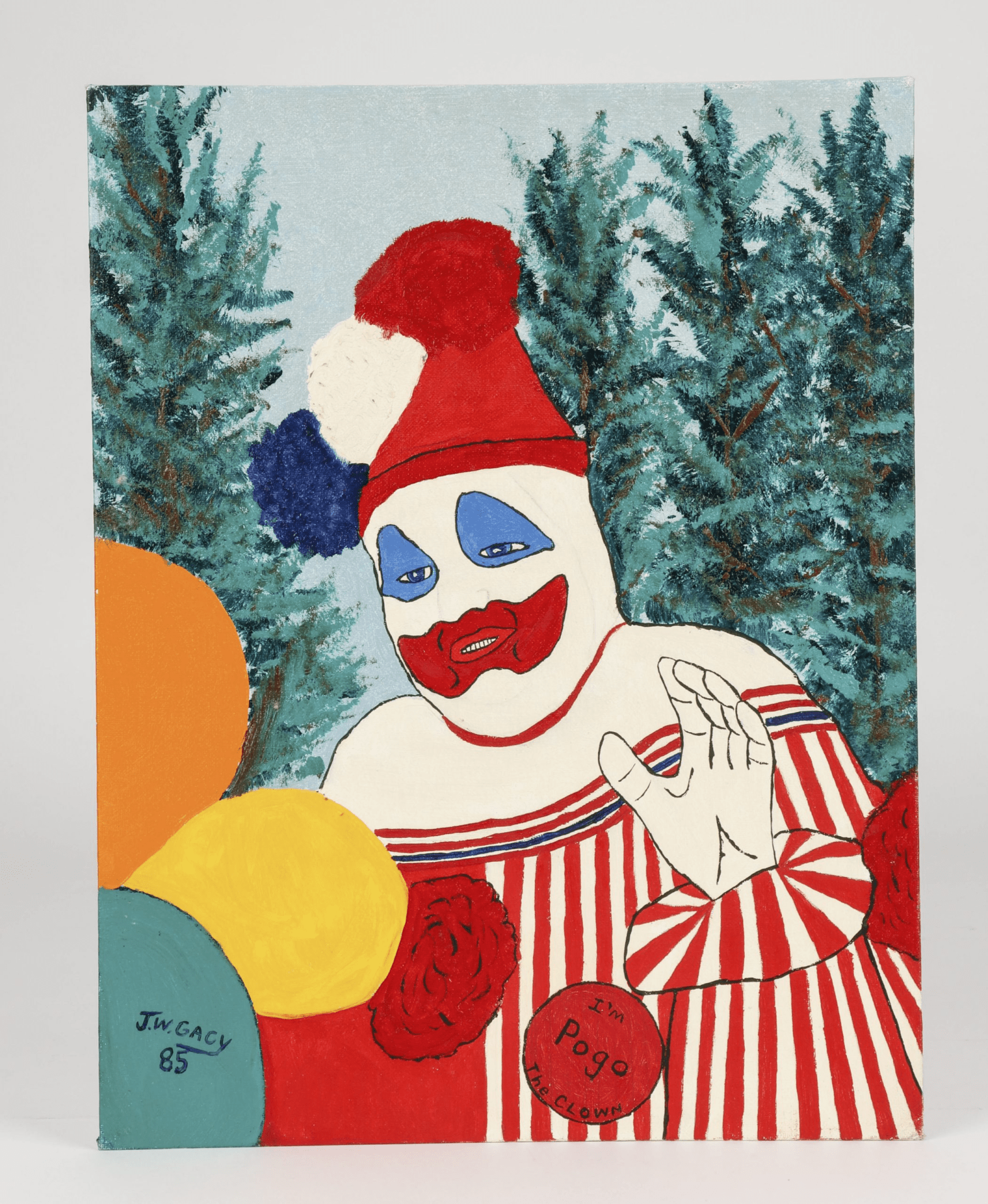
John Wayne Gacy’s “Pogo the Clown” (1985).
If, as an adult member of a free and open society, I become a believer in some thing, let’s say Christianity, and come to believe that I have an authentic self, a soul, if you will, that must be fixed or healed, since, according to my beliefs, I am born broken and sick, it will be because some theologian (amateur or professional) persuaded me to believe such a thing through the force of his arguments.
But if, as a little kid, everybody around me tells me that such things as souls and brokenness are real things and conditions, and moreover necessary to believe if I am going to be a good and whole person, and they take me to events where a man with strange hair, dressed in a strange way, saying strange things, telling stories about a brave and beautiful man who society wrongly rejected and oppressed, events that put me in a liminal state in order to transition me to a new way of seeing the world—or affirming the beliefs my parents instilled in me—and with the message reinforced by my family and my community after the ritual, then I will have become a believer not through reason, but instead through indoctrination. This is brainwashing.
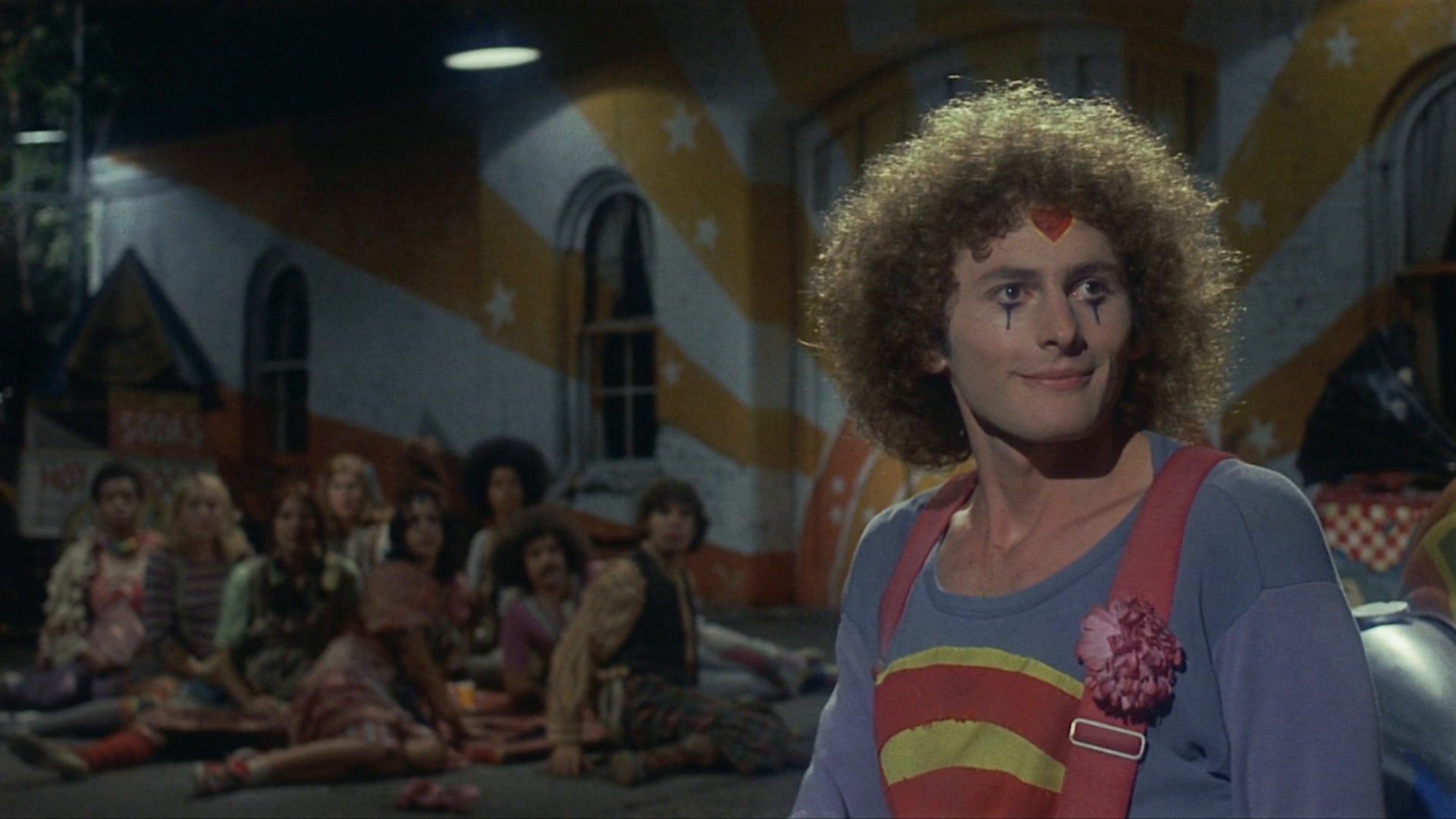
When I was a teenager, my parents took me to see the musical Godspell. I believe we went because a family friend was playing guitar in the production (the man who showed me the signature riff in Jimi Hendrix’s “Purple Haze”).
I’m an atheist and have been so all my life, but, thanks to Godspell, for about two weeks, I flirted with faith. I suspect a big part of why I was moved in this way was the fact that the actors were dressed as hippies. Hippies fascinated me. Hippies were everywhere in the early 1970s and I wanted to be one when I grew up.
My parents never reinforced the Godspell message, and so the effect wore off and I was soon back to my godless self.
I don’t know if Godspell had an agenda in back of it, and I don’t believe my parents had a ulterior motive in taking me to the production (I doubt they did—my mother took me to see The Life of Brian when it opened a few years later), but I suspect not a few young people were taken to see Godspell by parents hopeful that it would open a way into the Christian faith for their children that traditional avenues had failed to.
Here’s the point of today’s blog: You may very much want your kid to believe in your religion—or some ideology you profess. I get the character of passionate belief. But please understand that when you put your kid through a program, when you subject your child to manipulative techniques, for example, staged events designed to disrupt his ordinary understanding of things to prepare the ground for the planting of thoughts that you (or somebody else) want him to grow in his brain, you are compromising his autonomy—you are violating his right to arrive at his own beliefs through the rational process we call education. And if you are doing this to your children as an intentional act motivated by transgressive politics associated with crackpot theories, then you are perpetrating an injustice, not only for your child, but society at large.
* * *
Drag Queen Story Hour (DQSH) is a popular albeit niche type event occurring across the nation, typically held at public libraries, hosted by drag queens reading books to children and involving them in various other learning activities—books and activities that, while perhaps not exclusively, more often than not have to do to with, and are certainly projected through the lens of, a particular ideology, namely queer theory.
I need to take a moment to explain queer theory to readers in case there are any who are unsure of their understanding of this species of postmodernist critical theory. At the core of queer theory lies the notion that gender, and even sex, as well as heteronormativity and heterosexuality, are socially-constructed categories organized by power and learned during socialization.
Queer theory is not a passive academic exercise; it comes with the praxis of transgression. Jay Stewart, co-founder of Gendered Intelligence, explains: “Queer theory and politics necessarily celebrate transgression in the form of visible difference from norms. These ‘Norms’ are then exposed to be norms, not natures or inevitabilities. Gender and sexual identities are seen, in much of this work, to be demonstrably defiant definitions and configurations” (see his essay in the volume Genderqueer and Non-Binary Genders).
Queer theory is guided by the ideas of French post-structuralist and alleged pedophile Michel Foucault presented in a large body of work that includes the philosopher’s multi-volume The History of Sexuality, published over several decades, the last volume, Confessions of the Flesh, published posthumously (Foucault died of AIDS in 1984 at the age of 57).
At the heart of Foucault’s argument is that sexuality, presumed to be an essential component of the species, is actually a set of discursive practices organized by power in a manner that systematically dissimulates the mechanisms that call it into being while manufacturing the illusion that sexuality exists a priori in nature. In other words, sexuality is social production.
While there is certainly something to the sociological observation that human sexuality is interpreted through sociocultural and historical lens, sexuality, including sexual orientation, is nonetheless something found in nature. Relativism and emphasis on subjectivity should send up red flags about queer theory, or any other argument you encounter that cannot proceed scientifically.
Foucault’s notion of sexuality as discursive practice and social production was taken up and elaborated by Judith Butler who argues that the illusion power manufactures establishes heterosexuality as the truth of sex, a “truth” that determines notions of “feminine” and “masculine” around the biological constructs “female” or “male,” i.e., the gender binary. Gender, Butler contends, is performative. By performative, she does not mean gender is performance, but rather is identifying the norms and actions that establish gender in social interactions and relations (see her Undoing Gender). For Butler, the praxis of transgression serves as a resistance strategy. Examples of transgressive action are cross-dressing and drag.
One of the central concepts in queer theory is the notion of “heteronormativity,” which Lauren Berlant defines as “the institutions, structures of understanding, and practical orientations that make heterosexuality seem not only coherent—that is, organized as a sexuality—but also privileged.”
Queer theory denies that sexuality is the result of natural history. Heteronormativity is a worldview that normalizes heterosexuality and, moreover, promotes opposite sex relations and the feminine-masculine gender binary as the preferred sexual orientation and gender identity set. The dominant social institutions—cultural, political, religious—reinforce heteronormativity through mechanisms of formal and informal social control that work on both gay and straight individuals.
Crucially, following Foucault’s theory of power as generative and productive rather than as oppressive form rooted in a priori differences, heteronormativity is a mode of oppression that constructs sex as a mode of control. Sex is not a thing in nature the truth of which is revealed through knowledge; the knowledge of sex is organized by power which is found in social arrangements. For Foucault and other postmodernist philosophers, all truth is organized by power in this way—and it is power that manufactures all truth.
Foucault not only argues that gender and sexuality are socially-constructed but that age of consent laws are as well, and, as such, should be repealed, as they represent an arbitrary constraint on sexual relations governed by power unchosen by those controlled by such laws. In his view (and he was not alone in this view in French society), minors should enjoy the same access to sexual pleasure as adults, including sexual relations with adults; otherwise, the child is denied the full exercise of his fundamental human right to autonomy. In a 1978 radio interview concerning the matter, Foucault insisted that
assuming “that a child is incapable of explaining what happened and was incapable of giving his consent are two abuses that are intolerable, quite unacceptable.”
In her essay, “Thinking Sex,” Gayle Rubin builds upon Foucault’s critique of biological explanations of sexuality, extending it to examine how sexual identities and behaviors are structured in hierarchical systems of sexual classifications. She elucidates how certain forms of sexual expression are privileged over others, resulting in the oppression of those who fall outside these established parameters. Additionally, Rubin challenges the feminist notion that gender determines one’s sexuality or that gender and sexuality are interchangeable.
A longer list of the originators of queer theory often includes Gloria Anzaldúa, Adrienne Rich, Gayle Rubin, Eve Kosofsky Sedgwick, and Michael Warner alongside Foucault, Butler, Berlant, and Rubin.
Some lists might include Teresa de Lauretis, since she is the woman widely recognized to have coined the term, but in light of her critique of Foucault’s neglect of the female body in his work, it’s perhaps understandable that she would abandon the term upon its cooptation by establishment forces.
Adrienne Rich, a notable essayist and poet, who was criticized for supporting of Janice Raymond during the writing of The Transsexual Empire: The Making of the She-Male, a 1979 work considered by many queer theorists and trans-activists to be profoundly “transphobic” and therefore an instantiation of “hate speech,” doesn’t comfortably fit in the queer theory paradigm, either. Indeed, Rich’s core contribution to lesbian studies, her 1980 essay “Compulsory Heterosexuality and Lesbian Experience,” faded as an item of debate and discussion as the post-structuralist orientation of queer theory pushed essentialism out of next-wave feminist thinking.
One wonders how Rich (she passed away several years ago) would respond to the attack of the lesbians by trans activists, often manifest in the form of Antifa actions, directed at lesbian-straight feminist alliances. The relationship between Antifa, its roots in anarchism, and queer theory is not incidental, as readers can learn here from Derrick Jensen.:
In addition to Foucault and Rubin, Jensen identifies other contributors to queer theory: Pat Califia, and David Halperin (see Halperin’s “The Normalization of Queer Theory”). He also identifies Diogenes, the Greek philosopher of cynicism, as the prototype of this way of thinking. Seeing all social norms as oppressive, Diogenes intentionally violated social norms, defecating and masturbating in public and disrupting Plato’s lectures by eating loudly.
Relevant here is Derrick Jensen’s concept of “toxic mimicry,” which aims to capture the way something takes the form of something else but for which the content is inherently different. The paradigm is rape. Rape takes the form of sex, but this is only its apparent form; the content of rape is radically different from sex, as the latter is an expression of love and a necessary step (at least naturally) in the reproduction of a binary mammalian species. The rapist finding himself aroused by his actions is not aroused by sexual intercourse but by power and violence.
The concept of toxic mimicry applies as well to the practices of the trans-humanist cult of synthetic sexual identities. The purpose of the clown is to embody fun and joy. But some clowns simulate fun and joy in order to achieve ends that, however much a child might find in his innocent funny or joyful, sexually damage and spoil the child. The clown as toxic mimic uses his costume and the normalization of his presence as a ruse to access and prey on children often delivered to him by the child’s parents.
Crucially, toxic mimicry can only apply to human action; only humans can take natural history and species-being and pervert them in so many ways by transgressing normality. Again, transgressing normality is the core praxis of post-structuralist critical theory, a destructive anti-humanism rooted in nihilism, in the denial of truth.
To return to Diogenes, cynicism is the inclination to believe that people are motivated purely by self-interest. Cynicism as a universal assumption feeds nihilism; if all human action is selfishly motivated, then duty to virtue, to high moral standards, is a pretense—virtue is itself a construct of those whose selfish interests are collectively organized and prevalent.
I hasten to caution readers against lumping the various interests that lie in some part in the scope of queer theory and dismissing these interests based on the critique of critical theory. One should examine carefully, which is to say skeptically, the assumption implicit in the LGBTQ acronym that homosexuality (sexual orientation) and transgenderism (gender identity) are morally, philosophically, and politically congruent. As Douglas Murray and other prominent gay pundits have stressed, gay is not synonymous with queer. One can be gay without being queer, i.e., be romantically attracted to the same sex without taking up the practice of transgression—just as one can be straight without making a political movement out of it. Indeed, the attempt to make heterosexuality out to be a power move means to politicize that which existed prior to civilization and as such has no intrinsic political content. Sexual orientation is only political if politicized.
Inspired by the queer theoretical and the practice of transgression, DQSH is thus an act in “queering society,” that is, to make everything explicitly about sexuality while marginalizing heteronormativity and heterosexuality by making these appear as constructed and oppressive despite the fact that they are essential and natural.
Whatever one thinks of the practice, it should be at a minimum admitted that it is unusual for this particular form of entertainment to appear before children in this way, for at least the fact that libraries are not usually associated with those (often subterranean) cultural environments that incubated and elaborated drag in the United States.
Drag, or female impersonation, began as an outgrowth of black-face minstrel shows, soon adopted by vaudeville (e.g., “prima donna” and “winch” caricatures performed by men) in the latter half of the nineteenth century. It had spread to the night club scene by the early twentieth century and from there found its way into the gay community.
Writer Michelle Tea devised the concept of the Drag Queen Story Hour in 2015. The idea was inaugurated at the San Francisco Public Library. Brooklyn Public Library put on the show the following year and, since then, story hours have appeared across North America. The shows have even spread to Europe, where drag also enjoys a long history. There are more than thirty nonprofit chapters in the United States alone. There is even an international working group. DQSH is a well-organized campaign.
When conservative governments pass laws restrict drag performances for children (Tennessee’s law was just struct down by a federal court), critics of this move mock conservatives by focusing on the fact that drag performed for children is happening without talking about why it is happening. Drag for children is depicted as natural act that had no ulterior motive—that is, it is apolitical. Conservatives are accused of politicizing drag and then blasted for waging a “culture war.” In fact, DQSH is a weapon in a culture war waged by queer activists to disrupt normal social relations and weaken the necessary boundaries between adults and children. Drag around children is aimed as undermining the safeguarding of children. (See The Problem with Parental Rights. See also Republicanism and the Meaning of Small Government.)
According to Jonathan Hamilt, cofounder of the New York chapter, Drag Queen Story House strives to “instill the imagination and play of gender fluidity of childhood and gives kids glamorous, positive, and unabashedly queer role models.” Drag Queen Story Hour is thus pitched as a project to explore diversity and promote inclusivity. Taking children to these events help them develop empathy towards marginalized communities. Advocates emphasize the learning experience, explaining that the program encourages children to use their imagination, to turn their fantasies into realities, to reject the boxes society has established.
These selling points make the ideological ambitions of the campaign explicit: the project is devoted to disrupting the normative system that not only reproduces solidarity across social structure but has also allowed gay and lesbian people to live their lives freely and openly. The program is explicit in its intention to transgress gender norms in order to disrupt children’s understanding of sex and sex roles (see The Real Story Behind Drag Queen Story Hour).
Not a small number of feminists would suggest that what children are being taught in these events is not merely to take on faith the ideas and objectives of queer theory but to acquire a loathing of those women who object to being worn as a costume.
This was Raymond’s criticism in The Transsexual Empire. Transgenderism seeks to make women in the image of man by colonizing feminist identification, culture, politics, and sexuality. She contends that “transsexuals rape women’s bodies by reducing the real female form to an artifact, appropriating this body for themselves.” She continues: “Transsexuals merely cut off the most obvious means of invading women, so they seem non—invasive.” The libertarian psychiatrist and human rights activist Thomas Szasz similarly describes “transsexualism as an emblem of modern society’s unremitting—though increasingly concealed—antifeminism.”
With transsexualism as the way in, years later, we find men invading women’s spaces, even lesbian dating services with demands that lesbians accept men claiming to be women, most of them with their genitalia intact, or be smeared as bigots. The objectors would ask you to consider the following: Drag queens are adult men performing (some would say mocking) femininity—and doing so in hyper-sexualized fashion.
Indeed, drag is often explicitly justified as a “send up,” an exaggerated imitation of someone or something in order to ridicule them. Women don’t typically—as in almost never—look like women in drag, let alone read to children in libraries dressed provocatively and behaving in a stereotypically sexualized manner. Drag queens, on the other hand, often appear at these events as strippers, entering the room as a nightclub act, and always using sexualized gestures and speech. The focus is on the drag queen as sexualized totem. That’s the point of the ritual: to desensitize children to the presence of explicitly sexualized men, men whose identities revolve around their fantasies about either being or mocking women.
One might ask why it is acceptable for a man to lampoon women in this manner but unacceptable for a white man to appear in black face. Is it because transgenderism has become an article of faith in a world ruled by identity politics but transracialism has not? (See From Jenner to Dolezal: One Trans Good, the Other Not So Much.) Moreover, is drag an instantiation of the objectification of women?
I will let you ponder those questions (unavoidable in my estimation). I want to emphasize the point that, however much one might agree with the agenda behind DQSH, by its own lights, it is explicitly the cultural expression of a political ideology and must be grasped as a project devised to suggest to children that their gender and sexuality are mutable and that liminal adult sexualized displays are normal place. In this way, DQSH is akin to other forms of indoctrination, such as Vacation Bible School.
* * *
I share below a meme I have now shared on a few social media platforms, which has elicited not a few responses. It’s from the satirical news outlet Babylon Bee. It gets not only at Drag Queen Story Hour but also other forms of drag performed in front of children, for example, at nightclubs and other adult places of accommodation where drag queens perform strip tease, their genitals visible, and receive tips from children, who physically approach the men and touch their bodies. These types of interactions are frequent occurrences at the story hours, as well, where men sit children on their laps and romp with them on carpets.

When I posted the meme to Facebook, a friend asked, presumably rhetorically, “Why does a man in drag/lingerie want to act out in front of a group of children anyway? Why not have female strippers too?” Perhaps you, too, have wondered this (maybe you have been pondering it since I alluded to such a thing only moments ago).
I responded that, if it were a female stripper, then that would be seen for what it is: the sexualization of children by exposing them to adult sexual displays. Why is sexualization a problem? Thrusting children into circumstances with adult sexual content to which they can’t consent is potentially traumatic and damaging to children. It may also be illegal.
Why does a man dressing as a stripper change the situation? An anthropologist might say that it’s because, by occupying a liminal space, by not actually being a woman, but portraying exaggerated version of one, the man is not actually what he is feigning. It is a performance. So is stripping. So is prostitution, for that matter (the only difference between prostitution and pornography is that the latter occurs in front of a camera and thus enjoys First Amendment protection). The sex worker, like the porn actor, is pretending to like her John. I will suggest, then, that it is the agenda that makes one okay and the others wrong.
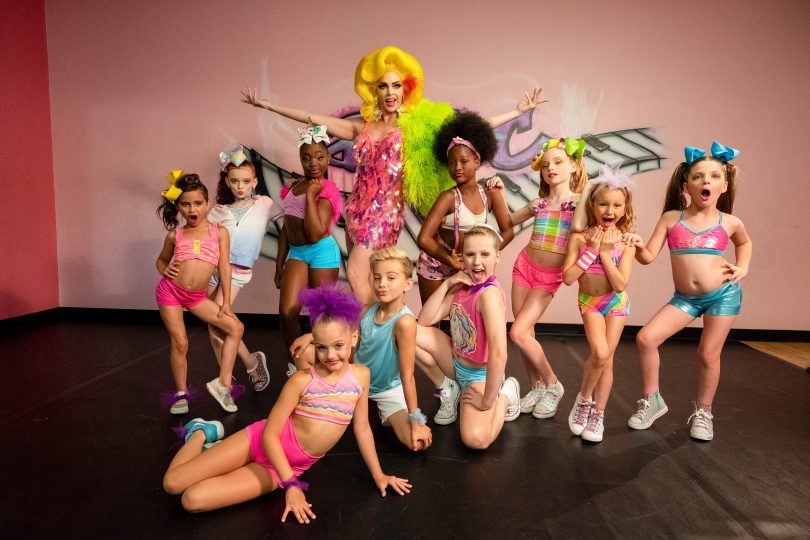
At the risk of enlarging the circle of offense-taking, parents who take their children to drag shows share with parents who put their children in beauty pageants a desire to place their kids in circumstances where the emphasis on hyper-sexualized displays are normalized and rewarded—with the potential for audience members attending these events to do so for purposes of sexual gratification. By characterizing these types of affairs as sexually exploitative, I have made people mad, especially those parents who have put their kids through them. I confess, I don’t know how to avoid the truth.
* * *
I want dwell for a bit on the opportunity these types of affairs afford those who see children as objects with which to achieve sexual gratification; these circumstances risk encounters with individuals whose motives may be untoward, and who are in any case projecting a sexualized and sexualizing persona.
There is a link between pedophilia, the clinical term for adult (mostly male) sexual attraction to children (the term is currently being recoded by The Party as “minor attracted persons,” or “MAPs”), and autopedophilia, a fetish (or kink) in which an adult is sexually aroused by imagining himself to be a child, which often involves dressing as a child and being treated as such by others, including children.
The later disorder is what psychiatrists call erotic-target identity inversion, or ETII. Autogynephilia, in which a male is sexually aroused by imagining himself to be a woman, which, as with autopedophilia, often involves dressing as the object of his sexual fantasy, is also a form of ETII. Pedophiles who suffer also additionally from autogynephilia may dress like little girls. Indeed, it is not uncommon for drag queens to adopt a princess-like appearance and tell the children around them that they are themselves a child. Perhaps the most famous case of this is Michael Jackson.
According to KHOU-11, based in Houston, a media spokesperson for a library there confirmed that one of the program’s drag queens, Tatiana Mala Niña (Tatiana “Bad Girl”), is Alberto Garza, a 32-year-old child sex offender. In 2008, Garza was convicted of assaulting an 8-year-old boy. He was sentenced to five years’ probation and community supervision. The Texas Sex Offender Registry says Garza is at “moderate” risk of reoffending. “In our review of our process and of this participant, we discovered that we failed to complete a background check as required by our own guidelines,” library officials said in a statement. “We deeply regret this oversight and the concern this may cause our customers.”
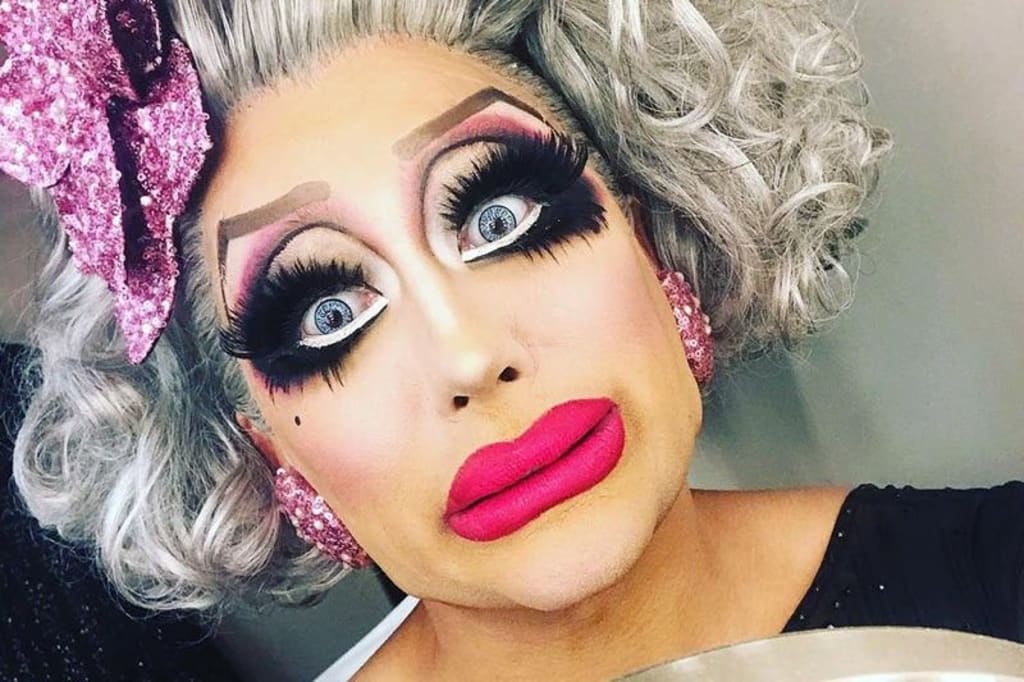
The clown-like aspect in many drag performances before children may also be a projection of this fetish (which perhaps explains why perceptive and sensitive children are often terrified by clowns—and why producers of horror fiction make bank with clowns). In other words, parents, in addition to taking their children to an event devised to disrupt the developing normative understandings of an immature human being, may also be taking their children to events where male performers are using their children to achieve sexual gratification.
Some children have never gotten over the trauma of being forced to be around clowns. Coulrophobia, the clinical term for adult fear of clowns, has its roots in childhood trauma. This occurs because the brain is evolved to detect danger—and the unusual is often dangerous.
There has been a lot of controversy over the use of the term “groomer” to characterize the behavior that occurs in these settings. In fact, using the word can get you banned on Twitter (perhaps not for long). As with extreme hostility to stories about how, in fact, most children (if allowed to) grow out of gender dysphoria, or the many and growing cases of detransitioners, describing all this as grooming provokes the zealotry that lies at the core of this (quasi)religious movement. But you’d be extraordinarily naive to not grasp the reality that, in many cases, this is in fact what is occurring. Think about it. Pedophiles like children. Pedophiles go where the children are. This fact has produced not a few Catholic Priests.
In their 2019 article, “The Grooming of Children for Sexual Abuse in Religious Settings,” published in the journal Aggression and Violent Behavior, Susan Reine and Stephen Kent “argue that unique aspects of religion facilitate institutional and interpersonal grooming in ways that often differ from forms of manipulation in secular settings.” They continue: “A number of uniquely religious characteristics facilitate this cultivation, which includes: theodicies of legitimation; power, patriarchy, obedience, protection, and reverence towards authority figures; victims’ fears about spiritual punishments; and scriptural uses to justify adult-child sex.”
If the reader thinks analogically, the parallels should become obvious. Gender ideology is form of religious thought and action. Listen to the language. Ideologues talk about truth of gender as “the way I feel inside,” a mystification. Nobody can see the way a person feels inside, just as nobody can see a person’s soul. But the soul in religion—the paradigm of the nonfalsifiable thing—is for the believer the real and eternal thing, just as gender is for the believer something that can be out of phase with what a person is actually, that is as ascertained by science. Religion has at its core a problem with reality.
To read some of my writings on the problem of quasi-religious thought and practice, see Awakening to the Problem of the Awokening: Unreasonableness and Quasi-religious Standards; Living at the Borderline—You are Free to Repeat After Me; A Judge Stands on His Head to Save Woke Progressive Indoctrination.
* * *
While I have no problem with adults performing drag (it’s a First Amendment matter and I am a hard core libertarian), I know others who do. However problematic one might find the exaggerated emphasis on gendered signifiers, especially those associated with commercial girl culture, an emphasis that lies at the heart of drag expression, adults have the freedom in an open society to dress how they wish and perform gender in whatever manner they choose.
I don’t mean to sound Butlerian by putting it this way; I do not believe gender is merely performative or transmutable. Rather, this is my libertarian response to those who disagree with me about the appropriate of drag as a general proposition. Moreover, I remind them, there are forms of drag that do not involve sexualization. Monty Python drag bits, especially in the Life if Brian are hysterical. Everybody agrees with me here (so far, at least, the joy eaters haven’t cancelled Monty Python). To be sure, some opposition to drag is coming from a prudish place. I get that. Prudishness is not my bag. I’m a sex-positive feminist.
We live in a society where parents have a lot of control over what materials and events to which their children may be subject. Sex-segregated summer camp, vacation bible school, beauty pageants—to name a few. At the same time, parents need to think about whether subjecting their children to sexualized performances and identities—and provide their children to men to use to achieve sexual gratification (is there a vetting process in all this)—is the best use of their child’s time, and consider carefully what deleterious effects these could potentially have on their children.
That said, nobody I know is trying to stop sexualized drag shows per se. The concern is with the presence of children at events with explicitly sexualized content. One might reasonably ask why a project that is trying to promote compassion and empathy for sexual minorities need involve provocative sexualized content. After all, there are other ways to build empathy for the various groups, including sexual minorities, towards which parents may feel sympathy or believe are marginal.
Again, parents remain still free to indoctrinate their children with their cultural and political commitments. Muslim parents still dress their female children in chadors in the United States. (I do think we should draw the line at circumcision, though—another of my opinions that has angered others. Apparently I’m a pro at triggering people with my criticisms of prevailing cultural practices.) Drag Queen Story Hour is one of a myriad of mass cultural phenomena in which parents have been caught up.
At the same time, these are not sacred affairs. There are no sacred affairs. The point of the meme I shared above is to cut through the soft sell to get what motivates some—and I emphasize some—of the participants. The meme takes off a bit of the polish. That’s a healthy thing in a free and open—and presumably rational—society. It speaks to a concern with ideology and ritual and the effects these have on children by asking us to consider the motives of those who are drawn to these situations. Not all priests are problematic, after all; but parents should none the less be leery of turning over their children to them. As a general rule, parents shouldn’t let virtue-seeking make them naive.
* * *
Drag Queen Story Hour is a paradigm of the way queer theory works to transgress societal boundaries in order to create spaces not just for those who problematize or reject traditional gender boxes (see Foucauldian Seductions: Busty Lemieux and the Hijab), which risks confusing children whose developing brains find difficult distinguishing the difference between fantasy and reality (that’s the point of early indoctrination—see Why It Harms the Liberty of Neither Teachers Nor Students to Restrict Ideology in the Classroom), but also creates a space for those who desire room to not merely indulge their sexual deviancy in front of children but also to normalize pedophilia and other forms of paraphilia, indeed to instill in children at a young age the notion that there is really no such thing as paraphilia-as-disorders, that these are just other ways of being, and all ways of being are acceptable except those that disagree with the queer standpoint.
This is not to suggest for a moment that homosexuality is sexual deviancy. Homosexuality is part of the natural history of our species, just as it is for thousand of other animal species. Moreover, the destigmatization of homosexuality and the abolition of legal discrimination and persecution of gays and lesbians has been among the greatest triumphs of the American Creed over the darkness of bigotry. My arguments have absolutely nothing to do with a desire for the heterosexualization of children. Most children will come to opposite-sex attraction naturally (this is necessary for the reproduction of the species). Those boys and girls who will grow up to be gay and lesbian will come to that naturally, as well.
(If you think about it, giving cross-sex hormones and surgically altering the bodies of same-sex attracted persons in order to turn them into the apparent of the opposite sex is an extreme form of heterosexualization of children. It is a form of conversion therapy. See Elite Hankerings for Obedience to learn how this works in Iran. This is also covered here: Foucauldian Seductions: Busty Lemieux and the Hijab.)
My argument concerns two problems. First, the sexualization of children. Ironically, the exaggerated emphasis on gendered and sexual signifiers, especially those associated with the culture industry, is powerfully heterosexualizing. It is wrong to confuse potentially gay and lesbian children about the gender identity based on the subject of romantic attraction.
Second, providing access to children for sexual deviants. Does this mean that all drag queens are sexual deviants? Of course not. I can tell you without even looking for numbers that the vast majority aren’t. But some are. I had somebody disagree with me on this in this fashion: “Yes, some priests are pedophiles. But does that mean we shouldn’t allow children to be around priests.” I think they were taken aback when I said, bluntly, “Yes, I think it does mean that.”
Nathan Robinson, for Current Affairs, writes, “Conservatives’ visceral dislike for any defiance of strict gender norms exposes the authoritarian core of right-wing politics.” The assumptions in this smear are that gender ideology seeks only the transgression of rigid gender norms and moreover that support for traditional gender norms is authoritarian.
Neither of these assumptions is correct. Gender ideologists argue for transgressing all the norms surrounding gender and sex, including age of consent laws. Gender ideology is an extremist belief system. The ideology also advocates medically altering children while suppressing news about the facts of the stability of feelings of gender incongruence (some of which is generated by the movement itself) and the regrets of those who have been put on hormones and undergone surgical procedures such as castration and mastectomy. Moreover, support for traditional gender norms is supported by anthropological observations that there has always been a sexual division of labor, that is, the species is sexually dimorphic, and that the vast majority of males and females identify as such.
Jo Bartosch, in her essay “Drag Queen Story Time is not okay,” ponders the purpose of DQST in Great Britain, and comes to a most obvious conclusion: “DQST claims to offer ‘queer role models’ to children. But despite the popularity of its events, it remains unclear how a man in a lurid frock will make kids with two mums feel supported, or how DQST serves to stop the bullying of kids who don’t conform. Britain is a remarkably tolerant country and many children will have a same-sex couple somewhere in their family; aunties Clare and Kate are likely to be better role models than adult entertainers with X-rated social-media feeds.”
However, Bartosch writes, “there is something more sinister to DQST. The male drag performers going into schools and libraries are routinely introduced to children as ‘she’. In this way, far from challenging stereotypes, DQST performances underscore the idea that womanhood is a gaudy, sexualised costume. Children are introduced to the use of preferred pronouns and the concept, popularised by queer theory, that ‘gender is a performance.’” Bortosch continues: “At a fundamental level, this creates a disjuncture between what the child knows to be true and what the child is compelled to say. In this way, DQST teaches compliance; it is the conceit of arrogant activists who seek to indoctrinate children, not educate them. That this is happening under the guise of ‘inclusivity’ and within libraries and schools is a bitter irony.”
Bartosch hits the nail on the head. This is not education. It’s indoctrination. However you feel about the agenda, a rational person opposes DQSH for this reason. (For an in-depth discussion of the problems of indoctrination, see my essay Why It Harms the Liberty of Neither Teachers Nor Students to Restrict Ideology in the Classroom.)
Yes, I know parents have the “right” in our society to make their kids believe as they do, but that doesn’t make it right. Children can neither consent to nor see through irrational teachings. A lot of adults can’t even see through the irrational character of their own beliefs. So my message is this: don’t put your kids through ideological programming. Don’t use children to advance agendas. Parents, leave your kids free to find themselves—not to find yourselves.
* * *
I want to end on a personal note. As a teenager in the 1970s, I caught glimpses of drag performers thanks to the generosity of bouncers working the entrances at clubs in the French Quarter. By the early 1980s, I was attending showings of Rocky Horror Picture Show in Coconut Grove with an army of gay men, who often went in drag.
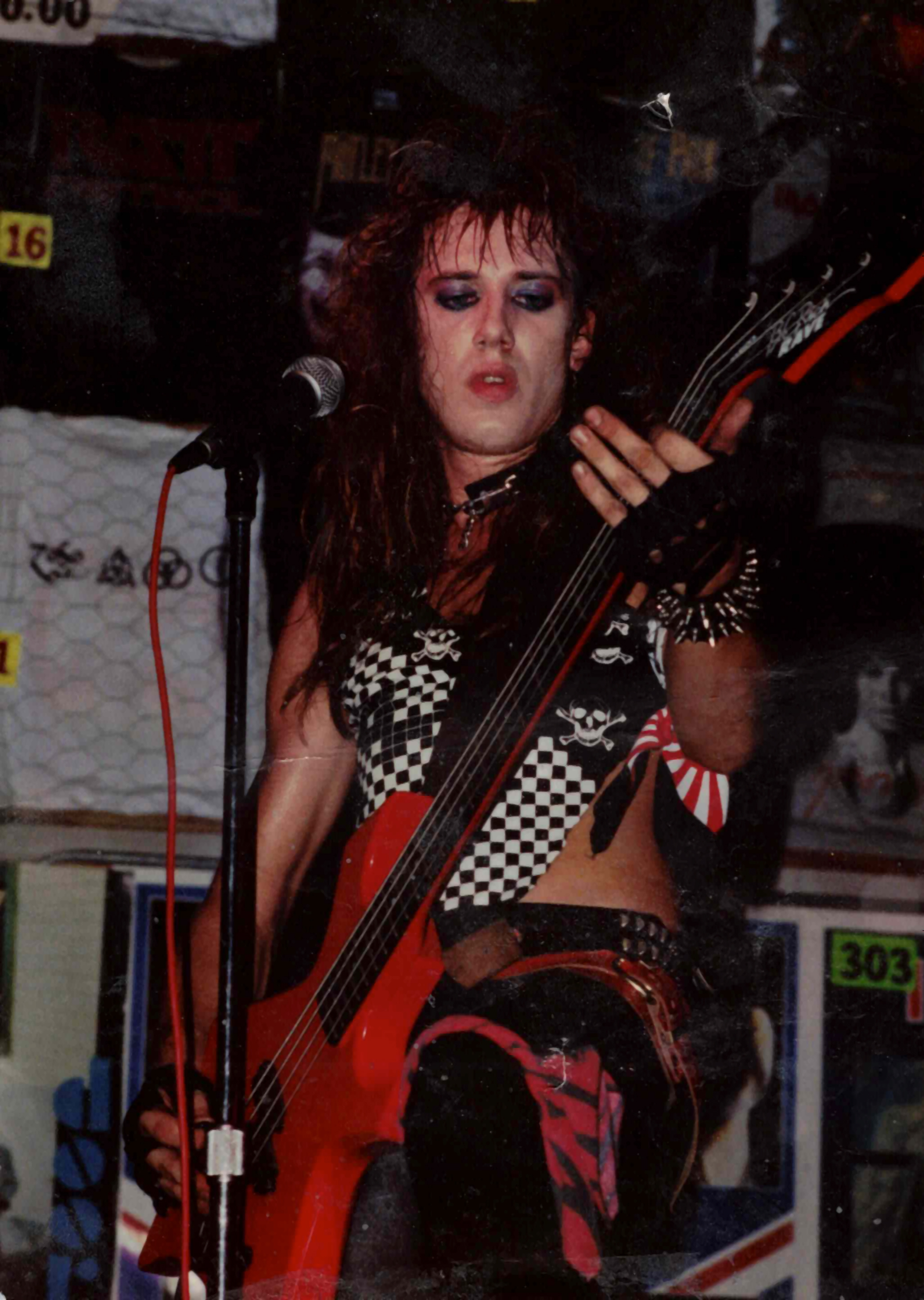
Some might suggest that my persona in South Florida’s heavy metal band Maddax involved drag, although not nearly to the degree that other bands in the United States over the second half of the 1980s took their dress, hair, and makeup.
I’m reticent to claim things I may not have earned. Decide for yourself. The point is that I know the history of drag, I get what it’s all about. I would ask those who accuse me of bigotry whether they fully understand drag themselves.

 freedom and reason