Another Oumou Kanoute? Another Anecdote for the Myth of Systemic Racism

Amanda Gorman, a Harvard graduate and the youngest inaugural poet in US history, claims she was racially profiled by a security guard who “tailed me on my walk home.” She claims the incident occurred Friday night, but she has neither identified the security guard nor the company for which he worked. “He demanded if I lived there because ‘you look suspicious,’” Gorman tweeted. “I showed my keys & buzzed myself into my building. He left, no apology. Gorman tweeted that this is “the reality of black girls.” “One day you’re called an icon,” she tweeted, “the next day, a threat.”

The novelty and relative insignificance of her contribution to western civilization, and the fleeting fame that comes with that, appear to be behind her story. I have seen this drill too many times to accept it without a lot of evidence (and even then, it sounds like an overreaction in the spirit of Oumou Kanoute at Smith College). Gorman tweeted: “In a sense he was right. I AM A THREAT: a threat to injustice, to inequality, to ignorance. Anyone who speaks the truth and walks with hope is an obvious and fatal danger to the powers that be. A threat and proud.” An ego this big needs attention. A spoken word treatment coming to a venue near you.

Amanda Gorman speaks at Joe Biden’s installation at the US Capitol on January 20, 2021.

CNN, always on the lookout for anecdotes to help them rationalize egging on BLM arson, looting, vandalism, and violence across several months in 2020, connected the alleged incident to the zeitgeist: “The encounter with the security guard Gorman describes is reminiscent of police violence and aggression against Black Americans, whose deaths have sparked national movements, including #BlackLivesMatter.” CNN continues: “Black men are approximately 2.5 times more likely to die at the hands of police over a lifetime as compared to White men, according to research by the National Academy of Sciences.”

As a criminologist, using statistics this way drives me up the wall. They like this NAS statistic because it is not an explanation. The fact of disparity does not indicate injustice. It could be that black men are approximately 2.5 times more likely to die at the hands of police over their lifetime as compared to White men because black men are 2.5 times more likely than white men to put themselves in situations were police officers are more likely to use deadly force to protect themselves or others. In fact, that is the reason. I have blogged extensively about this on Freedom and Reason. I understand that CNN does not read my blog. But they either don’t read or ignore the scientific studies that inform my blog. That is inexcusable.

The facts debunking establishment media claims (i.e. propaganda) keep coming. A new report, by J. Beck, a BJS statistician, Race and Ethnicity of Violent Crime Ofenders and Arrestees, 2018, based on data with which I am quite familiar as a criminologist, finds no racial disparities in crimes committed versus arrests made indicating systemic racism.

The study found that, based on data from the FBI’s Uniform Crime Reporting (UCR) Program, black people are overrepresented among persons arrested for nonfatal violent crimes (33%) and for serious nonfatal violent crimes (36%) relative to their representation in the US population (13%). In contrast, white people are underrepresented. White people account for 60 percent of US residents in the study (it’s actually between 67 and 73 percent), but 46 percent of all persons arrested for rape, robbery, aggravated assault, and other assault, and 39 percent of all arrestees for nonfatal violent crimes.

Beck compares these data to data from the National Crime Victimization Survey (NCVS) to determine how much offense and arrest differences by race and ethnicity may be attributed to differences in criminal involvement, Overrepresentation of blacks in found in all measures. Black people accounted for 29 percent of violent-crime offenders in the NCVS, 35 percent of violent-crime offenders in incidents reported to police (UCR), and 33 percent of all persons arrested for violent crimes.

Among the most serious incidents of violent crime—rape or sexual assault, robbery, and aggravated assault—there were no statistically significant differences by race between offenders identified in the NCVS and persons arrested per the UCR. In other words, white and black people are arrested proportionate to their involvement in serious nonfatal violent crime overall and in proportion to their involvement in serious nonfatal violent crime reported to police.

As I have confessed on this blog, some of this I should have known. Some of it now known in research that has emerged over the last few years. My political-ideological sympathies positioned me to believe the myth of systemic racism in the criminal justice system (and more generally in American society). I uncritically trusted arguments that reinforced that belief and pushed to the side studies that challenged it. It’s an error called confirmation bias. It was Heather Mac Donald’s 2016 The War on Cops that began turning me around. Then empirical studies starting emerging in which no researcher could find any evidence of bias in lethal civilian-police encounters. Could they be right? I took the studies apart. Yes, they are right. I revisited Wilbanks’ 1987 The Myth of the Racist Criminal Justice System (I had trusted Reiman’s critique of it) and found that Wilbanks was right. And he wasn’t the first one. And it’s not just lethal civilian-police encounters. It’s everything. American criminal justice is systemically not racist.

Here’s the reality of where we are: Black Lives Matter has no actual issue upon which to justify its existence as a protest movement. Its arguments are false. Even anecdotes it uses have been debunked. “Hands up” didn’t happen. Jacob Blake had a knife. Etcetera. Systemic racism is a mirage that dissipates upon closer examination. It is sustained by faith-belief, not be reason or evidence. It is reinforced by corporate media propaganda.

To be sure, woke lefties don’t think I am wrong about what I said back then. They think I’m wrong about what I am saying now. Instead of changing their views on the basis of fact and reason as I do, they say I have been radicalized, that I have fallen under the spell of rightwing ideology, that I have been “red-pilled” (as if that’s a bad thing). I would say that that’s their problem, but in today’s climate, it’s my problem, too. But I cannot knowing lie about it. To continue believing something that is not true is worse than accusations of disloyalty, of heresy, of apostasy.

Not a little bit worse. A lot worse. And not just because I value integrity. The fact is that black men are drastically overrepresented in serious crime compared to whites. The police, in doing their job, arrest more black men than white men relative to their population and even absolutely because black men commit more crime. Black men, only around six percent of the US population, are responsible for more than half of homicide and robbery and a third of aggravated assault and burglary. Cops don’t arrest more black men because they are racist. Sure, there are racist cops. There are racists in a lot of occupations. But law enforcement is not racist. America is not racist.

Inner city Baltimore

The question we need to ask ourselves, if we care about black people, what we need to explain: Why are black men overrepresented in serious crime? It’s not because of poverty. There are twice as many poor whites as there are poor blacks. The explanation is complex. Blaming law enforcement for doing their jobs won’t unravel that complexity. It more than a distraction. We cannot defund the police. We cannot depolice our communities. When we don’t adequately police our communities, we put our citizens at risk. Crime drives out business and jobs. Children cannot learn when they are not safe. Residents who can afford to leave—the very residents who help bring stability to these communities—leave for more orderly communities. This is bad for black people. Until order and peace are restored in these neighborhoods, these communities cannot develop and meet the needs of the people living there. But crime control is a crucial piece of investing in these communities.

The New Blasphemy—Why is it Such a Big Deal?

My lovely wife was born and raised in Sweden. Her family lives there still. I met her in her twenties when her English was just okay. She is outraged at a muppet mocking her culture and language. The Swedish Chef is culturally insensitive and offensive. Little Swedish children will feel belittled and stupid seeing this depiction of the dumb and incompetent Swede. It’s a stereotype. Thank goodness they have warning labels that confess to culturally insensitive characters.

Actually, my wife is not offended at all. She was raised in a time and a culture where children were taught to be resilient, not fragile. She thinks the Swedish Chef is funny—even though she doesn’t understand a word the muppet is saying. Her upbringing did not prepare to be offended by everything. She was raised to be resilient.

When publishers decided they weren’t going to publish cartoons of Muhammad so as not to offend Muslims, especially since Muslims were protesting, rioting, and even murdering cartoonists and editors over it, we were already far down the path that would find it ordinary to censor cartoons of Chinese people or remove from libraries classic books using period language.

We got a big heads up when they started labeling records and CDs. The PMRC. Content warnings. “Words,” Zappa’s voice echoes through my head. Maybe books would be better without them? Remember how goofy it still looked when conservatives freaked out over Ice T’s “Cop Killer”? (Why isn’t that song an anthem on the woke left?)

Imagine Cheech and Chong trying to make it in today’s fragile climate. “Up His Nose.” “Basketball Jones.” Or Don Rickles. How many years ago did they ruin Michael Richards? And Andrew “Dice” Clay? Remember the outrage on SNL? That was no Kaufmanesque bit. Those weren’t conservatives who did that. That wasn’t the rightwing.

Warning labels are a form of censorship that pretends to respect liberal values. “It’s not like you can’t see or hear it.” Right, but you have told me that I will probably regret it, or that is (partly) false, or it will damage my children, so maybe I should pass. Why would somebody put out something that could offend me or mislead me? Thank you for warning me about this. Come to think of it, why do we allow this sort of stuff at all? Don’t publish it. Disinvite him. We need a Ministry of Truth. Where is the commissar? Doubleplusgood!

I’m a child, too. Decide for me. I don’t know how to obtain a ID card. (Thank goodness I need one of those for the bank or the library.) Can’t you just mail my vote for me?

Political correctness is to liberal secularism what blasphemy is to religion. Call-out culture and cancel culture come with rules indicating words only the chosen people can say, as well as a selective aniconism. Equity is not about equality but about power. Otherwise, why would anybody care about speech rules somebody else thinks ought to be imposed?

We might call this the First Church of Woke. It is designed to make the congregation so frail that even words become crushing. The gatekeepers use this as a method of thought control—that is, political control. That the flock wants it, thinks it’s normal and necessary, is the point of indoctrination. Those who control you always need you to believe that their interests are your interests.

Gramsci called this ideological hegemony. Despite being thrown into prison by Mussolini, he understood that power doesn’t usual work by coercion alone. There are more effective forms of cancelling than incarceration. Hegemony happens also by engineering consent, by normalizing power over you. Controlling the means of communication is the prerequisite. That’s what Ed Bernays understood. It’s what corporate power, the administrative state, and the culture industry understand.

We know it today as as “inclusion” and other bellyfeel. Perhaps you have attended a struggle session or two where you were conditioned to accept it. If you didn’t leave feeling welcomed to the cognitive and behavioral training apparatus perhaps, then you should revisit your experience. It’s why tolerance has become such a bad word. Tolerance has become, in the eyes of Marcuse’s children, repressive.

Looking for racism

All that enlightenment work opening up society, emancipating thought and expression from the censorship by corporate bodies and powerful elites from the constraints of speech codes that shackle opinion—that work is now just an overreaction in the eyes of the new class of moral entrepreneurs, so many of whom are young and zealous. They don’t realize that all the other freedoms flow from the freedom of speech and expression.

Beware those who downplay the significance of ideological hegemony. The culture of inclusivity is stealthily stealing our liberties. Subscribe. Share. We’re going to have to fight if we want to remain free.

Recover the Courage of Your Liberal Convictions—Before It’s Too Late

From The New York Times story “Inside a Battle Over Race, Class and Power at Smith College,” by Michael Powell:

“Ms. Kanoute was determined to have eaten in a deserted dorm that had been closed for the summer; the janitor had been encouraged to notify security if he saw unauthorized people there. The officer, like all campus police, was unarmed.” Did they “offer any public apology or amends to the workers whose lives were gravely disrupted by the student’s accusation”? Nope. 

Instead, Smith College officials emphasized “reconciliation and healing” after the incident. “In the months to come they announced a raft of anti-bias training for all staff, a revamped and more sensitive campus police force and the creation of dormitories—as demanded by Ms. Kanoute and her ACLU lawyer—set aside for Black students and other students of color.”

Ms. Oumou Kanoute

In other words, in a case where there was no racism that spazzed in a decidedly racist manner. Why did they believe Kanoute? Because they believe the myth that black people are persecuted simply for being black. Who is pushing this myth? Who benefits from making the safest places in America (our college campuses) out to be sites of intersecting oppressions?

Bret Stephens follows up Powell’s article in a New York Times opinion piece “Smith College and the Failing Liberal Bargain.”

I confess, not being a conservative, my leftwing sympathies caused me to miss for many years the threat to liberal freedoms (many of which are also part of modern conservatism) that woke leftism presented. I will brag a bit and point out that I saw it sooner than many (which is likely the reason why I lost dozens of Facebook friends over the last year). Most of the people I know on the left either still don’t see it or openly dismiss it as an overreaction by those who actually still profess devotion to liberal values—you know, equal treatment and freedom of association, assembly, conscience, and speech.

In his opinion piece, Bret Stephens characterizes Michael Powell’s account of the “eating while black” hoax at Smith College this way: “It’s a striking—and increasingly familiar—tale of the battle the Woke left is now waging on well-meaning liberals who don’t seem to understand the illiberal nature of what they are facing.” Illiberal is precisely the correct term; this is an authoritarian countermovement against the Enlightenment.

I do not use the word “hoax” lightly. As Stephens points out, Kanoute’s claims turned out to be “comprehensively false.” I have curated on this blog several hoaxes of this sort. 

As a consequence of the hoax, a janitor and a cafeteria worker were smeared as racists for calling campus security. Neither of them called campus security. No matter. “#BelieveHer.” (So what if they had?) Powell reported that cafeteria and grounds workers “found themselves being asked by consultants hired by Smith about their childhood and family assumptions about race, which many viewed as psychologically intrusive.” 

This was part of “anti-bias training,” otherwise known as a struggle session (see Chinese Cultural Revolution 1966-1976 aka the “Lost Decade”). I have been making this comparison for months now. Finally mainstream media is allowing the connection to be made between woke progressivism and Maoist-era communist ideology. Stephens makes the reference. Push out his content!

Stephens rightly asks, what Heather Mac Donald asked a while ago in her excellent The Diversity Delusion, why do these moral panics over hoaxes and microaggression happen at the most progressive universities, at Smith, Yale, Northwestern, Bryn Mawr, and Dalton? Because these are points at which the ideology of social justice is promulgated. The students there are conditioned to see as real myths that flows from decades of critical race theory and its variants combined with an enabling and practicable ideology: “restorative justice.” 

Coddled students are primed to take up the myths because they provide attention-getting opportunities (see Jonathan Haidt). Lots of virtue signaling, ego stroking, (more) special treatment, and lawsuits. They are amplified because the accounts advance the discourse that America—a multiracial and secular nation that abolished the slave trade, abolished chattel slavery, early among nations with universal suffrage, abolished racial segregation, banned discrimination against nonwhites, instituted affirmative action, pumped trillions into impoverished neighborhoods, universalized marriage—is a oppressive racist, sexist, homophobic, Islamophobic, etc. nightmare. 

Stephens is no shit when he writes that “the Woke left has the liberal left’s number. It’s called guilt.” (See Shelby Steele.) We have come to a point, as Stephens points out, that absolution is not enough for this crowd. They want reparations. They want stuff. More than that, they want to renegotiate the liberal ideals that underpin all the freedoms and advancements that I noted a moment ago. And the liberal left has allowed a handful of elites guilt them into giving away the most precious thing of all: liberty. 

Stephens: “In place of former notions of fairness toward individuals regardless of race, the Woke left has new ideas of ‘restorative justice’ for racial groups. In place of traditional commitments to free speech, it has new proscriptions on hate speech. In place of the liberal left’s past devotion to facts, it demands new respect for feelings. All of this has left many of the traditional gatekeepers of liberal institutions uncertain, timid and, in many cases, quietly outraged. This is not the deal they thought they struck. But it’s the deal they’re going to get until they recover the courage of their liberal convictions.”

Folks have asked me, “Andy, what happened to you?” My answer is simply this (thanks Stephens for giving me the phrase): I recovered the courage of my liberal convictions. You need to do the same. Before it is too late. Tragically, it may already be.

Boring Speech Frenzies Collinson, But What About the Brooks Brothers Riot?

CNN’s article, “Trump unleashes new threat to American democracy,” sounds like an article from a high school newspaper (no offense to high schoolers): “Donald Trump has no remorse about the deadly violence he incited with his lies about a stolen election in his uprising against the US Congress. […] In his first public remarks since leaving the White House, he…dangerously lashed out at Supreme Court justices for failing to intervene to throw him the election he clearly lost to President Joe Biden…. …Trump fumed in an authoritarian speech at the Conservative Political Action Conference, in Orlando, Florida, referring to false fraud claims thrown out by multiple judges.”

Note that he refers to the president as the “ex-president,” when the norm has always been to refer to a president, vice-president, or senator by the honorific title after they leave office. We don’t talk about “ex-president Roosevelt” or “ex-president Reagan” or even “ex-president Nixon.”

Is this the level at which Stephen Collinson actually thinks or is this propaganda aimed at an audience CNN presumes to have the intellectual capacity of the average eight-year old? I listened to Trump’s speech. It was a policy speech and terribly boring. Trump is always boring when he gives this type of speech. His speech on January speech, which detailed voting irregularities, was also boring. Trump is no Reagan. He doesn’t fly at 30,000 feet. He’s Castro-lite. He so drones on. And where is the historical context in Collinson’s “analysis”?

Look at that first sentence. “Donald Trump has no remorse about the deadly violence he incited with his his lies about a stolen election in his uprising.” Why would a president have remorse over something he did not do? He did not incite violence. The second impeachment was as bogus as the first one. The Democrats are using impeachment as a political weapon, not as a legitimate constitutional process. Trump told the crowd to peacefully and patriotic walk to the Capitol and let their voices be heard. Since there is a lot of evidence of election irregularities and fraud, the president wasn’t lying. And to call the actions of gangs of professional disrupters the president’s uprising is absurd. The president wanted the electoral process to go back to the states where there were problems. Millions of Americans wanted that, too. That’s not an uprising. That’s what democracy looks like. It’s what speech and assembly look like.

The next sentences have Collinson claiming the president “dangerously lashed out” at the Supreme Court, that he wanted the Supreme Court to “throw him the election.”

Let’s consult history. Recall that on December 8, 2000, the Florida Supreme Court ordered a statewide recount of all undervotes. The machines had missed more than 60 thousand ballots. That’s a lot of votes. The Republican candidate, George W. Bush, was only winning by fewer than 600 votes. The Bush campaign requested that the Court intervene and stay the state court’s decision. The campaign did not want those votes counted. They knew Bush would lose. The next day, the Court granted the stay.

On what grounds did the Court stay the state court’s decision? Conservative justice Scalia cited “irreparable harm” to the presidency if the recount proceeded. The recounts would cast “a needless and unjustified cloud” over the legitimacy of Bush’s presidency. In the dissent, liberal justice Stevens wrote that “counting every legally cast vote cannot constitute irreparable harm.” (That’s what Trump was seeking, by the way, namely counting every legally cast ballot.) There were arguments and, in the end, Bush prevailed on constitutional grounds: hand counting votes violated equal protection since the other votes had been machine counted. In other words, the Supreme Court threw the election to the loser, Bush, who then proceeded to fill his administration with war hawks and launch disastrous wars in Afghanistan and Iraq. Yet in 2020 and 2021, courts did not intervene in circumstances clearly violative of equal protection.

Of course the Democratic candidate in 2000, vice-president Al Gore wanted the Supreme Court to rule in his favor, to allow the counting of every lawful vote to continue, to determine who actually won Florida (analysis shows that Gore did, in fact, win the election). Did Gore want the Court to “throw him the election”? Presumably CNN would think so, as it appeared to all the world that, given the way they covered the election, the establishment media wanted Bush to be president.

So Bush can beseech the Supreme Court to intervene in an election but Trump cannot? What if the Court had ruled against Bush in 2000-01? What if the votes were counted and Gore turned out to be the winner (only Florida stood in his way to presidency). Would this have cast a “a needless and unjustified cloud” over “the legitimacy of the presidency”? Would this have constituted “a threat to democracy”? If Bush were displeased with that outcome, would this make him “dangerous”? After all, Bush tried to thwart democracy by trying to the counting of lawful votes. Indeed, he succeeded.

Wait, there’s more. Remember the Brooks Brothers riot? A lot of you won’t because the establishment media didn’t toss it into their echo chamber. I remember it. It was caught on video (of course, as we saw in 2020-21, you do not see things caught on video if it does not fit with the official narrative).

2000 Florida recount: How the 'Brooks Brothers Riot' killed the Bush-Gore  recount in Miami - The Washington Post

On November 22, 2000, at a meeting of election canvassers in Miami-Dade County, Florida, a mob, with paid Republican operatives participating, orchestrated a riot with the goal of shutting down the recount. It was none other than John Sweeney (R-NY), who gave the signal to stat the riot. “Shut it down,” he instructed an aide. And so they did. The violence persuaded local officials to shut down the recount. The Washington Post wondered in 2018, “Eighteen years after a chaotic recount, debate still rages over whether the antics went too far.” Did they go too far? Let’s review:

It was clear that the media was in the tank for Bush in 2000-01, just as it was clear that the media was all in for Biden in 2020-21. Gore and Trump were insufficiently establishment. The power elite did not trust them. Gore wanted to secure entitlements by putting the budget surplus in a “lockbox,” a term the media relentless mocked him over. Wall Street wanted that money. The defense industry wanted that money. (Bush gave it to them and was guaranteed reelection, Ohio notwithstanding.) Trump was too critical of China, globalism, and military intervention. He had to go. He was a “threat to democracy.”

CNN played a chief role in engineering elections of establishment figures. To be sure, 2016 caught them by surprise. But the establishment media was ready for 2000. Now they have to undermine the legitimacy of Trump in case he or some other populist runs for president, hence the constant repetition of “lies” and “danger.” They are working to similarly delegitimize other populists seeking office. Understand that CNN is not down with American first and working class politics. CNN, and the rest of the establishment media, is the propaganda arm of global corporatist power.

Merrick Garland, Institutional Racism, and Implicit Bias

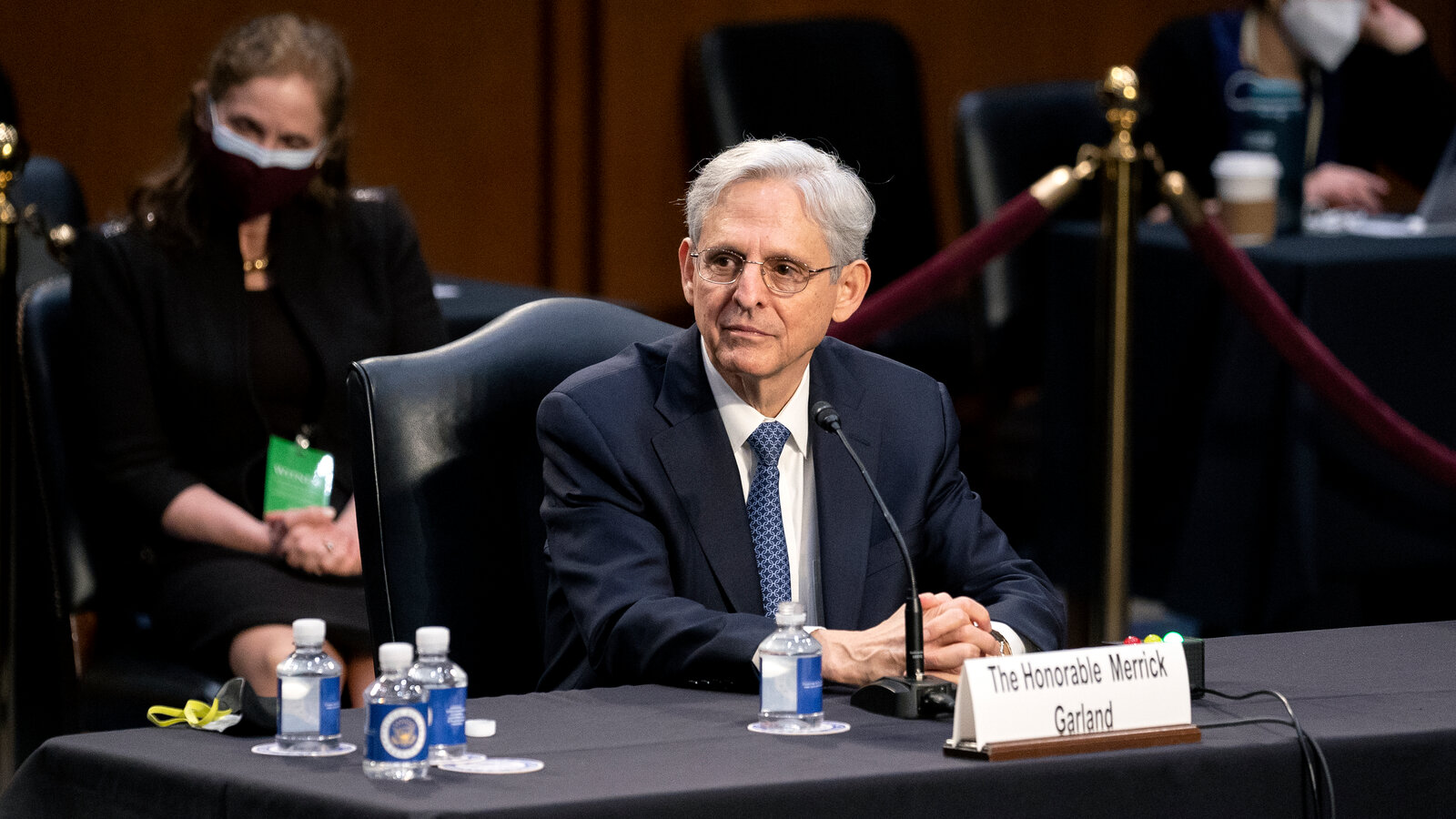
“I think it is plain to me that there is discrimination and widespread disparate treatment of communities of color and other ethnic minorities in this country,” Merrick Garland said during his confirmation hearing at the Senate, after being asked by Sen. John Kennedy, a Louisiana Republican, to define systemic racism. “They have a disproportionately lower employment, disproportionately lower home ownership rates, disproportionately lower ability to accumulate wealth,” he explained.

Judge Merrick Garland as his Senate confirmation hearing

Garland is making an ideological argument, not an empirical one. Disparate racial outcomes is not systemic racism. This is a fallacious conclusion and it is very troubling to see a man who will be attorney general of the United States answer the question this way. Systemic racism is a feature of a system with laws and policies in place that systematically oppress members of one group while systemically privileging members of another group on the basis of racial designation. This system was dismantled when I was only two years ago, a very long time ago.

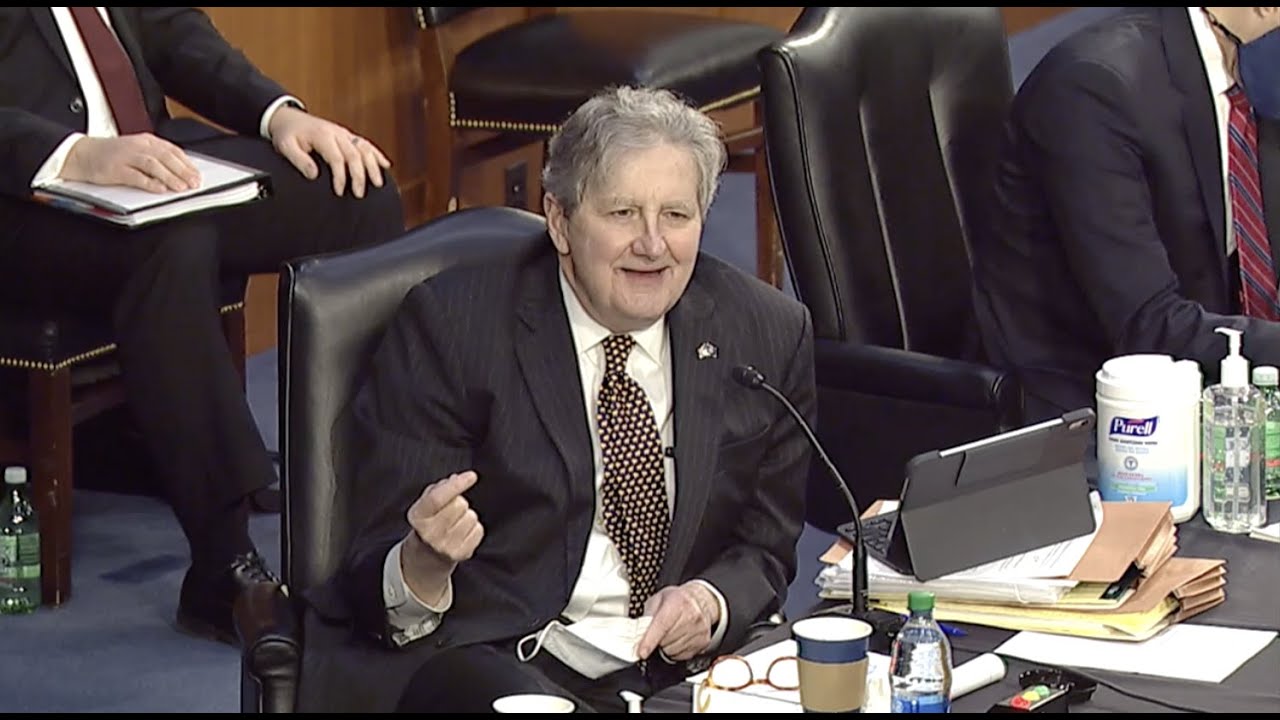
Senator Kennedy of Louisiana questions Biden nominee Garland

Kennedy later asked, “If you say an institution is systemically racist, how do you know what you know? Do you measure it by disparate impact, controlling for other factors? Or do you just look at the numbers and say the system must be racist?”

This is the right question to ask (Kennedy is a smart fellow) and it exposed the core flaw in the systemic racism argument. Those claiming that systemic racism is an enduring problem of United States society are falsely conflating racism with demographic differences between races. Demographic differences described in racial terms is not racism.

Racism is a discredited theory or practice and relations based on and justified by that theory positing that the human population can be meaningfully divided into groups that can in turn be hierarchically arranged and differentiated by degrees and quality of cognitive ability, behavioral proclivity, and moral integrity. Systemic racism would be the character of a system where racism was manifest in formal system, indicating law and policy, in which members of one or more groups suffer systematic oppression while members of one or more other groups enjoy systematic privileges on the basis on racial categories. This is different from but often informs race prejudice and discrimination, only the latter an actionable offense.

After acknowledging that he answered what he thought was a different question, Garland answered Kennedy’s follow up this way: “The authority the Justice Department has to investigate institutions is to look for patterns or practices of unconstitutional conduct and if we find a pattern or practice of unconstitutional conduct, I would describe that as institutional racism within that institution.”

This is heartening. This is a different understanding of racism than that held by the antiracists. Antiracists (critical race theory types) define racism on the face of it as demographic differences between racial groups. In doing so, by making the statistical fact of group differences a matter of racism by definition, they skirt the necessary work of demonstrating causal explanation for these differences, differences explicable by reference to other causes—which is why they don’t want to put themselves in the position of having to show that the evidence does not support their claims.

However, Garland should clarify that what he is talking about is institutional or organizational discrimination on the basis of race. He is right that it is is one of the obligations of the Justice Department to investigate institutions or organizations to look for patterns or practices of unconstitutional conduct. Crucially, patterns are not enough, as these may have many causes. Instead, patterns alert officials to look for and identify practices that may run afoul of the 1964 Civil Rights Act. One cannot assume racism is the cause of the patterns detected. Racism has to be positively demonstrated empirically. If racism can be demonstrated in practices, then the Justice Department has a case.

Kennedy also asked Garland to explain from his standpoint the difference between people who are racist, on the one hand, and institutional racism, on the other, as well as the “concept of implicit bias.”

“Implicit bias just means that every human being has biases. That’s part of what it means to be a human being,” Garland said. “And the point of examining our implicit biases is to bring our conscious mind up to our unconscious mind and to know when we’re behaving in a stereotyped way. Everybody has stereotypes. It’s not possible to go through life without working through stereotypes. And implicit biases are the ones that we don’t recognize our behavior.” Garland then said, “That doesn’t make you racist, no.” He’s right. It doesn’t.

The media is keen on contrasting Garland from William Barr, who correctly resisted the demand that government acknowledge the existence of systemic racism in law enforcement in the United States. He admitted, as anybody should, that there is racism in the United States, but repeatedly refused to agree with others that the police as an institution practice systemically racism. The paradigm of systemic racism in law enforcement is racial disparities in lethal civilian-officer encounters. Extensive empirical research over several decades fails to demonstrate that racism explains those disparities. If facts matter, the systematic racism argument is over.

Derrick Johnson, the president of the NAACP, criticized Kennedy for asking the question, describing it as a “waste of time.” He suggested that Kennedy’s questions were racially motivated. “I found it unfortunate that he would focus on something not relevant to whether or not that Judge Garland is competent, and qualified to serve as attorney general, honor the Constitution and represent the people of the United States. And for him to take the time to use their line of questioning was a waste of time. We need to move forward as a nation.” He added, “Senator Kennedy knows all too well the paralyzing effects of systemic racism has had on the south, in Louisiana and on this country.”

The question was not only relevant but, in the context of what has been occurring over the last several years, with Black Lives Matter and the specter of reparations, also obligatory for any politician who takes his charge seriously. How Garland answered this question bears directly on whether he is competent and qualified to serve as the attorney general of the United States. The name of the body he will lead contains the word “justice” in it. He and that body are obliged to honor the Constitution and represent the people of the United States.

Lived Experience and the Politics of Emotional Blackmail

Sometimes the desire to manufacture perceptions fails spectacularly.

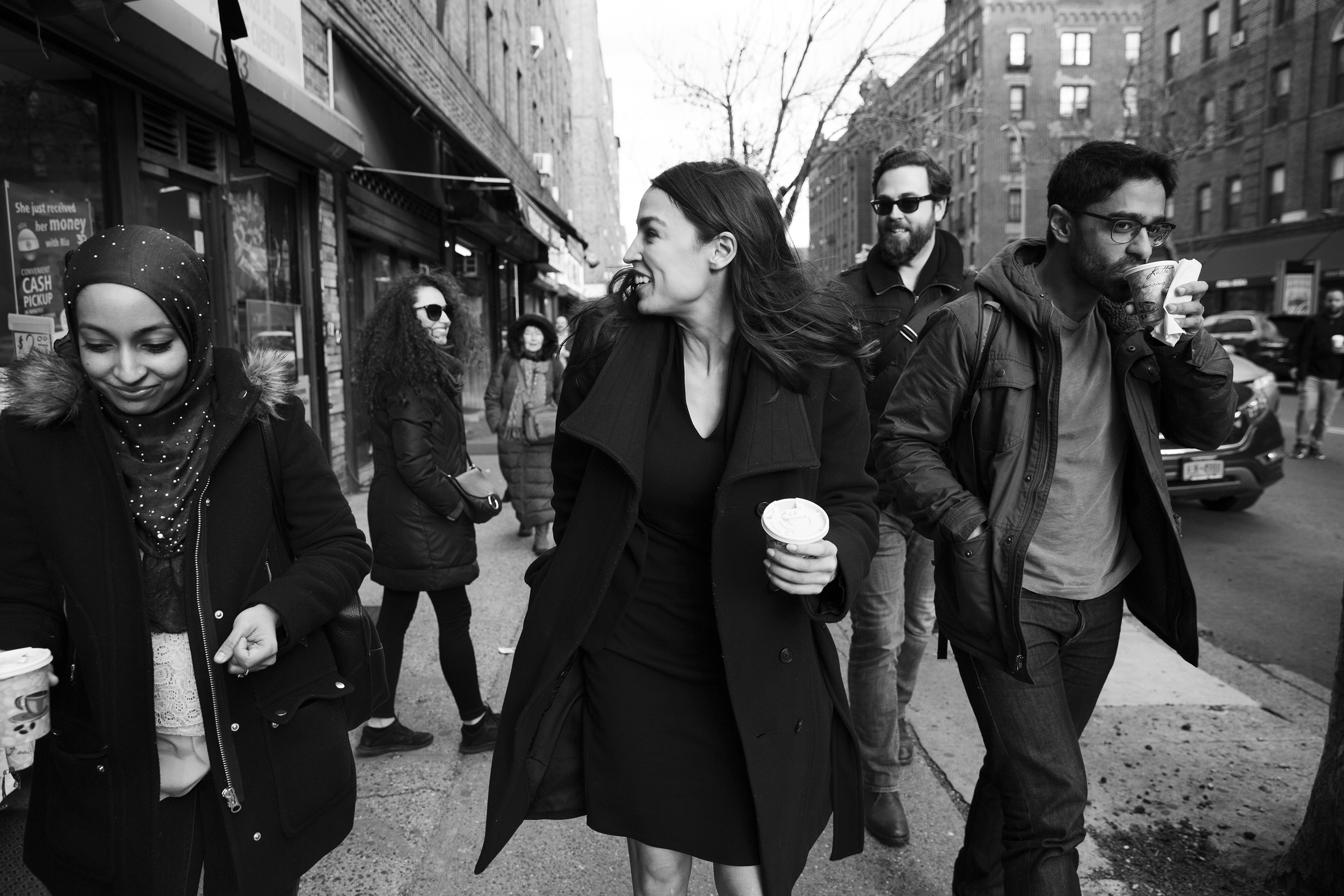
Consider the antics of—sorry, I can’t resist—Alexandria Ocasio-Smollett. Of course, I mean Alexandria Ocasio-Cortez, aka Sandy Ocasio, the congresswoman from New York’s 14th district.

In a February 1 90-minute Instagram Live video that Washington Post columnist Robin Givhan tells her readers “revealed our collective trauma,” the congresswoman describes her experience on 1/6 when, to paraphrase Ilhan Omar’s remark about the 9/11 attack on New York City, some people something.

(The date 1/6, when protestors entered the Capitol building, is the new 9/11. Pelosi is seeking to establish a 9/11-style commission to study the matter. The label “domestic terrorist” to describe the protestors is being widely socialized by the establishment media and Democratic Party figures.)

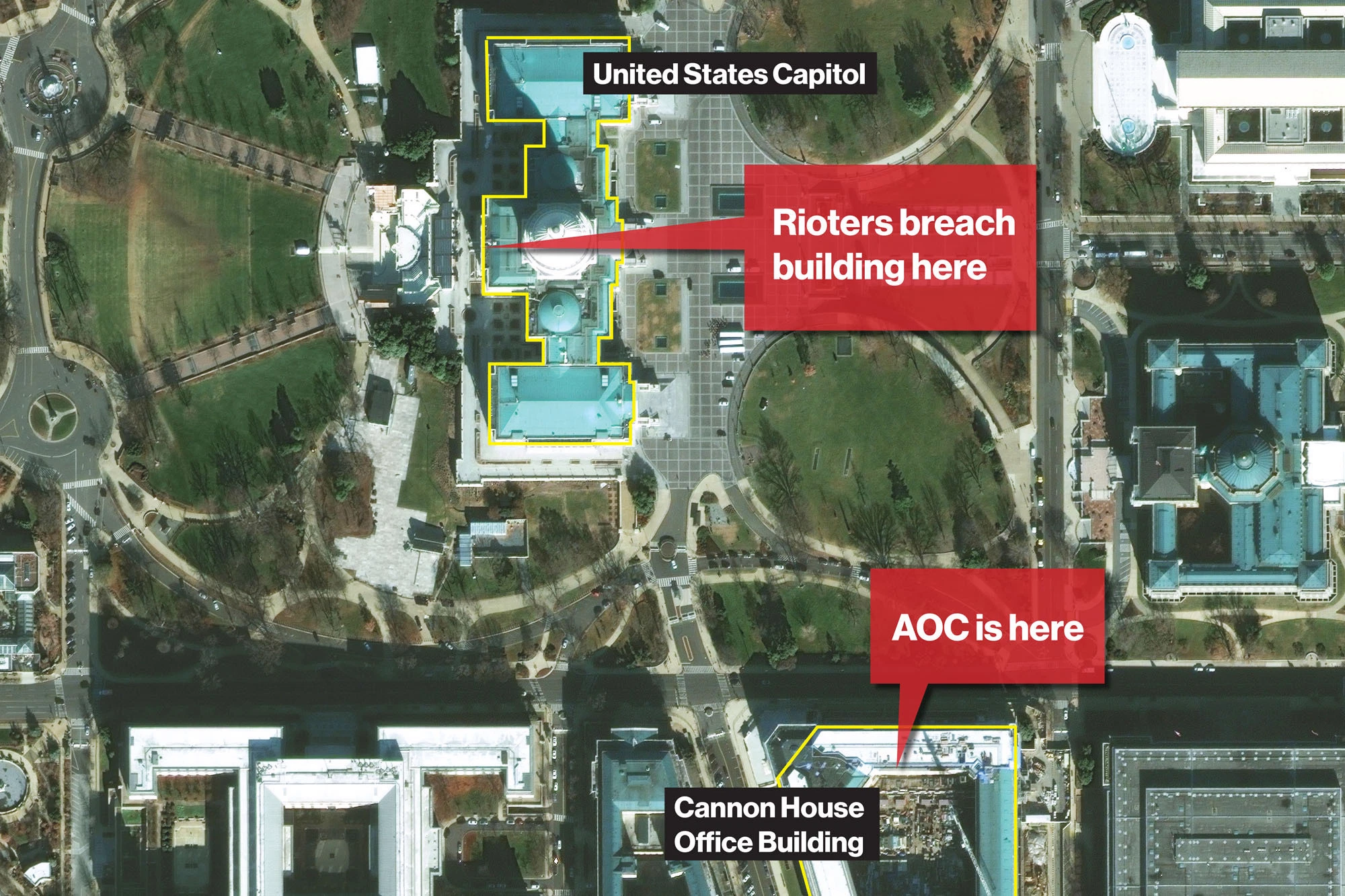
Ocasio-Cortez was not in the Capitol building at the time. She was in the Cannon House Office Building some ways away. There were no rioters at the Cannon. Nonetheless, the congresswoman tells a story about how an unknown man—a Capitol Police officer—knocked on her door and entered her office.

Of course, the congresswoman could have thought that rioters were in the Cannon building. It was a confusing situation. But she could only have thought this for a short while, as she was quickly apprised of the situation by that same Capitol Police officer, and nearly a month passed between that day and the day of her notorious livestream.

Ocasio-Cortez’s story is more than a telling from the standpoint of what a subject believed at one point in time. The personal is the political. The case makes me wonder: is there such a thing as lying in a post-truth world? Does personal standpoint stamp narratives with truth?

After all, in identity politics and its attendant postmodernist epistemology (or anti-epistemology, as it were), trauma and subjectivity, the “truth of experience,” is what matters, not objective facts. According to the ethics of the “lived experience,” we’re supposed to “believe her.” It’s what the placards instruct. Acknowledge the trauma of the “survivor.” Who are we to say Ocasio’s truth isn’t true? It’s her truth, not ours.

But if this is true, then why believe anybody? Can there be any basis for asserting a shared reality? What is the method by which a common existence could be known?

Not that there’s no sanity on the far left side of things. Postcolonialist feminist philosopher Sandra Harding says an objective reality can be known. She writes, in an essay I assign my research methods students, “Beyond the Neutrality Ideal,” “No critics of racism, imperialism, male supremacy, or the class system think that the evidence and arguments they present leave their claims valid only ‘from their perspective.’”

But Ocasio doesn’t operate on Harding’s level where regret can be expressed (see “Newton’s rape manual”). Ocasio is an organic manifestation of a popular post-truth condition.

All Ocasio had to do was tell the truth about her experience on January 6, the truth known to her as she live-streamed her account. In doing so she did not need to hide her feelings.

She could have said that she did not know at the time, especially since she was in a separate building, what was happening and appreciated very much the Capitol Police officer stopping by to check on her. She could then have mentioned that she enjoyed a cup of coffee with a colleague down the hall immediately afterwards. She could have said, just so there was no misunderstanding, that there were no rioters outside her door, which she would have emphasized was a door in a separate building, that she was safe, but of course empathized with what others in the Capitol went through, an ordeal investigators are sorting out.

Instead, timed for an impeachment based on absence and ignorance of facts (the Senate trial began on a week later and resulted in another acquittal of Donald Trump), Ocasio made the Capitol riot all about her, presenting herself as a victim to her throng of adoring fans (and others among her 12.5 million followers on Twitter and nearly 9 million on Instagram)—all for maximum propaganda effect.

When it was obvious that she could not be an actual victim of 1/6, she “contextualized” matters by telling the audience that she was at one point a victim. She then used this claim to berate those who dared to criticize her.

“The reason I say this and the reason I’m getting emotional in this moment is because these folks who tell us to move on, that it’s not a big deal, that we should forget what’s happened, or even telling us to apologize,” she said with wet eyes. “These are the same tactics of abusers. And, um, I’m a survivor of sexual assault.”

These are the tactics of an emotional blackmailer. It’s not a technique just anyone can use.

Nobody doubts the congresswoman’s savvy as a demagogue. In the livestream, she unfolded a story she knew was false, brazenly changing it as she told it, seemingly hearing the lies as she told them in her baby voice, while leaving the desired impression, namely that her fear, manufactured or real, is the truth of her experience.

There were men yelling and pounding on her door trying to kill her. Okay, one man. Okay, a Capitol police officer checking on her safety. But she didn’t like the way he looked at her (“ACAB”!). And Ted Cruz is trying to have her killed. She actually tweeted that—unfiltered by Jack Dorsey. (Remember Jon Lovitz’s SNL character the Pathological Liar? That.)

Now she is beseeching her Twitter army to demand the platform take down the tweets of those who exposed her Smollett.

As Jack Posobiec of One America News noted on Steve Bannon’s War Room, everybody remembers that one girl in high school who makes everything about her. The drama queen. The actress. Like Jussie Smollett.

Ocasio-Cortez is Hillary Clinton “landing under sniper fire” in Bosnia. Maybe Hillary was telling the truth. After all, it was her experience (#Ibelieveher). The trauma tells the truth.

These aren’t big mouths in high school. They’re big time influencers in the national arena.

I was wise to Ocasio-Cortez a long time ago. This is from my blog June 2019 and there’s more where that came from. Her followers exist in a religious-like space and state and she is their idol, their totem, their cult leader.

I am told that the congresswoman’s past stint as a bartender makes a claim on working class bona fides. But her brand of woke leftism does not represent working people. It can’t. Woke politics is the ideology of relatively affluent members of the academic and professional-managerial strata and their offspring.

Ocasio-Cortez is a creation of the Justice Democrats, a group organized by the once-populist Democratic presidential contender Bernie Sander insiders Saikat Chakrabarti and Jack Exley, Cenk Uyger of The Young Turks, and Kyle Kulinski of Secular Talk, key social influencers for enlisting young Americans in the progressive establishment, who self-identify as “democratic socialists.” (This was crowd that Jimmy Dore had to get away from because they are so subservient to state corporate power. I have watched Dore’s awakening in real time. He still has sleepies in his eyes, but he’s drinking the coffee. He now calls Ocasio-Cortez a coward, a gaslight, and a liar.)

Self-described democratic socialists are the faux-left. You may know them by their jargon. If you hear “crypto” (as in “cryptofascist”) to refer to a critic, or if there is expressed a fetish for some DSA sanctioned drama queen, or if some old sellout in mittens at Biden’s inauguration is the bomb and memed incessantly or, alternatively, if his grumpy chic is an expression of white privilege, then you know you have a faux-leftist in your midst. A piss-poor understanding of science and deep contempt for such core liberal values as equality of opportunity and free speech are also dead giveaways.

This crowd thinks puffed up antifascist rhetoric is a proper substitute for working class politics. They believe they constitute the left end of what they perceive to be a popular front against a rising tide of rightwing reaction that mostly exists in their imagination. At best, they’re wannabes.

The Noisy and Destructive Children of Herbert Marcuse

Matt Taibbi has an interesting piece on Substack concerning Herbert Marcuse and the notion of “repressive tolerance.” Tabbi’s piece can be found here: Marcuse-Anon: Cult of the Pseudo-Intellectual. I wrote about Marcuse on the pages of Project Censored back in the summer of 2018 in defending a free and open Internet (the canceling of Alex Jones was the impetus of my essay). I want to follow up on my thoughts in light of the consternation on the left over Taibbi’s essay. I will not engage Tabbi’s essay, as you can read it for yourself, and Tabbi can defend himself well enough. I will be setting forth my own interpretation of Marcuse’s arguments.

Image result for Herbert Marcuse hi def
Herbert Marcuse, guru of the New Left

Reading Marcuse crucially depends on how one defines tolerance. Understanding the piece also depends on understanding Marcuse’s deep roots in a particular reading for Freud, an analysis of which I will leave to one side except to note that Marcuse reads Freud as believing that our animal instincts require repression, “progressive and liberating repression,” and the necessity of alienation as “the constant and essential element of identity,” not in the way Marx saw it as a condition and state to overcome (see also Eros and Civilization). Remember, in “The Future of an Illusion,” Freud argues that, while he did not believe in God, God would never go way because the ordinary man needs a father, and that religion serves the Hobbesean function of keeping man in line. 

There was a missing paragraph in Marcuse’s original essay that tells us what Marcuse understands tolerance to mean, and it is what I understand the word to mean, i.e., to allow ideas to be expressed without constraint and punishment. I tolerate Nazis marching down the street with their placards and chants. I tolerate conservatives gathering in Washington DC to rally against the 2020 election. I tolerate student groups bringing to campus speakers expressing ideas with which I disagree. But, for woke progressives, allowing these is repressive tolerance to be countered by progressive repression because such repression is liberating. To be sure, this depends on your politics and identity, but, for Marcuse, this is a settled matter. This is where critical theory and postmodernism meet—the rejection of the grand narrative that liberalism has value (with Marcuse finessing it by distinguishing “authentic liberalism,” where, for postmodernists, the authentic is “lived experience”). 

The missing paragraph: “Withdrawal of tolerance from regressive movements before they can become active; intolerance even toward thought, opinion, and word, and finally, intolerance in the opposite direction, that is, toward the self-styled conservatives, to the political Right—these anti-democratic notions respond to the actual development of the democratic society which has destroyed the basis for universal tolerance. [This is the spirit of antifascism and antiracism, deeply illiberal standpoints.] The conditions under which tolerance can again become a liberating and humanizing force have still to be created. When tolerance mainly serves the protection and preservation of a repressive society, when it serves to neutralize opposition and to render men immune against other and better forms of life, then tolerance has been perverted. And when this perversion starts in the mind of the individual, in his consciousness, his needs, when heteronomous interests occupy him before he can experience his servitude, then the efforts to counteract his dehumanization must begin at the place of entrance, there where the false consciousness takes form (or rather: is systematically formed)—it must begin with stopping the words and images which feed this consciousness.” Stopping the words and images which feed this consciousness.” 

How shall we do this without controlling the means of communication and the production of knowledge? One is Gramsci’s long march through the institutions, which has only provided the content corporate power adapts to fracture the working class (see this summer). The other is using the corporate machinery to cancel and censor. That these developments are interconnected should not escape anyone. 

But Marcuse wants to make sure the reader fully understands him. For if you were wondering whether he is really advocating censorship, he wants to make sure you know that, indeed, he is, and, worse, he is advocating canceling voices before they have a chance to be censored, or precensorship, a type of popular prior restraint (deplatforming, etc.): “To be sure, this is censorship, even precensorship, but openly directed against the more or less hidden censorship that permeates the free media.” What is this “hidden censorship”? That’s the whole point of the essay: the power of the capitalist class to control discourse (see One Dimensional Man). The progressive left must censor and precensor: “Where the false consciousness has become prevalent in national and popular behavior, it translates itself almost immediately into practice: the safe distance between ideology and reality, repressive thought and repressive action, between the word of destruction and the deed of destruction is dangerously shortened.” Speech is violence. Silence is violence. It all follows. 

Shall we spend more than a second pondering why this paragraph went missing? Perhaps to ponder why those paragraphs that remain are not obvious enough?

The woke left today takes the central point of Herbert Marcuse’s essay to its logical conclusion, justifying street level violence to silence speech and assembly they believe retards the progress of “social justice,” seeing liberal values as right-wing tools, as well as leveraging the private corporate machinery to censor speech. Canceling, censoring, deplatforming, disrupting, doxing, labeling, mobbing, struggle sessions—the neo-Maoists (and that’s what they are) regard these interventions as politically necessary and ethically reasonable on the grounds that certain forms of speech are harmful and oppressive and, furthermore, that there is no right to racist and offensive speech.

Extending Marcuse’s argument, they flip the goals of “freeing language from the tyranny of the Orwellian syntax and logic [and] developing the concepts that comprehend reality” into Newspeak and postmodernist anti-epistemology themselves. This is why the woke left is so censorious, illiberal, and authoritarian. This is consequence of connecting power and knowledge in the realm of culture rather that organized class struggle and the generation of class consciousness, which the practices of identiarianism and progressive repression. This is the core flaw of Frankfurt School-style neo-Marxism. Moving the rhetoric from the means of production to the means of consumption (which Baudrillard later picks up) and the alleged pathology of Western civilization (the Culture Industry and the evils of the liberal bourgeois order) sets neo-Marxism up for its integration with postmodernism, postcolonialism, and thirdworldism. This is why the New Left and woke progressivism parallel Maoist cultural revolution. Listen to the arguments of his disciple Angela Davis.

Marcuse is hardly subtle when understood in the corpus of his thought, which incorporates not only elements of Freudian thought but also Heideggerian notions. In the essay, Marcuse argues for “liberating tolerance” from the liberal values of equality and neutrality, condemning “what is proclaimed and practiced as tolerance” of a diversity of opinion as a framework “serving the cause of oppression.” He proposes a “discriminating tolerance,” which “would include the withdrawal of toleration of speech and assembly from groups and movement which promote,” for example, “discriminating on the grounds of race and religion.” To be sure, we should not allow discrimination those grounds, but to stop speech and assembly? If this were the case, then we would have to withdraw tolerance for those seeking reparations for slavery, the bill now being dropped in Congress to study the matter. As much as this bill must be opposed and defeated, to censor those calling for it would be profoundly authoritarian.

We see Marcuse’s inspiration in practice today on college campuses where students organize to disrupt speakers and events. Marcuse argues for a dialectic that differentiates truth from falsehood (of course. we have that already, it’s enshrined in liberal, secular values of an open society, which Karl Marx himself defended), then suppresses the latter for the sake of emancipation from the administered, effectively totalitarian world of monopoly capitalism. To be sure, I share this goal, but this is an argument over means. And the means we are arguing for have promoted not liberation from oppression, but the socialization of the goals of woke leftists who desire an administered, effectively totalitarian world of monopoly capitalism.

The only tolerable tolerance for Marcuse is one that works towards liberation as Marcuse understands it, freedom from repression as he sees it, and that work should exclude or restrict repressive speech. He sees liberalism as tolerance “extended to policies, conditions, and modes of behavior which should not be tolerated because they are impeding, if not destroying, the chances of creating an existence without fear and misery.” He is arguing that only “in a society where real equality has been achieved, can the freedom (of opinion, of assembly, of speech) becomes an instrument for absolving servitude.” 

“As long as these conditions do not prevail,” he writes, “the conditions of tolerance are ‘loaded’: they are determined and defined by the institutionalized inequality (which is certainly compatible with constitutional equality), i.e., by the class structure of society.” His use of the word “compatible” parenthetically, in the corpus of his work, means that the liberal principles of equality before the law and equality of opportunity are used to further and legitimize capitalist exploitation. “In such a society, tolerance is de facto limited on the dual ground of legalized violence or suppression (police, armed forces, guards of all sorts) and of the privileged position held by the predominant interests and their ‘connections’.” Here he is calling for violence ad suppression by those who stand outside the legal and privileged order of things. Why should state and corporate authority be the only powers that can repress people? They represent regressive repression. The left represents progressive repression. 

Take a look at what Marcuse himself said reflecting on his original essay (his 1968 postscript): “I suggested in ‘Repressive Tolerance’ the practice of discriminating tolerance in an inverse direction, as a means of shifting the balance between Right and Left by restraining the liberty of the Right, thus counteracting the pervasive inequality of freedom (unequal opportunity of access to the means of democratic persuasion) and strengthening the oppressed against the oppressed. Tolerance would be restricted with respect to movements of a demonstrably aggressive or destructive character (destructive of the prospects for peace, justice, and freedom for all). Such discrimination would also be applied to movements opposing the extension of social legislation to the poor, weak, disabled. As against the virulent denunciations that such a policy would do away with the sacred liberalistic principle of equality for ‘the other side’, I maintain that there are issues where either there is no ‘other side’ in any more than a formalistic sense, or where ‘the other side’ is demonstrably ‘regressive’ and impedes possible improvement of the human condition. To tolerate propaganda for inhumanity vitiates the goals not only of liberalism but of every progressive political philosophy.” Then there is this more than suggestive line: “If the choice were between genuine democracy and dictatorship, democracy would certainly be preferable. But democracy does not prevail.”

He closes with: “Part of this struggle is the fight against an ideology of tolerance which, in reality, favors and fortifies the conservation of the status quo of inequality and discrimination. For this struggle, I proposed the practice of discriminating tolerance. To be sure, this practice already presupposes the radical goal which it seeks to achieve. I committed this petitio principii in order to combat the pernicious ideology that tolerance is already institutionalized in this society. The tolerance which is the life element, the token of a free society, will never be the gift of the powers that be; it can, under the prevailing conditions of tyranny by the majority, only be won in the sustained effort of radical minorities, willing to break this tyranny and to work for the emergence of a free and sovereign majority—minorities intolerant, militantly intolerant and disobedient to the rules of behavior which tolerate destruction and suppression.” Antifa, Black Lives Matter, cancel culture. These are Marcuse’s children.

Where Are We on this COVID-19 Deal?

There are today 27.7 million confirmed COVID-19 cases. The vast majority of these cases were/are asymptomatic or exhibit/ed mild symptoms. For a conservative estimate of the actual number of cases multiply 27.7 million by a factor of 10 (I pointed this out back in March and my conservative estimate has been held up by science). Since most cases are asymptomatic or mild, excusing the OCD crowd who gets tested for the same reason they open envelops to make sure they put the letters inside (thankfully a minority), most infected people don’t get tested. A factor of 10 means that 277 million Americans have been infected with SARS-CoV-2. That’s 83.9% of the US population, a percentage that greatly exceeds herd immunity (although move-the-goalposts Fauci may eventually articulate a threshold exceeding 100).

This explains why the number of cases is falling like a rock. On January 9 there were nearly 300 thousand new cases. Yesterday fewer than 100 thousand. The number is roughly where we were the day the day of the Biden miracle.

The deception involves more than falsely crediting the vaccine with saving us (the revised history you soon will see). When they tell you that the vaccine results in infections without significant symptoms, remember that the SARS-CoV-2 virus itself results in infections without significant symptoms. Moreover, they aren’t performing antibody tests on the millions being vaccinated. They don’t know if those who are being vaccinated have already been inoculated by the virus itself. If those who already had the virus don’t get COVID-19 symptoms, is that because of the vaccine? Or is it because more than 80 percent of the population has already been inoculated naturally? The answer to that question is pretty obvious.

There’s more. The case fatality rate (CFR) is up to 1.75 deaths per 100 (it was down around 16.5 per 100). As the number of cases plummets, expect that number to go up (relativity but also because death spikes lag case spikes). But, again, for a conservative estimate, enter a factor of 10. The infection fatality rate is probably around 0.175. In other words, the virus is survived by nearly 99.9% of persons who contract it. But this deceptive, too, since the median age of those who die from the virus is well over 80 years of age and/or those who have comorbidities, such a obesity.

It is a fact that it is extremely rare for healthy people and children rarely die from the virus. So why were children thrown out of school, their parents out of work, small businesses bankrupted, and everybody forced to wear masks? Why are the places where young people congregate—daycares, schools (they didn’t all close), grocery stores, and so on—not major sites of disease and death? Because they get the virus, bring it home to their parents, and nobody gets sick. They get inoculated. Without vaccines. The way it has worked since time immemorial.

Moreover, in the face of those (intentionally) terrifying numbers, there is still great confusion over the different between dying FROM the virus versus dying WITH the virus. If a person dies from a heart attack with a rhinovirus, a cold virus for those who don’t know what that is, the death is not recorded as a rhinovirus death. Lots of people for decades have died with colds. I doubt very few of the death certificates are stated with “rhinovirus.” (Are there any?) If, on the other hand, a person dies from a heart attack with a coronavirus, also a cold virus (most of us have had this family of viruses before), the death is recorded as a coronavirus death.

That death count they show you approaching 500,000? Scary but deceptive. According to the CDC, in only around 6% of coronavirus-associated deaths was the virus the only cause. And we aren’t talking about insignificant conditions and diseases. What about deaths above normal? Right. What about all those people who couldn’t get to a hospital for other disease detection and treatment? The drug overdoses? The suicides? We’ll be sorting all this out for a long time.

Now, connect the dots. A person 83 years old with stage four cancer, immune system shot by chemotherapy, contracts the virus and dies. That person’s odds of surviving the year were remote *without* the virus. In another year, influenza may have been the tipping point. It may have been this year, but they aren’t testing for influenza, which explains why there are so few cases of influenza this year, a finding that cannot be explained by social isolation and masks since these practices did not stop coronavirus from infecting more than 80 percent of the US population. It’s not like the influenza family and the coronavirus family made a pact and influenza took the year off. Only two years ago influenza killed some 80,000 people. And influenza is much more lethal across the life span, not just the elderly and infirm (note: healthy elderly people rarely die from coronavirus).

The scientists know all this. They aren’t stupid. All the information is public. You can check out everything I said. I’m not wrong. I just have some skills as a scientists and no investment in moral panic or a crisis going to waste.

A true skeptic wonders what has really been going on over the last year. One way of figuring out things like this, since smoking guns are so rarely recovered, is to ask oneself what was accomplished that those in power wanted to accomplish. Oh my God. Mission accomplished. Motive, means, intent, and effect. Not much left to infer, really.

All this is punctuated by how convenient the BLM uprising proved to be. How the coronavirus also made a pact with Antifa and BLM not to interfere with their protests. Now I am being silly. The rioters were mostly healthy, young people. Bandits don’t wear masks for their health. Well, there’s something. Thanks, guys, for the herd immunity.

Whiteness in Music Theory. Yeah, It’s a Thing

“Whiteness in music theory.” Yeah, that’s a thing. Everything must be racialized in the error …er… era of critical race theory. If it is white, condemn it and excoriate anybody who digs it or defends it. White is bad. Is blackness in music theory a thing? We hear about “black music.” It this to be exalted and its producers celebrated? What if it sucks?

“[R]ace is an electric wire in American society [you think?] and a traditional defense of untrammeled speech on campus competes with a newer view that speech itself can constitute violence.” The idea that speech can constitute violence is an obvious confusion of things. Speech is the expression of thoughts and feelings by producing sounds with your vocal cords and mouth parts. When not using violence as a metaphor, such as “this argument does violence to the very concept of free speech,” an example of violence is punching somebody in the face. That may convey meaning, but it is not speech. Maybe if one yells really loudly it will hurt someone’s ears. I don’t think we allow that, do we? (We shouldn’t.) At the same time, silence is violence.

“‘I’m educated in the tradition that says the best response to bad speech is more speech,’ said Professor Edward Klorman of McGill University. ‘But sometimes the traditional idea of free speech comes into conflict with safety and inclusivity.’” If what somebody says makes you feel unsafe, there is an easy solution to the problem: stop listening to the person. Want to feel included? Tolerate the speech of those with whom you disagree. There is something to say for working on yourself if you are so triggered by people expressing thoughts and feelings you don’t like.

“Did [Schenker’s] theoretical brilliance counter the weight of disreputable rages?” Does it fucking matter? As for Schenker himself, Professor Ewell argues that his racism informed his music theories: “As with the inequality of races, Schenker believed in the inequality of tones.” (I hope these weren’t the blue notes.) How do you counter this? Eric Wen describes Schenker’s music as “colorblind.” Unless you suffer from chromesthesia, isn’t that always the case?

How about we reject the utter stupidity of all this altogether? I suppose then we wouldn’t be very inclusive would we?

What We Do in Criminology

One of the two areas of expertise in my degree (sociology) is criminology. That is the main expertise I bring to bear on my teaching at the university where I am tenured. As you might imagine, quite a few psychology majors enroll in criminology. When it comes to producing a term paper, I often find myself having to explain the differences between criminal psychology, especially neuropsychology (brain science), and sociology.

I have a degree in psychology (bachelors) and have studied criminal psychology. Questions about brains and personality disorders are fascinating ones. My mother is a clinical psychologist and we have terrific conversations, but I am not leaning on her to make any claim to expertise! I would never say that biology and genetics aren’t relevant in some way. They just aren’t the questions that criminologists generally pursue—unless we are being critical of them while circumscribing our field of inquiry.

Criminology is a subfield of sociology, and sociology is a science, but it is not biology (nor is biology physics, and so on). The concepts of sociology are abstractions derived from qualitatively different domain of emergent reality than that of terrain of brain science (except the sociological production of knowledge about brain science, of course). While an argument can be made that psychology is closer to biology because they both potentially concern the nervous system, for sociologists, biology takes the practitioner far afield of his expertise with respect to evaluating student work. Put another way, although I am a Darwinian and knowledgeable about biology and physical anthropology (this was my minor), and write about the subjects on my blog, I am most qualified to evaluate student work and review work by my colleagues in the field of sociology. Criminology is properly a disciplinary-based course; in this regard, I stay in my lane.

That certainly narrows the range of topics students can write about in criminology, which I explain to them when we begin the proposal process for the term paper. One of the confusions that happens at that point is, given that the self is a fascinating subject (after all, it is persons who commit crime), why would I be cutting off topics concerning persons. This question assumes that the self or the person is only or mainly a biological phenomenon. That assumption is wrong.

Self is in fact largely a sociological phenomenon. However much our biology influences us (and surely it does), we are also products of socialization. We know from experience that children who are ill-socialized, or who do not have the same advantages as other children, suffer difficulties across the life-course. We aren’t born with a language. We acquire one. We aren’t born with a religion. We acquire one. And so forth and so on.

I ask this question of my students who raise concerns over the appearance that I am dismissing biological and genetic factors in explaining human behavior: I am sure you would agree that the 15-point difference between black and white IQ is due to social factors and not biological ones. We may hedge and say mostly social factors. We may even say that social factors play some role. My point is still made. They do play a role. Or consider the fact that black men are more than six times more likely to murder than white men. The answer to that question surely must lie in sociology and not biology, no? Maybe it’s culture. Maybe economics. Maybe neighborhood and family structure. Likely all these and more. Is it because there are biological races with different cognitive capacities and criminal tendencies? Western society has been down that road before. It does not end well. It is also not supported by any evidence I am aware of.

I hope they see the problem. But in case they don’t, I have a bonus example. Whereas a brain tumor may (partly) explain why Charles Whitman stabbed to death his mother and then climbed to the top of the clock tower at the University of Texas and shot to death 14 people and wounded another 31, it gets us nowhere near explaining why the rate of murder in the United States is so much higher than it is in other advanced industrialized democracies. Most murderers don’t have brain tumors. Or brain lesions. Or personality disorders. Most criminals are biologically the same and you and I.

As sociologists, the core of criminologists do is explain social facts. We study aggregates and patterns. We also study people. When we study people, the gold standard is within-subject change across the life-course in light of a myriad of variables. Labor force attachment. Income and occupation. Educational attainment. Neighborhood conditions. Martial status. Substance use. Law abidingness. Trauma. Perhaps some of the variables we will look at involve the nervous system and personality disorders. But most of the variables will concern social structures, forces, relations, interactions, and experiences. Yet, even those variables concerning the attributes of attitudes, feelings, and opinions are viewed in the light of the social context. We will even avoid chalking up unexplained variance (our error terms) to “human nature.”

So, one may very well study the self as emergent from and in the context of sociologically interesting processes, as do the labeling theorists and social learning theorists we study in criminology. While a criminologist may touch on biological/genetic factors here and there, the main focus is on sociological factors—class, culture, politics, racism, sexism, etc. These are social and historical questions. We are qualified to value student papers working from these bases.

I understand why people are interested in questions perhaps better addressed in the field of criminal psychology. I find those interesting questions, too. The depraved serial killer with an irresistible impulse to remove his victims’ eyes and replace them with dolls’ eyes is indeed titillating. In the hands of a good director, this might result in a very scary horror film. “Stop me before I kill again!” True crime stories have a long record of success. It’s just not what we do in criminology.