Karl Marx and Friedrich Engels conceived the materialist conception of history, or, more simply, historical materialism, in the mid-nineteenth century as a response to the confusion of idealist philosophy and as a critique of liberal political economy. They revised and refined the theory throughout their lives.
Karl Marx and Friedrich Engels
Keeping to that critical spirit, Marxist historians, philosophers, revolutionaries, and scientists elaborated the theory in the decades that followed. The theory remains a major intellectual and political force in many, if not most, contemporary societies, and continues to undergo revision and elaboration.
In light of this history, one could argue that there is not one but multiple Marxist theories. Nonetheless, there are elementary assumptions and concepts running through the various schools and permutations that differentiate Marxism from other critical theoretical standpoints and, more broadly, the conflict perspective.
The application of Marxist theory to crime and deviance studies is likewise manifold; yet here, too, there is an intellectual core that shapes theoretical and political work in similar ways.
This essay sketches the foundation of Marxist theory and, in broad strokes, surveys the crime and deviance literature employing this approach, in particular what often goes under the label “radical” or “critical” criminology.
From the standpoint of historical materialism, a human being is understood as a thing that is realized through social action, principally acts embedded in and surrounding the production of material life. Human essence lies at the intersection of the totality of social relations in which individuals emerge as social beings. Dialectically, individuals collectively objectivate society through social action and, in turn, realize their humanity in the process. However, in segmented societies, especially those marked by social class, individuals become alienated from their essential activities, the objects they bring into existence (their labor product), and from others and themselves.
For Marxists, the fundamental problem in history to explain and overcome is the fact that the majority has lost control over the act of creating the world and the world it created, a condition that denies its “species-being,” that is, the power of self-activity and self-actualization. This problem focuses both Marxist theory and political practice. Indeed, the political demand this approach entails is inseparable from the theory that explains it, which Marx envisioned in his youth as an epistemological position transcending the “is-ought” dichotomy that limits positivist thinking and liberal politics, both related expressions of bourgeois, or capitalist, idealism.
The solution to the problem of alienation, Marxists contend, is the achievement of substantive freedom for all member of society, which requires popular control over society’s productive forces, a state of affairs requiring—and justifying—the revolutionary transformation of the existing conditions. Once in power, the proletariat, or working class, is positioned to collectively shape the direction of history for the benefit of the population.
Thus, socialist revolution lays the foundation for a more just social order and a more complete human being. Crucially, this standpoint conceptualizes freedom not in liberal terms of limited political democracy, which is necessarily constrained by the capitalist imperative to accumulate property and usurp wealth, what Erich Fromm calls “negative liberty,” but in the radical terms of economic democracy, or socialism—with communism, a stateless and classless social order of self-actualizing individuals, envisioned as the final goal.
The concrete character of work, the objects on which work is performed, and the instruments produced by and used in that work constitute the labor process that moves history forward. Objects of labor may be things found in nature or things already worked up by prior labor activity. Some of these objects become instruments of labor, such as tools and machines that concentrate a worker’s activity on an object. The objects and instruments make up the means of production. Taken together, objects, instruments, and human labor power comprise the forces of production, constituting the practical and technological basis of a given social formation.
Underpinning this conceptualization of production is the labor theory of value, which is a foundational concept in both classical liberal political economy and the Marxist critique of this intellectual system. Marx incorporates into his theory of capitalist production the distinction between, on the one hand, use value, which is value imputed from biological needs and historically-conditioned wants, and, on the other hand, exchange value, which represent the quantum of labor contained in a commodity (i.e. the amount of labor required to produce the useful object).
Marx demonstrates in Capital, Volume I, that human labor is the sole source of exchange value. This is one of the major contributions to science. But, for Marx, it is also politically significant. It follows from his discovery that, since workers produce that value, they are naturally entitled to that value. Moreover, since the labor process in necessarily a collective one, that entitlement is social in character. Thus in demonstrating the validity of the labor theory of value, Marx not only makes a major contribution to the field of political economy, but also identifies the material underpinning of the struggle for social justice.
The question of ownership and control over the labor process raises the matter of the character of the social relations in which the production forces embed. Marxists define the social relations of production primarily in terms of property relations and the authority that attaches to them. Social class is paramount, defined as an individual’s relationship to the means of production, a position that she shares with other individuals bound by the same or similar relations.
Taken together, the forces and the social relations of production comprise the mode of production, what Georg Hegel calls “civil society.” In Marx’s popular base-superstructure metaphor, civil society is often referred to as the foundation, or “base” of society. Contradictions within the base, which exist in many forms, including class antagonisms, are theorized to drive the engine of social transformation. Upon the base arises a “superstructure,” or political society, comprised of state, law, and ideology, which function to protect the prevailing property relations either by force, if need be, or, more efficiently, through ideas that legitimize the prevailing relations by embodying notions of right and wrong, good and bad.
Political power and ideas are theorized to root in the material control of the forces of production, expressed by Marx and Engels in the famous dictum: “The ideas of the ruling classare in everyepoch the ruling ideas, i.e. the class which is the ruling material force of society, is at the same time its ruling intellectual force.” The character of the superstructure ultimately reflects, albeit not always in an immediately discernable way, the interests of the dominant economic class. Ultimately, the conditions under which people produce their material life stamp an entire society with a particular class consciousness.
Marxists conceptualize history as series of revolutionary transformations in modes of production, classified as stages, which include primitive communism, ancient society, feudalism, and capitalism. Under primitive communism, typified by gatherer-and-hunter societies, there are no social classes. The forces of production are collectively controlled and the community shared the social product based on need. With the appearance of large-scale agricultural production, occurring roughly five to seven thousand years ago, and with it the generation of substantial social surplus, it becomes possible for some families to live without working. Over time, the means of production are divorced from the laboring masses and concentrated in the hands of a nonproductive class, which forces the majority into subservience. The families freed from labor become a ruling class who, served by functionaries (managers, intellectuals), steer segmentally organized modes of production to their favor. This state of affairs is characteristic of all social formations up to the present, each successive stage of development in segmentation leading to greater inequality between those who produce the social surplus and those who appropriate it.
To illustrate how contradictions internal to production modes fuel the transformational moments that impel history through its stages, consider that periodic crises of overproduction, or of realization, which take the form of commercial calamities growing progressively worse over time, mark the capitalist mode of production. The contradiction exists by virtue of the fact that capitalist firms strive to maximize surplus value by rationalizing production through automation, bureaucratic organization, and mechanization, as well as through wage suppression, which in turn displaces, impoverishes, and marginalizes workers. The immiseration of workers in turn undercuts the opportunity for capitalists to realize surplus as profit in the market.
Thus what constitutes rational behavior at the level of the firm becomes irrational at the level of the system. The bourgeoisie, or capitalist class, strives to overcome the irrationality in various ways: the destruction of productive forces through war, the conquest of new markets through imperialism, the exploitation of old markets, state intervention in the economy, and promotion of finance capital. Thus overcoming crises explains the evolution of capitalism. However, while adaptation may temporarily lift the economy from a slump, it sets the stage for deeper crises in the future and, eventually, the total collapse of the system, thereby creating a revolutionary moment.
By the mid-1960s, powerful elites in the United States were interpreting the social upheavals that disturbed the late-1950s and early-1960s Cold War consensus not as a moment of legitimate dissent and needed reform but as a threat to the American way of life (such as they saw it). For many politicians and pundits, the struggle for civil rights had become a problem of law and order, a deviation from the established pattern of social relations. The shift from a strategy of piecemeal legal challenges undermining segregation to mass protest and direct action demanding social equality had run into a politically ascendant new conservatism—“Middle America” or the “Silent Majority” in political clichés.
White backlash to black progress revealed as national sentiment the obstinacy of racial animosity that had long marked southern attitudes. Even progressive white liberal support for the goals of the civil rights movement flagged, as a majority of citizens reported to pollsters that the pace of civil rights was too quick and the scope of change too far-reaching. The refusal of American mainstream to embrace fundamental change in race relations pushed a segment of the African American community to the political far left. On the front pages of the newspapers and in evening television news broadcasts images of urban rebellions, prison riots, and the presence of National Guard troops replaced images of sit-ins and protest marches and soaring speeches.
No organization epitomized the radicalism associated with this period more than the Black Panther Party, a militant, predominantly African American organization demanding not only equality for black Americas, but calling for the abolition of capitalism.
The core idea amplifying the politics of the radical African American movement was “Black Power,” what civil rights leader Martin Luther King Jr. characterized as a predictable reaction of black youth to the reluctance of white power to make substantive concessions to the demands of the oppressed. The slogan was first used by Stokely Carmichael (Kwame Ture) and Willie Ricks (Mukasa Dada), leaders in SNCC, the Student Nonviolent Coordination Committee, as a conscious replacement for the nonviolent civil rights slogan “Freedom Now!” The black power slogan, represented by a clinched fist raised in defiance, was seared into public consciousness when Tommie Smith and John Carlos, standing upon the winners’ podium after receiving their medals at the 1968 Summer Olympics, lowered their heads and raised the salute.
In this context, the Black Panthers emerged as the leading symbol of black resistance to the white establishment and capitalist oppression. With their Cuban-revolutionary inspired black berets, black leather jackets, black turtleneck or light blue dress shirts, sunglasses, and conspicuous visual presence, which typically involved open display of weapons, as well as law books in tow, the group provided a readily accessible identity to disaffected black youth in America’s inner-city urban communities.
The Panthers captured the imagination of not only the urban black masses who were dealing with police brutality and poverty on a chronic basis, but also white youth associated with the New Left. In particular, the Students for a Democratic Society (SDS) came to see the Black Power movement as the revolutionary vanguard of an era marked by rebellion against traditional authority. From the perspective of the white establishment, the Panthers represented the frightening possibility that black Americans, and by extension other disaffected groups, could organize urban communities to meet autonomous and self-determined ends, which proponents and opponents alike believed would undermine white control over property and political power globally.
The fact that the Panthers, in following insurgent movements in Africa and Asia, developed a distinct socialist worldview, and that this worldview was shared by predominantly white youth organizations such as the SDS, made the suppression of the Black Power movement necessary from the point of view of state elites. In turn, the intensification of state repression of the Black Panthers tracked the movement of the party from Black Nationalism through revolutionary nationalism into Marxist-Leninism. Maoism also played a significant role. Less than six months before Nixon made his official visit to China in 1972, Huey Newton visited China in late September 1971. “Everything I saw in China demonstrated that the People’s Republic is a free and liberated territory with a socialist government,” he said. “To see a classless society in operation is unforgettable.” As Chao Ren writes in “Concrete Analysis of Concrete Conditions,” “Huey Newton’s visit to the People’s Republic of China in 1971 further confirmed and consolidated his acceptance of Maoist revolutionary doctrines.” Ren writes that “Maoist thought, especially Maoist philosophy [became] a guiding principle of the struggles of the Black Panther Party, which empowered the Panthers to pursue freedom and liberation.”
Huey Newton and Bobby Seale, along with David Hilliard and others, formed the Black Panther Party for Self-Defense in Oakland, California in the fall of 1966, dropping the term “self-defense” from the name the following year, albeit not the concept from the overall philosophy. Newton and Seale met one another in Donald Warden’s Afro-American Association, but resigned due to it pro-capitalist orientation. Inspired by Malcolm X’s Black Nationalist philosophy, Newton and Seale took up a radical critique of the prevailing social order. Newton viewed himself as Malcolm’s heir and the Black Panther Party as a continuation of the legacy of Malcolm X’s Organization of Afro-American Unity (OAAU), founded in 1964, which pushed for exclusive black control over the community. The party adopted the black panther symbol that Carmichael and SNCC had used for the Loundes County Freedom party in 1966. In 1967, the party would draft Carmichael and name him Field Marshal to the party and, later, Prime Minister.
Huey Newton
Max Stanford (Muhammad Ahmad) of the Revolutionary Action Movement (RAM), founded in Philadelphia in 1963, also impressed Newton and Seale. Allied with Malcolm X, RAM openly called for Marxist revolution. RAM had originated the slogan “by any means necessary,” famously espoused by Malcolm X. Intellectually, the Panthers were captivated by the ethno-Marxist work of Frantz Fanon, whose 1961 Wretched of the Earth concerned the struggle against colonial rule in Algeria. Fanon advocated violence not simply as legitimate action in the struggle for liberation but as a necessary step in overcoming the psychic complex of black inferiority, which was the result of centuries of demeaning white European colonization. Bobby Seale described the Black Panther Party as addressing itself to “the 400 year old crying demands” of African Americans who suffered at the hands of “the greedy, vicious capitalistic ruling class of America.” Following Malcolm X, the party called for a United Nations-supervised plebiscite, comprised of only black colonial subjects, to determine black national destiny.
Early in its ideological development, the Panther critique of US capitalism did not represent a wholesale rejection of the normative framework of white-dominated society. Party demands appealed to the rights articulated in the country’s founding documents, as well as the legal and moral responsibility of white America to make whole the black community it had exploited and oppressed. The party cited the Second and Fourteenth Amendments to the US Constitution in asserting the rights to keep and bear arms and to face juries of their peers in criminal proceedings. The party’s 10-point program demanded changes in the criminal justice system, including the freeing of all black men from prison, exemption from military service, an end to policy brutality, full employment and other means to provide for an autonomous economic existence. The Panthers understood White America’s obligation in terms of reparations, citing the promise of “forty acres and two mules” as “restitution for slave labor and mass murder of black people.”
The party’s emphasis on collective self-defense most concretely expressed the Panthers’ conception of political sovereignty for the black community. Newton and Seale cited the principle of black self-defense espoused in the book Negroes with Guns by Robert Williams. Williams had been the president of the Monroe, North Carolina chapter of the NAACP and formed the Black Armed Guard in the late 1950s to defend the black community against the terrorism of the Ku Klux Klan and other white supremacist groups. In promoting the use of violence in defense of the black community, Williams represented a significant departure from the reformist character of the traditional civil rights movement.
Robert and Mabel Williams
Adapting this principle to their situation of inner city life, where white supremacy was more immediately represented by law enforcement, the Black Panthers organized community members to monitor the actions of the police in black neighborhoods by making sure that the rules of due process were followed and aggressively intervening in cases of official misconduct. Panthers would show up at police actions in their neighborhoods carrying the California Penal Code and firearms. They provocatively referred to this strategy as “patrolling the pigs,” whom they characterized as military forces occupying the ghetto.
The Panthers became the definitive image of the armed black revolutionary in the minds of Americans when thirty Panthers carrying rifles entered the state capitol in Sacramento in May of 1967 to oppose a bill, the Mulford Act, criminalizing unconcealed weapons.
Order, discipline, organization, and purpose soon made the party the most popular and most notorious of the black militant groups operating in the United States. The party established several dozen chapters in cities across the United States. In addition to suppressing policy brutality, they oversaw the creation and administration of community development projects which providing a variety of social services to the community, including free breakfast programs for school children, alternative education for children that public schools had labeled uneducable, forums to bring residents together around persistent social problems, and free health clinics.
As the struggle advanced, the party changed its views on the question of Black Nationalism. Newton associated the phenomenon of ethnic nationalism—what he often derided as “pork chop nationalism”—with reactionary politics. Newton identified “two evils” in the struggle for freedom: capitalism and racism. At the same time, Newton continued to believe that the black community, because of its intimate experience with oppression, enjoyed a privileged understanding of the situation; he continued to believe that oppressed blacks constituted the revolutionary vanguard. Nonetheless, the Panthers expanded the concept of Black Power to include blacks and other oppressed groups.
The Panthers signaled the change in philosophy by forging an alliance with the predominantly white California-based Peace and Freedom party. This shift in party philosophy intensified a growing rift between the Panthers and Stokely Carmichael and SNCC, as Carmichael was adamant about pushing a strict all-black policy. In 1969, Carmichael would resign from the party in protest over the coalition.
The evolution of the Panthers towards a Marxist-Leninist/Maoist conception of struggle came in part from the intellectual development of the party cadre, but was also the product of confrontation with the state. Citing evidence that the US government was ignoring the constitution and pursuing what the party described as fascistic tactics in the campaign to suppress them, the Panthers were compelled to abandon their earlier appeal to the Bill of Rights. In a major speech in 1969, David Hilliard argued that the founders never meant for the rights articulated in the founding documents to apply to black people. White capitalists had constructed a slave oligarchy and they had designed the law to maintain that racist classist structure. Within a year of Hilliard’s speech, the Panthers were calling for a constitutional convention. By 1972, the party had removed all references to constitutional guarantees.
The Black Panther Party cultivated several important leaders. Former Malcolm X devotee and prison activist Eldridge Cleaver became the Panthers’ information minister soon after the formation of the party. Cleaver, a writer for Ramparts, a New Left journal, became one of the more important intellectuals of the group, which now coalesced in a political salon known as Black House in San Francisco. Cleaver’s wife, Kathleen, became the first women to assume a leadership role in the Party’s inner circle. Eldridge Cleaver’s role grew after the fall 1967 arrest of Newton on murder charges stemming from incident with Oakland police in which one officer was killed and another wounded (Newton’s subsequent conviction and imprisonment kicked off the iconic “Free Huey” movement). Cleaver was the voice of the party during its high profile feud with Carmichael and SNCC. Cleaver explained that the Panthers adhered to the principle of proletarian internationalism, which implied solidarity with all people struggling against capitalism. Marxist-Leninist principles had successfully liberated oppressed populations and avoided the fate of those motivated by ethnic nationalism, which had rapidly deteriorated into tyrannies. As a demonstration of interracial solidarity, Cleaver became the party’s candidate for President of the United States in the national election of 1968 for the Peace and Freedom Party. That same year, Oakland police wounded Cleaver and killed Panther Bobby Hutton in a gunfight. The Panthers wounded two officers. The state charged Cleaver with attempted murder. Cleaver fled to Cuba, for a while leading the party’s international wing.
Fred Hampton joined the party in 1968. On the strength of his intellect and remarkable organizing prowess, he rapidly rose through the ranks to become leader of the Chicago chapter. Success drew the attention of authorities who were particularly troubled by his efforts to organize a coalition between the party and Chicago’s street gangs. The FBI was concerned that this would swell the numbers of the national revolutionary movement. Hampton’s success in engineering a truce testified to the efficacy of the Panther’s class-based education. When the Panthers and SNCC split, Hampton took over the Illinois state party. Among his other accomplishments was a free breakfast program for schoolchildren. Hampton was set to become a member of the party’s central committee when, on December 4, 1969, he was assassinated, alongside fellow Panther Mark Clark, by Chicago police in an attack coordinated by the FBI and ordered by Cook County State’s Attorney Edward Hanrahan.
Fred Hampton
The criminalization of the Panthers began almost immediately after Newton and Seale formed the party. Initially, Panther interventions in police stops in Oakland caught law enforcement off guard. Over time, however, the police developed a strategy for countering party tactics. The first phase focused on harassment of party members. Officers would follow, detain, and arrest Panthers on a daily basis. The Panthers responded with a more aggressive and public posture. Joined by the federal government, police action moved from harassment to repression, expanding coordinated operations to others cities where the Panthers had established a presence. In 1969, the ACLU condemned what it described as serious civil liberties violations perpetrated by the police, documenting a pattern of punitive harassment and interference with the constitution right of Panther members to make political speeches and distribute political literature. Unable to prove a federal government conspiracy, the ACLU nonetheless accused federal officials for facilitating these actions.
Investigations later exposed a conspiracy, organized at the highest levels of the state bureaucracy, to destroy the Black Panther Party. The Federal Bureau of Investigation’s counterintelligence program, better known by its acronym COINTELPRO, was comprised of five large-scale programs aimed at neutralizing what the agency perceived as threats to the internal security of the United States. Documents obtained through the Freedom of Information Act and information made public during federal government oversight hearings conducted by United States Senate Select Committee to Study Governmental Operations with Respect to Intelligence Activities, popularly known as the Church Committee, revealed a particular interest in what the FBI called “Black Nationalist-Hate Groups.” Several groups fell under this label, but the Black Panthers preoccupied COINTELPRO during the years between 1967 and 1971. Tactics of the FBI included disseminating misinformation, deploying agent provocateurs, assisting local police in conducting raids on Panther headquarters, and framing members of the Black Panther Party for unsolved crimes. COINTELPRO activities heighted Panther’s suspicions that those in other black power groups, and some in their own ranks, did not have the best interests of the movement at heart. This served to weaken party solidarity.
The party’s decline was almost as swift as its rise. Government repression proved effective in neutralizing the Black Panther Party as a mass-based revolutionary organization. Charles Carry, defense attorney for Huey Newton, claimed that in the two-year period between 1967 and 1969 twenty-eight Panthers were killed, hundreds arrested, and dozens had spent time in jails and prisons. There were other forces pressing against the party, as well. Many of the issues that fueled the protest movements of the 1960s were dissipating. The Nixon administration was extracting the United States from its aggressive war in Southeast Asia. The Great Society programs were ameliorating the worst conditions of the inner city. Civil rights legislation and policies, such as Affirmative Action, promised upward mobility for members of the black community.
The party continued in the 1970s, but with declining numbers. Criticizing Cleaver for instilling in the movement premature revolutionary urgency, Newton reorganized the party to focus on the immediate and practical problems of ghetto life. Newton tempered his anticapitalist rhetoric, as well, promoting black business leaders who worked with the community to improve the conditions of the people. From 1974-1977, while Newton was in a fugitive in Cuba, the party was led by Elaine Brown, who increased the role of women in the party and forged relationships with influential figures in Oakland’s political establishment. Newton returned and reassumed leadership, but the party went into sharp decline due to infighting and Newton’s increasingly self-destructive behavior. The party was effectively defunct by the 1980s. One consequence of the demise of the Black Panther Party was the shattering of the truce the Panthers had negotiated among street gangs. With inner city conditions rapidly deteriorating amid the mounting crisis of late capitalism, gang violence escalated over the next two decades.
In 1989, a member of the Black Guerilla Family shot and killed Newton. Eldridge Cleaver underwent an ideological transformation in the 1980s, becoming a conservative Republican and running for various political offices. He died in 1998. Bobby Seale continues his work as a community activist, leading the youth education program R.E.A.C.H. Elaine Brown is involved in numerous progressive causes, more notably prison reform. David Hilliard is active as a lecturer raising awareness of the situation in the black community. Kathleen Cleaver is currently a senior lecturer at Yale University.
My areas of emphases in graduate school were criminology and political economy. But the graduate program at UT also had an emphasis in environmental sociology and, on the recommendation of peers, I took a course from Sherry Cable, a noted expert in the field.
I soon saw at work in the facts of resource extraction and environmental degradation Edwin Sutherland’s concept of “analogous social injury.” Analogous social injury was Sutherland’s principle for detecting opportunities for enlarging the criminal law: if some action taken by a corporate or government agent has an analog to interpersonal behavior the criminal law has long identified as an offense, then that action suggests itself as a candidate for analogous legal control. That is, to be regarded as criminal. Sutherland wrote a book about it, White Collar Crime, published in 1949. In it, he argued that the powerful and the rich are able to shape law and consciousness in ways that reproduce their power and privilege. The publishing company seemed to prove his point when they censored his book before releasing it to the public.
I thought analogous social injury would make a good seminar paper. But a paper showing that environmental destruction for personal gain is analogous to criminality would surely fall short of the word count associated with the assignment. That’s so obvious, I thought. So, I set out to explain how environmentally-destructive business practices manage to avoid the criminal label. Leaning heavily on Antonio Gramsci’s ideas of “hegemony” and “the organic intellectual”—concepts capturing the method of control through the control of ideas and intellectuals—I showed how capitalists are able to hide the truth and change the conversation about environmental destruction. I also became more aware of the seriousness of the problem confronting us, of the problem of global climate change.
Professor Cable encouraged me to submit my paper to an academic journal, which I did, only to have the editor, after a round of supportive reviews, refuse publish it. Trying to understand what had happened, I discovered that this editor, an industrial sociologist, had received funding from polluting corporations. I considered filing an ethics complaint with the American Sociological Association but seeing how I was a graduate student who couldn’t afford to burn bridges, I sucked it up and sent the paper off to another journal instead. They published it (after another round of reviews) and it went on to win the 2002 Sociological Spectrum Award for Best Article. More gratifying than this was the article’s impact. My approach played a role in shifting academic work in this area from the too often sterile and passive sociology of collective behavior and social movements to a more radical political sociology of state corporate power.
That paper, “Advancing Accumulation and Managing its Discontents: The US Antienvironmental Countermovement,” documented the multilayered and well-coordinated structure of corporate-funded foundations and think tanks, faux-academic science mills, fake grassroots movements, what the industry calls “Astroturf,” corporate attorneys and lobbyists, and major media outlets that lay behind the manufacture of an illusion, namely that the earth is fine and really indestructible; that, if it isn’t, the innovative dynamic of the free market will, in promethean fashion, generate technology allowing humanity to repair it; and, in the meantime, the corporations heard the public loud and clear and are cleaning up their act by providing environmentally-sound commodities and services—“greenwashing.”
It wasn’t long before attention to my article, and a subsequent conference paper, provocatively titled “Paper Mills and Science Mills: The Battle for the Fox River,” inspired the antienvironmental countermovement to illustrate in real time one of my main points: polluting corporations, working through local agents, send up flak to delegitimize those who expose their tactics. They learned I was coming up for tenure and sought to prevent it. They got to the chancellor. After receiving phone calls from “concerned citizens,” he came down on me for having referenced a public service announcement warning pregnant and lactating women about eating the fish caught in the Fox river—the concentration of PCBs, a carcinogenic agent used in processing carbon-less paper, had made the fish unsafe for consumption. The industry was in the midst of an effort to blame the problem on what it’s propagandists called “non-source point pollution”—meaning that no one really knows who caused the problem—and manufacturing consensus around a plan called “natural attenuation”—meaning, if we don’t do anything, the PCBs will wash out into the bay in a hundred years or so.
With a colleague, Laurel Phoenix, I published two more articles using this approach to show the persistence of this structure during the Bush administration. Laurel and I recently discussed applying the model to the Obama and Trump presidencies. A cursory look at the facts indicates that we would replicate our findings—that there is a concerted industry effort to conceal and obscure climate change through misdirection and delegitimation.
We have to admit the problem of global climate change—it is real and catastrophic. The fact that humanity is facing what environmentalists call “overshoot and collapse” has been established not only by the bulk of scientific work over the last several decades but is well-known by forest rangers and wildlife officers, as well as hunters and fishers. Even the average citizen can see something is amiss. Armadillos are now common in my home state of Tennessee. They’ve become standard roadkill alongside the Opossum. Armadillos have been sighted as far north as Chicago. They carry the wasting disease leprosy. There are coyotes, too. And homeowners along the East Coast are seeing the value of their properties plummet as sea levels rise, many unable to dump their homes because buyers know what’s coming.
We must also identify the culprit: The capitalist mode of production—what Allan Schnaiberg call the “treadmill of production”—is exceeding the carrying capacity of the planet. Extractive and polluting corporations are so committed to the imperative of profit maximization—and lives of extravagance, opulence, and leisure—that they’re prepared to sacrifice the future of their own children and grandchildren. They have constructed a vast propaganda apparatus—a fog machine—to ensure this happens: the antienvironmental countermovement.
What is to be done? Many suggest regulating corporations. I hesitate to disagree. But there is a downside to this strategy that most folks don’t talk about. It’s not only that it is not enough. Without a larger comprehensive framework, it may be helping plunders and polluters. For years, environmental groups have invoked the Surface Mining Control and Reclamation Act (SMCRA) and the Clean Water Act (CWA) to stop mountain top removal, a problem I’m quite familiar with having roots in East Tennessee. Environmental groups demand that the mining companies follow the law. But minding companiesare following the law.The Army Corps of Engineers, in adherence to the law, has approved 99 percent of all corporate permit applications under the CWA and in accordance with the SMCRA.
As Richard Grossman, of the Program on Corporations, Law & Democracy, notes, in a 2002 open letter to Joan Mulhern of Earthjustice on Earth Day, “Both laws [have] enabled polluting and ruling corporations to legalize their destructions; to block the public from using democratic processes to stop corporate assaults upon life, liberty and property; from advocating people’s visions and agendas.” He continues: “These laws have channeled people (including dedicated lawyers) into endless regulatory and juridical struggles over definitions and minutiae, struggles which conceded corporations’ right to govern communities and devour the Earth. These laws have diverted passionate and creative minds away from strategies and tactics that empower local jurisdictions to prevent their eviscerations by absentee corporations and politicians for hire.”
“There were people who understood that there could never be sane strip-mining in Appalachia’s ridges and hollows,” Grossman writes. “Alas, Washington DC environmental groups joined with corporate lobbyists and politicians to establish rules under which coal corporations could strip-mine for ever and ever. They betrayed the folks from the ridges and hollows whom Save Our Cumberland Mountains (SOCM) had brought together over the previous decade in a valiant effort to ban strip-mining.”
I remember SOCM, how they boycotted the legislation written in their name that enabled extractive corporations to continue blasting off the tops of our Cumberland Mountains. I remember watching Jimmy Carter, in a well-publicized bill signing, deceive the public into thinking that our mountains would be saved.
Noting the difference between progressivism, which works within a legal structure that accepts the legitimacy of corporate rule, and populism, which desires to see corporations—if not abolished—returned to their previous status subordinated to democratic rule, Grossman laments the opportunity lost: “If the quarter century investment in SMCRA or CWA had gone instead to challenging corporations’ ability to use law (and the Constitution, and our governments) against people, communities, mountains, rivers and species, and into asserting the people’s authority to govern, there’d be no mountain top removal today.”
Grossman warns in his letter: “Before young activists and lawyers throw themselves into another twenty-five years of trying to make corporate rights laws work to people’s and the Earth’s advantage, wouldn’t it make sense to explore the nation’s experience with regulatory laws? With corporations? With the Constitution?”
That was more than 17 years ago. We have only eight more years to go before activists and lawyers will have thrown themselves into another twenty-five years of trying to regulate corporations to save the environment. But capitalism is unsustainable. It cannot save the environment. We have to change our approach—shift the emphasis from reformism to radicalism. The threat is that dire. Our future lies in reclaiming the republic from corporate power and establishing a democratic socialist order where economic decisions are made not for the sake of a privileged few who cannot see beyond avarice and egoism, but for the good of humanity and the planet and all the beautiful and precious things that live on it.
I was born in Tennessee to a Church of Christ minister and his wife. My mother was the daughter of a Church of Christ minister. My early world was the Christian church. I sat in the pews and listened to the sermons. I love my parents dearly.
The church in Sharpesville, Tennessee, where my father was a minister
I never took to Christianity. I did not have it in me to believe. I read the scriptures and was appalled. I soon came to understand that I was an atheist. Such is the ubiquity of religious belief that there is a label for those who do not have one.
The parking space where my mother saved me from the fear of devils by confessing that there are no such things.
Life as an atheist was at times difficult. Especially when staking out space as a disbeliever. Ostracization was the main weapon believers used against me. As a human being, not having friends stings, so it was effective in limiting my irreligious speech. I looked for those who disbelieved like me, but either there were few of them or they were clever enough to disguise their lack of faith. Most of the time I kept a low profile.
I wasn’t the only one who was bullied for standing outside prevailing norms. I watched homosexual friends and relatives endure persecution—when they weren’t hiding who they were. I watched women subordinated and children beaten by men guided by the Lord’s loving hand. I developed empathy for those shamed, oppressed, and persecuted by Christian belief.
I want to emphasize that these observations are not the reasons I am an atheist. I have had many condescending remarks thrown at me over the years that my experience with a type Christianity is the reason that I express the sentiments I do. That isn’t all Christianity, I am told, and then pitied for having experienced the wrong sort. My atheism is cast as rebellion against bad faith. My upbringing—in the rational Protestant faith—was more loving and understanding than what children experience in other Christian communities. The problem isn’t with the brand of Christianity I experienced. The problem is with the Judeo-Christian tradition.
When I became a sociologist in the 1990s, I entered a world of neo-Marxism, post-colonialism, and anti-racism. I was taught to see Muslims as victims of Western imperialism, a global structure of domination imposing on the planet the white Christian worldview. My empathy for persons persecuted by religion was transferred to the alleged plight of the Muslim.
I was the victim of misdirection. I did not consider what it must be like for somebody like me living in an Islamic society. My consciousness had become hijacked by a project portraying the Christian West as the source of the world’s problems, a standpoint that heroized the Muslim as “the other” and conferred upon him epistemic privilege.
September 11, 2001 photo the World Trade Center in New York burning after terrorists crashed two planes into the towers. Credit: AP Photo/Marty Lederhandler
On September 11, 2001, the United States was attacked by Muslim terrorists. More terrorist attacks followed. The desire to know why they attacked us led me to study the history and practice of Islam. And I started waking up. Soon I discovered disbelievers like me, homosexuals like my friends and relatives, and women and children subordinated, beaten by the men in their lives.
I righted my empathy and demanded more of myself. Proceeded with integrity and objectivity. I rejected double standards and resolved to apply the same criteria to Islam that I apply to Christianity. If Islamic doctrine turned out to be worse than Christian doctrine, then I would be honest about that. So, to be honest, it is.
Waking up I recognized that I was more than an atheist. I had in my sociological studies learned that religion, its myth and rituals, are invention. There is no transcendent religious truth. Science confirms this. But in reclaiming my empathy I came to understand that I’m an antitheist. The past makes clear: religion is neither a benevolent nor benign presence in our lives. It is, therefore, the responsibly of moral persons to speak against it whatever form it takes.
If I cut Islam slack, I would betray reason and experience.
Kenan Malik, in the foreword to his 2008 book Strange Fruit: Why Both Sides are Wrong in the Race Debate, writes “that, for all the vitriol directed at [James] Watson [the co-discoverer of DNA’s double helix structure punished for suggesting in an interview with the Sunday Times that blacks were cognitively inferior], racial talk today is as likely to come out of the mouths of liberal antiracists as of reactionary racial scientists.” “The affirmation of difference, which once was at the heart of racial science,” he continues, “has become a key plank of the antiracist outlook.” (For a lengthy discussion of Malik’s work see my “Kenan Malik: Assimilation, Multiculturalism, and Immigration.”)
In the battle against racism in the twentieth century, liberals either denied racial differences altogether or at least rejected the doctrine of racial hierarchy. Humans are, they argued, all the same beneath the skin, their outer appearance no indication of patterns of behavioral tendencies, cognitive ability, or cultural and societal potential. It followed that organizing society along racial lines enjoyed no rational justification. More than this, it was wrong and harmful. But in the post-civil rights era there emerged on the left a movement that sought to commandeer the language of racial difference and use it as a cudgel with which to attack the liberal and secular values of Western society. “The paradoxical result,” Malik writes, “has been to transform racial thinking into a liberal dogma. Out of the withered seeds of racial science have flower the politics of identity. Strange fruit, indeed.”
How did this happen? “Where radicals once championed scientific rationalism and Enlightenment universalism, now they are more likely to decry both as part of a ‘Eurocentric’ project,” a move facilitated by the corruption of philosophy and science by postmodern ideas that had found purchase in the academy. “Over the past three decades,” Malik, writes, “postmodern theory has made the link between the physical subjugation of the Third World through colonialism and the intellectual subordination of non-Western ideas, history and values.” This has led to the development of “cultural racism” As French philosopher Étienne Balibar announces in his essay “Racists and Anti-racists,” “we have passed from biological racism to cultural racism.” (See the last section of my essay “Smearing Amy Wax and the Fallacy of Cultural Racism” for a detailed analysis.)
Feminist and postcolonial philosopher Sandra Harding
“All knowledge systems, including those of modern science,” writes philosopher Sandra Harding, one of the most influential postmodern thinkers of our time, “are local ones.” The dominance of Western science across the planet is “not because of the greater purported rationality of Westerns or the purported commitment of their sciences to the pursuit of disinterested truth,” she contends, but “because of the military, economic and political power of European cultures.” (One might ask how the West came by this power.) Harding casts science as “politics by other means.” For thinkers of her ilk, the content of Western civilization—liberalism, rationalism, secularism—is an imposition on the rest of the world; its ideas have not won because they are better but because those who espouse them—white Christian men—are imperialist.
The postmodern epistemology expounded by scholars such as Balibar and Harding have produced regressive effects on developing countries and various communities in developed ones. As historian Meera Nanda observes: “postmodernism in modernizing societies like India serves to kill the promise of modernity even before it has struck roots.” The influence of postmodern ideas “has totally discredited the necessity of, and even the possibility of, questioning the inherited metaphysical systems, which for centuries have shackled human imagination and social freedoms in those parts of the world that has not yet had their modern-day enlightenments.” (Perhaps an irony in all this is that postmodernism, like modernism, is a Western idea.)
Historian of science Meera Nanda
Antiracism is pitched as the policy or practice of opposing racism and promoting racial tolerance. That’s the standard dictionary definition, anyway. However, in conception and practice, this is not how antiracism operates. Antiracism is a manifestation of racial thinking and is not only inadequate for combating racism but is one a major form racism takes today—racism defined as a system that essentializes cultural differences in human populations in racial terms. I no longer describe myself as an antiracist because I reject the racial thinking that inheres in the practice. It is wrong to say that every member of race of people possesses something for what should be two obvious reasons: (1) there is no such thing as race and (2) because collective and intergenerational guilt are theological constructs. The contemporary practice of antiracism is therefore irrational. This blog entry explains that position.
* * *
Antiracism finds its origin in the progressive political-ideological strategy of combating racism by replacing the concept of race with the concept of culture in explaining human behavioral and cognitive variation and establishing cultural relativism as a political and scientific worldview.
The first part of this is welcome. The claim that race explains differences in human populations is the essence of racism. The scientific consensus is that race is not a meaningful biological construct. What the evidence shows is that differences in human populations (and this includes the distribution of phenotypic features used to identify racial types) is the product of migration, cultural forces, and social organization. Moreover, cultural relativism is a sound methodological stance for studying cultural differences and similarities. The careful researcher should make efforts to ensure his own cultural standpoint does not interfere with practice rooted in objective epistemology (I reject the postmodern claim that there can be no such thing).
However, cultural relativism makes for awful for moral and political standpoint, as it rationalizes actions and attitudes that are exploitative, false, oppressive, and unhealthy as appropriate to the culture under consideration. This error is, to some extent, the consequence of functionalist thinking in anthropology. But it also expresses postcolonialist desire and anti-West loathing, the character of which is postmodernist (and post-Marxist). In effect, cultural relativism obviates individualism and human rights. All those things that define modernity—democracy and universal suffrage, diversity of opinion, freedom to produce and access knowledge, gender equality, individual liberty, sexual emancipation—are treated as a particular point of view, a perspective that hails from an imperialist civilization. There is nothing in these things enjoying universal appeal, the argument goes.
The ethic of cultural relativism stands in place of what one might on the face of it consider an authentic antiracist standpoint, namely an anti-ideological practice opposing the tradition of racializing populations, by which is meant the system of beliefs positing that Homo sapiens is meaningfully organized as biological types called “races.” In conception and in practice, what is called “antiracism” is the policy or practice of opposing criticism of non-European cultures and promoting tolerance and even acceptance of nonwestern norms and values. But race and culture are different things, with the former conceived as a constellation of traits obtained via biological heredity, the latter describing an observable system of assumptions, beliefs, norms, and values learned via socialization that inhere in an institution or a society. By confusing the concepts, antiracism confuses its audience. It becomes ideological.
If the premise of racism is accepted, then individuals are born as members of a given race. In this way, race is caste; one is eternally tagged by what Erving Goffman called “tribal stigma.” For racists, the reality of race explains cultural variation. For many of those who reject racism, even if they recognize race as a social construct (which clearly it is), they understand that no person is born with culture or a religion. Culture is acquired after one is born. An American whose great-grandparents immigrated from Japan and whose ancestors only married others of Japanese ancestry, would carry around with him American culture. He would not, unless he were a Nipponophile (and even then, whether his sensibilities could be said to reflect the emic is doubtful), carry around Japanese culture. Japanese culture is not encoded on one’s genes. At the very least, if humans are born with some innate cultural sensibilities, as the evolutionary psychologist might suppose, those sensibilities are not racially differentiated. There’s no evidence for this.
Race and culture are plainly different because, granting for the sake of argument an objective reality of biological race, or at least admitting to the common-sense recognition of racial types, a culture may be—and cultures often are—multiracial in character. However, things tend to end badly for those civilization without a unifying culture. Historian Victor Davis Hanson writes, “Ancient Greece’s numerous enemies eventually overran the 1,500 city-states because the Greeks were never able to sublimate their parochial, tribal, and ethnic differences to unify under a common Hellenism.” He cites numerous other examples. His point is not that multiracialism presents a problem for stable and prosperous societies, but rather that multiculturalism does. At the heart of multiculturalism lurks a repudiation of the necessity of a common culture for unifying a people around a common social purpose. In contrast to ancient Greece, Rome “managed to weld together millions of quite different Mediterranean, European, and African tribes and peoples through the shared ideas of Roman citizenship (civis Romanus sum) and equality under the law. That reality endured for some 500 years.”
Classical historian Victor Davis Hanson
Of course, what has always been true is that culture is produced everywhere by individuals of the same species. A society can only be described as multiracial when races are presupposed. One would think that the idea that cultural differences are racial differences, that races are entitled to separate cultural systems because of phenotypic affinity, is what antiracism was devised to counter. Instead, assuming notions advanced by Horace Kallen in the early twentieth century, antiracism promotes the Balkanization of society—that is a society splintered into hostile and uncooperative groups along lines of ethnicity and religion, to use a common definition—and recast the notion that an overarching nationalist consciousness as racist.
Étienne Balibar
Étienne Balibar is a useful example of a proponent of the view that nationalist consciousness is racist. Why is it racist? Because, he argues, it is exclusionary. He denies that one can speak of an absolute universalism; universalism is always inscribed in a civilization, of which there are plainly several. He claims that “modern racism is [the] dark face of the republican nation, and one which incessantly returns, thanks to the conflicts over globalization.” He cites France and the principle of laïcité, or state secularism, noting that, in France, a “nation increasingly uncertain as to what its values and its objectives are, laïcité less and less appears as a guarantee of freedom and equality between citizens, and has instead set to work as an exclusionary discourse.”
But this misses the point of the work of civic nationalism. It is not exclusionary of individuals but of norms and values that undermine modernity, that deny the universalism of human rights. “A diverse America requires constant reminders of e pluribus unum and the need for assimilation and integration,” writes Hanson. “The idea of Americanism is an undeniably brutal bargain in which we all give up primary allegiance to our tribes in order to become fellow Americans redefined by shared ideas rather than mere appearance.”
This is what antiracism rejects, namely the emancipation of the individuals from the imposition of racial, ethnic, and religious identities. Instead, the antiracist, in defining the Muslim as a race, expects she will wear the hijab as a skin color in order to mark racial difference (see Muslims are Not a Race). It only seems confusing to read Balibar defining universalism in its basic form as “a value that designates the possibility of being equal without necessarily being the same, and thus of being citizens without having to be culturally identical” until one understands that race and culture are conflated in his thinking. At the same time, he claims the following: “The universal does not bring people together, it divides them. Violence is a constant possibility.” Not only Balibar want to find universalism in multiculturalism, he blames violence on opposition to such a formulation. (Read Verso’s full interview with Balibar here.)
Modern-day accusations of racism leveled by antiracists therefore include in their scope not only those persons who believe they are biologically or genetically superior to others or they are some way essentially or intrinsically racially better than members of other races (one cannot rule out idealist claims of racial difference), but also cover those who believe that certain ways of life are superior or better than other ways of life. This is why Balibar wonders, “How could [Immanuel] Kant be both the theorist of unconditional respect for the human person, and the theorist of cultural inequality among races?” “This,” he claims, “is where the deepest contradiction—the enigma, even—lies.” When one criticizes Islam, and therefore Muslims, since Muslims are those culture-bearers bringing Islam, one risks being accused of racism. But what does religion have to do with race? How does it contradict unconditional respect for the human person to note cultural inequality? What is race stuck in there? I am not here defending Kant, but noting the problem of the point on its face. Balibar assumes at every step of his case that race and culture are intrinsically linked.
In his Racism Without Racists: Color-blind Racism and the Persistence of Racial Inequality in America, first published in 2003, Eduardo Bonilla-Silva identifies what he refers to as “central frames of color-blind racism.” Two of these frames bear directly on the present discussion.
The first is the frame of “abstract liberalism,” involving ideas associated with political and economic liberalism, that is the values of equal treatment under the law and personal or individual liberty. Bonilla-Silva cites as an example of the “new racism” the objection to preferential treatment as a violation of the principle of opportunity. He argues that opposition to preferential treatment ignores the fact that people of color are severely underrepresented in good jobs, schools, and universities. Rather than explain the causes of minority underrepresentation, which may or may not have something to do with racism, Bonilla-Silva assumes racial inequality is the consequence of racism, and, to remedy this situation, people of color should be given preference in admission and hiring, and those who object to positive discrimination are racists even if they no make racists arguments. I expect that the reader will see that Bonilla-Silva has made no argument here. He has merely told us that he wants to call people who are critical of preferential treatment “racists” because he supports preferential treatment. He tells us why at the end of the interview below.
Eduardo Bonilla-Silva, Racism without Racists (from 2014)
The second frame is “cultural racism,” which “relies on culturally based arguments such as ‘Mexicans do not put much emphasis on education’ or ‘blacks have too many babies’ to explain the standing of minorities in society.” One might therefore think that these stereotypes are not examples of racism. Bonilla-Silva concedes that only white supremacists root such prejudices in biology. However, according to Bonilla-Silva, “biological views have been replaced by cultural ones.” To illustrate, he quotes a male subject named George interviewed in Katherine Newman’s Declining Fortunes (1994). George says that he believes in morality, ethics, hard work—“all the old values.” What George doesn’t believe in are handouts. He criticizes the welfare system for creating dependency on the government. Newman observes that “George does not see himself as racist. Publicly he would subscribe to the principle everyone in society deserves a fair shake,” an observation which Bonilla-Silva uses to punctuate the title of his book: “Color-blind racism is racism without racists!” But, since culture is not race, why would criticizing welfare be racist? Neither Newman nor Bonilla-Silva present evidence that George is racist. Rather they are making criticism of welfare an act of racism. But most welfare recipients are white.
Note: Since most Hispanics are white, white recipients of food stamps exceeds 10 million persons. In other words, approximately twice as many whites use food stamps as blacks.
Bonilla-Silva says in the interview I shared above that, as a social scientist, his role is not to “provide the path to the promised land.” At the same time, as a person of color, he “has a stake in improving our position.” Yet there are people of color, for example Glenn Loury of the Watson Institute at Brown University, who cites research that shows that black and Hispanic youth who aspire to scholastic excellence are accused by their peers of “acting white” and that this social pressure reinforces a culture of underachievement, reproducing the conditions with which blacks are more likely to be associated. Anthropologists Signithia Fordham and John Ogbu identified this phenomenon in the Urban Journal in 1986. They documented an “oppositional culture” in which black youth dismissed academically oriented behavior as “white.” In the late 1990s, Harvard economist, Ron Ferguson, found a similar anti-intellectual culture in another setting. Columbia’s John McWhorter contrasts African American youth culture with that of immigrants (including blacks from the Caribbean and Africa), and notes that the latter “haven’t sabotaged themselves through victimology.” These are all persons of color. From Bonilla-Silva’s standpoint, what do they have a stake in?
Harvard’s Ronald Fryer, in his 2006 article “Acting White,” while finding fault with the previous explanations nevertheless concludes that “the prevalence of acting white in schools with racially mixed student bodies suggests that social pressures could go a long way toward explaining the large racial and ethnic gaps in SAT scores, the underperformance of minorities in suburban schools, and the lack of adequate representation of blacks and Hispanics in elite colleges and universities.” He argues that there is a need for new identities in communities of color. “As long as distressed communities provide minorities with their identities, the social costs of breaking free will remain high” he writes. “To increase the likelihood that more can do so, society must find ways for these high achievers to thrive in settings where adverse social pressures are less intense. The integrated school, by itself, apparently cannot achieve that end.”
Ronald Fryer
These claims are racist in Bonilla-Silva’s formula (or are they only racist when white scholars make them?). The problem is not merely that Bonilla-Silva is wrong. His arguments perpetuates the situation of inequality. If policymakers don’t recognize the problem and address it properly for fear of being smeared as racist, then society fates a proportion of minority youth to habits that, at least in part, perpetuate racial inequality in America—which Bonilla-Silva is right to complain about. Wouldn’t failure to honestly confront a problem in communities of color be a better example of racism than the one Bonilla-Silva puts forward?
There is no objective truth to claims that race has a biological reality. These claims result from ideology. Ideologies are cultural products. All ideologies, indeed all cultural products, are subject to vigorous interrogation—if humanist principle is observed. In a society where cultural criticism is permitted, thinkers will criticize those aspects of Western culture that produced and reproduce modes of racial thinking, as well as modes of sexist and heterosexist thinking. Or they will interrogate subcultures that systematically disadvantage minorities, independent of what the majority thinks or does. Thinkers should also be able to criticize those aspects of Islamic culture that, for instance, produce and continue to reproduce patriarchal attitudes. And so on. (See Racisms: Terminological Inflation for Ideological Ends.)
If one is convinced that the criticism of nonwestern culture or minority subcultures is racist, then those feminists who endeavor to root out patriarchal attitudes wherever they’re detected risk being labeled as racist and marginalized. This marginalization comes at cost for women and girls who live under the structure of patriarchy in the Islam world, a structure that denies them equal rights, personal freedom, and other rights and liberties associated with modernity. The same is true for black youth when criticisms of “acting white” are suppressed by accusations of racism. These are not exercises in exclusion, but the work of emancipation.
Since culture cannot be a result of race (rather racism is the result of culture), it makes no sense to describe cultural criticism as racist when there is not racism moving it. To be sure, there are people who criticize culture with the assumption that racial difference explains it. But, as we have established, those people are racists. That is what the term racism meant to capture. Absent that it is just cultural criticism. Bonilla-Silva’s argument is vacuous even if consequential.
If by “white” we mean something other than race, then criticizing white culture—or celebrating white culture, for that matter—would not be racist. But why would anyone describe the culture of the West as “white” if there is no such thing as a white race? Racism is the belief that the human population is meaningfully organized into racial groups and, moreover, that these groupings explain behavioral tendencies, cognitive ability, cultural accomplishment, and moral aptitude. If criticism of culture does not contain this belief it is by definition something other than racism. The idea of “white” and “black” cultures, if it is to mean anything racial, assumes as reality what science has proven false.
* * *
Kenan Malik
Antiracism in practice tacitly accepts a core premise of racism: it associates culture with a race and places these in an explanatory framework. It claims that western culture is the culture of white people and that, for this reason, there is something wrong with it.
Antiracists could say that racism as an element in a culture is a bad practice and should be eliminated without condemning the culture in which it is found. Racism is, after all, an aberration in a culture committed to the value of individualism. The more Westerners realize the ideals of the Enlightenment, the more peripheral the irrationalisms of race (and religion) become. One could declare an entire culture is racist or in some way harmful to people. But the antiracist wishes to say a great deal more than this. He wishes to say that all white people are racist because they are white and that the culture they produce is inherently racist for this reason. (What would be the solution to this problem if true?) Rightwing racism has a version of this logic: all white people belong to a tribe (whether they know it or not) and white culture is the product of the white race and it’s good for this reason.
This is the consequence of essentializing culture and religion in identitarian movements left and right: both standpoints root in racial thinking. The difference one would as least hope for is that, for the left, racial thinking would be seen as a bad thing. It used to be. But for today’s left, race identitarianism enthusiastically commits the crime it condemns: it hypostatizes race and places it at the center of its politics.
Consider the rhetoric of race privilege. When antiracists accuse people of possessing “white privilege,” the standard formula holding that “all white people” are privileged in some way that disadvantages members of nonwhite races, they are essentializing race. The assumption is that there is such a thing as the white race, and that intrinsic to it is race privilege. We know race privilege is intrinsic to the white race because every white person possesses it. It comes with their skin color. It is a feature of having been born white. If I, as a white person, deny being privileged in this way, then I am guilty of denying something I possess by virtue of my race. I am doubling down on my racism. I cannot get better if I do not admit that I am sick.
It’s all very circular and very racist. I am criticized and often condemned for my skin color. For many, hatred towards me on the grounds of my whiteness is at least understandable. But it’s not. It irrational. It’s exactly like supposing a black man is inferior to those who are not black because he is black. We have no evidence for this claim beyond racial identity. Privilege is assumed to be an actual and universal thing without requiring any evidence presented beyond the mere fact that I am “white,” which proves I am privileged. It’s as if there is still a rule in effect that directs blacks through a side door and up the stairs to the balcony of the movie theater so that whites do not have to mingle with them. But the United States abolished privileges on the basis of race in the 1960s. We’re taught to overlook the significance of the fact that, today, it is illegal—or should be illegal, anyway—to discriminate against persons on the basis of their perceived race.
But this last part is not exactly correct. Race is still considered in admissions to educational institutions, as well as in hiring in the public sector and at many business firms. You may not find many people who still believe in the old racism, but you will find plenty of persons who believe in this new idea of racism that makes it appropriate to decide matters based on racial classifications that work in a “progressive” direction. Members of the “white race” are, like members of the “black race,” human beings, each proven members of the same species. Yet race must necessarily be imagined as real in order to make the claim that one is privileged (or otherwise) by virtue of it.
The natural scientist tells us that race is not a thing (unless he is a racist). The social scientist says, “Not so fast.” Today, he accepts demands for racially segregated spaces, programs, and benefits, as if the United States did not more than half a century ago declare that the doctrine “separate but equal” is anything but equal. Progressives talk about the need of some people—white people—to pay reparations for a crime they did not commit (see my essay “For the Good of Your Soul”). These demands require coding people on the basis of selected and superficial phenotypic characteristics in order to discriminate against them on that basis. One may decry, “Isn’t this racism?” But one will be told that it is in fact racist to say, depending on the race in question, that recognition of racial types and differential treatment on the basis of race is racism. That’s the straitjacket into which Bonilla-Silva wishes to put critics of discrimination.
The antiracist sends conflicting messages. He promotes racial consciousness, and then insist that only some races have a right to organize their politics around it. He tells people they suffer from implicit race bias because they recognize race, but then criticizes them if they behave as if they don’t see race. He tells people to treat people as individuals but then accuses them of racism if they say they don’t see race. The critical race theorist, such as Bonilla-Silva, calls this “colorblind racism.” The antiracist claims that racism is an invisible structure that works its evil subtly and only by recognizing race and making decisions on that basis, with a certain selective logic, can we counter its effects.
In an act of extraordinary reification, the antiracist treats individuals as concrete representations of abstract groups, which are defined into empirical existence with statistical measures, aggregated data selectively touted when beneficial while rejected when not according to whom it benefits. Data showing that whites-as-a-group are better off than blacks-as-a-group is proof of the justification for positive discrimination. Data showing blacks-as-a-group commit more violent crime than whites-as-a-group cannot be accepted as grounds for policy formation because only individuals should be judged for their actions. (See Demographics and People.) Are we supposed to treat people as individuals or as racial types? It depends on abstract notions of power and direction in the cosmology of intergenerational guilt. And, of course, racial typing is also desired when organizations need to act as if persons with particular constellations of phenotypic features can stand in for abstract racial or ethnic group and thus should be admitted, displayed, or hired for this reason.
Antiracism does the work of racism. It determines worth based on race and other abstractions. It is rightwing racism’s leftwing mirror image, which is why we’re taught at a young age that there is no such thing as “reverse racism.” Which is in a way true. There is only racism.
This is how religion works. You are not supposed to examine its assumptions or true aims. Faith is a reflex. Angels, demons, heaven, hell, sin, salvation—these things are assumed as given. Naturally you will want to organize society around them if they are real. When you actually examine them, religion falls apart. They are not real things, but myths designed to control you. It is an absurd exercise to debate the reality of different sorts of demons when there is no such thing as one. Yet this is what happens. A rational person asks himself, why am I believing in unreal things? But people believe that race is real, so you have to operate on that basis, we are told. You may not see it, but others do. Should I suffer anything on account that people still believe in sin? How is that a remotely reasonable demand? One hundred years ago people believed that race was real. Some people believed it was a repugnant way to organize society, but they grew up in a culture that told them it was real. But then they examined the construct and found that it is not an actual thing. It only persists because people insist on keeping it alive. Why should that be my problem?
The ideas that we accept fictions or organize our lives around untruths because some people still believe them makes no rational sense. Why are those of us who have moved on pulled into such orbits? I’m an atheist. It’s not my religion. I’m not a congregant in the church of racial identity. Why should I be taxed for this or expected to seek salvation from the sin its moral entrepreneurs say I possess by virtue of my existence? There should be in a free society no gravitational force in such abstractions.
This much the postmodernist gets right: it is because of power that individuals are compelled to submit to the tyranny of fictions. Even though we now know race is not real, those who control our institutions, who organize our society—who make our law and form our politics—force us to submit to the fiction of race. We could move on from it. But those who demand we keep the damn thing going put their power where their desire is. We are compelled to participate in a delusion because there are real punishments for refusing to do so. It’s like challenging a witchfynder during an Inquisition. That makes you a witch.
My father is not an American Christian because of his race. He is an American Christian because he was born in a particular country in a particular culture. That is what makes him white, too. Had he been born somewhere else or in a different we would be describing him differently. He would be committed to different things. But whatever time and place he may exist in, he will always be Homo sapiens. That is the enduring truth. That is what makes humanism universal. Racism is wrong because it considers individuals on the basis of an abstract condition they were born into; it treats a cultural category as a natural one. There are no good or bad races apart from racist ideology. But cultures and religions are objectively not good for people. Some cultures and religions cut off body parts, subordinate women and girls, and persecute homosexuals.
If you are a postmodern type and chalk up these sorts of things to cultural and moral relativism, then this talk of human freedom and rights is lost on you. But if you recognize that each person is a member of a single species that comes with needs like every other animal species, then cultures are on the basis of their functioning and results either in whole or in part praiseworthy or blameworthy. But if culture is essentialized, treated as if it were race or gender, then the observer who reports what he sees can appear bigoted. But on what grounds is it rational to assume that all cultures are equal?
I have written numerous entries on this subject from various starting points. In this entry, I lay out the main argument for why criticism of culture and religion absent an appeal to biology (explicitly or implicitly) is not racism, exposing the agendas of “cultural racism” and “new racism” as resting on a false premise. These agendas, projects of leftwing identitarianism, interfere with the necessary liberal and secular practice of cultural and irreligious critique, as well as function to undermine the defense of human rights and western civilization.
Applied to categories of living things, the term “race” first appears in the late sixteenth century referring to breeding stocks of animals and plants. Human selection of desired traits created races of dogs (and other animals). People cultivated races of corn, some sweet, others bitter. By the seventeenth century the term had become a basic concept in the developing science of evolutionary biology. During this time it came to be applied also to people. Why not? They’re animals, after all. In time, talk of races of dogs and of corn died out. Today we hear instead about breed and varieties. But language referring the races of people carries on.
The terms “racism” and “racialism” appear in the first decade of the twentieth century to refer to the ideology that applies the concept of race to people. Thus, to be a “racist” or a “racialist” is to believe that the human species can be meaningful organized into races—sometimes three, sometimes five, sometimes even more—and that race explains variation in the behavioral proclivity, cognitive ability, cultural production, and moral aptitude of different groups of people grouped by selected phenotypic characteristics (skin color, hair texture, and so on). The core idea is that people of a given race think and behave in expected ways because they are evolved (or God made them) to think and behave in those ways.
The World Book Encyclopedia entry on “Race”
The doctrine of the hierarchy of races lost its position in mainstream science following the revelation of Nazi atrocities at the end of WWII. However, my 1969 The World Book Encyclopedia still included a section on “The Three Great Stocks of Man” (see above). The entry maintains that modern science “does not support the claim that some races are biologically superior or inferior to others” and, moreover, “civilizations of any race may be advanced or retarded, and the people within them may have greater or smaller opportunities for contact and personal development [but that] there is no scientific evidence to prove this has anything to do with inborn abilities or aptitudes.” Nonetheless, the biology of race stands out in the entry, the rejection of the doctrine of “separate but equal” notwithstanding.
The practice of presupposing race as a biological entity faded over the next several decades. Physical anthropology mortally wounded racism in the 1960s. Modern genetics research nearly finished it off in the 1990s. It is now a marginal belief. (See “Race, Ethnicity, Religion, and the Problem of Conceptual Conflation and Inflation.”) Racism’s destruction was not a disinterested affair, the concept having long been a repugnant notion for many, transparently an ideological attempt to make something grand or disreputable out of ancestry. Unfortunately, racism has not completely died out. Charles Murray, Sam Harris, and Jordan Peterson are examples of notable contemporary racists. But such people are thankfully rare.
However, interest in racism on the left is anything but rare. Because racism is such a heinous doctrine, affixing that label to an institution, an opinion, or a person can effectively delegitimize that institution, opinion, or person. Noting this usefulness, the left has repurposed the term to smear those with whom they disagree as “racist” even when the target of abuse is not. How is this possible? Because racism, we are told, now extends to culture, not the racist notion that culture is a projection of genetics (that is already part of racism), but to Enlightenment criticism of nonwestern culture and minority subculture. (See “Smearing Amy Wax and the Fallacy of Cultural Racism.”) Students are taught this in elementary school as soon as they’ve reached the age where they can be effectively programmed with rudimentary abstractions. And, since religion is part of culture, why not take the next step and claim that irreligious criticism is racist? And so the charge of racism is now leveled at the critics of Islam, even though Muslims are not a race (see “Muslims are Not a Race. So why are Academics and Journalists Treating Them as if They Were?”). The left calls this practice “antiracism.”
So absurd is the application of racism to cultural and irreligious criticism that does not appeal to biology that it is reasonable to suppose there must be an agenda in back of the practice. Suppressing the work of liberal and secular activists is more than a side effect of misguided thinking (although the thinking here is certainly misguided). The progressive left and the culture industry is consciously taking a term indicating an heinous ideology—that there are biological distinct races and that this fact explains culturally variable attitudes, behaviors, and culture—and enlarging it to encompass cultural and irreligious criticism in order to undermine defense of western culture. The new definition even includes criticism of the new definition; denying that criticizing culture and religion is racist is an element in the “new racism.”
An authoritarian feature of leftwing identitarianism is the desire to subject the Enlightenment demand to pursue a ruthless criticism of ideology to restrictions enforced by severe social sanction, including disciplinary action, mob action, and reputational damage. Attacking the humanist in this way is designed to produce a chilling effect that suppresses rational critique in the greater society. Any attempt by the antiracist to appeal to the same humanist tradition to justify his work is rationalization because he is not pursuing ruthless criticism for sake of freedom and reason but endeavoring to stifle criticism by delegitimizing the critic. The expansion of the term “racism” to cover things not germane to it is plainly ideological work, the point of which is to confuse meaning in order to deceive audiences. Exposing this tactic does not intend to deceive but to enlighten.
A crude but useful example of this is Ben Affleck’s meltdown on the Bill Maher show in the presence of Sam Harris (who is a racist but not for the argument he is making here) illustrates the problem quite well. Although Affleck is not a scholar or even an intellectual, his objection to rational criticism of Islam is no less sophisticated than what passes for scholarly discourse in today’s universities.
We don’t have a name for people who criticize culture because there is nothing wrong with criticizing culture. Knowing that, and not wanting to lose a good smear, the antiracist expands the term racism to include culture. But selectively. You can criticize western culture without being called a racist because the antiracist defines racism in such a way that it does not include western culture. The antiracist throws in religion, as well. Except, of course, Christianity. It is not racist to criticize Christianity because that is the prevailing religion in western culture. But it is racist is to criticize Islam.
Defining racism in this arbitrary way allows the antiracist to smear a person as racist without appearing as if he has betrayed the humanist and liberal value of openness he claims to possess. Ben Affleck gives us the perfect illustration of this mindset. “Of course, we do,” he say when Sam Harris says, “Ben, we have to be able to criticize bad ideas.” “No liberal doesn’t want to criticize bad ideas,” Affleck agrees. But he says this while characterizing criticism of Islam as “gross and racist.” Thus the ideology of antiracism produces what George Orwell calls in Nineteen Eighty-Four “doublethink,” the ability to accept contradictory beliefs simultaneously, which Orwell sees as a result of political indoctrination. Believing criticism of Islam is racist selectively negates the belief that bad ideas need criticizing.
There is little doubt that Affleck hears racism in Harris’ words. That he is operating on an emotional level is betrayed by his flushing. He is angered by criticisms of Islam. But to characterize Harris’ argument as racist is self-evidently fallacious since Muslims are not a race. Muslims are devotees to a political-religion ideology. Describing Muslims as a race is analogous to describing Christians or Nazis as a race. But irrational thinking is not concerning to the Antiracists who is working from the following principle: “I will define racism in a way that will make your nonracist arguments racist.” Even denying that he is right to do this becomes evidence of your racism. More than this, the antiracist defines racism in a way that makes his racist argument nonracist. Any open letter that begins with “Dear black people,” written by a white person with critical content to follow, will be deemed racist. But an open letter that begins with “Dear white people” will not be racist because white people cannot be the targets of racism. White people are, by definition, racist. That they take issue with that fact proves it.
Under cover of the interview format, Isaac Chotiner’s The New Yorker piece, “A Penn Law Professor Wants to Make America White Again,” attempts to assassinate the reputation of Penn law professor Amy Wax by portraying her as a white nationalist. (His is not the only media attempt to wreck Wax’s career using the smear of racism. Google it.) Wax easily handles him, but I fear confusion and willful ignorance over what racism is and what it is not will make it difficult for an interested public to grasp her points.
Amy Wax, law professor under fire for valuing western culture
The subject of the Chotiner’s piece is Wax’s recent National Conservatism Conference talk in which she discussed the idea of “cultural-distance nationalism,” which is, in Wax’s words, the belief that “we are better off if our country is dominated numerically, demographically, politically, at least in fact if not formally, by people from the first world, from the West, than by people from countries that had failed to advance.” She is unapologetically making an argument in favor of preserving western culture, which she believes is at least preferable to other cultures.
In her talk, she laments that the ubiquity of leftwing political correctness probably means that conservatives will not advocate restricting immigration from non-Western countries because whites are still the majority in the West and, therefore, advocacy of immigration restrictions will appear to favor white people, which would lead to accusations of racism. Wax’s disclaimer is uncharitably omitted in most media accounts. The dean of Penn Law School, Theodore Ruger, is likewise uncharitable, declaring Wax’s views “repugnant to the core values and institutional practices” of the institution.
Shorn of its disclaimer, Wax’s words do look bad. “Let us be candid,” she said in her talk, “Europe and the first world, to which the United States belongs, remain mostly white, for now; and the third world, although mixed, contains a lot of non-white people. Embracing cultural distance, cultural-distance nationalism, means, in effect, taking the position that our country will be better off with more whites and fewer non-whites.” Those in attendance report that the audience did not hear her words in the way it is portrayed in the media. Why should that matter? Wretched from its context, the quote is useful for smearing as racist not just Wax, but all those who oppose mass immigration from nonwestern countries.
There is nothing subtle about Chotiner’s approach. In the introduction to the interview, he describes Wax as “the academic who perhaps best represents the ideology of the Trump Administration’s immigration restrictionists.” Since Trump is widely assumed to be a racist for his immigration policy, Wax becomes the essence of Trump’s racist regime. Chotiner writes that Wax “promotes” the idea of cultural-distance nationalism. “Promotes.”
When given a chance to respond, Wax clarifies: “I think there is something to be said for it, and I think that we should at least be talking about it. And, if you read the rest of my talk, from start to finish, and you read it carefully, then you will see me saying that. I am saying this is a neglected dimension that gets no attention, no discussion.” Noting she was speaking with fellow conservatives, she makes the disclaimer explicit: “I was saying, ‘Well, if you do discuss it or you even advocate for it, people are going to say, “Oh, you are saying we are better off with more whites than non-whites.” That is the equivalent of the position you are taking, and that is going to spook conservatives.’” She suggests she should have been more careful since “the media and people on the left are going to interpret your neutral criterion as a racial one, or at least they will be upset that it has racial effects, and you will be tarred with that.” This is indeed the attitude of the culture industry and the progressive establishment. The smear of racism is applied liberally in order to reduce the immigration debate to a popular reflex for open borders. (I have written extensively on this subject here on Freedom and Reason. Browse the table of contents.)
The rest of The New Yorker Q&A returns again and again to racism, with Chotiner’s agenda explicit: he wants Wax to admit her argument is racist, or at least that it properly viewed as such, and to extract from her some form of apology which, if you are at all familiar with Amy Wax, is highly unlikely.
On the smear, Wax ties Chotiner into knots and provides substance for the dialogue. Here’s an example: “You have to understand that I come to this whole question of immigration with an unanswered question in my mind, something I got interested in years ago, and I have tried to get people to answer it: Why are successful, peaceful, orderly, prosperous, technologically advanced, democratically sound countries so rare and so few, and why do they clump up in one tiny corner of the globe, namely Europe, the Anglosphere?” She notes Japan and Taiwan as exceptions outside of the West and continues: —And why is the rest of the world essentially consisting of, in various degrees, failed states? Why do we have a post-Enlightenment portion of the world and a pre-Enlightenment portion of the world?” Never reluctant to state what she knows the audience is thinking, Wax puts the matter bluntly: “I guess, to be really crude about it, you would use Trump’s succinct phrase: Why are there so many shithole countries? Of course, the moment you say that, people just get outraged: Oh, my God, you are a racist for saying that. And that, of course, lets them off the hook; they don’t have to answer the question, which is convenient.”
She laments the reluctance to explore the question. “I have asked many sophisticated, knowledgeable people that question, and I have never gotten anything close to a plausible answer, because of course any answer has to be subject to the strictures of political correctness. I have had a couple of really smart people, people on the left, say, to me, Hey, you have a point: we don’t have an answer, and we are not allowed to think about it rigorously and realistically because there is a code of things you do say and things you don’t say.”
As a member of the academy, I can tell you from my own experience Wax hits the nail on the head here. We are taught in the social sciences to practice cultural relativism and avoid ethnocentrism—judging other cultures by western standards. Cultures are not bad or good, better or worse, superior or inferior, just different. Morality, since it is the product of a cultural worldview, is also relative. In the functionalist tradition, which lies at the core of anthropology and much of sociology, cultural traditions are theorized to have evolved to suit the “needs” of the people.
There is a double standard here. While social science students are encouraged to consider power in western culture, for example, in the patriarchal diminishment of women, they are discouraged from considering the problem of power in nonwestern cultures. That would be ethnocentric. Indeed, given the ethic of diversity, the nonwestern patriarchal diminishment of women is perversely celebrated in academic circles. For example, the hijab is touted as a progressive expression of cultural and political identity, a form of resistance to the assimilationist pressures of the Islamophobic West. Events are held on university campuses showing American college students how to wear the hijab.
Seeking racism, Chotiner asks Wax if she thinks culture is something innate or the result of history and experience. Chotiner wants self-reported confirmation for what he and his media colleagues have asserted. Wax responds, “I think the word ‘innate’ is terribly mischievous.” When asked why, she notes that “‘innate’ is a term that looks to heritable, or genetic factors.” She adds that she “not saying anything about biology.” She stresses that her question “is not a race-realist question or point of view.” Instead, she is asking: “What is it about cultures that hold people back?”
I have made the point that explaining cultural differences by reference to race is an element of racism. It has always struck me as a curious thing that left identitarians reflexively pair culture and race in their charge of “cultural appropriation,” such as a white man wearing dreadlocks, or a white woman wearing a kimono. From this standpoint, only blacks can wear dreadlocks and only Asian women can wear kimonos. That Chotiner wants Wax to admit to an innate or biological cause telegraphs the assumption that this is what racism is really about. Chotiner is not up to rehearsing the logic of cultural racism, which is the assumption lying behind this controversy. Perhaps he knows there will be no consensus here.
Chotiner tries to find a contrast by noting leftwing explanations about culture as a function of experience and history with colonialism. She argues that colonialism is a nonstarter, since it came late on the scene. This is a powerful and provocative observation. By the period of colonization, the West had already developed the foundational norms and values that made it a powerful cultural and historical agent. Indeed, to use Wax’s words, colonialism took “advantage of these discrepancies in sophistication and modernity, in advancement in technology, in science.” This is Max Weber’s observation. It was the unique character of the West that produced and caused capitalism to spread across the planet. And to suppose that what we call the Third World would look like the West without colonization is an odd suggestion. Wax hears this and wonders rhetorically, “if it weren’t for colonialism, Malaysia would be Denmark?” If anything, in light of the corruption of indigenous cultures around the world wrought by western colonialism, history should be a warning to those eager to open their countries to foreign cultural elements.
Wax also dismissed the role of geography in societal development, giving examples of nations with disadvantageous geography that have achieved high level of development because of their western cultural orientation. (Crediting western cultural orientation to one side, a leftwing social geographer once made the same point to me about the false assumption of geographical advantage in explaining more advanced societies.) It’s cultural. To be sure, it is other things. But it’s cultural. But, again, as with power, there is a double standard about who can appeal to cultural factors in their explanations.
At one point, Chotiner attempts to hang Enoch Powell like an albatross around Wax’s neck. But if one takes the time to look at Powell’s position, despite his rather incautious use of the word “white” (one can make the same criticism of Douglas Murray and other cultural conservatives who use white as a description of the Anglosphere), whether he is racist or, to use the term questioners usually used in putting this question to him, “racialist,” depends on, to use Powell’s own words, whether one defines racialist as “being conscious of the differences between men and nations, and from that, races” or “a man who despises a human being because he belongs to another race, or a man who believes that one race is inherently superior to another.” If the term meant the latter, then Powell’s answer was always “emphatically no.”
When discussing these matters with colleagues and students, I note people are culture bearers. This is rarely remarked upon in the social sciences. By culture bearer I mean that an individual brings with him his socialization and his worldview. My children speak my language, share many of the same values, and perpetuate in action norms learned in childhood. Their mother is Swedish. Had my children grown up in Sweden, they would speak Swedish, know the national traditions, reflect the national attitude. But they grew up here in America. They bring their American culture with them when they travel to Sweden. Wax asks, “How do little Swiss people become big Swiss people? Because we do associate a certain profile, a certain type, a certain set of priorities and orientations and behaviors and beliefs to Swiss people. Swiss people are radically different from, let’s say, Somali people or Indonesian people.” Despite it not being discussed in the immigration debate, this is a basic anthropological and sociological point of immense importance. Only some cultural differences are trivial.
Wax asks, “I’m Jewish. Why are Jews so Jewy? How did that happen? Why do French women, at least until recently, look so French? I mean, what is going on? I have a friend who’s Dutch, a Dutch artist, and he’s very well off, and, every morning, he gets up and cleans the front window of his house. It sparkles. I said, ‘Why are you doing that?’ He said, ‘Because I’m Dutch.’ So people do differ, there are these differences, and we just take them for granted. We don’t really interrogate them and examine them, we don’t look closely at their origins, once again, because a lot of it isn’t big-think stuff; it’s the little stuff that goes on in the family or civil society. How is the persona of each nationality preserved? That’s the question that has fascinated me for a very long time.”
Swedes have a particular persona. When I visit Sweden, I am always struck by how different the Swedish persona is from the persona I acquired growing up in the American South (my persona is different from the persona of the Midwest where I now live and work). Swedes are likewise struck by the difference. The last time I was in Sweden (summer 2018), the recent and very large influx of immigrants from Muslim-majority countries made for a stark cultural contrast. Sweden is having a lot of problems because of this situation (homelessness, vagrancy, crime, violence). Cultural personas matter.
Why is it controversial to admit to the difficulty large influxes of immigrants from very different cultures present to a particular way of life? Assimilation (which is not racist) is a slow process. If immigration occurs in large numbers and too quickly, then cultures clash, ethnic enclaves emerge, split labor markets form, and these forces make assimilation almost impossible. That’s not good. Over time, the culture of the host country shifts, in part through accommodation, and the native born see their traditional way of life diminished. And if that way of life was better for individuals, better for securing liberty and for achieving self-actualization, then a great tragedy occurred, both for the native born and for the newcomers who could have otherwise benefitted from emancipation from the personally-limiting norms and values of the culture they brought with them. If immigration is needed because there are jobs for which the native population do not possess skills (and if this is a systemic problem then it indicates that the educational system needs investment and reform), then it is prudent for a government that represents its citizens to consider the culture immigrants bring with them. It is not racist to ask, “How compatible are their norms and values with our society?” Citizens are not xenophobic to worry about this.
Not only are such concerns not racist or xenophobic, but the suggestion that they are deserves to be met with suspicion. The smear indicates an agenda. The accusation is meant to shame into silence those who would ask voice such concerns. It is this agenda that is putting Amy Wax through the ringer. Wax’s situation is representative of a greater problem. Wax is a cultural conservative. Is cultural conservatism therefore racist? Many leftwing identitarians would say “Yes.” This is why so many Americans are alienated by today’s left; the progressive worldview is a Manichean one, a black and white world organized by racism and antiracism. You are either on board with mass immigration or your are a nativist, racist, or xenophobe. (The agenda helps explain mission creep over at the Southern Poverty Law Center.)
Wax is an intellectual. She knows where Chotiner is getting his agenda. She flips the conversation and puts Chotiner on the spot. “Whether or not something is ‘racist’—I put it in heavy quotes, because I think it is a protean term, it is a promiscuous term, it is a term that’s trotted out as a mindless bludgeon, whatever. The question is, is it true? And, in fact, it’s emblematic of sliding toward Third Worldism that we now have this dominant idea that to notice a reality that might be quote-unquote ‘racist’ is impermissible. It can’t be true.”
Third Worldism runs throughout the identitarian left. The argument is that the West is responsible for the social problems of the rest of the world (poverty, sickness, crime, even terrorism) and therefore open borders is reparations the West owes the rest of the world (see “Reparations and Open Borders”). Because colonialism. The argument codes the West as “white” and the nonwestern world as “brown.” “Whiteness” is the bane of world existence and must be dismantled (while other cultures are encouraged to defend their cultural integrity). The structure of the global economy, without access to the nations of the West, is portrayed as a system of global apartheid (see the work of Harsha Walia and her notion of “border imperialism”). The goal is to disempower the West and expropriate its wealth, said to come not from the ingenuity of its culture, but from its ruthlessness. Third Worldism is why it is so easy for progressives to portray border control efforts as “racist” and “xenophobic,” immigration detention and processing centers as “concentration camps,” and a government that enforces the law as “fascist” and the agents of enforcement as “brown shirts.”
Chotiner raises the specter of anti-Semitism by noting the claim that Jews control much of Hollywood. Maybe, because Wax is Jewish, she can relate. Or at least be made to look like a hypocrite. Wax responds that “there are a tremendous number of Jews, out of proportion to their numbers in the population within the universities, within the media, in the professions. We can ask all of these questions, and you know what? They admit of an answer. But essentially what the left is saying is: We can’t even answer the question. We can’t. Once we’ve labelled something racist, the conversation stops. It comes to a halt, and we are the arbiters of what can be discussed and what can’t be discussed. We are the arbiters of the words that can be used, of the things that can be said.”
When Neil DeGrasse Tyson made the observation that there are only about fifteen million Jews in the world, yet they have received 25 percent of science Nobel prizes, while Islamic scientists have won just three of the 609 science Nobel prizes so far issued, even though they account for about 1.6 billion of the global population, he wasn’t criticized by Jews (that I know of). He did, however, face the wrath of Muslims and progressives. Was he saying that the difference is biological? Of course not. First, Jews and Muslims aren’t races. Second, race is not a biological reality. Clearly, their respective outlooks on science are the product of cultural differences. It is a relevant sociological question to ask: What is it about Jewish culture that produces individuals who excel in certain avenues of economic and social life?
Chotiner retreats: “I’m just trying to make a point about how something could be true but still racist or used in a racist manner.” This is so obvious it makes one wonder why Chotiner himself did not incorporate this understanding in the first place. It is his agenda. Relentless, Wax analogizes: there are differences between men and women. Is it “sexist” to say so? Chotiner asks, “What about saying, ‘I don’t like the way black people look, and so I don’t want this black person marrying my daughter?’ Is that racist?” Wax responds, “I guess it’s racist, but I think people are entitled to have preferences about who they marry. It’s on a basis of race, and it’s a broad generalization on the basis of race.”
Chotiner tries to get Wax to say Trump is racist because the president suggested Obama wasn’t born in the US and questioned whether a judge of Mexican heritage could make a fair judicial decision. Wax points out that Mexican is a national identity, not a race. Frustrated, Chotiner says, “We’re both smart people, Amy, or at least I’m somewhat smart. You know what he was saying. Come on.” To which she responds: “O.K., but you’re patronizing me because you’re trying to use the word ‘racist’ where race is not the operant category. You see, you’re saying, ‘Oh, you have to expect that, when you say something about a Mexican, it’s something about race.’”
Wax is brilliantly using the interview to show how the racism smear works in today’s political-ideological environment. The word is overapplied. She says, “I think we’re now having a discussion about the content of what he said, and we can’t have that discussion if you just go off on this ridiculous heresy hunt: ‘Is he a racist? Isn’t he a racist? Is that racist? Is this racist?’ That’s really, as far as I can tell, eighty-five per cent of what the discussion now is about on the progressive left. It is so pointless, and it’s so shallow. O.K.?” Chotiner attempts again to make her view appear as racist, suggesting that she sees culture as “hardwired.” He attempts this even though Wax earlier told him, in no uncertain terms, that she was not making a race-realist argument. Wax gets Chotiner to admit that “hardwired” is his word, not hers. And so the interview concludes, providing us with an excellent illustration of the problem with the contemporary discourse about immigration and race.
I noted earlier that what lies in back of the overapplication of the racism charge is construct of cultural racism. Cultural racism (the new racism or neo-racism) is a recent invention used to characterize judgments based on perceived or imagined differences in norms and values between nationalities, ethnicities, and races. For example, if one argues that western culture is superior to nonwestern cultures because the norms and values of the West uniquely emphasize critical thought and open inquiry, democracy, equality (for women, homosexuals, etc.), personal freedoms, such as freedom of association, opinion, and speech, scientific reasoning (rationalism, empiricism), and secularism (separation of church and state), and especially if one believes that native inhabitants of the West ought to be skeptical and wary of foreign norms and values that may threaten the integrity of their culture, one may be accused of cultural racism. Cultural racism is a weaponized version of the charge of ethnocentrism in a worldview where everything—ethnicity, nationalism, even religion—is reduced to race. It’s an example of terminological creep, the practice of repurposing a term to cover phenomena that exists beyond its parameters, phenomena that are qualitatively different from the phenomena initially covered by the meaning of the term. Cultural racism bears little resemblance to the term it seeks to qualify. (This is also true of symbolic racism, the other “new racism.”)
What is racism? I have defined the term many times on this blog (see, e.g., “Race, Ethnicity, Religion, and the Problem of Conceptual Conflation and Inflation” and “Prejudice and Discrimination: There are Many Sorts and We Mustn’t Confuse or Conflate them”). Racism is the belief that individuals can be differentiated into groups based on innate abilities and dispositions and that these groups can be rank ordered into superior and inferior types of humans. The term itself appears in the earlier twentieth century (interchangeable with the term “racialism” appearing around the same time). The ideology of racism emerges with the enlightenment, tangled with the development of science. Because of the latter’s self-correcting method, the core tenets of racism—chief among them that there actually is such a thing as biological race—have been debunked. But not before justifying some of the worst deeds in history, the ideology reaching its zenith in Nazi Germany, whose ideologues couched ethnicity and nationality in the language of natural history.
Heavily influenced by the postmodern turn in the social sciences in the 1980s and 1990s, the concept of cultural racism emerges in the aftermath of the collapse of scientific racism, the dismantling of de jure segregation in the United States, and the resumption of mass immigration to the West by nonwestern people. Thus, it was when the force of racism—law and policy, thought and practice, justified by widespread belief in innate racial differences—had been either eliminated or marginalized that the term was given a new lease on life by the political left for their own political purposes. Exploiting the differences and amplifying slight ambiguities in the concept of race between European cultures (which are, in his eyes, manufactured by state power), French philosopher Étienne Balibar argues that racism is always evolving and therefore is always “neo-racism.” This is a clever trick. In this way of thinking, racism becomes an eternally useful accusation by merely changing its meaning. And the left is doing this.
Étienne Balibar, advocate for the cultural racism concept
In “Racists and Anti-racists,” Balibar writes that “we have passed from biological racism to cultural racism.” That is not what has happened. What has happened is that we have marginalized the racists and produced a more just society in the West, an accomplishment that itself speaks to the power of the western cultural orientation. And, with the ethic of human rights, which is of western origin, people around the world have a chance to raise their moral standards and live better lives, to emancipate themselves from the oppression and poverty their culture generates and perpetuates. However, there are traditional powers that seek to prevent this (which is why there is such a thing as the Cairo Declaration on Human Rights in Islam) and it is not racist to identify those forces and condemn them.
I have been criticized for mocking the burqa and niqab. I commented on a widely circulated image of a women in a niqab taking a selfie (the image is shared below). I asked, “What’s the point?” Some expressed surprise that a man of the left would post such a thing. I’m not a good social justice warrior.
I am always a little surprised that anybody who knows me even a little—or who cares about women, frankly—would be surprised or dismayed by my criticism of Islam. To be clear, I understand why progressives think this way. Defending the Islamic way of life is how leftwing identitarians establish their progressive bona fides. It’s still always a little surprising. Disheartening is probably a better word to use here.
I am a vocal antitheist. Have been for most of my life. An antitheist is not merely an apostate or an atheist, but someone who has become convinced by reason and evidence that religion is a malevolent force in history and society. An antitheist openly advocates disbelief in supernatural things in order to save human beings from the oppression and violence that follows from such beliefs. Religious ideologies—in particular Catholicism and Islam in our time—are analogous to fascism and racism. They run on similar social logics and are responsible for widespread pain and misery.
One commentator asked me how, as an academic, that I could engage in such a crude act as mocking the niqab. But the conclusion I draw about modesty dress is the product of critical historical social science reflection. I wouldn’t be using my sociological training to proper ends if I allowed myself to participate in an ideological project to mainstream irrational belief systems by denying the reality of the structure and function of religion. Moreover, I have a responsibility as an moral person to criticize oppressive ideas and practices.
As a humanist, I don’t just reject religious belief for myself; I want to see religion marginalized to the point where it does not affect any significant number of people (ideally, the point at which it affects no one). Irreligious criticism and ridicule is central to the secular humanist project. And, as a feminist, I abhor the erasure of women. I would be a hypocrite if I remained silent in the face of such blatant oppression of my sisters. What do progressives say about the effect of failing to stand against oppression? Well, I know what a liberal said about it: “There are times when silence becomes an accomplice to injustice,” said apostate Ayaan Hirsi Ali. Or, as Leonardo Da Vinci put it, “He who does not oppose evil, commands it to be done.” It is not always true that silence is consent, but in the case of Islam’s treatment of women it is.
And it’s not just straight women who suffer under Islam. Watch the video below by Ex-Muslims of North America concerning the predicament of gay ex-Muslims. The video focuses on Omar (not his real name) and his story of growing up in a country where both homosexuality and apostasy are met by death (this is true of many Muslim-majority countries).
It has always troubled me that progressives selectively condemn religious systems that subordinate girls and women and persecute homosexuals. When it comes to Christian oppression of these groups, progressives are eager to criticize, mock, and ridicule. But when Muslims engage in oppression of these groups, they not only fall silent on the injustice, but attack those who speak out. Why do so many on the left resist extending to others the blessings of liberty and protections of rights they enjoy for themselves? We do they attempt to marginalize and suppress the voices of atheists, feminists, and homosexual activists who criticize Islam? It is a bizarre expression of racism that I analyze in my essay “What’s Racist About Islamophobia? Not What You Think.”
Kentucky Governor Matt Bevin starts off sounding like he is going to make a compelling point, then drives his train off the rails by blaming gun violence on things that have absolutely nothing to do with gun violence: pornography, video games, movies, song lyrics (see video below). Really? Song lyrics?
Kentucky Governor Matt Bevin goes completely off the rails on guns and violence
The increase of hard-core pornography and violence-themed video games, movies, music, and lyrics are actually associated with historic decreases in interpersonal violence across Western societies. This claim is among the most robust findings in all of social science.
Sorry governor, mass shooters are not motivated by movies or video games or pornography. If anything, these materials substitute for aggression and violence. There is scientific evidence showing that these materials demotivate those who consume them. Isn’t this the complaint? That we can’t get our kids to go outside? And when they’re playing violent-themed video games for hours on end, they’re not perpetrating acts of violence.
Whether pornography motivates masturbation and sexual intercourse or merely aids these activities is unclear. Maybe it’s both. But who cares? Why is photographing, filming, or video recording anal play, coitus, cunnilingus, fellatio, etc., degrading? People enjoy doing those things. Some even get paid doing something they enjoy. There’s nothing wrong with any of these things. Why is the governor talking about them? It’s silly.
As for this claim about abortion, if we agree that the frequency of abortion increased after Roe v Wade, we have to agree that this increase is associated with a historic decrease in interpersonal violence. What would be the causal link anyway? Seung-Hui Cho killed 32 people on the Virginia Tech campus in 2007 because women gained more control over their reproductive capacity in 1973?
You know what else is associated with a substantial decrease in violence in Western society? Growing secularism. That’s right, declining religiosity is associated with a safer (and more moral) society. As people have moved away from organized religion and the Judeo-Christian god, violence has declined. The progressive disappearance of corporal punishment, the practice of physically punishing children, is also associated with a decrease in violence. So is increasing sexual equality and female empowerment. So is the institution of civil rights laws and policies—those changes that recognizes the dignity and worth of all human beings regardless of the color of their skin. And greater tolerance of gay and lesbian rights.
All of these things—many of them things conservatives (publicly) don’t like—are associated with not more but less killing and violence. That these developments are associated with less violence is not merely empirical fact; it’s common sense. We are civilizing ourselves. What do you expect? This is good news. Share this gospel with everybody you meet. More people need to know about it, so they don’t fall for the nonsense folks like Governor Bevin peddle.
But, alas, we do have this problem of mass shootings, which is really a problem of large casualty counts associated with mass shootings. What’s behind this? Easy availability of high-powered military grade weaponry and an industry that fosters and enables gun fetishism are among the greatest sources of the problem.
The governor talked about the widespread ownership of guns in our society in his childhood. Guns were in my childhood, too. I have been around guns my whole life. But we didn’t have the types of weapons used in mass shootings when I was growing up. We had rifles and shotguns. Maybe a pistol in the family. It’s hard to pull off Virginia Tech with the stuff we carried around with us. Not that there weren’t murders. There were actually more murders back then! But we did not see mass shooting events routinely taking the lives of dozens of people. Not in the United States.
The governor said there are fewer households with guns. True. He’s been reading. But he forgot to tell his audience that there are more guns than ever, which means that many of the households have become, in effect, armories. Isn’t this what police and the FBI find when they search the homes of these mass shooters? Many of them have a lot of military-grade weaponry and lots—and I mean lots—of ammo. And they have all sorts of gun paraphernalia. It’s a fascination. Cult-like. Typically, a cult of one. A person has lots of guns designed for one purpose—killing human beings—for what reason? I’m always suspicious. We hope the purpose of this technology is never realized. So why allow it?
There are other things associated with mass killing. The glorification of military culture and the pathology of violent masculinity. After all, look at how so many of these killers are dressed. They’re obsessed with military and paramilitary fashion. They’re literally dressed to kill. (Of course clothes aren’t a source of violence. In this case, they are an outward manifestation of personal disposition.) The rise of violent religious fundamentalism, both Christianist and Islamist ideologies, that is, theistic tribalism, motivates a lot of these events. You see the source of violence in their rhetoric and in their targets. It’s not movies and video games that inspire violence but ideology. In our central cities, mass violence, for example gang-related shootings, is driven by structural inequality, hopelessness, tribalism, and, again, easy access to high-powered military-grade weaponry. These are cultures of violence.
Given all the facts, how do we combat mass killing in an optimistic era of declining crime and violence? Many of these sources will take a while to diminish or remove. But one of the sources we could ameliorate almost immediately and achieve the greatest effect: remove the means to perpetrate mass death. Comprehensive gun control and bans on most types of weapons and ammo.
At the National Rifle Association’s 148th Annual Meeting in Indianapolis, the gun lobby thanked Bevin for his “unwavering support of the Second Amendment!”
The woman who asked the question that got the governor going was accused of eye-rolling and smugness. The governor thought she was being disrespectful. No, Governor, she just wasn’t buying the nonsense falling from your mouth. Bevin’s attempt to take the moral high road was in reality an exercise in rehearsing a failed doctrine masquerading as morality. He is merely feigning an ethical stance. In actuality, he’s a tool of the gun lobby.
Ideal types don’t exist in reality. They are heuristics developed via abstraction from actual evidence and discernment of the structural logic explaining relationships in the data that are then used to explore the empirical world. There is only “actually-existing” or historical feudalism, capitalism, or socialism. There is no “pure this” or “pure that.” Purity is always an abstraction.
Max Weber’s ideal types of authority
Moreover, an ideal type must never be applied to the data in a superficial manner, such as the way people talk about this or that thing or person being “fascist” on the basis of an appearance of a handful of (often highly selective and stretched) analogical points of contact. There is “actually-existing,” i.e., historical fascism, and there are sociopolitical systems that are fascistic in character but are not fascism actually-existing.
Conceptual systems are never exactly the things they conceptualize (in part because things are always changing), but they come very close when they enjoy validity (such as in their predictive power) and their application is empirically sound (that is, supported by the facts). Still, we have to avoid reifying concepts such that they stand in place of the reality we are striving to grasp.
To suppose that the ideal type of capitalism exists anywhere in the world is absurd. To suppose one may use this absurdity to defend or rationalize capitalism marks ideology. Capitalism is an actual concrete historical system that comes in many varieties. There are characteristics of capitalism that distinguish it from other social forms, and central to these are its social relations and mode of exploitation.

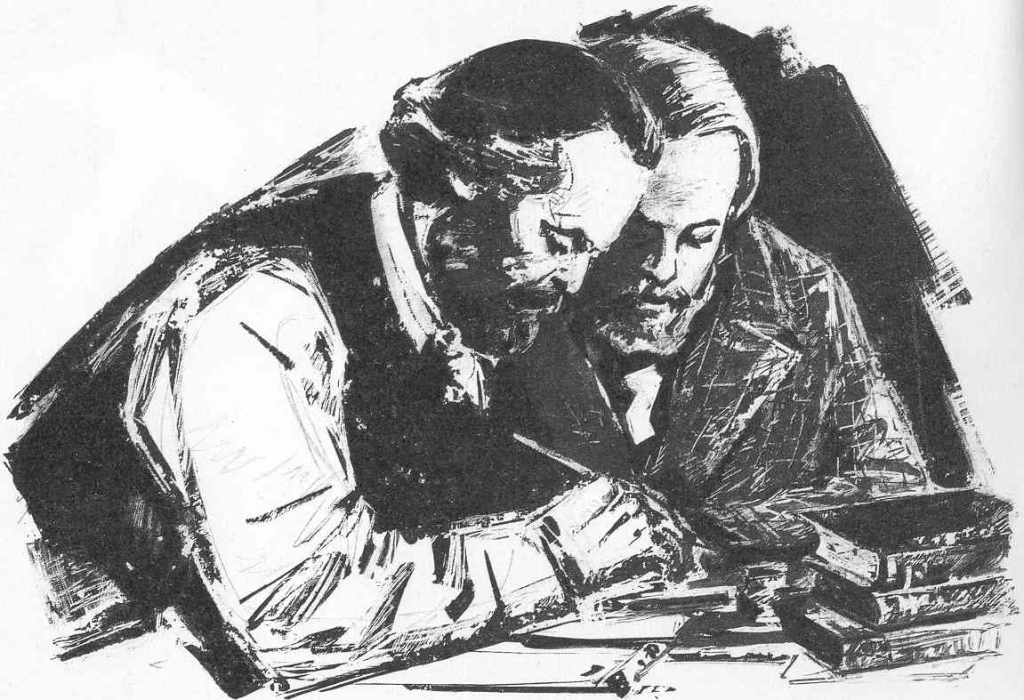


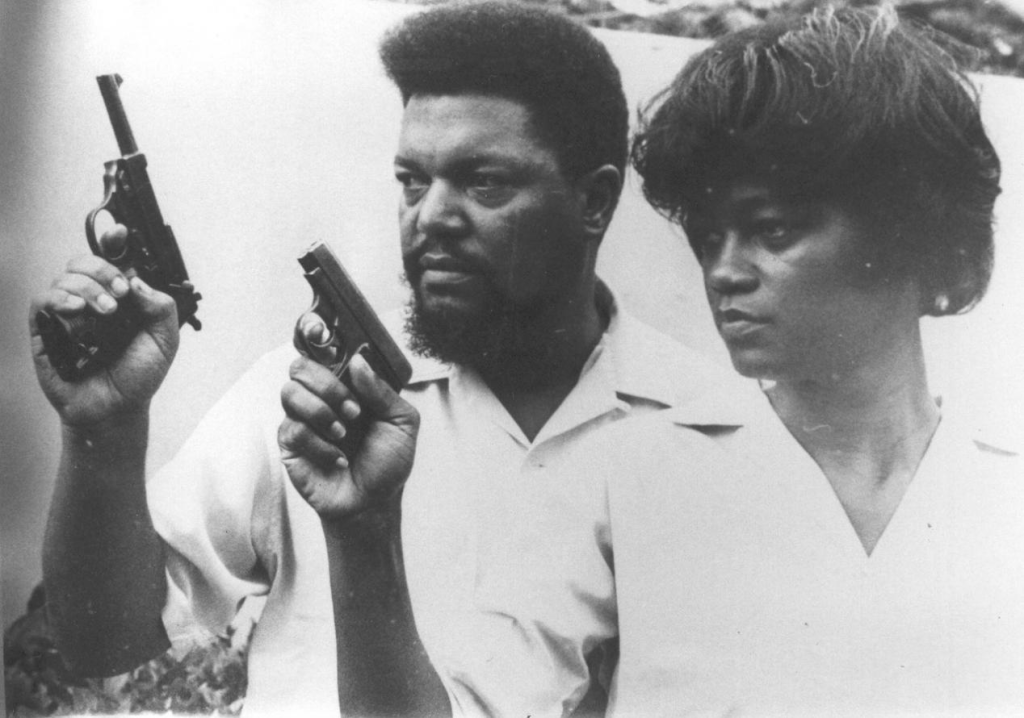
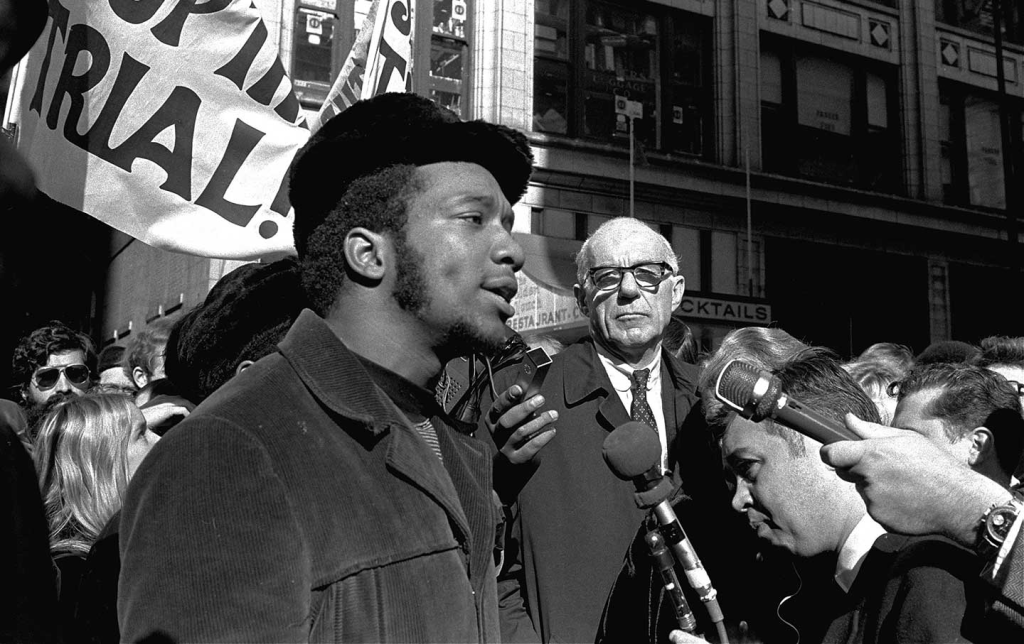


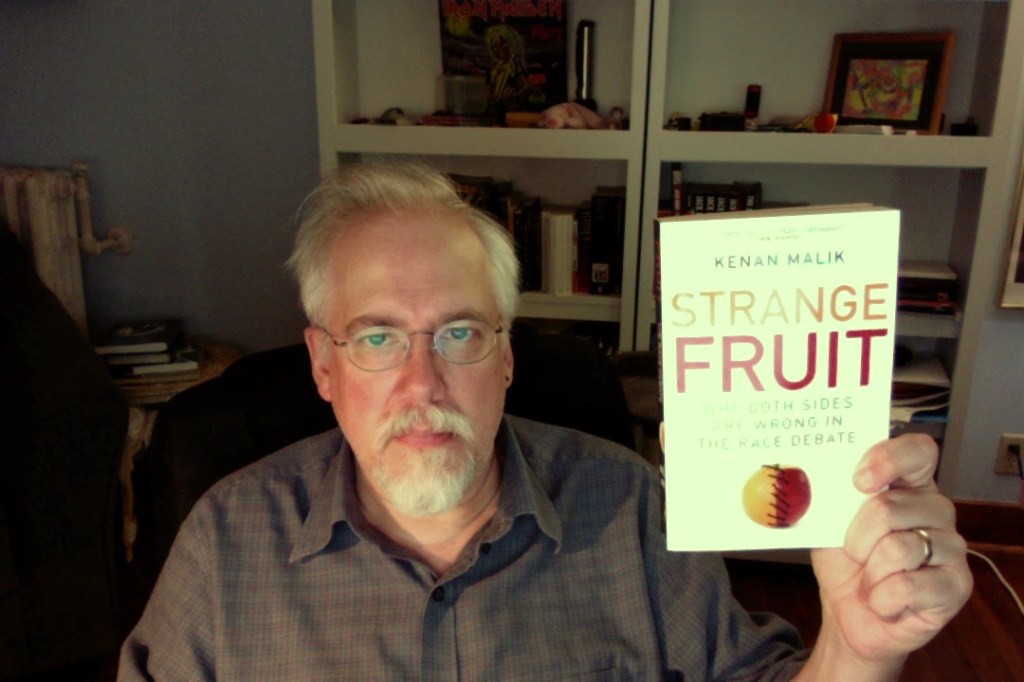





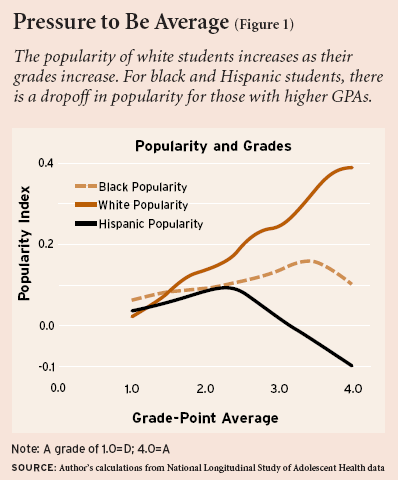


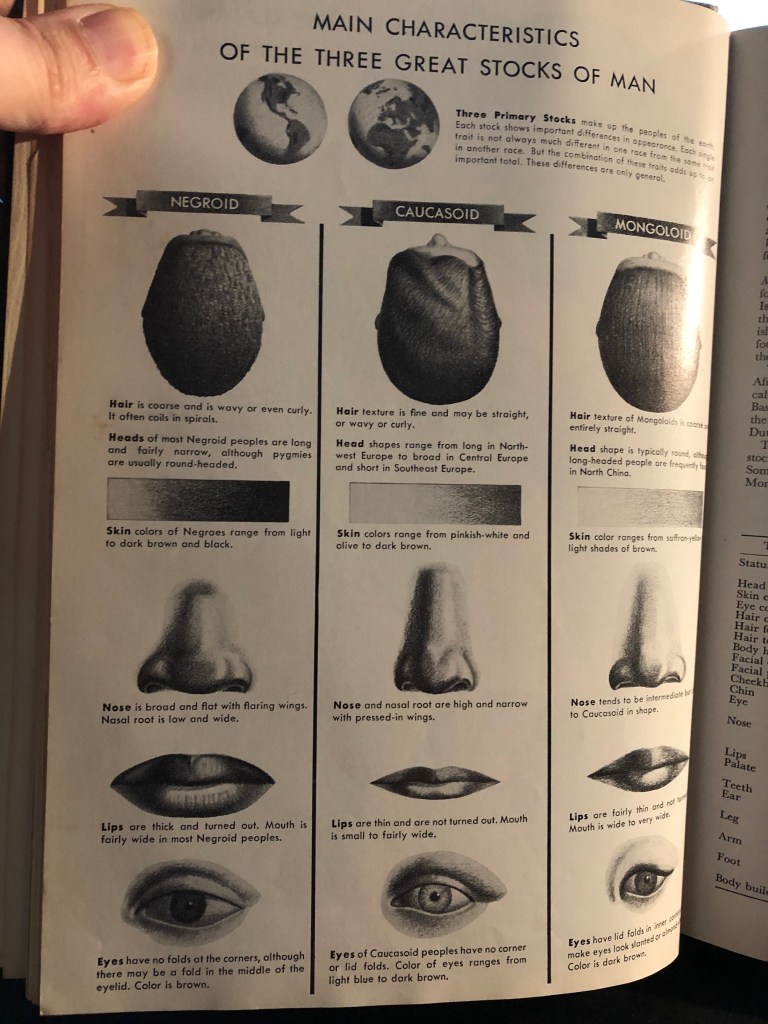





 freedom and reason