Ilhan Omar, a Minnesota Democrat elected to Congress this year, wears the hijab. For a woman indoctrinated in and obedient to certain forms of Islamic ideology, the hijab is a veil worn in the presence of males who stand outside of the woman’s immediate family. The hijab is in a class of head coverings that include the burqa, chador, and the niqāb. It is a form of religiously-imposed modesty that functions to sexually objectify women, secluding and segregating them on the basis of sex. Efforts to normalize this patriarchal practice represent a prong in the project to Islamize western society. Omar is advancing the Islamist agenda by seeking to overturn the ban in the House of Representatives on head coverings worn on the floor of that chamber.
The ban on head coverings was enacted in 1837 by members of Congress who desired to break from the traditions of the British Parliament. The hat ban represents a 181-year old tradition in sovereign government. Either Omar is hypnotized by her own ideology and has no ulterior motive or she recognizes the usefulness of advertising her ideology on a stage as big as the House of Representatives, its speeches and debates covered daily on C-Span. I suspect it is the latter. Whatever the case, the effect is the same; Muslims gain a victory in their efforts to weaken the secular character of the United States by striking a blow to the wall of church-state separation.
In founding the nation, our ancestors endeavor to marginalize theocratic desire, rejecting the notion that religion should play a role in the way the nation’s business was conducted. In 1776, when our ancestors declared their independence from the religious traditions of Europe, fewer that 20 percent of the population were adherents to the Abrahamic traditions. The colonists won the war and established a secular republic with a godless constitution. Seizing the opportunity to begin the world over again (to borrow the words of Thomas Paine, author of the anti-theist tract The Age of Reason), the founders erected a wall between religion and the government to keep out the corrupting force of ideologies rooted in superstition and supernaturalism.
The ban on hats in Congress, by implication, prevented zealots from bearing the badges of irrationalism in the People’s House. But the ban was not for this purpose. The ban is not a form of religious discrimination. It disallows hats and head coverings for any reason. Now Muslims, who have joined the Christianists pushing their cruel and patriarchal god inside the city gates, have found a wedge. Obtaining a religious exception to the ban on head coverings is a moment where Muslim activists can strike a blow for the cause of theocracy. And they have found allies in the Democratic Party, the party some might expect would uphold the liberal ideals of the republic’s founding, if not for the values of libertarianism, to oppose a master gesture of patriarchal power.
Yet, at Omar’s insistence, cheered on by the multiculturalists and leftwing identitarians who thrive on cultural division and social segmentation, Democrats are seeking to “clarify” the ban to allow religious headwear, as well as coverings for medical reasons. One can see the exception for medical reasons, as this represents a rational suspension of the rule (of course, in this case one suspects a Trojan Horse). However, if Congress lifts the ban on head coverings for religious reasons, it run afoul of the principle of church-state separation; Congress is bound by the Constitution to make no law respecting an establishment of religion. If all hats were permitted without respect to religious significance, Democrats would be on firmer grounds. But Democrats let the cat out of the bag (like Trump did with his Muslim ban) by admitting the purpose of the rule change. It is a religious purpose. Allowing an exception for religious hats is respecting an establishment of religion.
Some object that wearing the hijab is an example of the free expression of religion guaranteed by the First Amendment. But no speech is unrestricted. There are time and place restrictions, and religious speech is no exception. Would a creationist be able to talk endlessly to her pupils about her belief in creationism in a public school? That’s an opinion the type of speech the First Amendment seeks to protect, no? No, of course not; her professions of faith are inappropriate in that context. It does not oppress her in any way to demand that, in her role as public school teacher, she takes care not to impose her religious views on those assembled. Like a public school class room, Congress is a public space. It does not oppress a woman in any way to demand that, in her role as congresswoman, she takes care not to impose her religious views on those assembled. Would it be appropriate for a public school teacher to pray loudly in class? To wear a burqa in Congress?
There are all sorts of rules in the House that curtail the First Amendment. It is not proper at any time for a Member to refer to the television audience. A Member must always address the Chair and only the Chair. Members may not introduce or otherwise make reference to people in the Visitors or Press Gallery. Remarks must be limited to the question under debate and may not include personalities. It is inappropriate to address the President of the United States directly. It is also improper to refer to the President in a personally offensive manner. All of these rules abridge the freedom of speech.
Keep in mind that, for all these many decades, Congress hasn’t seen fit to change the law for kippah-wearing Jews. Nor have Jews been demanding to wear religious garb on the floor of the House. I suspect this is because Jews grasp the significance of preserving secular spaces (most Jews are secular in orientation). But Muslims don’t distinguish between the secular and sacred—except to see the former as decadence to be stamped out of existence. For a devout Muslim, everything falls within the sphere of religious devotion. Islam is a total system, and Muslims see it as standing over government. So as soon as a hijab-wearing Muslim is elected to Congress, Democrats scurry to change the rule to allow open expression of a deeply patriarchal faith—to assert the dress of Islam over the decorum of Congress.
Why are feminists and progressives pushing the Islamist agenda? Four reasons, at least: (1) a fetish for the exotic, treating conservative manifestations of a non-western ideology as representative, caring more about identity than about individuals; (2) cultural self-loathing stemming from a pathological sense of colonial guilt (a biblical sense intergenerational tribal responsibility); (3) the influence of the relativism of cultural anthropology and the epistemological confusion of postmodernist philosophy drilled into the heads of privileged college students; and (4) the deterioration of the post-1960s civil rights movement into deep multiculturalist practice and the diversity politics, shifting the focus from emancipation from repressive structures to celebration of group identity.
I recognize that Christians, Jews, and Muslims may serve in Congress. There’s no religious test and I don’t seek one. As Thomas Jefferson said, government only reaches actions not opinions. People of faith have been serving in government from its very beginning. But I have a hard time seeing the elected representatives of the people in the religious role all the time. It’s zealotry. Religious fanatics and their allies want to change the House rules so extremists can wear religious garb when they’re about the people’s business. They want walking sandwich-boards for superstitious thinking and supernatural beliefs. I fear Congress will over time come to look less like a rational secular institution and more like an expansive ecumenical gathering, a rainbow of colorful hats (what lies at the end of that rainbow?).
Religious uniforms aren’t a good look for a secular republic. The habit, kippah, hijab, etc.—these don’t feel like legitimate features of a political terrain landscaped by rationalists. The more progressive Christians understand this. Many members of the clergy have served in the House of Representatives and none have asked to the House to remove the rule against head gear. Indeed, Catholic priests have served and have not sought to don the zucchetto. They seem to recognize that there are enough spaces in our society for religious expression without having the signs of religion belief adorning the institutions of a free and secular republic. There would be no problem with nuns serving in Congress. Nuns aren’t always in their habits. (To give you a sense of just how extreme Islam is, the hijab is not a context-appropriate requirement for a specialized group of religious actors within a greater religion, but a requirement placed on all women.)
To be sure, I am an antitheist. But I don’t care what religion it is that you profess. You have your churches, mosques, and synagogs, and I believe you should have them. I wish you didn’t, but I can’t stop you. People believe all sorts of crazy things. But the People have their government. And it’s a secular government. If you have to wear religious garb all the time, maybe you’re not well-suited to the task of representing diverse constituencies—including those who did not vote for you. You want us to tolerate your religion. How about your respect our secularism?
In the final analysis, all this stems from the mistaken notion that religion deserves special treatment, that belief in God entitles people to some special dispensation. There are people who dress like animals. They’re called “furries.” (Look it up.) I don’t care if people want to be cheetahs or raccoons. That’s their business. But it would be a bad look to have the House of Representatives looking like a cosplay convention. Religion is no more special than whatever it is that’s moving people to want to dress as animals. The only difference is that furries aren’t oppressing anybody.
Reviewing the disciplinary manual for my local public school district, I ran across this: “Wearing of caps, hats, etc. and other outdoor attire is not permitted in the school building during the school day after the commencement of the first period of the day through the end of the last period of the day.” The policy does not give a reason for the rule, but my son tells me that it’s for safety reasons. No hats, no hoods. No hoodies. Yet Muslim females are allowed to wear the hijab and chador. The policy allows for this: “Students may wear head coverings for religious reasons.”
How does a religious reason for donning head coverings negate the concern for safety that head coverings present? What about somebody undergoing cancer treatments? Or somebody who has a deformity or a birthmark? Or is experiencing a bad hair day? Or hiding a bad haircut? Or whatever? How does a religious motive negate a rule that applies to everybody else whatever the reason? (They also have a rule against expressing signs of association with “antisocial organizations.” How is a young man with a swastika tattooed on his head supposed to square that rule with the rule against wearing hats?)
Such a policy discriminates on the basis of religion. It says that clothing worn for nonreligious reasons can be controlled, and the person who refuses to remove the article can be disciplined, i.e. punished, whereas a recognized religious motive permits a person to escape such punishment. The implication that the only good reason for wearing a head covering in a public space is a religious reason privileges religious motives over nonreligious motives. How is that religious liberty? To determine whether people get to wear head coverings on the basis of religion runs afoul of the establishment clause of the First Amendment.
This is about equal treatment. Either everybody is permitted to wear head coverings or nobody is. You can’t pick and choose the reasons people get to do thing on religious grounds. This goes for Congress, too. If a Muslim congresswoman gets to wear a head covering, then everybody gets to wear head coverings for whatever reason. It has to be so or else Congress may look like an ecumenical convention and not the lawmaking body of a secular society (it may wind up looking like that anyway before Democrats are through).
This is just like saying that people can take time out of instruction to pray, while those who don’t pray can’t take the same amount of time out of instruction to do whatever they want—like read passages from Bertrand Russell’s Why I am Not a Christian. Those who don’t pray are being held to a different standard, to differential obligations by such policies. My son is being told that he has no good reason to wear a hat on his head. I wear my hat around the office. My hat isn’t threatening anybody.
In theory, there may be no end to the exceptions that can be made for students who subscribe to a religious faith that leave students who do not still burdened by the obligations from which others are released. My districts policy also allows for release time for “religious instruction.” Students can take up to 60 minutes and not more than 180 minutes per week of regular time may be granted for religious instruction. Of course, they are following state law here and cannot prohibit this. But what about any other kind of instruction? Why just religious? Can my son have 180 minutes a week of watching videos by Christopher Hitchens and Richard Carrier, two well known secular humanists? I can assure them that this is instruction he is not receiving in the public schools.
Are there any limits? What about masks? Or would the niqab or burka get a pass on these, too? How about no masks no exceptions. Hats for everybody who wants to wear one? Or are those who don’t subscribe to a particular religion to be held to a different standard?
Religious liberty is not religious people enjoying greater freedom than nonreligious people or religious motives enjoying greater consideration than secular motives. On the contrary, religious liberty is about making sure religious people and their beliefs and practices are not privileged over other religions or the nonreligious and their beliefs (or non beliefs) and practices. The idea that religion should receive special consideration is what our secular form of government was designed to prevent. The First Amendment doesn’t say that religion gets special treatment. It says that the state shall make no rule respecting the establishment of religion. Every person is free to exercise religious liberty and that is the only thing the government is obligated to ensure (it’s right there in the First Amendment), namely that religion is only limited by the same reasons that free speech and expression, assembly, petition, etc., are limited.
What certain religious groups are doing is misusing the First Amendment to get things from the government and the public that others don’t get. That’s not equal treatment. That’s special treatment. That’s not what is meant by right. It’s privilege seeking.
The bottomline: No person should enjoy more freedom than another person because she is religious.
Everything that you can say about religion – that it provides a framework for explaining the things going on around us, that is a source of meaning and inspiration in people’s lives, then it builds unity and solidarity, that it organizes individuals into groups for action – can be said about racism and fascism. Religion also shares the destructiveness of these other ideologies. It divides human populations into groups and subgroups, marks people with superior and inferior statuses, persecutes and terrifies with violence – here Christianity and Islam outdo racism and fascism, promising violence for the disobedient even after they’re dead. And people are drawn to religion for the same reasons they are drawn to racism and fascism: alienated existence and fear of freedom draws people in irrational and authoritarian modes of social control. Lonely and confused in an unjust world, they seek belonging and meaning in the wrong places.
However, racism and fascism are condemned and people who express these ideologies are criticized and ridiculed. Subscribing to racist and fascist ideas come with a price: other relationships that people value – relationships made possible because of the advance of human rights and social democracy, struggles that have in many ways been won by pushing religion to the margins. But religion, despite the company it keeps, continues to find adherents, and the reason for this is that the conditions of alienation still linger and people who know better don’t hold religion to the same standards to which they hold racism and fascism. Religion is one of the last acceptable form of bigotry and intolerance. And, unlike racism and fascism, religion has billions of enablers. Indeed, paradoxically, holding religion to the same standards as racism and fascism risks for the critic accusations of bigotry and intolerance and, in turn, marginalization.
Karl Marx (1818-1883) stands among the giants in the history of scientific thought, alongside such luminaries as Nicolaus Copernicus, whose 1543 On the Revolutions of the Heavenly Spheres posits the heliocentric solar system, Isaac Newton, whose 1687 Mathematical Principles of Natural Philosophy establishes the foundation of classical mechanics, and Charles Darwin, whose 1859 work On the Origin of Species lays the basis for evolutionary biology.
The publication of Capital: The Critique of Political Economy, published in 1867, puts Marx in their company. In this work, Marx solves the riddle of capitalist accumulation. But that is not all. Marx’s frequent collaborator and closest friend, Friedrich Engels (1820-1895), on the occasion of Marx’s funeral in 1883, notes Marx’s significance in this way:
Just as Darwin discovered the law of development or organic nature, so Marx discovered the law of development of human history: the simple fact, hitherto concealed by an overgrowth of ideology, that mankind must first of all eat, drink, have shelter and clothing, before it can pursue politics, science, art, religion, etc.; that therefore the production of the immediate material means, and consequently the degree of economic development attained by a given people or during a given epoch, form the foundation upon which the state institutions, the legal conceptions, art, and even the ideas on religion, of the people concerned have been evolved, and in the light of which they must, therefore, be explained, instead of vice versa, as had hitherto been the case.
Marx also discovered the special law of motion governing the present-day capitalist mode of production, and the bourgeois society that this mode of production has created. The discovery of surplus value suddenly threw light on the problem, in trying to solve which all previous investigations, of both bourgeois economists and socialist critics, had been groping in the dark.
Science was for Marx a historically dynamic, revolutionary force…. For Marx was, before all else, a revolutionist. His real mission in life was to contribute, in one way or another, to the overthrow of capitalist society and of the state institutions which it had brought into being, to contribute to the liberation of the modern proletariat, which he was the first to make conscious of its own position and its needs, conscious of the conditions of its emancipation.
Marx’s contribution to the world of ideas, as well as to the practical every-day struggles for social justice, is relevant for today’s fight for democracy. Marx developed a comprehensive method for theorizing historical change and societal development, what he and Engels called the “materialist conception of history,” or “historical materialism.” This essay concerns the development of Marx’s scientific method of historical and scientific study, which synthesizes critiques of classical liberal political economy and the continental idealist theory of history. The goal of this work is to empower working people to fight for socialism.
Socialism’s opposite, liberalism, dominates our politics and legal system such that it shapes even our understanding of democracy, identifying “liberal democracy” (more liberal than democratic) as the only type of democracy consistent with individual freedom. The alchemy of liberalism ideologically transmutes democracy into majoritarianism (tyranny of the majority), a practice destructive to human rights. It then, rightly, if such a thing were true, condemns it. But it is not true. Marx, taking up the critique of liberalism by German philosopher Georg Hegel, provides a radically different standpoint, identifying socialism and communism as containing the true promise of democracy. This may seem paradoxical to those unfamiliar with Marxian thinking, but my hope is that you will at least be able to develop an appreciation for the argument by the end of this essay.
Crucially, Marx’s system transcends the “is-ought” dichotomy that pervades Western thinking about the character of knowledge, a dichotomy that, by demanding a strict separation between what “is,” that is, knowledge considered “objectively” true (and here objectivity is confused with neutrality and value-free science), and what “ought” to be (subjective matters of political opinion or moral judgment), functions to marginalize those who believe that knowledge about the social world should be used to advance the interests of the oppressed and downtrodden. Conflating “is” and “ought,” Marx explicitly wields knowledge as a weapon for working people against their exploiters.
I begin with Marx’s definitive statement of his method. In the Preface to A Contribution to the Critique of Political Economy, published in 1859, Marx writes:
The first work which I undertook to dispel the doubts assailing me was a critical re-examination of the Hegelian philosophy of law; the introduction to this work being published in the Deutsch-Franzosische Jahrbucherissued in Paris in 1844. My inquiry led me to the conclusion that neither legal relations nor political forms could be comprehended whether by themselves or on the basis of a so-called general development of the human mind, but that on the contrary they originate in the material conditions of life, the totality of which Hegel, following the example of English and French thinkers of the eighteenth century, embraces within the term “civil society”; that the anatomy of this civil society, however, has to be sought in political economy.
There is a lot to unpack in this paragraph. Let’s begin with political economy. In his Second Treatise on Government, written in the latter seventeenth century, John Locke argues that persons own themselves and therefore own their labor—and, by extension, own the products of their labor. This notion of personal sovereignty is a central tenet in liberalism. By mixing one’s labor with nature, Locke claims, the person creates property. Because it is a natural extension of the individual, he therefore has a natural right to it. For Locke, property relations are the basis of the social contract. Government exists to protect the natural right of property.
Locke’s philosophical and ethical position, on the one hand, and his political practice, which strived to secure private control over the property produced by others, and even the accumulation of persons as property, on the other hand, illustrates a contradiction in liberalism: if the products of labor naturally belong to those who labored to produce them, then why do those who labor give them up to others who profit from them without expending any or very little labor? Marx sought to make people aware of this contradiction and to realize liberalism’s promise by establishing socialist freedom.
Writing in the second half of the eighteenth century, in The Wealth of Nations, Adam Smith was suspicious the idea that the exchange value of a commodity depends on its utility or usefulness, its “use-value.” Commodities instead exchanged on the basis of the amount of labor expended in producing them. Smith distinguished between “nominal value,” the amount one would exchange for a commodity, and “real value” or “natural price,” the amount of labor embodied in a commodity (Marx deals with this issue at some length in Capital). Writing in the early nineteenth century, David Ricardo theorized that the amount of labor embodied in a commodity determined its equilibrium price. In other words, production costs, of which labor is ultimately the root, determined the average price of commodities.
The Wealth of Nations is concerned to show how raising the wealth of a nation benefits the nation as a whole. This was the basis of his advocacy for capitalism and free trade over the mercantilism that prevailed during his day. In his political economic work, Smith voices two concerns: (1) revealing the force that holds society together and (2) revealing the force that transforms society over time. He conceives of the market—a self-regulating mechanism—as that force. Smith argues the following points: The market transmutes chaotic self-interest into social harmony—it turns anarchy into order. The market empowers consumers to dictate the kinds and quantities of commodities the industrialists will produce. The market has a tendency towards equilibrium, regulating prices and incomes. The market interacts with the division of labor to produce innovation—the source of social evolution. Good ideas are selected by the system and perpetuated, spreading throughout the system. Bad ideas go extinct. All this acts as an invisible hand, a force that operates independent of human intention. Smith’s theory of a natural economic bears more than a passing resemblance to Darwin’s theory of natural selection. In fact, Darwin admitted that the work of Adam Smith, Thomas Malthus, and Herbert Spencer inspired the logic of his evolutionary model. Here’s the rub: by treating the market as a self-regulating phenomenon, Smith means to create the appearance of economics as a natural phenomenon, one that lies outside of, or at least should (laissez faire), lie outside of the control of human agency. This puts political economy beyond democratic politics. It transmutes subjection to the mercy of economic forces into a definition of liberty.
Marx incorporates many of Smith’s ideas; however, he does not do so uncritically. He shows that each of these processes Smith identifies functions not to raise the wealth of the nation in terms of making the general population better off, but rather to raise the wealth of a few while impoverishing and subordinating the many. He shows that the system did not peacefully emerge from the natural differentiation in human attitudes, capabilities, and dispositions, but was the result of the bloody expropriation of the commons, dispossessing humanity of free access to the means with which to make their way through life. And, crucially, Marx proves the labor theory of value. His critical investigations return the market from the abstract and naturalized sphere of ideology to the scientific sphere of concrete reality.
Who is this Hegel Marx writes of? Before getting to that, I need to address a philosophical debate that lies in back of Marx’s reference, a very old argument between what we know today as idealism and materialism. The dispute achieved it modern form during the Enlightenment, most clearly in German idealism from the mid-18th century and the critique of idealism by the materialists in Germany and England in the 19th century. Idealism is the position that experience and reality are explicable in terms of the mind or spirit, that is, in non-materialistic things. Idealists see ideas as the most important things. Ideas determine reality. Against this view is the materialist view, which holds that an exterior world shapes ideas and this world is objectively knowable through science. One variant of this view is that all that really exists is matter, or physical things, and that these things, these substances, are what we mean when we talk about “material.” The world around us is not the result of the mind or consciousness, but rather phenomena of the mind and consciousness are the products of physical processes. This is a narrow reductionist conception of materialism. In contrast, historical materialism, the approach Marx develops, is a materialist approach that captures the objective mind-independent aspects of social reality, but preserves agency, and with it the conscious act of changing the world. Historical materialism is thus simultaneously theoretical and practical. Marx maintains that we can study social structure as a material thing, much like gravity, even though we cannot directly perceive it, as we know it in terms of its effects and, moreover, transform it through action.
The idealism that inspired Marx is Hegelian idealism. Hegel developed a particular dialectical method that can be characterized as movement of the reality from the abstract (or immediate), through the negative or mediated, arriving at the concrete. A full exploration of the dialectic would take us well beyond our purposes here, so a brief summary of the idea will have to suffice. For Hegel, any idea must pass through a negative phase (negation or mediation) before becoming concrete and historical. An idea confronts another idea or reality—or in practice becomes a reality—which is always different from the original idea. The idea is thus transformed, become more highly developed, as the mind comes to know more fully the reality of its action. Hegel refers to this process as “becoming.” The process of becoming preserves the useful elements of an idea, object, or system, while transcending its limitations through successive approximations, which in turn alter the idea. Hegel applies this idea to argument and history. So does Marx.
An example from Hegel’s Phenomenology of Spirit should suffice to illustrate the dynamic. God, which in Hegel’s philosophical terms is the “Absolute,” objectifies its self in nature. Nature is the alienated self-expression of Spirit, a necessary moment in the struggle of the divine spirit. God reflects on its nature to achieve a deeper consciousness of its self. In concrete terms, Jesus, the word made flesh, was such a moment. God—the Absolute—manifests the idea of itself in physical human form and thus comes to know itself—along with all of the world who would hear the good news—at a deeper level. More broadly, history is the way God comes to know itself, and God must ultimately struggle with this work; humans make the history and culture that makes it possible to know God. What Hegel is describing is a process that, in its development, through the abstraction and its negation (or sublation), synthesizes a higher unity. Beings know themselves through each other and come to know the greater reality they create together. For Hegel, the mind, whether it is the individual human mind of the absolute mind (God) must pass through a struggle for freedom before realizing itself.
Hegel’s conception of freedom, which differs markedly from the liberal view, depends on the understanding of the context of thought and action. For liberals, freedom is defined in negative terms. Liberty is an empty vessel into which each individual places her interests, or, more accurately, her preferences. Freedom is defined in terms of what it’s not: the absence of coercion. For Hegel, freedom is not judged by degree of separation or alienation from society, i.e. others, but the degree of participation in society—in collective efforts to shape history in pursuit of higher levels of consciousness and understanding. Freedom is not unhampered individual activity, as liberals suppose; rather freedom results from rational control of human activity in social contexts, in the making of history collectively, as a people. Freedom is present when people are able to exert meaningful control over their lives as political actors.
Judged from the Hegelian standpoint, the standard liberal conception of freedom is exposed as superficial, for it does not ask why individuals make the choices they make.
Judged from the Hegelian standpoint, the standard liberal conception of freedom is exposed as superficial, for it does not ask why individuals make the choices they make. Hegel argues that external and internalized forces condition choices. The individual is a product of history and culture, and in this process the individual comes to develop her preferences for things and states. But the individual also has interests that lie outside of her own consciousness, which she may discover through a dialectical process. But it is not automatic. It requires education. This idea of freedom becomes central to Marx’s radical conception of freedom.
One of Hegel’s students, Ludwig Feuerbach, after first being faithful to his master’s system, began to see problems in his argument—indeed in idealism generally. He came to reject idealism in favor of materialism. He found in Hegel’s system that everything in history and nature is interpreted from the standpoint of development conceived of in such a way that the last stage is regarded as the final moment of a totality that includes all the previous stages. Thus the end of history, with a perfect society, is causing history to unfold itself towards that end. If this strikes you as having a religious character, you are right. Thus, Feuerbach accused his mentor of forming an illegitimate teleology: the results of history and nature call into existence the causes of those results. In other words, Hegel’s history is reverse engineered. Hegel would remind Feuerbach that there is a designed: god or, in Hegel’s terms, the Absolute. But Feuerbach wondered, “Why does the absolute need to struggle know itself when the final moment is already present from the beginning?”
Feuerbach is suspicious that Hegel’s system misrepresents nature, culture, and religion, because it ignores historical variety and cultural particularities. Christianity is assumed to be the Absolute religion. What of other religions? On what basis can Hegel be certain that the god of the Judeo-Christian religion is the one and only god? After all, different gods and religious systems exist in history and across cultures. Once history and culture entered the problem in this way, Feuerbach begins to perceive that Hegel has stood the order of things on its head. Hegel has put ideas before the material world, when, in fact, it was the other way around: ideas come from history, and history is the product of material social relations.
As Shlomo Avineri writes in The Social and Political Thought of Karl Marx, “Hegel’s process of overcoming these dichotomies had begun at the wrong end.” Hegel’s philosophy “could not disentangle itself from its internal contradictions,” therefore “it was bound to end as a mystification.” So to correct the problem one has to set Hegel on his feet, as Marx cleverly put it. Feuerbach called this procedure the “transformative method.” He took speculative philosophy and flipped the predicate and subject. “Thus man would be liberated from the alienated power his own mental creations had over him.”
This led Feuerbach to write one of the most notorious books in history, The Essence of Christianity. Feuerbach argues that all religion appears as mythology to a given society except the particular religion that prevails in that society. Religion is a social/historical construction that reflects the idealized features of the society in which it appears. Thus “god” is only the projections of the consciousness of the species in a given time and place. It is not a real transcendent thing. In fact, belief in the supernatural alienates the individual from his true relations with society and nature, as well as the origins of her creative energies: himself. “In the consciousness of the infinite, the conscious subject has for his object the infinity of his own nature.”
The Essence of Christianity was reviled at the time for its atheism. And Marx saw in it the solution to the problem of philosophy. It still preserved Hegel’s method, but made it scientific. Marx summarizes in his 1844 A Contribution to the Critique of Hegel’s Philosophy of Right: “For Germany, the criticism of religion has been essentially completed, and the criticism of religion is the prerequisite of all criticism…. The foundation of irreligious criticism is: Man makes religion, religion does not make man.” Marx reminds the reader: “man is no abstract being squatting outside the world. Man is the world of man – state, society. This state and this society produce religion, which is an inverted consciousness of the world, because they are an inverted world.” He continues:
It is, therefore, the task of history, once the other-world of truth has vanished, to establish the truth of this world. It is the immediate task of philosophy, which is in the service of history, to unmask self-estrangement in its unholy formsonce the holy form of human self-estrangement has been unmasked. Thus, the criticism of Heaven turns into the criticism of Earth, the criticism of religion into the criticism of law, and the criticism of theologyinto the criticism of politics.
But Feuerbach does not solve the other problem Marx wants to get a handle on, the false notion that knowledge and action should or even can be divided between “is” and “ought.” Like everything else, Hegel attacks it from the standpoint of idealism. Marx believes that solution to the problem lies within reality itself, where the source of all ideas are ultimately to be found. To quote Avineri again: “For Marx, Hegel’s chief attraction lay in his philosophy’s apparent ability to become the key to the realization of idealism in reality, thus eliminating the dichotomy Kant bequeathed to the German philosophical tradition.” Avineri continues, “Coupled with this Marx developed an immanent critique of the Hegelian system.” Marx saw in Hegel’s philosophy a method “to bridge the gap between the rational and the action.” Much like the mystification of Smith’s invisible hand, Hegel’s theory of social and political institutions hid the answer because it removed it to abstract thought, rather than finding it in the material forces of history.
Turning to Feuerbach, Marx writes:
“Feuerbach starts off from the fact of religious self-estrangement, of the duplication of the world into a religious, imaginary world, and a secular one. His work consists in resolving the religious world into its secular basis. He overlooks the fact that after completing this work, the chief thing still remains to be done. For the fact that the secular basis lifts off from itself and establishes itself in the clouds as an independent realm can only be explained by the inner strife and intrinsic contradictoriness of this secular basis. The latter must itself be understood in its contradiction and then, by the removal of the contradiction, revolutionized.”
These observations led to Marx’s famous dictum: “Philosophers have only theorized the world, the point is to change it.”
For Marx, “human being” is social product realized through society and the labor process. Humans objectify society through collective activity, realizing their essence through social action. But in class-divided societies human beings are alienated from their essential activities the objects they bring into existence from self and others. The central problem in history is this: the majority has lost control over the act of creating the world—and the world they created. Only when alienation is overthrown will humanity be free. The solution: Marx advocates substantive freedom, which means democratic control over society’s productive forces and the direction of history lays the basis for human freedom. Freedom is closely linked not to popular and representative political democracy, but to economic democracy or socialism. For this reason, Marx is the figure most closely associated with positive freedom.
The central problem in history is this: the majority has lost control over the act of creating the world—and the world they created. Only when alienation is overthrown will humanity be free.
Thus the struggle for democracy requires a scientific method. And in the year Darwin gave to the world the scientific basis of natural history, Marx delivered to that same world the scientific basis for human history; A Contribution to the Critique of Political Economy. Marx writes in the Preface:
In the social production of their existence, men inevitably enter into definite relations [that] are independent of their will, namely relations of production appropriate to a given stage in the development of their material forces of production.
The totality of these relations of production constitutes the economic structure of society, the real foundation, on which arises a legal and political superstructure and to which correspond definite forms of social consciousness.”
We can depict Marx’s model with this diagram:
The Base-Superstructure Model
Human labor, in the center of the diagram, is the foundation of production. People create the world and their selves through the power of labor. Without action, nothing happens, nothing is possible. And humans have no choice but to act. In the “Preface” to the first edition of The Origin of the Family, Private Property and the State (1884), Engels identifies the two imperatives of the species:
According to the materialistic conception, the determining factor in history is, in the final instance, the production and reproduction of the immediate essentials of life. This, again, is of a twofold character. On the one side, the production of the means of existence, of articles of food and clothing, dwellings, and of the tools necessary for that production; on the other side, the production of human beings themselves, the propagation of the species. The social organization under which the people of a particular historical epoch and a particular country live is determined by both kinds of production: by the stage of development of labor on the one hand and of the family on the other.
Marx writes that the fundamental elements of the labor process are the work itself, the object on which work is performed, and the instruments produced by and use in that work. Objects of labor can be objects found in nature or objects already worked up in the labor process. All objects must be appropriated from nature by human labor. Some of these objects become instruments of labor, which is a thing that focuses the worker’s activity on an object, such a tool or a machine or a road or a building. These two elements comprise the means of production. The means of production are simultaneously the product of human labor and a means through which human labor produces. Taken all together, these comprise the forces of production. The forces of production embed in social relations that are sustained by these forces. These are defined primarily as property relations, most importantly the relations of social class, although caste (race/ethnic and gender) relations are also relevant. The forces of production and the social relations taken together are conceptualized as the mode of production, or civil society, to use Hegel’s terminology. This is the base of society (the substructure is nature).
Upon this base rises the superstructure, or political society comprised of (1) the state and law, that defends the prevailing property relations by force, (2) the ideology or set of ideologies, including religion, racism, sexism, and other repressive ideas that animate coercive structures, that legitimizes the prevailing property relations with notions of right and wrong, good and bad, insiders and outsiders, and finally (3) consciousness, collective and individuals. Ideas function to justify the status quo and are rooted in material control of the forces of production. Marx and Engels in the German Ideology, penned in 1845, put it this way:
The ideas of the ruling class are in every epoch the ruling ideas, i.e. the class that is the ruling material force of society, is at the same time its ruling intellectual force. The class that has the means of material production at its disposal has control at the same time over the means of mental production, so that thereby, generally speaking, the ideas of those who lack the means of mental production are subject to it. The ruling ideas are nothing more than the ideal expression of the dominant material relationships, the dominant material relationships grasped as ideas; hence of the relationships which make the one class the ruling one, therefore, the ideas of its dominance.
History moves through a dialectic process: primitive communism (which includes gather-and-hunter societies, as well as horticultural), which comprises most of our roughly 400,000-year existence as a species, Asiatic (large-scale agricultural), ancient (tributary), feudal, and capitalist. Each of these stages is a mode of production determinable by an analysis of its social relations. Under primitive communism there is neither class system nor state and law. State and law come into existence with the emergence of social class. Before social class came into existence, the fruits of labor – that is, the social product, including the social surplus, or excess production beyond subsistence – were shared among all in the community. With the emergence of large-scale agricultural, and the production of substantial social surplus, it became possible for some to live without working. These families became the rulers. They developed religion and other ideologies as a means of controlling the population. Each successive stage has led to great inequality between those who produce the social surplus and those who appropriate it without working. Capitalism represents the highest stage of exploitative relations. Here’s what that looks like:
Epochal Changes in the Mode of Production
What explains the transformation from one stage to another? Marx writes,
In studying such transformations it is always necessary to distinguish between the material transformation of the economic conditions of production, which can be determined with the precision of natural science, and the legal, political, religious, artistic or philosophic—in short, ideological forms in which men become conscious of this conflict and fight it out. Just as one does not judge an individual by what he thinks about himself, so one cannot judge such a period of transformation by its consciousness, but, on the contrary, this consciousness must be explained from the contradictions of material life, from the conflict existing between the social forces of production and the relations of production.
The static model presented above is abstracted from history; for history shows that the status quo gives way to transformational or revolutionary moments—that, alas, do not always give way to revolutions—driven by the internal contradictions to the system, such the periods of realization crisis or crises of overproduction, such as we have been experiencing in our own time:
At a certain stage of development, the material productive forces of society come into conflict with the existing relations of production or — this merely expresses the same thing in legal terms — with the property relations within the framework of which they have operated hitherto. From forms of development of the productive forces these relations turn into their fetters. Then begins an era of social revolution. The changes in the economic foundation lead sooner or later to the transformation of the whole immense superstructure.
This is what Marx and Engels are describing in the Communist Manifesto having happened with feudalism giving way to capitalism. Now it is our turn to usher in the next great epochal change, from capitalism to socialism.
Clinton was one of three heavyweights of the centre-left interviewed by the Guardian to better understand why their brand of politics appears to be failing. All three have seen their countries upended by political events that to some degree can be explained by the success of rightwing populism. The other two interviewees, Tony Blair and Matteo Renzi, agreed that the migration issue had posed significant problems for centrist politics.
Centrist politics created the immigration problem. For this and other reasons centrist politics poses a significant problem for the working class. It’s hard to imagine how the problem of immigration can be solved by a continuation of politics that created the problem. However, those committed to preserving liberal republicanism and, therefore, the political ground for unifying the national proletariat against their respective bourgeoisie, won’t like the way the right deals with the problem for sure. A center-left awakening to the reality of immigration may be the only source of workable collective power. I cringe writing this, I so loathe Clinton.
If Clinton gets the problem of immigration, then this suggests she gets the problem of globalism, that it’s the policies of the transnational capitalist elite that have fueled right-wing populism in Europe and North America. But those are her politics. The left can’t hide from this problem anymore. When a third of the French population votes for Marie Le Pen that signals that the left has failed on a massive scale. Majorities of French say they no longer feel at home in their own country. Smearing them as “racist” and “xenophobes” isn’t going to substitute for returning to working class politics. Large-scale immigration is not in the interests of the proletariat of western countries. Progressives abandon workers to the political right when they fall in line with neoliberal strategies for extracting more value from labor. And if the right is anything, its opportunistic. For Clinton, this awakening may stem from her anger over being derailed by Trump. She surely recognizes that anti-globalist sentiment was a major source of Trump’s strength among the tens of millions of proletarian workers who voted for the man.
Clinton is no leftist. I get it. But that doesn’t make her wrong about everything. As Sam Harris pointed out in the mid-2000s, the far right understands what’s going on, while the left is busy disempowering itself with identity politics, exchanging the struggle for equality for the optics of diversity. Harris’ diagnosis: “the dogma of multiculturalism has left a secular Europe very slow to address the looming problem of religious extremism among its immigrants.” He noted with appropriate concern the fact that the far right was telling the truth about large-scale immigration from Muslim cultures. “To say that this does not bode well for liberalism is an understatement.” Tough pill to swallow, I know. But if it were false, then the last several decades would yield a different story. It won’t do as an explanation to suggest that the working class is a bunch of bigots who don’t share the humanitarianism of the cultural elite. It’s the cultural elite who are fucking over the working class with austerity and privatization while driving down workers wages through globalization, and that includes immigration. The ruling ideas and all that (read your Marx). And while liberalism isn’t good enough, it may have to be for the time being.
Hitchens was right to characterize Harris’ words as raising the alarm. But it wasn’t only the far right Harris references who got it. Along with Harris and Hitchens, Bruce Bauer, Douglas Murray, and Chris Caldwell got it, too. Had Europe maintained its social democracies, there would be no room for the right. Sweden is a good example of the problem. The rise of the populist Sweden Democrats tracks the vacuum the center-left created by opening its country to unsustainable immigration. Now the country suffers from a slit-labor market, a serious crime problem, attacks on women’s rights and women themselves, a government that lies to its people, and millions of good-hearted Swedes paralyzed by collective guilt over colonialism they never practiced. Not everybody is paralyzed. The Sweden Democrats grew from 5% in 2004 to more than 18% this past September. The main source of that growth? Social Democrats.
The neoliberalism Hillary Clinton has long advanced is not the answer. But there may be some strategic value in a center-left after all – if it is serious about getting a handle on this problem. It will have to couple that with a new dedication to social democracy. And stop the warmongering. However, it may be too late to do anything about it. The apocalyptic forces of right-wing populism and Islam have lives of their own now (I guess they always did, really). The course the West is on – towards a century of political and religious conflict – may not be correctable.
In its article, “4 Myths About How Immigrants affect the U.S. economy,” PBS manages to get just about everything wrong about the impact of immigration on the United States. Let’s go through the “myths” one by one and see how they hold up to logic and evidence.
Myth #1 “Immigrants take more from the US government than they contribute.” The article claims they don’t actually. Yet, a couple of sentences into this section the article admits they actually do: “First-generation immigrants cost the government more than native-born Americans.” How much more? $1600 per legal immigrant per year. As I have pointed out in previous essays on this blog (see “The Immigration Situation“), that’s tens of billions of dollars annually, a tax burden borne by native-born workers to support the immigrants who will compete for their jobs. But don’t worry, the authors of the article write, “second-generation immigrants” contribute more in taxes than nonimmigrants.
But “second-generation immigrants” aren’t actually a thing. The United States inherited from English common law the principle of jus soli. The politicians and pundits call it “birth-right citizenship” (and they’re keen on keeping it). It means that, with very narrow exceptions, if you are born in the United States, then you are a US citizen. You can have second-generation immigrants in Sweden and Norway (and most of the rest of the world) because they have jus sanguinis (citizenship by ancestry), but not in the United States. An accurate calculation of the fiscal burden of immigration would therefore not count a first-generation native-born citizen on the immigrant side of the tax ledger. It would count him on the native-born side of the ledger. This deceitful way of talking about immigration is rampant in immigration apologetics. One might think that the journalistic standard of objectivity would correct such an error. The widespread persistence of dishonest framing supports the propaganda model of the corporate media.
The article admits it’s hard to measure the fiscal impact of illegal immigrants (to this point, the article has been only about legal immigrants). But consider that using schools, hospitals, and public infrastructure while paying little in property tax (indirectly through rents), little in sales taxes (California, the state with the largest number of immigrants, doesn’t tax food), and no income or payroll taxes cannot possibly be associated with a net increase in revenue. Moreover, the burden would be greater if illegal immigrants weren’t afraid of being detected by authorities and so avoid formally utilizing public services, which puts stress on the system in other ways. Many immigrant advocates argue for distribution of public services without respect to immigration status. Of course there is a moral obligation to provide water, food, shelter, and medicine to those in our country who need it. But this is all the more reason to reform immigration to reduce the flow into the country.
Myth #2: “Immigrants take American jobs.” The article admits that immigrants make up 17 percent of the US labor force. That’s more than 27 million workers. How is it possible that such a large figure would not displace native-born workers? As I have pointed out in essays on this blog (see, e.g. “The Immigration Situation“), immigration not only pushes native-born workers out of low-skilled/low-wage jobs, it also displaces high-tech workers. Firms fire or avoid hiring skilled/high-wage native-born workers in favor of skilled/low-waged immigrant workers. Why? Profits. Value is produced by work, and the cheaper the labor, the more surplus value the capitalist appropriates in the labor process. Immigrant labor puts downward pressure on the wages across industries, harming the standard of living of native-born workers.
The reader need not remind me that immigrants don’t have the power to fire native-born workers. It’s the capitalist who exploits labor for profit. When we control immigration we control the ability of capitalists to use foreign labor as a cudgel against native-born labor. I’m not blaming immigrants for this situation.
The claim the PBS article makes, namely that “immigrant often have jobs that Americans tend not to take,” is a typical business propaganda line. It makes it sounds as if there are jobs lying around with no American workers waiting to fill them. Consider work in which immigrants are overrepresented: construction workers, custodial services, food services, groundskeepers, housekeepers, and taxi drivers – work that is not easily automated. All of these occupations are presently majority native-born. The composition of these occupations is changing not because American workers are lazy, but because capitalists are hiring immigrants over native-born workers. The propaganda line seeks to redefine the displacement of workers in these occupations as unwillingness to work. This is victim blaming.
The fallacious nature of this shopworn line is confirmed when we consider skilled labor occupations. More than a third of software engineers are immigrants. Is software engineering an occupation native-born Americans avoid? Or it is the case that a foreign-born software engineer will earn a lower wage for the same work thus generating greater surplus value of the capitalist? There are native-born software engineers, displaced by outsourcing, who are again screwed by the importation of cheap skilled labor. Take another example: doctors. More than a quarter of physicians in the US are foreign born. Is medicine a field in which native-born citizens are reluctant to enter? There is a perception that there is a physician shortage in the United States, but studies show that this is because of the way health care is organized and utilized not with the actual number of physicians per capita. Foreign-born physicians are highly desirable in a corporate system of medical care.
While the rhetoric is false, it works to create the perception that native-born workers are snobs who find certain occupations beneath them. It makes it easier to displace African-American groundskeepers, for example, by making it sound like they voluntarily leave the occupation to immigrant labor because the work is beneath them. You know, spoiled American workers and all that. Not to mention lazy poor people. On the other hand, memes asking “Who will pick our apples, take our orders, cook our food, bus our tables, clean our toilets?” cast immigrants as necessary for this “dirty work.” Capitalist use immigrant labor to create split-labor markets.
The claim that we don’t have enough native-born workers to fill these jobs also asks us to ignore decades of state-led strategies to absorb and manage surplus workers. There are 2.3 million people in prison, half of whom are locked away for non-violent property and drug offenses. There are millions more with felony records who reside outside prison walls. They are disproportionately black and brown native-born citizens who, in most cases, had no job or were earning very little money at the time they committed the crime for which they were incarcerated. And a felony conviction makes it hard to work on the other side. Think of all the millions of native-born American workers who are out of work because the government facilitates the importation of foreign labor while leaving the native-born to languish in US prisons and jails and ghettos. It’s not possible to train them for the work now performed by cheap immigrant labor? It’s unfair to the men who want to support their families. Historically, labor shortages inspire prison reform (see Ruche and Kirchheimer’s Punishment and Social Structure). A dependable flow of cheap immigrant labor undermines those efforts.
What prevents Americans from seeing a mass of unemployed labor on one side and a mass of jobs on the other and seeing a solution to the problems of black America? Why do they instead insist that these jobs are for immigrants?
The claim that immigration has not come at the cost of American wages is contradicted by the fact that half a trillion dollars (you read that right: 500 billion dollars) is transferred from the native-born working class to the capitalist class every year because of the wage differential between native-born and foreign-born labor. That’s the point of hiring immigrant workers: to pay them less than native-born workers. Immigrants may increase overall economic output, but what is not being said in this article or generally in the establishment media is that large-scale immigration redistributes the wealth and income in a way that harms native-born workers. Since America was opened up to immigration in the mid-1960s, we have seen wages stagnate, union density plummet, income inequality increase, and a shift in politics from left to right. The proportion of our population that is foreign-born is now approaching late 19thcentury levels. Are working Americans the better for it? Are economic conditions better today than they were in the 1960s? Is the left stronger today then yesterday?
Myth #3: “The US economy does not need immigrants.” Here, the article makes the oft-heard claim that immigrants offset a falling birth rate. The first question we should ask: Why is a falling birth rate such a bad idea? Because of the aging population? The article tries to scare the reader: “If not for immigrants, the U.S. workforce would be shrinking. Social Security, which is paid for by current workers, would be in even more serious budgetary trouble than it already is.” But Social Security is not in trouble. Social Security is trillions of dollars in the black. And we can raise payroll taxes if there’s ever a problem.
Another claim elites make is that the workforce would be shrinking but for immigrants. What would be shrinking is a low-wage labor force for capitalist to exploit for mega-profit. What happens to wages when there is greater demand for workers? Wages go up. Few workers mean fewer people waiting to take your job for less money. That means more money for you. Better jobs with better pay and better conditions. But that won’t happen if businesses can always depend on cheap immigrant labor. Workers are not just competing with cheap labor overseas. That cheap labor is being brought here. Who can blame immigrants for wanting to come over and take advantage of that? I don’t. This is capitalism. But I am a socialist and I am not interested in helping capitalists undermine the living standards of the American worker.
More people is not environmentally sustainable. The United States has 326 million people. We are the third largest country in the world. Only China and India are bigger. We don’t need more people. According to naturalist Karen Shragg, writing for Free Inquiry, the United States should have 150 million people to be sustainable.
When the public discourse focuses on individual behavior change, we hear a statistic such as this: on average, every adult in the United States is responsible for giving off 19.8 metric tons of carbon per year. This compares to only 4.6 metric tons per average Chinese citizen. This is a statistic that shows our excess. But why, then, does China contribute more emissions than the United States? Because its total population is so much larger. China’s nearly 1.5 billion people are responsible for 29.51 percent of the world’s total annual carbon emissions (2015), and the United States with its relatively smaller 324 million accounts for 14.34 percent of the world’s annual carbon emissions (2015).
Karen Shragg (2017)
More people means more consumption of resources, more pollution of land, sea, and air, more habitat destruction, more noise, more traffic. What was the point of promoting family planning and birth control in the first place? To reduce poverty and reduce our ecological footprint? Or to create a need for foreign-born workers to do the dirty work of capitalism? Proponents of growth like to characterize those of us who worry about population as something akin to eugenicists. But does the environment matter or not? Economic growth and consumption are priorities for capitalism. We’re facing overshoot and collapse. We cannot maintain a modern standard of living, be environmentally responsible, and continue to add people to our population.
Myth #4: “It would be better for the economy if immigrants’ children were not citizens.” The debate over jus soli and jus sanguinis seems impossible to have in the current political climate without those who see the problem with birth-right citizenship being accused of the worst of motives. So let’s leave that matter to one side. I will suggest you look at what most of the world does. Here, I will just want to draw attention to this absurd argument: “A Migration Policy Institute analysis estimates the number of unauthorized immigrants would increase from 11 million to 16 million by 2050 if birthright citizenship were repealed.” A tautology as an argument seems appropriate for this mess of an article.
* * *
The establishment media – in this case PBS – is not interested in covering the immigration issue in an objective manner. What I am reading on an almost daily basis now is corporate propaganda designed to justify current levels of immigration and, furthermore, weaken support for rational immigration reform. PBS is the paradigm. Because the experience of Americans tells them that the claims made in the context of immigration apologetics are incredible, rather than winning the argument for immigration, intensifying nativist sentiment seems the more likely effect. If the corporate media is going to push immigration for their corporate sponsors, they would do better by immigrants, the native born, and naturalized citizens alike to try their best to be accurate and truthful in reporting and analyses.
Globalization has led to great economic losses for the national proletariats, as well as political disorganization. Several European states have watched their union densities decline, including in the most powerful nation-states (Germany, France, and the UK), as well as in the United States, and the march towards socialism halted. After falling substantially between 1930 and 1970, income inequality has sharply risen in both Europe and the United States. The reversal of fortune for working families begins a decade later in Europe, and is not quite as severe, but its effect is acutely felt for a people who have, thanks to social democracy, enjoyed a high standard of living.
Piketty and Saez, Inequality in the long run, Science, 23 May 2014
At the same time it has hammered the working class, globalization has led to a vast accumulation of wealth for a small number of families. This is especially true for the United States, but since 1980, Europe has see growing concentration of wealth among the very rich, even in Scandinavian countries. In fact, the share of wealth held by the superrich in Scandinavia is above the European average.
Growing consciousness of how globalization has affected the working class has led to a backlash against globalist ambitions and invigorated nationalist sentiment. The reaction has been exacerbated by immigration. In the United States, the foreign-born proportion of the population has grown from less than 5% in the mid-1960s to over 13% today. In Europe, the 2015 migrant crisis punctuated the problems immigration was already presenting to the proletariats of Europe. Moreover, large-scale Muslim immigration threatens the secularism that is largely responsible for the high standard of living and progressive social attitudes of the West; Islam seeks to subordinate all things to the recorded hallucinations of its prophet, an illiterate warlord named Muhammad. The left has failed to defend secularism against the regressive forces of religious medievalism, and so working men and women of Europe are turning to those who are willing to talk about this threat.
Frightened by the populist turn, transnational elites have embarked on a propaganda plan to sell the public a patriotism disconnected from national sentiments; more than this, in fact, often condemning nationalism as contrary to patriotism. The attitude they wish to convert is that working people should not feel patriotic about their nation, but rather they should feel patriotic about the values of globalism and multiculturalism, ideas that just happen to benefit the capitalist class. Thus we have arrived at a legitimation crisis where the ideology of globalism is not longer working to conceal the decadent affairs of the rich, the lavish parties at Davos and elsewhere to which working people are persona non grata.
Recently, in the context of the West’s commemoration of the horrors of WWI (the one hundredth anniversary of “the war to end all wars”), French president Emmanuel Macron, with world leaders in this audience, declared, “Nationalism is a betrayal of patriotism.” He warned Europe about “old demons coming back to wreak chaos and death.” He portrayed nationalism as the selfishness of a petulant child: “Our interest first! Who cares about others?” When we do this, he admonished, “we erase what a nation holds dearest, what gives it life, what gives it grace and what is essential: its moral values.” The moral values of the bourgeoisie!
Nationalism in a republic founded on secular values of rule of law, free speech, religious liberty, political equality, and democratic participation is the progressive belief that the people are sovereign and that the political-legal machinery of the nation-state serves the collective interests, not just the narrow interests of elites. To be sure, this is not historically what the rich see as the real purpose of the modern national republic. As Marx and Engels note in context of the nakedness of mid-ninetieth century industrial capitalism:
In the condition of the proletariat, those of old society at large are already virtually swamped. The proletarian is without property; his relation to his wife and children has no longer anything in common with the bourgeois family relations; modern industry labour, modern subjection to capital, the same in England as in France, in America as in Germany, has stripped him of every trace of national character. Law, morality, religion, are to him so many bourgeois prejudices, behind which lurk in ambush just as many bourgeois interests.
The idea of nationalism for the bourgeoisie has always been about a legal framework for the realization of profit, a means of labor control that emancipates property and business activities from the state. Emancipating humanity from property and business activities is the next step, the revolutionary step socialism must make. But without the developed machinery of the bourgeoisie state, not just the coercive pieces, but the means to secure the legitimacy of the workers state through education, the proletariats lack the governmental tools to transform society. Moreover, fighting for democracy means establishing the conditions that make liberal ideals socialist reality not abolishing them.
The threat of socialism and pressure from various social movements has led capitalists to improve the bleak conditions described in The Communist Manifesto, in some cases even by adopting bits of its platform. It also causes the United States and European states to sharply reduce immigration, which led to a sharp increase in the standards of living. At the same time, assimilation strengthened working class solidarity, erasing ethnic differences and focusing consciousness on economic conditions. This and the crisis of late capitalism forced capitalists to make war on labor and the left and devolve the welfare state in order to sustain the bourgeoise life of luxury.
Explicitly, Macron was rebuking Trump. At a political rally in October 22, Trump had said, “A globalist is a person that wants the globe to do well, frankly not caring about our country so much, and you know what, we can’t have that.” He went on to say: “I’m a nationalist.” But Trump is wrong, as well. A globalist is not a person who wants the globe to do well. A globalist is a person who wants the transnationalism capitalist elite to do well. That may involve improving the condition of some of the world’s population in order to manufacture consent around the globalist agenda, but in the end it leaves hundreds of millions to economic uncertainty.
In an op-ed piece on Fox News, Steve Hilton argued that Trump was right and Macron was wrong, writing, “Macron’s attack on President Trump was highly revealing. It lays bare the astonishing arrogance of the globalist ruling class who think it’s their moral duty to ignore democracy and instead run the world according to whatever makes life easier for the rootless and heartless global corporations that Macron and his gang of Davos elitists cravenly serve.” It is a sad day for the left when the plain truths its supposed to emphasize are instead noted by a British conservative pundit who used to advise Tory leader David Cameron. It would be nice if it went without saying at all that the leaders of a democratic republic should put the interests of their population first. But the struggle is two-fold: the nation-state must be preserved in order to make it about the interests of the working class.
After announcing that she converted to Islam, and changing her name to Shuhada Davitt, Sinead O’Connor told her Twitter followers that she never wants to spend time with white people ever again: “I’m terribly sorry,” she said. “What I’m about to say is something so racist I never thought my soul could ever feel it. But truly I never wanna spend time with white people again (if that’s what non-muslims are called). Not for one moment, for any reason. They are disgusting.”
It was disappointing to read O’Connor words in light of the wonderful thing she did in 1992 calling out the Catholic Church on Saturday Night Live by condemning child abuse and ripping up a picture of the Pope. She was way ahead of the curve in condemning that global child sexual abuse ring and I was angered by how much grief she got for being brave and truthful. This courageous act in defense of children almost feels negated by an act of not merely rationalizing of a patriarchal and misogynistic ideology in Islam, but converting to it. In 2013, O’Connor said to Miley Cyrus, “Women are to be valued for so much more than their sexuality. We aren’t merely objects of desire.” Now she is a hijab-wearing Muslim.
Then there is this business of conflating religion and race. For one thing, in the West, most Muslims are white. For another, not wanting to be around non-Muslims is no more racist than not wanting to be around Muslims. Islam is a religion, a hateful and backwards ideology. Not wanting to be around Islam isn’t the same as not wanting to be around people of difference races. Indeed, not wanting to be around Muslims is analogous to not wanting to be around racists; no matter how well they are behaving, you know what they are thinking and what the world would look like if they were in charge. Let’s put it this way: a Muslim is not analogous to a race; Islam is analogous to racism.
There is an important historical parallel here. Rational Protestants were suspicious of Catholics not because Protestants were racist, but because Catholics were papists who threatened secularism and liberalism. To be sure, there has been, as with the Islamophobia project, a successful effort to present anti-Catholic sentiment as a form of bigotry analogous to ethnic or race bias, typically called “nativism,” a charge Catholics have used to secure powerful positions in the nation-state apparatus (they now control the Supreme Court, for example), but this conflation is entirely fallacious. Opposition to Catholic immigration was out of concern for preserving the superior values of the republic’s founding, not out of something analogous to racial hatred.
Likewise, later opposition to southern and eastern European immigration was about the impact of boatloads of low skilled, uneducated workers pouring into American cities and only peripherally about worries that could be described as ethicist or racism. There were eugenicists who made fine distinctions about sub-populations, but that wasn’t the masses. These groups were considered white. A myth has grown up about that, but the truth was that the conflict was over nationality not race—about different languages, traditions, etc. Moreover, the American working class was opposed to the importation of cheap labor to undermine wages, disorganize politics, and destabilize the republic. Once immigration was restricted, the country enjoyed a cultural homogenization that led to great victories in civil, human, political, and social rights.
Sinead O’Connor’s babble is emblematic of the anti-proletarian dreck of identity politics. Whiteness studies is an ideological hammer elites use to pound down working class politics and this is the rot that has colonized O’Connor’s worldview. It opens up an avenue for anti-secular and illiberal Islam to present itself as antiracist and opposition to it as racism. Muslims were quick to condemn O’Connor’s tweet, to frame it as a stumble, because O’Connor’s naïveté revealed the truth of the project to bring westerners to Islam—to drive a wedge between working people and secular government. This is what explains the Islamophilia of O’Connor and many other is about. And, sure, she may be damaged, but I know a lot of women who sound like her. I don’t assume they’re all damaged.
As Variety points out: “Mortensen spoke about cyclical and generational use of hate speech…. He used the N-word specifically as an example of speech that’s no longer common in conversation.” It was on a panel discussing interracial progress surrounding his work in a movie about slavery, Green Book, that Mortensen used the word. “I have no right to even imagine the hurt that is caused by hearing that word in any context,” Mortensen’s apology read, “especially from a white man.”
He should not have apologized, nor should anybody have pressured him to. He did not use the word in a derogatory or directed way. He has nothing to apologize for. The cultural intimidation that is compelling people to self-censor when it comes to frank discussion about the history of race relations has reached alarming levels. This is the same force pushing Harper Lee’s To Kill a Mocking Bird and Mark Twin’s The Adventures of Huckleberry Finn off the shelves of school libraries and excessively beeping out words in Mel Brooks’ Blazing Saddles.
Only a few years ago this word could be used the way Mortensen used it (and many other ways). What changed? The character of the civil right struggle. The struggle has shifted away from fighting racism to advancing a racial economy of identity, in which the common project to dismantle oppressive structures and systems has given group to work that reifies racial categories as essential types with exclusive entitlements (typically excluding whites on the basis of a rhetoric of power). Blacks are “taking that word back,” Ice Cube told Bill Marr on his long-running HBO show Real Time after Marr use the word in playful conversation.
In the era of identity politics, a lot of energy is expended in manufacturing sacral words that only members identified with some groups can use. Self-appointed leaders—typically academicians and celebrities—determine the boundaries and usages. It’s a form of social control—in this case, control based on skin color designation—by claiming racially and ethnically exclusive entitlement to words and shaming those from other groups who use those words in unapproved ways. Or at all, as we see in the Mortensen and Marr cases. White people are given permission to say “the N-word,” but not “nigger,” infantilizing those designated as white, a sort of payback for historic paternalism?
Where it is not about controlling people through language, it’s a problem of the accuser not grasping the difference between using a word as a slur intended to hurt a person’s feelings and using a word in a discussion about words. (We saw this in reflections of discussions in the Asian community about “yellow fever.” Whites commenting on the discussion were told that under no circumstance were they to use that term.)
This racial economy has progressed so far that it is problematic to even discuss what’s going on here—we’re not allowed to bracket for the sake of discussion. There are layers to analytical disempowerment. But racially-selective political correctness is (to a large extent probably unconsciously, I believe) a strategy to limit participation of some people in conversations about the cultural and social reality of which they are also a part (but for which they are not responsible merely) on the basis of their skin color in order to flip power rather than achieve equality. What is more, it’s a way of recruiting white people, in the absence of racist motive/action, in the project to affirm the claim that all white people are racist by default. This is why it was so important for Mortensen’s statement to read: “especially from a white man.” That confession is ritual truth is as true today as it was in medieval times—and just as religious-like—and so Mortensen participates in the act of admitting and thereby assigning collective guilt.
The authors of this project are moral entrepreneurs within a demographic who presume to speak for all other members of that demographic, thus assigning to themselves exclusive intragroup permission to wield linguistic power in particular ways. It’s not unlike the Muslims who think they can forbid the publishing of depictions of Muhammad, forcing their aniconism on everybody else. Are they really the authorities here? To be sure, if they can bring consequences, then there’s power present. But is it legitimate power? No. It is illiberal and censorious.
Some will object that there is no law that can punish Mortensen for what he said and so my objection is overblown. Mortensen is just a sensitive and charitable guy who stepped up to be an ally. But informal social control can be as powerful as formal control, especially when careers can be made to suffer (Roseanne Barr losing the TV show she created for a Twitter comment is a case in point). It forced Mortensen to perform a rational calculation: How much will asserting my human right to think out loud cost me in the long run? Knowing the knee-jerk forces arrayed against free thought in contemporary western society, Mortensen did what a lot many celebrities do: beg forgiveness. And there is law in Europe that can bring a person before a court for using words—yes, the return of blasphemy to the realm of enlightenment—and given the flagging support for free speech in the US, as well as growing proprietary control over everything under capitalism, one wonders how long before blasphemy laws come here?
I don’t need to be told that words are offensive to people. But there is a massive difference between using a slur intended to hurt a person’s feelings and using a word during a discussion about the history and uses of words—in a conversation about interracial progress. Indeed, being told that we cannot use that word in that context is indicative of how ineffectual identity politics has been in overcoming racism (if that’s even its goal). Instead, it has produced a generation of people who can’t tolerate adult conversation.
Last night, Facebook censored a work of art I shared on the social media site in the context of a political argument. I may be leaving Facebook on account of this; it is bad enough that I allow the platform to use my data for profit, but censoring political speech is very troubling for a service that functions more like a public utility than a private corporation. I am in the process of curating my profile. It will be difficult to leave, if I decide to, given the importance of Facebook as a virtual town square, and the fact that nearly everybody with whom I would care to interact is on it. Moreover, I am administrator to several pages and groups of importance and popularity. However, my personal experience with censorship is relevant to our ongoing struggle against censorship.
Here are the circumstances: I shared Al Brandtner’s “Patriot Act” in an attempt to defend political art. When I first saw Brandtner’s piece, it struck me as a visual manifestation of the dilemma conjured by horror writer Stephen King in The Dead Zone, where the main character, Johnny Smith, clairvoyant with the power of precognition by accident, shakes the hand of Greg Stillson, a local politician with an impulse problem and a penchant for violence and treachery, and sees an awful future wherein Stillson, now president, launches global thermonuclear war. The central question becomes: if you could go back in time and kill Hitler and save lives, would you? Smith answers yes and plots to assassinate Stillson. I won’t spoil the ending of the story; the premise should suffice to convey the connection I am making here and the point of the Brandtner’s piece.
Ironically, it was the other side in the Facebook argument (I am leaving all the participants unnamed, as it is the principle I am interested in here, not the particulars) who first shared a controversial image, that of comedian Kathy Griffin with a mock-up of Trump’s severed head. Griffin was aggressively assailed by conservatives for her performance piece and, in response, she lost work. Under siege, she made a tearful apology, which she later retracted when she saw, as many of us did, the way she was being used by the forces of reaction to silence dissent on the left. The person sharing the image in the Facebook argument compared her piece to the work of ISIS, the Muslim terrorist organization known for the dramatic staging of beheadings as a threat to the West. As if Griffin represented a threat to Donald Trump and his family…
The Griffin image flew on Facebook no problem, although the point of why the image was used was lost on the room, except for what appeared to be three brothers, some or all of whom were marines. A band of brothers sort of affair it seemed. Not that I had to go to any lengths to find out their military status (or cared to); rightwing marine types let you know upfront they’re marines because they believe it makes their arguments right and true however wrong or irrelevant are their arguments. At any rate, they knew what was going on. One of the brothers claimed to have shared an image depicting a horrible image allegedly threatening to the other side that was censored because, while Facebook allows the horrific Griffin image to appear, any image where an Obama or Clinton is the graphic target of heinous political attack is censored. Implication: Facebook, like the rest of the corporate media, has a liberal bias.
Yet Facebook censored my Brandtner contribution almost immediately and kicked me off the platform. It made for a fine point about how Facebook works to defend the establishment regardless of party (the Bush family is well liked by establishment power); there is no double standard. However, without the audience knowing what the image was, and some among them unable to piece together what should have been obvious in the unfolding context, I was left to explain it (I was still cleaning that up this morning). That is, after I was allowed to return to Facebook. I first had to verify my account. Then I was subjected to a lecture from the social media platform about “community standards.” Maybe I just didn’t know the rules, they charitably excused my first offense. Then they wanted me to tell them how much I enjoyed the experience of being censored and ejected. So I did.
Some background: Brandtner’s work is from the 2005 exhibit “Axis of Evil: The Secret History of Sin.” It features mock stamps designed by several dozen artists addressing such issues as the Roman Catholic sex abuse scandal, racism, and the Iraq War (all contemporary issues). Back in 2005, the exhibit was on a college tour and the Secret Service (alerted by a patriotic citizen) started harassing artists and venues. They even got to the chancellor of my institution, Bruce Shepard, and persuaded him to censor the piece in question when it came to the Lawton Gallery. His pathetic compromise to civil libertarians was to allow the book version collection to be on display in a corner of the exhibition. I was part of the protest against this act of censorship. The protest included a panel at the exhibit in which one of our art professors openly wept while speaking about the assault on free speech and expression censorship represents. I was deeply moved by this expression of love for freedom.
(The protest was personally difficult for me because it came not long after a lengthy period of harassment to which I was subjected by right-wing goons over my opposition to the Iraq War. The campaign was a clear attempt to deny me tenure by smearing me as un-American. Chancellor Shepard piled on and it wasn’t until the faculty rallied around me that I had hope I would pull through it with my career intact. But this is another story that perhaps I will tell one day.)
The 2005 episode portended a troubling and renewed tendency in America to censor political speech and expression, building on the political correctness movement that had emerged the previous decade. My first academic publication was a book review of John K. Wilson’s The Myth of Political Correctness: The Conservative Attack on Higher Education, published in Nature, Society, and Thought, in 1996. In that work, Wilson’s documents the aggressive suppression of speech and expression critical of rightwing politics and ideology. Since then, political correctness has spread to cover the left and the right, suppressing speech critical of identity politics. The movement represents the return of the norms of a value-free education and an alleged necessity for political centrism, with those engaged in critical and politically conscious speech on either side of the spectrum forced to the margins, the effect of which is to legitimize establishment politics (which explains why the campaigns of the recent midterm elections had so little to say about the fact and the costs of perpetual war).
Facebook reflects this trend, cowing to the censors for fear of being regulated, bringing on board the Atlantic Council to ferret out objectionable political opinion and expression. I recently wrote about this for Project Censored: “Defending the Digital Commons.” The political censorship is not really a left-right thing, but runs in favor of establishment politics. That this happened to me when I used the very image of the 2005 controversy, with all that history and emotion, plus the chest thumping of marines—it all combined to really piss me off.
There are few things I loathe more than censorship and jingoistic reflex. Last night was like spending time with Juan “Johnny” Rico and Mobile Infantry gang in Robert A. Heinlein’s Starship Troopers. One of the brothers actually said to me, “You didn’t have to tell us you didn’t serve.” You know: You’re not a citizen ’cause you never suited up. I’m just a civilian. Virtual spaces can feel quite real. For the record, patriots of secular republicanism defend freedom. And most of them don’t wear uniforms.



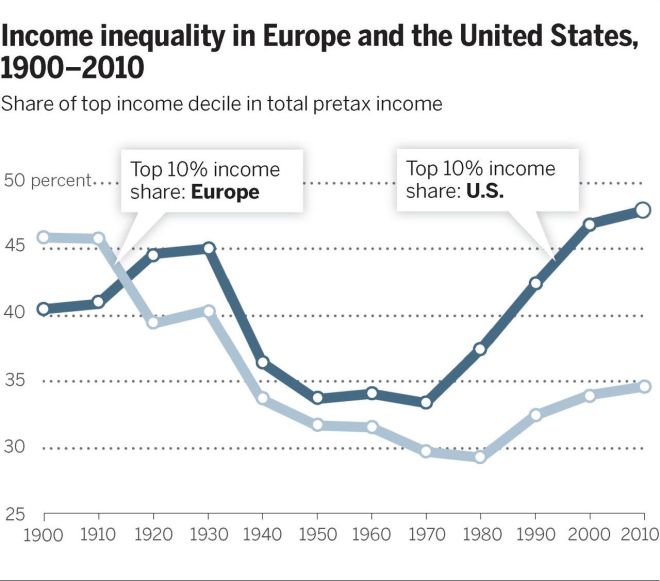
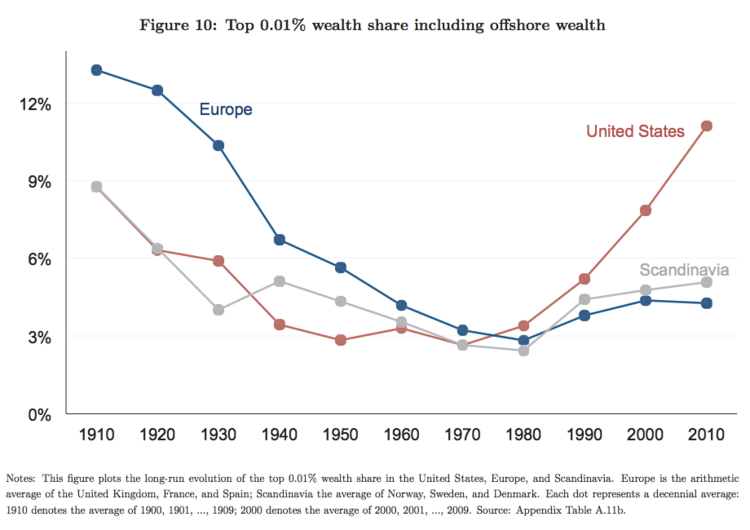


 freedom and reason