
Islamophobia has no Place on the Left

Jacobin has published an interview with Deepa Kumar, an associate professor of media studies at Rutgers University and the author of Islamophobia and the Politics of Empire. In the interview, titled “The Roots of Islamophobia,” Kumar says that interfaith dialogue is not enough (why even desire such a thing?) to marginalize Islamophobia. She calls on the left to “organize demonstrations, rallies, and other actions.” More than this, she calls on the left to develop a strategy that “addresses the root causes that make these. . . threats possible.”

What is the left being asked to do? Defend Muslims from discrimination? Or advance the cause of Islam?

Kumar’s relationship to the left ought to be strained after her rejection back in 2006 of the values of free speech and religious criticism in the Danish cartoons controversy. Opposing publication of the cartoons, in a Monthly Review article titled “Danish Cartoons: Racism has no Place on the Left,” Kumar complains about “the anemic response by the left in this country” to what she characterizes as “anti-Muslim racism.” She describes the “free speech” defense of “racist cartoons” and speech “condemning the protests against them” as “liberal cover for right-wing arguments.”

While Kumar is right to proclaim that racism has no place on the left, she is wrong to assume that the Danish cartoons are racist or have something to do with racism and, moreover, that European society is shot through with anti-Arab bigotry. The cartoons have no racist content. A Muslim is not a member of a racial category by virtue of his adherence to Islam; Muslims can be African, Asian, or European. The problem isn’t Arabs. The problem is ideology. Religion and culture are about ideas, not biology.

The cartoons are having a go at religion. In the West, that’s okay; every religious and political ideology is subject to criticism and even ridicule. Europeans have inherited the grand tradition of critical thinking that Karl Marx, in a letter to Arnold Ruge (in 1943), captures nicely: “if constructing the future and settling everything for all times are not our affair, it is all the more clear what we have to accomplish at present: I am referring to ruthless criticism of all that exists, ruthless both in the sense of not being afraid of the results it arrives at and in the sense of being just as little afraid of conflict with the powers that be.” It’s one of the things that makes the West free and progressive. It’s a culture worth defending.

Kumar’s standard Marcusean new left formulation, that the equal-opportunity argument for ridiculing religious identity does not apply to “oppressed and disempowered people,” creates an illusion of Muslim victimhood. There are 1.6 billion Muslims in the world. There are around 50 Muslim-majority countries, most of which run on sharia (Islamic law). And while Muslims are a minority in Europe, Europeans have been more than generous in allowing Muslims entry into their countries and providing them with public assistance, education, and housing – even passing laws punishing hate speech against Muslims and obscuring crime perpetrated by Muslim immigrants. All Europeans want – whether they say it or not (and many don’t for fear of being accused of bigotry) – is to be able to continue European culture, a culture that respects the rights of gays and women, enjoys a tradition of irreligious criticism, and possesses an irreverent sense of humor, traits conspicuously missing from Islam.

Piggy-backing off such terms as “Negrophobia,” “xenophobia,” and “homophobia,” those wielding the term “Islamophobia” mean to imply either that the speaker is mentally disturbed or that the concerns he has are unreasonable. It is an attempt to render the speaker and his speech illegitimate by suggesting that he is motivated by irrational fear and loathing of Muslims. Yet the evidence is clear that Islam is an oppressive ideology. It chains law and policy to a religious worldview. Its culture puts men over women, imposing upon the latter a regime of modesty and restricted movement. Its practitioners surgically alter the genitalia of children, persecute homosexuals, and push death for apostasy. Moreover, Islam is a religion, which by definition constitutes a system of false and alienated claims about the world. (Kumar would benefit from visiting Karl Marx’s withering critique of religion or any of Christopher Hitchens’ lectures on the subject.)

The question of whether fear and loathing of ideology is irrational depends on the character of the ideology and its effects. An audience of leftists would laugh out of the room any person who dared claim that fear and loathing of fascism was a mental disorder or an irrational position. Fascism is an ideology that, among other things, sees women as properly subordinated to men, homosexuals as degenerate, and demands the subordination of the individual to a totalitarian idea. Imagine antifascism described as “fascophobia.” Conscience obliges antifascism.

The term “Islamophobia” is designed to conflate Islam with those individuals who have either been indoctrinated or converted to Islam. But ideology and people are different things. The individual is the possessor of human rights, among these the right not to be punished for her beliefs. An ideology is not a person. It does not possess human rights. It cannot be discriminated against. It needs no protection. On the contrary, it needs confrontation. The effect of conflating ideology and people is obvious in this case: a weapon to smear those who speak out against Islam.

In her Jacobin interview, Kumar calls for “dismantling the institutional and structural foundations upon which Islamophobia is built.” She claims that “Islamophobia [is] integrated into the very fabric of US society because it serves to justify empire and the bloated national security state.” Every aspect of this claim is false or misleading.

Before Islamic terrorism became a problem, Americans were, for the most part, unconcerned about Muslims. Most of the Muslims they knew were either African Americans or white Arabs. In my childhood, Arabs were the heroes of our favorite films (such as in Ray Harryhausen’s Sinbad movie series, steeped in Asian mythology). Lebanese and Syrian celebrities moved through our television and radio worlds without a prejudicial remark. In her talks on the “construction of Muslims as the enemy,” Kumar continually depicts Muslims as “brown men.” But this is not the way those of European and those of European descent have generally viewed Arabs.  The racialization of Arabs as “non-white” is a recent phenomenon – it goes hand-in-hand with the project to Islamize western sensibilities. Muslims are not, for the most part, being racialized by the general population or right-wing ideologues. The source of the racialization is coming from Islamic and leftist academic activists. In the era of diversity politics, they see value in recoding Arabs as non-white. It allows Muslims to leverage the rhetoric of “white privilege.”

It is not true that anti-Islamic sentiments are used to “justify empire and the bloated national security state.” In the wake of the attacks on the United States by Islamic terrorists, the leaders of national security state moved to disconnect in the public mind Islamic terrorism and the ideology that motivates it. They went all-out in an effort to disabuse the public of any notion that Islam was behind the attacks that killed thousands of people. President George Bush repeated incessantly the slogan that “Islam is a religion of peace.” Senator Hillary Clinton parroted the line, adding that Islam had nothing to do with terrorism. President Barack Obama repeated these lines, as well. If anything, terrorism was as perversion of Islam, he said. In the face of every “Allahu akbar,” US politicians and corporate media pundits shielded Islam from responsibility.

The emergent attitudes towards Muslims in the United States (and Europe) is not because of the ahistorical and propagandistic view that “Islamophobia is integrated into the very fabric of US society because it serves to justify empire,” but because secularism is integrated into the very fabric of US society (our country is founded on it). A strong commitment secularism preserves religious freedom and advances human dignity. It is the threat to liberalism and secularism by a large and aggressive religious power – one that sees the West as decadent and sinful and seeks to bend culture and law towards its own irrational ends – that makes westerners uneasy. It is the West’s experience with a belligerent Islam that is (finally) pulling from reluctant westerners recognition of the threat Islam poses to the continuation of western culture and the values of equality, liberty, and tolerance. The West resists Islamization (yet not vigorously enough) in the same way it resists Christianization (at least the way those on the left have resisted Christianization).

This reality leads us to the core problem with Kumar’s argument. If Islamophobia is opposition to Islam and Muslims, and if resistance to Islam is a reflection of the West’s dedication to liberal values, then “dismantling the institutional and structural foundations upon which Islamophobia is built” means, at the very least, weakening western commitment to secularism, free speech, and the separation of church and state. And that’s the point to all this.

Outrage over cartoons depicting Muhammad reflects the desire of fundamentalist Muslims to spread Islamic rules to the West. It’s not enough that Muslims don’t depict Muhammad in images, they demand that everybody practice this newfound obsession with Islamic aniconism. The victory of the Enlightenment in the West means that westerners do not have to live under blasphemy laws. Muslims and their allies can’t impose religious-based blasphemy rules on western society directly, so they sneak them in by claiming that criticism of their prophet is racist. They exploit the West’s flagging commitment to free speech and free thought and the neoliberal reordering of society that underpins its erosion.

The desire to punish people for expressing their opinions or for drawing cartoons is a deeply illiberal impulse, one that strikes at the core of our culture, a desire that Muslims are eager to enact using violence or the threat of violence. For Kumar and her ilk, Muslim belligerence is to be resolved not by punishing violence and demanding assimilation to western values, but by diminishing the West’s commitment to a free and open society. This view has no place on the left. It is an authoritarian vision.

What is particularly troubling about the project to silence irreligious criticism of Muslims in Europe is what those who advance this line really want. The propaganda term “Islamophobia” is part of a strategy to soften and suppress opposition to the Islamization of the West. It not only aims to punish speech critical of Islam, but to shame people into open displays of affection for an ideology that views women as inferior to men. In order to show they are not Islamophobic, western women don the hijab and express “solidarity” with Muslims. Populations are being conditioned to celebrate the normalcy of Islam. This is how Islamization worked in Muslim-majority countries. And this is how it will work in the West.
Speaking Out Against Irrationality and Injustice Does Not Cause Terrorism

Malala Yousafzai was shot in the head by Pakistani Taliban, or Tehrik-i-Taliban, for speaking out about the practice of banning girls from school. In the Tehrik-i-Taliban interpretation of faith, speaking out in this way is speaking against Islam. For many Muslims, modern education, especially for girls, who are easily corrupted, is un-Islamic; not only is education believed to undermine Muslim identity, faith, and practice, but when Muhammad said Muslims have a religious duty to acquire knowledge, many Muslims interpret that to mean religious education only.

This is why it was surprising when Malala said the following: “The more you speak against Islam and against all Muslims, the more terrorists it will create.” Did she mean this to say that her own actions in speaking out against the Islamic belief that secular education is un-Islamic produced the terrorist action that nearly killed her? I would never think to blame the action taken against Malala on her willingness to speak out against oppressive Islamic practice. I encourage more Muslims to speak out against Islam in this way. To be fair, although I did not assume she was intentionally blaming herself for her own suffering, I suppose this could be an interpretation of her words. However, I took Malala’s words at their plain meaning, that is, as a threat. What I heard was a blame-the-victim frame: If you speak against Islam, the terrorism that follows will be your fault. 

The quote I provided was immediately followed by: “So it’s important that whatever politicians say, whatever media says, they should be really, really careful about it.” Far from changing the meaning of the first sentence, this second sentence doubles down on the threat. Watch what you say, be careful with your words, or the violence that follows will be on your head. That’s what I hear. To make sure we get the meaning of her words, Malala repeats the same argument. Then she says, “So it’s important that they try to show harmony towards Muslims and say that they’re accepted in this world.” Not only is Malala telling us that speaking against Islam will create more terrorism, but that not joining hands with Muslims and accepting Islam commits the same offense.

These are very troubling words. But I wonder about Malala’s state of mind. How could she not see the irony in telling us that we should not speak against Islam – that indeed we should embrace it – lest we suffer more terrorism when, at the very least, that logic suggests that she is responsible for the terrorism she suffered for daring to speak out against Islam? Can you imagine a racist telling you to lay off the criticism of white supremacy or else black people will suffer more? Can you see the contradiction? Can you see the threat? I certainly don’t accept that Malala is allowed to speak against Islam and I’m not.

Many progressives twist themselves into knots to deny what Malala told the world. I know they would sing a different tune if, on the grounds of deeply-held religious beliefs, a Christian extremist shot a Christian girl who survived to tell us that criticizing Christianity will cause more Christian extremism. We would say, rightly, that it’s sad that this young Christian woman is so deeply affected by her religious indoctrination that she would go on the road to tell her audiences that, in order to avoid what happened to her, others should not to speak against Christianity, that people needs to be very careful what they say about Christianity and Christians, and, moreover, that we should embrace Christianity. Malala has been picked as a spokesperson for human rights. But she is either being used or seeks to be a shill for Islam. 

Modesty Shaming

As such, “modesty shaming” means to be the opposite of “slut shaming.” But it’s not really the opposite. The “virtue” of modesty reconstitutes women as sexualized beings (in contrast to sexual beings), a fact that must presuppose the act of covering the body to avoid shame. Hiding the body in this way is not merely reifying and amplifying an initial act of sexualization; by drawing attention to the sexualization of the body inherent in the act of covering it for this reason, the practice of modesty functions as a statement condemning immodesty, which by definition includes those who remain to some degree uncovered (the ultimate standard of modesty being to dress in a bag of some sort or to live in a box). 

Thus the cartoon that tries to accuse the West of hypocrisy by portraying a woman in a niqāb and a women in a bikini looking at each other with ethnocentric gazes, represented with thought bubbles containing statements condemning the manner of dress, creates a false equivalency. To be sure, the sexualization of women showing cleavage, in bikinis, or women with no clothing at all, is also the product of the patriarchal gaze; but this is not something given by the manner of dress, but rather something that resides in the sexualized eye of the beholder. A woman dressing in a way that displays the sexualized regions is refusing to be covered. The woman forced – by this we usually mean shamed – into covering herself (as we see even in the act of breastfeeding in public) by definition cannot or finds it very difficult to refuse the sexualization of her body from confining her freedom and self-expression. Moreover, to suppose both are the victims of patriarchal pressure is to suppose that all cultural systems are equally unfree. The woman in the burqa could not wear a bikini if she wanted to.

Moral Relativism and the Education of Our Youth

“The General Assembly…calls upon all Governments to pay constant attention to educating the young in the spirit of respect for international law and fundamental human rights and freedoms and against Fascist, neo-Fascist and other totalitarian ideologies and practices based on terror, hatred and violence….” (Measures to be taken against Nazi, Fascist and neo-Fascist activities and all other forms of totalitarian ideologies and practices based on apartheid, racial discrimination and racism, and the systematic denial of human rights and fundamental freedoms)

The United States has failed in its duty to educate its youth about the essential character of moral commitment to fundamental human rights.

It is the essence of fascism to see moral action as primarily dependent on power and ambition. As such, fascism is the paradigm of moral relativity. Yet large portions of conservative and liberal communities also practice moral relativity. For them, determining whether something is right or wrong depends on what the goal (complicating the matter is false consciousness about whose interests are served by concrete policies). They do not really base their moral understanding on the “dignity and worth of the human person, in the equal rights of men and women and of nations large and small and [the need] to promote social progress and better standards of life in larger freedom….”

While fascism is not the only ideology that teaches people to disrespect international law and fundamental human rights and freedoms, it does seem to be the least hypocritical of the lot. We should end the hypocrisy by reaffirming the necessity of human rights and democracy to advancing human freedom and dedicating considerable time in our classrooms to the matter. And we must insist that our government adheres to a standard of conduct befitting these ideals.

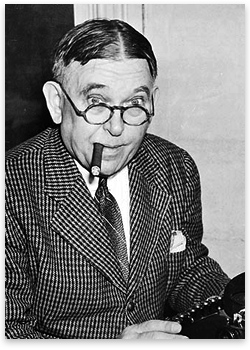
The Moral Degeneracy of H. L. Mencken

“Moral certainty is always a sign of cultural inferiority. The more uncivilized the man, the surer he is that he knows precisely what is right and what is wrong. All human progress, even in morals, has been the work of men who have doubted the current moral values, not of men who have whooped them up and tried to enforce them. The truly civilized man is always skeptical and tolerant.”

This quote, attributed to journalist H. L. Mencken, should immediately prompt a contentious person in a sufficient state of cognitive arousal to ask: What is the degree of morally uncertainty about genocide, rape, and slavery? Are those of us who are horrified by the sight of starving children culturally inferior? Are we uncivilized for objecting to this situation? Will we really make moral progress when we question whether it is truly wrong to starve children?

I must count myself among the uncivilized who cannot tolerate genocide, rape, and slavery. I cannot even bring my-culturally-inferior-self to be skeptical of the moral demand that we never fail to be intolerant of such things.

What is the source of H. L. Mencken’s view that civilized and culturally superior men must be uncertain of moral truths? The answer to this question is an easily discoverable and unambiguous one: Mencken was a committed social Darwinist. Like the sociopathic Ayn Rand of Atlas Shrugged fame, and any thoughtful fascist, Mencken believed that morality and democracy were tools that inferior men used to hold back superior men. For Mencken, what should determine right and wrong is the “will to live” (Schopenhauer’ notion which Mencken conflated with Nietzsche’s “will to power”), a judgment to which only a handful of superior men should be entitled – and perhaps will if a succession of supermen appear and save the world from democracy.

Pressing the philosophy of his idol Nietzsche into his own hyper-individualist and anti-democratic worldview, Mencken writes, “There must be a complete surrender to the law of natural selection – that invariable natural law which ordains that the fit shall survive and the unfit shall perish. All growth must occur at the top. The strong must grow stronger, and that they may do so, they must waste no strength in the vain task of trying to lift up the weak.”

To preempt the convenient delusion that Mencken is expressing only a possible interpretation of Nietzsche’s views and not his own, one should recall that Mencken said on his own account: “The great problem ahead of the United States is that of reducing the high differential birthrate of the inferior orders, for example, the hillbillies of Appalachia, the gimme farmers of the Middle West, the lintheads of the South, and the Negroes. The prevailing political mountebanks have sought to put down a discussion of this as immoral: their aim has been to prosper and increase the unfit as much as possible, always at the expense of the fit. But this can’t go on forever, else we’ll have frank ochlocracy in America, and the progress of civilization will be halted altogether.” (For those unfamiliar with the term ochlocracy, it means “mob rule,” which is how Mencken viewed democracy.)

“Linthead” was Mencken’s favorite term to refer to southern textile workers, a reference to the fragments of fabrics that clung to their hair even after their always arduous and sometimes deadly day in the factory. It was hardly a term of endearment. Mencken said of Southern whites, “Only a rare linthead girl remains a virgin after the age of twelve. Her deflowering, in fact, is usually performed by her brothers, and if not by her brothers, then by her father. Incest is almost as common as fornication among these vermin, and no doubt it is largely responsible for their physical and mental deterioration.” Working people – to a civilized and cultural superior mind like Mencken’s – were inbred mentally retarded and physical deformed vermin.

He was hardly kinder to African Americans. On the contrary: “So long as we refrain, in the case of the negro loafer, from the measures of extermination we have adopted in the case of parasites further down the scale, we are being amply and even excessively faithful to an ethical ideal which makes constant war upon expediency and common sense.” To Mencken, black Americans were not as evolved as whites of his own social caste. “In any chance crowd of Southern Negroes one is bound to note individuals who resemble apes quite as much as they resemble Modern Man, and among the inferior tribes of Africa, say the Bushmen, they are predominant.”  

Is there any hope for black Americans? “I admit freely enough that, by careful breeding, supervision of environment and education, extending over many generations, it might be possible to make an appreciable improvement in the stock of the American negro, for example, but I must maintain that this enterprise would be a ridiculous waste of energy, for there is a high-caste white stock ready at hand, and it is inconceivable that the negro stock, however carefully it might be nurtured, could ever even remotely approach it. The educated negro of today is a failure, not because he meets insuperable difficulties in life, but because he is a negro. He is, in brief, a low-caste man, to the manner born, and he will remain inert and inefficient until fifty generations of him have lived in civilization. And even then, the superior white race will be fifty generations ahead of him.”

However much one might credit Mencken with having, along with Mark Twain and a handful of others, established a unique U.S. literary tradition (Mencken’s lasting claim to fame), uncivilized people cannot allow a man with such repugnant opinions (and I have here provided but a sampling of his vileness) to stand among those luminaries who are so easily quoted as if their words reflect some deep wisdom to be heralded or emulated. Mencken was an antidemocratic, antisemitic, classist, negrophobic snob. So crude was the man that Dorothy Parker, having come to Baltimore with great interest in its literary scene, was compelled to leave Mencken’s presence when he turned to his pastime of making derogatory racial remarks. 

We should likewise be compelled to leave the presence of the myth of Mencken’s greatness. His legacy should instead serve as an example of how even moral degenerates can possess a knack for phrase-turning.

Groseclose’s Methodology

Tim Groseclose’s methodology is an ideological contrivance (Left Turn: How Liberal Media Bias Distorts the American Mind). Consequently, his results are unsound. For example, Groseclose categorizes the right-wing pro-military RAND Corporation as liberal. This begs the question: what does that word “liberal” mean?

If we grant the classification, then just about everything to the left of RAND is liberal. It will follow that journalists more often cite liberal sources than conservative ones. In other words, Groseclose’s measure is designed to find liberal bias. It’s a self-fulfilling prophecy. And not a very clever one.

Here’s another example of squirrelly methodology: Using Groseclose’s criteria, we can rank the American Civil Liberties Union as conservative, with the National Rifle Association as only slightly more conservative. Self-evidently, this is a useless metric.

The statistic given that 93 percent of Washington DC reporters vote Democratic may be correct, but meaningless in light of the way institutions actually work. Journalists are workers. Like most workers, managers and owners dictate their work, designing the product and telling them when and in what amount to make it.

In the media, the managers are editors. Editors control the hiring of reporters and the news that is reported. Studies consistently find that the editors’ bias in these matters reflect the sensibilities of the owners and advertisers (see Michael Parenti’s Inventing Reality to learn more about this).

But the 93 percent figure is misleading. What studies consistently find is that roughly 40 percent of journalists across the nation describe themselves as being liberal (around 30 percent describing themselves as just “a little to the left”), which means that 60 percent describe themselves as “middle of the road” or leaning towards the political right. Groseclose not only leaves out the political character of journalists across the country as determined by scientific polling, but he uses Washington DC journalists to illustrate a general media bias. This is a choice driven by ideology.

Even if we were to suppose that party loyalty represented actual bias (a case of the prisoners running the prison), the claim of a left-wing bias on account of support for Democrats is misleading because the claim assumes, first, that the Democratic Party represents a left-wing politics and, second, that liberalism is a left-wing philosophy. If the Democratic Party is a center right political organization, and if liberalism is a center-right political philosophy, then 100 percent of journalists can vote Democratic and self-identify as liberal and there will be zero left-wing bias in the media—unless the editors and owners are leftists, which would be an absurdity in a capitalist society.

Socialism is an example of a left-wing political philosophy. Support for the social democratic Green Party would indicate left-of-center orientation. What was the degree of attention given to the Green Party by the corporate media during the last election? Slightly greater than zero? What mainstream journalists are socialists? I cannot think of any, but a handful would hardly prove the claim.

What scientific studies of media bias generally find is that journalists, while relatively liberal on social policies, are significantly to the right of the public on domestic economic and foreign policy issues. Why? Because this is a capitalist society. There is no mainstream left-wing journalism in the United States. Claims of left-wing bias is rhetoric designed to dissimulate right-wing corporate power.

Groseclose doesn’t hide his right wing ideology very well. Consider his prediction that eliminating left-wing media bias (by which he must mean social liberalism) would shift the political spectrum to the right. Obviously he desires that collective American thought move from right-of-center to far right. He also admits that the corporate media is an effective tool of thought control.

* * *

Van Jones has never denied, indeed he has always been quite open about the fact that he, like a lot of young Americans, tried out various ideologies during his early political development before settling on his current pro-capitalist stance. A number of influential conservatives began their political lives as Marxists (a fact conservatives never seem to find troubling). David Horowitz, a favorite among conservatives, is a case in point.

However, the claim that the mainstream media did not cover the Jones scandal is false. I recently performed a search of LexisNexis (a database of all major media) and it returned more than sixty hits on the story. To be sure, the mainstream media didn’t dwell on it like rightwing radio, but they covered it extensively.

For the sake of accuracy, we should note that Groseclose’s desire to red-bait Jones overwhelms any obligation to get the controversy right. What Jones actually resigned over was for having called Republicans “assholes” and for having signed a petition calling for an investigation into 9-11, complaints that hardly seem resignation worthy.

For the record, Van Jones’ comments regarding environmental racism are well-founded. Blacks tend to live in poor parts of the city, and elites do in fact steer land fills and other toxic repositories away from their neighborhoods and into the poorer neighborhoods, which disproportionately affect blacks. As a consequence, the impact of environmental pollution is substantially greater in the majority black neighborhoods than in majority white neighborhoods. This is true for a range of social facts, from how food is distributed to how the police operate.

* * *

The video uses a standard trick typical of conservative anti-tax rhetoric. The pie chart shows the percentage of income taxes paid by the rich as a proportion of all taxpayers. If the rich have more money as a result of a tax cut, then they will pay a greater proportion of the income taxes by virtue of having a greater share of the income.

By every measure, the Bush tax cuts benefited the wealthy more than other classes. They also wiped out the largest budget surplus in history. Combined with military spending, this resulted in a massive fiscal deficit. Who finances the national debt? Rich people. Who collects the interest?

I expect most mainstream media outlets refrained from reporting this “fact” because the corporate media tries, for the most part, to appear objective and fact-minded. To present a meaningless chart would be self-discrediting. However, plenty of guests interviewed by the mainstream media made the spirit of this argument and their hosts did not object. Conservatives did the same thing during the Reagan years. It’s not a new story.

As for debt creation, this is intentional on the part of Republicans. It’s called “starving the beast.” By ramping up the debt, they can then justify cutting social programs for ordinary people. It’s part of the neoliberal privatization scheme. Does the “left-wing” media dwell on this? Not at all. Mainstream media is largely supportive of the privatization of everything. Why? Because they also are mega-corporations that benefit from the extraction of public wealth.

* * *

I have to say something about the source of the video. Groseclose is a real professor (of Economics at George Mason University) but Prager University is not a real university. It’s a right-wing propaganda site run by conservative Dennis Prager.

Among the secular leftists Prager says are conspiring to undermine America’s alleged Judeo-Christian foundations are labor unions, which have almost disappeared from the American scene, the ACLU, a libertarian organization defending the Constitution from authoritarian state policy, and civil rights organizations, that is, those organized groups of oppressed minorities trying to make America a more just country. 

We find a useful instance of Prager’s bigotry in his demand that authorities prevent Keith Ellison from swearing his oath to office on the Quran, the Muslim holy book. Such a remark should lead conservatives to wonder how committed Prager is to the US Constitution. (The Constitution states: “no religious test shall ever be required as a qualification to any office or public trust under the United States.”)

In defending his position, Prager claimed that every president since Washington took the oath on the Bible. This is a false claim. Teddy Roosevelt, a Republican, did not swear his oath on the Bible when assuming office in 1901. John Quincy Adams also did not swear his oath on the Bible when he assumed office in 1925 (he used a law book). In fact, there is no hard evidence that any president from John Adams to John Tyler used a Bible.

A Plea to Christians

Christian bigots are going after our homosexual brothers and sisters with renewed vigor. The forces of acceptance, love, and justice really need our liberal and progressive Christians friends to step up and stand with us against the hatred and intolerance in their ranks. They have to show the courage they showed against the racist bigots who spoke for Christianity in the past.

Some of you are old enough to recall that Christian bigots made the same arguments against race mixing. “Almighty God created the races white, black, yellow, malay and red, and he placed them on separate continents. And but for the interference with his arrangement there would be no cause for such marriages. The fact that he separated the races shows that he did not intend for the races to mix,” said Judge Leon M. Bazile on January 6, 1959. US Senator Theodore Bilbo wrote in 1946: “Purity of race is a gift of God…. And God, in his infinite wisdom, has so ordained it that when man destroys his racial purity, it can never be redeemed.” There “is every reason to believe that miscengenation and amalgamation are sins of man in direct defiance to the will of God,” he said.

I could continue for quite a while sharing quotes about how race mixing is un-Christian. But you are familiar with the arguments. Growing up, we all heard – and some of you, sadly, and hopefully regretfully, uttered – the same self-serving rhetoric against interracial marriage. I heard it from Christians all the time. “Andy, I got nothing against black people, in fact, some of my best friends are black, but the practice of interracial marriage is against God’s and natural law. It’s just wrong. But I still love everybody.” No, you really don’t. Racist bigotry in Christianity is still alive.

However, the Bible cannot legitimately be used to justify sexist bigotry any more than it can be used to justify racist bigotry. The Bible cannot be the moral and ethical guide for society. The Bible declares slavery to be a moral right and prescribes the rules by which one man can own another (Exodus 21:2-11,20-21; Leviticus 25:44-46). The Bible declares honor killing to be a moral right and prescribes the rules by which a father can murder his daughter (Deuteronomy 22:13-21). God of the Bible instructs his followers to perpetrate genocide (Deuteronomy 2:34, 3:6, 13:15, Joshua 6:21, 10:40; 1 Samuel 15:2-3) and rape (Deuteronomy 20:10-14; Judges 21:10-24; Numbers 31:7-18). All decent people condemn these terrible acts and commandments.

It is the moral duty of all Christians, if they truly bring the love they claim to bear, to reject the bigotry and hatred and terrorism of the scripture and work together with people of other faiths, and of no faith at all, to advance the universal humanist values that will finally bring us together in beloved community. Tolerance is not enough. We all must accept our brothers and sisters if we really mean to get away from irrational hate. We have to condemn bigotry. And, Christians, it would be most helpful if that condemnation occurred in your spheres of influence.

The End of Work

The labor theory of value is not a substitute of supply and demand. To my knowledge, no significant political economist – certainly not Smith, Ricardo, or Marx, whose work I have closely examined – argue that supply and demand explains value. That would theorize in the wrong direction. Price is a specific form of value, a function of commodity-capital over against money-capital. Supply and demand is more effect than cause (allowing for feedback, of course); when in equilibrium, supply and demand explain nothing.

Concerning structural unemployment, the best way to measure this (short of doing a scientific survey of the workforce) is by calculating the rate of surplus value, the chief indicator of the organic composition of capital. The US government makes that calculation easy by periodically conducting a survey of manufactures. My calculations in the past have found that the rate of exploitation has increased, which means fewer workers generating the same amount of surplus value. This is occurring across sectors.

Over against the shrinking proportion of labor in agriculture and manufacturing (even while output in these sectors has skyrocketed), as well as the delinking of income from production, government and services took up the slack in much of the second half of the twentieth century. But government employment is dwindling – three-quarters of government workers are now private contractors in for-profit companies – and services are rapidly automating.

For the same reason that we have seen dramatic increases in agricultural and manufacturing output with fewer workers, we are seeing a secular decline in service sector work relative to the expansion of that sector. Just as it was the industrialization of both agriculture and manufacturing that eliminated most labor from those sectors, the progressive industrialization of services will eliminate most labor from that sector. Since the dawn of property and social class, there have always only been four (with only the mix changing). What sector will appear to soak up the army of redundant labor to give the enumerated work?

Far from the ideological picture of production portraying workers doting after machines, the empirical picture finds consumers doing the work workers used to do – and not getting paid for it or questioning why they are performing free labor. That the economy continues to appear to grow is a function of states pumping up the credit economy to compensate for the fall in real income and the associated development of financial products. But we are reaching the end of an epoch.

No herald of the end of work argues that this happens overnight or that it must happen in a complete way to precipitate crises. We already experience the crises – and they are worsening. The intermediate stage, with rising labor redundancies and declining real incomes, is marked by transfers of surplus value between capitalist-intensive production employing fewer workers existing alongside low wage, labor-intensive production. The impending collapse of late capitalism is forestalled only temporarily by this, the dynamic that identifies the last and terminal phase of capitalist globalization.

This dynamic, combing with the overgrowth of finance-capital, and the socialization of productive ideas, is sufficient to predict the end of the current global system. And the capitalist class knows it, evidenced by the frantic pursuit of enclosure, a desperate attempt to stave off post-capitalism. With it we see structural adjustment, the erosion of civil liberties, the intensification of surveillance, the expansion of police and military apparatuses, and the arming of reactionaries with arms and ideology. It’s called “neoliberalism.”

Will the collapse happen tomorrow? In the time scales of history, when we say something is rapidly approaching, we don’t mean literally tomorrow. Or next year. We mean sooner than later and inevitably. And don’t forget overshoot-and-collapse; we are threatening to exceed the planets carrying capacity. The cancer of capitalism will kill us one way or another. It will serve the people well to drop panglossian delusions that technology will create new opportunities for the continued exploitation of labor (an attitude that, even if true, is immoral) – or allow us to live sustainably. Instead, we need to organize to democratize the economy and turn it to different purposes.

The Character of Superpatriotism

Consider the rhetoric and tone of the right-wing and conservative memes we see every day on social media. Love of country or admiration for the teachings of Jesus Meek and Mild are not behind the energy expended. There really isn’t any love in these memes. They are, for the most part, expressions of belligerence, chauvinism, and jingoism. Staged photos of soldiers and police praying, saving puppies and kittens, buying a random poor (black) child a toy. Kids pledging allegiance or praying in a public school setting. Confederate flag waving and wearing. All dressed in chintzy wear and sappy sentiment.

Beneath all the flailing symbolism is a desire fueled by hatred for those who love humanity, oppose war and imperialism, choose not to participate in mindless expressions of obnoxious loyalty to flag and deity, are down on their luck, want to give those who are down on their luck a hand up, are different. These memes are really a reaction to the acceptance, compassion, justice, love, and peace expressed and practiced by the “bleeding hearts,” “commie scum,” “hippies” and “treehuggers.”

Humanist values deeply irk the conservative personality, which is, beneath all of it, an authoritarian personality in wait, the seething tendency of a perverse collective psyche (and I use perverse here in its intended meaning). We have seen it before. At its core, superpatriotism and hyper-Christianity represent loathing of rational thought, intellectual pursuit, artistic adventure, and ethnic and racial and sexual diversity. In sum, and ironically (if we take them at their word), conservatism is contemptuous of individually differentiated attitudes and conduct.

The fascistic character of these expressions – authoritarian, conformist, disciplinarian, patriarchal, pro-corporal punishment, pro-gun, pro-hierarchy, pro-masculinity, pro-police, pro-war, pro-warrior – becomes self-evident with a bit of historical awareness. And a willingness to accept truthful comparisons. Authoritarianism, wherever it manifests, is a controlling and destructive tendency. Its desire is see people under the thumb of a rigid ideology. Tragically, good people get sucked into the irrational hatred and resentment because they want to be good patriots.

True unity is not obtained by rallying around flags, but by rallying around each other. We all know which social class benefits from dividing working people. We need to collectively focus our attention on the real enemy.

My Full Interview with the International Business Times

On June 26, I was interviewed by Sarah Berger for the International Business Times concerning the attack on tenure and faculty governance in the University of Wisconsin system by Governor Walker and the state Republicans. Berger used a small part of what I said in the published report (which is fine, because many others were interviewed). Here is rest of the interview: 

SB: What is your stance on Scott Walker’s proposal to remove tenure in the university system from state statute, leaving it  up to the Board of Regents, which has 16 members appointed by the governor subject to the confirmation of the State senate?  Also, what is your position on Walker’s proposal to change state law regarding shared governance? Do you think this change will discourage recruitment of potentially valuable faculty members to the University? 

AA: Wisconsin is unique among states in upholding the institution of tenure in statute. Some see that uniqueness as an argument in favor of taking it out of statute. I disagree. Tenure protections set in law tell the rest of the country that Wisconsin is committed to upholding academic freedom and sees tenure as a crucial asset in attracting the best professionals around the world and keeping them here in Wisconsin. Why shouldn’t we be a model for the nation? Retaining the same tenure language in Board of Regents policy is essential if it is taken out of statute. Still, the citizens of Wisconsin should be very concerned about these developments. The state is already losing some of its finest faculty, which means an exodus of research moneys from the state. It will lose a great deal more if tenure protections are removed or weakened. If economic and social development are valuable things to Wisconsinites, then retention of strong tenure language is essential.  

Many observers critical of this move by the governor and legislature are relieved that the Board of Regents is adopting the original tenure language. However, there is some troubling language in all this concerning an expansion of the reasons for terminating faculty positions, language that allows the administration to “…terminate a tenured faculty member, or layoff or terminate a probationary faculty member prior to the end of his or her appointment, when such an action is deemed necessary due to a budget or program decision requiring program discontinuance, curtailment, modification, or redirection.” This language severely weakens tenure protections and will cause the  system to lose a lot of fine faculty members to other states that continue to observe strong tenure protections.

Remember that tenure is not a guarantee of a job, contrary to the rhetoric we often hear. Tenure is about due process, making sure that faculty are not dismissed based on unpopular ideas, the whims of administrators, or the wishes of wealthy donors. Tenure is only earned after years of rigorous evaluation and assessment. Many talented people are in fact denied tenure. Moreover, tenure give faculty an investment in their jobs, a strong incentive to stay, in light of the fact that a university position often earns less income than a comparable position in the private sector.  

SB: Another colleague talked about the negative psychological effect that the proposal will have on the faculty and the university as a whole. Would you agree with that? 

AA: The psychological effects of this are palpable.  Morale is down across the system. The faculty here put in long hours, meeting with students not only in the classroom, but individually, working with them on projects, arranging internships and independent studies, advising and providing career advice, writing letters of recommendation. When not teaching and working with students, faculty are engaging their research projects and the campus and larger community in service. I know of no faculty member who works less than forty hours a week. Act 10 hit faculty hard. And now they are being asked to absorb hundreds of millions of dollars in cuts, which will affect families across the state. On top of this, faculty are having to endure the insult of being told they are overpaid and underworked. So, yes, it is having a damaging impact. All this is also having an impact on the reputation of the system worldwide. I hear it from faculty at other institutions.  Wisconsin is increasingly sounding like a place that talented professionals should avoid. 

SB: Do you think there is potential for the proposal to cause a chilling effect on academic free speech? Don Downs suggests this in his piece in Politico.  Do you think tenure protected professors feel as if they have more freedom to choose how and what they teach? 

AA: Weakening of tenure and faculty governance does carry a chilling effect. Faculty become concerned that if their research projects or teaching methods offend powerful special interests, especially those with financial ties to the institution, that positions and departments may be put in jeopardy. With these pressures, faculty self-censor. They may be hesitant to pursue this or that research interest which may be of great benefit to the larger community, interests such as environmental and labor concerns. The impact is hard to gauge, but it is certainly greater than zero.

SB: Do you believe the proposal, if passed, will affect non-tenure track and non-tenured professors? If yes, how so?  

AA: Very much. The loss or weakening of tenure and faculty governance puts non-tenure track and probationary faculty in a precarious position. Tenured faculty can operate from a position of strength and protect their junior colleagues who do not have tenure. There are administrators who look out for the interests of our junior colleagues, but in a system without strong protections for academic freedom and faculty governance, depending on the good will of administrators is not the security that a successful public university should afford to its employees, particularly if you want them to be about the pursuit of the truth. Non-tenure track and nontenured faculty are professionals, and if the state is concerned with keeping the best people in Wisconsin, then it shouldn’t weaken the traditional protections all faculty have enjoyed in the state.