
The Sandy Hook Shootings: What Really Happened

Note July 3, 2024: I no longer agree with banning military-style assault weapons.

The police have confirmed my identification of the weapons used in the killing. To be sure, I have an advantage in this sort of thing; I’m a criminologist with a bit of understanding of crime scene investigation, as well as what makes shooters like this tick. But, really, you don’t need to have these qualifications to put together a reasonably accurate account of the Sandy Hook massacre. You just need to listen to what the police, the medical examiner’s office, and other authorities are telling reporters. A knowledge of firearms helps. And a mind not clouded by right wing paranoid delusion.

Adam Lanza’s murder weapon

One of the ironies of this event is that right wingers would rather trust hasty reporting by the “liberal” news media in the immediate aftermath of the shooting, in particular the December 15 Today show coverage, in which numerous claims were made that turned out to be completely wrong, than believe the experts and authorities who are investigating the event.

Sandy Hook is not part of a conspiracy to disarm the populace. Here’s what really happened: A troubled young man living in a climate of gun enthusiasm in a house full of high powered and assorted weaponry went to an elementary school with four of those weapons, took three inside with him, and proceeded to murder 26 children, teachers, and administrators. The guns used in this crime were legally purchased. His mother taught him how to use a firearm and took him to the firing range to practice. He was trained and willing to kill. This is the long term problem we face in the United States: a culture supportive of gun violence.

The only way this particular tragedy could possibly have been prevented is if military-style assault rifles and high-capacity semiautomatic handguns and magazines were not publicly available, the number of guns allowed per household was sharply restricted, and any household with the presence of one or more diagnosed mentally ill persons was barred from owning firearms (which, if you know anything about the prevalence of mental illness would disarm a lot of households). Only the gun control measures listed would cover everybody (since most shooters are not mentally ill) and not involve further stigmatization.
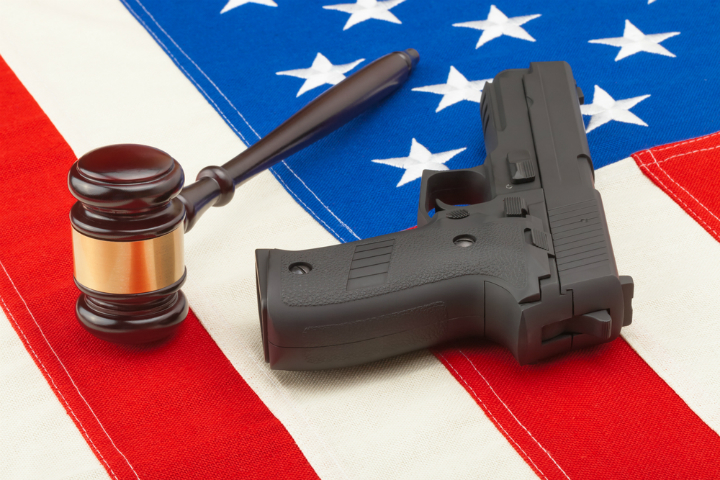
The Insurrectionist Myth

People seem to have forgotten why the Constitution was written. It was in large measure to form a strong national government to put down insurrections and rebellions that were threatening the nation under the Articles of Confederation.

Those who defend the Second Amendment most vociferously reject the premise on which the Second Amendment rests.

Recall the Second Amendment ratified by the states and certified by Secretary of State Thomas Jefferson: “A well regulated militia being necessary to the security of a free state, the right of the people to keep and bear arms shall not be infringed.”

Who regulates the militia? Government. Article 1, Section 8 of the United States Constitution: “The Congress shall have Power To provide for the calling forth the Militia to execute the Laws of the Union, suppress Insurrections and repel Invasions; To provide for organizing, arming, and disciplining, the Militia, and for governing such Part of them as may be employed in the Service of the United States, reserving to the States respectively, the Appointment of the Officers, and the Authority of training the Militia according to the discipline prescribed by Congress.”

How can the Second Amendment protect the right of insurrection when it specifically refers to the right of citizens in the context of a well-regulated militia to put down insurrections?

The Second Amendment is not about arming citizens to overthrow the government. This claim, which we hear all the time, is patently absurd. No republic sets itself up for violent overthrow. That’s why it is illegal to try to overthrow the government. Trying to overthrow the government is treason, arguably the most serious crime a man or group of men can perpetrate.

Think about it. Why would the government recognize a right to engage in illegal activity? It wouldn’t. Surely if it meant to it would not leave such a right so elusive!

The Second Amendment specifically refers to the context of a “well regulated militia” which, in Article I, Section 8 of the Constitution, exists “to execute the Laws of the Union, suppress Insurrections and repel Invasions.” It makes no sense to believe that the framers of the US republican would organize militias to defend against insurrection and simultaneously arm citizens to rebel against the Republic.

James Madison was many things, but stupid wasn’t among them. When he proposed what became the Second Amendment, he introduced the matter this way: “That the people have a right to keep and bear arms; that a well regulated Militia composed of the body of the people trained to arms is the proper, natural and safe defence of a free State. That standing armies in time of peace are dangerous to liberty, and therefore ought to be avoided, as far as the circumstances and protection of the Community will admit; and that in all cases the military should be under strict subordination to and governed by the Civil power.”

The intent of his amendment is clear. States need a military to defend their government. However, standing armies are a threat to liberty. Therefore the people will be at the ready for the purposes outlined in the Constitution. This militia will be well regulated and comprised of persons trained to use arms for the defense of a free state.

Whether this makes sense to you or not, it is nonetheless the plain meaning of the text in every single rendering. It was clear to those who voted for it. In fact, the only debate the House and Senate had over this was a conscientious objectors clause that was struck from the final version. The idea there was that persons could opt out of the militia for religious reasons or other reasons of conscience.

It’s true that the Second Amendment is not about self-defense or hunting. Use of a firearm for self-defense is part of the larger right to self-defense, which is so fundamental as to be assumed under common law. Nobody thought you needed an amendment to protect such a fundamental right. Moreover, the use of firearms in hunting is simply using an effective tool in acquiring food. That was such a normal thing when the Constitution was written that nobody thought you would need to secure that right, either.

The Second Amendment has one purpose: assure the states that the people have a right to defend their interests against insurrection and invasion. When you don’t have a standing army, then your male population becomes an army at the ready.

Have Your Rebellion Without Having One

One wonders why conservatives don’t call for the banning of violent sports, such as boxing. Here the aim is to actually hurt people and the result is that people actually get hurt.

Do forms of organized violence as socially-accepted spectator phenomena beget other forms of violence? Conservatives don’t think so. We are told that sports build character. The athlete – the football player, the hockey player, the boxer, the wrestler – is idolized.

If violent sports are unlikely to beget real world violence, then it’s a greater stretch to suppose violent movies do.

All these things – violent movies, music, sports – at best represent the sublimation of the frustration endemic to a modern capitalist life. Rather than translate that frustration into real world violence, workers discharge their frustrations vicariously through fictional or organized violence. That the forms catharsis takes are ever more intense is a reflection of the ever growing alienation capitalism represents to the social being.

If this interpretation works at all, we must avoid attributing the phenomena to the agency of the working class. Proletarians do not control the means of production; they do not have the power to produce these images. Fictional and organized violence reflect corporate desire to channel and capitalize on alienation and frustration.

Real proletarian violence has two directions and both are threats to the interests of the capitalist class. The first is interpersonal violence. Too much disrupts social order and exposes the ideology that capitalism is a peaceful and harmonious social system. The second is revolutionary violence. For obvious reasons this is to be especially feared.

Granting a few exceptions, violent movies and especially television programming, while providing an outlet for the energy that might otherwise fuel undesirable types of violence, reinforce attitudes supportive of authoritarian and hierarchical social ordering. The most dramatic recent example of this is The Dark Knight Rises.

The exceptions – V for Vendetta, for example – also function as catharsis: individuals can have their rebellion without making one.