Late Capitalism

In his tour de force Late Capitalism, Ernest Mandel periodizes the development of capitalism into three stages: (1) market capitalism (1700 to 1850), marked by growth of industrial capital in domestic markets; (2) monopoly capitalism (1950-1960s), marked by imperialism, the development of international markets and the exploitation of colonial territories; and (3) late capitalism (1960s-onward), dominated by transnational corporations, mass consumption, globalized markets and labor pools, and transnational flows of capital, a process often called globalization.

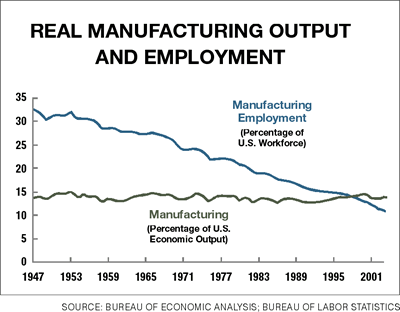
Some talk of “de-industrialization” and claim that the late capitalist stage is the “post-industrial” stage, but as Mandel points out, it’s not that industry has disappeared, just that industry has moved to different parts of the world and that automation, mechanization, and scientific management are replacing and displacing human labor. For example, manufacturing jobs have been disappearing in the United States even though manufacturing output has been holding steady since at least 1947. According to the Bureau of Labor Statistics, less than 9 percent of the workforce is now employed by manufacturing.

So where do the displaced workers go? They won’t be going into agriculture. When industrial production emerged in the United States in the second half of the 19th century, some 70-80 percent of the population worked in agriculture. Last year, that figure was 2-3 percent. In real terms, of the some 150 million employed workers in the United States in 2008, fewer than one million were agricultural workers. We have almost completely mechanized farming. The sectors that have been absorbing surplus workers over the past several decades have been service and government. The service sector is not monolithic in terms of income opportunity. Non-government service sector jobs are the low paying food, retail, and other service work. The business-financial sector employment has grown the fastest because of the vast expansion of the finance side of capitalism (the cause of increasing instability in the global economy and the direct cause of the recent financial crisis). However, the rational principles that drove disemployment in the agricultural and manufacturing sectors are now being applied to this sector (for example through self-service—which is unpaid labor).

These trends explain why, combined with diminishing progressivity in the tax code and decline in union density, despite manufacturing output remaining stable long term, inequality and poverty (as shown in numerous charts supplied to you this semester) have risen so sharply in the United States independent of the recessions (but of course compounded by them). Manufacturing jobs, with their average of 18 dollars an hour, are the foundation of what the corporate media likes to refer to as the “middle class.” Agricultural jobs average around seven dollars an hour, much less than half of the manufacturing average.  For service sector work along the lines of food preparation and services, personal care and service occupations, administrative support and retail occupations, and grounds keeping and maintenance wages range from nine to eleven dollars an hour in 2008 (unionizing this sector would dramatically raise wages and benefits). Wages in management in the financial and business service sectors are obviously higher than the wages for all these jobs. This also explains growing inequality, as income is shifting upwards into nonproductive sectors that control labor power. 

This is why corporations rationalize: to reduce the quantum of value produced by the worker going towards wages so that the capitalist and managerial classes can capture a greater proportion of the value (or exploitation). What propels the development of capitalism through these stages is, in major part, the contradiction between maximizing surplus value production in the short term and realizing that surplus in the form of profits, and the battle between capital and labor over the surplus value.  This is the twin process of capitalist accumulation and class struggle.  In order to maximize surplus value, capitalists must rationalize production—that is, make workers work harder for the same or less money or make them more productive by implementing machines and scientific management strategies (i.e. increase rates of exploitation).  When workers organize to raises their income, capitalists deploy even more labor saving strategies, in addition to busting unions and moving factories overseas. 

The latter method is called relative surplus value production, and this is the dominant method for accumulating capital beginning in the industrial era. The problem with this method is that when you make workers more productive, you need fewer of them. This is the source of a phenomenon unique to capitalism: the industrial reserve army of labor.  The industrial reserve is always present, but its ranks swell during periodic crises of capitalism, what we call business cycles. aggregate productivity can rise while aggregate wages fall. On top of this, rational strategies are applied sector to sector with shifts in labor costs.  Given that services now dominate, that’s where the bulk of labor costs are now, and this is why the customer is doing more and more of the labor, which, obviously, the customer is not being paid to do.  The result is labor displacement in the service sector and more growth in the industrial reserve. Manufacture is closing in on near-full automation.  Next in line is effectively automating the service sector. 

Rationalization of production is what lies behind the falling rate of profit in capitalist economies; as more workers are eliminated from paid production, aggregate demand decreases, which leaves commodities sitting on store shelves, unrealized as profit. This is a realization crisis, which in turn leads to a crisis of overproduction/underconsumption. Robots and machines don’t buy products.  They also don’t produce any value. Put another way, the rational behavior of firms to make profits causes systemic instability and human suffering. The government then moves to bail out the capitalists with tax payer dollars or by printing more money. This problem has been compounded in the United States by the globalization of manufacture, a process in which capital-intensive high-wage work is shipped overseas to take advantage of countries without labor and environmental standards and repressive political regimes that prevent unionization. But the more fundamental problem is that of capitalism eliminating high paying  (and even low paying) jobs through rationalization.

The effects of the rationalization process have been devastating not only in the United States, but around the world. The International Labor Organization predicts that, during 2009, the number of unemployed persons globally will rise between 29 million and 59 million. This increase comes on top of hundreds of millions already disemployed by rationalization. For example, the number of unemployed persons in the Asia Pacific region alone will likely reach 112 million people. In East Asia, between 40 and 49 million persons will be jobless. In South Asia between 33 and 37 million unemployed. And this is where much of the US industrial base went.  The total number of persons unemployed world wide at the start of 2009 was estimated to be between 210 and 239 million (it is much higher now with the continuing deteriorating global economic situation).

Widespread structural unemployment isn’t the only problem caused by late capitalism. Vulnerable employment, that is unstable and low-wage jobs, will likely rise 52 million in 2009, which would bring the total to more than 1.1 billion persons with vulnerable employment. In South Asia, the number of vulnerable workers will rise to almost 79 per cent of all workers or 493 million people. In South East Asia and the Pacific, the share of workers in vulnerable employment could rise to around 64 per cent, or 182 million people, and in East Asia to 57 per cent, or 458 million people. These are massive numbers and they underscore the problem with an economic system that strives to find ways to eliminate and marginalize workers. The number of people working in Asia Pacific but living in households that survive on less than $1.25 per person per day could rise to 589 million. The consequences of unemployment and vulnerable employment is widespread poverty.

While the Third World is getting our manufacturing jobs (and then capitalists are rationalizing those third world workers into the surplus population), the US Labor Department projects that from 2008 to 2018, service-providing industries will add 14.6 million jobs, or 96 percent of the increase in total employment.  Goods-producing employment as a whole is expected to show virtually no growth. And the US will see declines in manufacturing of some 1.2 million more workers. This means that even more workers who used to work at good-paying manufacturing jobs will be shifted into low-wage services.  Approximately one-third of the work force wasn’t working or was working only part time when this crisis started. And the current 10 percent unemployment rate masks a lot of suffering.  When we disaggregate that number, we find that unemployment for minorities is much higher than 10 percent, especially for African Americans, who have long been relegated to the reserve army (as well as to prison).

I used Asia and the United States to give the reader a comparative point.  Africa and South and Central America are also experiencing extraordinarily high rates of unemployment. Europe is experiencing some unemployment, as well, but because of the extensive social safety net most Europeans enjoy, the effects on their well being are not nearly as severe as for the United States and the Third World. Strategies used in European societies are good for capitalism because they redistribute income through taxation providing for higher incomes and therefore more stable of aggregate demand and profit realization patterns.  Germany, for example, wasn’t much harmed by the recent global economic meltdown because of the high standards of living enjoyed by its citizens. This is the benefit of democratic government.

One of the ways the managers of the US economy have kept alive the illusion that the nation continue to have an affluent middle class is by promoting debt financing. Fifty years ago, citizens had considerable savings. They were encouraged to save so there would be money for banks to lend for investment. At times, citizens were even required to save. Now citizens—as consumers—are urged to use debt financing as a way to spend beyond their means, which are dwindling with anemic and or declining real income. The United States now has the lowest savings rate of the advanced capitalist economies. In fact, we save now at the lowest rate since the Great Depression. There has been a dramatic acceleration in this debt since globalization moved into high gear.  As late as 1984, the private savings rate was more than 10 percent of national income. Americans are compensating for the loss of real wages by using credit cards to by the things they don’t need. Most families live and die in the red. It’s unsustainable, as the current crisis is trying to tell us.

In his book, Mandel wondered what would happen if all necessary labor were eliminated from production. “Imagine for a moment a society in which living human labor has completely disappeared, that is to say, a society in which all production has been 100 per cent automated,” he writes; “let us imagine that this development has been pushed to its extreme and human labor has been completely eliminated from all forms of production and services. Can value continue to exist under these conditions? Can there be a society where nobody has an income but commodities continue to have a value and to be sold?” These are rhetorical questions. Mandel writes, “A huge mass of products would be produced without this production creating any income, since no human being would be involved in this production. But someone would want to ‘sell’ these products for which there were no longer any buyers!”

For those in the back: “It is obvious that the distribution of products in such a society would no longer be effected in the form of a sale of commodities and as a matter of fact selling would become all the more absurd because of the abundance produced by general automation. Expressed another way, a society in which human labor would be totally eliminated from production, in the most general sense of the term, with services included, would be a society in which exchange value had also been eliminated. This proves the validity of the theory, for at the moment human labor disappears from production, value, too, disappears with it.”

Ludwig von Mises once sad, “It is not capitalism which is responsible for the evils of permanent mass unemployment, but the policy which paralyzes its working.” Wrong. It is capitalism that is responsible for permanent mass unemployment. It’s the nature of the beast. Mass unemployment is an essential feature of the capitalist mode of production. But what is more significant about what that great apologist of capitalism said is this—he admits that there is this problem of permanent mass unemployment. You don’t have to be left or right to recognize this. But you have to be left to fix it.

Late Capitalism and Permanent Mass Unemployment

Ernest Mandel, in his tour de force Late Capitalism, published in the 1970s, periodized the development of capitalism in three stages: (1) market capitalism (1700 to 1850), marked by growth of industrial capital in domestic markets; (2) monopoly capitalism (1950-1960s), marked by imperialism, the development of international markets and the exploitation of colonial territories; and (3) late capitalism (1960s-onward), dominated by transnational corporations, mass consumption, globalized markets and labor pools, and transnational flows of capital (as well as people), a process often called globalization. This blogs carries forward Mandel’s analysis to understand the contemporary situation.

Earnest Mandel, economist and activist

Some talk of “de-industrialization” and claim that the late capitalist stage is the “post-industrial” stage, but as Mandel points out, it’s not that industry has disappeared, just that it has moved to different parts of the world, and automation, mechanization, and scientific management are replacing and displacing human labor. This trends continues. Manufacturing jobs have been disappearing in the United States as output in this sector has been holding steady since at least 1947. According to the Bureau of Labor Statistics, less than 10 percent of the workforce is now employed by manufacturing.

Where do displaced workers go? Not into agriculture. When industrial production emerged in the United States in the second half of the 19th century, some 70-80 percent of the population worked in agriculture. Last year, that figure was 2-3 percent. In real terms, of the some 150 million employed workers in the United States in 2008, fewer than one million were agricultural workers. Capitalists have almost completely industrialized farming. And where they needs hands, capitalists seek them among selected immigrant groups. There are to jobs in this sector for native workers to return to.

The sectors that have been absorbing surplus workers over the past several decades have been service and government sectors. The service sector is not monolithic in terms of income opportunity. The financial sector employment has grown the fastest because of the vast expansion of the money side of capitalism (the cause of increasing instability in the global economy and the direct cause of the recent financial crisis). But this line of work is rather exclusive.

The largest sector is labor-intensive services, comprised of low wage food, retail, and similar work. However, the rational principles that drove disemployment in the agricultural and manufacturing sectors are now being applied to the service sector. These trends explain why, combined with diminishing progressivity in the tax code and declining union density, despite manufacturing output remaining stable long term, inequality and poverty have risen in the United States relatively independent of recession.

Manufacturing jobs, with their current average of 18 dollars an hour, are the foundation of what the corporate media likes to refer to as the “middle class” (really, the working class). Agricultural jobs average around seven dollars an hour, much less than half of the manufacturing average. For service sector work along the lines of food preparation and services, personal care and service occupations, administrative support and retail occupations, and grounds keeping and maintenance wages range from nine to eleven dollars an hour in 2008 (unionizing this sector would dramatically raise wages and benefits). Wages in management in the financial and business service sectors are obviously higher than the wages for all these jobs, which, in part, explains growing inequality, as income distribution is shifting upwards into nonproductive sectors that control labor power.

Corporations rationalize production to reduce the quantum of value produced by the worker going towards wages so that the capitalist and managerial classes can capture a greater proportion of the value (exploitation). What propels the development of capitalism through its stages is, in major part, the contradiction between maximizing surplus value production in the short term and realizing that surplus in the form of profits, and the battle between capital and labor over the surplus value.

This is the twin process of capitalist accumulation and class struggle: In order to maximize surplus value, capitalists must rationalize production, i.e., make workers work harder for the same or less money or make them more productive by implementing machines and scientific management strategies (i.e. increase rates of exploitation). When workers organize to raises their income, capitalists deploy even more labor saving strategies, in addition to busting unions and moving factories overseas. The latter method is called relative surplus value production, and this is the dominant method for accumulating capital beginning in the industrial era. The problem with this method is that, when you make workers more productive, you need fewer of them. At least it’s a problem for workers.

This dynamic is the source of a phenomenon unique to capitalism: the industrial reserve army of labor. The industrial reserve is always present, but its ranks swell during periodic crises of capitalism, or the business cycles. Aggregate productivity can rise while aggregate wages fall. On top of this, rationalization strategies are applied sector to sector with shifts in labor costs. Given that services now dominate, that’s where the bulk of labor costs are now, and this is why the customer is doing more and more of the labor, which, obviously, the customer is not being paid to do. The result is labor displacement in the service sector and more growth in the industrial reserve. Manufacture is closing in on near-full automation. Next in line is effectively automating the service sector.

Rationalization of production is what lies behind the falling rate of profit in capitalist economies; as more workers are eliminated from paid production, aggregate demand decreases, which leaves commodities sitting on store shelves, unrealized as profit. This is a realization crisis, which in turn leads to a crisis of overproduction / underconsumption. Robots and machines don’t buy products. They don’t produce any value.

As the rational behavior of firms to make profits causes systemic instability and human suffering, the government moves to bail out the capitalists with tax payer dollars or by printing more money. This problem has been compounded in the United States by the globalization of manufacture, a process in which capital-intensive high-wage work is shipped overseas to take advantage of countries without labor and environmental standards and repressive political regimes that prevent unionization.

But the more fundamental problem is that of capitalism eliminating jobs through rationalization. The effects of the rationalization process have been devastating not only in the United States, but around the world. The total number of persons unemployed world wide at the start of 2009 was estimated to be between 210 and 239 million. It is much higher now with the continuing deteriorating global economic situation. The International Labor Organization predicts that, during 2009, the number of unemployed persons globally will rise between 29 million and 59 million. This increase comes on top of hundreds of millions already disemployed by rationalization. For example, the number of unemployed persons in the Asia Pacific region alone will likely reach 112 million people. In East Asia, between 40 and 49 million persons will be jobless. In South Asia between 33 and 37 million unemployed. And this is where much of the US industrial base went.

Widespread unemployment isn’t the only problem caused by late capitalism. Vulnerable employment, that is unstable and low-wage jobs, will likely rise 52 million in 2009, which would bring the total to more than 1.1 billion persons with vulnerable employment (a number I gave in class yesterday). In South Asia the number of vulnerable workers will rise to almost 79 per cent of all workers or 493 million people. In South East Asia and the Pacific, the share of workers in vulnerable employment could rise to around 64 per cent, or 182 million people, and in East Asia to 57 per cent, or 458 million people. These are massive numbers and they underscore the problem with an economic system that strives to find ways to eliminate and marginalize workers. The number of people working in Asia Pacific but living in households that survive on less than $1.25 per person per day could rise to 589 million.

The consequences of unemployment and vulnerable employment is widespread poverty. While the Third World is getting our manufacturing jobs (and then capitalists are rationalizing those third world workers into the surplus population), the US Labor Department projects that from 2008 to 2018, service-providing industries will add 14.6 million jobs, or 96 percent of the increase in total employment. Goods-producing employment as a whole is expected to show virtually no growth. And the US will see declines in manufacturing of some 1.2 million more workers. This means that even more workers who used to work at good-paying manufacturing jobs will be shifted into low-wage services.

Approximately one-third of the work force wasn’t working or was working only part time when this crisis started. And the current 10 percent unemployment rate masks a lot of suffering. When we disaggregate that number, we find that unemployment for minorities is much higher than 10 percent, especially for blacks, who have long been relegated to the reserve army, idled in impoverished communities.

I used Asia and the United States to give the reader a comparative point. Africa and South and Central America are also experiencing extraordinarily high rates of unemployment. Europe is experiencing some unemployment, as well, but because of the extensive social safety net most Europeans enjoy, the effects on their well being are not nearly as severe as for the United States and the Third World.

Strategies used in European societies are good for workers because they redistribute income through taxation providing for higher incomes and therefore more stable patterns of aggregate demand. Germany, for example, wasn’t much harmed by the recent global economic meltdown because of the high standards of living enjoyed by its citizens. This is the benefit of democratic government.

One of the ways the managers of the US economy have kept alive the illusion that the nation continues to have affluent middle strata is by promoting debt financing. Fifty years ago, citizens had considerable savings. They were encouraged to save so there would be money for banks to lend for investment. At times, citizens were even required to save. Now citizens—as consumers—are urged to use debt financing as a way to spend beyond their means, which are dwindling with anemic and or declining real income.

The United States now has the lowest savings rate of the advanced capitalist economies. In fact, we save now at the lowest rate since the Great Depression. There has been a dramatic acceleration in this debt since globalization moved into high gear. As late as 1984, the private savings rate was more than 10 percent of national income. Americans are compensating for the loss of real wages by using credit cards to by the things they don’t need. Most families live and die in the red. It’s unsustainable, as the current crisis is trying to tell us.

Decades ago, Mandel wondered what would happen if all necessary labor were eliminated from production. 

Imagine for a moment a society in which living human labor has completely disappeared, that is to say, a society in which all production has been 100 per cent automated. Of course, so long as we remain in the current intermediate stage, in which some labor is already completely automated, that is to say, a stage in which plants employing no workers exist alongside others in which human labor is still utilized, there is no special theoretical problem, since it is merely a question of the transfer of surplus value from one enterprise to another. It is an illustration of the law of equalization of the profit rate. Bu let us imagine that this development has been pushed to its extreme and human labor has been completely eliminated from all forms of production and services. Can value continue to exist under these conditions? Can there be a society where nobody has an income but commodities continue to have a value and to be sold? Obviously such a situation would be absurd. A huge mass of products would be produced without this production creating any income, since no human being would be involved in this production. But someone would want to “sell” these products for which there were no longer any buyers! It is obvious that the distribution of products in such a society would no longer be effected in the form of a sale of commodities and as a matter of fact selling would become all the more absurd because of the abundance produced by general automation. Expressed another way, a society in which human labor would be totally eliminated from production, in the most general sense of the term, with services included, would be a society in which exchange value had also been eliminated. This proves the validity of the theory, for at the moment human labor disappears from production, value, too, disappears with it.

Ludwig Von Mises once remarked, “It is not capitalism which is responsible for the evils of permanent mass unemployment, but the policy which paralyzes its working.” But it is both capitalism and policy that are responsible for permanent mass unemployment. Unemployment is an intrinsic and indeed essential feature of the capitalist mode of production. Policy, to the extent that it serves the narrow interests of powerful corporations, exacerbates the problem of permanent mass employment. Capitalism is, indeed, in its late phase of development. It’s a terminal phase.

The Tea Party: A Corporate-Funded Astroturf Project

The “tea party” protests are part of a corporate-funded political project. It’s what the industry calls “astroturf,” or fake grassroots organizing, designed to advance corporate interests over the public interest. As such, the tea party phenomenon is an excellent illustration how corporate power and ideology are used to manipulate people and public opinion. Astroturf has proven to be an extremely successful tactic for industry. I wrote about astroturf in my article “The US Anti-Environmental Countermovement,” published in 2002 by the Sociological Spectrum, so you can seek out that article for more detail.

An Astroturf movement: the “tea party”

In one of the more notorious expressions of the phenomenon, the Republican Party organized a mob to harass vote counters and disrupt the vote count in the 2000 election in Florida. They succeeded in shutting down the Miami-Dade County count, which would have produced more votes for Gore (there were 10,750 previous uncounted ballots in a heavily Democratic district). Bush only led by fewer than 600 votes. The 2000 presidential election was a stolen election. That is the power of fake grassroots.

Much of the media portrayed the mob as “spontaneous,” manufacturing the illusion that there was a popular rebellion against counting votes. The “rioters” were in fact Republican Party operatives. The common sense notion that people do not spontaneously riot over counting votes in a democracy did not seem to count in the minds of most journalists covering the story. They did not find this suspicious. (At least they did not let on that they did.) And even those media sources that reported the truth had no effect because the cable and network news media didn’t put it in the echo chamber. The votes were never counted (nor were thousands of other votes in Florida), and George W. Bush was installed as US president by the Supreme Court. In other words, democracy did not happen in the 2000 presidential election in part because of an astroturfed event. And none of the perpetrators were ever punished for violating election law.

The tea party (or “tea bagger”) protests are only the latest venture of organized corporate power to manufacture the illusion of popular support for pro-corporate policies when the real mission is to thwart democracy. 

The tea party is organized by several corporate-backed and staffed groups, but foremost among them are FreedomWorks, Americans for Prosperity, and American Solutions for Winning the Future. These organizations provide logistical support and public relations assistance to protesters, who are joined by industry confederates to direct activities on the ground. FreedomWorks coordinates conference calls among protesters, teaches them how to plan events and write press releases, provides them with how-to guides on how to deliver a clear message, and gives them templates for sign construction. FreedomWorks has established several Internet domain addresses—making them appear to be the work of amateurs—to promote the protests. Americans for Prosperity and American Solutions for Winning the Future engage in the same types of activities.

FreedomWorks is run by Dick Armey, former high ranking Republican congressman who left politics to work for industry public relations. Armey is a right-wing extremist. I could give you several examples of his extremism, but here’s an obvious one that goes straight to the matter of his ideological worldview. In a recent debate with Joan Walsh on Chris Matthews television program Hardball, Armey mocked Walsh saying, “I am so damn glad that you can never be my wife cause I surely should not have to listen to that prattle from you every day.”

Americans for Prosperity is run by Tim Phillips, a partner in Ralph Reed’s lobbying firm Century Strategies (the parent company of Millennium Marketing, a commercial PR firm). Phillips is a long-time Republican Party operative, as is Reed. Americans for Prosperity is funded by Koch family foundations. Koch Industries is the second largest privately-held company in the United States. It is the largest privately owned energy company in the country. Koch industries made most of its money in the oil refining business, but it holds interests in chemical, fertilizer, and forest products. Americans for Prosperity is also connected to oil giant ExxonMobil. Remember the “grassroots” movement “Drill Here, Drill Now” protests? That was the work of Americans for Prosperity. 

Also organizing the tea baggers is former Republican House Speaker Newt Gingrich. He heads up the American Solutions for Winning the Future. Gingrich was part of the same Congressional leadership team as Armey when they were Republican Party officials. They engineered the “Contract with America” campaign of the 1990s that aimed to slash government programs for vulnerable populations. Republicans pushing the agenda in the House compared poor children to “alligators” and “wolves.”

Like Armey, Gingrich is a right-wing extremist. In his Reinhardt College address, “Renewing American Civilization,” on January 7, 1995, Gingrich said in explaining why women shouldn’t serve in combat: “If combat means living in a ditch, females have biological problems staying in a ditch for thirty days because they get infections and they don’t have upper body strength. I mean, some do, but they’re relatively rare. On the other hand, men are basically little piglets, you drop them in the ditch, they roll around in it, doesn’t matter, you know. These things are very real. On the other hand, if combat means being on an Aegis-class cruiser managing the computer controls for twelve ships and their rockets, a female may be again dramatically better than a male who gets very, very frustrated sitting in a chair all the time because males are biologically driven to go out and hunt giraffes.”

Gingrich provides tea partiers with talking points and sends e-mails to his supporters instructing them to go to the tea party events and help direct the protests. Gingrich’s outfit is heavily funded by polluting corporations, as well. Peabody Energy, which used to be Peabody Coal, is one of the ASWF’s major contributors. This explains why ASWF is so big on laying astroturf around burning coal (a major source of global warming pollution). Have you seen this campaign? They get a bunch of average-looking Americans standing around chanting about how great coal is. Right, that happens all the time. Next we will see rallies for nuclear reactors.

The tea party astroturf campaign is heavily pushed by the corporate media, particularly Fox News, which has been exposed organizing protesters and leading them in anti-government chants. Here’s a sampling of the broader Fox News PR campaign for the tea bag protests put together by Media Matters. Note how Fox News commentators admit that Fox News got the map from Newt Gingrich. 

The other news organizations cite conservative numbers of millions and liberal numbers of thousands and chalk up the discrepancy to ideological bias, leaving the viewer to suppose that maybe the millions number could be correct. But the new media is supposed to report the facts, and the fact is that these rallies are small compared to, say, anti-war rallies, which are almost never covered by the corporate news media. 

The numbers of the largest tea bag rally, which was the march on Washington, was somewhere between 25,000 and 60,000 persons. That’s respectable numbers, but nowhere near millions or even hundreds of thousands of people claims. Pictures were floated on the Internet showing the massive tea party crowd with the claim that there is no way this could only be tens of thousands. However, the photos turned out to be more than a decade old, taken in 1997 and had nothing to do with the tea baggers (they were quickly exposed as fakes because they don’t include the National Museum of the American Indian, which is located on the corner of Fourth Street and Independence Avenue, which did not open until late 2004).

If we think about it for a moment, we shouldn’t expect that right-wing rallies would be the equivalent of the massive rallies we see emerging from the left in quality or quantity. Protests and movements supporting corporate interests and opposing popular democratic desires are not naturally emergent mass phenomenon; they therefore must be organized. It would be odd indeed for any significant proportion of the majority of humanity—workers, women, persons of color—to rise up and oppose their own interests. Indeed, when such movements wane, we wonder why the people have become passive. Movements—or more accurately countermovements on the right, represent the interests of a small proportion of the population and therefore have to be concocted by and mass marketed by elite groups like Americans for Prosperity and FreedomWorks. 

I think we would all recognize that a pro-war rally would almost always have to be a manufactured thing. Organically speaking. Drives for war are elite-manufactured phenomenon (which is why we don’t debate them). So why would it strike anybody who spent any time thinking about it that ordinary Americans would in any great numbers naturally protest against universal health care and environmental protection, two things broadly and consistently supported by the public?

To be sure, the right can often make their projects appear successful because of the amount of money power and wealth its members possess. Corporations manufactured the New Right movement—with its network of foundations and think tanks, such as the American Enterprise Institute and the Heritage Foundation—that, once in power, dismantled much of the New Deal. It was major corporations that backed the neoconservatives who manufactured the threats that politicians used to justify invading other countries and limiting our civil rights. It wasn’t like the masses were going to tear down the good stuff or desire to invade countries that had never attacked us or give up their Constitutionally-protected freedoms, so corporations had to do it.

This is easy to see if we look at other moments in history. Under feudalism, for example, the king’s interests were obviously contrary to the interests of his subjects; but, because of his power and wealth, he could be heard, and he could always find a mob to defend his interests against popular forces seeking greater freedom. The illusion was that the king had the numbers on his side. But the reality is that he didn’t have greater numbers on his side, or especially the majority on his side. He had a lot of power to deceive people so he could exploit them more. And he had this power because he, and the nobility he served, controlled the wealth the serfs produced with their labor. This is a general principle of class-based societies: the ideas of the ruling class are the ruling ideas. When you control the material means of production, you control the ideological means of production.

It is worth noting that similar tactics were used by corporations in Germany and Italy during the fascist countermovement. Corporations funded gangs of disaffected citizens, coordinated by right-wing intellectuals, and legitimated by former army officers and small business owners, to harass labor union meetings and disrupt progressive political rallies. Some of these groups eventually organized themselves around notions of military rank and discipline, for example the paramilitary Blackshirts in Italy and the Brownshirts in Germany. There are always reactionary members of the working class that can be mobilized by right-wing forces to thwart popular democracy. Tragically, a lot of good-hearted people get caught up in these things.

Studying the tea party events reveals that unwitting participants typically have a poor and frequently confused understanding of political and economic power, process, and history. For example, one of the claims made at the rallies—you see it written all over the signs—is the claim that Obama is a “socialist.” Socialism is an economic system in which the means of production—resources, tools, machines, buildings, investment capital, etc.—are owned and controlled by the working people to their benefit. Under socialism, corporations go away. Under socialism, the president doesn’t hand over taxpayer money to big financial institutions. Socialists don’t assemble a team of Wall Street insiders to serve as advisers to the president. The notion that Obama is a socialist is ludicrous on its face when you have an understanding of the idea and the history of socialism.

Another claim made by tea baggers is that Obama is a “fascist.” The signs often claim Obama is simultaneously a socialist and a fascist. Pictures of socialist leaders appear alongside Hitler’s picture. Obama’s pictures are modified to make him look like Hitler. Again, if you know the idea and history of fascism, you know that these depictions are absurd (you also know that fascism and socialism are opposites). Fascism is a right-wing corporatist capitalist ideology and practice. Fascists were organized and bankrolled by big industry and big finance capital to smash the left, the labor movement and democratic parties. And while it is true that state monopoly capitalism in the Untied States presents with fascistic elements—military patriotism, perpetual warfare, oppressive criminal justice system, white supremacy—the Democrats are political centrist or center-right, not right wingers. Ever since Woodrow Wilson, Democrats have been establishment progressives. Democrats support rights for gays and lesbians, minorities, women, and immigrants—all causes opposed by the right. Whatever Obama may be, he is not a fascist.

What we are looking at here is a disinformation machine, one that dispenses images of Obama and the Democrats that are erroneous, organized by political front organizations for big corporations, designed to undermine the interests of working people, while advancing the interests of monopoly capitalism, while integrating disaffected and reactionary elements of the working class into anti-democratic reactionary cells. The purpose of all this is to send flak in the direction of the Democrats to constrain their ability to do the things they were elected to do, as well as create the appearance of a mass movement of people opposing progressive government policies, so that viewers at home will think, “Where’s there’s smoke there’s fire, so maybe I should jump on board this tea party thing.” That’s astroturf in a nutshell.

An Obnoxious Chauvinist

Paradox, hypocrisy, and chavinism rule in the interview, Judaism as a way of being, as Yale professor David Gelernter tells the public radio audience, in an hour-long discussion with Tom Ashbrook of Boston, that Jews are the originators of Western culture and everything good in it. The interview is concerning Gelernter’s book Judaism: A Way of Life.

According to the Yale computer scientist and frequent contributor to the neoconservative Weekly Standard, Jews are the pivot upon which world history turns. Jews invented the ideas of acceptance, loving one’s neighbor, social justice, and tolerance. Jews love the stranger, because they are themselves strangers among mankind.

It is a “fact of history,” Gelernter tells Ashbrook, that Jews are the choosen people, and anybody who disagrees with that “fact,” or criticizes the IDF, which Gelernter characterizes as the “most moral army in the world,” is an anti-Semite and a liar. But such criticism is to be expected, he laments, because nobody wants to hear the truth. Yahweh has called upon the Jews to preach truth to the world (apparently truth is another idea the Jews came up with). And any Jew who disagrees with this is obviously filled with self-hatred and self loathing. It is the curse of the Jews, according to Gelernter, that the people who hate Judaism the most are also Jews. And Jewish criticism of Israel state policy is part of the big lie.

At the beginning of the interview, Ashbrook asked Gelernter to talk about his concept of separatism, which he discusses in the book. Gelernter obliges arguing that Judaism calls upon Jews to be separate themselves from other groups. Jews are part of mankind, he said, of course, but because Jews are specifically enjoined by Yahweh to help all of mankind find god, they have to remain a separate nation and a separate spiritual entity. Thus conscious and willful segregation is called for.

If a non-Jew were to observe that Jews were clannish, he would immediately be accused of anti-Semitism, since one of the hallmarks of anti-Semitism, we are told, is the stereotype of Jews as clannish. Okay, so maybe Jews can say things about themselves that non-Jews cannot. But would not a Jew applying a Jewish stereotype not be an instance of self-loathing? For if it is a fact that Jews are told to be clannish, then how can it be racist to simply observe that fact?

At any rate, according to Gelernter, while Jews may wish to be like everybody else, they must never allow themselves to be. To be sure, this is one of the sources of anti-Semitism, he says. People hate Jews because Jews insist on speaking the truth. Jews are hated for the mission Jews have been called to join, namely the duty to teach mankind values, because the origin of these values are Jewish. But teach Jews must. Jews are told to be be obnoxious, to get in other people’s faces. We know Jews are the chosen people because everybody pays attention to them and everybody hates them. Gelernter makes other claims, as well. Poetry is a Jewish creation. And, if you judge Israel from the point of view of the United Nations, Israel is the source of evil in the world.

I can’t believe that any more than a handful of American Jews listening to this program thought Gelernter’s speech constituted an accurate representation of Jewish beliefs. At least I certainly hope not, because it didn’t sound good. In fact, it sounded racist. Had the interviewee been an African-American professor from Yale talking about how African culture was the pivot upon which history turned (more true than Gelernter’s claims in at least one way, namely the original human being was African, not Jewish), or, worse, a white Christian professor from Harvard crediting the church with having created everything moral in the world, I can’t imagine anything less than a substantial proportion of public radio listeners finding the chavinism distinctly racist. In any case, it was definitely bad from a public relations standpoint – that is, if anybody gave a shit.

I’m surprised that Ashbrook sat there and listened without taking Gelernter to task more than he did. He got a bit frisky at the end, but otherwise he let Gelernter have the hour (an extraordinary amount of time considering the topic). The best I can figure out is that Ashbrook was giving Gelernter enough rope to hang himself. By the end, Ashbrook even led Gelernter into unapologetically calling for women to recognize their duty to be homemakers and understand that men were to be in charge of in public life. If this were an exercise in helping Gelernter make a complete fool of his himself, then it was a brilliantly executed plan.

Contras and Cocaine

Dark Alliance: The CIA, the Contras, and the Crack Cocaine (Seven Stories Press 1999) grew out of a three-part series of articles published in the San Jose Mercury News in 1996. Gary Webb’s work concerned the nexus of terrorists, known as the Contras, who were backed and trained by the White House and the CIA and organized crime figures involved in cocaine trafficking. The network smuggled large shipments of cocaine into the United States through various points. Los Angeles was the receiving point. From Los Angeles, cocaine was distributed throughout the United States. Cocaine profits were funneled to the Contras to fund their terrorist operations. The CIA-Contra traffic was the primary source of the growing cocaine problem in the United States during the second half of the 1980s. This followed on the heels of the drug war that sent, and continues to send, thousands of young black men to prison. Webb’s investigation revealed – his facts and conclusions independently corroborated – the role of CIA and evidence that Reagan/Bush administration protected traffickers and dealers by shielding them from prosecution. The White House pursued this illegal route because the Boland amendments, passed between 1982-1984, restricted government funding of Contra activities.

Under intense flak from the government and Contra backers, as well as the big corporate news, The San Jose Mercury News distanced themselves from the story and Webb in 1997. The attacks on Webb’s work by major news corporations was particularly effective in marginalizing Webb. Webb understood what was going on. “The government side of the story is coming through the Los Angeles Times, the New York Times, the Washington Post,” Webb told FAIR in 1998. “They use the giant corporate press rather than saying anything directly. If you work through friendly reporters on major newspapers, it comes off as the New York Times saying it and not a mouthpiece of the CIA.” The attacks on Webb effectively ended his career as a journalist. In 2004, Webb was found dead, twice shot in the head. The coroner ruled his death a suicide. Since his death, it has become generally accepted by corporate media that Webb’s reporting was accurate (reporters had known about CIA-Contra drug trafficking before Webb took on the story, but stayed away from it because they worried it would ruin their careers).

Drug trafficking by elements in the United States government is well documented. Alfred W. McCoy, who spoke on this campus a few years back, and who has documented the extensive use of torture by the Bush/Cheney administration, wrote the landmark work on CIA-heroin trafficking in The Political of Heroin: CIA Complicity in the Global Drug Trade (Lawrence Hill Books, 2003). More recent US involvement in drug trafficking has been documented by, among others, Peter Dale Scott and Jonathan Marshall in Cocaine Politics: Drugs, Armies, and the CIA in Central America (University of California Press, 1998), Castillo Celerino and Dave Harmon in Powderburns: Cocaine, Contras, and the Drug War (Sundial, 1994), Alexander Cockburn and Jeffrey St. Clair in Whiteout: The CIA, Drugs, and the Press (Verso, 1999), and Gary Webb in the aforementioned Dark Alliance .

What Webb exposed is one of the more stunning examples of political crime by the state. In a nutshell: The Iran-Contra arms-for-hostages/arms-for-cash/drugs-for-cash operations involved the United States government, led by Reagan and Bush Senior, selling advanced weaponry to entities in Iran (an official enemy of the United States at the time) in exchange for hostages and money. The weapons were sold through channels in Israel, one of the many US client states in the region. Revenues from weapons sales were funneled to the Contras operating in Nicaragua from bases in Honduras. The Contras were organized as death squads and terrorist cells striving to undermine the popular Sandinista government, which had charted a path away from its imperialist master towards sovereign independence, a democratic effort that caused it to become designated by government propagandists as a “communist menace.”

After tens of thousands of Nicaraguan civilians had been tortured and murdered by the Reagan/Bush crime network, fourteen administration officials were eventually charged with crimes. Eleven officials were convicted. As noted in my previous post, the World Court found the US government guilty of intentional terrorism. However, due to legal technicalities and pardons from George H. W. Bush, none of the convicts served any prison time. Bush pardoned six felons associated with the scheme: Elliot Abrams, Duane Clarridge, Alan Fiers, Clair George, Robert McFarlane, and Caspar Weinberger. Other major criminal actors involved were Oliver North, John Poindexter, and Otto Reich. The underlying crimes of treason, murder, and terrorism were never prosecuted. And, as explained earlier, the US prevented any action by the international community with its veto on the UN Security Council.

Despite their involvement in illegal weapons sales to an enemy nation, cocaine trafficking, and terrorism, several of the named officials continued to serve in government. Elliot Abrams became the Special Assistant to the President and Senior Director on National Security Council for Near East and North African Affairs under the George W. Bush. Otto Reich, the head of the Office of Public Diplomacy, the chief propaganda unit under Reagan, served under George W. Bush. John Negroponte served as Ambassador to Iraq, the National Intelligence Director, and Deputy Secretary of State under G. W. Bush. You can see him sitting behind Colin Powell while Powell lies to the UN Security Council about weapons of mass destruction in the run up to the illegal invasion and occupation of Iraq. Six-time felon Poindexter served under Bush as Director of the Office of Information Awareness, Bush’s major domestic spying operation.

Operation Cast Lead Has Failed

The Israeli military says that 1,166 people were killed in Operation Cast Lead, 60 percent of whom were “terrorist operatives.” The state of Israel shamelessly lies in defense of war crimes and crimes against humanity against the Palestinian civilians who live under its thumb. See the Goldstone report and the findings of the international, Palestinian, and Israeli-based human rights organizations that establish the truth of Israel’s aggression against Palestinian civilians, including hundred of children killed in Operation Cast Lead.

According to the state of Israel, Operation Cast Lead was intended to stop rocket attacks into Israel. Some 270 rockets and mortar rounds have been fired from Gaza into Israel since the end of the operation. Operation Cast Lead, besides being an international crime, was a failure in its “intended” purpose. I think it’s clear at this point that no move by Israel short of either making peace with Palestinians or eliminating every Palestinian from Gaza will stop rocket fire or some other sort of violence from at least a handful of Palestinians against Israeli towns within range.

If human rights matter, there is no military solution to this conflict. To be sure, British settlers in North America justified massacring Indians on the grounds that Indians responded violently to colonization. But that didn’t make any less obvious the true source of the violence. Nor did it make the violence morally justifiable. Today, it is not only morally unjustifiable to make war on civilian populations – it is illegal under international law.

Israel will have to make peace, and that peace will have to based on something resembling a just settlement concerning land, property, and resources. The minimum acceptable for something like this is Resolution 242, unanimously adopted by the UN in November 1967, stating that no nation can legitimately acquire territory by war under international law, that Israel must withdraw its forces from territories occupied during the 1967 war, that Israel must terminate its state of belligerency, that Israel must recognize the right of vessels to navigate through international waterways, that Israel negotiate a just settlement of the Palestinian refugee problem.

Realizing the demands of Resolution 242 requires withdrawal of Israel armed forces from territories occupied in the 1967 war and the occupied territories, dismantling all settlements in these areas and the occupied territories, and compensation and/or right of return to expelled Palestinians. The means the removal of Israel forces and settlers to behind the 1949 armistice lines.

More just would be a return to the UN partition map of 1947 established in Resolution 181. Even more just would be the establishment of a single democratic country in Palestine without any ethnic or religious character. These last two options will not happen because of the recalcitrance of Israel and its defender the United States. The first option will likely never happen for the same reason, but it has to be the bottom line or else Israel will continue to consume all of Palestine.

The Fatah constitution contains the following articles: “Article (7) The Zionist Movement is racial, colonial and aggressive in ideology, goals, organisation and method.” And “Article (8) The Israeli existence in Palestine is a Zionist invasion with a colonial expansive base, and it is a natural ally to colonialism and international imperialism.” If the Fatah constitution is wrong, then why does Israel continue to engage in colonial activities? Settlements are the hallmark of colonial expansion. If Zionism is not racist, then why does the Israeli state define itself in specific ethnic terms? Why does the dominant ethnic Jewish population systematically privilege Jews, particularly Ashkenazi Jews (Europeans), and disadvantage Arabs and Mizrahi and Sephardi Jews, those of non-European origins? It isn’t a matter of opinion these characteristics of Zionism and Israeli behavior. They are matters of fact. If the leaders and citizens of Israel do not wish be defined in such a manner, then why, instead of pretending that the facts aren’t what they are, do they not change their policy and behavior?

The Shawshank Redemption Illustrates Key Concepts in the Sociological Study of Prisons and Penology

These are remarks made at the Christie Theater in Green Bay on November 9, 2009.

Frank Darabont’s 1994 film The Shawshank Redemption, based on the novella by Stephen King titled Rita Hayworth and the Shawshank Redemption, is a superb film, which, while not doing well upon release, has since developed a cult following. The film has two of my favorite actors in Tim Robbins and Morgan Freeman.

Scene from The Shawshank Redemption.

It may seem a little odd to think of this as a Stephen King story, but King also wrote The Green Mile, which also concerns the criminal justice system. These are, in their own way, horror stories.

Shawshank State Prison, is a fictional penitentiary in Maine. The movie is set mostly in the period from the late 1940s through the 1960s. The last part takes the story in the 1980s. What I want to do in my remarks is situate King’s fictional prison in the context of real history.

The penitentiary system is a relatively new social phenomenon, scarcely two hundred years old. It emerged, along with its philosophy of deprivation of liberty, on both sides of the Atlantic ocean in the late eighteenth and nineteenth centuries. 

Built upon the foundation of jails, workhouses, and disciplinary programs in England and France, the US system served as a way of organizing labor displaced by the transition from agricultural capitalism, the result of improvements in agriculture and the shift in capitalism towards industrial and finance capitalism. The development of penitentiaries – and the development of the criminal justice system more generally – tracks the development of capitalism.  

US reformers – Thomas Jefferson, Benjamin Rush, Caleb Lownes, Zebulon Brockway, to name a few prominent figures – were inspired by the Italian juridical theorist Cesare Beccaria and the British philosopher Jeremy Bentham to build a system that moved away from the cruel physical punishments one saw during the latter Middle Ages with the rise of agricultural capitalist production. 

Reformers stressed rehabilitation, which they conceived as putting criminals to work. City jails rebuilt and state prisons built to put convicts to hard labor. The sources of labor were unskilled laborers from urban areas and transient agricultural workers. The state of Pennsylvania and the Quakers led the charge of prison reform.  

In the 1770s, Walnut Street Jail was established and Lownes was appointed its first warden. Dubbed “the cradle of the penitentiary,” the jail became the model prison for new penology. Several penitentiaries followed, all within span of 16 years (1799-1815). The Eastern State Penitentiary in Pennsylvania was the paradigm.

The Eastern State Penitentiary in Pennsylvania.

The evolution of the system was marked by its cyclical character, which correlated with the nation’s economic cycles. The initial period following the War of Independence was marked by a rapidly growing economy.  Labor demand outstripped labor supply, so prisons provided ready labor pool for state and capital. Prison industries were geared towards urban industries and convicts performed labor-intensive work.

Following War of 1812, the nation entered a recession. High levels of unemployment were seen by early 1820s, followed by a financial panic 1837 and a depression. One third of workforce out of work and aggregate wages fell 50 percent. Prison industries lost profitability.  As a result, a movement emerged to get tough on crime. Prisoners should not work; should be undesirable places. The liberal reformer was “too lenient. ” To be effective, deterrence required retribution.  Brutal physical punishment were instituted including the treadmill, stocks, irons, whippings. 

This cycle between rehabilitation and retribution has been the pattern right up until the present.  When the economy recovered in the 1840s and labor demand grew rapidly in manufacturing and agricultural work declined, labor reintroduced in Auburn and Pennsylvania systems. Treadmill and isolation systems were eliminated. Prison labor was seen as useful producing revenues for administrators. Captive workers were used as weapons against crafts system. This period coincided with the emergence of industrialization.

After 1850s, with large-scale immigration and the widespread deployment of labor-saving machinery, the growing industrial reserve – the “dangerous classes” – became a problem. A depression followed in 1857-1858 reducing demand for prison labor and harsh punishments came back into effect. Prisons swelled. 

During much of the period during the development of the penitentiaries, there was slavery in the South. There was no penitentiary system there, but what some have called the “great penitentiary,” that is the plantation system, what was, in fact, a giant system of forced labor camps. 

Before the development of the penitentiary system in the north, convict labor was widely used. Convicts were used throughout the south, as well, before the large-scale introduction of African labor. After chattel slavery was ended with the Civil War penal slavery was reintroduced in the south, first in the form of convict leasing (1880s-1920s), then in the form of chain gang, which persists to this day.  Elements of the chain gang system appear in the movie.

James Whitmore plays the character Brooks Hatlen, who fails to adjust to life outside of prison. Some may be perplexed by this, but various problems confront long-term prisoners after release that lead to a range of response. 

Donald Clemmer coined the term “prisonization” in his 1940 book The Prison Community. He defines prisonization as “the taking on, in greater or lesser degree, of the folkways, mores, customs, and general culture of the penitentiary” by inmates. Clemmer’s ideas stimulated the development of a literature on prison socialization and culture, the basic premise of which is that, over time, incarcerated individuals will acquire the values, norms and beliefs held and practiced by other inmates. 

Prisonization is a process of assimilation into inmate society that is characterized by the adoption of a particular constellation of norms, values, and beliefs that shape the prisoner’s worldview and undermine the goals of reform. The inmate code isolates the prisoner from the influence of penitentiary staff by fostering the prisoner’s allegiance to his fellow prisoners. Devotion to the code represents a type of solidary opposition.

The new rules are distinct from both those of the institution and of the wider society. The more true someone holds to prison culture, the more he or she rejects the rules of prison authorities and those of the outside community. Stanton Wheeler puts the dynamic this way: “The net result of the process [is] the internalization of a criminal outlook, leaving the ‘prisonized’ individual relatively immune to the influence of a conventional value system.”

According to Clemmer, prisonization plays the primary role in determining the success of the prisoner’s adjustment to outside life. The learned set of values and norms that replace the inmate’s conventional beliefs and practices inoculate him or her against pro-social influences upon returning to mainstream society. The general hypothesis is that empirical research should find a negative relationship between the degree of prisonization and the success of rehabilitation.

The deleterious effects of imprisonment depend on the frequency and intensity of associations with other inmates and the length of time spent in the penitentiary setting. Putting the matter simply, the more time inmates spends with other prisoners, and the longer their sentences, the more prisonized they will become.

Clemmer identifies numerous structural elements shaping prison society, such as the antagonistic relationship between inmates and prison staff, the existence of cell-house groups and work gangs, race-ethnic stratification, and so forth. 

Many observers attribute prisonization to the austere realities of incarceration. Like mental hospitals and concentration camps, the penitentiary is a species of what sociologist Erving Goffman calls “total institutions.” In a total institution, all activity occurs according to rigid rules and tight schedules. Shorn of responsibility for basic life choices and activities, prisoners become almost wholly dependent upon the regimen of the system.

Goffman believes total institutions cause “self-mortification,” deadening people’s autonomy, identity and willpower. In a similar fashion, Ann Cordilia find that prisons “desocialize” inmates and make them reliant upon authority, while Kathryn Watterson characterizes women’s prisons as a “concrete womb”—only behind prison walls do the prisonized feel secure. 

Gresham Sykes, used the idea of the “pains of imprisonment,” to describe how prisoners adapt to prison life. James Austin and John Irwin report an affective dimension to these pains, finding among inmates’ feelings of powerlessness, meaninglessness, normlessness, detachment, and alienation. From this perspective, the culture of penitentiaries in which inmates are prisonized is caused by their anomic state of existence, as inmates, struggling to make sense of their world, develop their own normative and value systems. 

To the degree that prisonization is a factor in prisons, the phenomenon creates problems for the goals of rehabilitation. Accustomed to prison culture, convicts find life on the outside challenging. Just how problematic prisonization makes reform depends on length of confinement and the degree of assimilation to prison culture.

According to Clemmer, as a general rule, the longer inmates stay in prison, the more prisonized they become, the less likely they are to successfully adjust to society, and the more likely they are to recidivate after release.

From Goffman’s perspective, dependence upon constant surveillance and authority makes autonomous existence beyond prison difficult. A certain percentage of convicts find it impossible, and make their way back behind penitentiary walls.

Enjoy the movie. With a little sociological imagination, you should be able to appreciate how a fictional drama can illustrate key social science concepts in the study of the penitentiary and modern penal philosophy and practice.

The Myth of Extraordinary Evil: A Challenge to Evolutionary Theories of Genocide and Xenophobia.

This is a paper I presented at the Mid-South Sociological Association in Lafayette, LA, November 6, 2009. I have left off the page numbers and bibliography for this version. 

“The standard misapplication of evolutionary theory assumes that biological explanation may be equated with devising accounts, often speculative and conjectural in practice, about the adaptive value of any given feature in its original environment (human aggression as good for hunting, music and religion as good for tribal cohesion, for example).” – Stephen J. Gould, Scientific America(1994)

“We all have darks sides to us, and, given the right confluence of contributing factors, we are all capable of some terrible deeds.” – James Waller, Becoming Evil (2002)

In A Natural History of Rape (2000), biologist Randy Thornhill and anthropologist Craig Palmer argue that since women instinctually seek men of wealth and status with which to copulate, men who do not have such things have developed the instinct to force women to copulate with them. Their proof for this claim is that while rape allegedly occurs in all known cultures, in many cultures there is no known cultural encouragement to rape. Important findings as these, the authors contend, demonstrate “that the best way to better understand the role of culture in the cause of human rape is to approach the subject from the only generally accepted scientific explanation of the behavior of living things: Darwinian evolution by natural selection.”

In Becoming Evil (2002), social psychologist James Waller explores the problem the existence of “extraordinary human evil” and concludes that the capacity to oppress and kill people perceived are different from themselves is ultimately rooted in human nature, what he calls the “ancestral shadow.” He theorizes that proper dispositional character and appropriate situational triggers transfigure the human aptitude for violence into savage action. Deep down, each of us is suited for genocide because the human being is predisposed to hate and dominate others. We are in essence born killers. Augustine Brannigan, a sociologist at the University of Calgary, sketched a similar view of evil in his 1998 essay “Criminology and the Holocaust,” published in Crime and Delinquency, wherein he proposes a theory of genocide based on evolutionary psychology.

These and other writings have provided a ready-made explanation for oppressive and violence behavior in popular consciousness on the political right. I offer here a critique evolutionary psychology and, more generally, sociobiology, as social scientists apply these to the phenomena of hatred and violence. My criticism is that theories founded upon the premise of a universal and innate human potential for hatred and violence are logically problematical and empirically unsound. I also voice political objections to the ideology of human nature, which, consistent with the framework of sociobiology, is conceptualized in this paper as an intransitive and normally stable genotype fixing, or at least shaping, the behavioral characteristics of the phenotype, or “the macroscopic level of the whole organism.” I juxtapose to the sociobiological conception of human nature a constructivist standpoint in which it is argued that what people are is socially determined and that culture and situations shape individual and group choices among historically variable lines of conduct. I argue that, because human agency is a transitive phenomenon, sociobiological explanations of violence are almost certainly false.

I begin with a summary of key points in Waller’s Becoming Evil and Brannigan’s essay “Criminology and the Holocaust,” followed by a critical analysis of their arguments. Twelve problems are identified and elaborated. Although the empirical shortcomings of evolutionary psychology are documented and discussed, my criticisms are concerned for the most part with problems of logic. At points in the critique, I reference studies in the larger sociobiological literature. I conclude with a discussion of the political implications of the sociobiological program and recommend rejecting this approach in favor of the historical materialist approach to studying human social behavior.

Accounts of the Turkish genocide of Armenians in 1915, the German deployment of the Einsatzgruppen in the Soviet Union in 1941, Indonesia’s invasion of East Timor in 1975, and so forth, are tests of various theories of evil, according to Waller. Extant theories explored in his work include Milgram’s authority studies, Arendt’s banality thesis, Adorno’s authoritarian personality inventory, and Goldhagen’s “willing executioners” hypothesis. Waller’s explanation begins with an appeal to evolutionary psychology, a research program purporting to explain emotions and behaviors by drawing on the logic of natural selection. Evolutionary psychology derives from sociobiology the notion that human behavior is either controlled by genes or emerges from a constellation of genes that conditions our experiences and the expression of social action. Alleged universal forms of social behavior are the products of descent with modification. War, racism, and sexism are at root basic survival processes acquired during adaptive upgrading. The catalog of traits underlying expressions of human nature cited by sociobiologists include territorial imperative, male domination, selfishness, altruism, grammar, and aesthetic sensibilities. Although Waller downplays his enthusiasm for evolutionary psychology by characterizing the field as a “protoscience,” he nevertheless embarks on an extensive defense of it, at the conclusion of which he states that “we can no longer dismiss as an unsupportable theological or philosophical assumption the idea that human nature has a dark side.” As Becoming Evil proceeds, Waller’s certainty in the tenets of evolutionary psychology grows stronger. Two chapters later he writes as if it is a fact “that genocidal evil is readily available in our human potential.” 

Rejecting the blank slate theory, which assumes that variable environmental conditions (culture, social structure, geography, and so forth) are the cause of group differentiation in H. sapiens, Waller argues that human beings are “driven by a set of universal reasoning circuits that were designed by natural selectionto solve adaptive problemsfaced by our hunter-gatherer ancestors” (emphasis his). Some psychological adaptations come to us in the form of comradeship, love, cooperativeness, communication, nurturance, a sense of justice and fairness, and self-sacrifice. However, alongside our more prosocial proclivities exist “darker ultimate motives.” These include “intergroup competition for dominance, boundary definition, and fear of social exclusion.” Both sides of human nature comprise what Waller calls our “ancestral shadow.”

The chief components of our innate capacity for evil, according to Waller, are ethnocentrism, xenophobia, and the desire for social dominance. Human beings “have an innate, evolution-produced tendency to seek proximity to familiar faces because what is unfamiliar is probably dangerous and should be avoided.” Relying on the problematic logic of homology, Waller offers the observation that chimpanzees have a dark side as evidence for the “the idea that our aggressive and violent tendencies go back into our prehuman past.” Waller appeals to an incident that occurred in 1974, in which Godi, a chimp of the Kahama troop in Gombe National Park, Tanzania, was observed by Hillali Matama (a field assistant from Jane Goodall’s research center) being tortured by chimpanzees from a neighboring troop. Chimps and humans, Waller notes, share 98.4 percent of the same DNA. He quotes Wrangham and Peterson who, based on this incident, write, “The idea that humans might have been favored by natural selection to hate and to kill their enemies has become entirely, if tragically, reasonable.” Wrangham and Peterson contend that these “surprisingly excellent models of our direct ancestors” demonstrate that “[c]himpanzee-like violence preceded and paved the way for human war, making modern humans the dazed survivors of a continuous, 5-million-year habit of lethal aggression.” Waller then states as fact that “our ape ancestors have passed to us a legacy of aggression and violence, shaped by the power of natural selection.” In the spirit of Desmond Morris’ Naked Ape, Waller concludes that the behavior of our closest ancestors reflects our desire for social dominance.

However, Becoming Evil is not a one-sided sociobiological explanation of evil. The author stresses that we will not find genocide in a gene. “Ethnocentrism, xenophobia, and our desire for social dominance are tendencies, not triggers that lead to mechanical causation or reflex action,” he writes. He begins his search for these other causes with a focus on the psychosocial determinants of mass murder. Here the perpetrators’ “identity” becomes salient. However, Waller criticizes the tendency among social psychologists to seek explanations locating causal factors outside the individual. Although situational factors play a role, he stresses the need for researchers to focus on evil dispositions, because the “personalities of perpetrators do matter.” Among the dispositional influences Waller identifies are cultural belief systems, which involve orientations to authority and ideological commitments; the degree of moral disengagement, which concerns justifications, euphemisms, and exonerations; and rational self-interest, encompassing professional and personal self-interest. Yet, he emphasizes, as with the evil potential in human nature, personal disposition “only tells us that we all capableof extraordinary evil.” We are left with only potential.

Waller then turns to the immediate social context, theorizing that perpetrators embed in a “culture of cruelty.” Through ritualized deindividuation and suppression of conscience, the culture of cruelty extracts loyalty from the individual by escalating commitments to killing operations. Facilitating the culture of cruelty is collective inaction, explained by “diffusion of responsibility,” or the “bystander effect.” Waller explores how definitions of the target, seen in the concepts of “other” and those who have experienced “social death,” contribute to extraordinary evil. He draws his evidence from the social psychology literature on “us-them thinking,” “out-group homogeneity,” the “accentuation” effect, dehumanization, and “victim blaming.” In these arguments, Waller’s arguments enjoy some points of contact with the sociological literature, for instance (although he does not cite them) in the analysis of contradictory moral systems and techniques of neutralization by Gresham Sykes and David Matza.

Waller concludes Becoming Evil with a synopsis of his theory of extraordinary human evil and briefly explores ways to suppress our tendency to kill others unlike ourselves. He condenses his argument into three concepts: the actor, the context of the action, and the definition of the target. Here, his commitment to a pessimistic theory of human nature becomes palpable. Waller emphasizes the importance of “the universal dispositional nature of human nature”—our “ancestral shadow”—for understanding the perpetrator, because researchers “cannot underestimate the impact of what we are on whowe are.” He argues that extraordinary evil rests in “innate, evolution-produced tendencies for ethnocentrism, xenophobia, and the desire for social dominance” and is therefore “readily available in our human potential.” Our nature “endows us with the psychological mechanisms that leave us all capable of extraordinary evil when activated by appropriate cues.” The major cues triggering extraordinary evil are the aforementioned cultural belief systems, moral disengagement, and rational self-interest. Because the disposition towards violence occurs in a social context, the culture of cruelty plays a role in helping “perpetrators initiate, sustain, and cope with their extraordinary evil.” At the heart of the culture of cruelty are the phenomena of professional socialization, group solidarity, and the merging of role and person. Finally, perpetrators must see their targets as unworthy of full moral consideration. The organizers of mass death achieve the social death of their victims by dehumanizing them.

Four years before the publication of Becoming Evil, Augustine Brannigan, Professor of Sociology at the University of Calgary, sketched a similar view of evil in a1998 essay “Criminology and the Holocaust,” published in Crime and Delinquency. Founding his arguments for the most part upon Matt Ridley’s thesis in The Origins of Virtue, Brannigan argues that “the dark side of [our] sociability is group prejudice and an intolerance for out-groups.” He provides two sources of evidence for this view. The first is the tendency of male chimpanzees to form coalitions and raid neighboring troops for females (Brannigan assumes, as does Waller, the validity of homology, as well as the genetic origins of chimp behavior). The second is the social behaviors of the Yanomamö of Venezuela, a group that Brannigan characterizes as a “modern stone-age people.” From these examples, Brannigan draws the following conclusion: “the evolution of sociability, altruism, and the instincts for coalitions goes hand in hand with hostility to outsiders.” Our “belligerence arises from our coalitionist nature,” which lies “at the heart of our sociability as a species and is the root of xenophobia.”

After stating that the ideas evolutionary psychologists generate will provide fertile grounds for sociologists “if they contain clues to the basis of collective ethnic violence and genocide,” Brannigan introduces several caveats into the discussion. First, theories of crime remain based on voluntarism. Human nature supplies the appetite for violence, but it does not guarantee that violence will result. Individuals choose to misbehave. The author avoids discussing the paradox of amalgamating an existentialist position, which involves moral judgments, with sociobiology, in which human beings, because behavior is determined by extrasocial forces, are not viewed as subject to moral evaluation. Second, culture remains the mechanism that switches instincts on/off or excites other instincts to switch them on/off. Third, and this follows from the second, our shared biological constitution does not fate us to violence. Citing Buss’ work The Evolution of Desire, Brannigan writes that our ability to curb our ancestral desires “seems to borrow in spades from the mechanisms central to sociological criminology—high levels of self-control and social control, conditions that are acquired to various degrees during early childhood socialization.” Given the dynamic between our desire for violence and a culture that suppresses it, “xenophobic behavior—and its management—are here for the long haul.” Thus, despite caveats, Brannigan returns to the construct of human nature as the master explanatory variable. We do not learn to be evil, according to this view; rather we learn not to be evil.

Sociobiology is at best an impoverished scientific paradigm for explaining human thought, emotion, and behavior. At worst, it is unscientific, a form of scientism, the application of method from one area of study (biology) to another area of study (anthropology/sociology) without regard to the qualitatively different phenomenon under study. The application of evolutionary theory to the level of reality that encompasses interpretation and meaning commits a fallacy, a domain level error, by falsely applying a logic induced from observations of the natural domain to a domain that operates on a different logic, the logic that forms the basis of sociology and anthropology, disciplines both dependent upon natural history in an ultimate sense (though not needing to always take account of it), that nonetheless operate according to emergent logic as different from biology as biology is from physics. Scientists recognize that the biological domain cannot be reduced to physics. An ecosystem, despite having a physical dimension, is not a physical system. Natural relations are not governed by the same forces. Ideas in physics can be used metaphorically to describe observations in biology, but they are always metaphors. And the process by which metaphors are generated and used remain explicable only in terms of the mental lives of persons, which, without a social environment where language is present, are not even possible.

I discuss the following twelve problems present in both Waller and Brannigan’s work, problems representative of the larger evolutionary psychology and sociobiology literature: (1) neglect of culture and social structure, variables crucial to any explanation of mass human action, that is the sociocultural force as the prime mover of hatred and violence; (2) neglect of the role of motive, thus very little analysis of willful social action (actions derived from the sociocultural system, not from the biological one); (3) explicit and implicit use of the logic of control theory, which uses a “but for” logic of explanation, and thus assumes facts not in evidence (ordinarily, people don’t need a reason not to kill); (4) resort to circular reasoning; (5) reliance on fallacious explanations of the sort Gould calls “just-so stories,” a illegitimate form of teleology in which everything is explicable in a manner consistent with the theory; (6) erroneous belief in the inherent connection between cultural universals and human nature (as well as the vacuity of categories of cultural universals); (7) explanations of variability in quantity and quality using constants as exogenous causal factors; (8) the problematic logic of homology (deriving conclusion based on observation of other animals); (9) empirical and logical weaknesses of laboratory-based animal studies (assuming the validity of homology); (10) ignorance of the paucity of evidence demonstrating the existence of behavioral genes and the absence of any reasonable theory explaining the link between genes and behavior, not to mention attitudes and motives; (11) the problem of overgeneralization using atypical examples; and (12) appeal to the false ontology of human nature. On this last point, I emphasize that this is not a dismissal of the fact that humans are animals or that they have needs that are universal. It is skepticism regarding the idea that human attitudes, motives, and actions are the expression of evolved brain circuitry or modules.

Any explanation of group hatred and mass killing claiming completeness must explore how historical dynamics structure societies to make genocide more likely and take account of the shared beliefs that guide the perpetration of collective murder. The arguments presented by Waller and Brannigan fail as explanations because they tend to neglect culture and social structure. Although Waller does address the force of culture, this element plays a marginal role in his explanation; culture may act to prevent the manifestation of the genocidal impulse. Moreover, while Waller seeks nomothetic status for his subcultural explanation (the strongest element of his theory), the situational component remains inadequate for a general theory of evil because there is no explanation for how such situations arise in the first place. At best it is a woefully incomplete account.

Without an account of motive, explanations for intentional social action become doubtful. While Brannigan seems unaware of the problem of motive for his proposed framework (beyond misplaced appeals to voluntarism), Waller’s reticence to deal systematically with willful human conduct is evident in his mishandling of Daniel Goldhagen’s thesis in Hitler’s Willing Executioners (1996). Goldhagen contends that the Holocaust was rooted in anti-Semitic culture, the sentiments of which were widespread in Weimar Germany. This culture shaped the milieu in which Germans were raised. Xenophobia was acquired during a lifetime of socialization in anti-Semitic culture. Therefore, racial hatred and racial pride provided the motive to kill Jews. When called upon to embrace their white German identity and save their troubled nation, Germans became “willing executioners.” The Nazis did not unleash a violent human nature, as Waller and Brannigan argue; rather, German fascism unchained learned genocidal anti-Semitism. There were certainly other causal forces at work. Macroeconomic instability created a context in which the Nazis could, by joining with traditional conservative forces, rise to power. A bureaucratic state machine made possible the mass production of death. These factors (largely ignored by Waller and Brannigan) constituted the opportunity for and the means of genocide. But anti-Semitism served as the motive. Waller’s criticism that Goldhagen’s explanation of motive is tautological finds Waller hoisted upon his own petard; for his own thesis rests upon a claim that the genocidal disposition is latent in all of us. What is more, whereas Goldhagen is able to empirically demonstrate the existence of an anti-Semitic culture and sentiment, Waller is only able to speculate about innate violent tendencies.

The claim that biology is not destiny, voiced by both authors, reveals the central weakness of their shared approach, namely, a fundamental commitment to the logic of control theory. Brannigan writes, “The Nazis may have played to instinctual out-group animosities in the reign of terror from 1933 to 1945, but the postwar peace process and the trial of war criminals orchestrated the innate moral instincts to reduce racial bigotry.” In other words, proper socialization can reduce the likelihood that H. sapiens will murder other belonging to groups not like theirs. He thus explicitly connects evolutionary psychology to control theory, which states that but forproper socialization, humans naturally commit acts of force and fraud. In other words, people need a reason not to kill. (While Waller does not make this connection explicit, his work nevertheless shares with Brannigan’s the logic of control theory.)

Brannigan’s characterization of the tenets of control theory as mechanisms central to sociological criminology reveals a stunning ignorance of the literature. While deterrence models appeal to control theory, there is no disciplinary consensus over the utility of control theory in understanding criminality. Indeed, control theory is widely recognized as a deeply problematical approach in the discipline. It is empirically questionable at many points, and its logical problems are probably insurmountable. Elliott Currie puts the matter succinctly when he writes, “Whatever one may think, on a purely philosophical level, about [the control theorist’s] attitude toward human nature, it cannot tell us why some times, some places, and some groups are more criminal than others.” Because of its status as an assumption awaiting substantiation, the premise of a Hobbesian-style human nature is deficient as a causal theory of criminal behavior. Put another way, control theory assumes facts not in evidence. It takes for granted what needs proving.

Like control theory, the logic underlying sociobiological thought is tautological. How do we know that a person has a genetic potential to commit mass murder? Because we see that person participating in mass murder. How is it possible that a person can participate in mass murder? Because that person has a genetic potential to do so. Perhaps it suffices here to simply turn Waller’s critique of Goldhagen against his own logic in Becoming Evil: if you are a human, and you are not engaging in genocidal activities, and you are not aware of your genocidal instincts, it is because your murderous disposition runs so deep that it need not be expressed consciousness. Indeed, “both its expression and its lack of expression testif[y] to that fact.” Such an explanation (which is no strawman in Waller’s case) is akin to Freud’s theory of psychopathy or Gottfredson and Hirschi’s theory of low self control or a priest’s diagnosis of demon possession as the cause of some malady. All these theories explain behavior by reference to non-falsifiable and infinitely rationalizable constructs.

Sociobiological explanations almost always fall under the species of fallacious reasoning Stephen J. Gould (following Rudyard Kipling) calls “just-so stories.” The hallmark of the just-so story is that any behavior, in the hands of a creative proponent of natural selection, can be explained in terms of the theory. Examples of just-so stories are Simpson’s pelycosaur’s dorsal fin explanation, Bartholomew and Casey’s claim of functional endothermy of large beetles, and Barash’s theory of variation in aggression in mountain blue birds (see Gould 1994 for details and more stories). The tales Waller and Brannigan weave are similar to Barash’s ethological theory of blue birds, what Gould calls “sociobiological stories”:

Ever since Darwin proposed it, the theory of natural selection has been marred by an uncritical style of speculative application…: one simply constructs a story to explain how a shape, function, or behavior might benefit its possessor. Virtuosity in invention replaces testability and mere consistency with evolutionary theory becomes the primary criterion of acceptance. Although this dubious procedure has been used throughout evolutionary biology, it has recently become the primary style of explanation in sociobiology. [Or, as Ludwig von Bertalanffy put it years earlier, “If selection is taken as an axiomatic and a priori principle, it is always possible to imagine auxiliary hypothesis — unproved and by nature unprovable — to make it work in any special case.… Some adaptive value…can always be constructed or imagined.”]

After explaining that their theory of the (relative) invariance of the age-crime curve “posits a single psychological mechanism as the cause of all forms of criminality,” Kanazawa and Still provide an excellent example of a just-so story in the criminological literature. They explain that “lower-class” men are overrepresented in violent and property crimes “because lower-class men lack the resources and status to attract women, and, therefore, they need to be more competitive and to acquire more material resources in order to achieve reproductive success.” Putting aside the empirically-challenged claim that “lower-class” men commit more violent and property crimes than affluent men, Kanazawa and Still’s explanation is organized entirely around the unrealistic assumption that human social behavior maximizes fitness, defined as accomplishing the transmission of genetic material (for a vigorous defense of unrealistic assumptions, see Kanazawa).

Waller challenges the dismissal of sociobiology on the grounds that it is merely a collection of just-so stories. He characterizes this claim as the false charge of “ultra-Darwinism” and emphasizes that evolutionary psychologists do not assert that natural selection accounts for everything. Yet, he goes on to write that natural selection “is the only evolutionary force that acts as a ‘designer’ in engineering mechanisms to solve adaptive problems.” He thus gives a natural selection a thoroughly teleological cast. Characterizing natural processes as purposeful is inconsistent with modern evolutionary thought. This error is the foundation upon which just-so stories are erected. Furthermore, Waller’s claim that natural selection “is the only known causal process capable of producing complex functional organic mechanisms,” even if true, is irrelevant to the question of social behavior.

Sixth, the claim that a universal feature of a species’ social life, such as violence, reveals something intrinsic to the genotype of that species is not automatically valid. There is no essential connection between universality and innateness. For instance, granting that all human groups have language implies nothing about an innate capacity to acquire language. Humans could come by language entirely by enculturation. Thus the hunt for cultural universals — which is itself problematical, as the examples are so empirically vacuous as to be true by definition — is probably a waste of time if the goal is to use these universals to prove that certain behaviors are genetically essential to H. sapiens. (A challenge to language as strictly learned behavior has been advanced by Noam Chomsky, but this theory is presently founded upon a non-empirical biological entity, “the language facility” and thus suffers from many of the same problems identified here with respect to sociobiological theories.)

Seventh, if we were to agree that human nature were a universal, a universal is a constant and therefore cannot explain variability. Human nature becomes as much a necessary condition for genocide as does the existence of human beings. One is as irrelevant to any scientific explanation of mass murder as the other. What explains genocide? According to the logic of Waller’s argument, it cannot be human nature. He says as much when he emphasizes that our potential for evil is just that: a potential. It cannot be our personal disposition, either, since this, too, is only a potential. What we are left with as an explanation for evil is the culture of cruelty, which only explains how ordinary people are inducted into killing projects. What, then, is the point of discussing human nature? The point — and why else would he bring it up — is that Waller very much wants to root violence in human nature and universalize the problem. Aware of the severe theoretical and empirical constraints inherent in making such a claim, he is forced to try and reconcile desire and reality. The result is a confused thesis in which human nature is depicted as the ultimate causal force yet always remains only a potential. Brannigan’s go at the problem is not any worse, although it is less systematic.

Eighth, granting for the sake of argument that chimps as a matter of habit kill one another, the problem of homology remains. It does not follow that because organisms are morphologically and genetically similar, and therefore may share a common ancestor, that similar behaviors arise from shared ancestry. (How are we to account for similar behaviors exhibited by organisms that are morphologically and genetically dissimilar?) Biologist David L. Hull, a noted critic of essentialist arguments, writes, “Most phenotypic traits are highly variable both within and between species. In some species there is more intraspecific variation than interspecific variation. Reverting to the genetic level does not help much. In fact, it only reaffirms the preceding observations.” (For an extensive critique of the general concept of homology see de Beer). Is Godi’s fate (unknown, since he was never seen again) one of those singular events that unlocks the riddles of human aggression and violence? Moreover, if other animals share our nature, what is uniquely human about it?

Ninth, even if we assume that the logic of homology is adequate for drawing inferences about human behavior from nonhuman animal behavior, we are confronted with the scientific reality that the empirical relationship between violence and biology in all animals is problematic. Suzanne Sunday, a professor of psychobiology at Cornell University writes, “At best, the hormonal, genetic, and sociobiological data indicate that there is no simple relationship between biology and aggression among nonhumans.” These complexities are compounded by the problem inherent in generalizing from the laboratory, where most animal studies are conducted, to the natural environment. Rats are social animals. What do laboratory experiments involving rats in cages tell us about rats in the wild? Thus, the knowledge sociologists gain from animal behavior studies (which appears to be limited) comes with a price: the baggage of ethology.

Tenth, has any researcher discovered the behavioral gene that accounts for an alleged instinct as complex as mass murder in H. sapiens? Because of the persistent failure by researchers to either specify the gene that causes social behavior or to explain the process by which a gene could influence social behavior, the logic of explanation becomes one of “triangulation,” as Boehm puts it. Such language is designed to place a positive spin on the type of illogic I am criticizing in this paper. Boehm provides an fine example of tautological reasoning when he writes that “genotypic tendencies…are strong enough so that they are likely to be either expressed or else decisively suppressedin adequately socialized and enculturated individuals who live in the full range of circumstance typical of our evolutionary history.” (I need to emphasize that the theoretical approach criticized in this essay is not the same as biological positivism, a body of work that explains variation in individual patterns of criminal offending by assuming genetic defects or hormonal imbalances. Biological positivism is marked, for instance, by the notorious twins studies. One of the best critiques of biological positivism I have read can be found in Chapter 3 in Gottfredson and Hirschi’s A General Theory of Crime. What sociobiologists require to move their theory forward is direct evidence of genes involved in behavior and a valid framework for explaining behavior based on the presence of those genes. I recognize that some of the best methods for obtaining the evidence necessary to test sociobiological theories run contrary to the system of ethics that rightly limits the range of possible experiments using human subjects, but the creativity sociobiologists regularly display in telling just-so stories could surely be put to good use in devising rigorous experimental protocols that do not violate accepted moral standards of scientific research. (For a review of the literature on biological theories of human aggression and a critique see Rosoff.)

Eleventh, as for the Yanomamö, anthropologists have long noted that this group is unique when it comes to their levels of aggression, warfare, and male domination. Put another way, the Yanomamö are not a typical gatherer and hunter group, and, therefore, should not be used as a basis for generalizing to other hunting and gathering groups, let alone other types of social formation. Indeed, the accumulated evidence convincingly demonstrates that, in general, gatherer and hunter societies represent the most peaceful, democratic, and egalitarian type of social formation (Leacock 1986; see also Goodale 1971). This is a problem for sociobiological theories of violence. Since gatherers and hunters are closer to the Hobbesean “state of nature” they should be more violent than any other societal types. Human should experience a reduction of violence with increasing civilization. Empirical contradiction of the sociobiological premise is punctuated by Blick’s (1988) finding that European-induced culture conflict, the result of colonization, has increasedwarfare in tribal societies, including genocidal warfare. At least with respect to violence, the mission civilisatrice has made circumstances worse, not better. It is worth noting that Brannigan’s appeal to the Yanomamö has similarities to Marvin Harris and William Tulio Divale’s notion of the “Male Supremacy Complex,” a disturbing argument that links female subordination, falsely claimed to be universal, to the practice of warfare. Like Brannigan, Harris and Divale generalize to all human groups from evidence gathered about the Yanomamö. Harris and Divale’s conclusion that primitive types of warfare are curbed by civilizing processes brought by western colonizers, finds considerable affinity with Brannigan’s argument concerning the cultural suppression of genocidal tendencies (see Casey for a critique).

Finally, if human beings have one thing in common as social beings it is almost certainly the absence of a universal nature or “essence.” The concrete relations that underpin societal structures constitute us as social beings in the historical moment. As Karl Marx put it in his Theses on Feuerbach: “the human essence is no abstraction inherent in each single individual. In its reality it is the ensemble of the social relations.” In other words, there is no essence of humanity but for what is given to our species by social forces, which are dynamical and historically variable. Hull insists, and I agree, that not only is what is referred to as “essence” is transitory, but that this does not change the fact of our biological identity as H. sapiens. “Biologically we will remain the same species, the same lineage,” he writes, “even through we lose our ‘essence’.” Since the “essence” of humanity is transitory and plastic, it follows that it cannot originate in our nature which—consistent with sociobiological usage—is intransitive and (relatively) stable. Certainly the evolutionary psychologist would not agree with Hull’s statement that “human nature surely exists [if] by ‘human nature’ all one means is a trait which happens to be prevalent and important for the movement,” as this conceptualization runs up against the necessity of an intransitive, universal, and relatively consistent human nature.

In the end, the genetic explanation for behavior remains little more than a species of theological truth leveled against either attempts at subtle understanding of complex and historically variable phenomena or those claims that human beings are not inherently evil. (I have intentionally left out of the critique the problem of using religious constructs like evil in the context of the social sciences because of obvious space constraints.) As Waller puts the matter, “we all can be considered the children of Cain.” For the sociobiologists, our potential for violence is an original sin to be wrapped in scientific jargon and circular reasoning. Why do human beings war? Because, E. O. Wilson argues, kin selection has produced a natural human tendency to close ranks against and express belligerence towards strangers, strengthening group solidarity and thwarting attacks against the group. This is the source of ethnocentrism and xenophobia, and it is what causes us to war. Why do men rape? Thornhill and Palmer argue in A Natural History of Rape that since women instinctually seek men of wealth and status with which to copulate, men who do not have such things have developed the instinct to force women to copulate with them. Their proof? While rape allegedly occurs in all known cultures, in many cultures there is no known cultural encouragement to rape. Such important findings as these, the authors contend, demonstrate “that the best way to better understand the role of culture in the cause of human rape is to approach the subject from the only generally accepted scientific explanation of the behaviour of living things: Darwinian evolution by natural selection.” Why are men better at math? Because, to protect, guide, and secure food for their tribes, men have developed a superior ability to negotiate three-dimensional space. Just-so stories. “Never were so many facts explained by so few assumptions,” Richard Dawkins wrote in all seriousness in River out of Eden. There is nothing scientific about any of this. It is a very old and pessimistic ideology—a myth that reproduces its power in the manner of all myths, via contradiction and appeal to indemonstrable essence.

I am aware that my arguments will strike the advocates of human nature as ideological and polemical (I confess to the latter). But I do not reject the idea of human nature merely because I find evolutionary psychology politically distasteful (which, for some, surely makes me more likely to distort sociobiological accounts for ideological purposes); rather, I suggest that sociobiology is an ideology that erects a barrier to critical theorizing about and research into the causes of violence. Frankly, at least for now, sociobiology is scientifically irrelevant for explaining xenophobia and genocide. And I do not think that we are likely to see sociobiology’s stock rise in the future. When we talk about political ideology and behavior, of which mass killing is a species, we are discussing human-made structures that make humans. To say that there is an unalterable human nature is to falsely naturalize a historically and culturally given entity: social being. Such an error indicates an unscientific posture. (The construct “human nature” has always struck me as an oxymoron.)

Yet the political concerns of the progressive social scientist arerelevant, and so is sociobiology as an ideological force. However much its proponents wish to deny the unpleasant consequences of this mode of explanation (they say their critics wrongly draw ought from is, falsely confirming their claims as factual), it remains a fact that sociobiology, and similar logics, such as control theory, have become a justification for greater levels of official coercion. Within such “logics,” the proliferation of violence around the world is not conceptualized as the problems of class, race, gender, and age inequalities and political oppression, but rather global violence is seen as a problem of containing “evil” human nature. The solutions that nation-states are increasingly adopting are not programs to end human suffering, but rather the expansion of the mechanisms of control. The problems of injustice are “solved” by greater political and cultural repression. Mihalio Marković states the matter this way: “conservative advocates of law and order derive the legitimacy of coercive state machinery from the view of human beings as naturally egoistic, aggressive, acquisitive, primarily satisfied in the satisfaction of their own appetites.” For those who press for greater control over human interaction “the gloomier and more cynical [is] their view of human beings, who are considered basically evil…. The worse their image, the less hope for any project of social improvement, the more justification for restrictions of freedom.” This gloomy view is no more obvious than in Richard Herrnstein and Charles Murray’s The Bell Curve and J. Philippe Rushton’s Race, Evolution, and Behavior. Rushton’s claims that differences in the genetic constitutions of groups of Homo sapiens explain differences in degrees of intelligence, impulsivity, aggression, and violence drew the ire of progressive social scientists. Yet the extremism of scholars such as Rushton function to mask the reactionary character of the field.

The alternative to authortiarian science is a democratic scientific approach that recognizes that Homo sapiensis the product of its social and cultural environment. Such an approach is found in historical materialism, the scientific framework first outlined by Karl Marx. The human being is, Marx wrote in 1857, “not only a social animal, but an animal that can individualize himself only within society.” There are no instincts that guide the individual independent of the social group: “Production by an isolated individual outside society—a rare event, which might occur when a civilized person who has already absorbed the dynamic social forces is accidentally cast into the wilderness—is just as preposterous as the development of speech without individuals who live together and talk to one another.” The “human essence,” Marx wrote in 1845, “is no abstraction inherent in each single individual. In its reality it is the ensemble of the social relations.” He observed that “[a]ll social life is essentially practical. All mysteries which lead theory to mysticism find their rational solution in human practice and in the comprehension of this practice.” Scientific discovery and refinement since Marx confirm his conclusion. Sound science is based not on speculation about nonfalsifiable entities and processes, but on empirical observation and actual practice.

Much as did the social Darwinian of the nineteenth century, contemporary appeals to human nature keep people from recognizing that social life is our collective creation and is therefore changeable, not over a long period of time, as Waller and Brannigan assert, but right now. Xenophobia “and its management” do not have to be “here for the long haul.” We need not squint to try to see the “faint glimmer of hope that we all may, ultimately, be delivered from extraordinary evil.” Solving the problems of xenophobia and genocide requires collectively changing the structure of a world that gives opportunity, license and motive to hate and kill. Social scientists must, at the very least, free this task from the weight of atavistic and reactionary ideology.

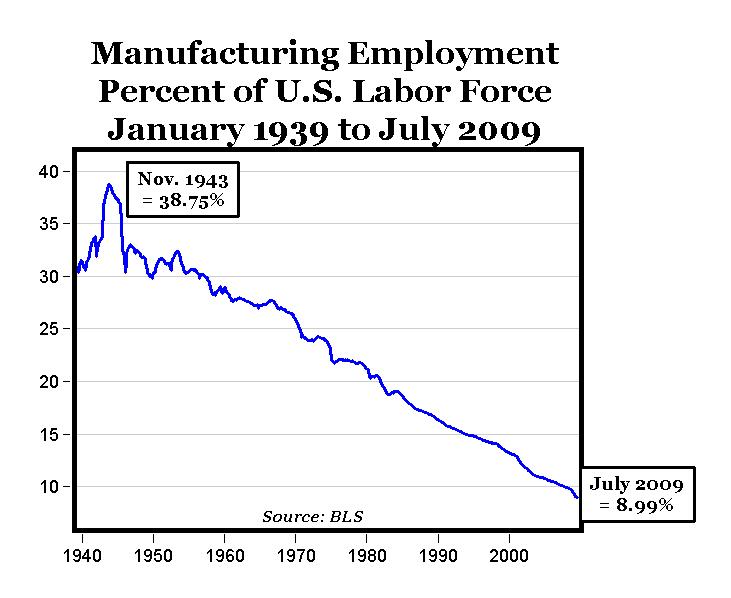
Jeremiah Wright and Suspicions About the Origin of AIDS

Rev Jeremiah Wright on Government-Created HIV C-SPAN – National Press Club, 2008

It may seem strange to hear a learned man like Jeremiah Wright make the claim that AIDS was created by the government, but it’s not an obscure belief among the black intelligentsia worldwide. Wangari Maathai, the first African woman to win a Nobel Prize, asks, “Why has there been so much secrecy about AIDS? When you ask where did the virus come from, it raises a lot of flags. That makes me suspicious.” It has been reported that she went further than this and said it was “deliberately created by Western scientists to decimate the African population,” but she denies saying this. But she did say this: “I have no idea who created AIDS and whether it is a biological agent or not. But I do know things like that don’t come from the moon. I have always thought that it is important to tell people the truth, but I guess there is some truth that must not be too exposed.” Asked to clarify she said, “I’m referring to AIDS. I am sure people know where it came from. And I’m quite sure it did not come from the monkeys.” Under pressure, she backtracked from this statement, saying she was misunderstood, but it doesn’t seem that she could have meant something different than what is implied.

Graphic representation of the AIDS virus

In 2005, a survey by the Rand Corporation found that half of all American blacks surveyed reported that they believe AIDS is man-made, one-quarter believe it was created in a government laboratory, and sixteen percent believe it was created to reduce the black population. Where do such ideas come from? One possible source is the juxtaposition of two facts that occurred in 1969 in the halls of our own government. In July, 1969, George H. W. Bush, US Representative from Texas, gave a major speech on the need to control population growth in the Third World. It was one of many he gave on the subject. He was so obsessed with population control, in fact, that his colleagues nicknamed him “Mr. Rubbers.” A few days later, the Department of Defense requested ten million dollars from Congress to fund the development of a “synthetic biological agent, an agent that does not naturally exist and for which no natural immunity could have been acquired.” The following conversation is from the Congressional Record, the event a hearing over the Department of Defense appropriation request (HB-15090) for budget year 1970. Here is the Pentagon’s Dr. Donald MacArthur telling Congressman Robert Sikes of the need for a “synthetic biological agent”: 

Dr. MacArthur: There are two things about the biological agent field I would like to mention. One is the possibility of technological surprise. Molecular biology is a field that is advancing very rapidly and eminent biologists believe that within a period of 5 to 10 years it would be possible to produce a synthetic biological agent, an agent that does not naturally exist and for which no natural immunity could have been acquired.

Mr. Sikes. Are we doing any work in that field?

Dr. MacArthur. We are not.

Mr. Sikes. Why not? Lack of money or lack of interest?  

Dr. MacArthur. Certainly not lack of interest.

Mr. Sikes. Would you provide for our records information on what would be required, what the advantages of such a program would be. the time and the cost involved?

Dr. MacArthur. We will be very happy to. The dramatic progress being made in the field of molecular biology led us to investigate the relevance of this field of science to biological warfare. A small group of experts considered this matter and provided the following observations: 1. All biological agents up the present time are representatives of naturally occurring disease, and are thus known by scientists throughout the world. They are easily available to qualified scientists for research, either for offensive or defensive purposes. 2. Within the next 5 to 10 years, it would probably be possible to make a new infective microorganism which could differ in certain important aspects from any known disease-causing organisms. Most important of these is that it might be refractory to the immunological and therapeutic processes upon when we depend to maintain our relative freedom from infectious disease. 3. A research program to explore the feasibility of this could be completed in approximately five years at a total cost of $10 million. 4. It would be very difficult to establish such a program. Molecular biology is a relatively new science. There are not many highly competent scientists in the field., almost all are in university laboratories, and they are generally adequately supported from sources other than DOD. However, it was considered possible to initiate an adequate program through the National Academy of sciences-National Research Council (NAS-NRC), and tentative plans were made to initiate the program. However decreasing funds in CB, growing criticism of the CB program., and our reluctance to involve the NAS-NRC in such a controversial endeavor have led us to postpone it for the past two years. It is a highly controversial issue and there are many who believe such research should not be undertaken lest it lead to yet another method of massive killing of large populations. On the other hand, without the sure scientific knowledge that such a weapon is possible, and an understanding of the ways it could be done. there is little that can be done to devise defensive measures. Should an enemy develop it there is little doubt that this is an important area of potential military technological inferiority in which there is no adequate research program.

Source: Department of Defense Appropriations for 1970. United States Senate Library. Hearings before a Subcommitee of the Committee on Appropriations. House of Representatives. Ninety-First Congress. First Session. Subcommittee on Department of Defense. Printed for the use of the Committee on Appropriations. US Government Printing Office. Washington: 1969. Tuseday, July 1, 1969. Synthetic Biological Agents.

Of course none of this proves the government created AIDS. What it does show, however, is that the military and political operatives at the highest levels of the US government were interested in a program which could produce a AIDS-like virus for the purposes of biological warfare and that experts believed that such a virus could be produced in 5 to 10 years. That in itself is something, and when some people hear this, recall that AIDS emerged in the early 1980s, then do a little math—well, it seems to fit the time line, doesn’t it?

Most white people will never have heard of this theory. For most whites who have heard this, they won’t make the connection—they will see it as a coincidence (not all, of course, e.g., composer Frank Zappa, who believed AIDS was created to kill blacks and gays, wrote a famous play satirizing it called Thing Fish). But among blacks, a relatively smaller proportion of the population than whites, linked together through a tight network of black churches and other civic organizations, many will have heard of it. So, when black people hear this, they have a different reaction than whites. They make the connection. And this is because of their history.

Black people remember all too well that the United States government conducted syphilis experiments at the Tuskegee Institute on black men from the 1930s through the 1970s, an experiment that violated the Nuremberg Code, the rules governing the punishment of Nazi doctors who engaged in medical experiments. The Nazi doctors were hanged until dead. Yet nothing happened to the Tuskegee doctors. Moreover, blacks know the government dumps toxins on their communities, locates landfills in their neighborhoods, and keeps blacks in the dark about working conditions that make them sick. Combine this with vast disparities in health care services and outcomes for blacks, and experience and context make it easy to believe that the government would do something like create a virus that targets undesirable populations.

When Jeremiah Wright was confronted with what he had said during his April 2008 National Press Club appearance, he asked the media in attendance, “Have you read Medical Apartheid” (I have, by the way, and it’s excellent and extremely important work by Harriet Washington, the full title: Medical Apartheid: The Dark History of Medical Experimentation on Black Americans from Colonial Times to the Present). Wright said, “Based on the Tuskegee experiment and based on what has happened to Africans in this country, I believe our government is capable of doing anything.” (Much of the theory about government involvement in the creation of AIDS comes from the work of Boyd Graves, who argues that AIDS is associated with the US Special Virus Program (1962-1978). Related to this is the work of Dr. Alan Cantwell.)

While it may not be true that the government created AIDS, it’s no stretch of the imagination to suppose that it may be true (majorities believe much stranger things than this). There are lots of things that sound bizarre that turn out to be true upon careful investigation. The Tuskegee syphilis experiment seems hard to believe, but it’s true. Forced sterilization programs in the US, Canada, Great Britain, and Scandinavia, responsible for the surgical mutilation of tens, possibly hundreds of thousands of human beings sounds like a fantastic story. But it’s for real. The Holocaust—the systematic murder of millions of human beings in an efficient bureaucratic death machine—seems farfetched, almost impossible, but it really happened. Millions of people were taken from their homes, herded into death camps, killed with bullets and poison gas, their bodies burnt to ash in networks of crematoria.

To suppose that such things are impossible risks permitting terrible things to happen again and on-going atrocities to continue. The scientific mind remains open to possibility. What some people call conspiracy theories, others see as bold conjecture or working hypotheses. Wrights error, in my view, is in stating a hypothesis as fact. But then millions of brothers and sisters do the same thing. They may have jumped the gun. But that doesn’t make them crazy. Nor does it warrant a dismissive attitude from others.

Why I Call Myself a Libertarian

Discourse on libertarianism turns on the definition of liberty, of which there are basically three. The oldest notion of liberty in the Western tradition is the liberal contradiction simultaneously holding to the labor theory of value, in which, on the one hand, those who mix their labor with the instruments and objects of production are seen as naturally entitled to the things they produce, while, on the other hand, the insistence on bourgeois property relations that allow individuals to have property in things they do not produce themselves and acquire without fully compensating the producers the full value of labor expended by virtue of a monopoly over the means of production. John Locke and Adam Smith, among others, held this view.

The early theorists of political economy suspected that capitalism was exploitative, since the capitalist made off with more value than he produced—often he did no productive labor at all—but their science couldn’t reveal the secret of accumulation. They weren’t too troubled by this, however, since, the utilitarian side of their thinking allowed them to argue that the benefits—wealth creation and emergent social order—outweighed the moral downside, namely inequality and poverty.

In Capital, Karl Marx solved the riddle of the metamorphosis of labor into capital scientifically: M-C-M’. Earlier, he had resolved the contradiction of liberalism by jettisoning bourgeois property relations in favor of workers keeping the full value of their production, that is socialism. Unlike the capitalist ideologue, Marx saw liberty—i.e. individual freedom and personal sovereignty—as predicated on substantive equality. “In place of the old bourgeois society, with its classes and class antagonisms,” he and Engels wrote in Manifesto of the Communist Party, “we shall have an association, in which the free development of each is the condition for the free development of all.” Marx and Engels here anticipate Abraham Maslow.

Anarchists agreed with this conclusion, but disagreed with the political strategy the communists advocated. As Alexander Berkman noted in the ABCs of Anarchism, the end goal, communism, was common to Marxists and anarchists, but the proper path to the promise land was not through the “dictatorship of the proletariat.” Anarchists identified themselves as communists and socialists but distinguished themselves from Marxists by calling themselves libertarians, creating compound words such as anarchist-communist (Berkman and Goldman were fond of this term), libertarian-socialist (Kropotkin, Proudhon, Bakunin, and later Chomsky and Bookchin), and libertarian-communist.

The libertarian tradition on the left has a long history. Anarchist Sebastien Faure’s Le Libertaire, published in 1895, is the first publication to use the term in a purposeful political sense, although the earliest usage politically appears to have been anarchist-communist’s Joseph Dejacque’s use of the word in 1858. The anarchist tradition of libertarianism continued throughout the 20th century. The Libertarian League was founded in the United States in 1920, publishing the journal The Libertarian. During the Spanish Revolution, a coalition group, the United Libertarian Organizations, was created to get the revolutionary anarchist message out. The anarchosyndicalists were influenced by Spanish anarchist Isaac Puente, who in 1932 wrote the pamphlet Libertarian Communism. Gregory P. Maximoff founded the Libertarian Book Club in the late 1940s, which by 1954 had grown into the second Libertarian League (the first having dissolved in 1930). George Fontenis’ The Manifesto of Libertarian Communism was published in the 1950s. In 1959, Cuban anarchists founded the Libertarian Association of Cuba. In 1962, George Woodcock published Anarchism: A History of Libertarian Ideas and Movements. Also in the 1960s, the Solidarity Group published Solidarity: A Journal of Libertarian Socialism.

In other words, long before there was a US Libertarian Party, which was founded in 1971 and didn’t call itself libertarian until 1972, there were libertarians—and they were anarchists, communists, and socialists!

Which brings us to the rightwing libertarian. Perhaps recognizing the contradiction between the labor theory of value and bourgeois property relations, the rightwing libertarian jettisons the former. In their view, all value is reduced to use value only, and even more to the subjective, to the desire of the individual will. There is no social order really, only individuals, families, and markets. To the extent that there is an economic reality, markets reflect the natural order of things—survival of the fittest—and individuals are either more or less fit to survive. This is why right-wing libertarianism is more aptly labeled social Darwinism.

There are different varieties. Anarchocapitalism (for example, Murray Rothbard), dreams of no government and corporations running everything. Corporations would provide the police and military. Indeed, everything would be private. If your labor wasn’t needed you would starve or be shot for trying to procure food for your family. It’s a truly horrifying vision. It’s a sort of stateless fascism, tyranny of the corporate bureaucracy. Others believe government’s role should only be protection of property and contract enforcement (see F. A. Hayek). The outcomes of this arrangement is not much different than anarchocapitalism, as the state is obligated to treat everybody exactly the same even though there are vast differences among individuals. Imagine a world in which the disabled are treated the same as the ablebodied without regard to the disabilities and see the nightmare scenario unfolding. This is the Ron Paul world where white restaurant owners deny black families service because the former’s property rights trump the latter’s humanity. Libertarianism without civil liberties? I think you see the absurdity. There are still others, for example Robert Nozick, who believe a free society allows individuals to sell themselves into slavery. Again, libertarianism without civil liberty.

All these views lead to the same place, a place where liberty is enjoyed by a few and denied to or curtailed for the many, with either no government standing between exploited and the exploiter or a minimalist state aiding the exploiter in perpetuating the conditions of exploitation.

What we have is a contest between those who first used the word libertarianism to advance their vision of liberty worldwide—the radical left—and those who broke away from the Old Right seeking to co-opt the term “libertarianism” to advance their vision of liberty—a form of tyranny by the minority.

Since my definition of liberty is consistent with the radical left, libertarianism means something radically different to me than it does to those on the political right. And, since my definition of libertarianism is the much older and the more recognized worldwide, it is the best way to express myself to my comrades around the world. Moreover, I am a dedicated civil libertarian, a card-caring member of the ACLU (I’m even a board member).

The right has co-opted the term for use as propaganda for an ideology that does not hold individual freedom as its overarching concern, but rather seeks unregulated tyranny of property over society. By letting the political right have the term, those of us who believe in freedom participate in legitimating a conception of liberty that is antithetical to freedom. If we cede the term to them, then we allow them to define liberty, and if their movement continues to gain followers, and if in the end they should win, that will be a disaster for freedom and democracy.

Make no mistake about it, the libertarian right openly despise democracy. Democracy is incompatible with their definition of liberty. But it’s compatible with mine. I use the term in its traditional non-contradicted understanding where the labor theory of value underpins the realization of liberal values.