
The foundation of this discussion assumes John Locke’s labor theory of value, which may be regarded as a truism. Locke held that while wealth exists in nature, value is something created by human labor. Without labor, the wealth of nature remains untapped. When a person mixes his labor with nature to extract its resources, he gives those resources value, since he renders them possible to meet human needs and wants. From that value, in a market situation, necessary in complex and free social arrangements, he derives an income with which he sustains himself and his family.
Under capitalism, however, part of the value produced by the worker is expropriated by the capitalist. The capitalist exploits labor to claim a share of the value that the worker’s labor creates, just as the worker exploits nature, today augmented by machines and tools provided by capital, to create value. One may, as a Marxist would, argue that it is wrong for capital to exploit labor—but whether or not one accepts that moral claim (and however the Marxist would rationalize it, a moral claim necessarily lies behind the argument), it remains a fact of life in the economic order we inhabit today. There is a reason to embrace this, namely an economic dynamic that drives technological advance and therefore improves the life chances of the species.
Out of the value the worker receives in wages or salary, a portion goes to the government through taxation. The same is true for the capitalist, who also pays a share of his derived value to the government. The government, in turn, uses these revenues to provide for national defense, maintain public order, and secure the general safety of the population—functions are necessary and therefore reasonable. Thus, from the worker’s standpoint, part of the value he produces goes to the capitalist, and another part goes to the state to sustain these essential services.
However, the worker is called upon to fund much more than this. Out of his taxes, he must also contribute to programs that provide food, healthcare, and housing for those who are not working to produce value, or whose work is deemed unnecessary in the productive process. Consequently, the worker not only supports the capitalist and the government’s core functions but also supports others who are not contributing labor. While one might see this as an act of compassion—helping those in need—the worker cannot support everyone indefinitely, nor is it obvious that the government’s proper role is to compel charity (since charity is by definition voluntarily given). Moreover, this development has a deleterious effect: as more people become dependent on such provisions, society begins to move toward a condition resembling socialism, not because capitalists have been abolished, but because the labor burden increasingly resembles that of a communist redistribution scheme.
To be sure, some people genuinely cannot work—the disabled, the elderly—and their support is both humane and justified (the problem of compulsion remains, however). But some healthy individuals do not work, even as they raise children and depend on government assistance. One of the reasons for this lies in the behavior of capitalists themselves. The capitalist, driven by the desire to maximize his share of the value produced by labor, constantly seeks to reduce the cost of that labor. He achieves this by automating production, importing cheaper foreign labor, offshoring jobs, or otherwise finding ways to produce more with fewer resources. This drive to increase productivity through mechanization, globalization, and technological advancement has led to a shrinking demand for labor in advanced economies. As a result, the number of people who are not working—and who therefore must be supported by the taxes of those who do—is steadily growing.
Some might propose that we are approaching a post-scarcity world, in which machines and robots will produce all that we need. In such a world of plenty, human beings would no longer have to work. Yet this would represent a radical break from all of human history—a world in which people obtain the things they desire without any personal effort. It would also undermine the capitalist dynamic that drives technological advance. In that scenario, an overarching government would have to determine the distribution of goods according to need. But this would require a powerful and coercive state apparatus to decide how much each person receives, when they receive it, and for what purposes. It is easy to see how, in such a world, hunger might end—but freedom could end along with it.
We can already observe a smaller version of this dynamic among those who rely on welfare today. Though they may have food, healthcare, and housing, they must still go to the government to obtain them. They depend on handouts, and those handouts come with conditions, as they must, since those who provide them have an interest in making sure those resources are not wasted on unnecessary things. In contrast, the working person, after the capitalist and the government have taken their shares, still retains the freedom to decide how to spend what remains of his earnings. That freedom of choice—over one’s own portion of value—is essential to human dignity. Those who generate value should play a determinative role in how that value is used.
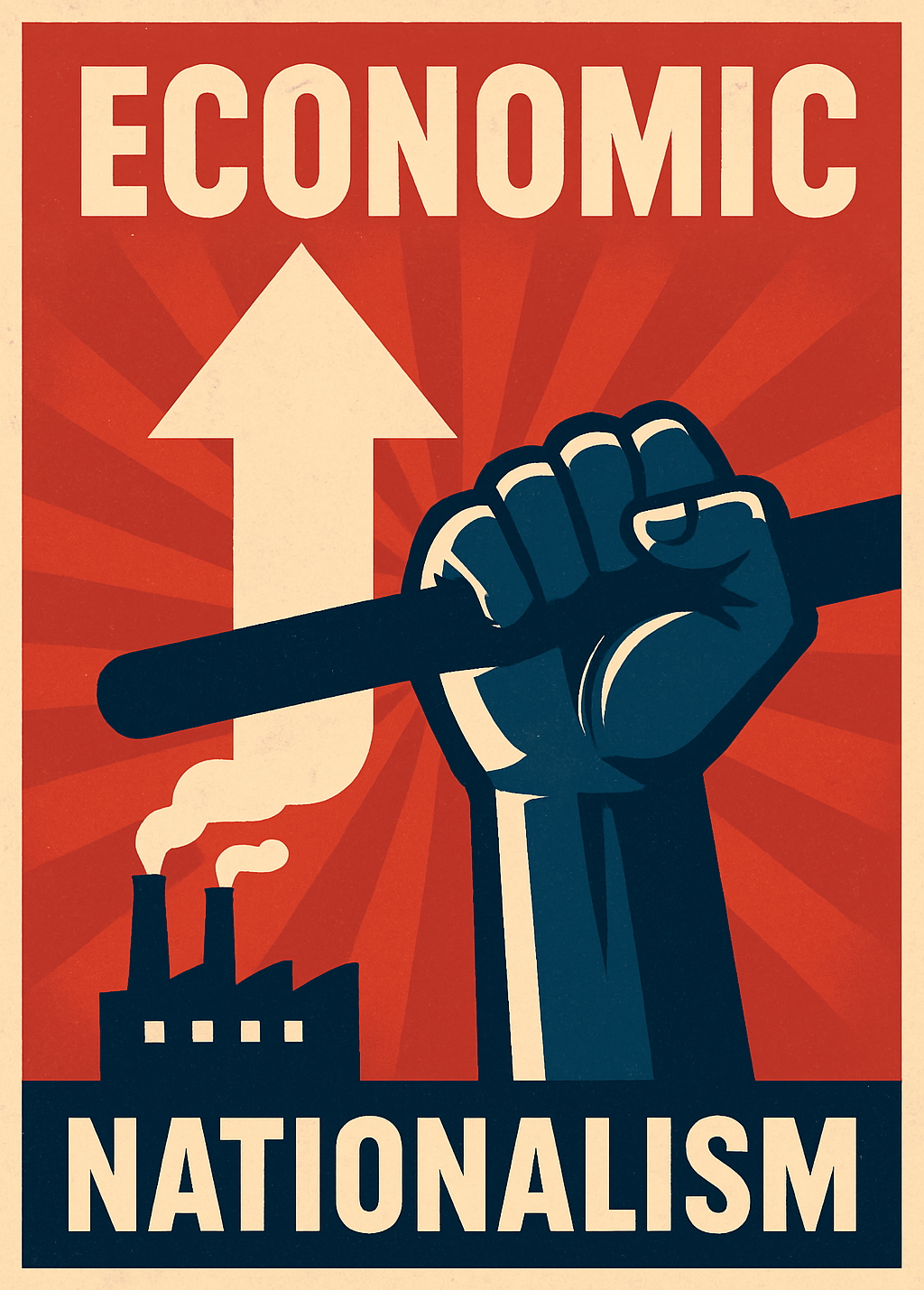
Given this reasoning, the political task of working-class people should not be to demand that the government provide more “free” goods such as food, healthcare, or housing—since nothing is truly free when it comes from the value workers produce. Instead, workers should pursue policies that restrict the ability of corporations to eliminate jobs through excessive automation, the importation of cheap foreign labor, and the offshoring of manufacturing. Trade with other nations may continue, but under terms that generate revenue to support the national interest and the domestic workforce. Rather than sustaining millions of people who are not working, we should create the conditions under which those millions can be productively employed. With a larger base of working, value-producing citizens, society could more easily care for those who truly cannot work—the elderly, the infirm, the disabled—without eroding the freedom and dignity of the working majority.
In this way, the program outlined above preserves the core commitments of liberalism and republican democracy. Liberalism rests upon the right of individuals to enjoy conditions of personal liberty—control over their own labor, the fruits of that labor, and the life they build with it. A political order in which productive citizens retain meaningful authority over the value they create safeguards these liberties by preventing both private concentrations of power and state-administered systems of redistribution from overtaking individual agency. At the same time, a republican form of democracy is maintained, for the people—conceived not as passive recipients of governmental provision but as active contributors to the nation’s material life—collectively determine the legitimate scope and aims of government. This democratic authority is necessarily limited by the natural rights to life, liberty, and property that no majority may override. By ensuring broad participation in productive labor and preventing economic arrangements that erode that participation, society secures both the freedom of individuals and the self-governing character of the polity.

 freedom and reason