
In the 1960s, the percentage of foreign-born people in the United States was relatively low compared to earlier periods in American history and compared to today. In 1960, approximately 5.4 percent of the US population was foreign-born, while the remaining 94.6 percent were native-born. This was a period when immigration levels had significantly decreased due to restrictive immigration laws, such as the Immigration Act of 1924, which established national origins quotas that limited immigration from many regions. In 1960, the US population was about 179 million, and estimates suggest there were around 200,000 to 500,000 illegal immigrants. This means that illegal immigrants constituted roughly 0.1 to 0.3 percent of the total population at the time.
The immigration landscape changed dramatically after the passage of the Immigration and Nationality Act of 1965, which abolished these quotas and set the stage for an increase in immigration in subsequent decades. As of 2023, about 14.3 percent of the US population is foreign-born,. This figure has been increasing steadily over the years and represents the highest proportion in over a century. In 2024, with an estimated US population of about 334 million and, using the lowest estimates (provided by DHS) of 11 to 12 million, illegal immigrants now make up approximately 3.3 to 3.6 percent of the population. If higher estimates of 20 to 25 million illegal immigrants are used, they make up approximately 6 to 7.5 percent of the US population in 2024. Whichever number we go with, the percentage has clearly grown, reflecting changes in immigration policy, birder enforcement, and migration trends over the decade.
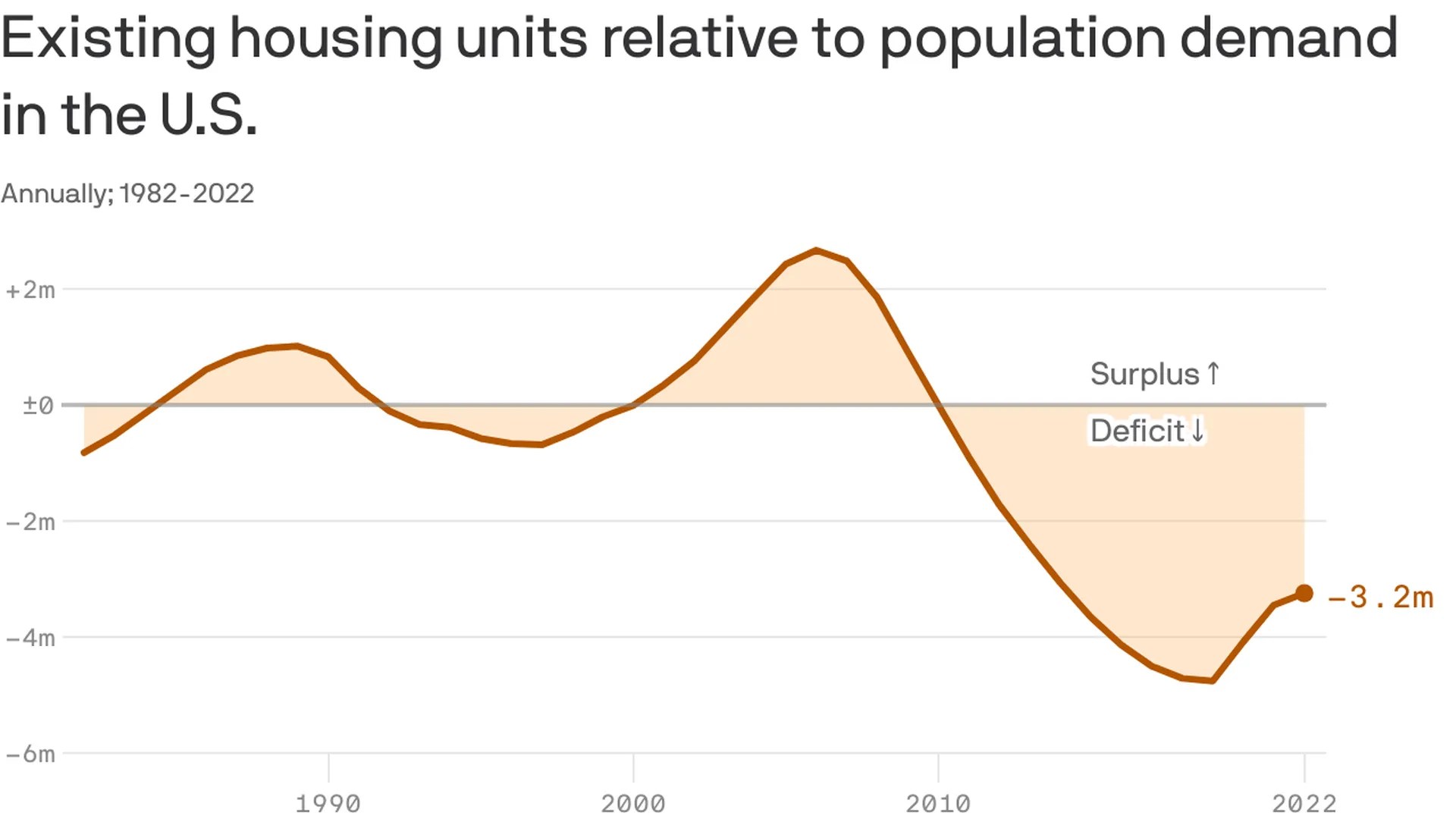
It is understood that the US faces a shortage of millions of affordable homes, especially for low- and middle-income renters. Estimates I have seen suggest a shortfall of 3 to 5 million homes. This shortage has driven up housing prices, making it harder for people to buy homes. It has also contributed to rising rents in many cities, exacerbating the situation. In 1960, the median home price was about $12,700, which, adjusted for inflation, equals approximately $111,760 in 2024 dollars. By comparison, the median home price in 2024 is estimated to be around $416,100, quadrupling of housing prices.
By the 1960s, United States had experienced a post-war housing boom, with a relatively high availability of affordable single-family homes, partly due to government programs like the GI Bill, which helped many veterans buy homes. Fast forward to recent years, the housing market has faced a critical shortage. Based on basic supply and demand principles, assuming the number of housing units remains constant, having millions fewer people in the United States would increase housing availability and bring down prices for native-born Americans and those foreigners legally in our country.
All these figures are easily available on the Internet. It takes only a few minutes to figure all this out. So, ask yourself, why doesn’t the mainstream media explain this to the American people? The answer is simple: the corporate media is part of the project to fundamentally change the demographic composition of the United States, to disorganize its communities and culture, undermine national integrity, and provide a dependent constituency for the permanent rule of the Democratic Party and its fellow travelers in the Republican Party. These are the transnationalists, and cultural pluralism is their strategy to realize their vision of a one world government run by global corporations. (I have written about this extensively on Freedom and Reason. Here is an example from January of last year: An Architect of Transnationalism: Horace Kallen and the Fetish for Diversity and Inclusion.)

 freedom and reason