
If by “Marxist” one means those who work from the vision of the International Workingmen’s Association (IWA), with Karl Marx as the principal theorist, it is crucial to understand that their goal was not to undermine the work ethic in the revolution. Rather, it was to transfer the forces of production from the capitalist class to the working class. The IWA, which stood in solidarity with the Republican Party and the Union during the Civil War, deeply valued the work ethic while putting labor at the center of its focus. Their long-term aim was to develop technological forces to reduce the amount of necessary labor, thereby liberating individuals to pursue other activities. Such a transformation, however, was not feasible given the economic and technological conditions of their time.
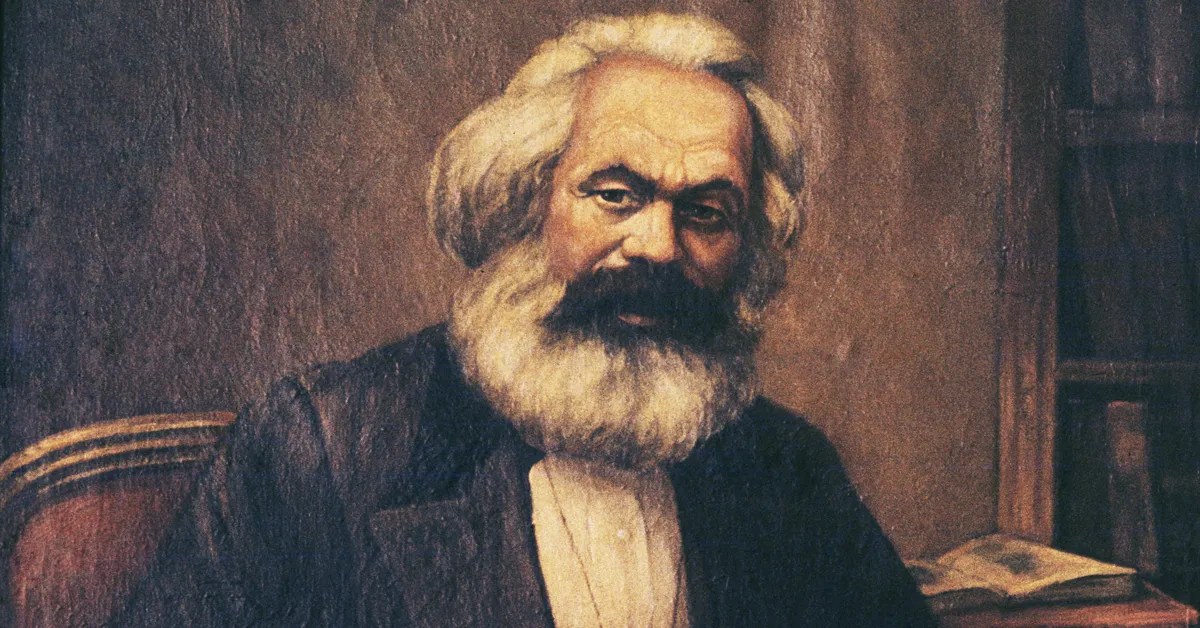
Marx articulates this view in the socialist slogan: “From each according to his ability, to each according to his work.” This principle emphasized the importance of rewarding individuals based on their contributions, reflecting a commitment to fairness and productivity within the constraints of their society. Recall Marx’s passage in the preface to Introduction to a Contribution to the Critique of Political Economy observing theorizing: “No social order is ever destroyed before all the productive forces for which it is sufficient have been developed, and new superior relations of production never replace older ones before the material conditions for their existence have matured within the framework of the old society. Mankind thus inevitably sets itself only such tasks as it is able to solve, since closer examination will always show that the problem itself arises only when the material conditions for its solution are already present or at least in the course of formation.” This highlights Marx’s belief in the gradual evolution of society based on material conditions and productive capacities.
In contrast, the people claiming to be “Marxist” or “neo-Marxist” today are mostly progressives albeit most of them don’t know this—credentialed technocrats of the professional-managerial class and their children. Progressives envision a transition from late capitalism to a form of global neofeudalism, which also embodies fascistic elements, where working people will become serfs living administered lives on high-tech estates. This shift is designed to allow the power elite to maintain their wealth and privilege. Consequently, the radical ideas taught to students under the guise of Marxism—Critical Race Theory, queer theory, postcolonial studies, etc.—have little to do with Marxist thought. They are instead expressions of bureaucratic rationalism. As Marx pointed out in his critique of Hegel: “The bureaucracy is a circle from which no one can escape. Its hierarchy is a hierarchy of knowledge.”
Given these historical conditions, I no longer describe my politics as socialist. I have said this before, but I want to briefly elaborate the reason why I say this. The rise of the corporate state has negated the revolutionary potential inherent in capitalism—perhaps forever. Nevertheless, our immediate need is to attempt to restore the democratic-republican ethos and return to the purer capitalist relations organized within nation-states. This will allow for the continued development of conditions necessary for future social transformation. Following Marx, these conditions must clearly emergent before we can once again speak meaningfully of socialist revolution. This is why I support the populist revolt in the Republic Party and the project to deconstruct the administrative state.

 freedom and reason